 All the three(translation. transcription,
interpretation) comes under the category
called language.
 Though they all comes under same category
the nature of work and purpose varies.
 Such things are explained deep in following
slides
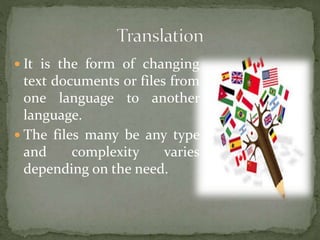
 It is the form of changing
text documents or files from
one language to another
language.
 The files many be any type
and complexity varies
depending on the need.
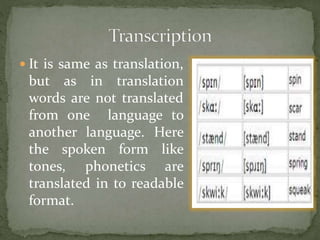
 It is same as translation,
but as in translation
words are not translated
from one language to
another language. Here
the spoken form like
tones, phonetics are
translated in to readable
format.
 The interpretation is nothing but the
spoken format. The language is translated
from one language to another orally.
 There are popular misbelieves among
people that translators, interpreters and
transcriptions are same. But there are many
studies proves that they are entirely different
with a exception that they deal with
language.
 What are things differentiating them
check the further slides
• Translators- deals with written documents to convert
files or document from source language to destination
language
• Transcriptions- deals with written document ,
translating words and tones into readable form
• Interpreter- translation is done orally
Translation- more time
consumption is needed for
translation.
Transcription- here the time
consumption will be more than
that of translation
Interpretation- no time
consumed more, as the instant
translation is always preferred.
Translation- the translation is done for many
documents like legal files, documents and
business related confidential files
Transcription- the transcription is done for the
above mentioned files and documents also if the
sentence contain slogan or speech format words
Interpretation- no file is required, all a person
need is skill to deliver simultaneous result.
All the persons who are under any of these files should be expert in the
language what they are dealing with. In spite of that, there are many skill
sets required as a individual. That is:
Translators- scholar in language more
than a native speaker
Transcriptionists- combination of
language skill and special certification
about transcription
Interpreters- spontaneity with language
skill to face the public without hassle.
 should be certified in both source and destination
language and should update the periodical use of the
words.
 As they work with legal and confidential files getting,
they should put some extra efforts in acquiring details
about the topics and legal terminology
 The core concept should be acquired at the first say to
provide accurate result.
 The transcriptionists deals with many tonal language.
All the learned scholars can change words from one
language to another. But it was only the transcriptions
who can change even the tones into words.
 They work mainly for song translation or translation of
word document which has phonetic words
 The linguistic skill is must but less compared to other
two. It is enough to know the language little above the
native people.
 But the spontaneity plays a major role here. The
person should deliver the speech more promptly
 Presence of mind plays major role here.
 These are some of the concepts and facts about
translator, transcriptionist and interpreter.
 These three plays significant role for a business
concern to reach a global market.
 To know more on translators and interpreter, visit
http://qualitytran.blogspot.in/2015/08/comparison-
between-translators-and.html
 Waterstone Translations is one of the professional
translation service providers with number of
translation services like Chinese translation services,
document translation services, legal translation
services.
 To know more, visit
http://www.waterstonetranslations.com.

Translation, transcription and interpretation

  • 2.
     All thethree(translation. transcription, interpretation) comes under the category called language.  Though they all comes under same category the nature of work and purpose varies.  Such things are explained deep in following slides
  • 3.
     It isthe form of changing text documents or files from one language to another language.  The files many be any type and complexity varies depending on the need.
  • 4.
     It issame as translation, but as in translation words are not translated from one language to another language. Here the spoken form like tones, phonetics are translated in to readable format.
  • 5.
     The interpretationis nothing but the spoken format. The language is translated from one language to another orally.
  • 6.
     There arepopular misbelieves among people that translators, interpreters and transcriptions are same. But there are many studies proves that they are entirely different with a exception that they deal with language.  What are things differentiating them check the further slides
  • 8.
    • Translators- dealswith written documents to convert files or document from source language to destination language • Transcriptions- deals with written document , translating words and tones into readable form • Interpreter- translation is done orally
  • 9.
    Translation- more time consumptionis needed for translation. Transcription- here the time consumption will be more than that of translation Interpretation- no time consumed more, as the instant translation is always preferred.
  • 10.
    Translation- the translationis done for many documents like legal files, documents and business related confidential files Transcription- the transcription is done for the above mentioned files and documents also if the sentence contain slogan or speech format words Interpretation- no file is required, all a person need is skill to deliver simultaneous result.
  • 11.
    All the personswho are under any of these files should be expert in the language what they are dealing with. In spite of that, there are many skill sets required as a individual. That is: Translators- scholar in language more than a native speaker Transcriptionists- combination of language skill and special certification about transcription Interpreters- spontaneity with language skill to face the public without hassle.
  • 12.
     should becertified in both source and destination language and should update the periodical use of the words.  As they work with legal and confidential files getting, they should put some extra efforts in acquiring details about the topics and legal terminology  The core concept should be acquired at the first say to provide accurate result.
  • 13.
     The transcriptionistsdeals with many tonal language. All the learned scholars can change words from one language to another. But it was only the transcriptions who can change even the tones into words.  They work mainly for song translation or translation of word document which has phonetic words
  • 14.
     The linguisticskill is must but less compared to other two. It is enough to know the language little above the native people.  But the spontaneity plays a major role here. The person should deliver the speech more promptly  Presence of mind plays major role here.
  • 15.
     These aresome of the concepts and facts about translator, transcriptionist and interpreter.  These three plays significant role for a business concern to reach a global market.  To know more on translators and interpreter, visit http://qualitytran.blogspot.in/2015/08/comparison- between-translators-and.html
  • 16.
     Waterstone Translationsis one of the professional translation service providers with number of translation services like Chinese translation services, document translation services, legal translation services.  To know more, visit http://www.waterstonetranslations.com.