Translation Studies
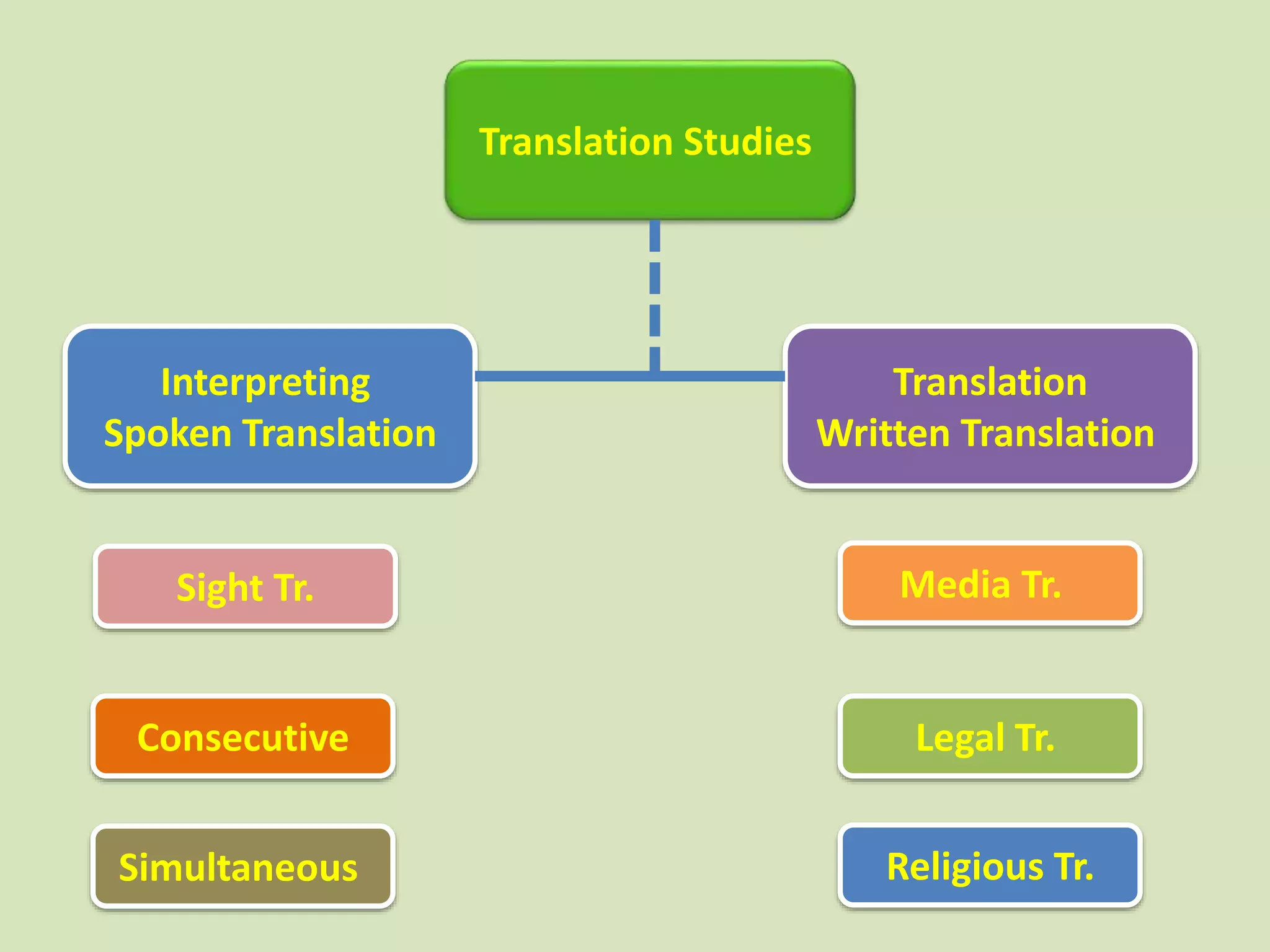
Translation
Written Translation
Interpreting
Spoken Translation
Simultaneous
Consecutive
Sight Tr. Media Tr.
Legal Tr.
Religious Tr.
• This concept has been defined differently by different scholars from different
perspectives
1. In his book (A Linguistic Theory of Translation), Catford states that translation
is a process of substituting a text in one language for a text in another
language. Furthermore, he defined that translation is the replacement of
textual material in source language by equivalent textual material in target
language.
2. For Newmark translation is a craft consisting in the attempt to replace a
written message and/or statement in one language by the same message
and/or statement in another language.
3. According to Bell Translation is a mental activity in which a meaning of given
linguistic discourse is rendered from one language to another
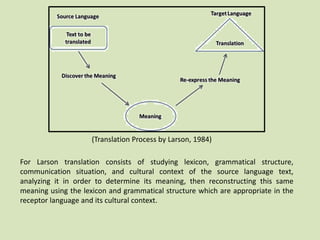
For Larson translation consists of studying lexicon, grammatical structure,
communication situation, and cultural context of the source language text,
analyzing it in order to determine its meaning, then reconstructing this same
meaning using the lexicon and grammatical structure which are appropriate in the
receptor language and its cultural context.
(Translation Process by Larson, 1984)
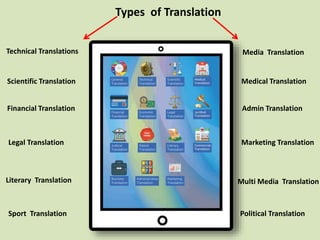
Technical Translations
Scientific Translation
Financial Translation
Legal Translation
Literary Translation
Sport Translation
Media Translation
Medical Translation
Admin Translation
Marketing Translation
Multi Media Translation
Political Translation
Types of Translation
Overview
The first step is simply to scope out the text to be
translated - subject matter, content, length, style,
technicality, etc. The translator will typically read or
skim read parts of the text to get a feel for the content.
They may note key concepts or terminology to be
researched, or background reading needed.
Initial Translation
The translator systematically translates the
document in chunks of 5 – 10 words a Time.
Chunks need to be short enough to hold in short
term memory, and will perfectly be discrete units
of meaning.
Accuracy check
The translation is logically compared against the
original, chunk by chunk. The aim is to confirm no
content has been missed and no meaning
mistranslated. Most translators will also look to
improve any awkward or unstylish wording.
Clear the mind
This step is very simple - put the translation aside
and take a break. This will be for a few hours or
overnight. The aim is purely to clear the mind so
the final step is more effective.
Final polishing
The translator re-reads the translation,
without reference to the source document,
looking solely at quality of expression. Final
edits are made to further refine the
translation wording.
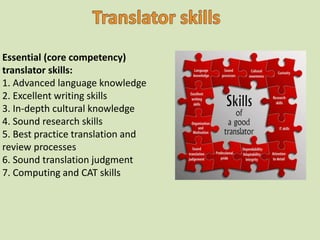
Essential (core competency)
translator skills:
1. Advanced language knowledge
2. Excellent writing skills
3. In-depth cultural knowledge
4. Sound research skills
5. Best practice translation and
review processes
6. Sound translation judgment
7. Computing and CAT skills

Topics.pptx

  • 1.
    Translation Studies Translation Written Translation Interpreting SpokenTranslation Simultaneous Consecutive Sight Tr. Media Tr. Legal Tr. Religious Tr.
  • 2.
    • This concepthas been defined differently by different scholars from different perspectives 1. In his book (A Linguistic Theory of Translation), Catford states that translation is a process of substituting a text in one language for a text in another language. Furthermore, he defined that translation is the replacement of textual material in source language by equivalent textual material in target language. 2. For Newmark translation is a craft consisting in the attempt to replace a written message and/or statement in one language by the same message and/or statement in another language. 3. According to Bell Translation is a mental activity in which a meaning of given linguistic discourse is rendered from one language to another
  • 3.
    For Larson translationconsists of studying lexicon, grammatical structure, communication situation, and cultural context of the source language text, analyzing it in order to determine its meaning, then reconstructing this same meaning using the lexicon and grammatical structure which are appropriate in the receptor language and its cultural context. (Translation Process by Larson, 1984)
  • 4.
    Technical Translations Scientific Translation FinancialTranslation Legal Translation Literary Translation Sport Translation Media Translation Medical Translation Admin Translation Marketing Translation Multi Media Translation Political Translation Types of Translation
  • 5.
    Overview The first stepis simply to scope out the text to be translated - subject matter, content, length, style, technicality, etc. The translator will typically read or skim read parts of the text to get a feel for the content. They may note key concepts or terminology to be researched, or background reading needed.
  • 6.
    Initial Translation The translatorsystematically translates the document in chunks of 5 – 10 words a Time. Chunks need to be short enough to hold in short term memory, and will perfectly be discrete units of meaning.
  • 7.
    Accuracy check The translationis logically compared against the original, chunk by chunk. The aim is to confirm no content has been missed and no meaning mistranslated. Most translators will also look to improve any awkward or unstylish wording.
  • 8.
    Clear the mind Thisstep is very simple - put the translation aside and take a break. This will be for a few hours or overnight. The aim is purely to clear the mind so the final step is more effective.
  • 9.
    Final polishing The translatorre-reads the translation, without reference to the source document, looking solely at quality of expression. Final edits are made to further refine the translation wording.
  • 10.
    Essential (core competency) translatorskills: 1. Advanced language knowledge 2. Excellent writing skills 3. In-depth cultural knowledge 4. Sound research skills 5. Best practice translation and review processes 6. Sound translation judgment 7. Computing and CAT skills