chapter  12 Delivery
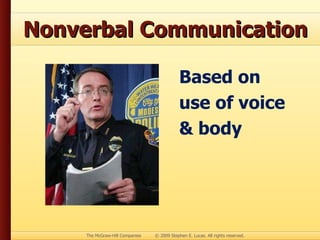
Nonverbal Communication Based on use of voice & body
Methods of Delivery Manuscript Memory Impromptu Extemporaneous
Manuscript Speech Written out fully Read to audience
Impromptu Speech Delivered with little or no immediate preparation
Extemporaneous Speech Carefully prepared & rehearsed Presented from brief notes
Conversational Quality Sounds spontaneous no matter how many times speech has been rehearsed
Speaker’s Voice Volume Pitch Rate Pauses
Speaker’s Voice Vocal variety Pronunciation Articulation Dialect
Volume Loudness or softness of speaker’s voice
Pitch Highness or lowness of speaker’s voice
Rate Speed at which person speaks
Pauses Momentary break in vocal delivery
Vocalized Pauses Pauses that occur when speaker says “uh,” “er,” “um,” etc.
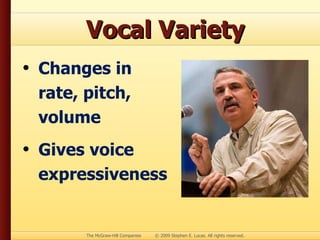
Vocal Variety Changes in rate, pitch, volume  Gives voice expressiveness
Pronunciation Accepted standard of sound, rhythm for words in given language
Articulation Physical production of speech sounds
Dialect Variety of a language distinguished by accent, grammar, vocabulary
Speaker’s Body Personal appearance Movement Gestures Eye contact
Kinesics Study of body motions as mode of communication
Practicing Delivery Go through preparation outline aloud Prepare speaking outline
Practicing Delivery Practice speech aloud Polish, refine delivery Give dress rehearsal
Preparing Q&A Sessions Formulate answers to possible questions Practice delivery of answers
Managing Q&A Sessions Approach questions with positive attitude Listen carefully
Managing Q&A Sessions Direct answers to entire audience Be honest, straightforward Stay on track

Chapter 12 - Delivery