Lecture Seven
Child-directed speech
What is child-directed speech?
 The academic term for the language
used by adults/caregivers when
addressing children.
Phonology
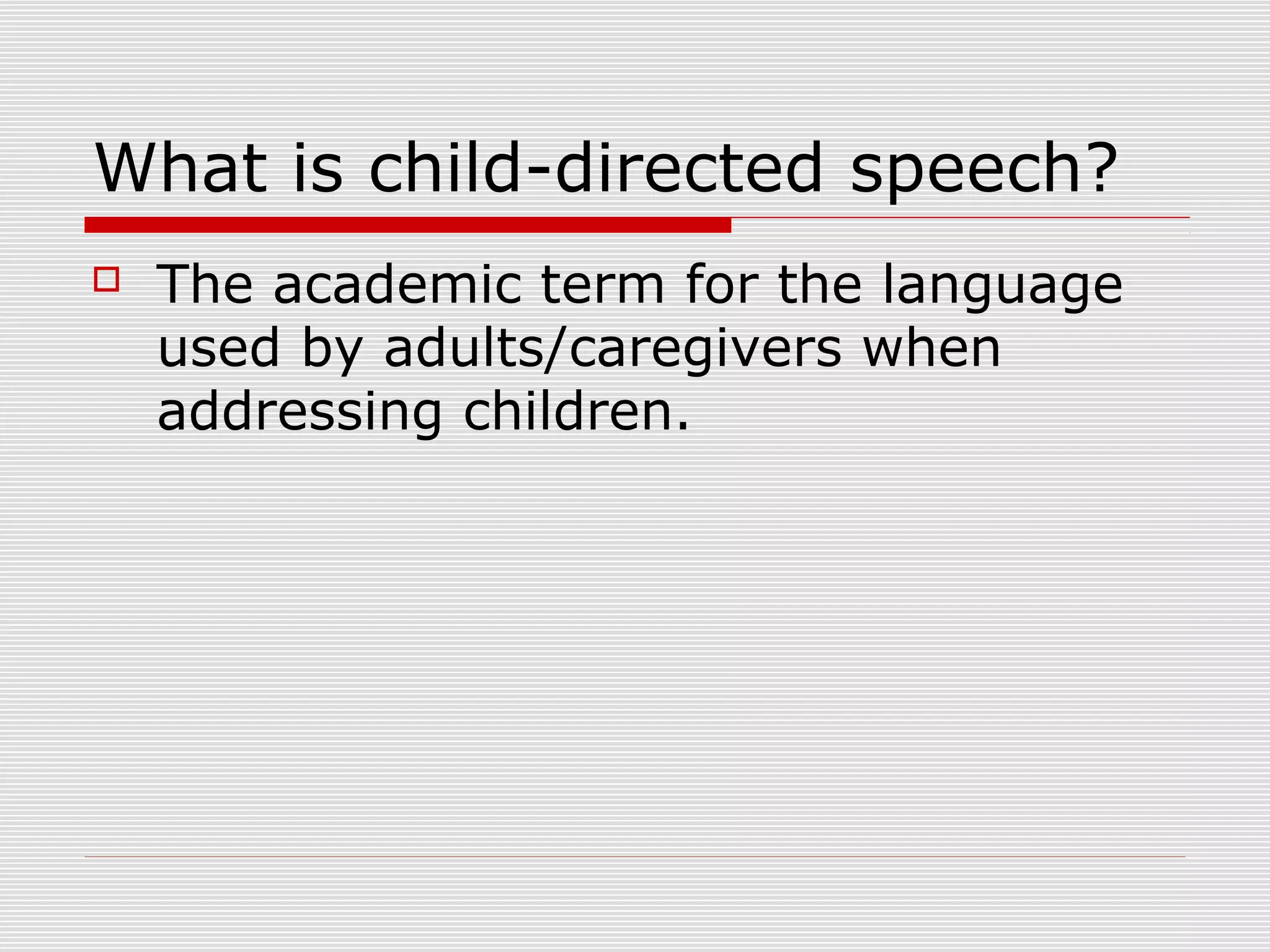
 Separate phrases more
distinctly (longer
pauses).
 Speak more
s-l-o-w-l-y.
 Exaggerated ‘singsong’
intonation.
 Exaggerated difference
between questions,
statements and
commands.
 Higher and wider
range of pitch.
Lexis and Semantics
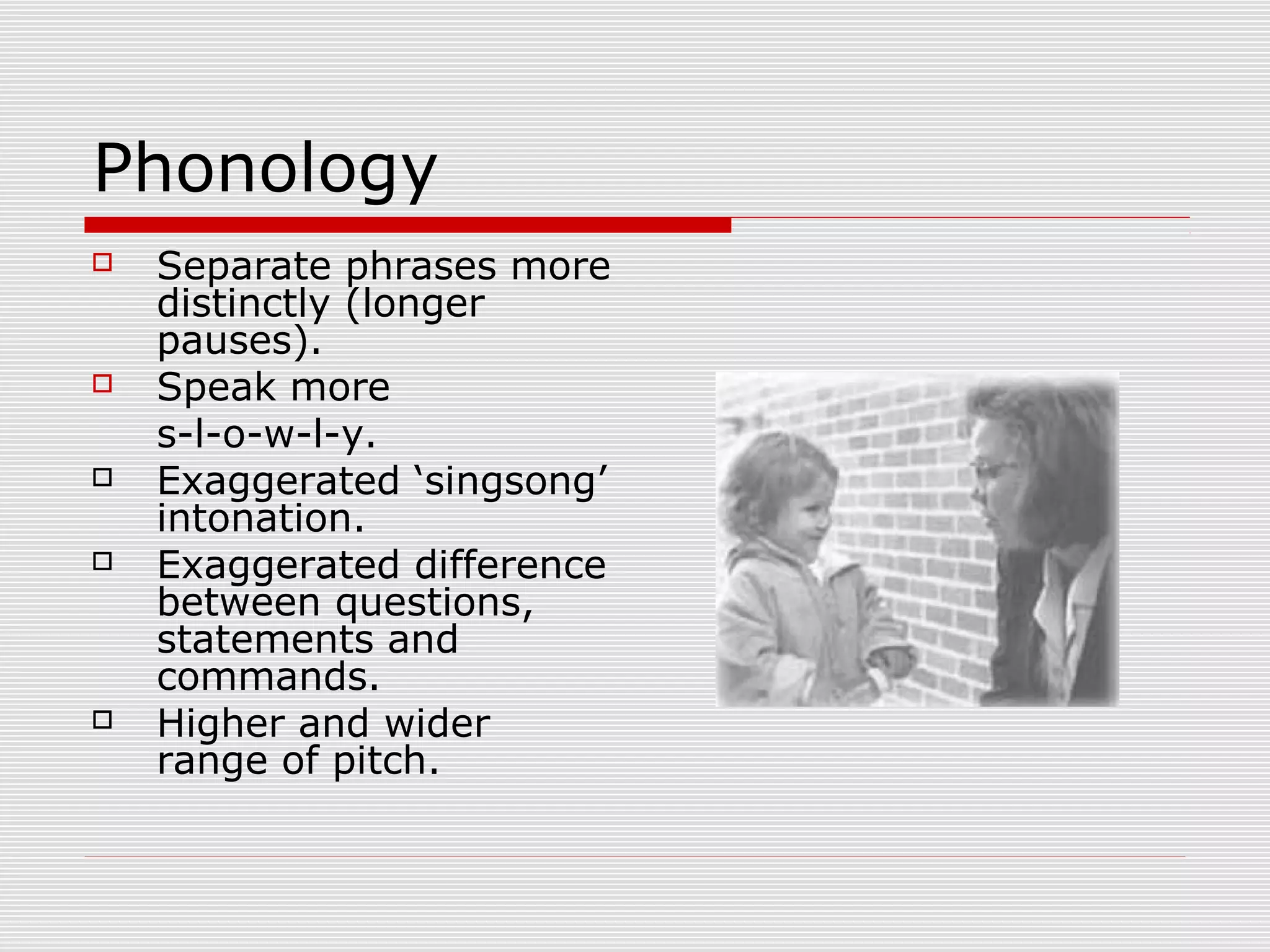
 Use of concrete nouns
(e.g. train, cat) and
dynamic verbs (e.g.
give, put).
 Adopt child’s own
words for things (e.g.
wickle babbit).
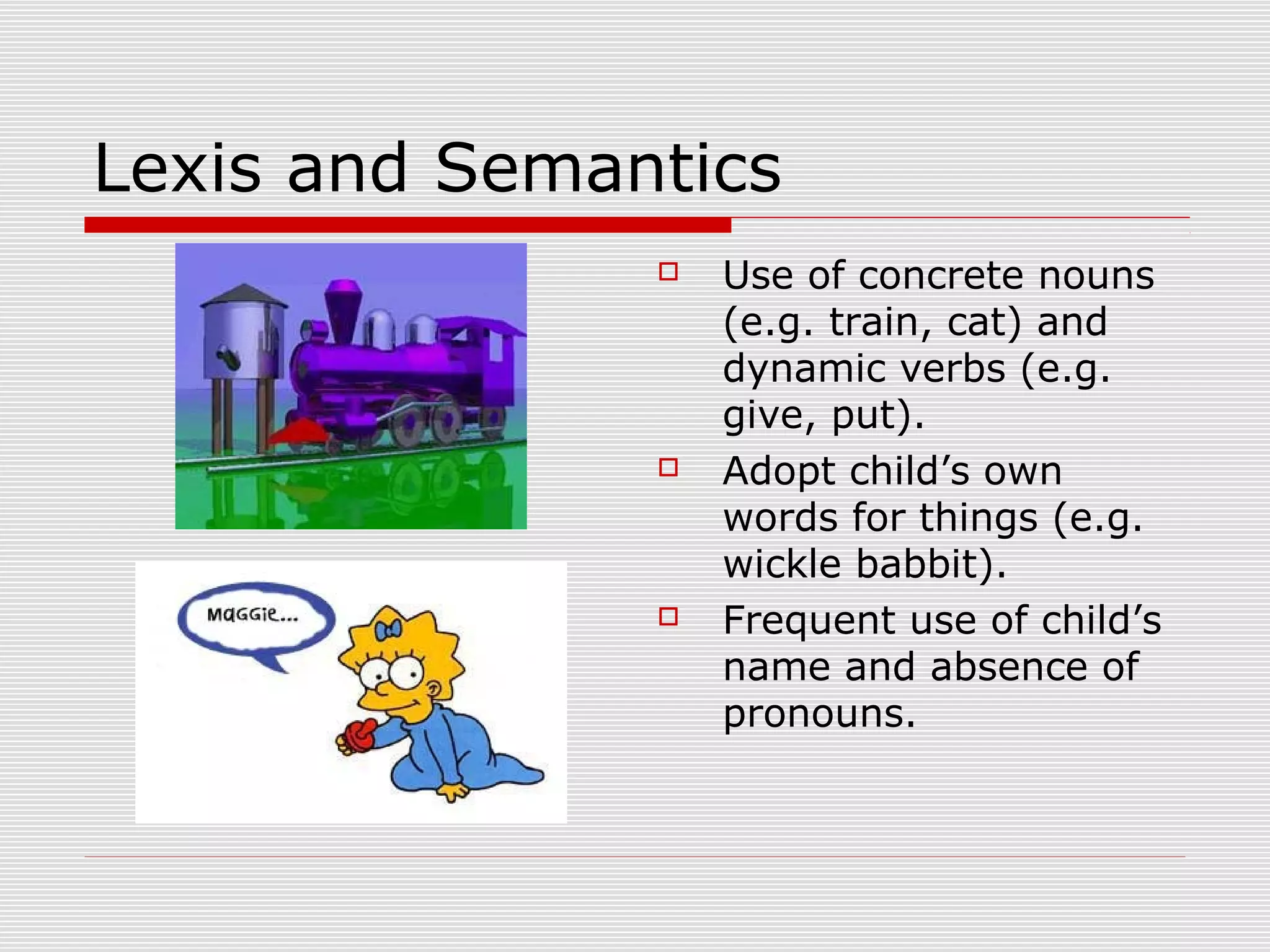
 Frequent use of child’s
name and absence of
pronouns.
Grammar
 Repeated sentence frames: ‘That’s a …’
 More simple sentences.
 Fewer complex sentence and passives.
 Omission of past tense and inflections.
Grammar
 More command, questions and tag
questions.
 Use of EXPANSIONS: where the adult
‘fills out’ the child’s utterance.
 Use of RECASTINGS: where the
child’s vocabulary is put into a new
utterance.
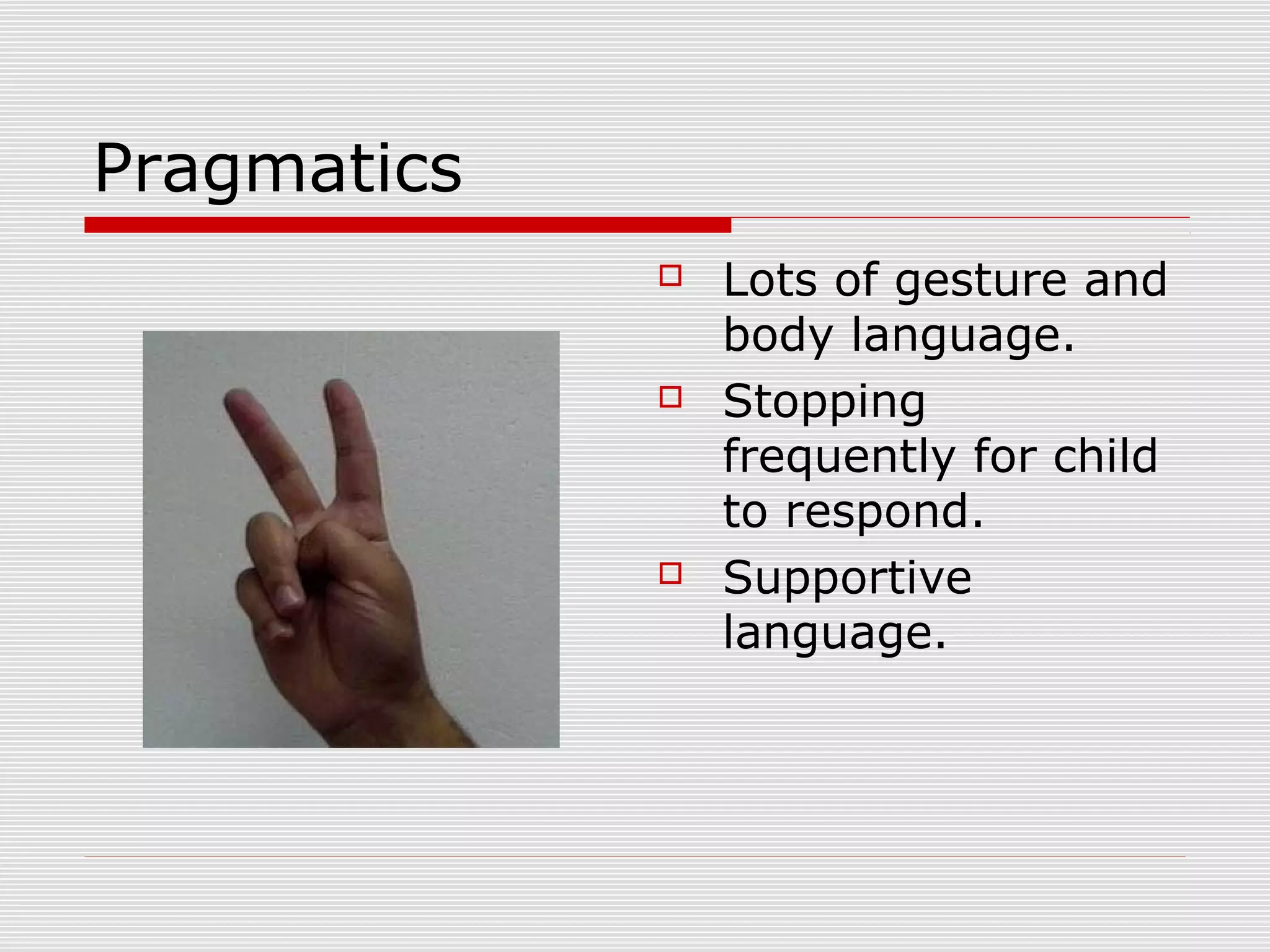
Pragmatics
 Lots of gesture and
body language.
 Stopping
frequently for child
to respond.
 Supportive
language.
Clarke-Stewart (1973)
 Children whose mothers talk to them
more have larger vocabularies.
Nelson (1973)
 Holophrastic stage
 Children whose mothers corrected
them on word choice and
pronunciation actually advanced more
slowly than those with mothers who
were generally accepting.
Kuhl (1992)
 Studied exaggerated vowel sounds
used by parents when speaking to 6-
month olds (in English, Swedish and
Russian).
 Babies turn towards adults who speak
in sing-song voice, ignoring regular
conversation.
 Mothers in all three countries
exaggerated the important vowels.
IMPORTANT!!!
 NOT ALL CULTURES USE CHILD-DIRECTED
SPEECH.
 In some (non-western) cultures babies are
expected to ‘blend in’ with adult interaction
and no special accommodation is made.
 These children still go through same
developmental stages at roughly the same
time, as long as there is EXPOSURE to
language.

Language Acquisition: Lecture 7 Child Directed Speech

  • 1.
  • 2.
    What is child-directedspeech?  The academic term for the language used by adults/caregivers when addressing children.
  • 3.
    Phonology  Separate phrasesmore distinctly (longer pauses).  Speak more s-l-o-w-l-y.  Exaggerated ‘singsong’ intonation.  Exaggerated difference between questions, statements and commands.  Higher and wider range of pitch.
  • 4.
    Lexis and Semantics Use of concrete nouns (e.g. train, cat) and dynamic verbs (e.g. give, put).  Adopt child’s own words for things (e.g. wickle babbit).  Frequent use of child’s name and absence of pronouns.
  • 5.
    Grammar  Repeated sentenceframes: ‘That’s a …’  More simple sentences.  Fewer complex sentence and passives.  Omission of past tense and inflections.
  • 6.
    Grammar  More command,questions and tag questions.  Use of EXPANSIONS: where the adult ‘fills out’ the child’s utterance.  Use of RECASTINGS: where the child’s vocabulary is put into a new utterance.
  • 7.
    Pragmatics  Lots ofgesture and body language.  Stopping frequently for child to respond.  Supportive language.
  • 8.
    Clarke-Stewart (1973)  Childrenwhose mothers talk to them more have larger vocabularies.
  • 9.
    Nelson (1973)  Holophrasticstage  Children whose mothers corrected them on word choice and pronunciation actually advanced more slowly than those with mothers who were generally accepting.
  • 10.
    Kuhl (1992)  Studiedexaggerated vowel sounds used by parents when speaking to 6- month olds (in English, Swedish and Russian).  Babies turn towards adults who speak in sing-song voice, ignoring regular conversation.  Mothers in all three countries exaggerated the important vowels.
  • 11.
    IMPORTANT!!!  NOT ALLCULTURES USE CHILD-DIRECTED SPEECH.  In some (non-western) cultures babies are expected to ‘blend in’ with adult interaction and no special accommodation is made.  These children still go through same developmental stages at roughly the same time, as long as there is EXPOSURE to language.