Unit‐ III
ENV ENGG  – IIENV. ENGG.  II
Prof S S JAHAGIRDAR
BE (CIVIL), ME(ENV.)PhD(persuing)g
NK Orchid college of Engg. and Tech. , Solapur
A] SLUDGE TREATMENT
Thickening 
DigestionDigestion
Conditioning
Dewatering
DryingDrying
Disposal (Incineration)
1. Thickning
Reduces moisture content of sludge
Th  t   f thi k iThree types of thickening
1. Gravity thickening1. Gravity thickening
2. Air floatation
3. Centrifugation
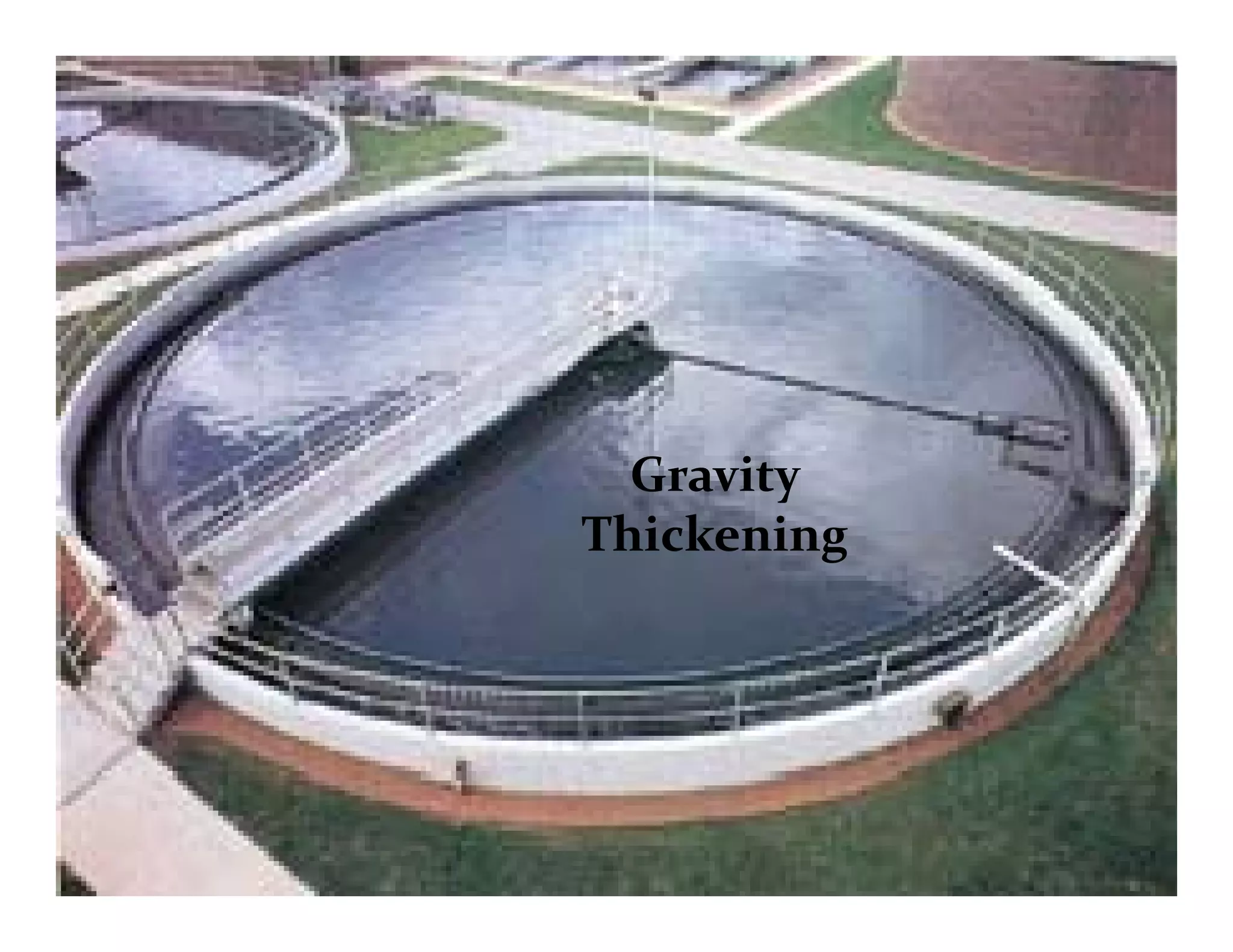
Gravity 
ThickeningThickening
2. Digestion
Aerobic or anaerobic decomposition
of sludgeof sludge
Can be sent to mechanical filters or
sand beds
3. Conditioning
Conditioning improves the drainability of  
digested sludge.
Methods adopted –
1. Elutriation (involves passage of air to ( p g
separate particles)
2. Chemical conditioning (addition of g (
coagulants)
3. Freezing etc.3 g
4. Dewatering
Purpose is to reduce volume of sludge and
increase concentrations of biosolids.increase concentrations of biosolids.
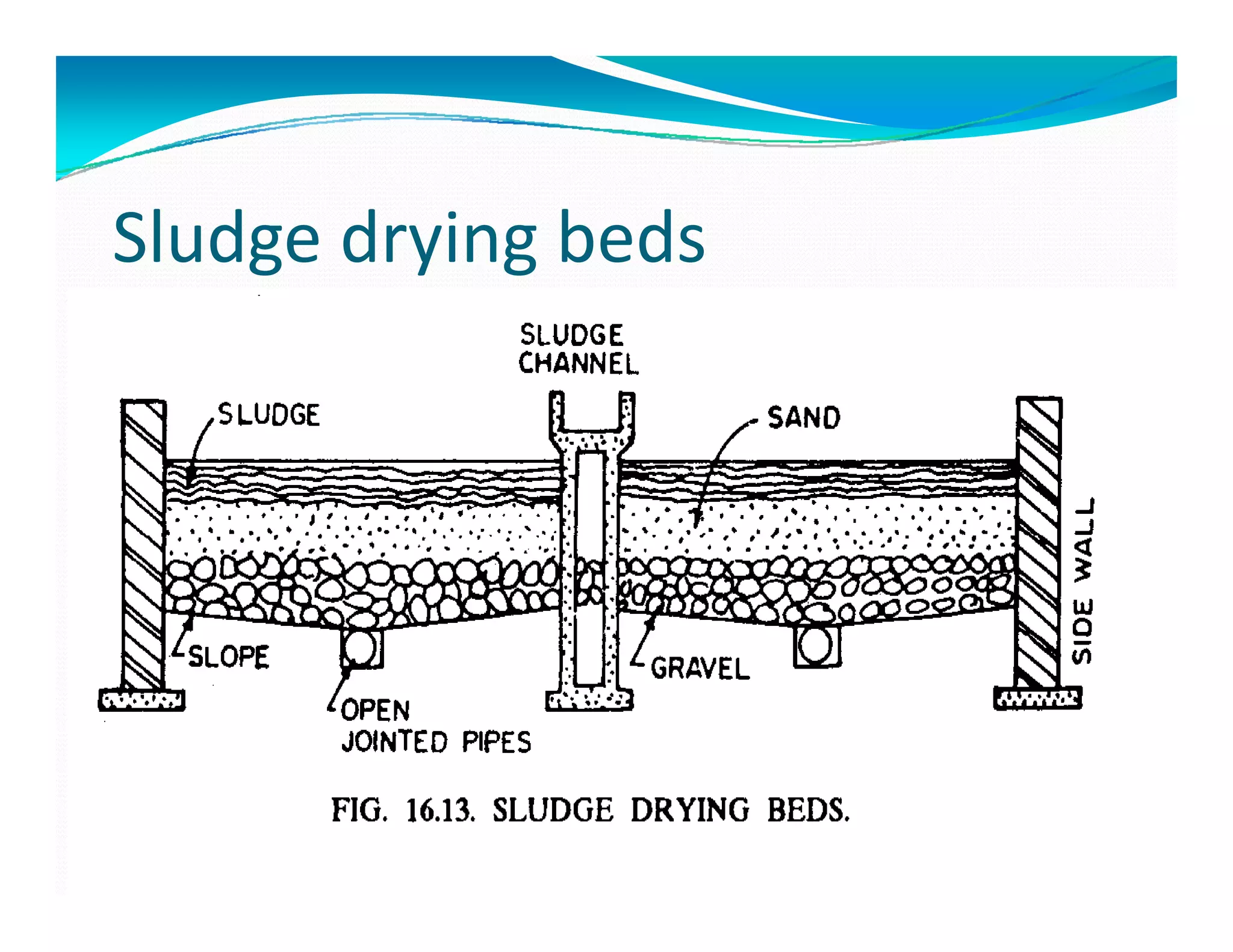
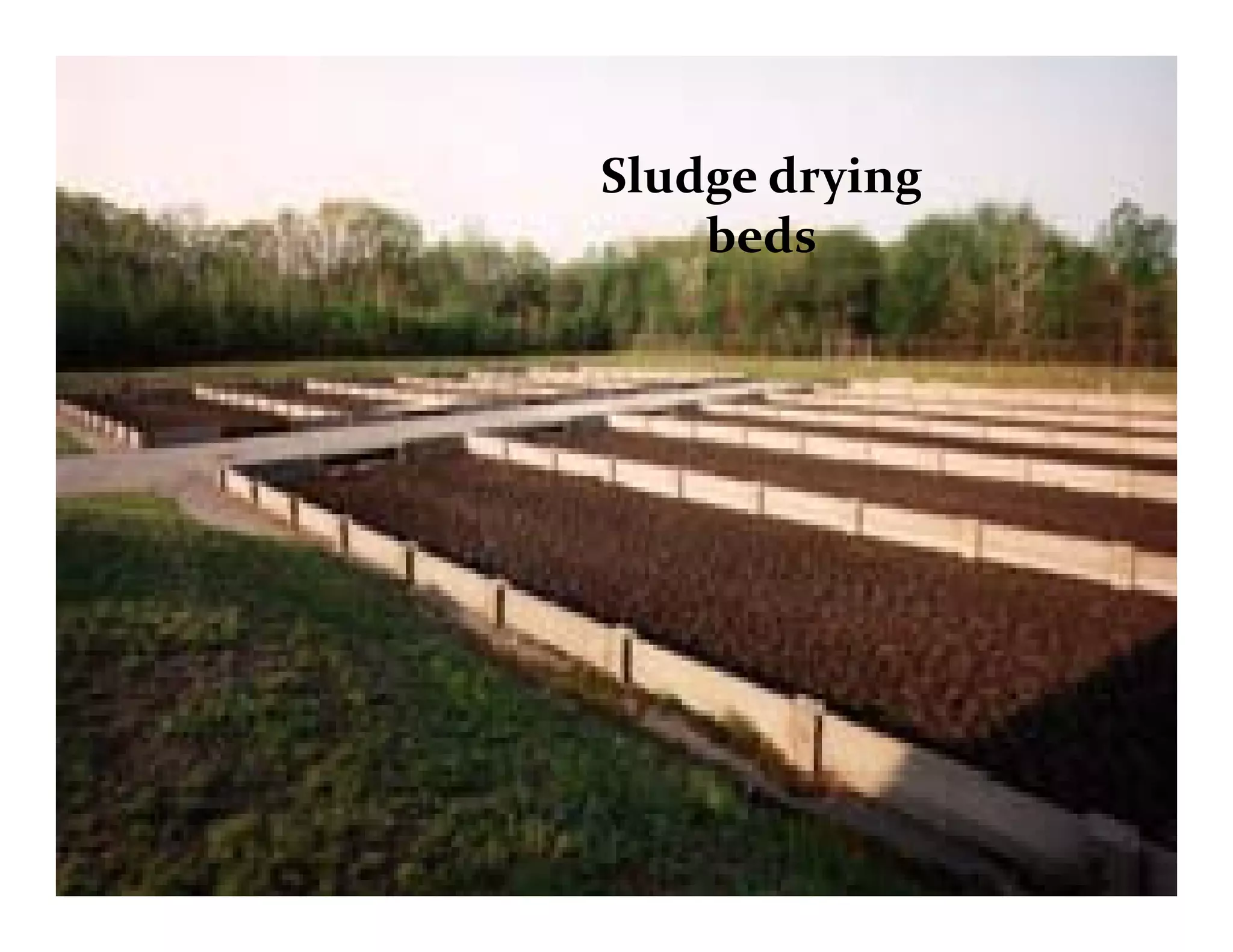
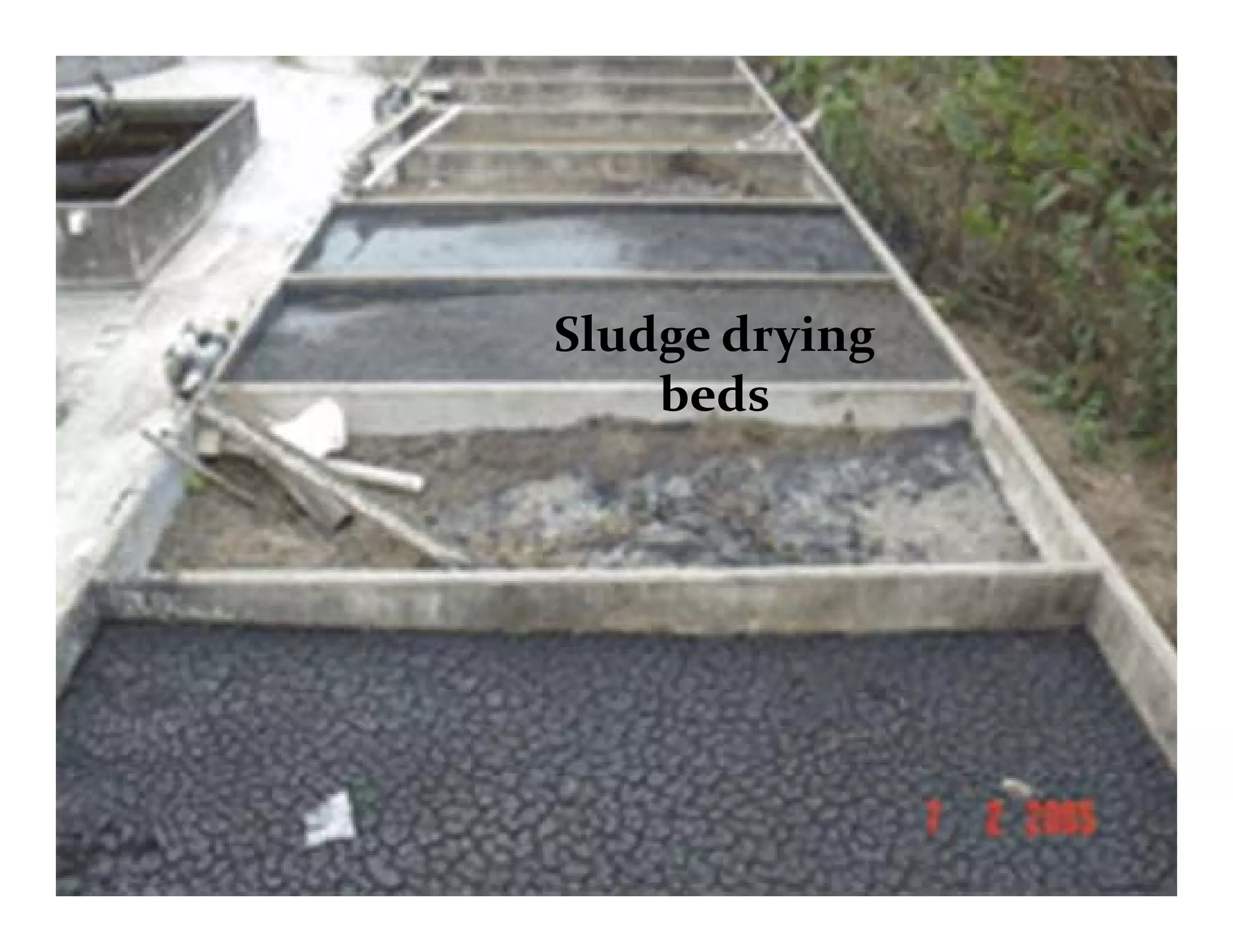
Dewatering can be achieved on sand drying
b dbeds.
Sludge drying beds
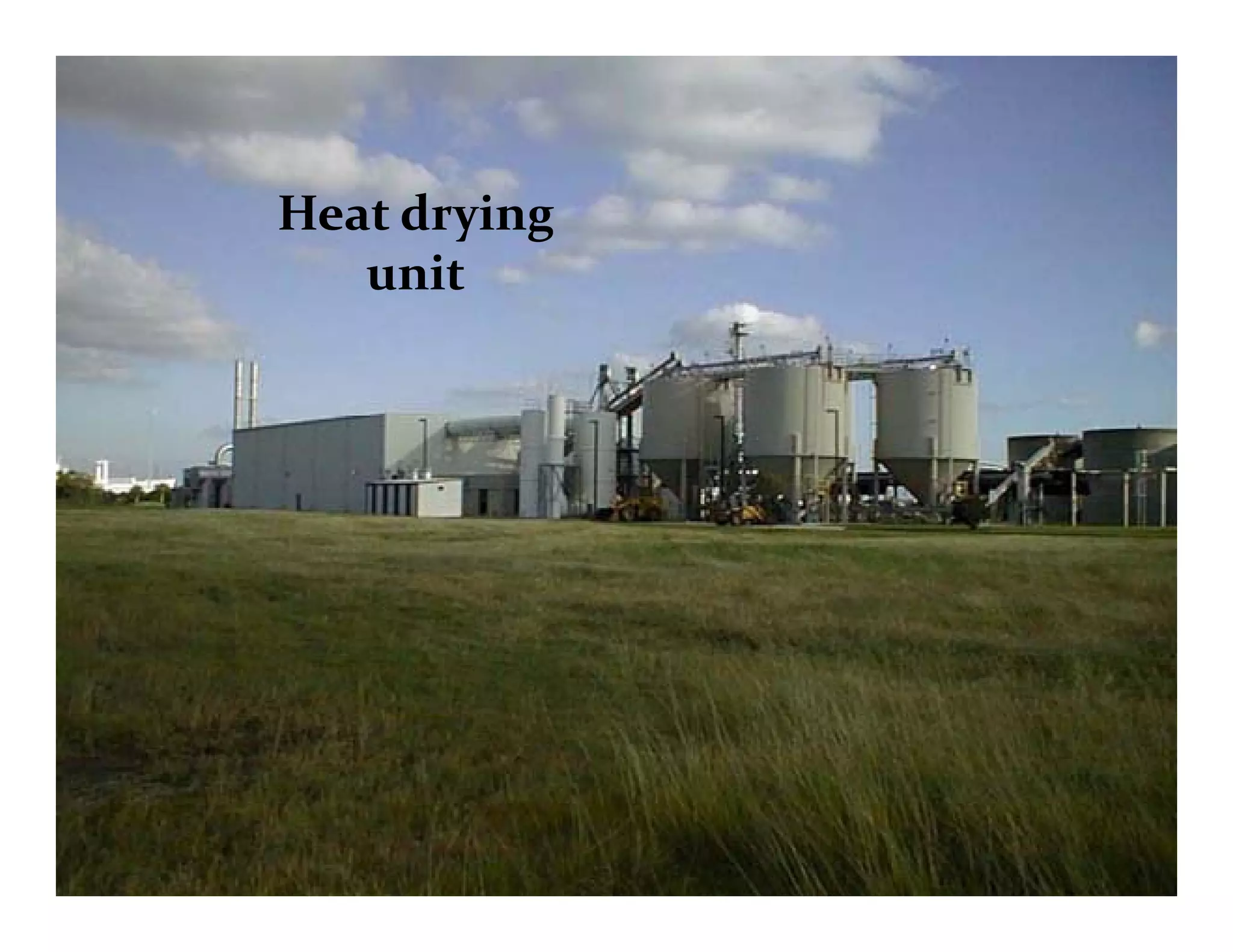
5. Heat drying
Reduces water content
T      C Temp  @ 350oC 
Process carried out in kilnProcess carried out in kiln.
Dried sludge used as soil g
conditioner
Heat drying 
unit
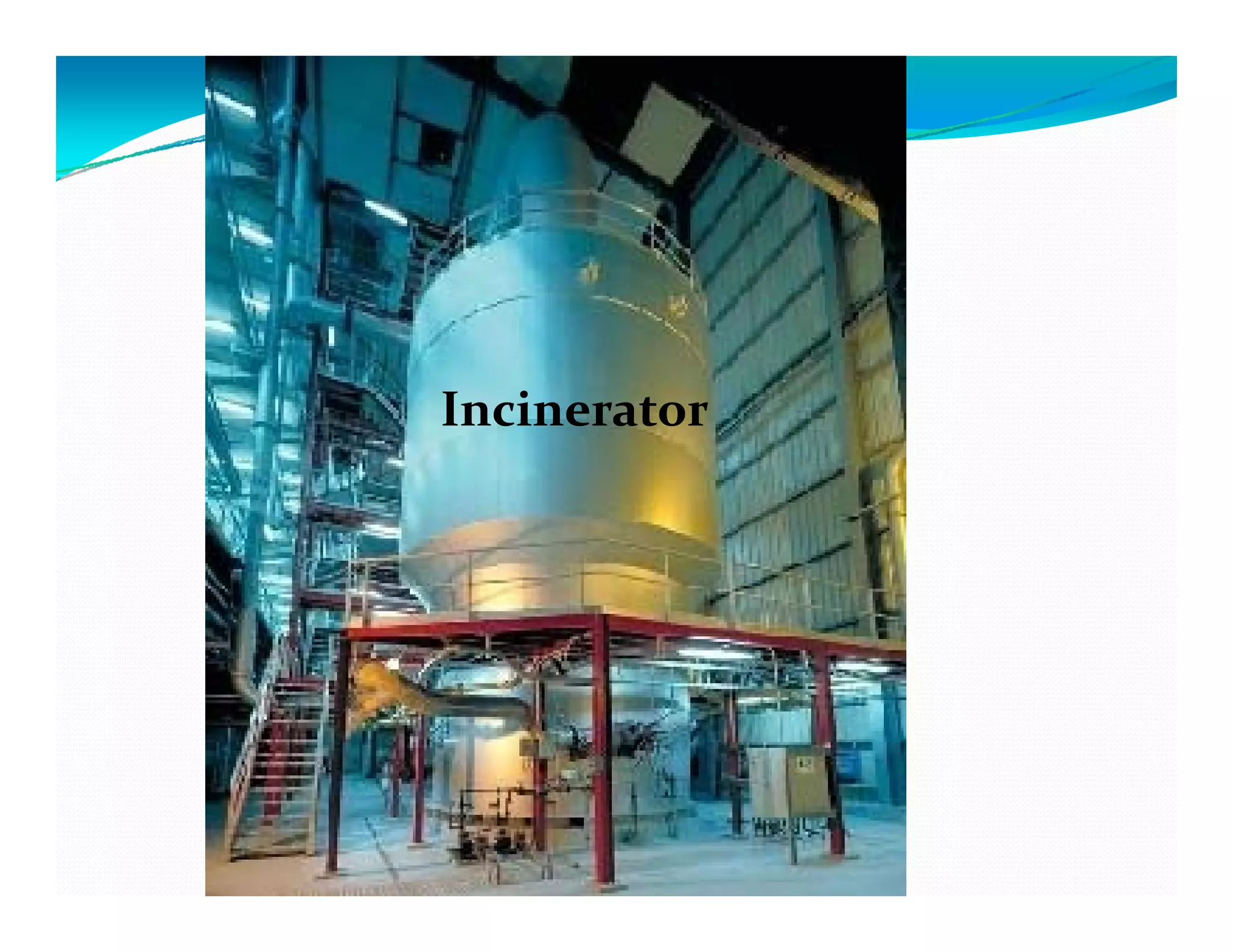
6. Incineration
Combustion of sludge
Temp @ 650oC to 750oC  
Residual ash is send to landfills
IncineratorIncinerator
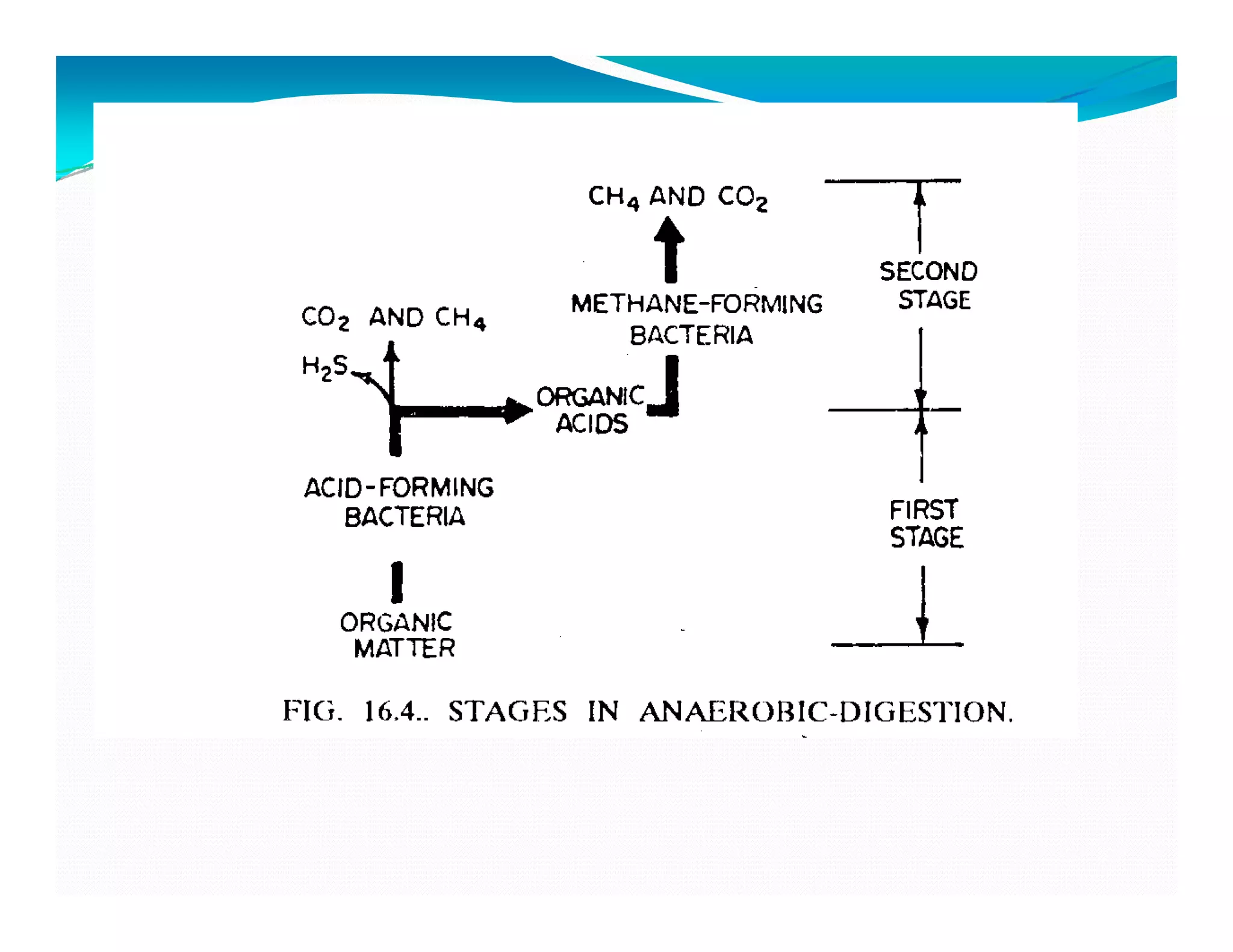
B] Anaerobic Digestion
Consists of decomposition of 
sludge from settling tankssludge from settling tanks.
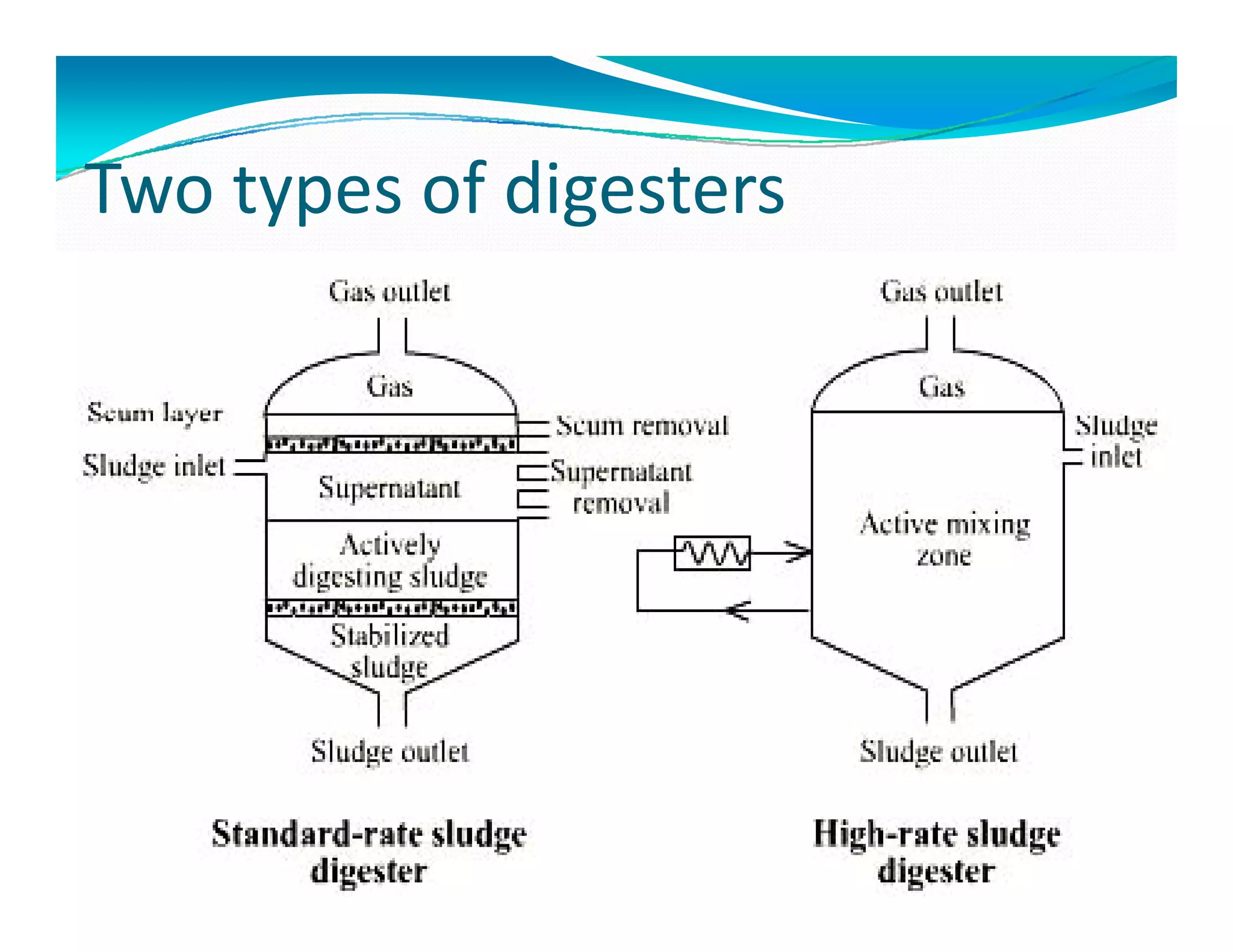
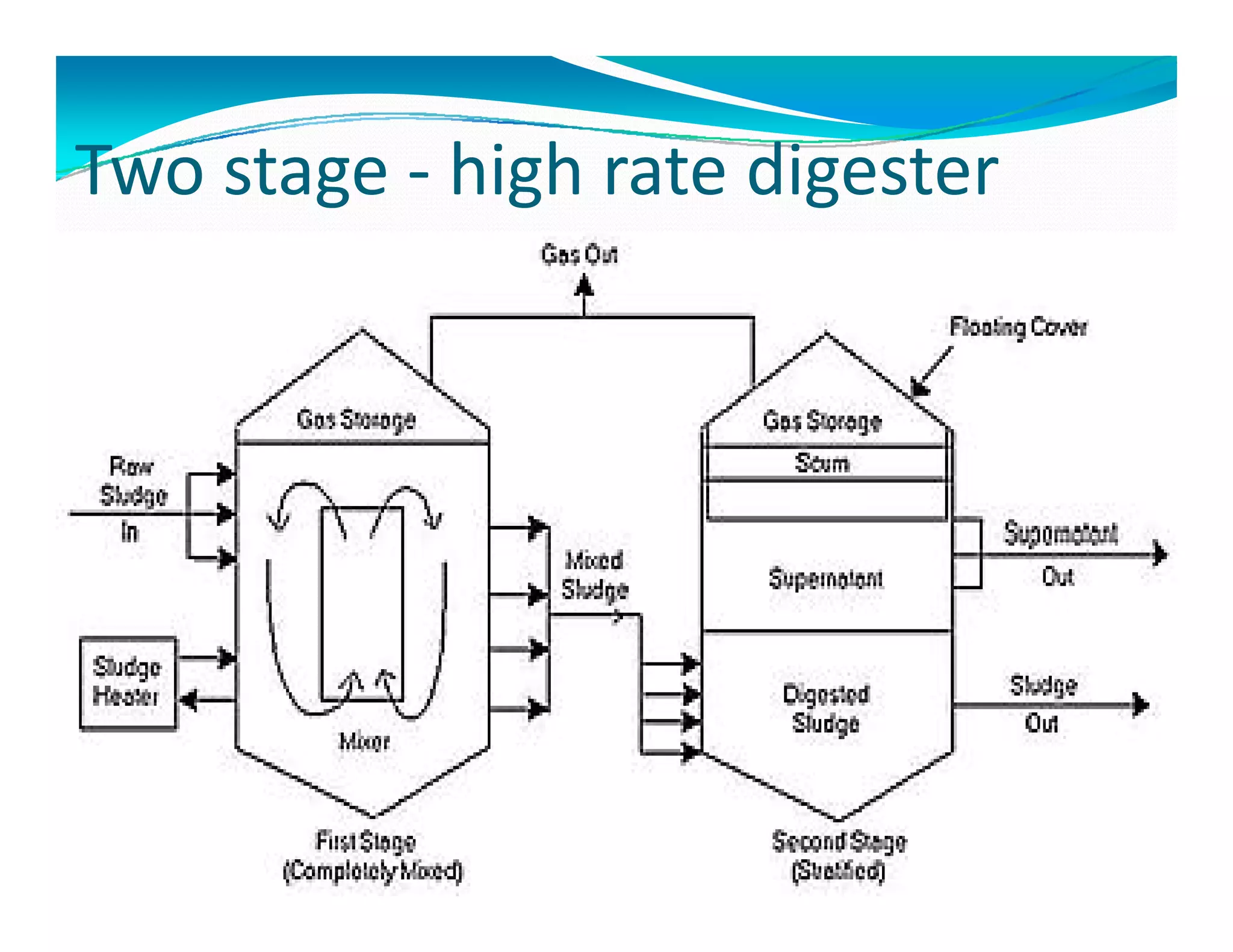
Two types of digestersTwo types of digesters
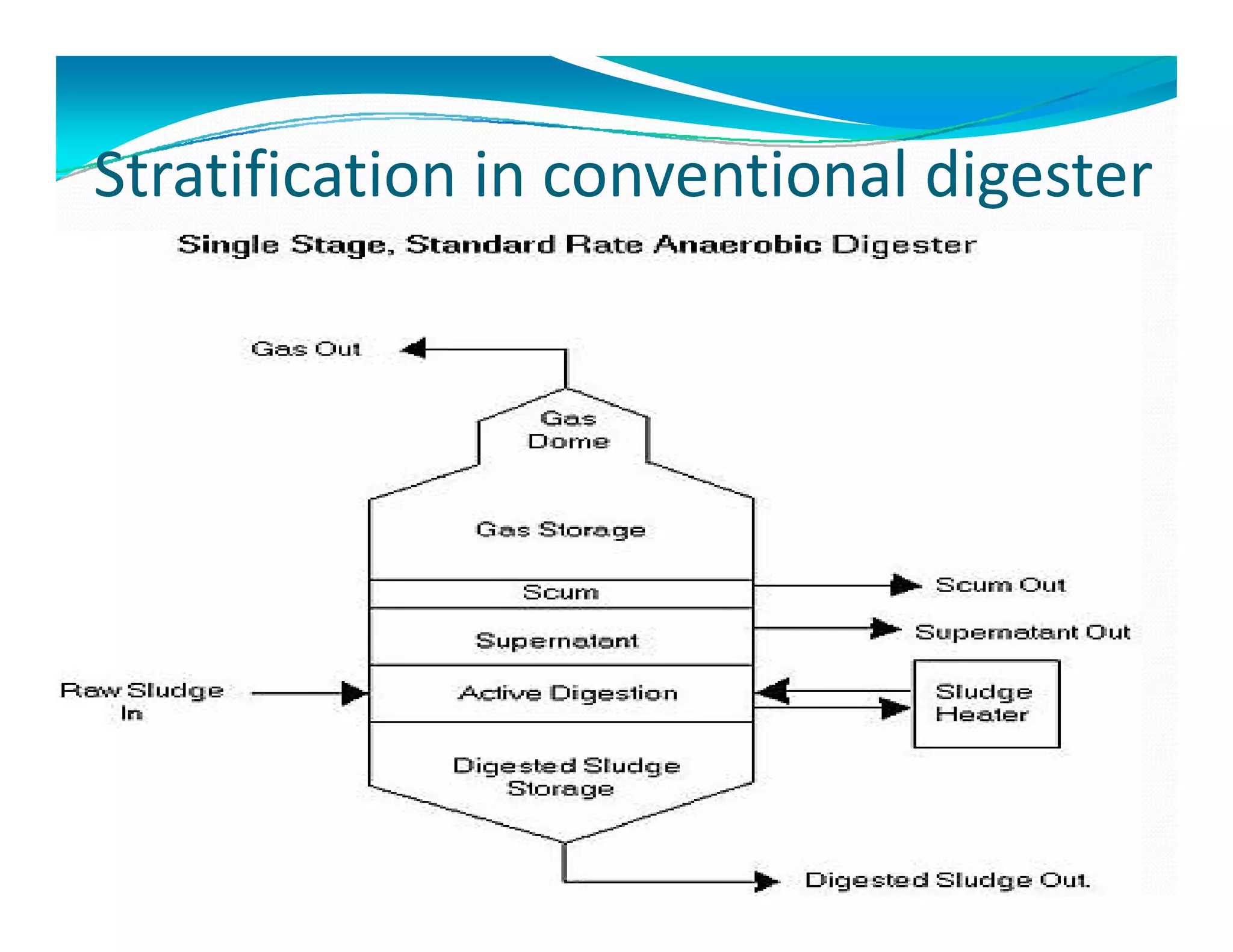
i]  Standard rate or conventional
Ii] High rate digester
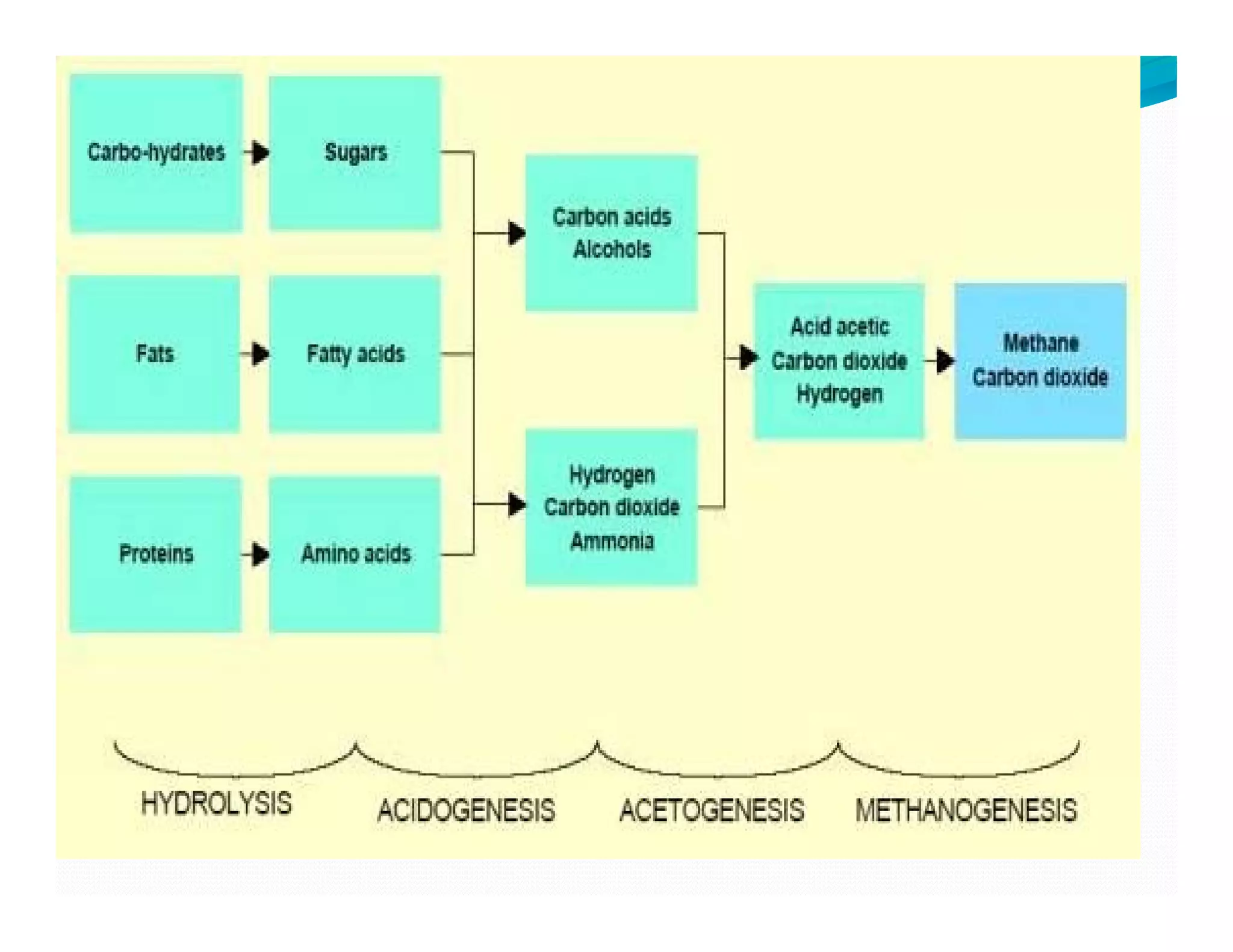
The process of digestion 
The process has now been described by the 
following four steps: g p
Hydrolysis: large polymers are broken 
d  b    down by enzymes. 
Fermentation: Acidogenic 
fermentations are most important, 
acetate is the main end product. Volatile acetate is the main end product. Volatile 
fatty acids are also produced along with 
carbon dio ide and h drogen  carbon dioxide and hydrogen. 
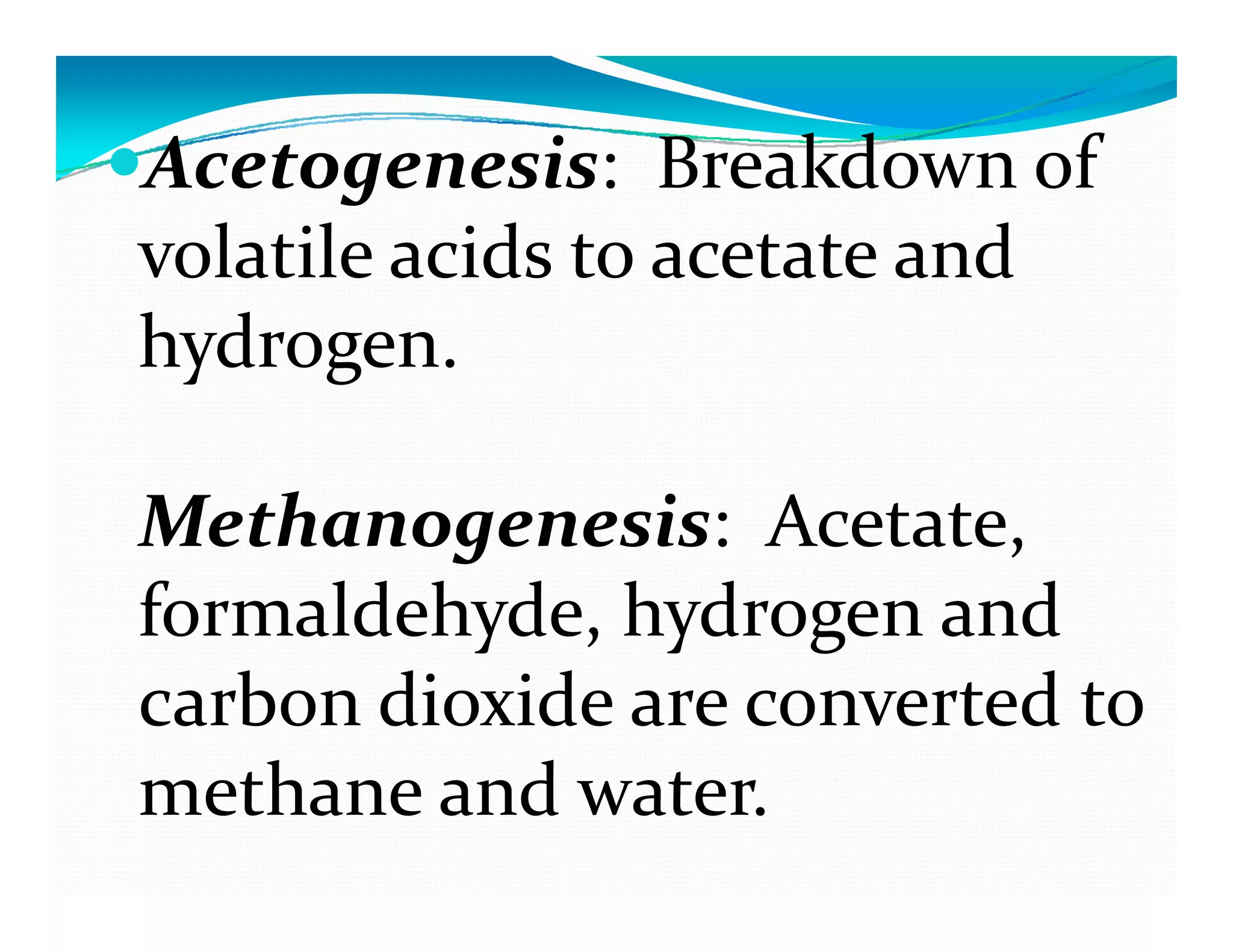
Acetogenesis: Breakdown of Acetogenesis: Breakdown of 
volatile acids to acetate and 
hydrogen. 
Methanogenesis: Acetate  Methanogenesis: Acetate, 
formaldehyde, hydrogen and 
carbon dioxide are converted to 
th   d  t  methane and water. 
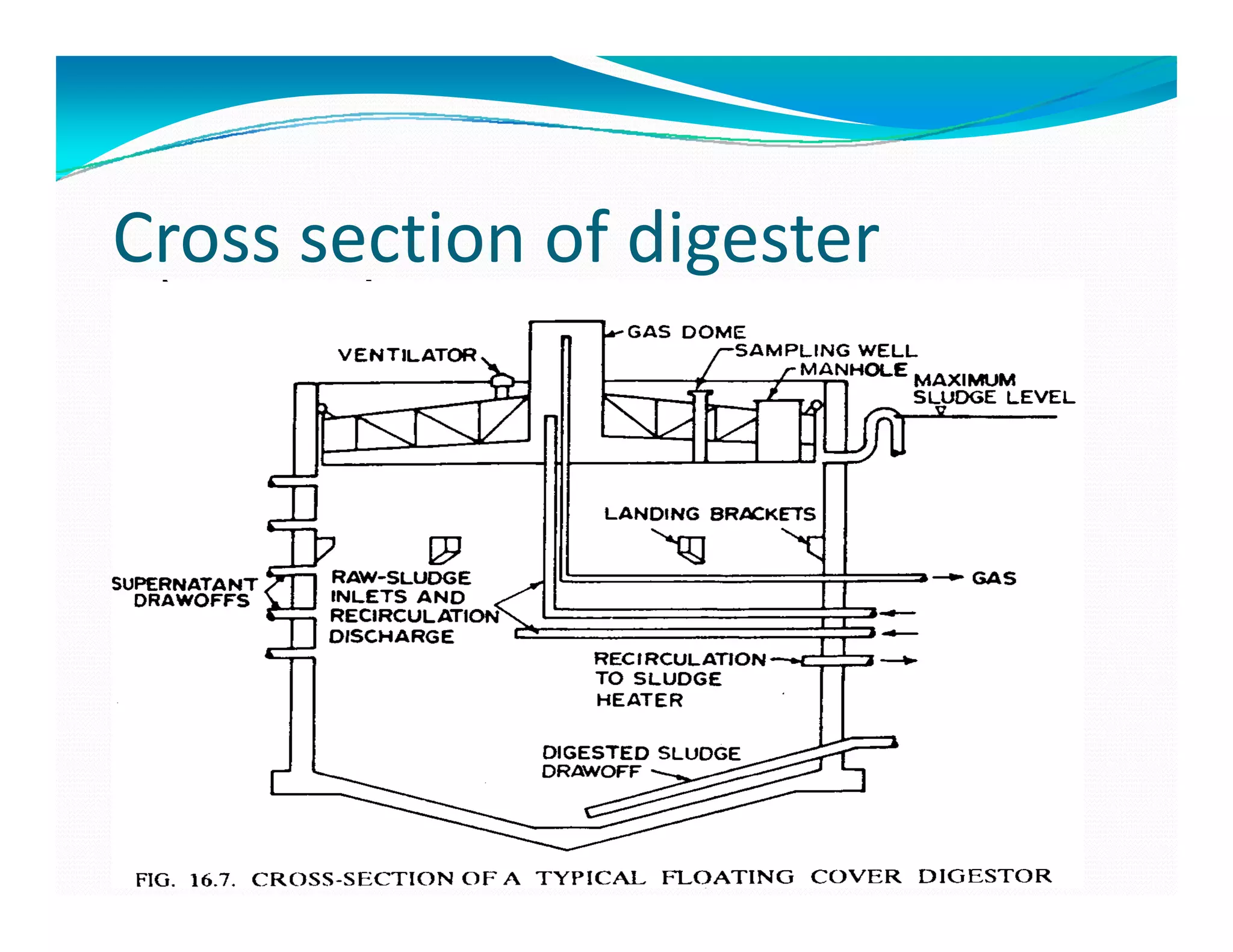
Cross section of digester
Anaerobic Anaerobic 
digesters
A bi  Anaerobic 
digester
Stratification in conventional digesterStratification in conventional digester
T t f di tTwo types of digesters
Two stage ‐ high rate digesterTwo stage ‐ high rate digester
Sludge drying Sludge drying 
beds
Sludge drying 
beds
C] DISPOSAL OF DIGESTED SLUDGE
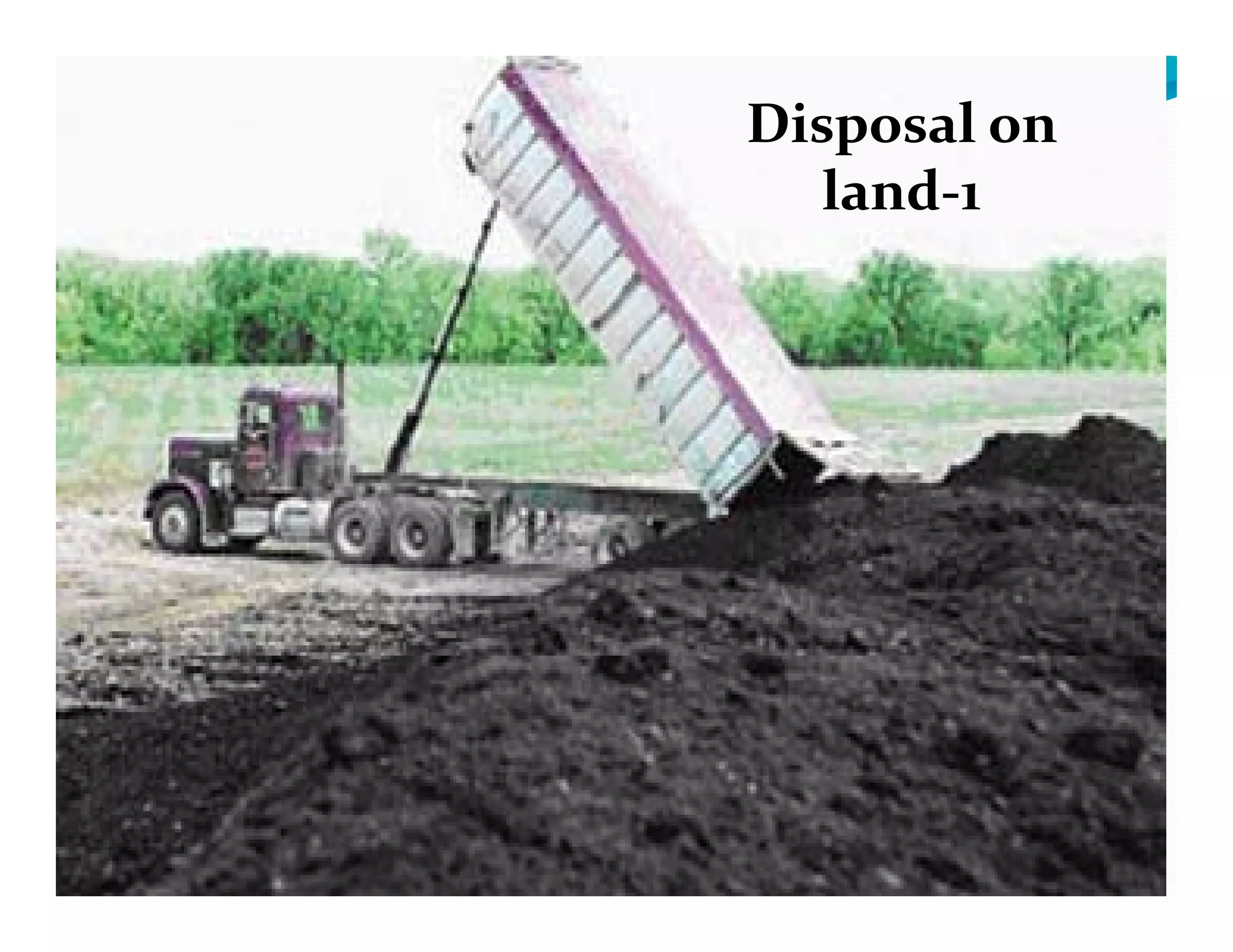
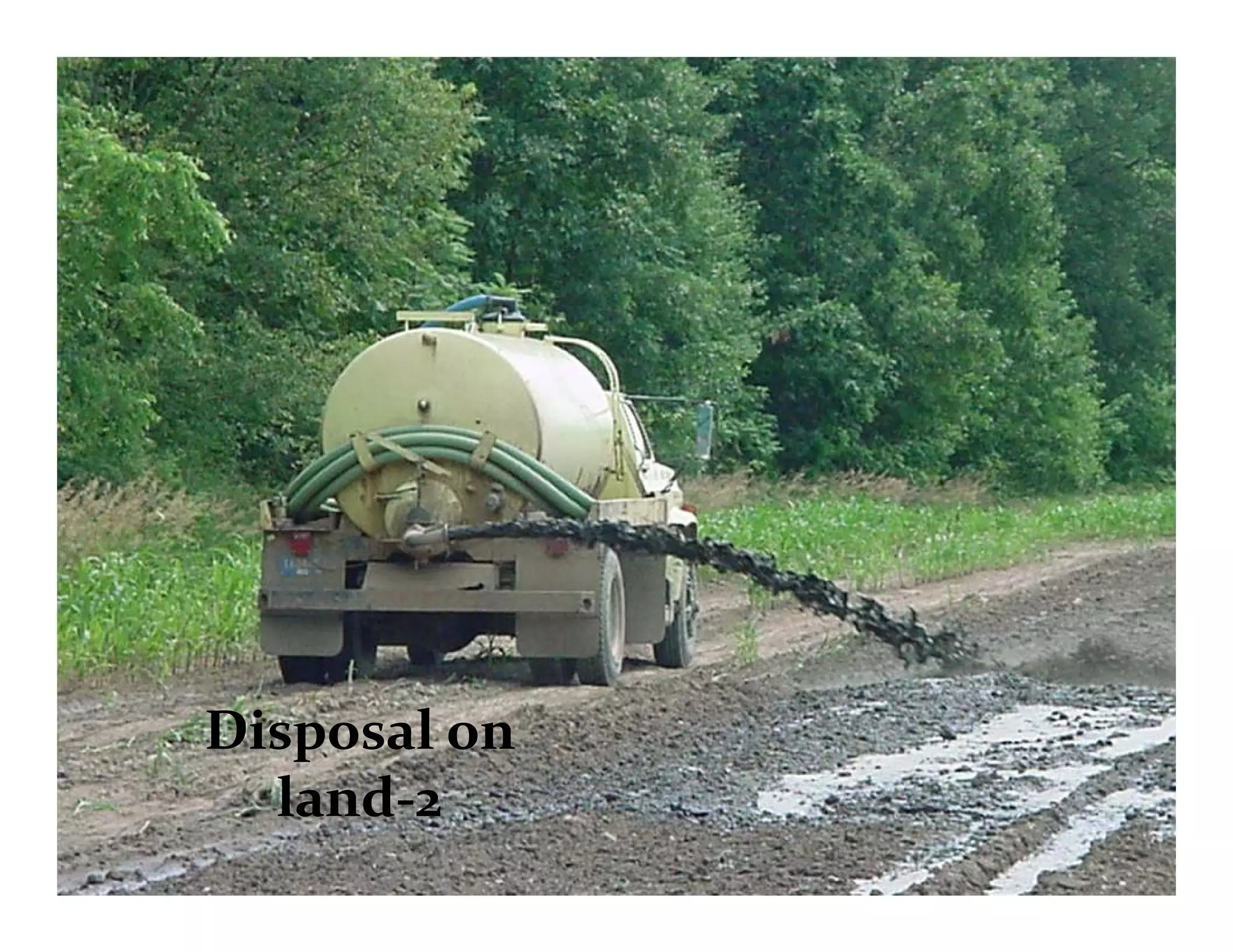
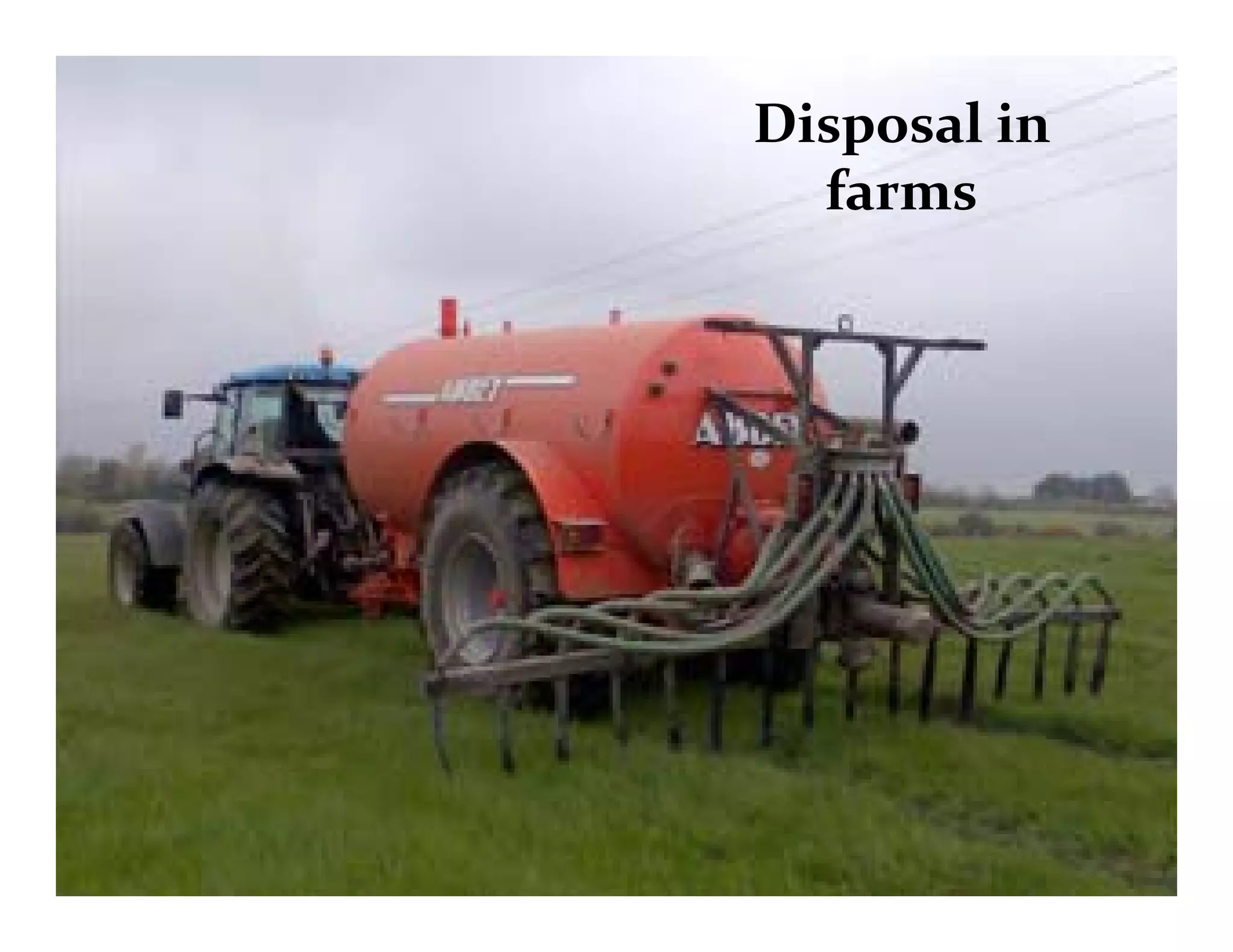
Spreading on farm land
Dumping ( in abandoned quarries)Dumping ( in abandoned quarries)
Land filling ( Sanitary)
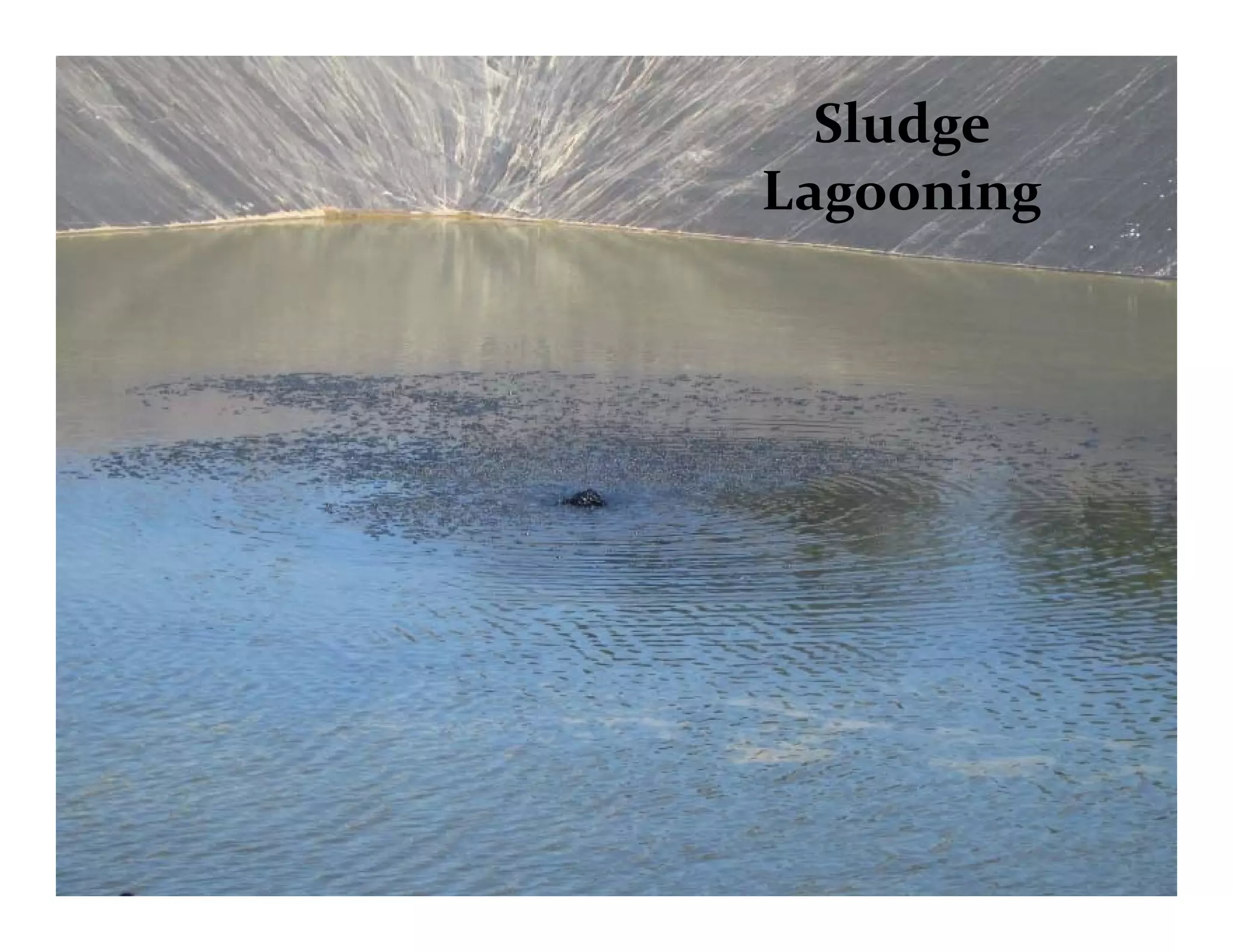
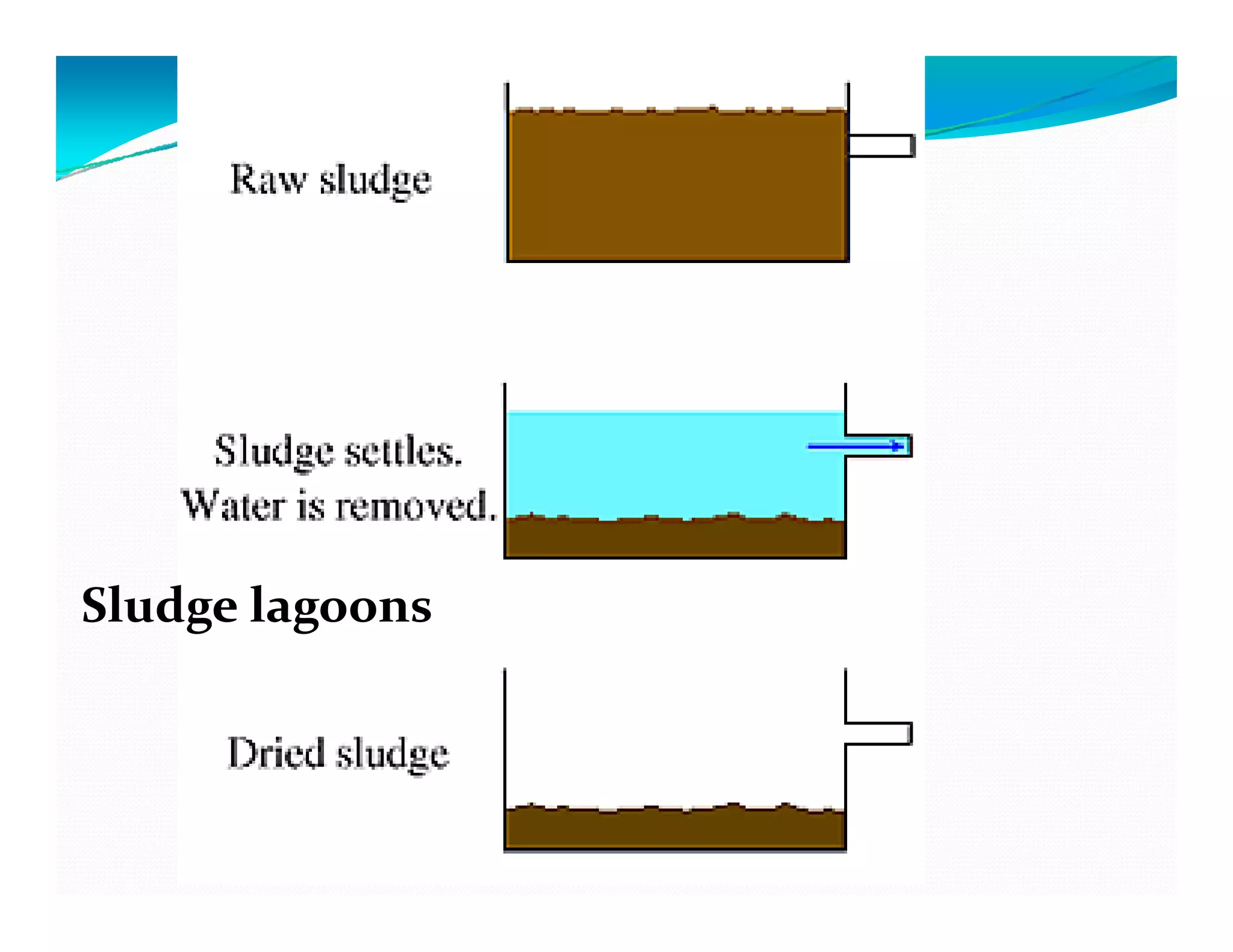
Sl d  l iSludge lagooning
Compostingp g
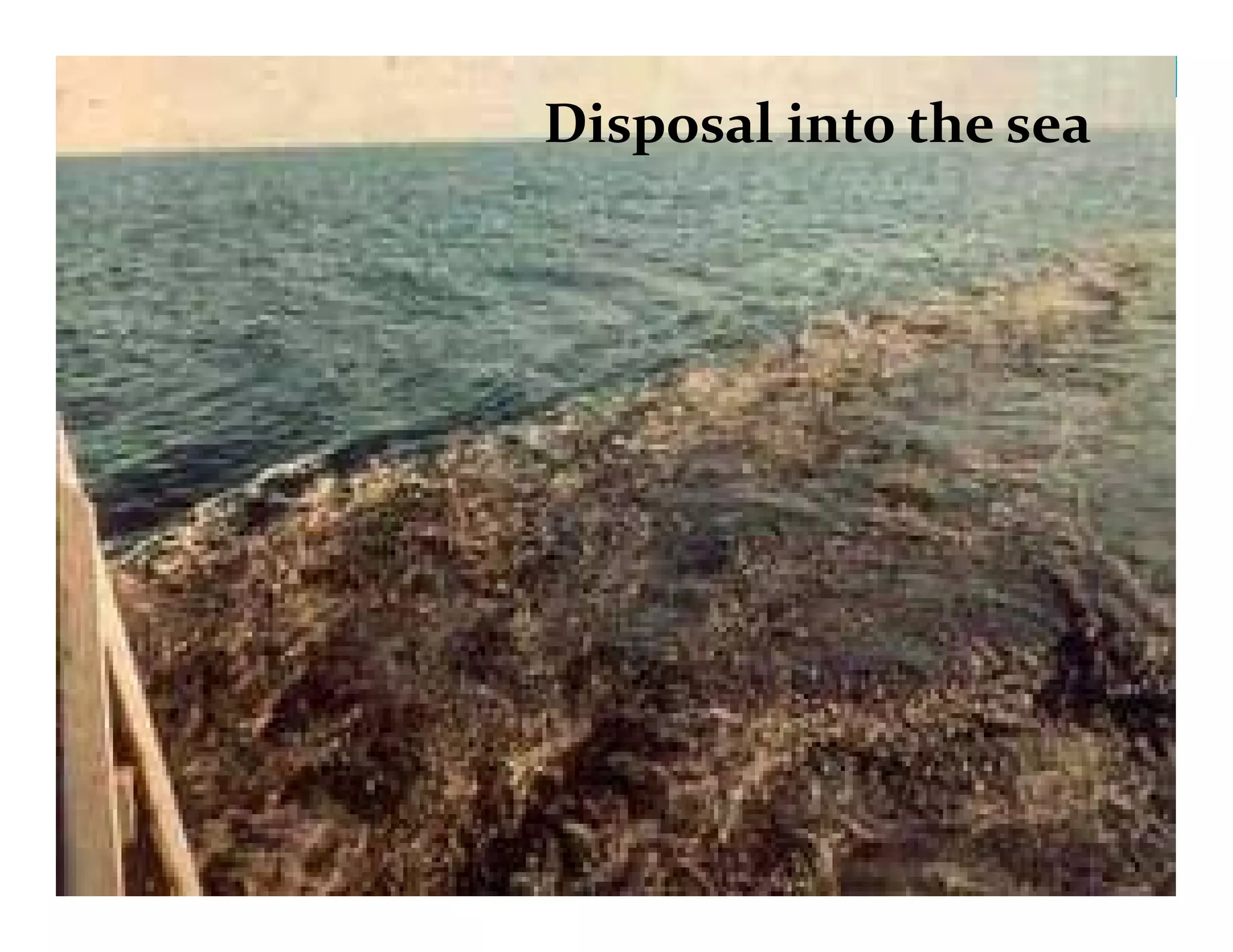
Disposing in Inland water bodies or 
Sea  Sea. 
Disposal on 
l dland‐1
Disposal on 
l dland‐2
Disposal in 
ffarms
Disposal into the sea
Sludge 
L iLagooning
Sludge lagoons
What is sludge digestion? Explain anaerobic digestion. (Nov 2010, 8
marks)
Write short note onWrite short note on
1. Anaerobic digestion process. (Nov 2009, 6 marks)
2. Sludge drying beds (May 2008, 6 marks)
Explain different methods of sludge disposal. (May 2009, 8
marks)
E l i l bi di i h k h (M 2008 6Explain low rate anaerobic digester with a neat sketch. (May 2008, 6
marks)
Enumerate the methods of sludge dewatering. Explain any one in detail.
(May 2008, 6
marks)
Describe anaerobic sludge digester with neat sketch. Also explain various stages ofDescribe anaerobic sludge digester with neat sketch. Also explain various stages of
anaerobic digestion of sludge. (May 2008, 8
marks)
St t bj ti f l d t t t E t th th d f l d di lState objectives of sludge treatment. Enumerate the methods of sludge disposal.
(May 2007,5 marks
)
Sludge management and Sludge digesters

Sludge management and Sludge digesters