L-23
Sugar IndustrySugar Industry
Industrial Waste Treatment
Introduction
• Sugar can be manufactured from
- Sugarcane in countries like Cuba,
Jamaica and IndiaJamaica and India
- Beetroots
• In India sugar factories operate
for about 4 to 8 months after the
harvesting of sugar cane.
• Sugar Industry in India is the second
largest agro-based industry in the
country next to cotton textiles.
• The Indian Sugar Industry is playing
a pivotal role in rural development,
supporting over about 50 million
sugarcane farmers.
Manufacturing flow-sheet
Manufacturing Process
General Characteristics of
Combined waste
Characteristics Mill
house
waste
Filter cloth
washing
Condenser
water
Boiler
house and
floor
washings
Combined
waste
Rate of
flow
(Lit/tonne
of sugar
crushed)
730 360 1640 230 ---
crushed)
pH 6.7 9.5 --- 7.2 4.6-7.1
COD --- --- --- --- 600-
4380
BOD --- --- --- --- 300-
2000
TS mg/lit 1760 6970 --- 5130 870-
3500
TVS mg/lit --- --- --- --- 400-
2200
TSS 910 4000 --- 120 220-800
Total
nitrogen
--- --- --- --- 10-40
nitrogen
COD/BOD
ratio
--- --- --- --- 1.3-2.0
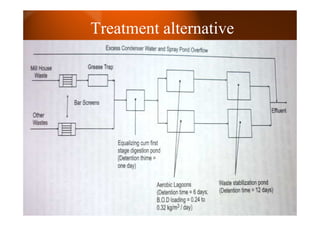
Treatment alternatives
• Volume of waste can be reduced by
adopting in house measures (good
house keeping)house keeping)
• Floors can be dry washed instead of
wet washing.
• Organic load can be reduced by
proper control of operations
• The reasonable COD/BOD ratio indicate
the waste is amenable to biological
treatment
• TF and ASP are not much efficient for• TF and ASP are not much efficient for
sugar industry molasses. (efficiency of
51% is reported with TF and ASP
together).
• Anaerobic treatment using lagoons and
digesters is more effective and economical.
Treatment alternative
Solid wastes
• Bagasse :- can be used in boilers
• Press mud: - can be used for
composting with bagasse andcomposting with bagasse and
Spent wash (liquid waste from
distillery)
Objective Questions
1. Press mud is generated during ________
process.
2. pH of sugar mill waste is ___ to ____.
3. BOD of molasses is in the range of ____
to _____.
4. Total nitrogen for sugar mill waste is in
the range of __________.
5. Sugar industry is ______ largest sector in
India.
Theory Questions
Q1. Draw a neat flow sheet of sugar
industry. Discuss processes in brief and
clearly mention types and sources of
wastes generated.wastes generated.
Q2. Give general characteristics of
molasses.
Q3. Discuss treatment alternatives for sugar
mill waste.

L sugar industry

  • 1.
  • 2.
    Introduction • Sugar canbe manufactured from - Sugarcane in countries like Cuba, Jamaica and IndiaJamaica and India - Beetroots • In India sugar factories operate for about 4 to 8 months after the harvesting of sugar cane.
  • 3.
    • Sugar Industryin India is the second largest agro-based industry in the country next to cotton textiles. • The Indian Sugar Industry is playing a pivotal role in rural development, supporting over about 50 million sugarcane farmers.
  • 6.
  • 8.
  • 11.
  • 12.
    Characteristics Mill house waste Filter cloth washing Condenser water Boiler houseand floor washings Combined waste Rate of flow (Lit/tonne of sugar crushed) 730 360 1640 230 --- crushed) pH 6.7 9.5 --- 7.2 4.6-7.1 COD --- --- --- --- 600- 4380 BOD --- --- --- --- 300- 2000
  • 13.
    TS mg/lit 17606970 --- 5130 870- 3500 TVS mg/lit --- --- --- --- 400- 2200 TSS 910 4000 --- 120 220-800 Total nitrogen --- --- --- --- 10-40 nitrogen COD/BOD ratio --- --- --- --- 1.3-2.0
  • 14.
    Treatment alternatives • Volumeof waste can be reduced by adopting in house measures (good house keeping)house keeping) • Floors can be dry washed instead of wet washing. • Organic load can be reduced by proper control of operations
  • 15.
    • The reasonableCOD/BOD ratio indicate the waste is amenable to biological treatment • TF and ASP are not much efficient for• TF and ASP are not much efficient for sugar industry molasses. (efficiency of 51% is reported with TF and ASP together). • Anaerobic treatment using lagoons and digesters is more effective and economical.
  • 16.
  • 17.
    Solid wastes • Bagasse:- can be used in boilers • Press mud: - can be used for composting with bagasse andcomposting with bagasse and Spent wash (liquid waste from distillery)
  • 18.
    Objective Questions 1. Pressmud is generated during ________ process. 2. pH of sugar mill waste is ___ to ____. 3. BOD of molasses is in the range of ____ to _____. 4. Total nitrogen for sugar mill waste is in the range of __________. 5. Sugar industry is ______ largest sector in India.
  • 19.
    Theory Questions Q1. Drawa neat flow sheet of sugar industry. Discuss processes in brief and clearly mention types and sources of wastes generated.wastes generated. Q2. Give general characteristics of molasses. Q3. Discuss treatment alternatives for sugar mill waste.