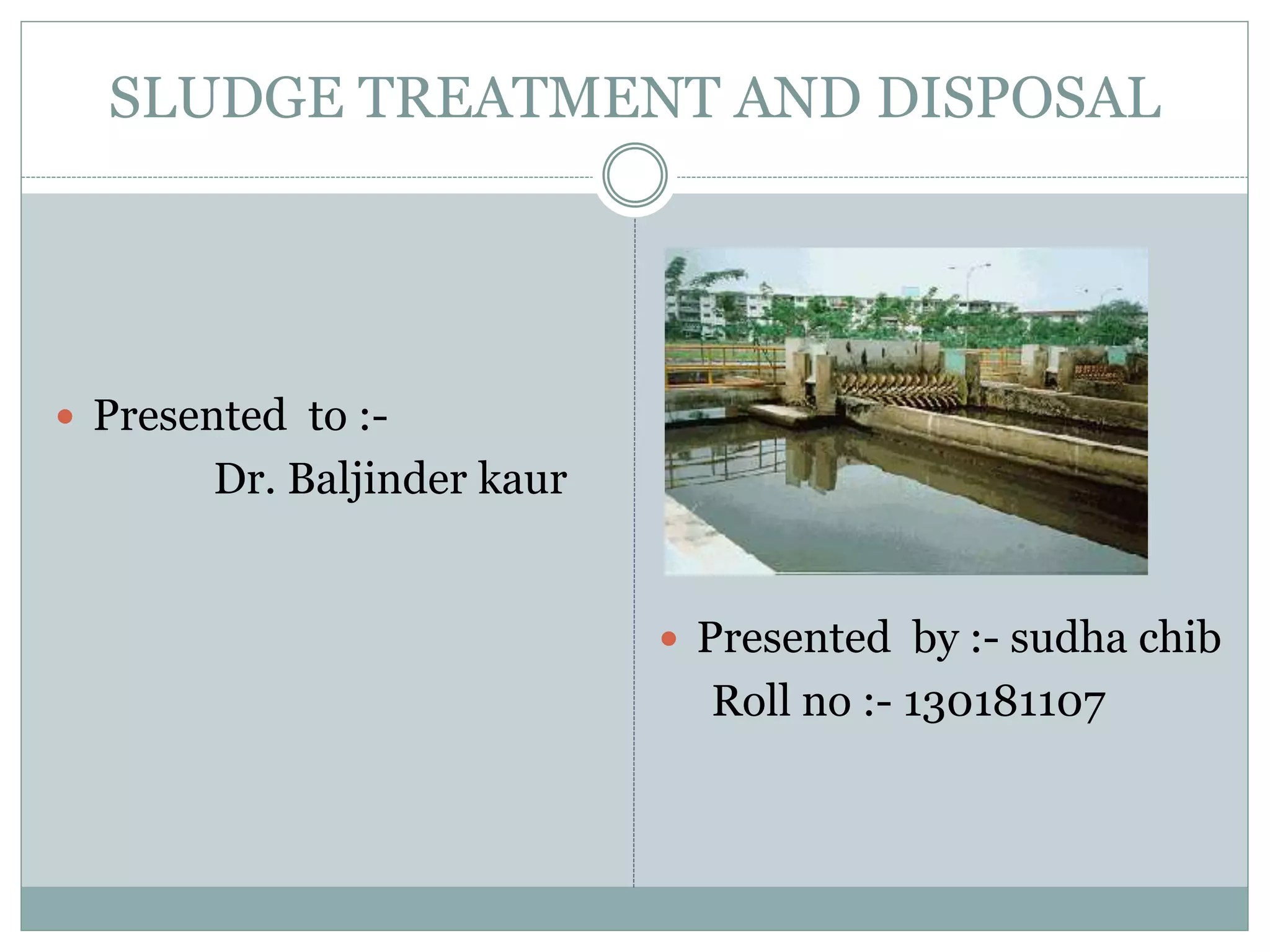
SLUDGE TREATMENT AND DISPOSAL 
 Presented to :- 
Dr. Baljinder kaur 
 Presented by :- sudha chib 
Roll no :- 130181107
CONTENTS 
 SLUDGE CHARACTERISTICS 
 SLUDGE THICKENING 
 SLUDGE DIGESTION 
 SLUDGE DISPOSAL
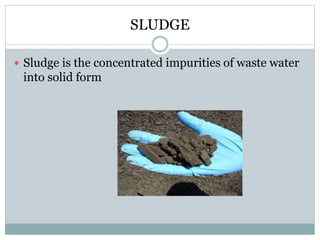
SLUDGE 
 Sludge is the concentrated impurities of waste water 
into solid form
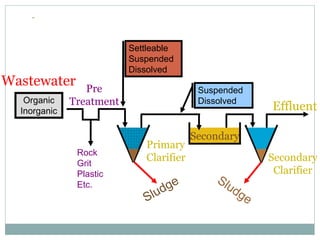
Secondary 
Wastewater 
Organic 
Inorganic 
Pre 
Treatment 
Rock 
Grit 
Plastic 
Etc. 
Settleable 
Suspended 
Dissolved 
Primary 
Clarifier 
Suspended 
Dissolved 
Effluent 
Secondary 
Clarifier
SLUDGE CHARACTERISTICS 
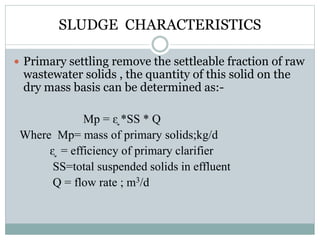
 Primary settling remove the settleable fraction of raw 
wastewater solids , the quantity of this solid on the 
dry mass basis can be determined as:- 
Mp = ᶓ *SS * Q 
Where Mp= mass of primary solids;kg/d 
ᶓ = efficiency of primary clarifier 
SS=total suspended solids in effluent 
Q = flow rate ; m3/d
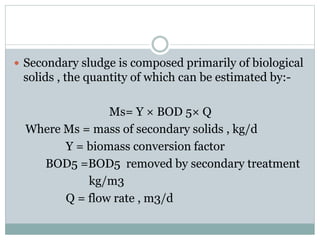
 Secondary sludge is composed primarily of biological 
solids , the quantity of which can be estimated by:- 
Ms= Y × BOD 5× Q 
Where Ms = mass of secondary solids , kg/d 
Y = biomass conversion factor 
BOD5 =BOD5 removed by secondary treatment 
kg/m3 
Q = flow rate , m3/d
CHARACTERISTICS 
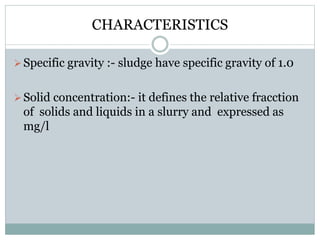
 Specific gravity :- sludge have specific gravity of 1.0 
 Solid concentration:- it defines the relative fracction 
of solids and liquids in a slurry and expressed as 
mg/l
SLUDGE THICKENING 
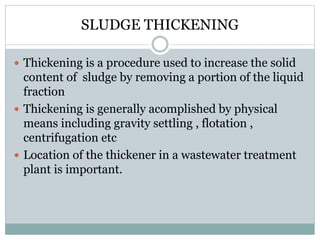
 Thickening is a procedure used to increase the solid 
content of sludge by removing a portion of the liquid 
fraction 
 Thickening is generally acomplished by physical 
means including gravity settling , flotation , 
centrifugation etc 
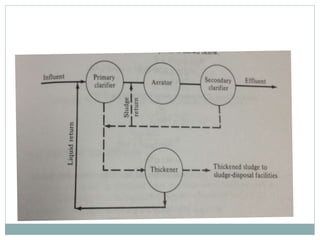
 Location of the thickener in a wastewater treatment 
plant is important.
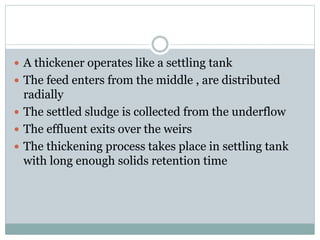
 A thickener operates like a settling tank 
 The feed enters from the middle , are distributed 
radially 
 The settled sludge is collected from the underflow 
 The effluent exits over the weirs 
 The thickening process takes place in settling tank 
with long enough solids retention time
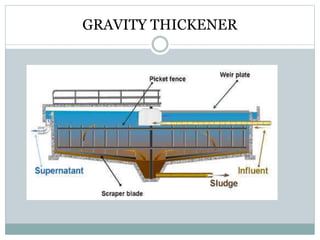
GRAVITY THICKENER
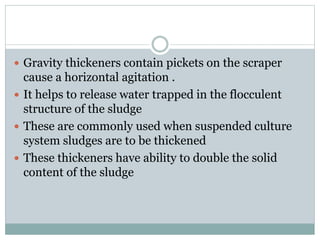
 Gravity thickeners contain pickets on the scraper 
cause a horizontal agitation . 
 It helps to release water trapped in the flocculent 
structure of the sludge 
 These are commonly used when suspended culture 
system sludges are to be thickened 
 These thickeners have ability to double the solid 
content of the sludge
SLUDGE DIGESTION 
 Sludge digestion serves both to reduce the volume of 
the thickened sludge still further and to render the 
remaining solids and relatively reduce pathogen 
 These goals can be achieved by :- 
Anaerobic digestion 
Aerobic digestion
ANAEROBIC DIGESTION 
 Anaerobic digestion is the most common method for 
dealing with the waste water containing primary 
sludge 
 The principle function is to convert as much of the 
sludge as possible to end products such as liquid and 
gases 
 Very less residual biomass as possible is produced
 The anaerobic sludge digestion often divides the 
organisms into broad groups :- 
 Acid formers 
 Methane formers
ACID FORMERS 
 The acid formers consist of facultative and anaerobic 
bacteria and include organisms that solubilize the 
organic solids through hydrolysis 
 The soluble products are then fermented to acids and 
alcohols of low molecular weight
METHANE FORMERS 
 Methane formers consist of strict anaerobic bacteria 
 Acids and alcohols along with hydrogen and carbon 
dioxide are converted to methane
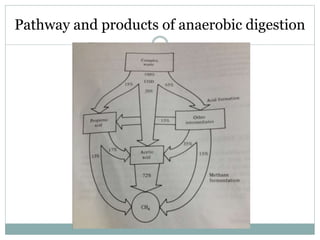
Pathway and products of anaerobic digestion
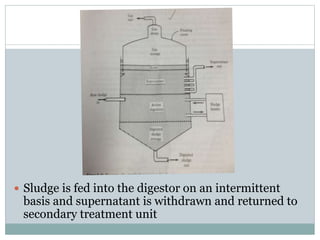
 Sludge is fed into the digestor on an intermittent 
basis and supernatant is withdrawn and returned to 
secondary treatment unit
 A typical standard rate anaerobic digester consisting 
of a single – stage operation 
 The conical bottom facilitates sludge withdrawal 
 Floating cover accommodate volume change due to 
sludge addition or withdrawl 
 Sludge separates in the reactor 
 Although some mixing occur in the zone of active 
digestion and in the supernatant
HIGH RATE DIGESTERS 
 These are more efficient 
 Require less volume 
 The contents are mechanicaly mixed to ensure better 
contact between the organics and the 
microorganisms 
 Unit is heated to increase the metabolic rate of the 
microorganisms 
 Optimum tempurature is around 35̊ C
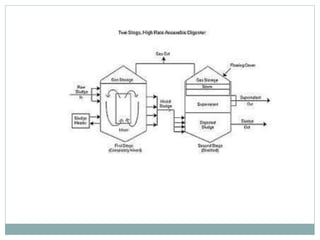
 Little gas is generated in the second stage 
 But the second stage is covered and is equipped for 
gas recovery 
 The second stage reactor is not heated
ADVANTAGES 
 Waste stabilisation 
 Odour reduction 
 Scalable technology 
 Low capital cost 
 Fuel based renewable/pack generation
DISADVANTAGES 
 No useful byproduct 
 Required expertise 
 Affected by changes in loading and conditions
AEROBIC DIGESTION 
 This process is essentially a continuation of the 
aeration process , with the volume being reduced by 
thickening in the secondary clarifier and sludge 
thickener 
 It is an endogenous respiration process
ADVANTAGES 
 The process is easy to control 
 It usually has lower ammonia concentration 
 Explosive gases are not produced
DISADVANTAGES 
 Aerobic digestion is energy consumptive 
 Temperature dependent 
 Aerobic digestion does not produce energy
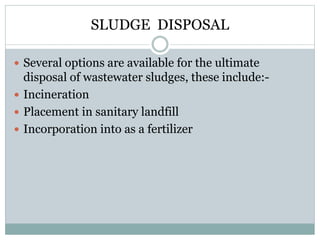
SLUDGE DISPOSAL 
 Several options are available for the ultimate 
disposal of wastewater sludges, these include:- 
 Incineration 
 Placement in sanitary landfill 
 Incorporation into as a fertilizer
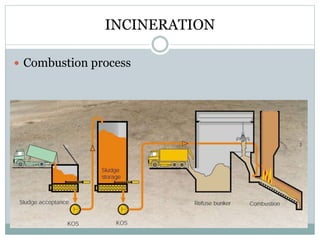
INCINERATION 
 Combustion process
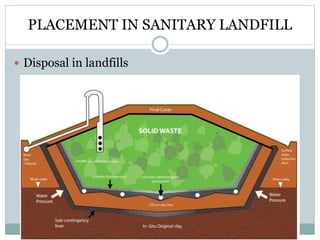
PLACEMENT IN SANITARY LANDFILL 
 Disposal in landfills
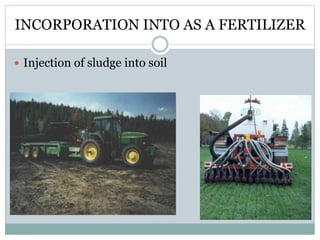
INCORPORATION INTO AS A FERTILIZER 
 Injection of sludge into soil
REFERENCES 
 Environmental engineering by Howard S .Peavy 
 mimoza.marmara.edu.tr/~orhan.gokyay/enve425/ch2.p 
df 
 www.eea.europa.eu/publications/GH-10-97-106- 
EN-C/download 
 http://www.lenntech.com/library/sludge/drying/sludge 
drying.htm 
 www.maths.tcd.ie/~jlennon/miniprojects/biomass.doc 
 http://www.wrights-trainingsite.com/aerodigestion.html

Env sudha

  • 1.
    SLUDGE TREATMENT ANDDISPOSAL  Presented to :- Dr. Baljinder kaur  Presented by :- sudha chib Roll no :- 130181107
  • 2.
    CONTENTS  SLUDGECHARACTERISTICS  SLUDGE THICKENING  SLUDGE DIGESTION  SLUDGE DISPOSAL
  • 3.
    SLUDGE  Sludgeis the concentrated impurities of waste water into solid form
  • 4.
    Secondary Wastewater Organic Inorganic Pre Treatment Rock Grit Plastic Etc. Settleable Suspended Dissolved Primary Clarifier Suspended Dissolved Effluent Secondary Clarifier
  • 5.
    SLUDGE CHARACTERISTICS Primary settling remove the settleable fraction of raw wastewater solids , the quantity of this solid on the dry mass basis can be determined as:- Mp = ᶓ *SS * Q Where Mp= mass of primary solids;kg/d ᶓ = efficiency of primary clarifier SS=total suspended solids in effluent Q = flow rate ; m3/d
  • 6.
     Secondary sludgeis composed primarily of biological solids , the quantity of which can be estimated by:- Ms= Y × BOD 5× Q Where Ms = mass of secondary solids , kg/d Y = biomass conversion factor BOD5 =BOD5 removed by secondary treatment kg/m3 Q = flow rate , m3/d
  • 7.
    CHARACTERISTICS  Specificgravity :- sludge have specific gravity of 1.0  Solid concentration:- it defines the relative fracction of solids and liquids in a slurry and expressed as mg/l
  • 8.
    SLUDGE THICKENING Thickening is a procedure used to increase the solid content of sludge by removing a portion of the liquid fraction  Thickening is generally acomplished by physical means including gravity settling , flotation , centrifugation etc  Location of the thickener in a wastewater treatment plant is important.
  • 9.
     A thickeneroperates like a settling tank  The feed enters from the middle , are distributed radially  The settled sludge is collected from the underflow  The effluent exits over the weirs  The thickening process takes place in settling tank with long enough solids retention time
  • 10.
  • 11.
     Gravity thickenerscontain pickets on the scraper cause a horizontal agitation .  It helps to release water trapped in the flocculent structure of the sludge  These are commonly used when suspended culture system sludges are to be thickened  These thickeners have ability to double the solid content of the sludge
  • 13.
    SLUDGE DIGESTION Sludge digestion serves both to reduce the volume of the thickened sludge still further and to render the remaining solids and relatively reduce pathogen  These goals can be achieved by :- Anaerobic digestion Aerobic digestion
  • 14.
    ANAEROBIC DIGESTION Anaerobic digestion is the most common method for dealing with the waste water containing primary sludge  The principle function is to convert as much of the sludge as possible to end products such as liquid and gases  Very less residual biomass as possible is produced
  • 15.
     The anaerobicsludge digestion often divides the organisms into broad groups :-  Acid formers  Methane formers
  • 16.
    ACID FORMERS The acid formers consist of facultative and anaerobic bacteria and include organisms that solubilize the organic solids through hydrolysis  The soluble products are then fermented to acids and alcohols of low molecular weight
  • 17.
    METHANE FORMERS Methane formers consist of strict anaerobic bacteria  Acids and alcohols along with hydrogen and carbon dioxide are converted to methane
  • 18.
    Pathway and productsof anaerobic digestion
  • 19.
     Sludge isfed into the digestor on an intermittent basis and supernatant is withdrawn and returned to secondary treatment unit
  • 20.
     A typicalstandard rate anaerobic digester consisting of a single – stage operation  The conical bottom facilitates sludge withdrawal  Floating cover accommodate volume change due to sludge addition or withdrawl  Sludge separates in the reactor  Although some mixing occur in the zone of active digestion and in the supernatant
  • 21.
    HIGH RATE DIGESTERS  These are more efficient  Require less volume  The contents are mechanicaly mixed to ensure better contact between the organics and the microorganisms  Unit is heated to increase the metabolic rate of the microorganisms  Optimum tempurature is around 35̊ C
  • 22.
     Little gasis generated in the second stage  But the second stage is covered and is equipped for gas recovery  The second stage reactor is not heated
  • 24.
    ADVANTAGES  Wastestabilisation  Odour reduction  Scalable technology  Low capital cost  Fuel based renewable/pack generation
  • 25.
    DISADVANTAGES  Nouseful byproduct  Required expertise  Affected by changes in loading and conditions
  • 26.
    AEROBIC DIGESTION This process is essentially a continuation of the aeration process , with the volume being reduced by thickening in the secondary clarifier and sludge thickener  It is an endogenous respiration process
  • 27.
    ADVANTAGES  Theprocess is easy to control  It usually has lower ammonia concentration  Explosive gases are not produced
  • 28.
    DISADVANTAGES  Aerobicdigestion is energy consumptive  Temperature dependent  Aerobic digestion does not produce energy
  • 29.
    SLUDGE DISPOSAL Several options are available for the ultimate disposal of wastewater sludges, these include:-  Incineration  Placement in sanitary landfill  Incorporation into as a fertilizer
  • 30.
  • 31.
    PLACEMENT IN SANITARYLANDFILL  Disposal in landfills
  • 32.
    INCORPORATION INTO ASA FERTILIZER  Injection of sludge into soil
  • 33.
    REFERENCES  Environmentalengineering by Howard S .Peavy  mimoza.marmara.edu.tr/~orhan.gokyay/enve425/ch2.p df  www.eea.europa.eu/publications/GH-10-97-106- EN-C/download  http://www.lenntech.com/library/sludge/drying/sludge drying.htm  www.maths.tcd.ie/~jlennon/miniprojects/biomass.doc  http://www.wrights-trainingsite.com/aerodigestion.html