UNIVERSITY INSTITUTE OF
ENGINEERING AND
TECHNOLOGY
PRESENTATION ON
SEWAGE
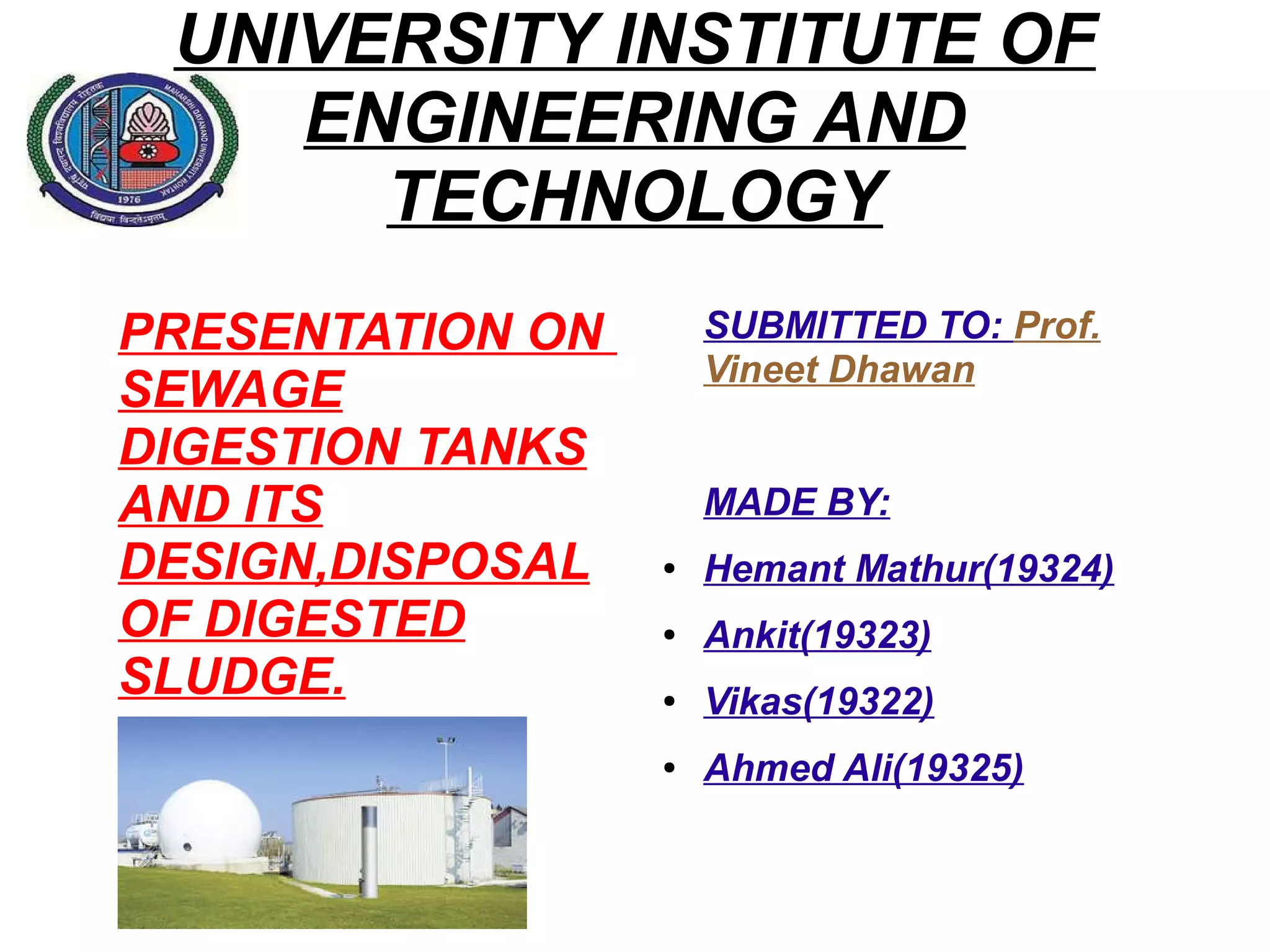
DIGESTION TANKS
AND ITS
DESIGN,DISPOSAL
OF DIGESTED
SLUDGE.
SUBMITTED TO: Prof.
Vineet Dhawan
MADE BY:
● Hemant Mathur(19324)
● Ankit(19323)
● Vikas(19322)
● Ahmed Ali(19325)
INTRODUCTION
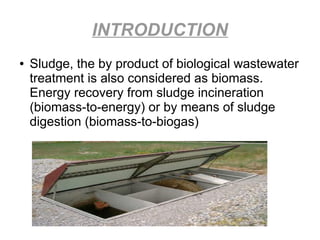
● Sludge, the by product of biological wastewater
treatment is also considered as biomass.
Energy recovery from sludge incineration
(biomass-to-energy) or by means of sludge
digestion (biomass-to-biogas)
OUTLINES:
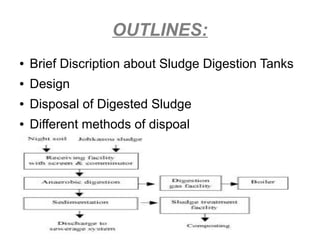
● Brief Discription about Sludge Digestion Tanks
● Design
● Disposal of Digested Sludge
● Different methods of dispoal
DIGESTION OF SLUDGE:
● Waterleau has developed a complete set of
anaerobic reactors for the production of new
energy from bio-effluents and biomass.The
methane can be used to generate heat and
electric power in cogeneration units while
reducing the carbon footprint and greenhouse
emissions of the wastewater treatment plant.
● After sludge digestion, the digested sludge can
be stabalized for landfill or used as fertilizer,
depending on its composition and local
legislation. An alternative is to further
mechanically dewater the sludge.
PROCEDURE OF SLUDGE
DIGESTION
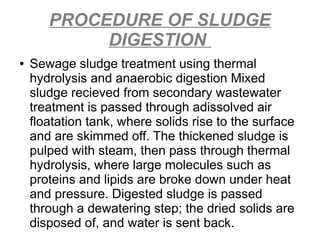
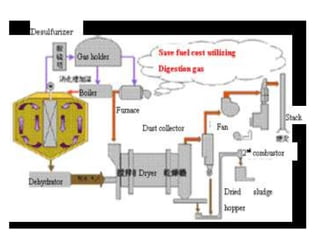
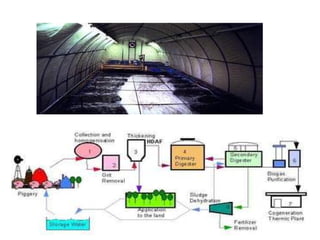
● Sewage sludge treatment using thermal
hydrolysis and anaerobic digestion Mixed
sludge recieved from secondary wastewater
treatment is passed through adissolved air
floatation tank, where solids rise to the surface
and are skimmed off. The thickened sludge is
pulped with steam, then pass through thermal
hydrolysis, where large molecules such as
proteins and lipids are broke down under heat
and pressure. Digested sludge is passed
through a dewatering step; the dried solids are
disposed of, and water is sent back.
DESIGN OF SLUDGE DIGESTION
TANKS
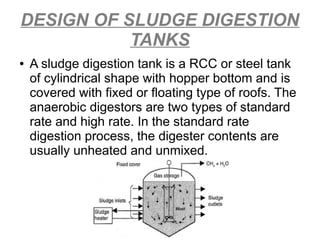
● A sludge digestion tank is a RCC or steel tank
of cylindrical shape with hopper bottom and is
covered with fixed or floating type of roofs. The
anaerobic digestors are two types of standard
rate and high rate. In the standard rate
digestion process, the digester contents are
usually unheated and unmixed.
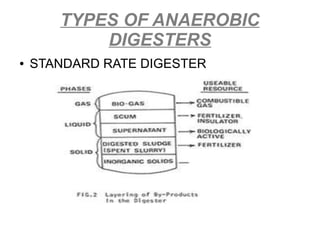
TYPES OF ANAEROBIC
DIGESTERS
● STANDARD RATE DIGESTER
DESIGN DETAILS:
● Generally digesters are designed to treat for a
capacity upto 4MLD.
● Tank sizes are not less thean 6m diameter and
not more than 55m diameter.
● Liquid depth may be be 4.5-6m and not greater
than 9m.
● v=[Vf-2/3(Vf-Vd)]t1+Vdt2
● v=capacity of digester in m3, Vf+volume of fresh sludge m3/d,
Vd=volume of daily digested sludge accumulation in tank m3/d,
t1=digestion time in days, dand t2 are period of digested sludge
storage.
GAS COLLECTION:
The amount of sludge gas produced varies from
0.014 to 0.028 m3 per capita.
● The sludge gas is normally composed of 65%
methane and 30% carbon di oxide and
remaining 5% of nitrogen and other inert
gases, with a calorific value of 5400 to 5850
kcal/m3.
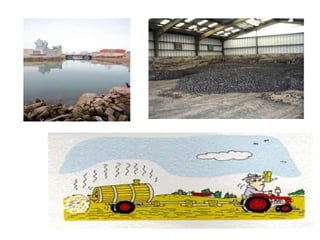
DISPOSAL OF DIGESTED
SLUDGE
● Disposal in Water
● Disposal on Land
● Composting
DISPOSAL IN WATER:
● This is economical but not common method
because it is contigent on the availability of
bodies of water adequate to permit it. At some
seacoast cities, sludge either raw or digested is
pumped to barges and carried to sea to be
dumped in deep water for enough off shore to
provide huge dilution factors and prevent any ill
effects.
● In past few years there has been an increased
problem of pollutional loads,well above safe
standardsaffecting the south shore.
DISPOSAL ON LAND:
● BURIAL
● This method is used for raw sludge, where
unless covered by earth serious odor nuisance
are created. The sludge is run in to trenches
two or three feet wide and about two feet deep
where large areas of land land available ,burial
of raw sludge is probably the most economical
method as it eliminates the cost of sludge
treatment process.It is rarely used method.
FILL
● Use of sludge for fill is confined almost entirely
to digested sludge which can be exposed to the
atmosphere without creating serious or
widespread odor nuisances. The sludge should
be well digested without any appreciable
amount of raw or undigested mixed with it
● Either wet or partially dewatered can be ude fill
low areas.The ash from incinerators is usually
disposed of by using it for fill.If the fill area is
remote the ash should be sufficiently wet to
suppress the dust and transported by truck.
COMPOSTING
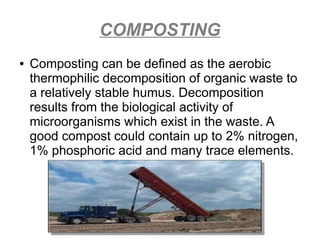
● Composting can be defined as the aerobic
thermophilic decomposition of organic waste to
a relatively stable humus. Decomposition
results from the biological activity of
microorganisms which exist in the waste. A
good compost could contain up to 2% nitrogen,
1% phosphoric acid and many trace elements.
COMPOSTING
● Compost is generally considered as the
material to be used in conjuction with fertilizer ,
rather than the replacement for fertilizer.
Compost benefits the soilthe soilby replenishing
the humus, improving the soil that are drought
sensitive.In horticulture applications compost
has been useful on heavy soils as well as
sandy and peat soil. It has been commonly
applied to parksand gardens as it increases the
water absorbing capacity of soil.
END OF SLIDES

Ppt mdu

  • 1.
    UNIVERSITY INSTITUTE OF ENGINEERINGAND TECHNOLOGY PRESENTATION ON SEWAGE DIGESTION TANKS AND ITS DESIGN,DISPOSAL OF DIGESTED SLUDGE. SUBMITTED TO: Prof. Vineet Dhawan MADE BY: ● Hemant Mathur(19324) ● Ankit(19323) ● Vikas(19322) ● Ahmed Ali(19325)
  • 2.
    INTRODUCTION ● Sludge, theby product of biological wastewater treatment is also considered as biomass. Energy recovery from sludge incineration (biomass-to-energy) or by means of sludge digestion (biomass-to-biogas)
  • 3.
    OUTLINES: ● Brief Discriptionabout Sludge Digestion Tanks ● Design ● Disposal of Digested Sludge ● Different methods of dispoal
  • 4.
    DIGESTION OF SLUDGE: ●Waterleau has developed a complete set of anaerobic reactors for the production of new energy from bio-effluents and biomass.The methane can be used to generate heat and electric power in cogeneration units while reducing the carbon footprint and greenhouse emissions of the wastewater treatment plant. ● After sludge digestion, the digested sludge can be stabalized for landfill or used as fertilizer, depending on its composition and local legislation. An alternative is to further mechanically dewater the sludge.
  • 5.
    PROCEDURE OF SLUDGE DIGESTION ●Sewage sludge treatment using thermal hydrolysis and anaerobic digestion Mixed sludge recieved from secondary wastewater treatment is passed through adissolved air floatation tank, where solids rise to the surface and are skimmed off. The thickened sludge is pulped with steam, then pass through thermal hydrolysis, where large molecules such as proteins and lipids are broke down under heat and pressure. Digested sludge is passed through a dewatering step; the dried solids are disposed of, and water is sent back.
  • 7.
    DESIGN OF SLUDGEDIGESTION TANKS ● A sludge digestion tank is a RCC or steel tank of cylindrical shape with hopper bottom and is covered with fixed or floating type of roofs. The anaerobic digestors are two types of standard rate and high rate. In the standard rate digestion process, the digester contents are usually unheated and unmixed.
  • 8.
    TYPES OF ANAEROBIC DIGESTERS ●STANDARD RATE DIGESTER
  • 9.
    DESIGN DETAILS: ● Generallydigesters are designed to treat for a capacity upto 4MLD. ● Tank sizes are not less thean 6m diameter and not more than 55m diameter. ● Liquid depth may be be 4.5-6m and not greater than 9m. ● v=[Vf-2/3(Vf-Vd)]t1+Vdt2 ● v=capacity of digester in m3, Vf+volume of fresh sludge m3/d, Vd=volume of daily digested sludge accumulation in tank m3/d, t1=digestion time in days, dand t2 are period of digested sludge storage.
  • 10.
    GAS COLLECTION: The amountof sludge gas produced varies from 0.014 to 0.028 m3 per capita. ● The sludge gas is normally composed of 65% methane and 30% carbon di oxide and remaining 5% of nitrogen and other inert gases, with a calorific value of 5400 to 5850 kcal/m3.
  • 12.
    DISPOSAL OF DIGESTED SLUDGE ●Disposal in Water ● Disposal on Land ● Composting
  • 13.
    DISPOSAL IN WATER: ●This is economical but not common method because it is contigent on the availability of bodies of water adequate to permit it. At some seacoast cities, sludge either raw or digested is pumped to barges and carried to sea to be dumped in deep water for enough off shore to provide huge dilution factors and prevent any ill effects. ● In past few years there has been an increased problem of pollutional loads,well above safe standardsaffecting the south shore.
  • 14.
    DISPOSAL ON LAND: ●BURIAL ● This method is used for raw sludge, where unless covered by earth serious odor nuisance are created. The sludge is run in to trenches two or three feet wide and about two feet deep where large areas of land land available ,burial of raw sludge is probably the most economical method as it eliminates the cost of sludge treatment process.It is rarely used method.
  • 15.
    FILL ● Use ofsludge for fill is confined almost entirely to digested sludge which can be exposed to the atmosphere without creating serious or widespread odor nuisances. The sludge should be well digested without any appreciable amount of raw or undigested mixed with it ● Either wet or partially dewatered can be ude fill low areas.The ash from incinerators is usually disposed of by using it for fill.If the fill area is remote the ash should be sufficiently wet to suppress the dust and transported by truck.
  • 16.
    COMPOSTING ● Composting canbe defined as the aerobic thermophilic decomposition of organic waste to a relatively stable humus. Decomposition results from the biological activity of microorganisms which exist in the waste. A good compost could contain up to 2% nitrogen, 1% phosphoric acid and many trace elements.
  • 17.
    COMPOSTING ● Compost isgenerally considered as the material to be used in conjuction with fertilizer , rather than the replacement for fertilizer. Compost benefits the soilthe soilby replenishing the humus, improving the soil that are drought sensitive.In horticulture applications compost has been useful on heavy soils as well as sandy and peat soil. It has been commonly applied to parksand gardens as it increases the water absorbing capacity of soil.
  • 19.