PRINCIPLES OF DOCUMENTATION Ms. JEENA AEJY
DOCUMENTATION MUST BE CONSISTENT WITH PROFESSIONAL AND AGENCY STANDERDS, COMPLETE, ACCURATE , CONCISE, FACUAL, ORGANIZED AND TIMELY, LENGTHY, PRUDENT AND CONFIDENTIAL.
1. DATE & TIME Document date and time of  each  recording. Record time in conventional manner(Eg. 9am, 6pm etc)  or according to the 24 hour clock(military clock) Avoid recording in advance.
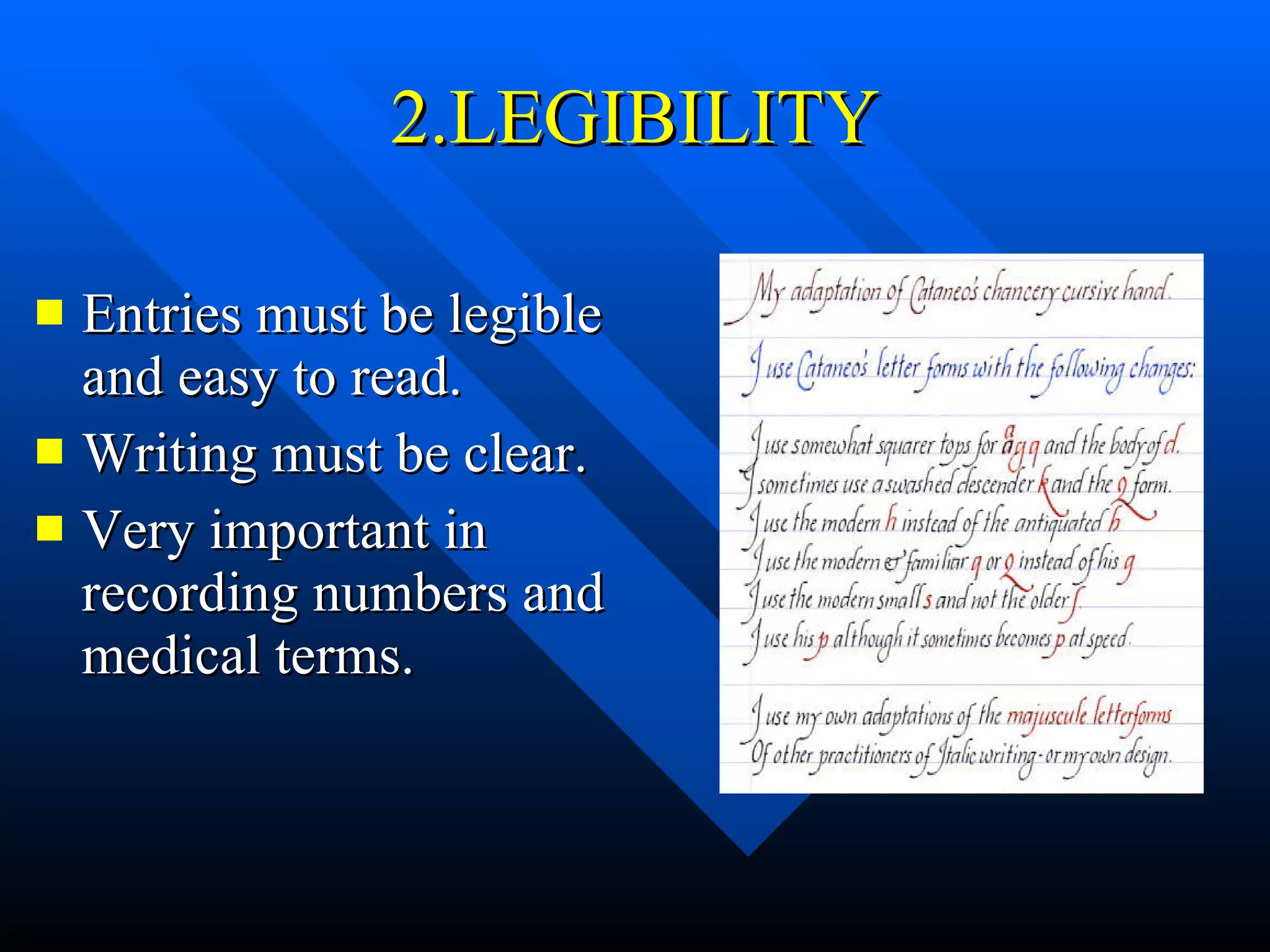
2.LEGIBILITY Entries must be legible and easy to read. Writing must be clear. Very important in recording numbers and medical terms.
3.CORRECT SPELLING Correct spelling is essential for accuracy. If unsure about the spelling use a dictionary or other resource book.
4.PERMANANCE Entries should be  done in dark ink. It helps to identify changes and allows duplication (Xerox).
5.ACCEPTED TERMINOLOGY Use commonly accepted abbreviations, symbols and terms that are specified by the agency Use universally accepted abbreviations.
6.FACTUAL Descriptive objective information about  what nurse sees, hears, feels and smells. Use of inference without supporting data is not acceptable. Vague terms like appears, seems or apparently is not accepted.  Include objective signs of problems. Subjective data is documented in client’s exact words within quotation marks.
7. ACCURATE Use of exact measurement establishes accuracy. Eg. Intake 450ml of water than writing adequate amount of water. Clients name and identifying information is written on each page. Before making any entry in the chart make sure that it is correct. Chart only your observations and actions to be accountable.
If any mistakes occur  while recording, draw a line through it and write above or next to original entry with your initials or name. Do not erase, blot or use correction fluids. Follow agencies policy while making computerized charting. Write on every line but not in between the lines. Draw a line through the blank spaces so that no additional information can be added.
8.SEQUENCE Document events in order of occurrence. Eg. Record assessments, then nsg interventions and then the client responses. Update or delete problems as needed.
9. APPROPRIATENESS Record informations  pertaining to the client health problems& care only. Avoid personal informations that are in appropriate.
10. COMPLETENESS Document all necessary informations It should give a clear picture of what took place. Complete pertinent assessment data such as vital signs, wound drainage, client complaints, who was notified and what interventions are carrid out etc are recorded.
The following informations should be included in the chart: A new or changed information Signs and symptoms Client behavior Nursing interventions Medications Physician’s orders carried out Client teaching Client response
11.CURRENT Timely entries are must Keeping record at bed side may facilitate immediate documentation
Activities/findings recorded at the time of occurrence include the following Vital signs Administration of  drugs or Rx Preparations for diagnostic tests or surgery Change in the clients health status & who was notified. Admission, transfer, discharge or death of a client. Treatement for a sudden change in client’s status.
12. CONCISENESS (BRIEVITY) Recording need to be brief as well as complete to save time in communication. Client’s name and the word client can be omitted Eg. “perspiring profusely. Respiration shallow. 28/mt” Use accepte abbreviations
13. ORGANIZED Information should have logical manner Eg. description of pain, nurses assessment and interventions and the client response. This helps in preventing any omission of informations. Easy to read.
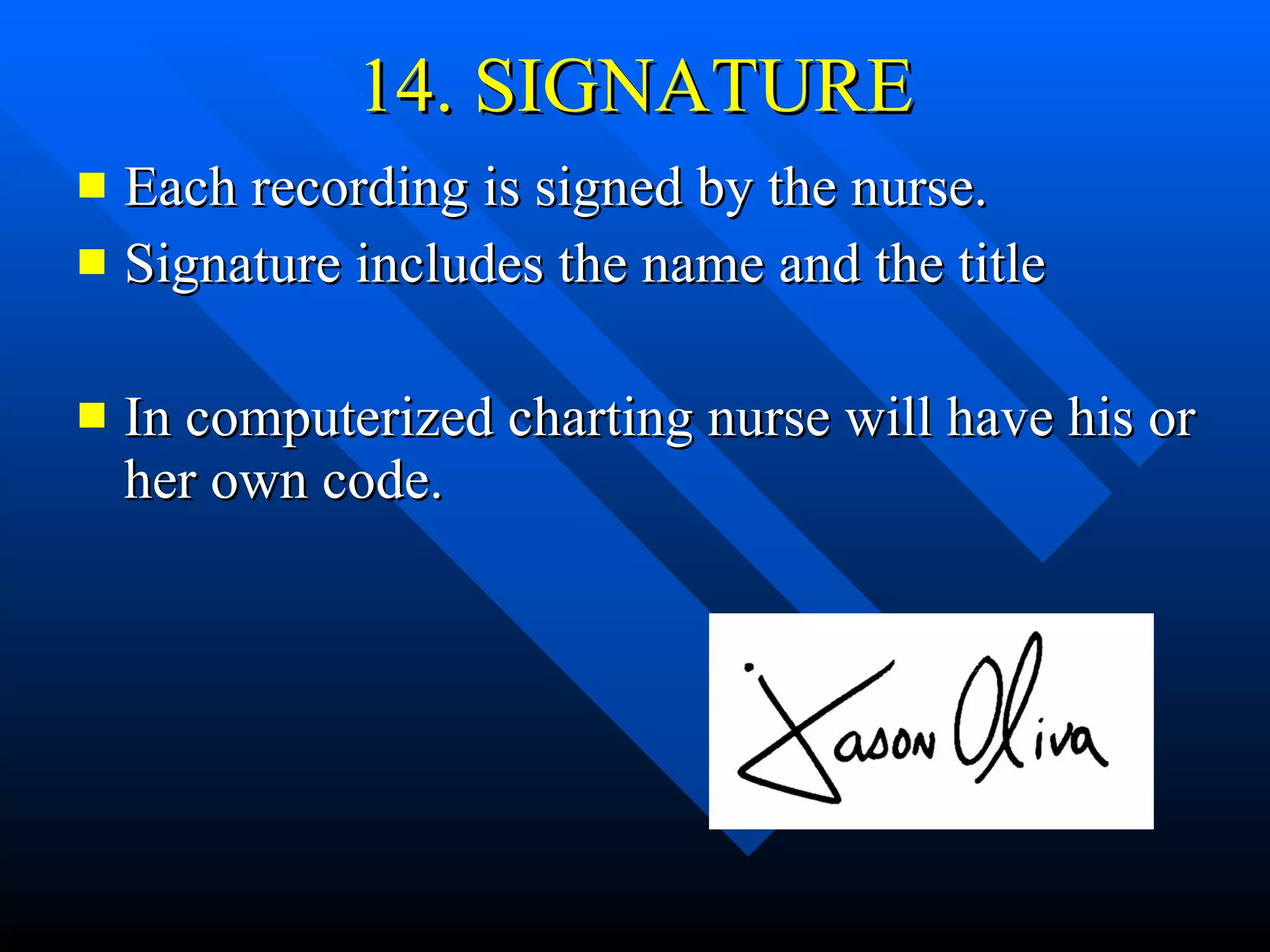
14. SIGNATURE Each recording is signed by the nurse. Signature includes the name and the title  In computerized charting nurse will have his or her own code.
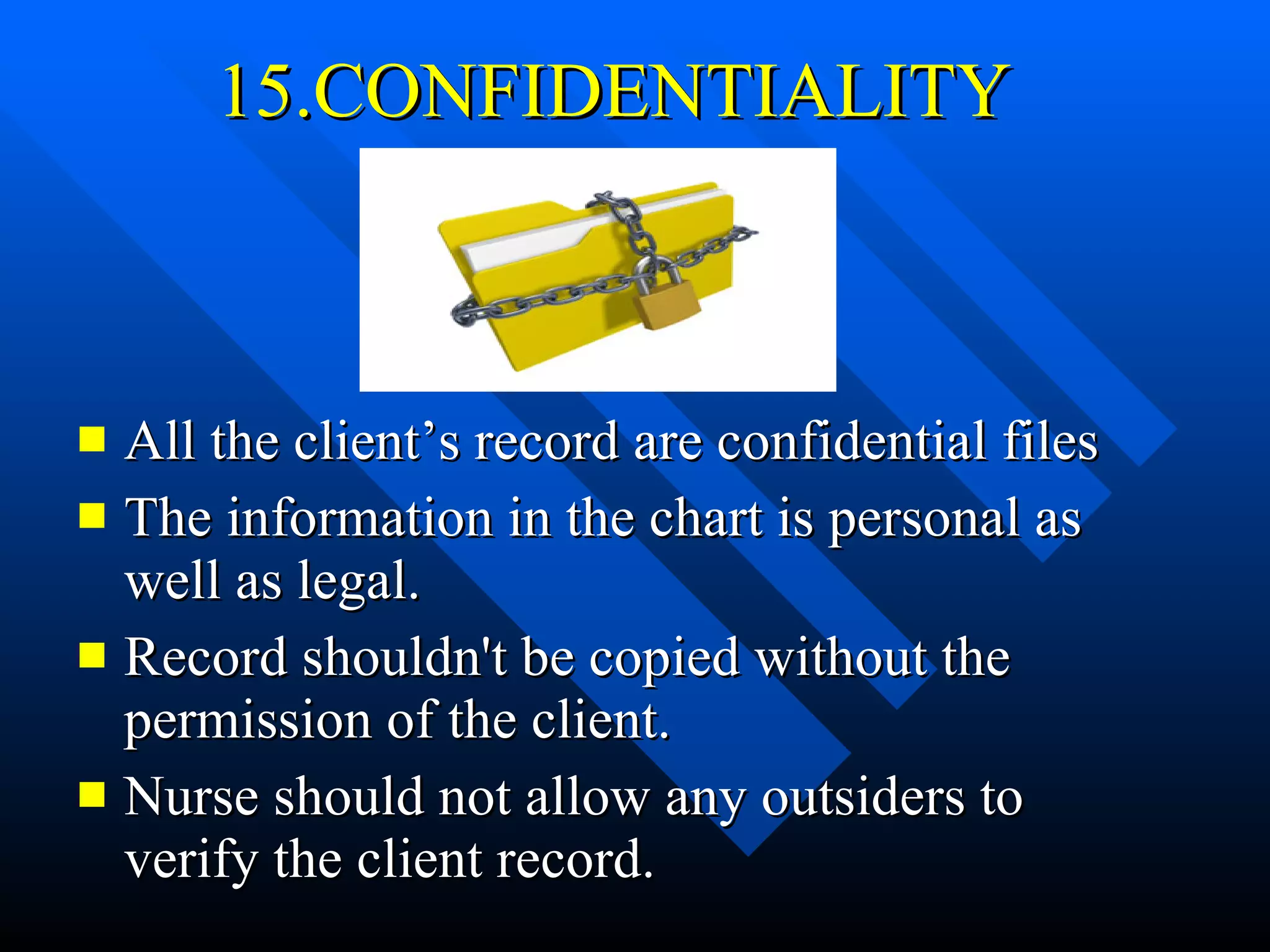
15.CONFIDENTIALITY All the client’s record are confidential files The information in the chart is personal as well as legal. Record shouldn't be copied without the permission of the client. Nurse should not allow any outsiders to verify the client record.
Thank you

Principles of Documentation

  • 1.
  • 2.
    DOCUMENTATION MUST BECONSISTENT WITH PROFESSIONAL AND AGENCY STANDERDS, COMPLETE, ACCURATE , CONCISE, FACUAL, ORGANIZED AND TIMELY, LENGTHY, PRUDENT AND CONFIDENTIAL.
  • 3.
    1. DATE &TIME Document date and time of each recording. Record time in conventional manner(Eg. 9am, 6pm etc) or according to the 24 hour clock(military clock) Avoid recording in advance.
  • 4.
    2.LEGIBILITY Entries mustbe legible and easy to read. Writing must be clear. Very important in recording numbers and medical terms.
  • 5.
    3.CORRECT SPELLING Correctspelling is essential for accuracy. If unsure about the spelling use a dictionary or other resource book.
  • 6.
    4.PERMANANCE Entries shouldbe done in dark ink. It helps to identify changes and allows duplication (Xerox).
  • 7.
    5.ACCEPTED TERMINOLOGY Usecommonly accepted abbreviations, symbols and terms that are specified by the agency Use universally accepted abbreviations.
  • 8.
    6.FACTUAL Descriptive objectiveinformation about what nurse sees, hears, feels and smells. Use of inference without supporting data is not acceptable. Vague terms like appears, seems or apparently is not accepted. Include objective signs of problems. Subjective data is documented in client’s exact words within quotation marks.
  • 9.
    7. ACCURATE Useof exact measurement establishes accuracy. Eg. Intake 450ml of water than writing adequate amount of water. Clients name and identifying information is written on each page. Before making any entry in the chart make sure that it is correct. Chart only your observations and actions to be accountable.
  • 10.
    If any mistakesoccur while recording, draw a line through it and write above or next to original entry with your initials or name. Do not erase, blot or use correction fluids. Follow agencies policy while making computerized charting. Write on every line but not in between the lines. Draw a line through the blank spaces so that no additional information can be added.
  • 11.
    8.SEQUENCE Document eventsin order of occurrence. Eg. Record assessments, then nsg interventions and then the client responses. Update or delete problems as needed.
  • 12.
    9. APPROPRIATENESS Recordinformations pertaining to the client health problems& care only. Avoid personal informations that are in appropriate.
  • 13.
    10. COMPLETENESS Documentall necessary informations It should give a clear picture of what took place. Complete pertinent assessment data such as vital signs, wound drainage, client complaints, who was notified and what interventions are carrid out etc are recorded.
  • 14.
    The following informationsshould be included in the chart: A new or changed information Signs and symptoms Client behavior Nursing interventions Medications Physician’s orders carried out Client teaching Client response
  • 15.
    11.CURRENT Timely entriesare must Keeping record at bed side may facilitate immediate documentation
  • 16.
    Activities/findings recorded atthe time of occurrence include the following Vital signs Administration of drugs or Rx Preparations for diagnostic tests or surgery Change in the clients health status & who was notified. Admission, transfer, discharge or death of a client. Treatement for a sudden change in client’s status.
  • 17.
    12. CONCISENESS (BRIEVITY)Recording need to be brief as well as complete to save time in communication. Client’s name and the word client can be omitted Eg. “perspiring profusely. Respiration shallow. 28/mt” Use accepte abbreviations
  • 18.
    13. ORGANIZED Informationshould have logical manner Eg. description of pain, nurses assessment and interventions and the client response. This helps in preventing any omission of informations. Easy to read.
  • 19.
    14. SIGNATURE Eachrecording is signed by the nurse. Signature includes the name and the title In computerized charting nurse will have his or her own code.
  • 20.
    15.CONFIDENTIALITY All theclient’s record are confidential files The information in the chart is personal as well as legal. Record shouldn't be copied without the permission of the client. Nurse should not allow any outsiders to verify the client record.
  • 21.