Downloaded 249 times
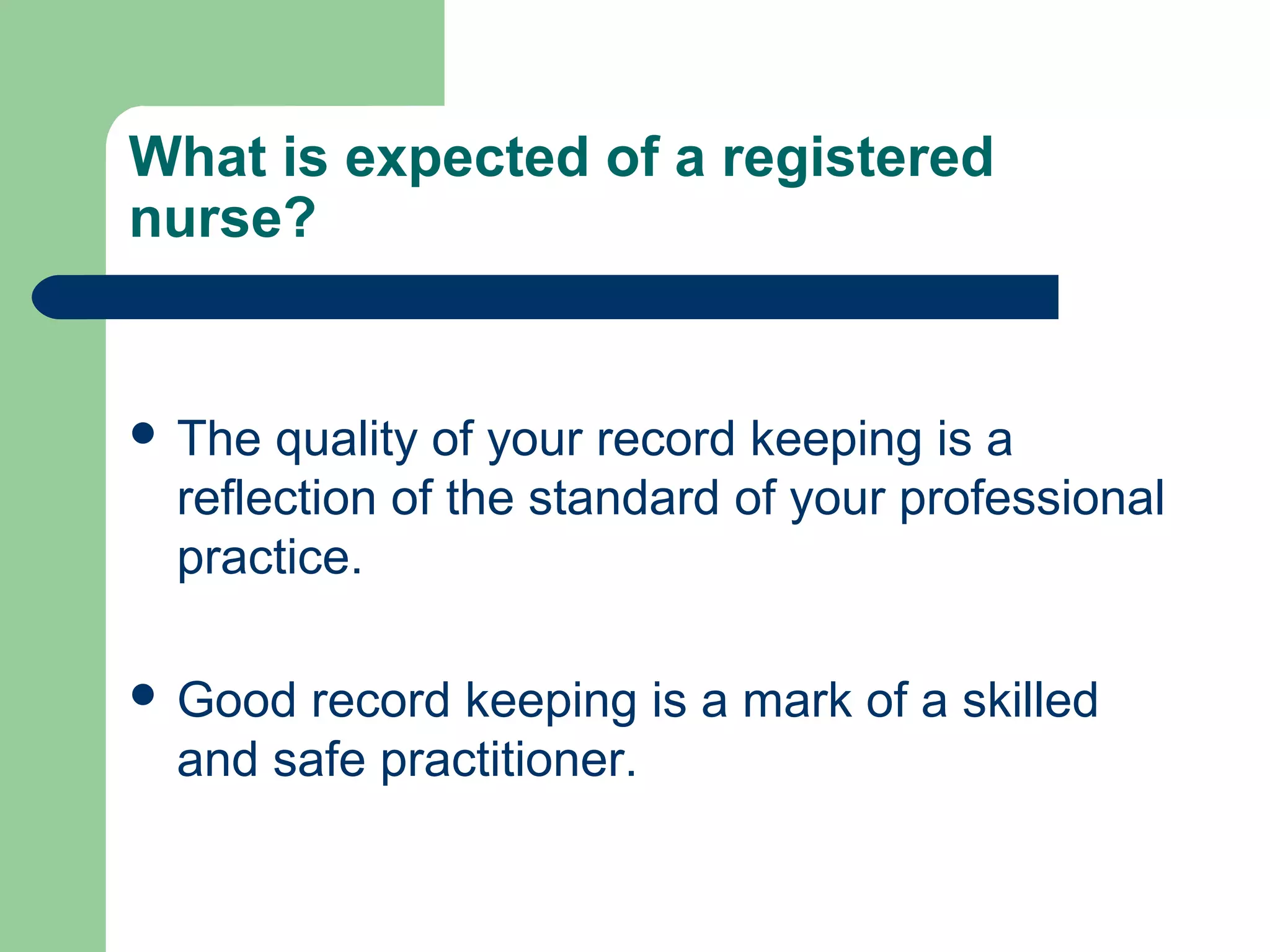
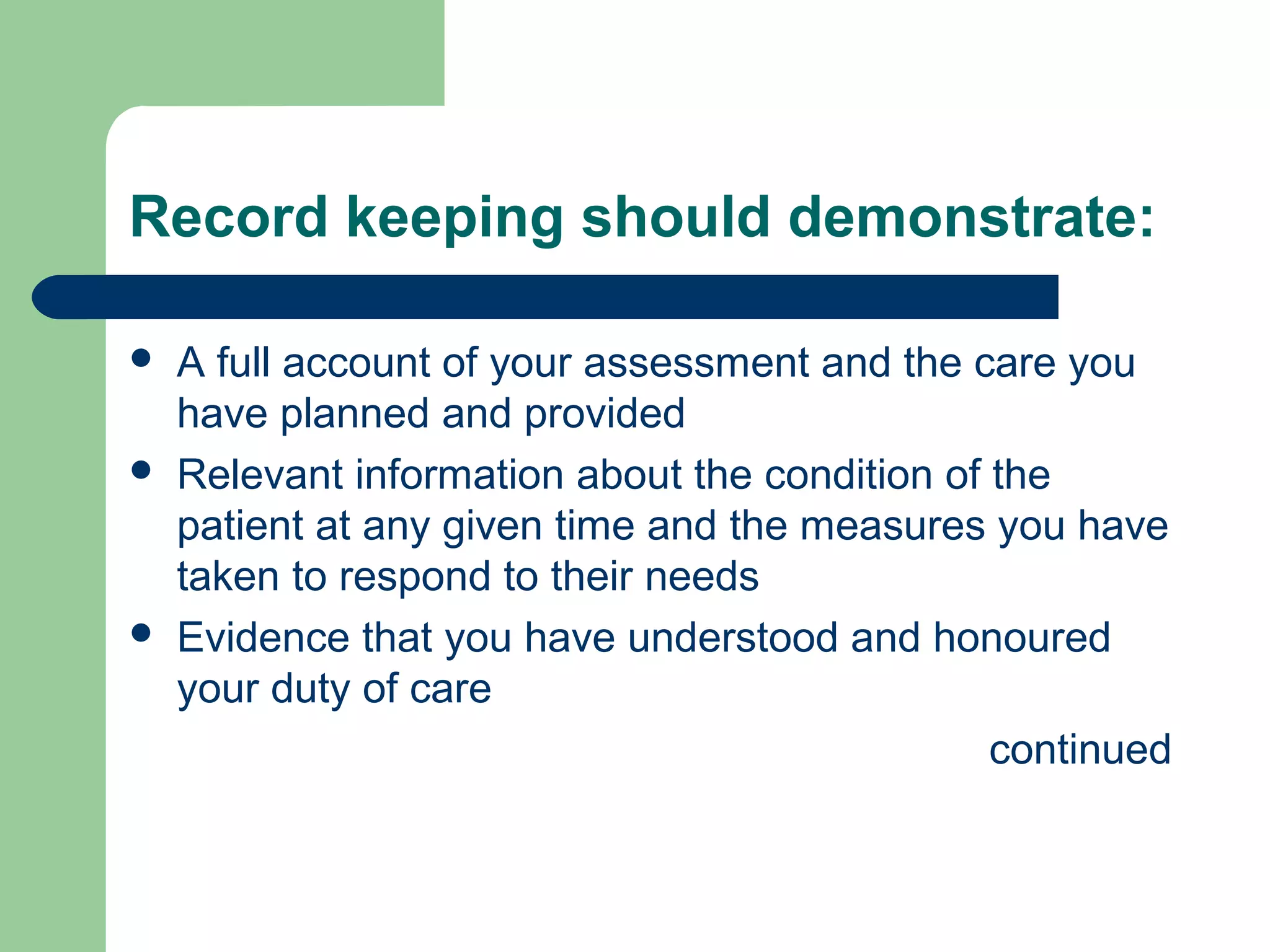
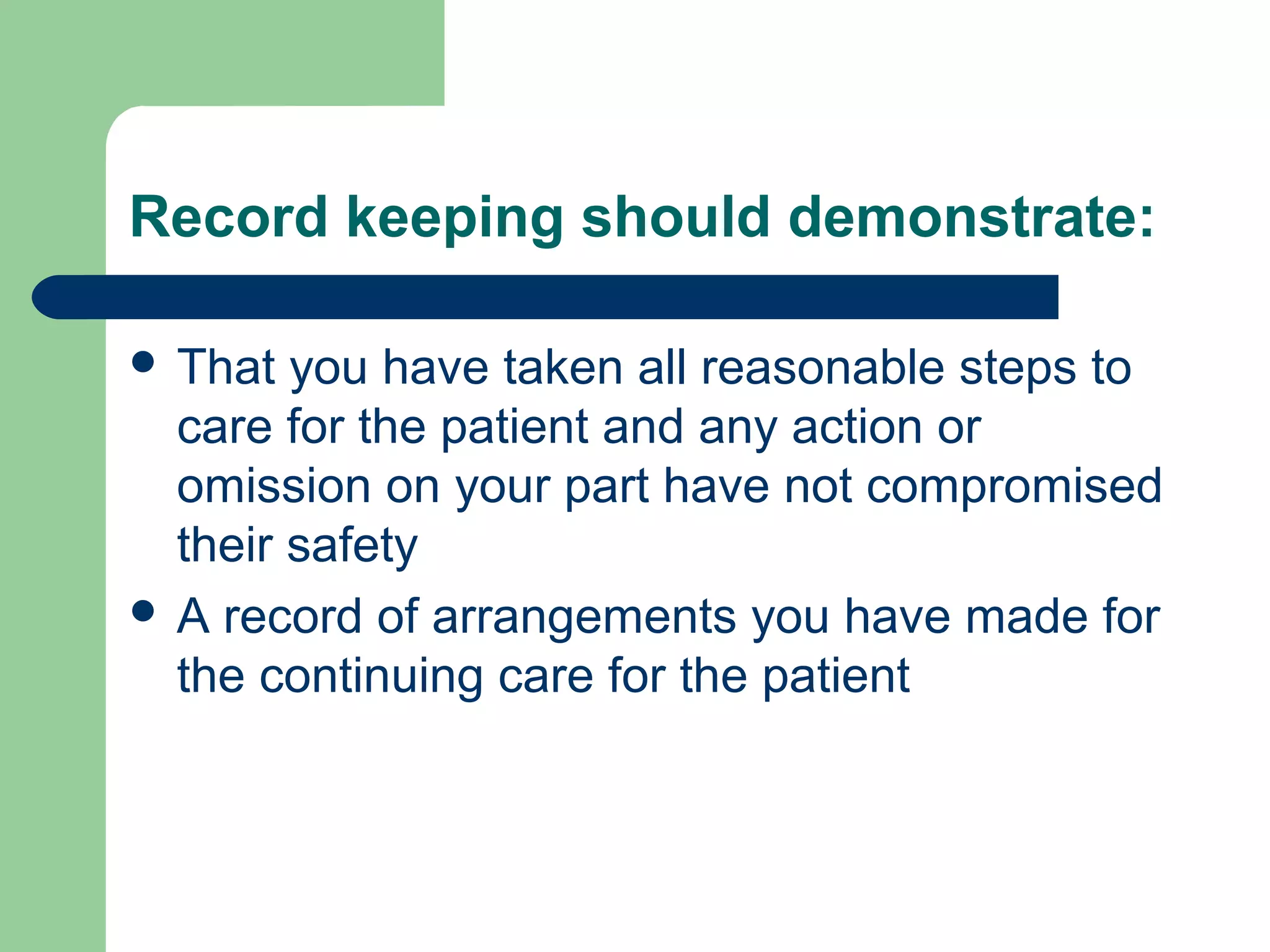
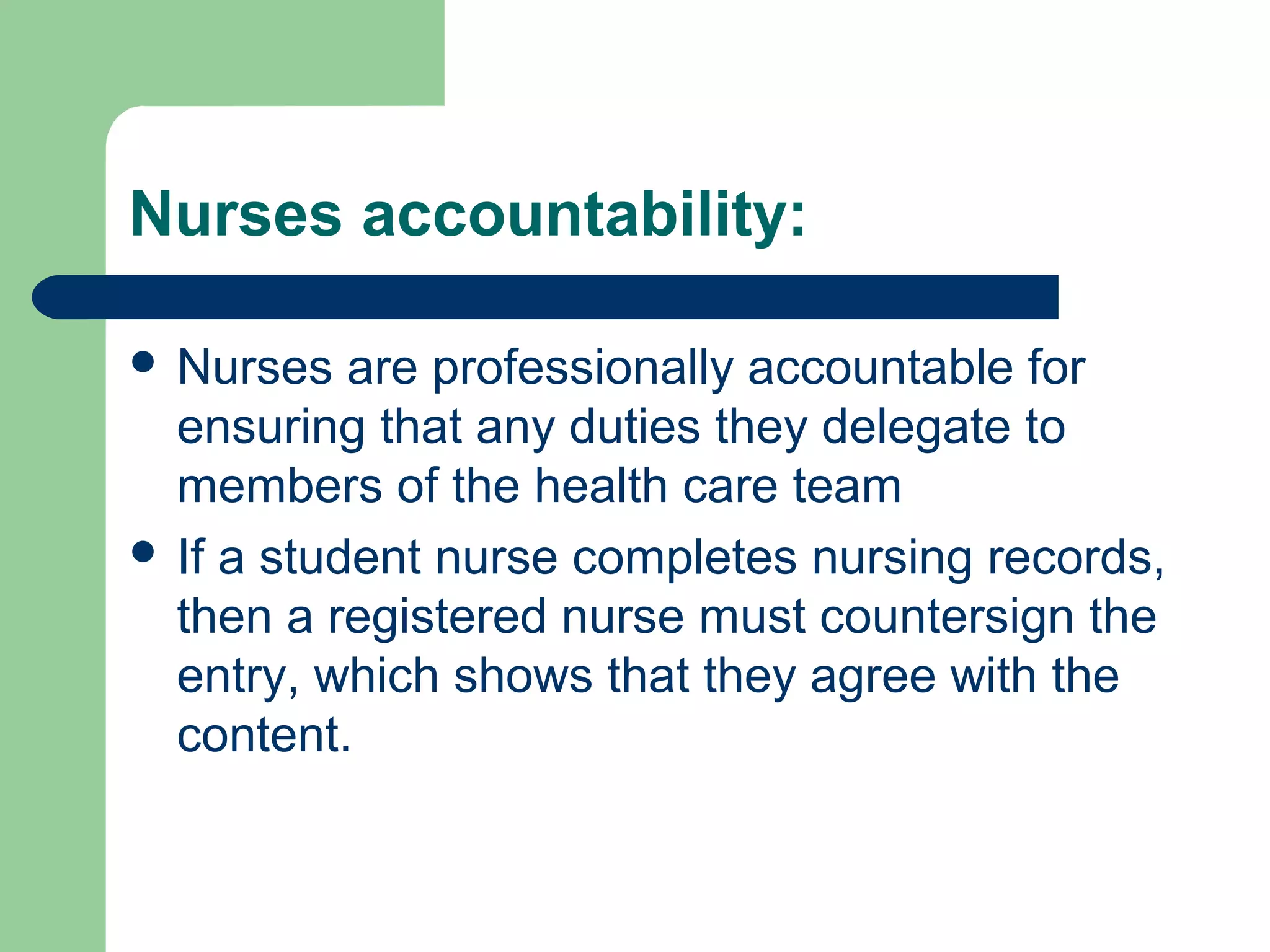
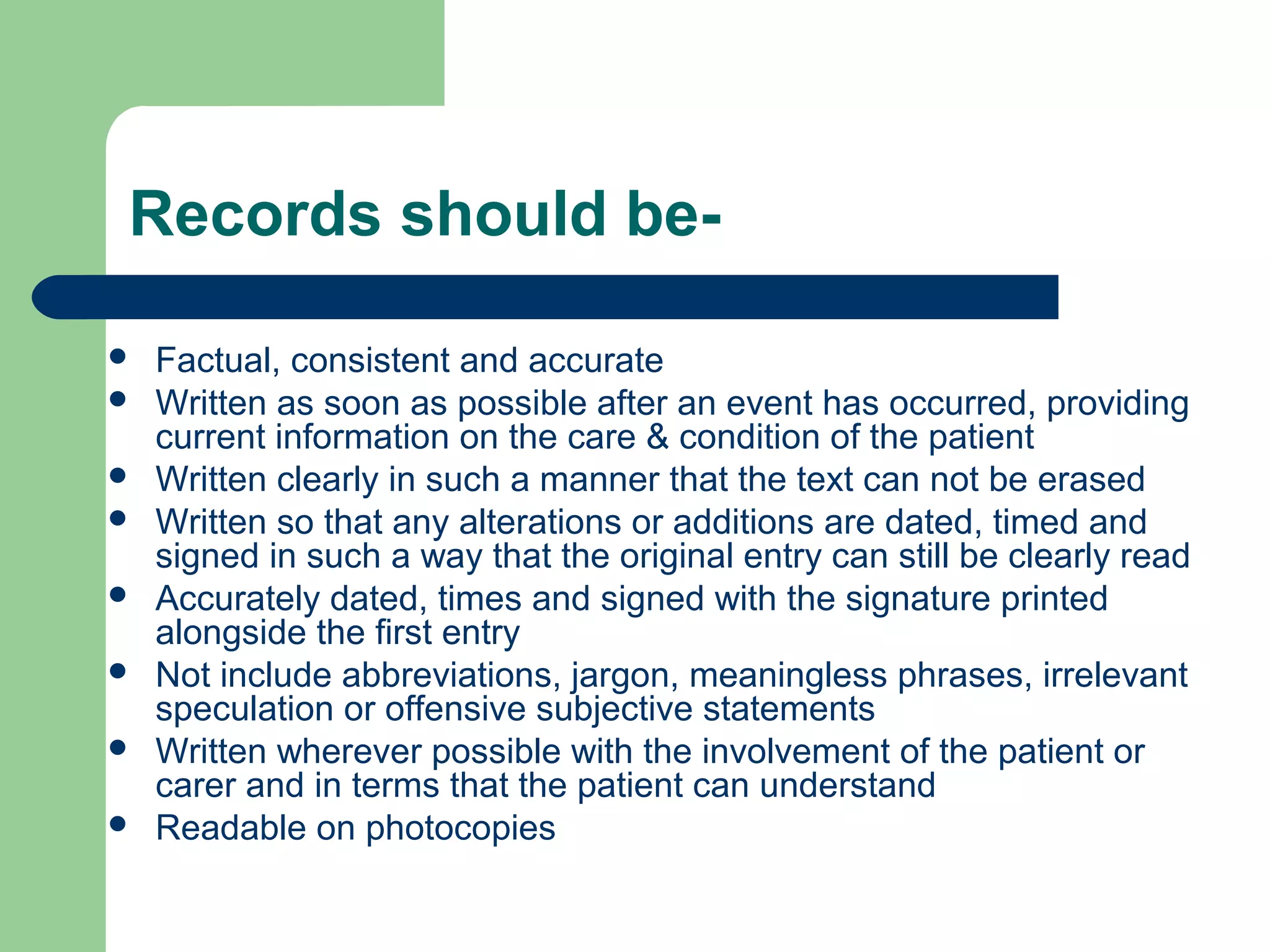
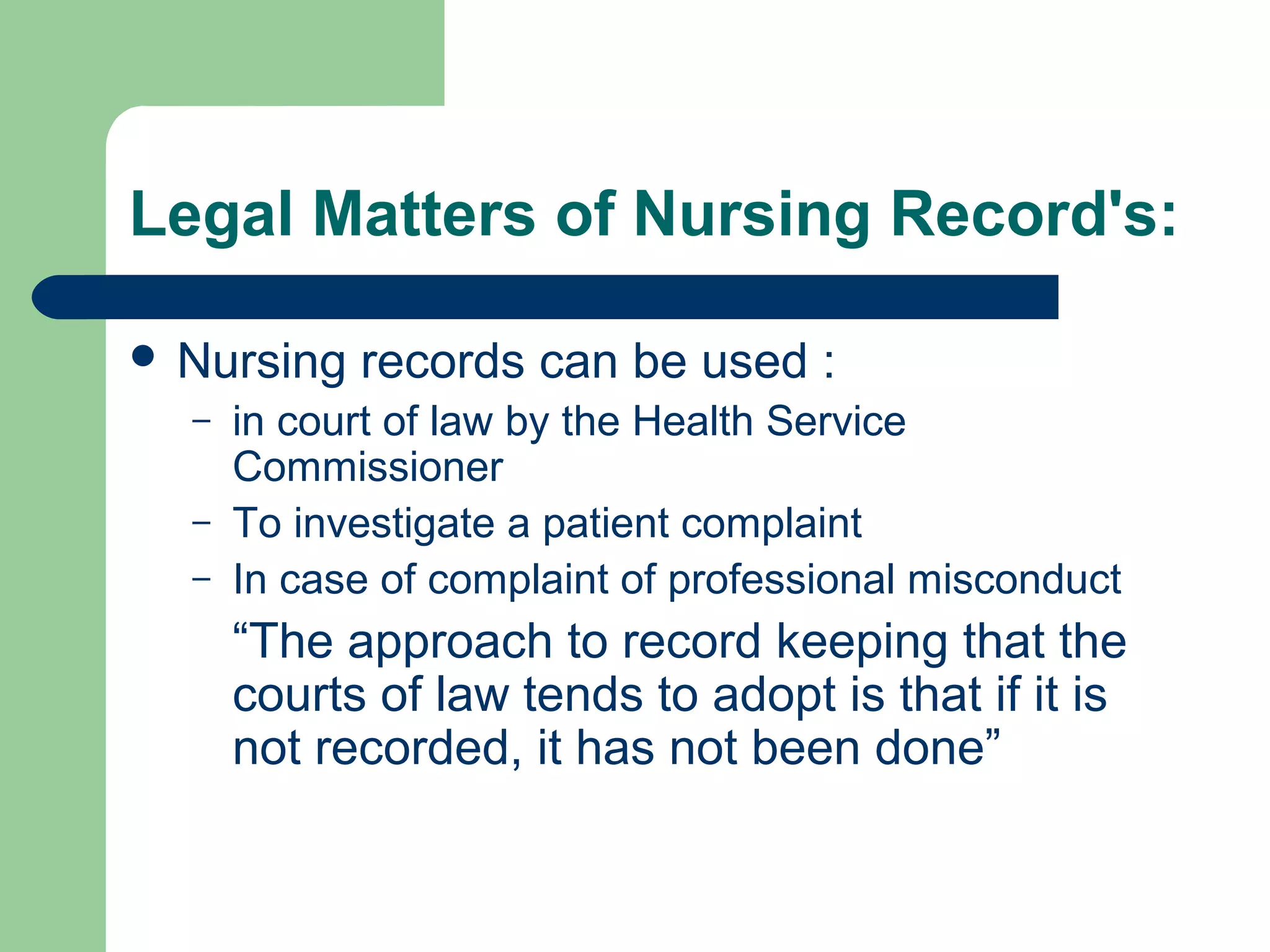

Nursing documentation is an integral part of nursing practice that promotes high quality patient care, continuity of care, and communication between healthcare providers. It provides an accurate account of a patient's treatment, care plans, and the care delivered. Nursing records are read by nurses, patients, relatives, doctors, and other healthcare team members. Registered nurses are professionally accountable for ensuring complete, factual, consistent, and clear documentation that demonstrates their assessment, care planning, actions taken, and arrangements made for patients. Nursing documentation can be used in legal matters and audits help assess record standards and identify areas for improvement.
Nursing documentation is essential for professional practice, aiding in care processes and record keeping.
Effective record keeping enhances clinical care standards, fosters continuity, and improves team communication.
Nursing records are important for various stakeholders, including nurses, patients, doctors, and healthcare teams.
Registered nurses are expected to demonstrate high-quality record keeping reflecting their professional standards.
Records must capture assessment details, patient condition, care responses, and continuity arrangements.
Nurses must ensure delegated tasks are recorded accurately, with proper countersigning by registered nurses.
Records should be factual, consistent, timely, and clear, avoiding jargon and ensuring patient comprehension.
Nursing records have legal significance and can be used in court; proper documentation is crucial.
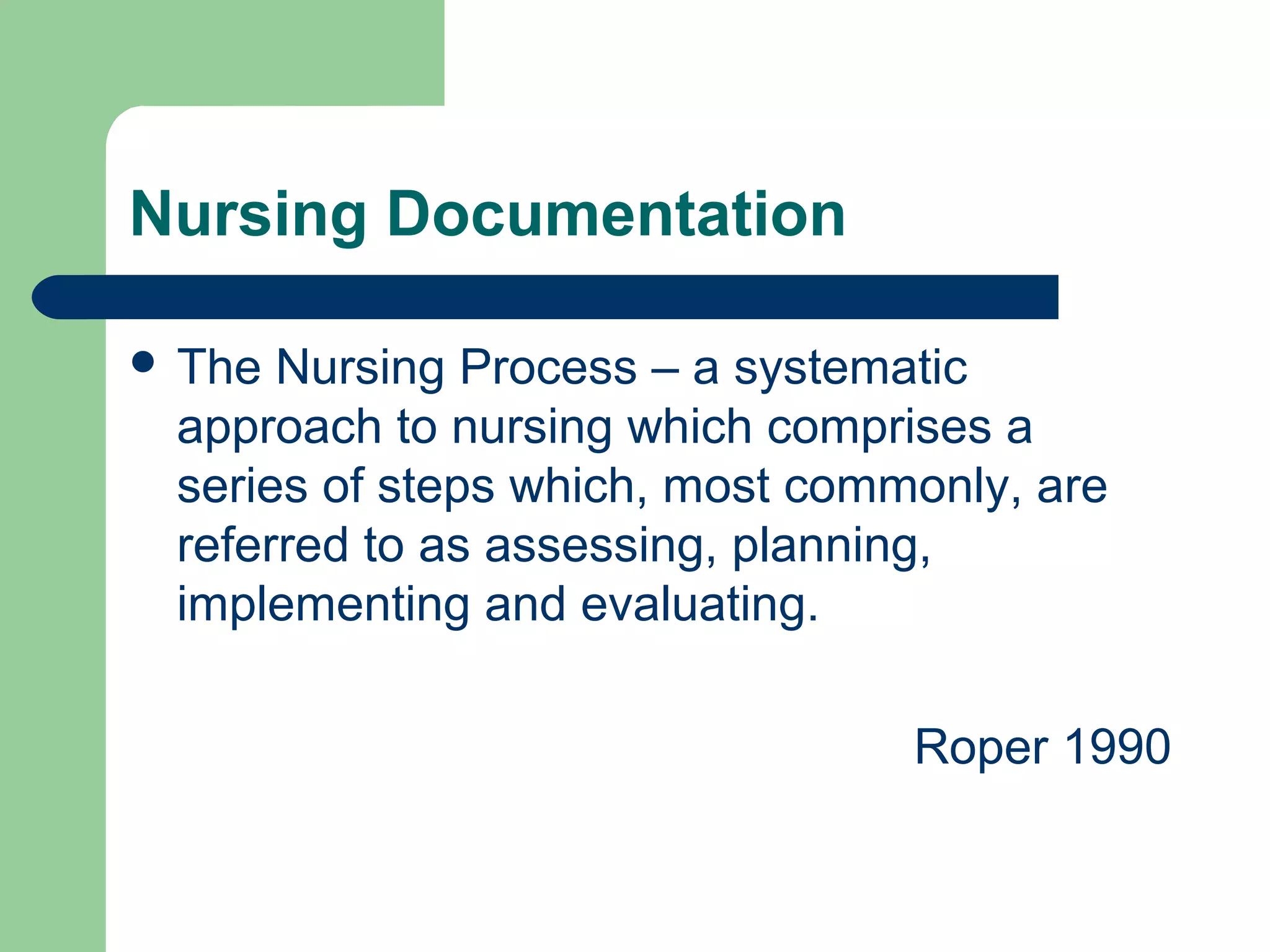
The nursing process is a systematic approach characterized by assessment, planning, implementation, and evaluation.
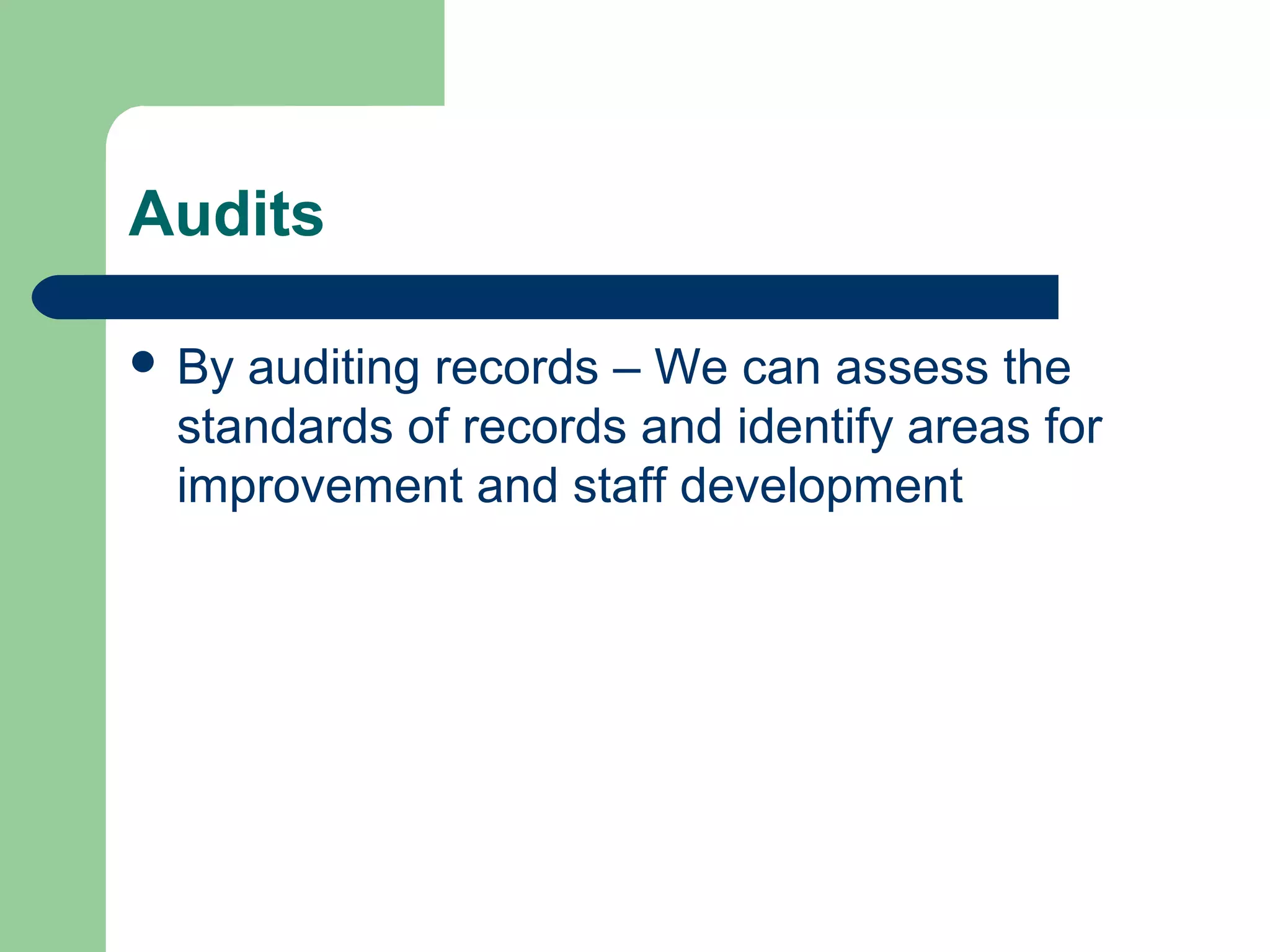
Auditing nursing records helps assess standards and identify areas for improvement and professional development.


![[1] documentation and reporting](https://cdn.slidesharecdn.com/ss_thumbnails/1documentationandreporting-150205213856-conversion-gate02-thumbnail.jpg?width=640&height=640&fit=bounds)


![[DSC Europe 25] Jim Sterne - Adopting Generative AI Capabilities Into the Ent...](https://cdn.slidesharecdn.com/ss_thumbnails/sxhpofuorcagxsaulkmt-3-251204082258-7e66bc48-thumbnail.jpg?width=640&height=640&fit=bounds)


![[DSC Europe 25] Petar Zivanov - AI meets documents From chatbots to AI-powere...](https://cdn.slidesharecdn.com/ss_thumbnails/xer2bb6nrdc8pdpev0pc-8-251204082258-7c2fa4a1-thumbnail.jpg?width=640&height=640&fit=bounds)


![[DSC Europe 25] Dragana Ilic - AI for Big Data in Astronomy.pptx](https://cdn.slidesharecdn.com/ss_thumbnails/8palya86qaatvjhva1ms-2-dragana-ilic-ai-ilic-251208151906-652b819c-thumbnail.jpg?width=640&height=640&fit=bounds)


![[DSC Europe 25] Goran Obradovic - The Rise of Sovereign AI: Building the Regi...](https://cdn.slidesharecdn.com/ss_thumbnails/7nw2xxixrxqdxvrb5wca-6-251205085714-ab09a2ac-thumbnail.jpg?width=640&height=640&fit=bounds)
![[DSC Europe 25] Nikola Rajovic - Hardware Technologies Under the Hood: RISC-V...](https://cdn.slidesharecdn.com/ss_thumbnails/o2gptrmtoyqndgoshwgq-dsc2025-tenstorrent-rajovic-251205090438-814685f5-thumbnail.jpg?width=640&height=640&fit=bounds)
![[DSC Europe 25] Boris Perkovic - Lost in performance.pptx](https://cdn.slidesharecdn.com/ss_thumbnails/uq5hrp7vsuahqkxzifux-1-251204082258-fd2ee09d-thumbnail.jpg?width=640&height=640&fit=bounds)