Basic Concepts of Quality
BASIC CONCEPTS OF QUALITY:
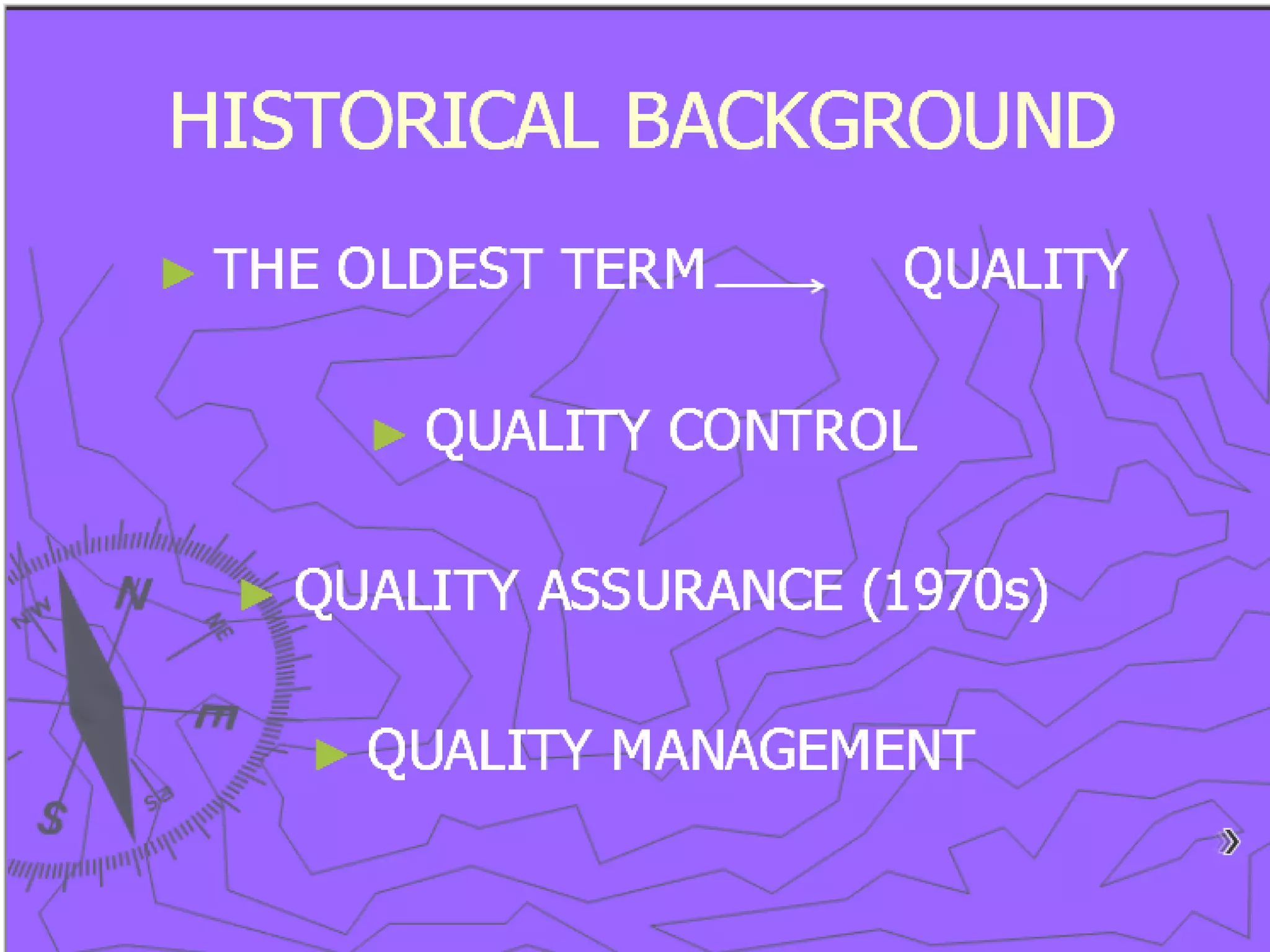
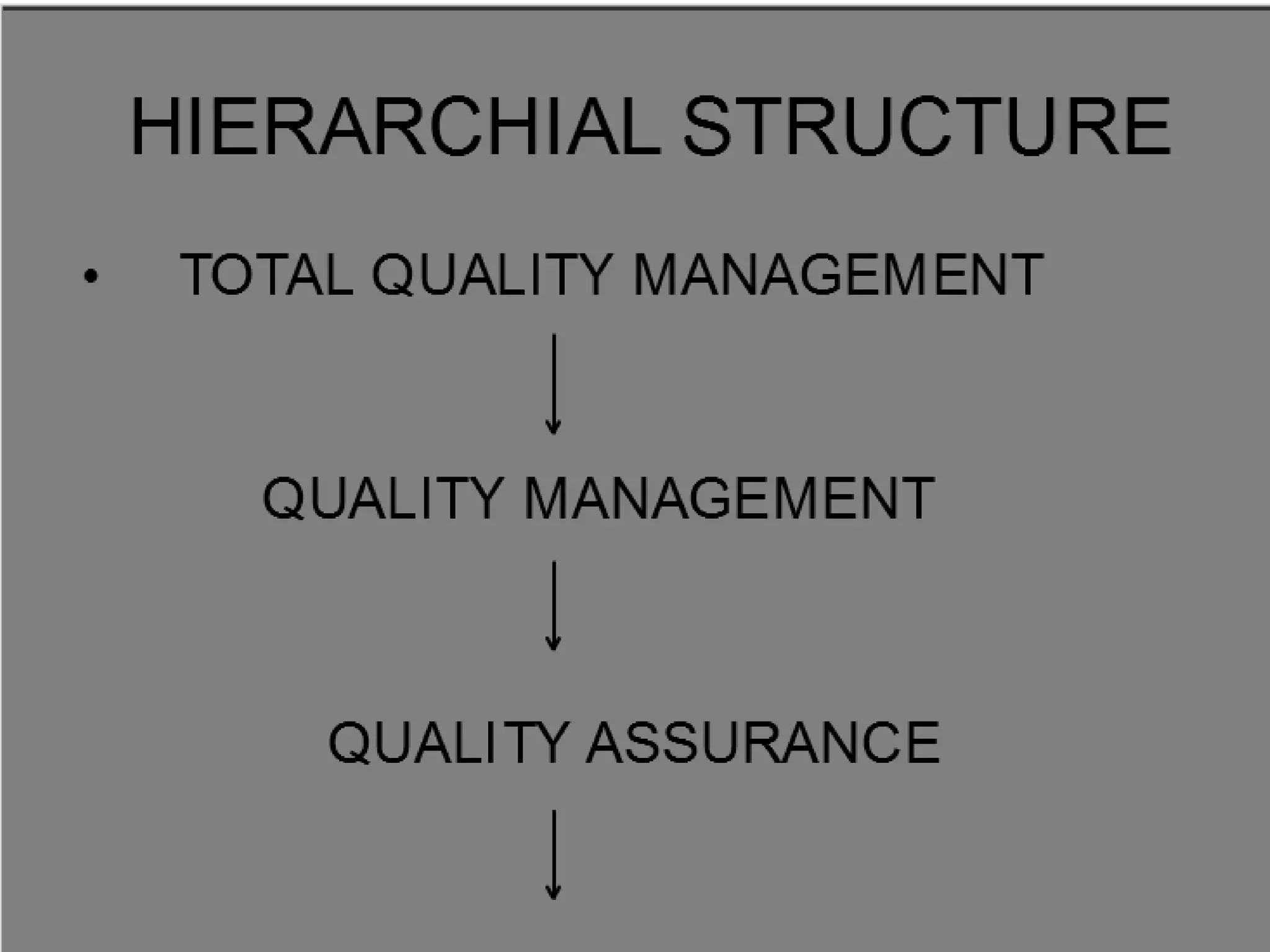
QUALITY
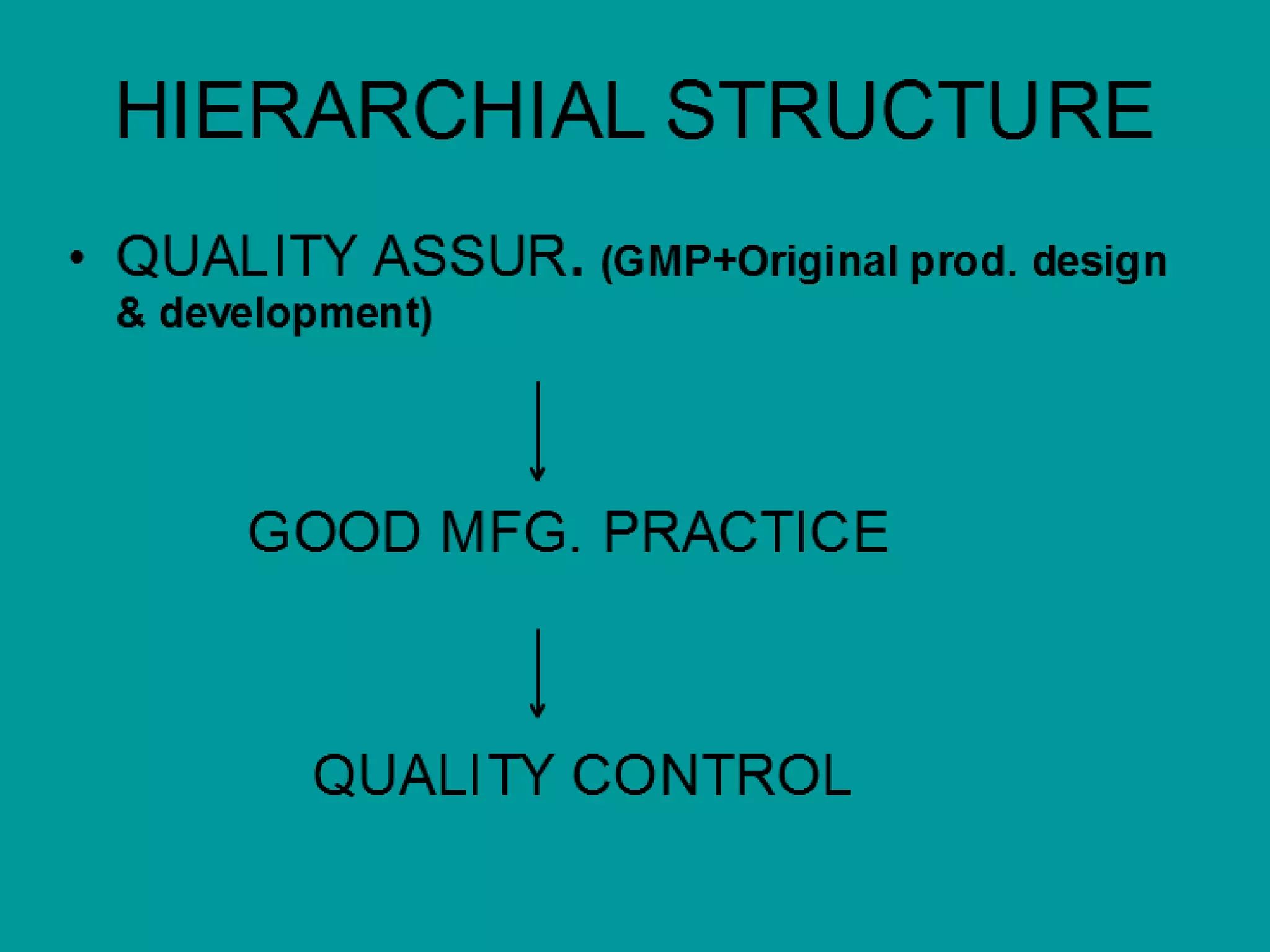
QUALITY CONTROL
QUALITY ASSURANCE
QUALITY MANAGEMNT
TOTAL QUALITY MANAGEMENT
ISO SYSTEM
QUALITY:
QUALITY is the totality of features and
characteristics of a product that bears on
it’s ability to satisfy the stated or implied
needs -- ASQC
What is Quality?:
What is Quality?
User-based: “In the eyes of the beholder”
Manufacturing-based: “Right the first time”
 Product-based: Precise measurement
Dimensions of Quality:
Performance
Aesthetics
Special features: convenience, high tech
Safety
Reliability
Durability
Perceived Quality
Service after sale
Importance of Quality:
Lower costs (less labor, rework, scrap)
Motivated employees
Market Share
Reputation
International competitiveness
Revenues generation increased (ultimate
goal)
QUALITY CONTROL:
is the operational techniques and
activities that are used to fulfill the
requirements for quality
QUALITY ASSURANCE:
QUALITY ASSURANCE is all
systematic and planned actions which
are necessary to provide adequate
confidence that a product or service
will satisfy the given requirement for
quality.
QUALITY MANAGEMENT:
QUALITY MANAGEMENT is a
systematic set of operating
procedures which is company wide,
documented, implemented and
maintained while ensuring the growth
of business in a consistent manner
TOTAL QUALITY MANAGEMENT:
THE LATEST APPROACH
IT IS THE PROCESS OF
INDIVIDUAL & ORG.
DEVELOPMENT THE PURPOSE OF
WHICH IS TO INCREASE THE
LEVEL OF SATISFACTION OF ALL
THE STAKEHOLDERS
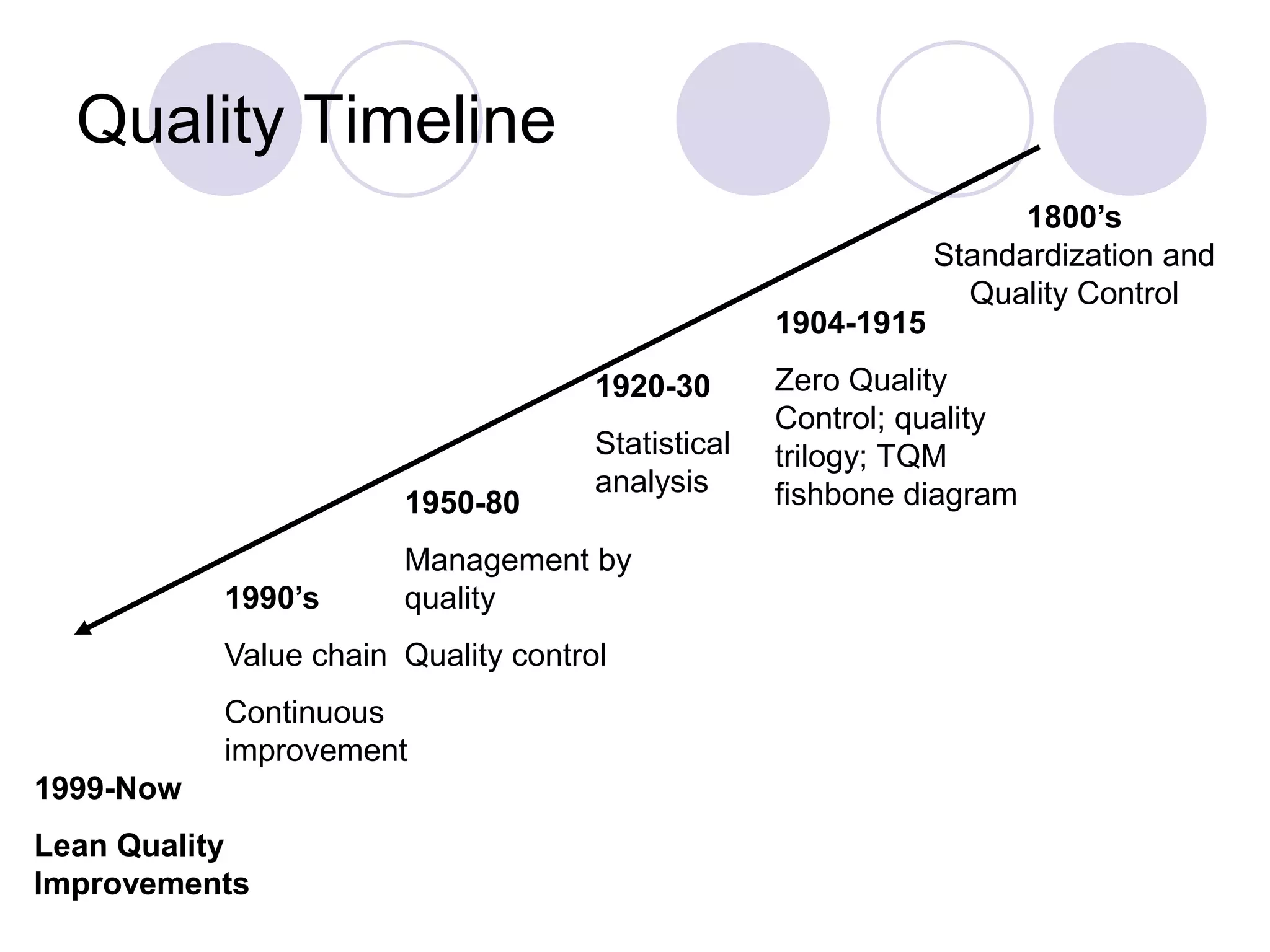
Quality Timeline
1800’s
Standardization and
Quality Control
1904-1915
Zero Quality
Control; quality
trilogy; TQM
fishbone diagram
1920-30
Statistical
analysis
1950-80
Management by
quality
Quality control
1990’s
Value chain
Continuous
improvement
1999-Now
Lean Quality
Improvements
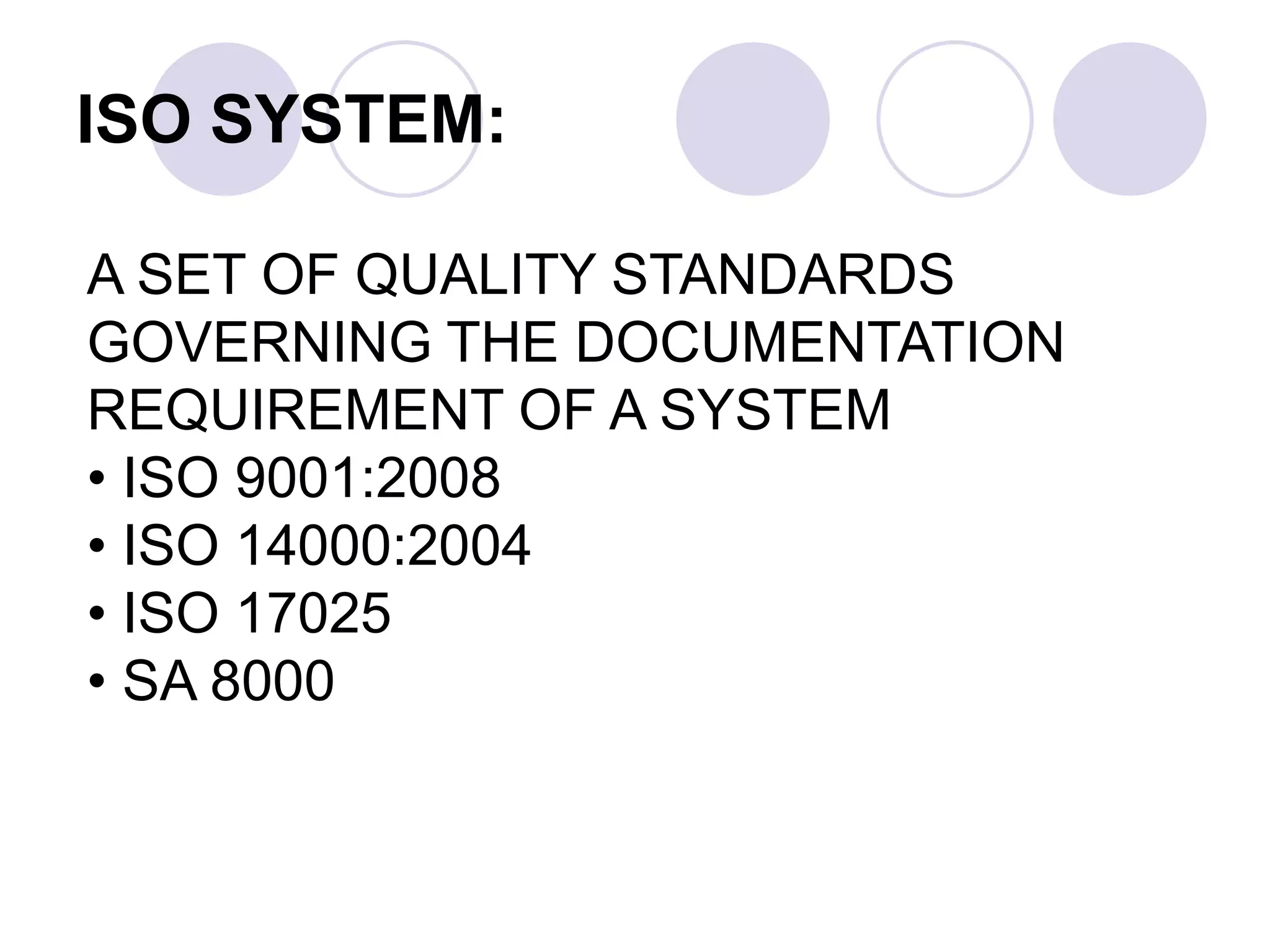
ISO SYSTEM:
A SET OF QUALITY STANDARDS
GOVERNING THE DOCUMENTATION
REQUIREMENT OF A SYSTEM
• ISO 9001:2008
• ISO 14000:2004
• ISO 17025
• SA 8000
ANY QUESTIONS?

Basic quality concept

  • 1.
  • 2.
    BASIC CONCEPTS OFQUALITY: QUALITY QUALITY CONTROL QUALITY ASSURANCE QUALITY MANAGEMNT TOTAL QUALITY MANAGEMENT ISO SYSTEM
  • 3.
    QUALITY: QUALITY is thetotality of features and characteristics of a product that bears on it’s ability to satisfy the stated or implied needs -- ASQC
  • 4.
    What is Quality?: Whatis Quality? User-based: “In the eyes of the beholder” Manufacturing-based: “Right the first time”  Product-based: Precise measurement
  • 5.
    Dimensions of Quality: Performance Aesthetics Specialfeatures: convenience, high tech Safety Reliability Durability Perceived Quality Service after sale
  • 6.
    Importance of Quality: Lowercosts (less labor, rework, scrap) Motivated employees Market Share Reputation International competitiveness Revenues generation increased (ultimate goal)
  • 7.
    QUALITY CONTROL: is theoperational techniques and activities that are used to fulfill the requirements for quality
  • 8.
    QUALITY ASSURANCE: QUALITY ASSURANCEis all systematic and planned actions which are necessary to provide adequate confidence that a product or service will satisfy the given requirement for quality.
  • 9.
    QUALITY MANAGEMENT: QUALITY MANAGEMENTis a systematic set of operating procedures which is company wide, documented, implemented and maintained while ensuring the growth of business in a consistent manner
  • 10.
    TOTAL QUALITY MANAGEMENT: THELATEST APPROACH IT IS THE PROCESS OF INDIVIDUAL & ORG. DEVELOPMENT THE PURPOSE OF WHICH IS TO INCREASE THE LEVEL OF SATISFACTION OF ALL THE STAKEHOLDERS
  • 13.
    Quality Timeline 1800’s Standardization and QualityControl 1904-1915 Zero Quality Control; quality trilogy; TQM fishbone diagram 1920-30 Statistical analysis 1950-80 Management by quality Quality control 1990’s Value chain Continuous improvement 1999-Now Lean Quality Improvements
  • 16.
    ISO SYSTEM: A SETOF QUALITY STANDARDS GOVERNING THE DOCUMENTATION REQUIREMENT OF A SYSTEM • ISO 9001:2008 • ISO 14000:2004 • ISO 17025 • SA 8000
  • 17.