Basic of quality management
Riya rai
T1622PQA008
1st Semester
M.Pharm QA
Guided by
Dr.avni khristi
M.Pharm, PhD
Assistant
professor
PARUL INSTITUTE OF PHARMACY
contents
 Quality management
 Component of quality management
 Principle of quality management
 Purpose of quality management
 Benefits of quality management
 Process improvement
 Techniques of quality management
 references
Quality : “Measure of excellence or the
state of being free from defects ,
Deficiencies and significant variations .”
Quality management
A system to make sure that a product or service meets
standards of excellence, and that the process by which the
product or service is created is efficient and effective as
well.
Component of quality management
 Quality planning
 Quality assurance
 Quality control
 Quality improvement
Quality planning
Quality control planning is the first step .
Requirements must be identified , a criteria needs to
be set, and important procedure must be recognized
as a part of plan.
Quality control
 Quality control is needed to review the quality
of the product or service.
 Quality control focused on fulfilling quality
requirements.
Quality assurance
Companies need to assure defects and Mistake
are avoided in the manufacturing of good or the
delivery of service, and quality assurance
guarantees consistent results.
Quality improvement
The is always room for improvement Through
Quality improvement ,the results can be measured
and possible improvements in products or services
can be made.
Principle of quality management
 Customer focus
 Leadership
 Engagement of people
 Process approach
 Improvement
 Evidence-based decision making
 Relationship management
Purpose of quality management
 Ease the processes of production,
 Make the workflow more efficient,
 Ensure a quick and airtight delivery mechanism, and
 Significantly improve the quality of deliverables (both
service and product)
The Benefits of Quality Management
1. Improved customer satisfaction
2. Reduced costs
3. Increased efficiency
4. Improved competitiveness
5. Increased compliance with regulations.
6. Increased employee satisfaction
Process improvement
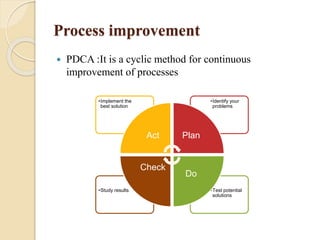
 PDCA :It is a cyclic method for continuous
improvement of processes
•Test potential
solutions
•Study results
•Identify your
problems
•Implement the
best solution
Act Plan
Do
Check
Techniques of Quality Management
1.Total quality management
It is the approach of the management to achieve long-term
success by focusing on customer satisfaction. The
organization works towards a steady improvement in
quality at all stages of production.
2. Six Sigma
 Six sigma :Six Sigma is a systematic approach to
eliminating errors.
 A business process for improving quality , reducing
costs , and increasing customer satisfaction
 Six Sigma is a set of techniques and tools for process
improvement.
Statistically
 Having no more than 3.4 defects per million.
 Program designed to reduce defects.
Methodology for six sigma:
There are two methodologies used in the six-sigma project.
1. DMAIC: It is a method for improving current business
operations.
 DMAIC (Define—Measure—Analyze—Improve—
Control)
 Develop, test, and implement solutions to improve the
process.
2. DMADV: It is a technique for developing a new
product or process design that results in more
predictable, mature, and defect-free efficiency
 DMADV (Define—Measure—Analyze—Design—
Verify)
 Measure and identify critical-to-quality characteristics
of the product, service or process. This includes risk
and production capabilities.
3.ISO
 It is the “International organization for
standardization” a body which gives the certification of
quality to the products and also to various type of
companies.
 This ISO certification also works as an assurance to the
customer that the product is genuine and safe to
consume.
 The ISO tag is there on every product. There are very
hard formalities which are to be followed to get the
status of ISO approved.
 This ISO tag is also the sign of good quality and every
industry is running to get this mark to make its product
as a genuine product.
4. Cost of Quality
 cost of quality is the difference between the cost of the
production including manufacturing, sale and other
expenses and cost incurred without any defect during the
production.
 The main idea behind the cost of quality is to make the
product cheaper and defect-free.
 The manager basically focuses on cost reduction and
quality improvement so that there is a benefit of the
customer and as well of the company.
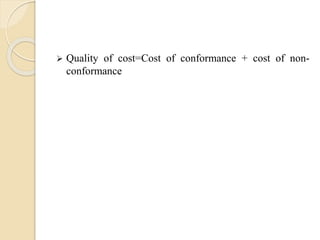
 Quality of cost=Cost of conformance + cost of non-
conformance
quality management system

quality management system

  • 1.
    Basic of qualitymanagement Riya rai T1622PQA008 1st Semester M.Pharm QA Guided by Dr.avni khristi M.Pharm, PhD Assistant professor PARUL INSTITUTE OF PHARMACY
  • 2.
    contents  Quality management Component of quality management  Principle of quality management  Purpose of quality management  Benefits of quality management  Process improvement  Techniques of quality management  references
  • 3.
    Quality : “Measureof excellence or the state of being free from defects , Deficiencies and significant variations .”
  • 4.
    Quality management A systemto make sure that a product or service meets standards of excellence, and that the process by which the product or service is created is efficient and effective as well.
  • 5.
    Component of qualitymanagement  Quality planning  Quality assurance  Quality control  Quality improvement
  • 6.
    Quality planning Quality controlplanning is the first step . Requirements must be identified , a criteria needs to be set, and important procedure must be recognized as a part of plan. Quality control  Quality control is needed to review the quality of the product or service.  Quality control focused on fulfilling quality requirements.
  • 7.
    Quality assurance Companies needto assure defects and Mistake are avoided in the manufacturing of good or the delivery of service, and quality assurance guarantees consistent results. Quality improvement The is always room for improvement Through Quality improvement ,the results can be measured and possible improvements in products or services can be made.
  • 8.
    Principle of qualitymanagement  Customer focus  Leadership  Engagement of people  Process approach  Improvement  Evidence-based decision making  Relationship management
  • 9.
    Purpose of qualitymanagement  Ease the processes of production,  Make the workflow more efficient,  Ensure a quick and airtight delivery mechanism, and  Significantly improve the quality of deliverables (both service and product)
  • 10.
    The Benefits ofQuality Management 1. Improved customer satisfaction 2. Reduced costs 3. Increased efficiency 4. Improved competitiveness 5. Increased compliance with regulations. 6. Increased employee satisfaction
  • 11.
    Process improvement  PDCA:It is a cyclic method for continuous improvement of processes •Test potential solutions •Study results •Identify your problems •Implement the best solution Act Plan Do Check
  • 12.
    Techniques of QualityManagement 1.Total quality management It is the approach of the management to achieve long-term success by focusing on customer satisfaction. The organization works towards a steady improvement in quality at all stages of production.
  • 13.
    2. Six Sigma Six sigma :Six Sigma is a systematic approach to eliminating errors.  A business process for improving quality , reducing costs , and increasing customer satisfaction  Six Sigma is a set of techniques and tools for process improvement. Statistically  Having no more than 3.4 defects per million.  Program designed to reduce defects.
  • 14.
    Methodology for sixsigma: There are two methodologies used in the six-sigma project. 1. DMAIC: It is a method for improving current business operations.  DMAIC (Define—Measure—Analyze—Improve— Control)  Develop, test, and implement solutions to improve the process.
  • 15.
    2. DMADV: Itis a technique for developing a new product or process design that results in more predictable, mature, and defect-free efficiency  DMADV (Define—Measure—Analyze—Design— Verify)  Measure and identify critical-to-quality characteristics of the product, service or process. This includes risk and production capabilities.
  • 16.
    3.ISO  It isthe “International organization for standardization” a body which gives the certification of quality to the products and also to various type of companies.  This ISO certification also works as an assurance to the customer that the product is genuine and safe to consume.  The ISO tag is there on every product. There are very hard formalities which are to be followed to get the status of ISO approved.
  • 17.
     This ISOtag is also the sign of good quality and every industry is running to get this mark to make its product as a genuine product.
  • 18.
    4. Cost ofQuality  cost of quality is the difference between the cost of the production including manufacturing, sale and other expenses and cost incurred without any defect during the production.  The main idea behind the cost of quality is to make the product cheaper and defect-free.  The manager basically focuses on cost reduction and quality improvement so that there is a benefit of the customer and as well of the company.
  • 19.
     Quality ofcost=Cost of conformance + cost of non- conformance