SUHASINI NAYAL
M.PHARM(MQA)
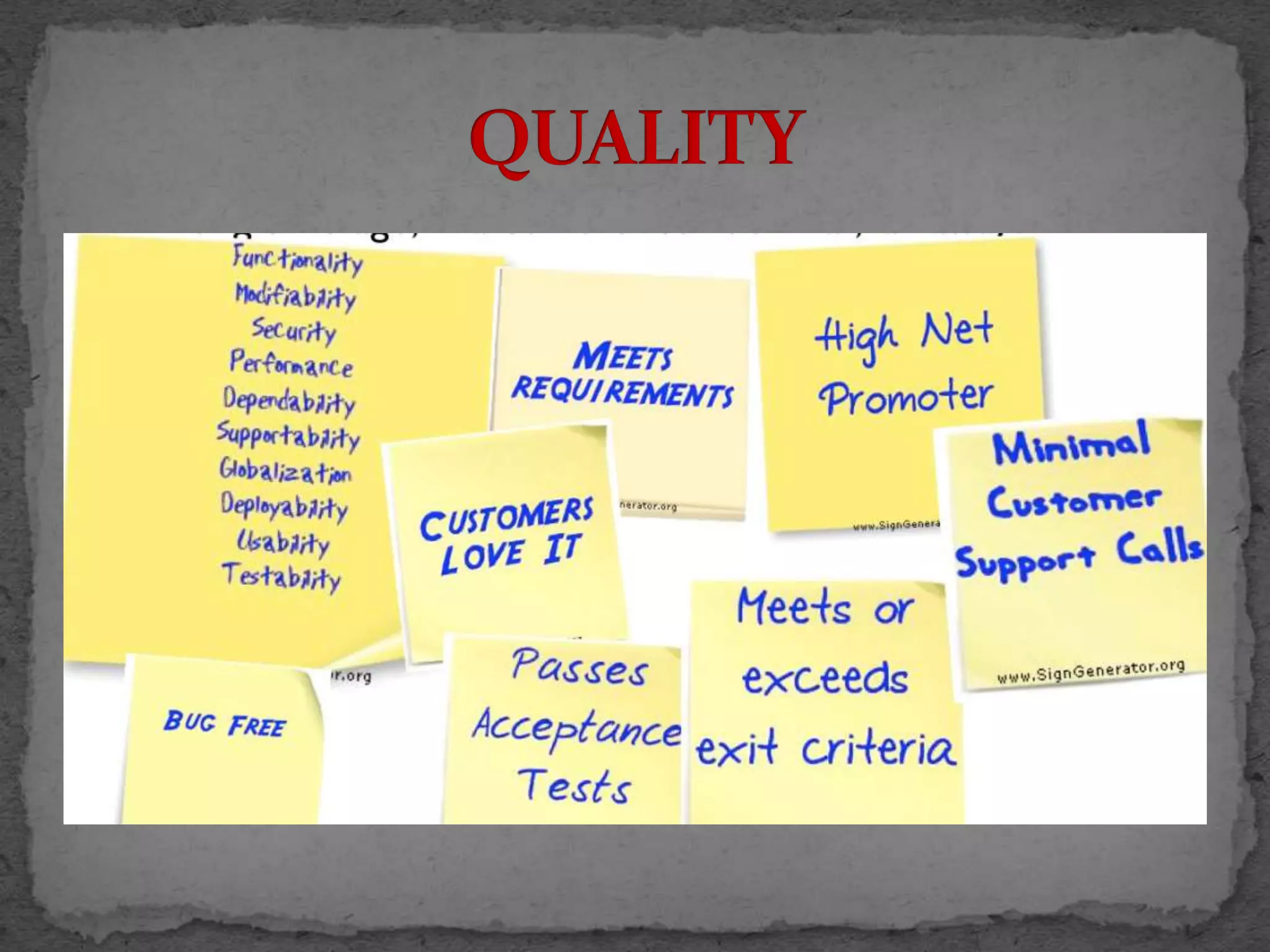
QUALITY AND EVOLUATION
OF QUALITY
ORIGIN OF QUALITY WORD
LATIN
QUALIS
(OF WHAT KIND)
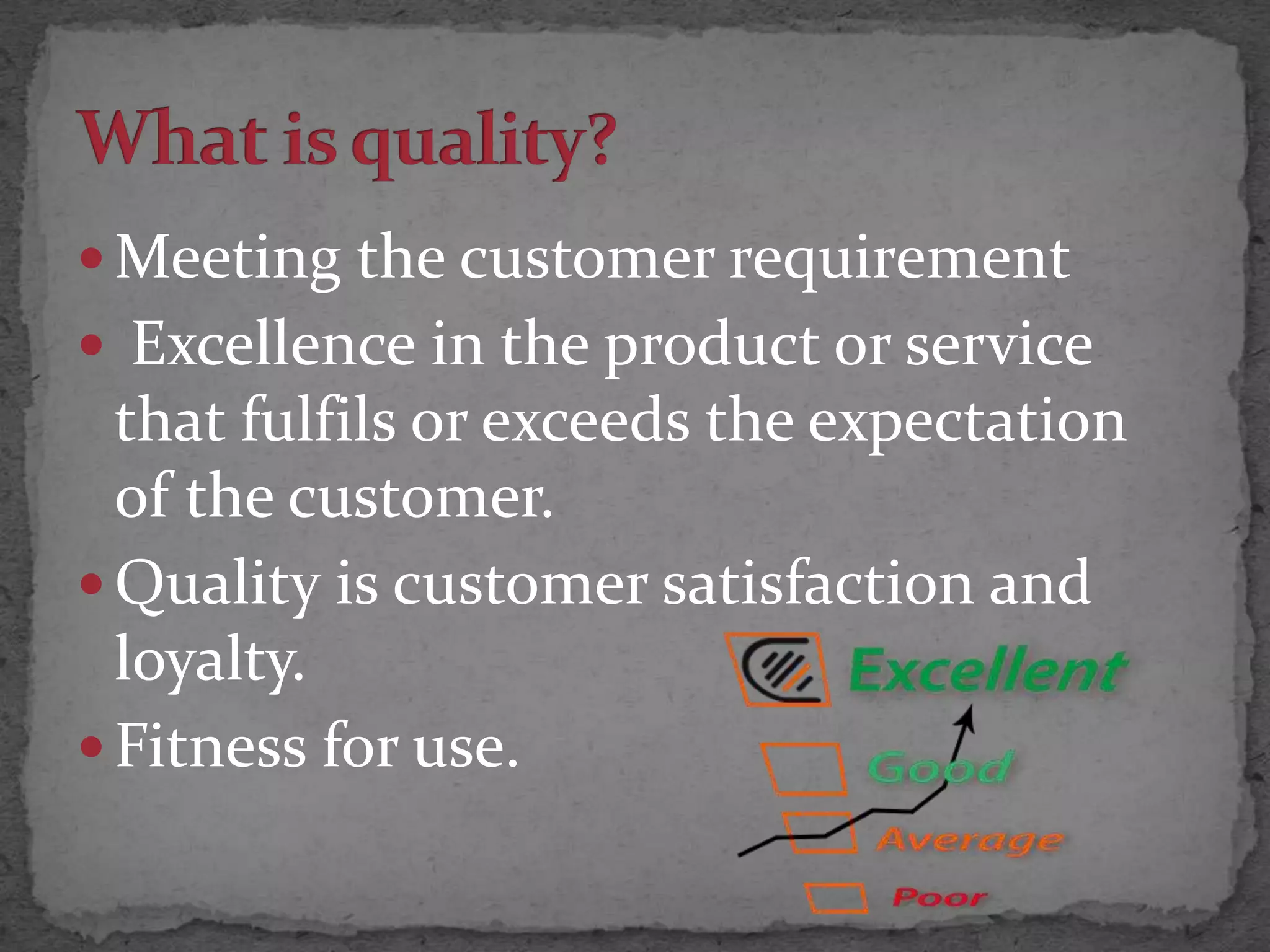
 Meeting the customer requirement
 Excellence in the product or service
that fulfils or exceeds the expectation
of the customer.
 Quality is customer satisfaction and
loyalty.
 Fitness for use.
 In manufacturing a measure of
excellence or a state of being free from
defects , deficiencies and significant
variations. It is brought by strict and
consistent commitment to certain
standards customer or user
requirements.
 Conformance to requirements (Philip
Crosby)
 Fitness for purpose or use (Juran)
 A predictable degree of uniformity and
dependability, at low cost and suited to
the market (Edward Deming)
 Synonymous with customer needs and
expectations (R J Mortiboys)
 Meeting the (stated) requirements of
the customer- now and in the future
(Mike Robinson)
 The totality of features and
characteristics of a product or service
that bears on its ability to satisfy stated
or implied needs
ISO-8402
 Degree to which a set of inherent
characteristics fulfills requirement
ISO-9000
 Transcendent definition : excellence
 Product-based definition : quantities of
product attributes
 User-based definition : fitness for
intended use , meeting or exceeding
user expectations
 Value-based definition : quality vs price
 Manufacturing-based definition :
conformance to specifications.
 Quality is never an accident , it is
always the result of high intention ,
sincere effort , intelligent direction and
skilful execution it represents the wise
choice of many alternatives.
 Quality deals with :-
 Competition
 Satisfaction
 100% result for the customers
EVOLUTION OF QUALITY
 During the 20th century , a significant body
of knowledge emerged on achieving
superior quality . Many individual
contributed to the knowledge such as:-
 Juran
 Deming
 Feigenabum
 Crosby
 Ishikawa
 J.M. Juran emphasizes the importance of a
balanced approach using managerial ,
statistical and technological concepts of
quality. He recommends an operational
framework of three quality processes,
quality planning , quality control and
quality improvement.
 W.Edwards ,which also has a broad view of
quality, which he initially summarized in 14
points aimed at the management of an
organization.
 A.V. Feigenbaum emphasizes the concept
of total quality control throughout all
function of an organization. Total quality
control really means both planning and
control.
 Philip Crosby defines quality as
“conformance to requirements” and stresses
that only performance standard is zero
defects.
 Kaoru Ishikawa showed the Japanese how
to integrate the many tools of quality
improvement , particularly the simpler tools
of analysis and problem solving.sss
Quality and evolution of quality by suhasini

Quality and evolution of quality by suhasini

  • 1.
  • 2.
  • 4.
    ORIGIN OF QUALITYWORD LATIN QUALIS (OF WHAT KIND)
  • 5.
     Meeting thecustomer requirement  Excellence in the product or service that fulfils or exceeds the expectation of the customer.  Quality is customer satisfaction and loyalty.  Fitness for use.
  • 6.
     In manufacturinga measure of excellence or a state of being free from defects , deficiencies and significant variations. It is brought by strict and consistent commitment to certain standards customer or user requirements.
  • 7.
     Conformance torequirements (Philip Crosby)  Fitness for purpose or use (Juran)  A predictable degree of uniformity and dependability, at low cost and suited to the market (Edward Deming)  Synonymous with customer needs and expectations (R J Mortiboys)  Meeting the (stated) requirements of the customer- now and in the future (Mike Robinson)
  • 8.
     The totalityof features and characteristics of a product or service that bears on its ability to satisfy stated or implied needs ISO-8402  Degree to which a set of inherent characteristics fulfills requirement ISO-9000
  • 9.
     Transcendent definition: excellence  Product-based definition : quantities of product attributes  User-based definition : fitness for intended use , meeting or exceeding user expectations  Value-based definition : quality vs price  Manufacturing-based definition : conformance to specifications.
  • 10.
     Quality isnever an accident , it is always the result of high intention , sincere effort , intelligent direction and skilful execution it represents the wise choice of many alternatives.
  • 11.
     Quality dealswith :-  Competition  Satisfaction  100% result for the customers
  • 12.
  • 14.
     During the20th century , a significant body of knowledge emerged on achieving superior quality . Many individual contributed to the knowledge such as:-  Juran  Deming  Feigenabum  Crosby  Ishikawa
  • 15.
     J.M. Juranemphasizes the importance of a balanced approach using managerial , statistical and technological concepts of quality. He recommends an operational framework of three quality processes, quality planning , quality control and quality improvement.  W.Edwards ,which also has a broad view of quality, which he initially summarized in 14 points aimed at the management of an organization.
  • 16.
     A.V. Feigenbaumemphasizes the concept of total quality control throughout all function of an organization. Total quality control really means both planning and control.  Philip Crosby defines quality as “conformance to requirements” and stresses that only performance standard is zero defects.  Kaoru Ishikawa showed the Japanese how to integrate the many tools of quality improvement , particularly the simpler tools of analysis and problem solving.sss