Learning Theories
Supporting Early
Literacy
Development
The main goal of theory in early
literacy instruction and research,
that is, to present a central premise
of a theory, to characterize the
nature of early literacy which
constitute the young learners
literacy at any point of development
and to explain how and why
emergent literacy takes place.
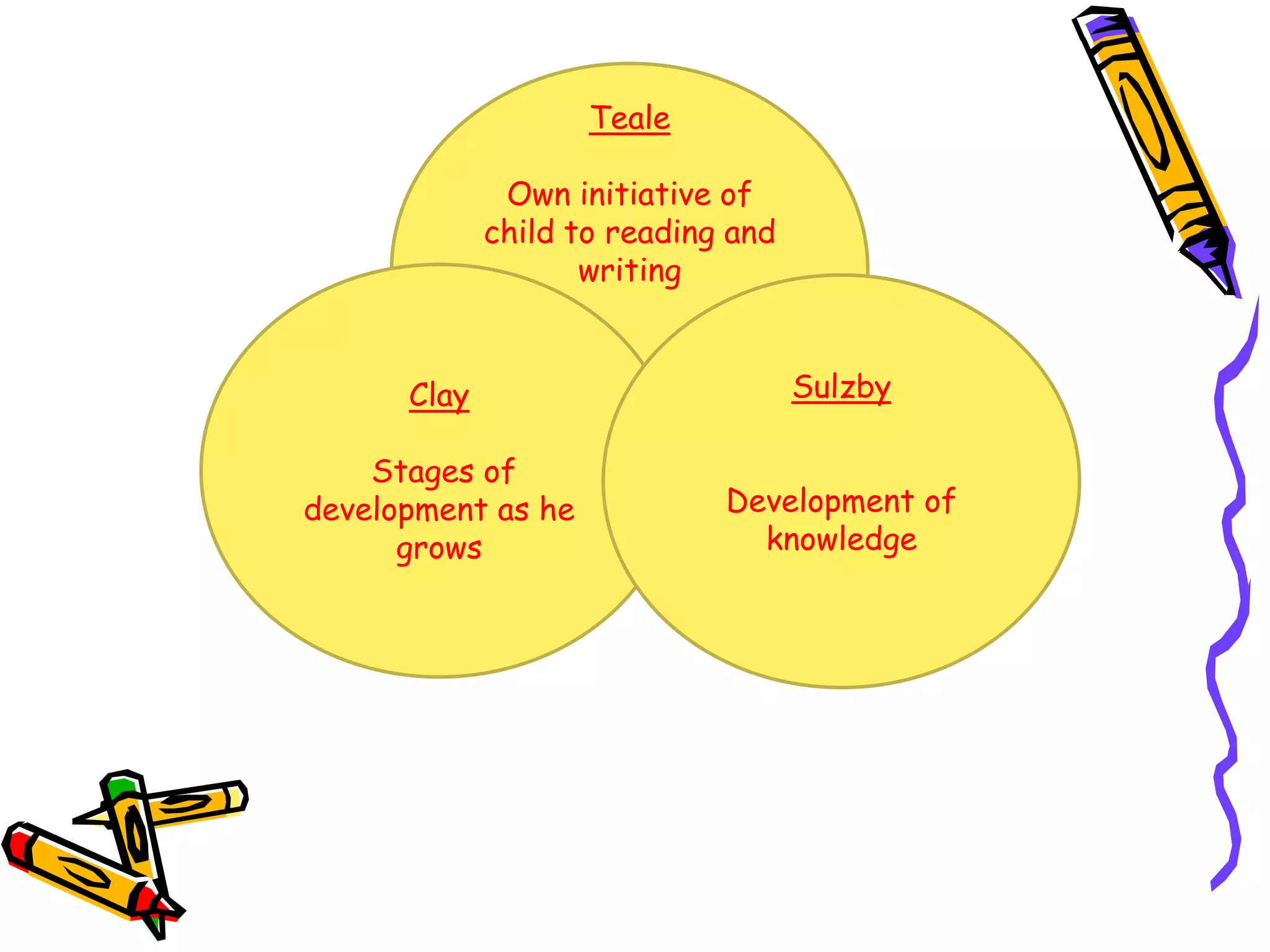
Teale
Own initiative of
child to reading and
writing

Clay

Sulzby

Stages of
development as he
grows

Development of
knowledge
Theories On Child
Development that
Support Early Literacy
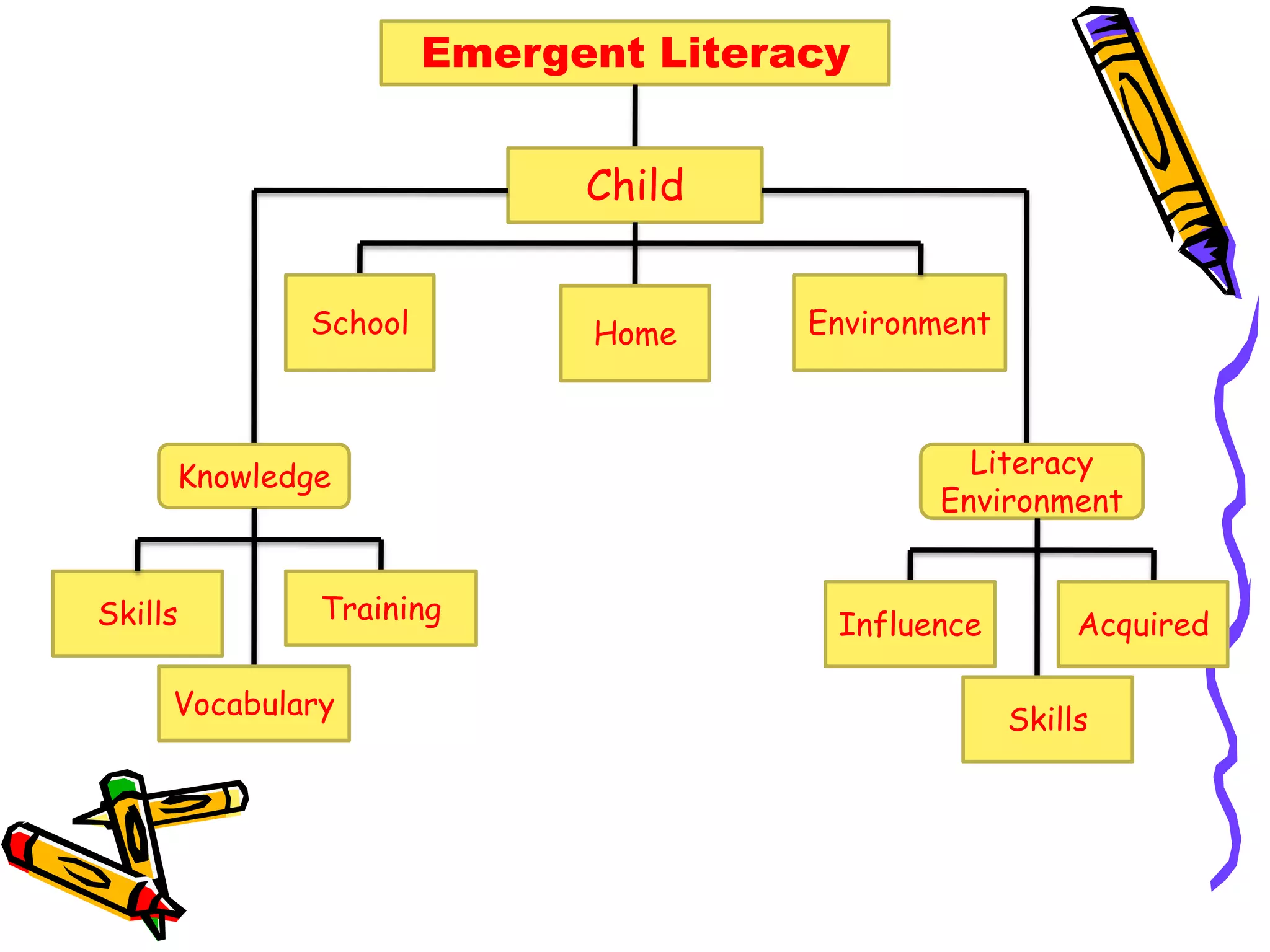
Emergent Literacy
Child
School

Knowledge

Skills

Training

Vocabulary

Home

Environment

Literacy
Environment

Influence

Acquired
Skills
Concepts on Emergent Literacy
BEFORE

NOW

Early literacy was somewhat
neglected

A great deal of attention to
literacy development in early
childhood

Little attention given to a
child’s literacy was in grade 1

Acquisition of given
information about literacy
begins at birth and continues
at the course of early
childhood
Development of literacy in a
child’s earliest years

Assumed that the beginning
of literacy was in grade 1
Speaking and listening will
learned in early childhood
while reading and writing will
learned in school age

Simultaneous development of
language-related abilities
Concepts on Emergent Literacy
BEFORE

NOW

Reading instruction was
ignored in pre-school
education

Emphasis on oral language
development and preparation for
reading

No advocacy for formal
reading instruction in early
childhood

Capitalized on child’s existing
knowledge, information about
literacy and reading and
writing experiences

Pre-schoolers were not
perceived as readers and
writers

Children are active constructor
of their own learning

Waiting for a child natural
maturation to unfold

Nurture emergent literacy
from birth to kindergarten to
grade 1
Concepts on Emergent Literacy
BEFORE

NOW

Preparation for literacy was
through the acquisition of a
set of prescribed hierarchy
of skills

Continuous building of knowledge
on oral language, reading and
writing

Progression from part to
whole, a set of skills as
prerequisites to reading

Children learn from meaningful
and functional situations

Drills from contrived

Children are interested and
attempt early to communicate
in writing reading and writing
Writing had been certainly
missing writing develops after are cultivated concurrently
reading

Learning theories supporting early literacy development

  • 1.
  • 2.
    The main goalof theory in early literacy instruction and research, that is, to present a central premise of a theory, to characterize the nature of early literacy which constitute the young learners literacy at any point of development and to explain how and why emergent literacy takes place.
  • 3.
    Teale Own initiative of childto reading and writing Clay Sulzby Stages of development as he grows Development of knowledge
  • 4.
    Theories On Child Developmentthat Support Early Literacy
  • 5.
  • 6.
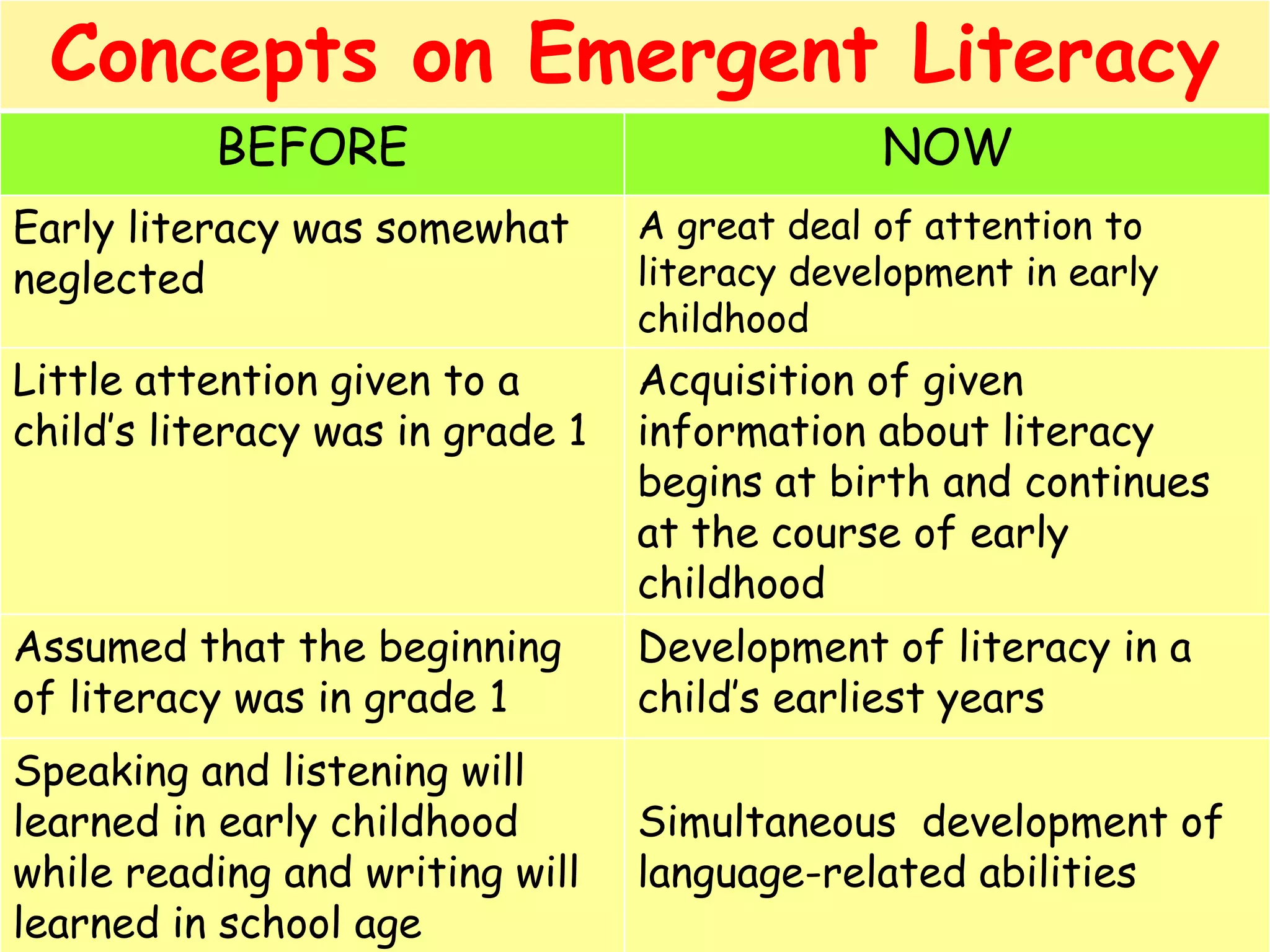
    Concepts on EmergentLiteracy BEFORE NOW Early literacy was somewhat neglected A great deal of attention to literacy development in early childhood Little attention given to a child’s literacy was in grade 1 Acquisition of given information about literacy begins at birth and continues at the course of early childhood Development of literacy in a child’s earliest years Assumed that the beginning of literacy was in grade 1 Speaking and listening will learned in early childhood while reading and writing will learned in school age Simultaneous development of language-related abilities
  • 7.
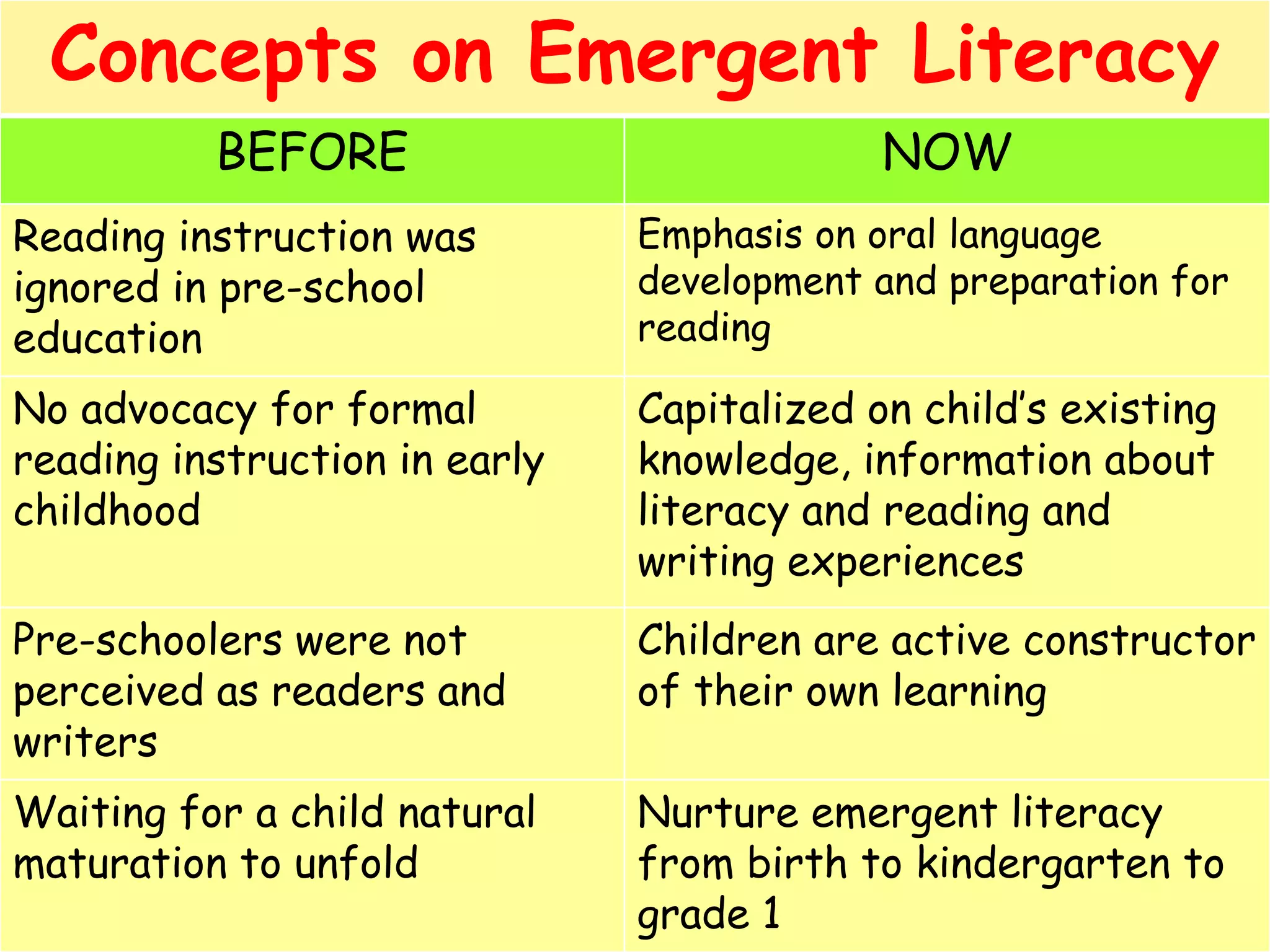
    Concepts on EmergentLiteracy BEFORE NOW Reading instruction was ignored in pre-school education Emphasis on oral language development and preparation for reading No advocacy for formal reading instruction in early childhood Capitalized on child’s existing knowledge, information about literacy and reading and writing experiences Pre-schoolers were not perceived as readers and writers Children are active constructor of their own learning Waiting for a child natural maturation to unfold Nurture emergent literacy from birth to kindergarten to grade 1
  • 8.
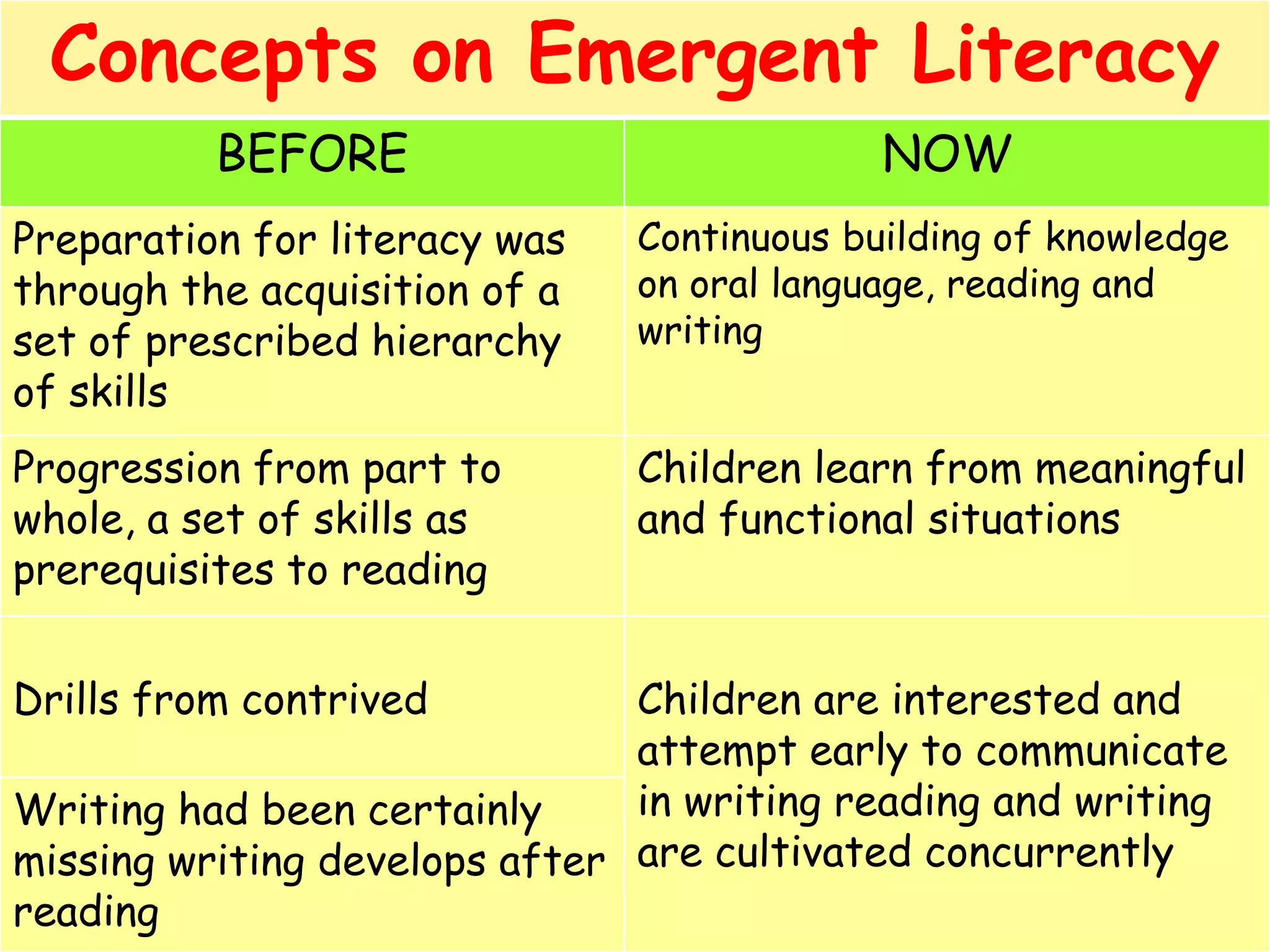
    Concepts on EmergentLiteracy BEFORE NOW Preparation for literacy was through the acquisition of a set of prescribed hierarchy of skills Continuous building of knowledge on oral language, reading and writing Progression from part to whole, a set of skills as prerequisites to reading Children learn from meaningful and functional situations Drills from contrived Children are interested and attempt early to communicate in writing reading and writing Writing had been certainly missing writing develops after are cultivated concurrently reading