Moody (1983: 23)
to "provide a framework,
or sequence of operations
to be used when we
come to actualities”
TEACHING APPROACH
• acquainted with variety of
approaches, techniques, activities
• stimulate and develop students'
interest
• knowledge of literature
IMPORTANCE
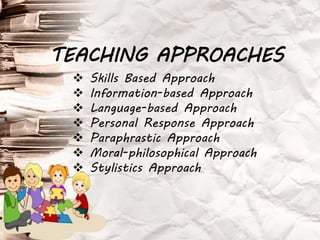
TEACHING APPROACHES
 Skills Based Approach
 Information-based Approach
 Language-based Approach
 Personal Response Approach
 Paraphrastic Approach
 Moral-philosophical Approach
 Stylistics Approach
• Gain information
• Verify existing knowledge
• Critique A writer's ideas or
writing style.
• Enjoyment
• Enhance knowledge language
being read.
SKILLS BASED APPROACH
• Determines the approach to
reading comprehension
• Text :letters, words, sentences,
paragraphs
• Reader uses knowledge, skills,
and strategies
• to determine what that
meaning is.
PURPOSE OF READING
• teaching knowledge about
literature
• source of information
• examine history, historical
background
• characteristics of literary
movements
INFORMATION-BASED
APPROACH
• Incorporate language and
literature syllabus
• By studying the language.
LANGUAGE BASED
APPROACH
• Encourages learners 'active involvement
• emotionally, intellectually,
• draw own experiences, feelings, opinions
also known as Thematic approach
• texts chosen according to same theme
compare to learner
PERSONAL
RESPONSE APPROACH
(Thematic approach)
• Surface meaning of text
• Paraphrase ,
• Re-word the story in simpler
language
• Translating it into another language
• Beginners of target language
PARAPHRASTIC APPROACH
• Read a particular literary text
• Search for moral values
• Awareness of values
• Assist students to understand
themes in future readings.
MORAL-PHILOSOPHICAL
APPROACH
• closer understanding
,appreciation of literary text
• combination of linguistic analysis
• and literary critic (Lazar, 1993)
STYLISTICS APPROACH

Approaches in Teaching Literature

  • 2.
    Moody (1983: 23) to"provide a framework, or sequence of operations to be used when we come to actualities” TEACHING APPROACH
  • 3.
    • acquainted withvariety of approaches, techniques, activities • stimulate and develop students' interest • knowledge of literature IMPORTANCE
  • 4.
    TEACHING APPROACHES  SkillsBased Approach  Information-based Approach  Language-based Approach  Personal Response Approach  Paraphrastic Approach  Moral-philosophical Approach  Stylistics Approach
  • 5.
    • Gain information •Verify existing knowledge • Critique A writer's ideas or writing style. • Enjoyment • Enhance knowledge language being read. SKILLS BASED APPROACH
  • 6.
    • Determines theapproach to reading comprehension • Text :letters, words, sentences, paragraphs • Reader uses knowledge, skills, and strategies • to determine what that meaning is. PURPOSE OF READING
  • 7.
    • teaching knowledgeabout literature • source of information • examine history, historical background • characteristics of literary movements INFORMATION-BASED APPROACH
  • 8.
    • Incorporate languageand literature syllabus • By studying the language. LANGUAGE BASED APPROACH
  • 9.
    • Encourages learners'active involvement • emotionally, intellectually, • draw own experiences, feelings, opinions also known as Thematic approach • texts chosen according to same theme compare to learner PERSONAL RESPONSE APPROACH (Thematic approach)
  • 10.
    • Surface meaningof text • Paraphrase , • Re-word the story in simpler language • Translating it into another language • Beginners of target language PARAPHRASTIC APPROACH
  • 11.
    • Read aparticular literary text • Search for moral values • Awareness of values • Assist students to understand themes in future readings. MORAL-PHILOSOPHICAL APPROACH
  • 12.
    • closer understanding ,appreciationof literary text • combination of linguistic analysis • and literary critic (Lazar, 1993) STYLISTICS APPROACH