A . O R A L S K I L L S
B . L I T E R A C Y S K I L L S
C . R E C E P T I V E A N D P R O D U C T I V E S K I L L S
Macro Skills
A. Oral Skills
1. Listening
2. Speaking
1. Listening
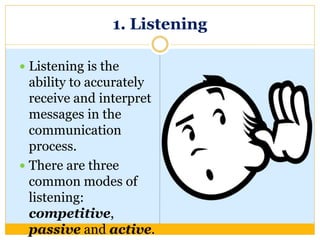
 Listening is the
ability to accurately
receive and interpret
messages in the
communication
process.
 There are three
common modes of
listening:
competitive,
passive and active.
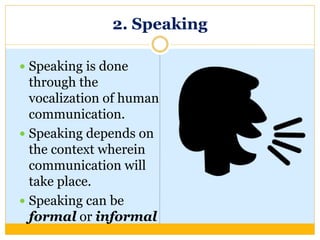
2. Speaking
 Speaking is done
through the
vocalization of human
communication.
 Speaking depends on
the context wherein
communication will
take place.
 Speaking can be
formal or informal
B. Literacy Skills
1. Reading
2. Writing
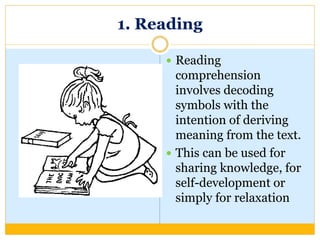
1. Reading
 Reading
comprehension
involves decoding
symbols with the
intention of deriving
meaning from the text.
 This can be used for
sharing knowledge, for
self-development or
simply for relaxation
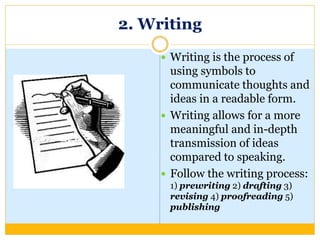
2. Writing
 Writing is the process of
using symbols to
communicate thoughts and
ideas in a readable form.
 Writing allows for a more
meaningful and in-depth
transmission of ideas
compared to speaking.
 Follow the writing process:
1) prewriting 2) drafting 3)
revising 4) proofreading 5)
publishing
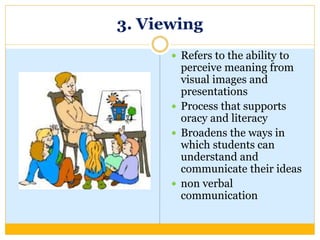
3. Viewing
 Refers to the ability to
perceive meaning from
visual images and
presentations
 Process that supports
oracy and literacy
 Broadens the ways in
which students can
understand and
communicate their ideas
 non verbal
communication
 ways to represent ideas visually:
Drawings
Photographs
Organizational graphs and charts
Videos
Multimedia
WebPages – and web based correspondence
Types of viewing:
 Visual Literacy
 Ability to interpret meaning from visual images (Georgis,
1999)
 Ability to construct effective visuals in order to convey
ideas to others (Valmont, 2003; Heinich, 1999)
 Critical Viewing
 Ability to carefully comprehend and evaluate information
presented by visual media
 Ability to think critically about the composition of the
picture
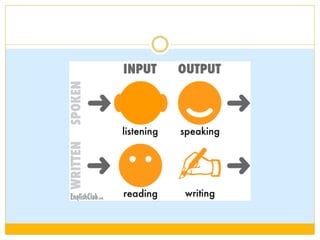
4. Receptive and Productive
ORAL
SKILLS
LITERACY
SKILLS
RECEPTIVE
SKILLS
Listening Reading
PRODUCTIVE
SKILLS
Speaking Writing
Connection
Significance
 To effectively communicate
 To understand subtext and various aspects
of communication
 To solve future problems or successfully
achieve objectives which essentially derive
from effective communication
Significance
 To accomplish four main purposes
including: expressing wants and needs,
developing social closeness, exchanging
information, and fulfilling social
etiquette routines (Light, 1997)
A . D E F I N I T I O N
B . D E L L H Y M E S
C . C O M P O N E N T S
D . S P E A K I N G M O D E L
Communicative
Competence
A. Communicative Competence
 “The ability to function in a truly
communicative setting.”
 Not limited to linguistic forms
 Social rules and context
 Coined by Dell Hymes
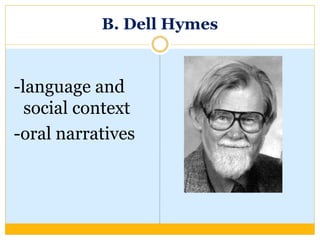
B. Dell Hymes
-language and
social context
-oral narratives
He says…
 “…a normal child acquires knowledge of sentences
not only as grammatical, but also as appropriate.
He or she acquires competence as to when to
speak, when not, and as to what to talk
about with whom, when, where, in what
manner. In short, a child becomes able to
accomplish a repertoire of speech acts, to take part
in speech events, and to evaluate their
accomplishment by others.”
(Hymes 1972, 277)
5 Components
1. Linguistic/Grammatical Competence
 Knowledge of language code:
Phonology
Morphology
Syntax
Lexicon
2. Sociolinguistic Competence
 Knowledge of socio-cultural use of the
language
3. Cultural Competence
 Awareness and sensitivity to other’s
culture and tradition.
Setting
Topic
Taboos
4. Discourse Competence
 Knowledge of producing ,
comprehending , combing oral and
written language:
Organizing words, phrases, sentences
5. Strategic Competence
 Ability to recognize, adjust and repair
verbal and non verbal communication
errors:
Paraphrasing
Shifting
Avoidance
S-P-E-A-K-I-N-G MODEL
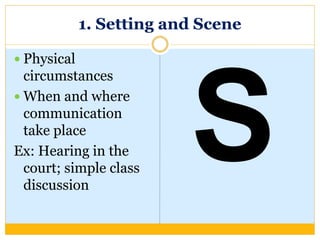
1. Setting and Scene
 Physical
circumstances
 When and where
communication
take place
Ex: Hearing in the
court; simple class
discussion
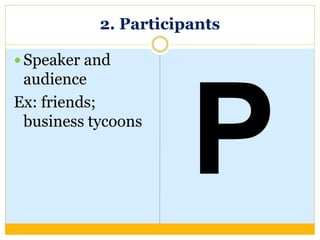
2. Participants
 Speaker and
audience
Ex: friends;
business tycoons
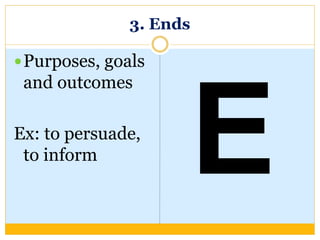
3. Ends
Purposes, goals
and outcomes
Ex: to persuade,
to inform
4. Act Sequence
Form and order
of event
Ex: begin-
middle-end
5. Key
Tone, manner
or spirit
Ex: lively,
serious
6. Instrumentalities
Forms and
styles of speech
Ex: informal,
formal
7. Norms
Social rules
Ex: Do’s and
Don’ts
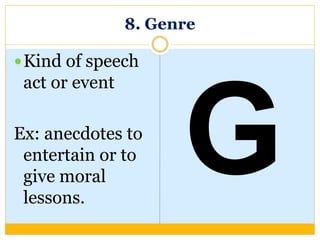
8. Genre
Kind of speech
act or event
Ex: anecdotes to
entertain or to
give moral
lessons.
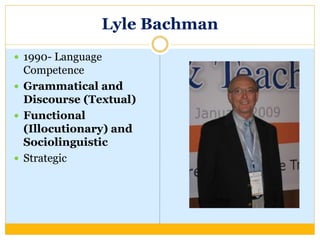
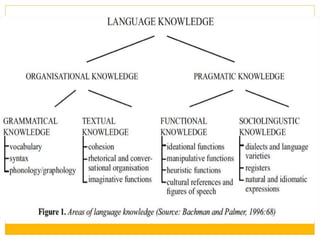
Lyle Bachman
 1990- Language
Competence
 Grammatical and
Discourse (Textual)
 Functional
(Illocutionary) and
Sociolinguistic
 Strategic
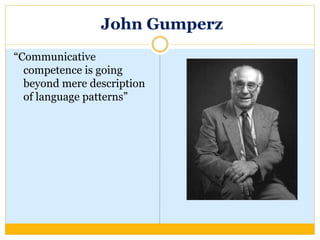
John Gumperz
“Communicative
competence is going
beyond mere description
of language patterns”
James Cummins
 CALP- Cognitive/Academic Language
Proficiency
 School oriented language- Context Reduced
 BICS- Basic Interpersonal Communication
Skills
 Face to face communication- Context Embedded
 Basically, greatly developing one’s macro
skills promotes communicative competence.
 The macro skills play a key role in fostering
learners’ communicative competence since:
 they are the manifestations of interpreting and
producing a spoken or written piece of discourse
 as well as a way of manifesting the rest of the
components of the communicative competence
construct.

Macro Skills and Communicative Competence

  • 1.
    A . OR A L S K I L L S B . L I T E R A C Y S K I L L S C . R E C E P T I V E A N D P R O D U C T I V E S K I L L S Macro Skills
  • 2.
    A. Oral Skills 1.Listening 2. Speaking
  • 3.
    1. Listening  Listeningis the ability to accurately receive and interpret messages in the communication process.  There are three common modes of listening: competitive, passive and active.
  • 4.
    2. Speaking  Speakingis done through the vocalization of human communication.  Speaking depends on the context wherein communication will take place.  Speaking can be formal or informal
  • 5.
    B. Literacy Skills 1.Reading 2. Writing
  • 6.
    1. Reading  Reading comprehension involvesdecoding symbols with the intention of deriving meaning from the text.  This can be used for sharing knowledge, for self-development or simply for relaxation
  • 7.
    2. Writing  Writingis the process of using symbols to communicate thoughts and ideas in a readable form.  Writing allows for a more meaningful and in-depth transmission of ideas compared to speaking.  Follow the writing process: 1) prewriting 2) drafting 3) revising 4) proofreading 5) publishing
  • 8.
    3. Viewing  Refersto the ability to perceive meaning from visual images and presentations  Process that supports oracy and literacy  Broadens the ways in which students can understand and communicate their ideas  non verbal communication
  • 9.
     ways torepresent ideas visually: Drawings Photographs Organizational graphs and charts Videos Multimedia WebPages – and web based correspondence
  • 10.
    Types of viewing: Visual Literacy  Ability to interpret meaning from visual images (Georgis, 1999)  Ability to construct effective visuals in order to convey ideas to others (Valmont, 2003; Heinich, 1999)  Critical Viewing  Ability to carefully comprehend and evaluate information presented by visual media  Ability to think critically about the composition of the picture
  • 11.
    4. Receptive andProductive ORAL SKILLS LITERACY SKILLS RECEPTIVE SKILLS Listening Reading PRODUCTIVE SKILLS Speaking Writing Connection
  • 13.
    Significance  To effectivelycommunicate  To understand subtext and various aspects of communication  To solve future problems or successfully achieve objectives which essentially derive from effective communication
  • 14.
    Significance  To accomplishfour main purposes including: expressing wants and needs, developing social closeness, exchanging information, and fulfilling social etiquette routines (Light, 1997)
  • 15.
    A . DE F I N I T I O N B . D E L L H Y M E S C . C O M P O N E N T S D . S P E A K I N G M O D E L Communicative Competence
  • 16.
    A. Communicative Competence “The ability to function in a truly communicative setting.”  Not limited to linguistic forms  Social rules and context  Coined by Dell Hymes
  • 17.
    B. Dell Hymes -languageand social context -oral narratives
  • 18.
    He says…  “…anormal child acquires knowledge of sentences not only as grammatical, but also as appropriate. He or she acquires competence as to when to speak, when not, and as to what to talk about with whom, when, where, in what manner. In short, a child becomes able to accomplish a repertoire of speech acts, to take part in speech events, and to evaluate their accomplishment by others.” (Hymes 1972, 277)
  • 19.
  • 20.
    1. Linguistic/Grammatical Competence Knowledge of language code: Phonology Morphology Syntax Lexicon
  • 21.
    2. Sociolinguistic Competence Knowledge of socio-cultural use of the language
  • 22.
    3. Cultural Competence Awareness and sensitivity to other’s culture and tradition. Setting Topic Taboos
  • 23.
    4. Discourse Competence Knowledge of producing , comprehending , combing oral and written language: Organizing words, phrases, sentences
  • 24.
    5. Strategic Competence Ability to recognize, adjust and repair verbal and non verbal communication errors: Paraphrasing Shifting Avoidance
  • 25.
  • 26.
    1. Setting andScene  Physical circumstances  When and where communication take place Ex: Hearing in the court; simple class discussion
  • 27.
    2. Participants  Speakerand audience Ex: friends; business tycoons
  • 28.
    3. Ends Purposes, goals andoutcomes Ex: to persuade, to inform
  • 29.
    4. Act Sequence Formand order of event Ex: begin- middle-end
  • 30.
    5. Key Tone, manner orspirit Ex: lively, serious
  • 31.
    6. Instrumentalities Forms and stylesof speech Ex: informal, formal
  • 32.
    7. Norms Social rules Ex:Do’s and Don’ts
  • 33.
    8. Genre Kind ofspeech act or event Ex: anecdotes to entertain or to give moral lessons.
  • 34.
    Lyle Bachman  1990-Language Competence  Grammatical and Discourse (Textual)  Functional (Illocutionary) and Sociolinguistic  Strategic
  • 36.
    John Gumperz “Communicative competence isgoing beyond mere description of language patterns”
  • 37.
    James Cummins  CALP-Cognitive/Academic Language Proficiency  School oriented language- Context Reduced  BICS- Basic Interpersonal Communication Skills  Face to face communication- Context Embedded
  • 39.
     Basically, greatlydeveloping one’s macro skills promotes communicative competence.  The macro skills play a key role in fostering learners’ communicative competence since:  they are the manifestations of interpreting and producing a spoken or written piece of discourse  as well as a way of manifesting the rest of the components of the communicative competence construct.

Editor's Notes

  • #9 enhances both listening and reading skills with levels literal, reorganizational, inferential, evaluation and appreciation comprehension.
  • #10 https://www.academia.edu/4612918/VIEWING_COMPREHENSION
  • #11 CV – such as: by television, video recordings Ability to analyze the construction of isolated images
  • #14 Communicative competence is important for just about anyone who wishes to communicate with other people in any type of relationship. Arguments and disagreements can often be avoided if people are able to effectively express meaning in a message. Politicians and other public speakers often seek high levels of communicative competence to be able to effectively convey meaning and express ideas to others. People who are learning a second language also tend to focus on this type of competence to ensure they understand subtext and various aspects of communication within that language that may be subtle and complex.