Transformational learning – is about
change, dramatic, fundamental
change in the way we see ourselves
and the world in which we live.
Transformative learning – involves
experiencing a deep, structural shift
in the basic premises of thought,
feelings and actions.
Mezirow (1994) described
the transformational learning theory
as being constructivist, an
orientation which holds that the
way learners interpret and
reinterpret their sense experience
is central to making meaning
and hence learning.
This theory involves two kinds
of learning:
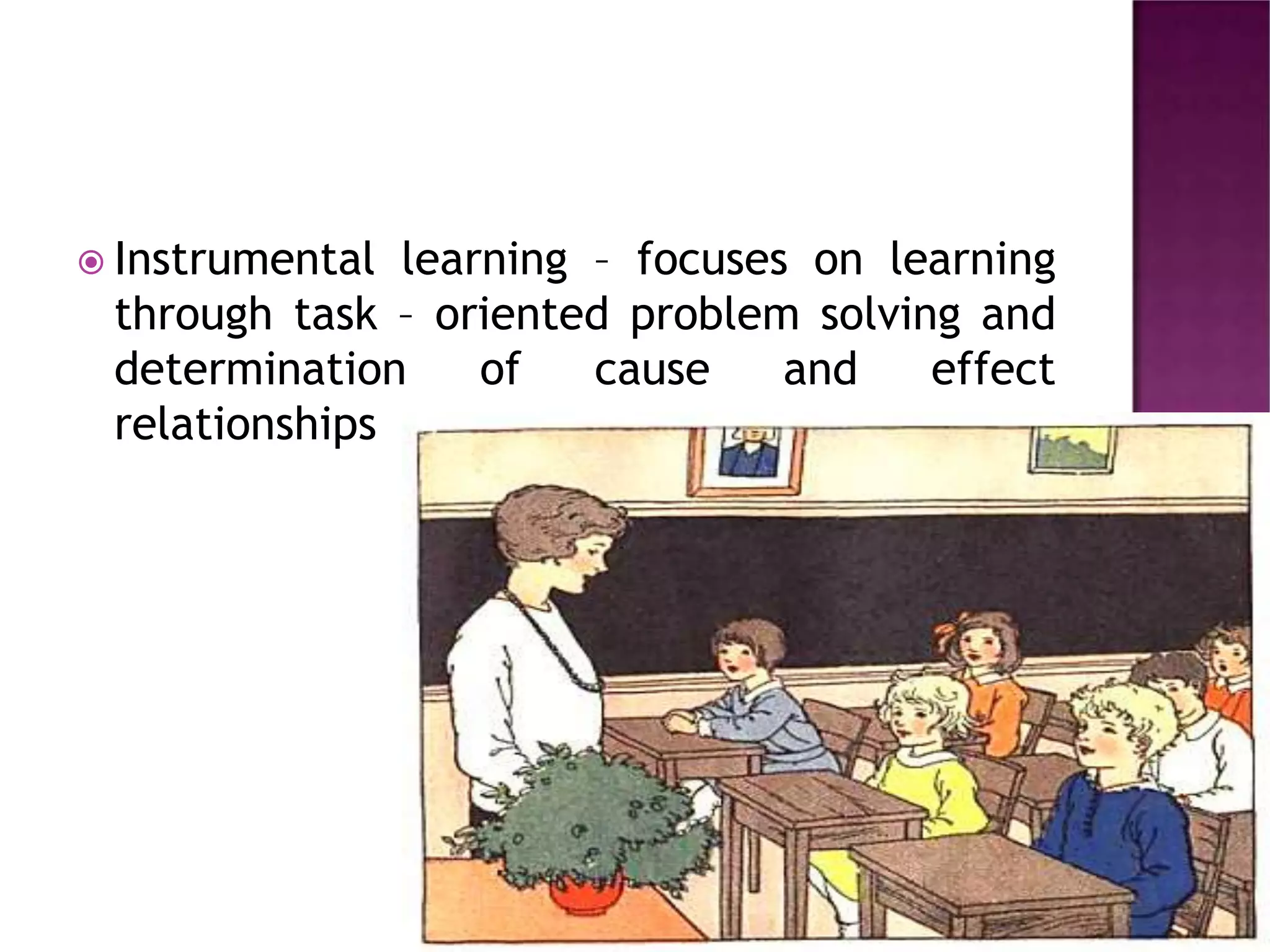
 Instrumental learning – focuses on learning
through task – oriented problem solving and
determination of cause and effect
relationships
 Communicative learning – is involved with
how others communicate their feelings, need
and desires with another person. It helps the
learners to become critical, autonomous and
responsible thinkers
 Perspective transformation – leading to
transformative learning occurs infrequently.
Mezirow believes that it usually results from
a disorienting dilemma, which is triggered by
a life crisis or major life transition, although
it may also result from an accumulation of
transformations in meaning schemes over a
period of time
 Process of Perspective Transformation
 Psychological (changes in understanding of
the self)
 Convictional (revision of belief systems)
 Behavioral (changes in lifestyle)
From Mezirow (1997) , the goal of
transformational learning is to change the
“frame of reference”, which is the collective
assumptions through which we interpret and
understand the world we live in.
 Elements of frame of reference: (Mezirow
1997)
 Habits of mind – are always affected and
shaped by assumptions which build on
cultural, social, educational and political
codes
 Point of View – Originates from habits of
mind
 Learning occurs in one of four ways:
(Mezirow 1997)
 By elaborating existing frames of reference
 By learning new frames of reference
 By transforming points of view, or
 By transforming habits of mind
 Levels of Cognitive processing: (Mezirow
1997)
 Cognitive processing: First order thinking
 Compute, memorize, read and comprehend
 Cognitive processing: Metacognition
 Monitoring progress and products of first
order thinking
 Cognitive processing: Transformative
learning
 Reflecting on the limits of knowledge, the certainty of
knowledge, and the criteria for knowing
 The following are the reasons to consider
transformative learning theory and practice for
students: (Guide for Educators of Adult, 1994).
 The transition to adult life. This often involves
personal transformation as students move from a
safe school environment to take on complex
work, study and social responsibilities
 When students are led to a deeper understanding
of concepts and issues their fundamental beliefs
an assumptions may be challenged leading to a
transformation of perspective or overview
 As we ask students to develop critical and
reflective thinking skills and encourage them
to care about the world around them they
may decide that some degree of personal or
social transformation is required.
 We are living through a period of
transformational change in society and
culture
 The following are the key points to apply
transformational learning in practice (Imel, 1998,
Taylor, 1998)
 Ideal learning condition – promotes a sense of
safety, openness, trust and care
 Effective instructional methods – support a
learner – centered approach, promote
student autonomy, participation and
collaboration.
 Sensitive relationship with the students – this
provides the students with quality learning
experience by being trusting, empathetic,
caring, authentic and sincere
 The following are instructional practices that
can be used to increase participation and
engagement in the classroom (de
Frondeville)
 Creating an emotionally safe classroom
students who have been shamed or belittled
by the teacher or another student will not
effectively engage in challenging tasks
 Creating an intellectually safe classroom –
begin every activity with a task that 95
percent of the class can do without your help
 Cultivating engagement meter – be acutely
aware of when your students are paying
strong attention or are deeply engaged in
their tasks
 Participating journal or blog writing to
communicate with students – let your
students write with regular reflections on the
work they have done
 Teaching self – awareness about knowledge –
creating a culture of explanation instead of a
culture of right answer
 Using the design process to increase the
quality of work – this is a draft – and –
revision process used by many professionals
to increase the quality of their work
 Marketing the projects – assign projects
which incorporate authentic tasks that will
help students in their lives, jobs or
relationships
Some issues
 Educational Implications
There have been plenty of criticism
about education that aims at an end product,
rather than focusing on the learning process.
The lack of a priority of experience and
access to different areas of learning was also
mentioned.
To determine what to learn and how to
learn requires a dialogue among all those
who are involved in the educational process.
 Remember:
Transformative learning involves the
transformation of frame of reference (points
of view, habits of mind, worldviews) and
critical reflection on how we come to know
(Mezirow, 1997).
In order to foster transformative
learning, the educator should assist learners
in becoming aware and critical of
assumptions

Transformative Education

  • 2.
    Transformational learning –is about change, dramatic, fundamental change in the way we see ourselves and the world in which we live.
  • 3.
    Transformative learning –involves experiencing a deep, structural shift in the basic premises of thought, feelings and actions.
  • 4.
    Mezirow (1994) described thetransformational learning theory as being constructivist, an orientation which holds that the way learners interpret and reinterpret their sense experience is central to making meaning and hence learning. This theory involves two kinds of learning:
  • 5.
     Instrumental learning– focuses on learning through task – oriented problem solving and determination of cause and effect relationships
  • 6.
     Communicative learning– is involved with how others communicate their feelings, need and desires with another person. It helps the learners to become critical, autonomous and responsible thinkers
  • 7.
     Perspective transformation– leading to transformative learning occurs infrequently. Mezirow believes that it usually results from a disorienting dilemma, which is triggered by a life crisis or major life transition, although it may also result from an accumulation of transformations in meaning schemes over a period of time
  • 8.
     Process ofPerspective Transformation  Psychological (changes in understanding of the self)  Convictional (revision of belief systems)  Behavioral (changes in lifestyle)
  • 9.
    From Mezirow (1997), the goal of transformational learning is to change the “frame of reference”, which is the collective assumptions through which we interpret and understand the world we live in.
  • 10.
     Elements offrame of reference: (Mezirow 1997)  Habits of mind – are always affected and shaped by assumptions which build on cultural, social, educational and political codes  Point of View – Originates from habits of mind
  • 11.
     Learning occursin one of four ways: (Mezirow 1997)  By elaborating existing frames of reference  By learning new frames of reference  By transforming points of view, or  By transforming habits of mind
  • 12.
     Levels ofCognitive processing: (Mezirow 1997)  Cognitive processing: First order thinking  Compute, memorize, read and comprehend  Cognitive processing: Metacognition  Monitoring progress and products of first order thinking  Cognitive processing: Transformative learning  Reflecting on the limits of knowledge, the certainty of knowledge, and the criteria for knowing
  • 13.
     The followingare the reasons to consider transformative learning theory and practice for students: (Guide for Educators of Adult, 1994).  The transition to adult life. This often involves personal transformation as students move from a safe school environment to take on complex work, study and social responsibilities  When students are led to a deeper understanding of concepts and issues their fundamental beliefs an assumptions may be challenged leading to a transformation of perspective or overview
  • 14.
     As weask students to develop critical and reflective thinking skills and encourage them to care about the world around them they may decide that some degree of personal or social transformation is required.  We are living through a period of transformational change in society and culture
  • 15.
     The followingare the key points to apply transformational learning in practice (Imel, 1998, Taylor, 1998)  Ideal learning condition – promotes a sense of safety, openness, trust and care
  • 16.
     Effective instructionalmethods – support a learner – centered approach, promote student autonomy, participation and collaboration.  Sensitive relationship with the students – this provides the students with quality learning experience by being trusting, empathetic, caring, authentic and sincere
  • 17.
     The followingare instructional practices that can be used to increase participation and engagement in the classroom (de Frondeville)  Creating an emotionally safe classroom students who have been shamed or belittled by the teacher or another student will not effectively engage in challenging tasks  Creating an intellectually safe classroom – begin every activity with a task that 95 percent of the class can do without your help
  • 18.
     Cultivating engagementmeter – be acutely aware of when your students are paying strong attention or are deeply engaged in their tasks  Participating journal or blog writing to communicate with students – let your students write with regular reflections on the work they have done  Teaching self – awareness about knowledge – creating a culture of explanation instead of a culture of right answer
  • 19.
     Using thedesign process to increase the quality of work – this is a draft – and – revision process used by many professionals to increase the quality of their work  Marketing the projects – assign projects which incorporate authentic tasks that will help students in their lives, jobs or relationships
  • 20.
    Some issues  EducationalImplications There have been plenty of criticism about education that aims at an end product, rather than focusing on the learning process. The lack of a priority of experience and access to different areas of learning was also mentioned. To determine what to learn and how to learn requires a dialogue among all those who are involved in the educational process.
  • 21.
     Remember: Transformative learninginvolves the transformation of frame of reference (points of view, habits of mind, worldviews) and critical reflection on how we come to know (Mezirow, 1997). In order to foster transformative learning, the educator should assist learners in becoming aware and critical of assumptions