 SCHEMA
-it is an individuals way to understand or create
meaning about a thing or experience.
 ASSIMILATION
-this is the process of fitting a new experience
into an existing or previously created cognitive
structure or schema.
 ACCOMMODATION
-this is a process of creating a new schema.
•EQUILIBRIUM
-is achieving proper balance between
assimilation and accommodation.
COGNITIVE DISEQUILIBRIUM
- there is discrepancy between what is
perceived and what is understood.
PIAGET’S STAGES OF COGNITIVE
DEVELOPMENT
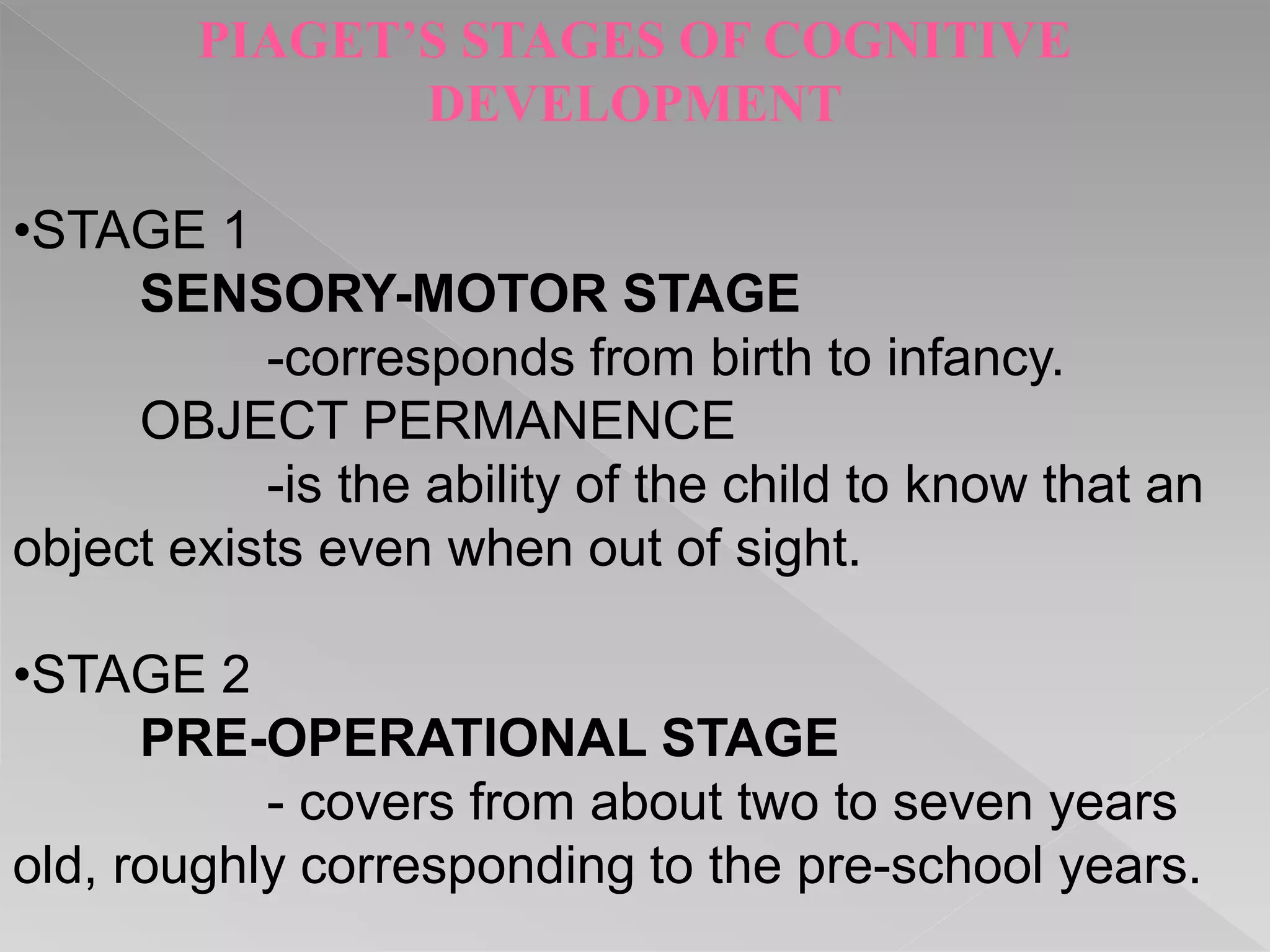
•STAGE 1
SENSORY-MOTOR STAGE
-corresponds from birth to infancy.
OBJECT PERMANENCE
-is the ability of the child to know that an
object exists even when out of sight.
•STAGE 2
PRE-OPERATIONAL STAGE
- covers from about two to seven years
old, roughly corresponding to the pre-school years.
-intelligence at this stage is intuitive in nature.
SYMBOLIC FUNCTION
- the ability to represent objects and
events.
- gradually develops in the period
between 2 to 7 years.
ECOGENTRISM
- is the tendency of the child to only see
his point of view and to assume that everyone has
his same point of view.
CENTRATION
- the tendency of a child to only focus on
one aspect of a thing or event and exclude other
aspects.
IRREVERSIBILITY
- pre-operational children still have the
inability to reverse their thinking.
ANIMISM
- the tendency of children to attribute
human like traits or characteristics to inanimate
objects.
TRANSDUCTIVE REASONING
- pre-operational child’s type of reasoning
that is neither inductive nor deductive.
If A cause B, then B causes A.
• STAGE 3
CONCRETE-OPERATIONAL STAGE
- is characterized by the ability of the child
to think logically but only in terms of concrete
objects. This covers approximately the ages between
8-11 years.
DECENTERING
- refers to the ability of the child to
perceive the diff. features of objects and situations
REVERSIBILITY
- the child can now follow that certain
operations can be done in reverse.
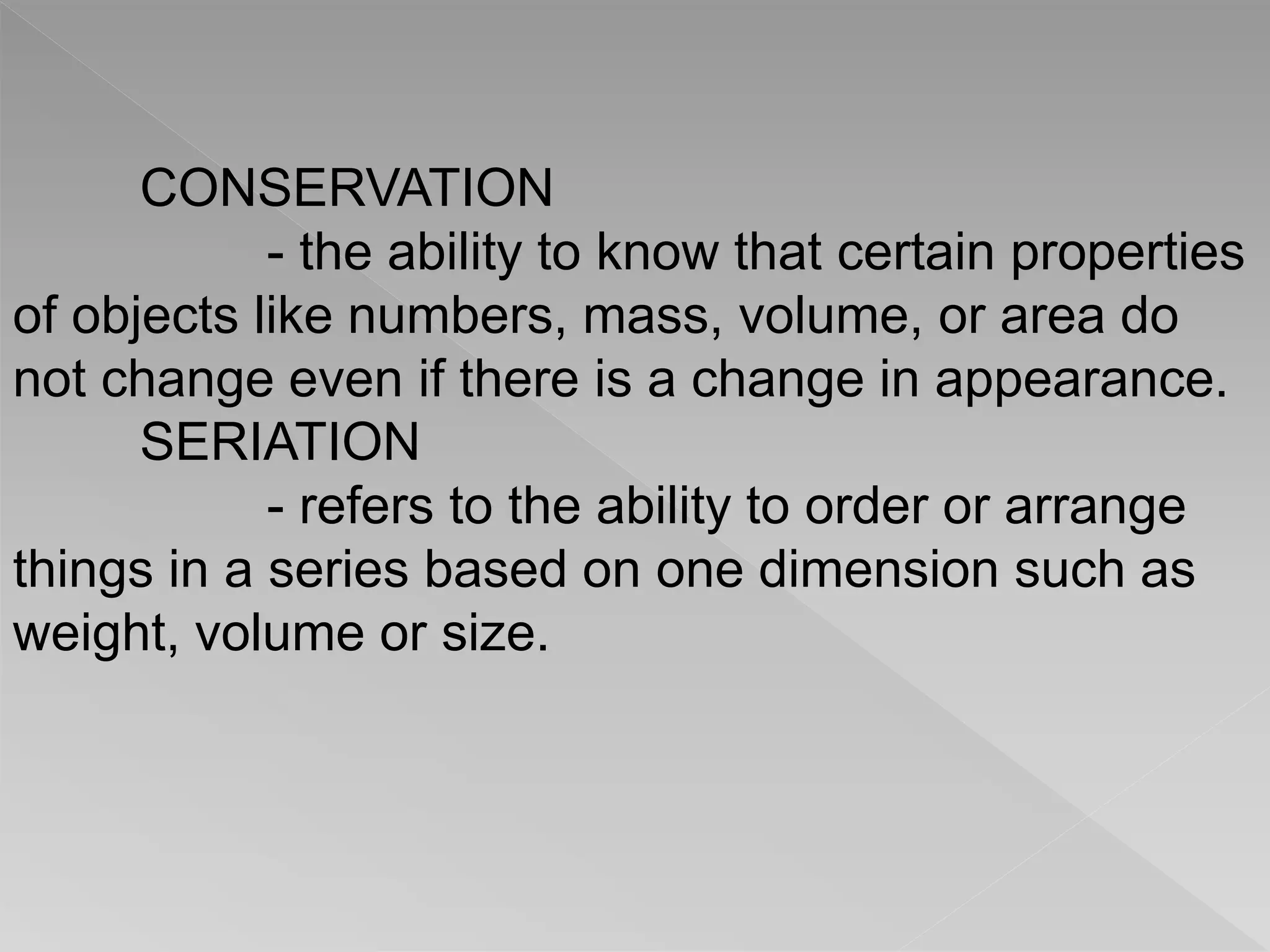
CONSERVATION
- the ability to know that certain properties
of objects like numbers, mass, volume, or area do
not change even if there is a change in appearance.
SERIATION
- refers to the ability to order or arrange
things in a series based on one dimension such as
weight, volume or size.
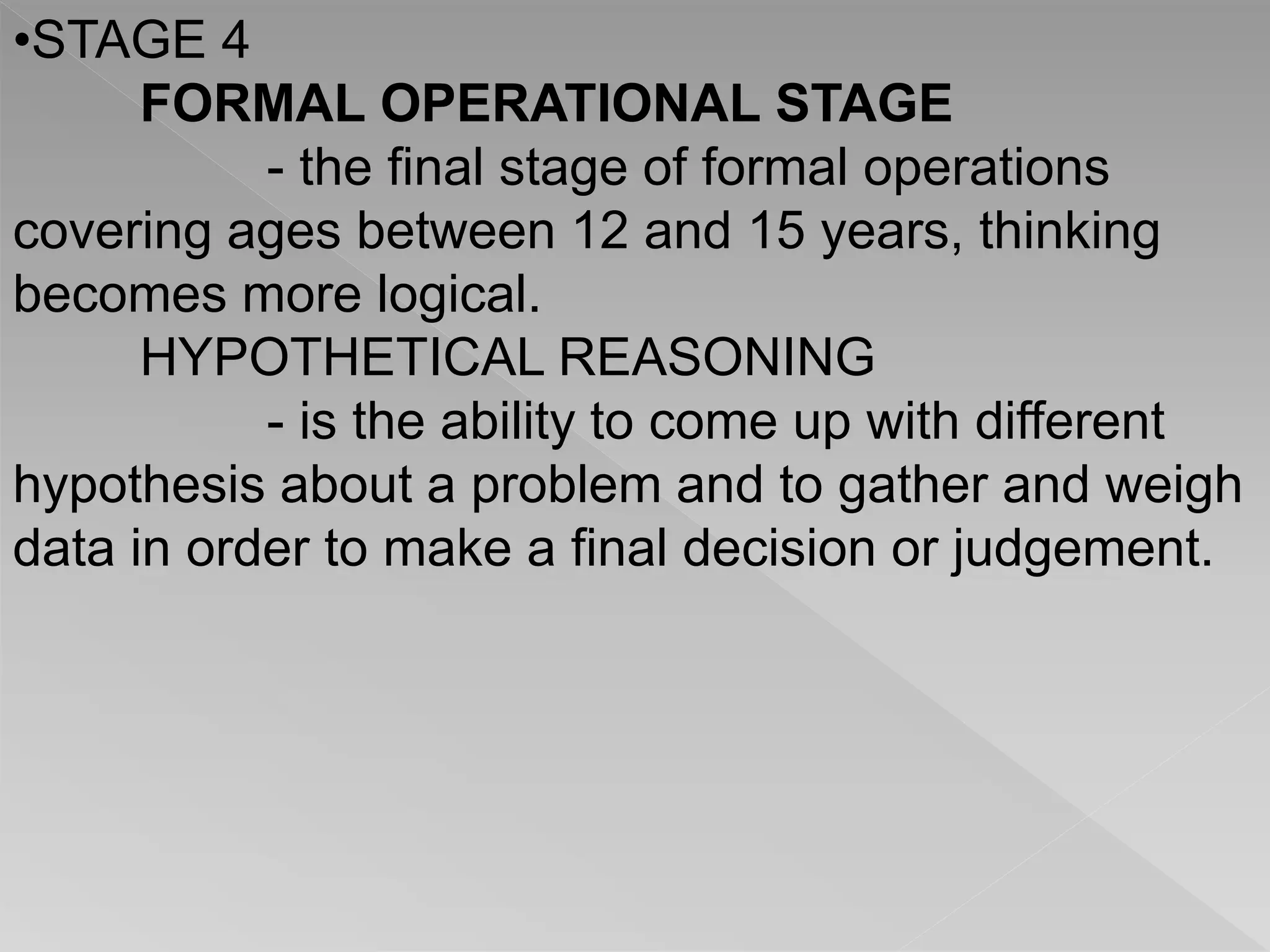
•STAGE 4
FORMAL OPERATIONAL STAGE
- the final stage of formal operations
covering ages between 12 and 15 years, thinking
becomes more logical.
HYPOTHETICAL REASONING
- is the ability to come up with different
hypothesis about a problem and to gather and weigh
data in order to make a final decision or judgement.
ANALOGICAL REASONING
- is the ability to perceive the relationship
in one instance and then use that relationship to
narrow down possible answers in another similar
situation or problem.
DEDUCTIVE REASONING
- is the ability to think logically by applying
a general rule to a particular instance or situation.

Stages of cognitive development

  • 2.
     SCHEMA -it isan individuals way to understand or create meaning about a thing or experience.  ASSIMILATION -this is the process of fitting a new experience into an existing or previously created cognitive structure or schema.  ACCOMMODATION -this is a process of creating a new schema.
  • 3.
    •EQUILIBRIUM -is achieving properbalance between assimilation and accommodation. COGNITIVE DISEQUILIBRIUM - there is discrepancy between what is perceived and what is understood.
  • 4.
    PIAGET’S STAGES OFCOGNITIVE DEVELOPMENT •STAGE 1 SENSORY-MOTOR STAGE -corresponds from birth to infancy. OBJECT PERMANENCE -is the ability of the child to know that an object exists even when out of sight. •STAGE 2 PRE-OPERATIONAL STAGE - covers from about two to seven years old, roughly corresponding to the pre-school years.
  • 5.
    -intelligence at thisstage is intuitive in nature. SYMBOLIC FUNCTION - the ability to represent objects and events. - gradually develops in the period between 2 to 7 years. ECOGENTRISM - is the tendency of the child to only see his point of view and to assume that everyone has his same point of view. CENTRATION - the tendency of a child to only focus on one aspect of a thing or event and exclude other aspects.
  • 6.
    IRREVERSIBILITY - pre-operational childrenstill have the inability to reverse their thinking. ANIMISM - the tendency of children to attribute human like traits or characteristics to inanimate objects. TRANSDUCTIVE REASONING - pre-operational child’s type of reasoning that is neither inductive nor deductive. If A cause B, then B causes A.
  • 7.
    • STAGE 3 CONCRETE-OPERATIONALSTAGE - is characterized by the ability of the child to think logically but only in terms of concrete objects. This covers approximately the ages between 8-11 years. DECENTERING - refers to the ability of the child to perceive the diff. features of objects and situations REVERSIBILITY - the child can now follow that certain operations can be done in reverse.
  • 8.
    CONSERVATION - the abilityto know that certain properties of objects like numbers, mass, volume, or area do not change even if there is a change in appearance. SERIATION - refers to the ability to order or arrange things in a series based on one dimension such as weight, volume or size.
  • 9.
    •STAGE 4 FORMAL OPERATIONALSTAGE - the final stage of formal operations covering ages between 12 and 15 years, thinking becomes more logical. HYPOTHETICAL REASONING - is the ability to come up with different hypothesis about a problem and to gather and weigh data in order to make a final decision or judgement.
  • 10.
    ANALOGICAL REASONING - isthe ability to perceive the relationship in one instance and then use that relationship to narrow down possible answers in another similar situation or problem. DEDUCTIVE REASONING - is the ability to think logically by applying a general rule to a particular instance or situation.