1-1
1-1

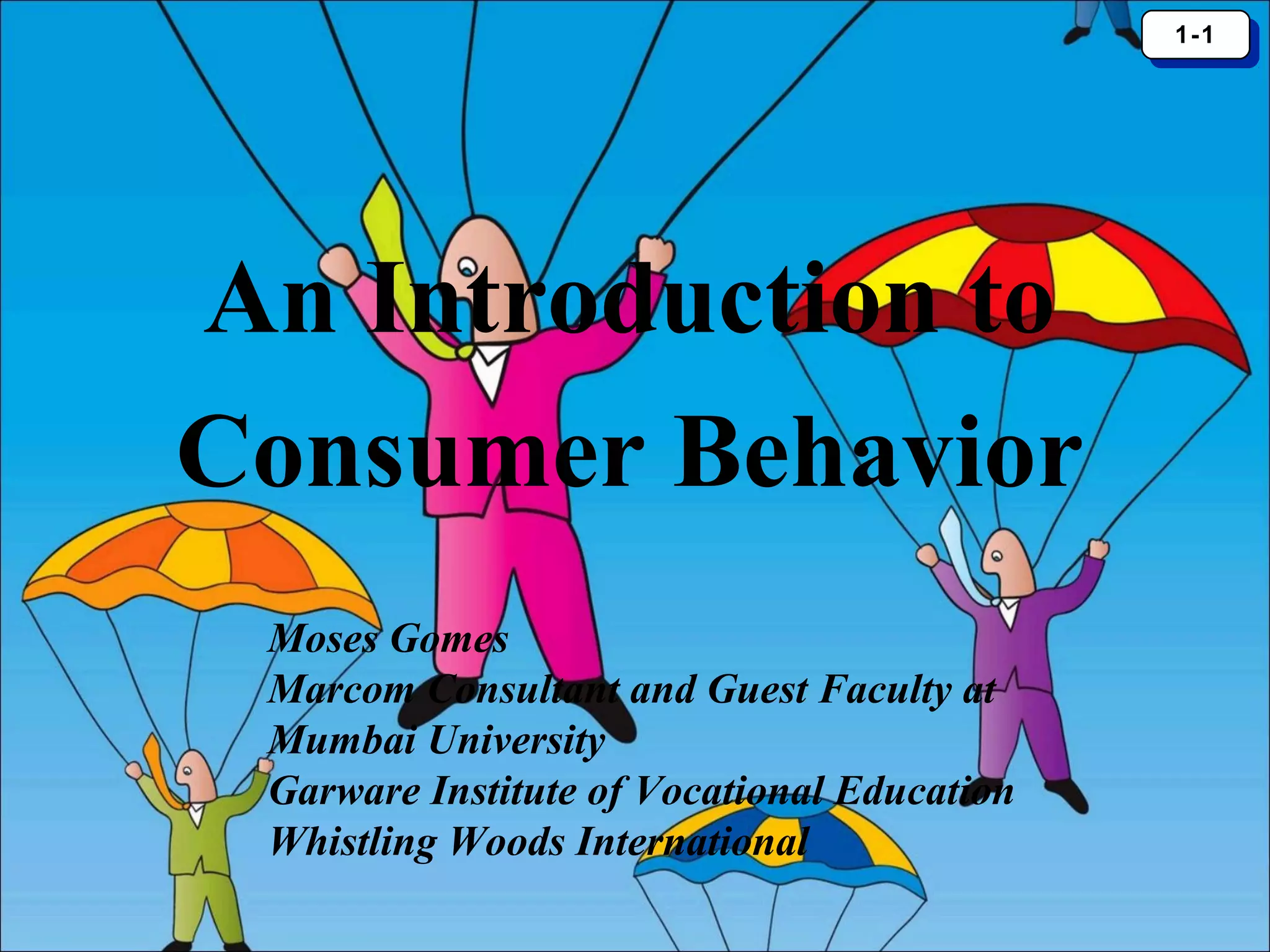
An Introduction to
Consumer Behavior
Moses Gomes
Marcom Consultant and Guest Faculty at
Mumbai University
Garware Institute of Vocational Education
Whistling Woods International
1-2
1-2
1-3
1-3

“Remember
“Remember
Me?”
Me?”
I'm the fellow who goes into a restaurant, sits down and patiently

waits while the waitresses do everything but take my order. I'm
the fellow who goes into a department store and stands quietly
while the sales clerks finish their little chitchat. I'm the man who
drives into a gasoline station and never blows his horn, but waits
patiently while the attendant finishes reading his comic book.
"Yes, you might say, I'm a good guy. But do you know who else I
am? I am the fellow who never comes back, and it amuses me to
see you spending thousands of dollars every year to get me back
into your store, when I was there in the first place, and all you had
to do to keep me was to give me a little service; show me a little
courtesy."
Source: From a Better Business Bureau bulletin submitted by An
Arkansas Reader to Dear Abby
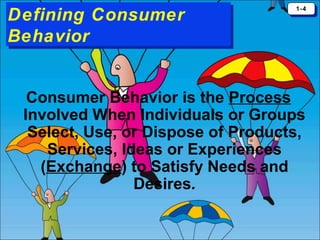
Defining Consumer
Defining Consumer
Behavior
Behavior

1-4
1-4

Consumer Behavior is the Process
Involved When Individuals or Groups
Select, Use, or Dispose of Products,
Services, Ideas or Experiences
(Exchange) to Satisfy Needs and
Desires.
1-5
1-5

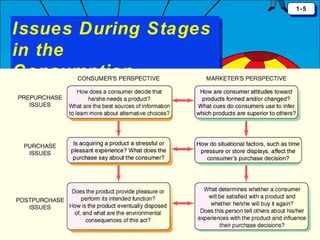
Issues During Stages
in the
in the
Consumption
Consumption
Process
Process
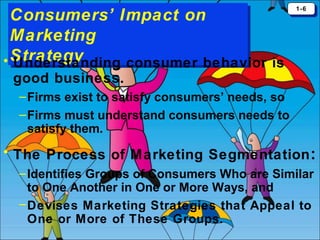
Consumers’ Impact on
Marketing
Marketing
Strategy
• Strategy
Understanding consumer behavior is

1-6
1-6

good business.
– Firms exist to satisfy consumers’ needs, so
– Firms must understand consumers needs to
satisfy them.

• The Process of Marketing Segmentation :
– Identifies Groups of Consumers Who are Similar
to One Another in One or More Ways, and
– Devises Marketing Strategies that Appeal to
One or More of These Groups.
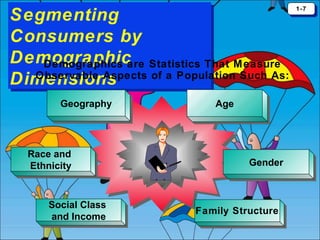
Segmenting
Segmenting
Consumers by
Consumers by
Demographic Statistics That M easure
Demographic
Demographics are
Observable Aspects of a Population Such As:
Dimensions
Dimensions
Geography
Geography

Race and
Race and
Ethnicity
Ethnicity

Social Class
Social Class
and Income
and Income

Age
Age

Gender
Gender

Family Structure
Family Structure

1-7
1-7
Consumers’ Impact On Marketing
Strategy: Building Bonds With
Consumers
Consumers
•

1-8
1-8

Relationship Marketing occurs when a
company makes an effort to interact with
customers on a regular basis, and gives them
reasons to maintain a bond with the company
over time.

• Database Marketing involves tracking
consumers’ buying habits very closely, and
crafting products and messages tailored
precisely to people’s wants and needs based
on this information.
Marketing’s Impact on
Consumers:
Consumers:
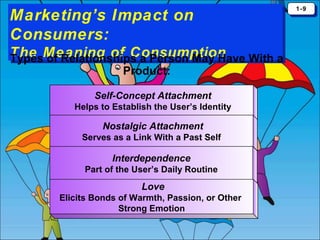
The Meaning of Consumption
The of Relationships a Person May Have With a
Types Meaning of Consumption
Product:

Self-Concept Attachment
Helps to Establish the User’s Identity

Nostalgic Attachment
Serves as a Link With a Past Self

Interdependence
Part of the User’s Daily Routine

Love
Elicits Bonds of Warmth, Passion, or Other
Strong Emotion

1-9
1-9
1-10
1-10

Marketing’s Impact on
Consumers:
Consumers:
Consumption Typology the Different Ways
Consumption Typology Explores
Consumption Typology

That Products and Experiences Can Provide Meaning
to People.
There Are 4 Distinct Types of Consumption Activities:
Consuming as Experience

An Emotional or Aesthetic
Reaction to Consumption Objects

Consuming as Integration

Express Aspects of Self or
Society

Consuming as Classification

Communicate Their Association
With Objects, Both to Self/ Others

Consuming as Play

Participate in a Mutual Experience
and Merge Self With Group
1-11
1-11

Marketing’s Impact on
Consumers
Consumers
– Marketing and Culture
• Popular Culture
– Intangible and Tangible Objects

– The Global Consumer
• Global Consumer Culture

– Virtual Consumption
• Business to Consumer Selling (B2C Commerce)
• Consumer to Consumer Selling (B2B Commerce)
• Virtual Brand Communities

– Blurred Boundaries: Marketing and Reality
Marketing
Marketing
Ethics
Ethics
Business Ethics are Rules of Conduct That
Guide Actions in the Marketplace - the
Standards Against Which Most People in a
Culture Judge What is Right and What is
Wrong, Good or Bad.

1-12
1-12
Other Marketing Ethics
Issues
Issues

1-13
1-13

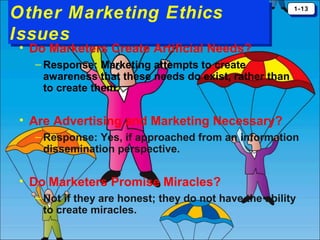
• Do Marketers Create Artificial Needs?
– Response: Marketing attempts to create
awareness that these needs do exist, rather than
to create them.

• Are Advertising and Marketing Necessary?
– Response: Yes, if approached from an information
dissemination perspective.

• Do Marketers Promise Miracles?
– Not if they are honest; they do not have the ability
to create miracles.
The Dark Side of
The Dark Side of
Consumer
Consumer
Behavior
Behavior
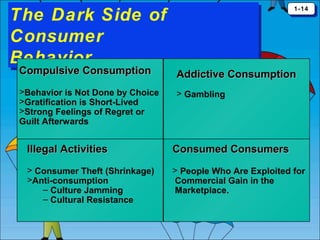
Compulsive Consumption
>Behavior is Not Done by Choice
>Gratification is Short-Lived
>Strong Feelings of Regret or
Guilt Afterwards

1-14
1-14

Addictive Consumption
> Gambling

Illegal Activities

Consumed Consumers

> Consumer Theft (Shrinkage)
>Anti-consumption
– Culture Jamming
– Cultural Resistance

> People Who Are Exploited for
Commercial Gain in the
Marketplace.
Interdisciplinary
Interdisciplinary
Influences
Influences

1-15
1-15

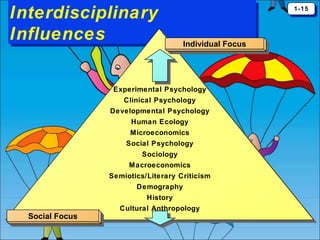
Individual Focus
Individual Focus

Experimental Psychology
Clinical Psychology
Developmental Psychology
Human Ecology
Microeconomics
Social Psychology
Sociology
Macroeconomics
Semiotics/Literary Criticism
Demography
History

Social Focus
Social Focus

Cultural Anthropology
Two Perspective on
Two Perspective on
Consumer
Consumer
Research
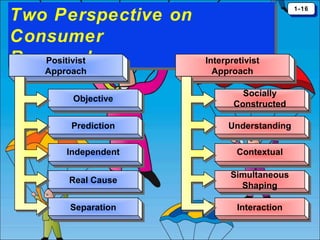
Positivist
Positivist
Research
Approach
Approach

1-16
1-16

Interpretivist
Interpretivist
Approach
Approach

Objective
Objective

Socially
Socially
Constructed
Constructed

Prediction
Prediction

Understanding
Understanding

Independent
Independent

Contextual
Contextual

Real Cause
Real Cause

Simultaneous
Simultaneous
Shaping
Shaping

Separation
Separation

Interaction
Interaction
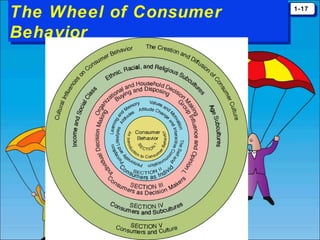
The Wheel of Consumer
Behavior
Behavior

1-17
1-17
1-18
1-18

Introduction to Consumer Behaviour

  • 1.
    1-1 1-1 An Introduction to ConsumerBehavior Moses Gomes Marcom Consultant and Guest Faculty at Mumbai University Garware Institute of Vocational Education Whistling Woods International
  • 2.
  • 3.
    1-3 1-3 “Remember “Remember Me?” Me?” I'm the fellowwho goes into a restaurant, sits down and patiently waits while the waitresses do everything but take my order. I'm the fellow who goes into a department store and stands quietly while the sales clerks finish their little chitchat. I'm the man who drives into a gasoline station and never blows his horn, but waits patiently while the attendant finishes reading his comic book. "Yes, you might say, I'm a good guy. But do you know who else I am? I am the fellow who never comes back, and it amuses me to see you spending thousands of dollars every year to get me back into your store, when I was there in the first place, and all you had to do to keep me was to give me a little service; show me a little courtesy." Source: From a Better Business Bureau bulletin submitted by An Arkansas Reader to Dear Abby
  • 4.
    Defining Consumer Defining Consumer Behavior Behavior 1-4 1-4 ConsumerBehavior is the Process Involved When Individuals or Groups Select, Use, or Dispose of Products, Services, Ideas or Experiences (Exchange) to Satisfy Needs and Desires.
  • 5.
    1-5 1-5 Issues During Stages IssuesDuring Stages in the in the Consumption Consumption Process Process
  • 6.
    Consumers’ Impact on Consumers’Impact on Marketing Marketing Strategy • Strategy Understanding consumer behavior is 1-6 1-6 good business. – Firms exist to satisfy consumers’ needs, so – Firms must understand consumers needs to satisfy them. • The Process of Marketing Segmentation : – Identifies Groups of Consumers Who are Similar to One Another in One or More Ways, and – Devises Marketing Strategies that Appeal to One or More of These Groups.
  • 7.
    Segmenting Segmenting Consumers by Consumers by DemographicStatistics That M easure Demographic Demographics are Observable Aspects of a Population Such As: Dimensions Dimensions Geography Geography Race and Race and Ethnicity Ethnicity Social Class Social Class and Income and Income Age Age Gender Gender Family Structure Family Structure 1-7 1-7
  • 8.
    Consumers’ Impact OnMarketing Consumers’ Impact On Marketing Strategy: Building Bonds With Strategy: Building Bonds With Consumers Consumers • 1-8 1-8 Relationship Marketing occurs when a company makes an effort to interact with customers on a regular basis, and gives them reasons to maintain a bond with the company over time. • Database Marketing involves tracking consumers’ buying habits very closely, and crafting products and messages tailored precisely to people’s wants and needs based on this information.
  • 9.
    Marketing’s Impact on Marketing’sImpact on Consumers: Consumers: The Meaning of Consumption The of Relationships a Person May Have With a Types Meaning of Consumption Product: Self-Concept Attachment Helps to Establish the User’s Identity Nostalgic Attachment Serves as a Link With a Past Self Interdependence Part of the User’s Daily Routine Love Elicits Bonds of Warmth, Passion, or Other Strong Emotion 1-9 1-9
  • 10.
    1-10 1-10 Marketing’s Impact on Marketing’sImpact on Consumers: Consumers: Consumption Typology the Different Ways Consumption Typology Explores Consumption Typology That Products and Experiences Can Provide Meaning to People. There Are 4 Distinct Types of Consumption Activities: Consuming as Experience An Emotional or Aesthetic Reaction to Consumption Objects Consuming as Integration Express Aspects of Self or Society Consuming as Classification Communicate Their Association With Objects, Both to Self/ Others Consuming as Play Participate in a Mutual Experience and Merge Self With Group
  • 11.
    1-11 1-11 Marketing’s Impact on Marketing’sImpact on Consumers Consumers – Marketing and Culture • Popular Culture – Intangible and Tangible Objects – The Global Consumer • Global Consumer Culture – Virtual Consumption • Business to Consumer Selling (B2C Commerce) • Consumer to Consumer Selling (B2B Commerce) • Virtual Brand Communities – Blurred Boundaries: Marketing and Reality
  • 12.
    Marketing Marketing Ethics Ethics Business Ethics areRules of Conduct That Guide Actions in the Marketplace - the Standards Against Which Most People in a Culture Judge What is Right and What is Wrong, Good or Bad. 1-12 1-12
  • 13.
    Other Marketing Ethics OtherMarketing Ethics Issues Issues 1-13 1-13 • Do Marketers Create Artificial Needs? – Response: Marketing attempts to create awareness that these needs do exist, rather than to create them. • Are Advertising and Marketing Necessary? – Response: Yes, if approached from an information dissemination perspective. • Do Marketers Promise Miracles? – Not if they are honest; they do not have the ability to create miracles.
  • 14.
    The Dark Sideof The Dark Side of Consumer Consumer Behavior Behavior Compulsive Consumption >Behavior is Not Done by Choice >Gratification is Short-Lived >Strong Feelings of Regret or Guilt Afterwards 1-14 1-14 Addictive Consumption > Gambling Illegal Activities Consumed Consumers > Consumer Theft (Shrinkage) >Anti-consumption – Culture Jamming – Cultural Resistance > People Who Are Exploited for Commercial Gain in the Marketplace.
  • 15.
    Interdisciplinary Interdisciplinary Influences Influences 1-15 1-15 Individual Focus Individual Focus ExperimentalPsychology Clinical Psychology Developmental Psychology Human Ecology Microeconomics Social Psychology Sociology Macroeconomics Semiotics/Literary Criticism Demography History Social Focus Social Focus Cultural Anthropology
  • 16.
    Two Perspective on TwoPerspective on Consumer Consumer Research Positivist Positivist Research Approach Approach 1-16 1-16 Interpretivist Interpretivist Approach Approach Objective Objective Socially Socially Constructed Constructed Prediction Prediction Understanding Understanding Independent Independent Contextual Contextual Real Cause Real Cause Simultaneous Simultaneous Shaping Shaping Separation Separation Interaction Interaction
  • 17.
    The Wheel ofConsumer The Wheel of Consumer Behavior Behavior 1-17 1-17
  • 18.