Consumer Behaviour
Based on concepts from  Psychology Sociology Anthropology Marketing Economics
Why do we need to study  Consumer Behaviour? Because no longer can we take the customer/consumer for granted.
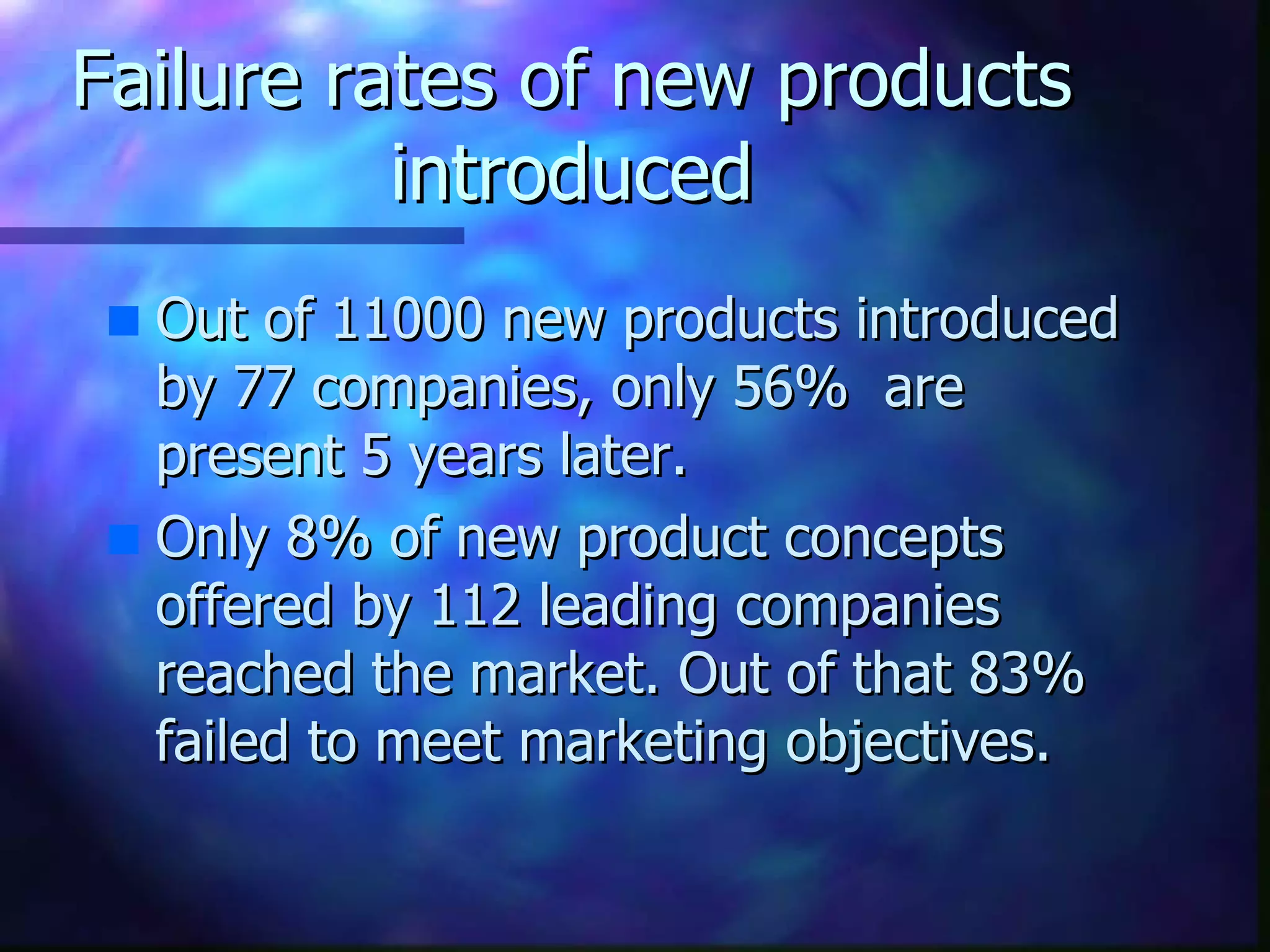
Failure rates of new products introduced Out of 11000 new products introduced by 77 companies, only 56%  are present 5 years later. Only 8% of new product concepts offered by 112 leading companies reached the market. Out of that 83% failed to meet marketing objectives.
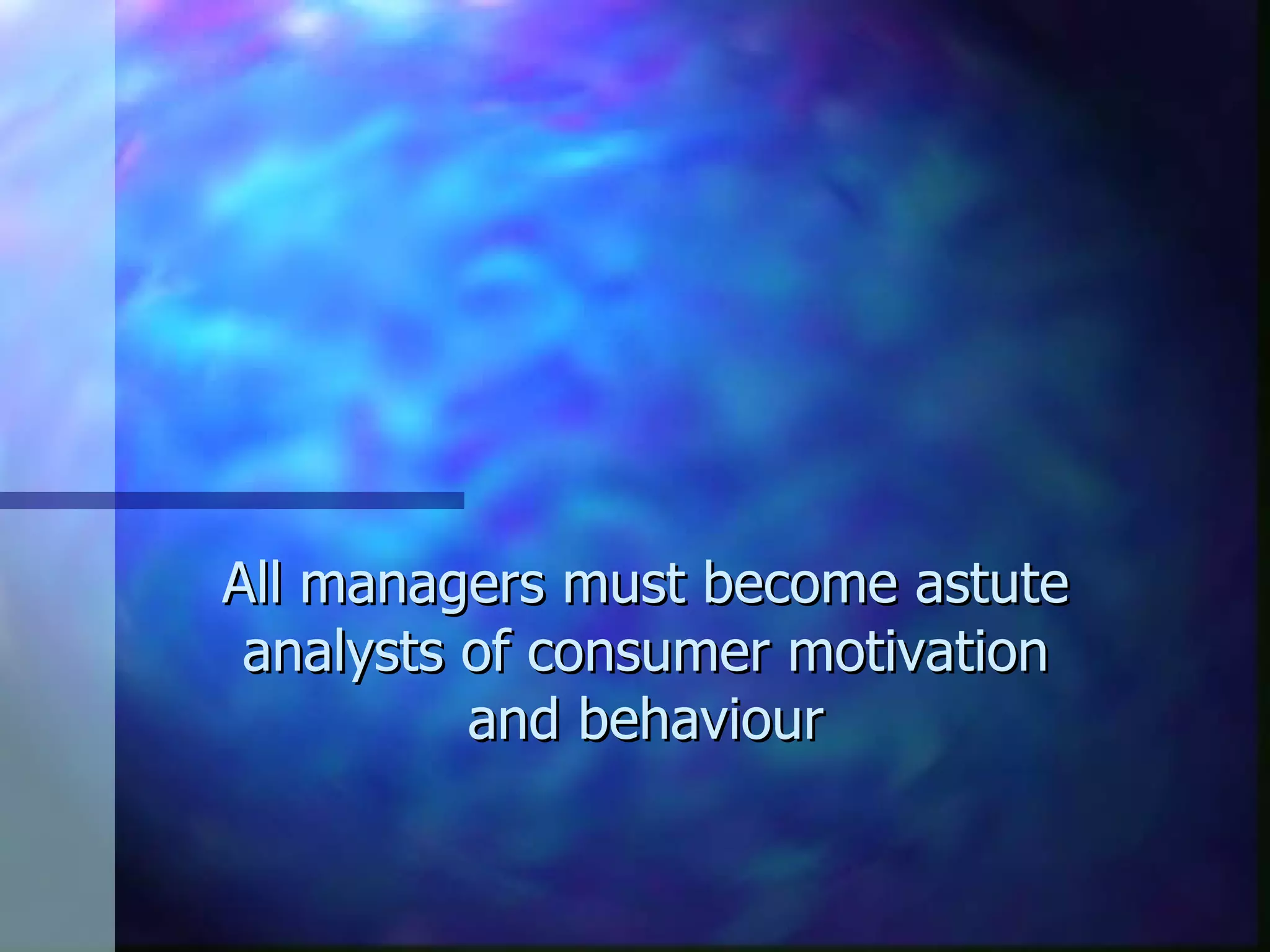
All managers must become astute analysts of consumer motivation and behaviour
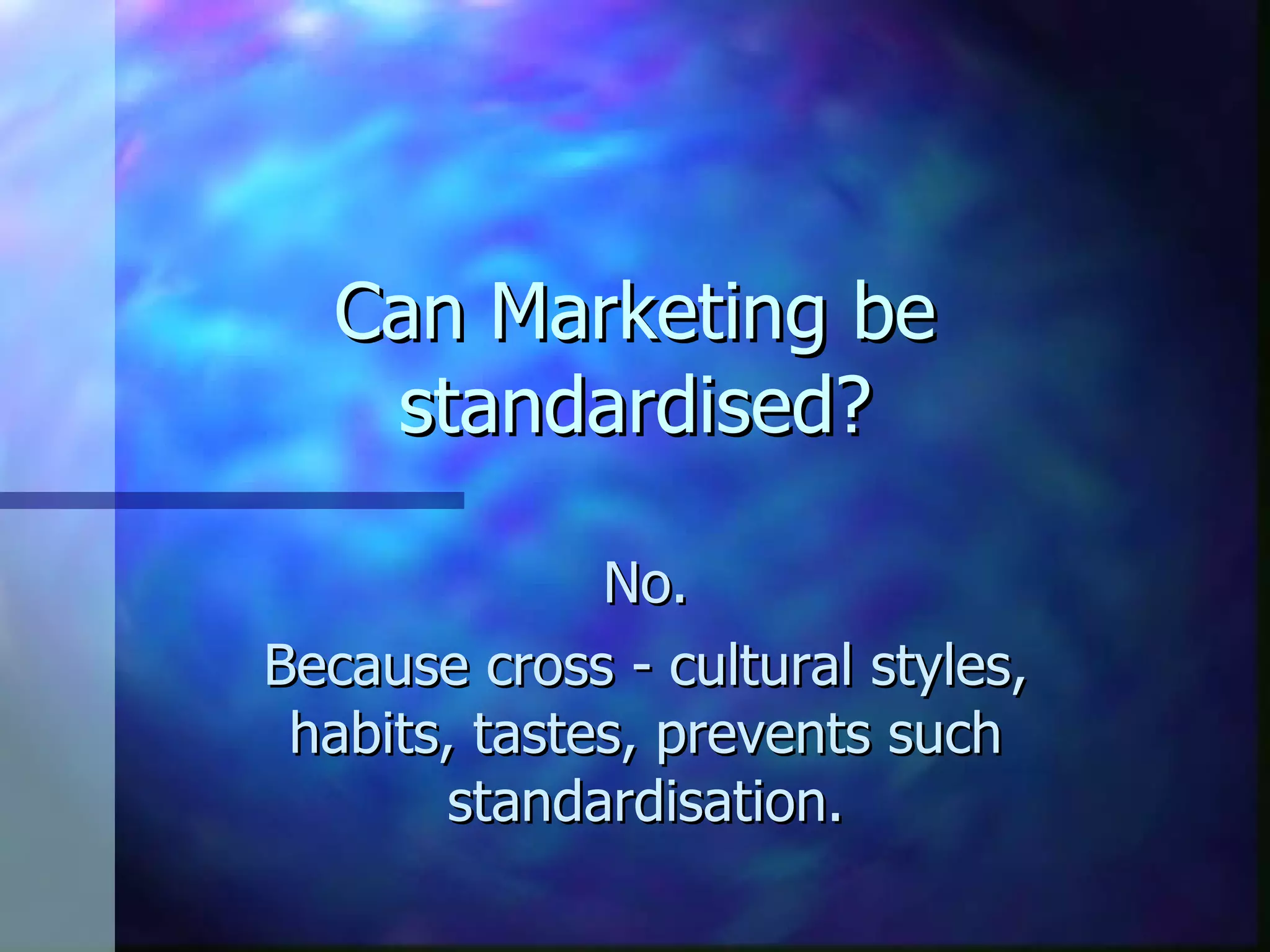
Can Marketing be standardised? No. Because cross - cultural styles, habits, tastes, prevents such standardisation.
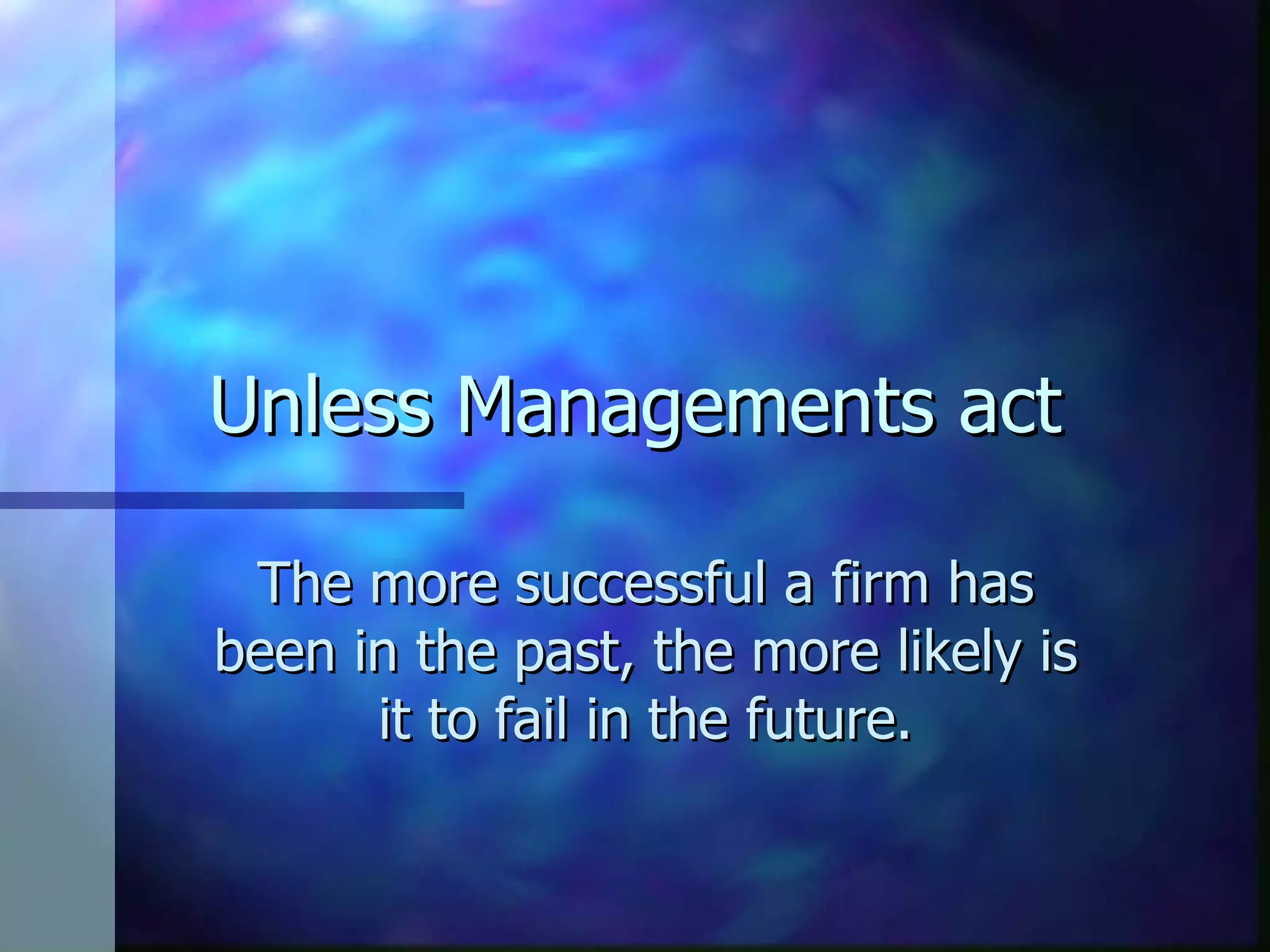
Unless Managements act The more successful a firm has been in the past, the more likely is it to fail in the future.
Why? Because people tend to repeat behaviour for which they have been rewarded.
Language Problems “ Please leave your values at the desk” - Paris hotel “ Drop your trousers here for best results” - Bangkok laundry “ The manager has personally passed all water served here” - Acapulco restaurant “ Because of the impropriety of entertaining guests of the opposite sex in the bedroom, it is suggested that the lobby be used for the purpose.” - Zurich hotel Ladies are requested not to have children in the bar.”- Norway bar
“Come alive with Pepsi” “Come alive out of the grave” - Germany “Pepsi brings your ancestors back from the grave” - China
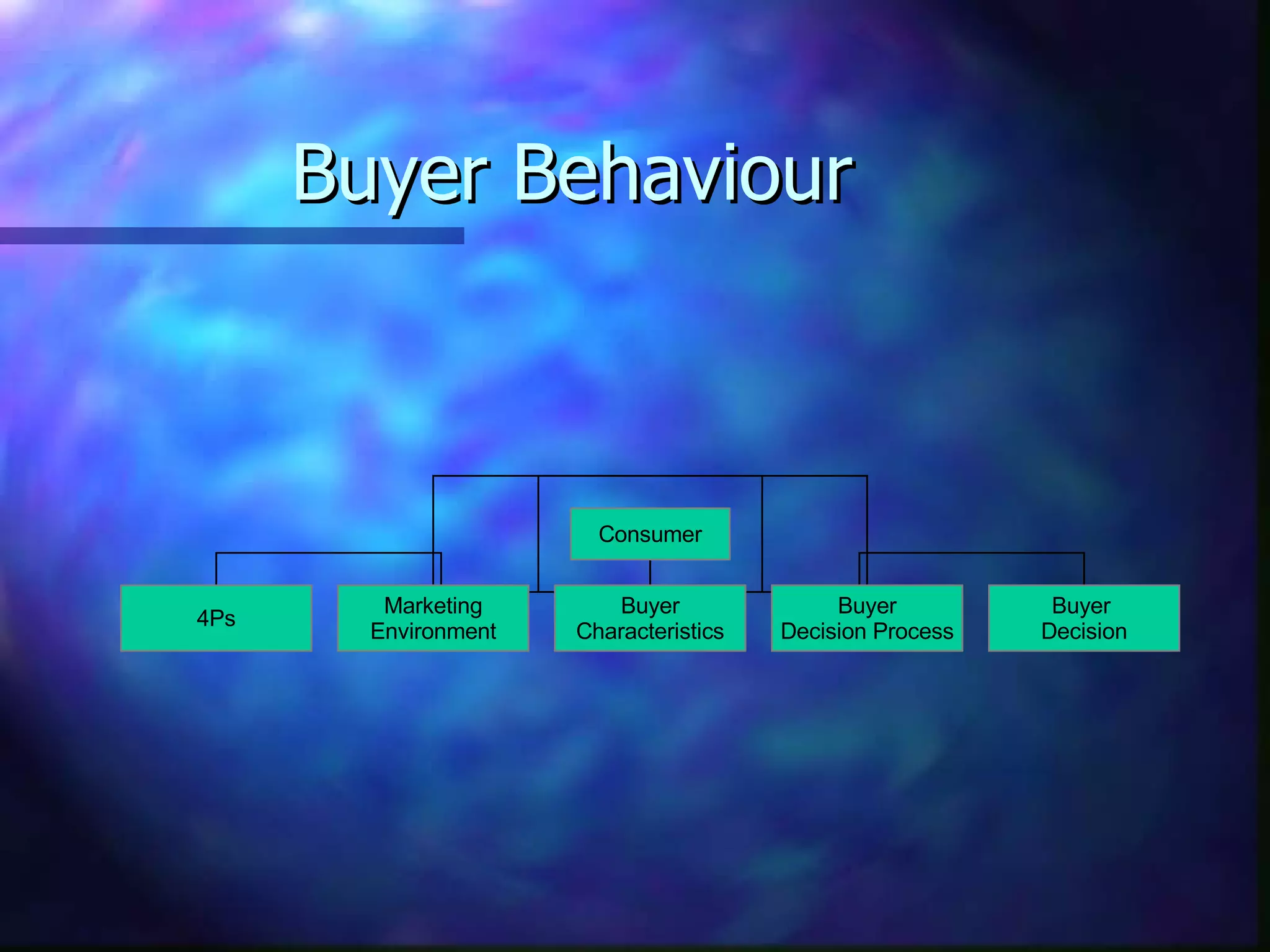
Buyer Behaviour Consumer 4Ps Marketing Environment Buyer Characteristics Buyer Decision Process Buyer  Decision
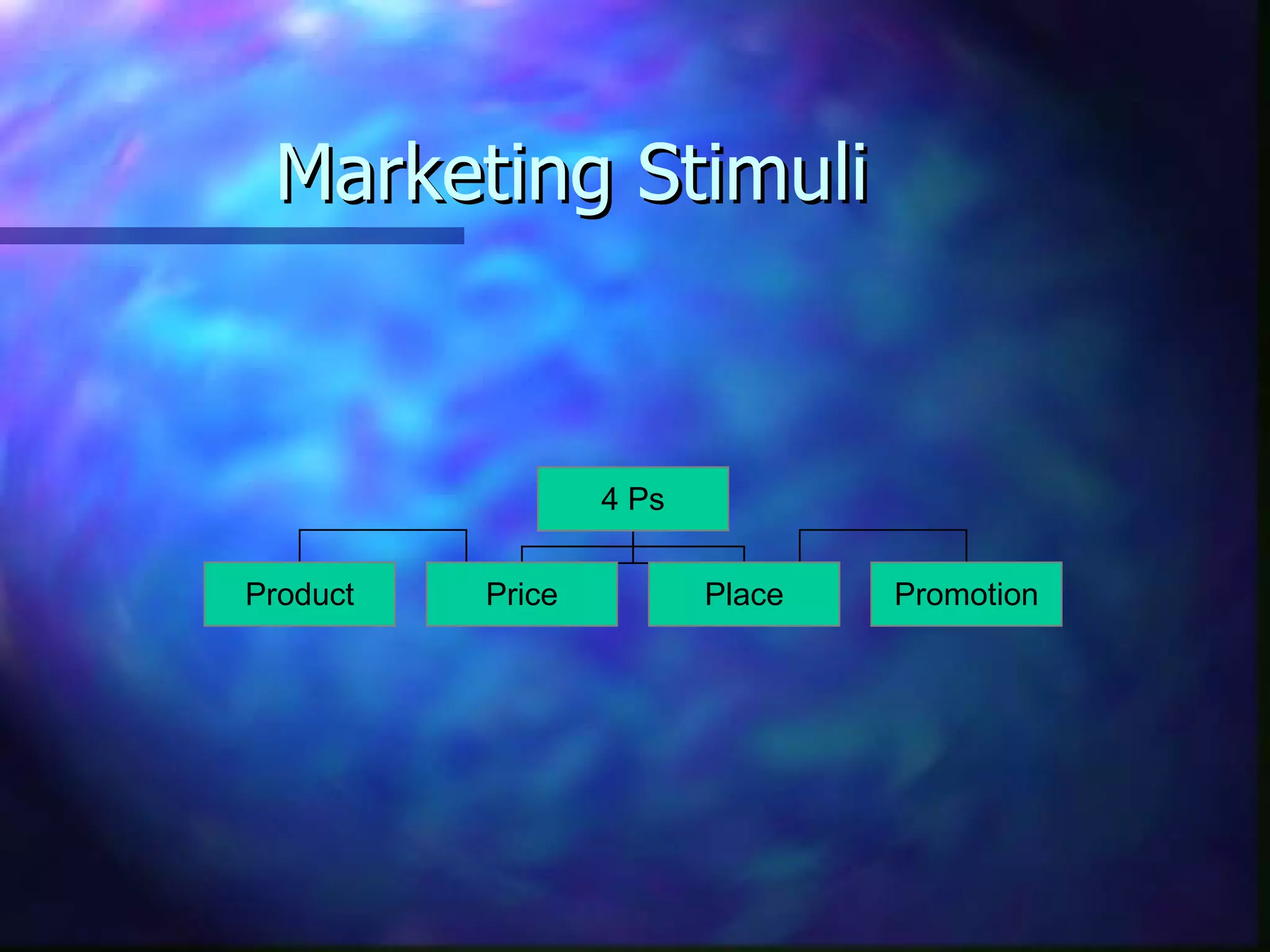
Marketing Stimuli 4 Ps Product Price Place Promotion
Other Stimuli Marketing Environment Economic Technological Political Cultural
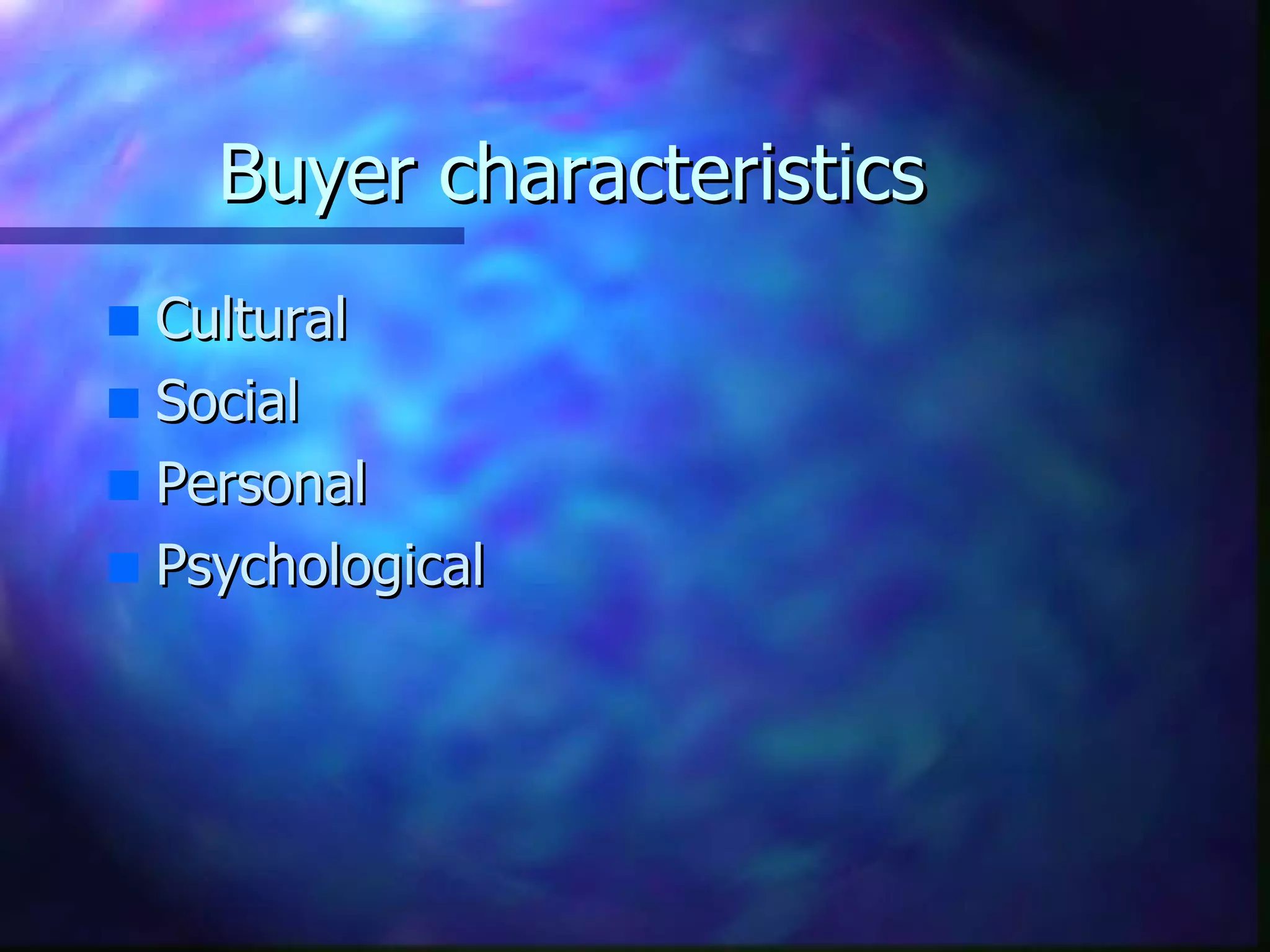
Buyer characteristics Cultural Social Personal Psychological
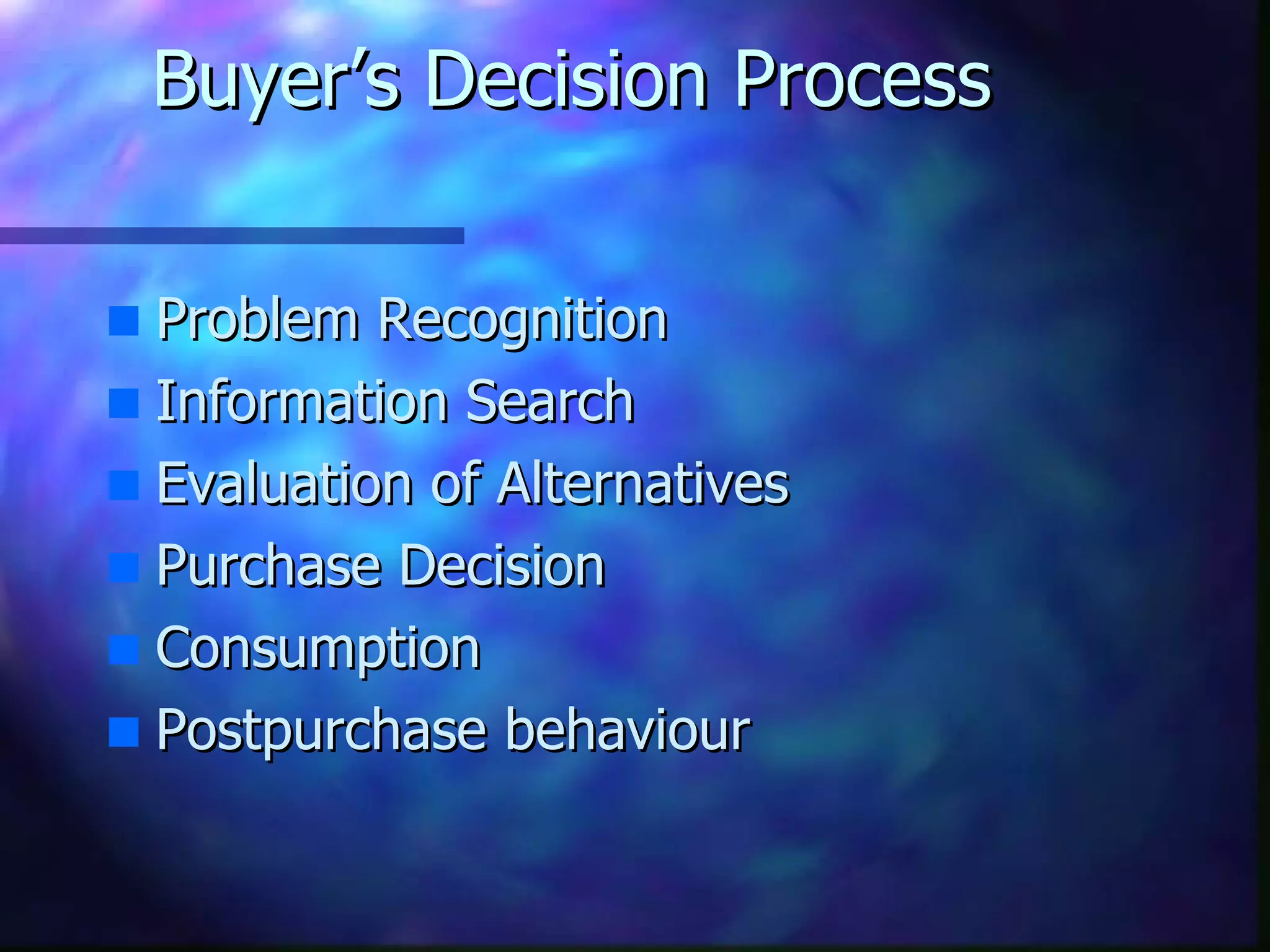
Buyer’s Decision Process Problem Recognition Information Search Evaluation of Alternatives Purchase Decision Consumption Postpurchase behaviour
Buyer’s Decision Product Choice Brand Choice Dealer Choice Purchase Timing Purchase Amount
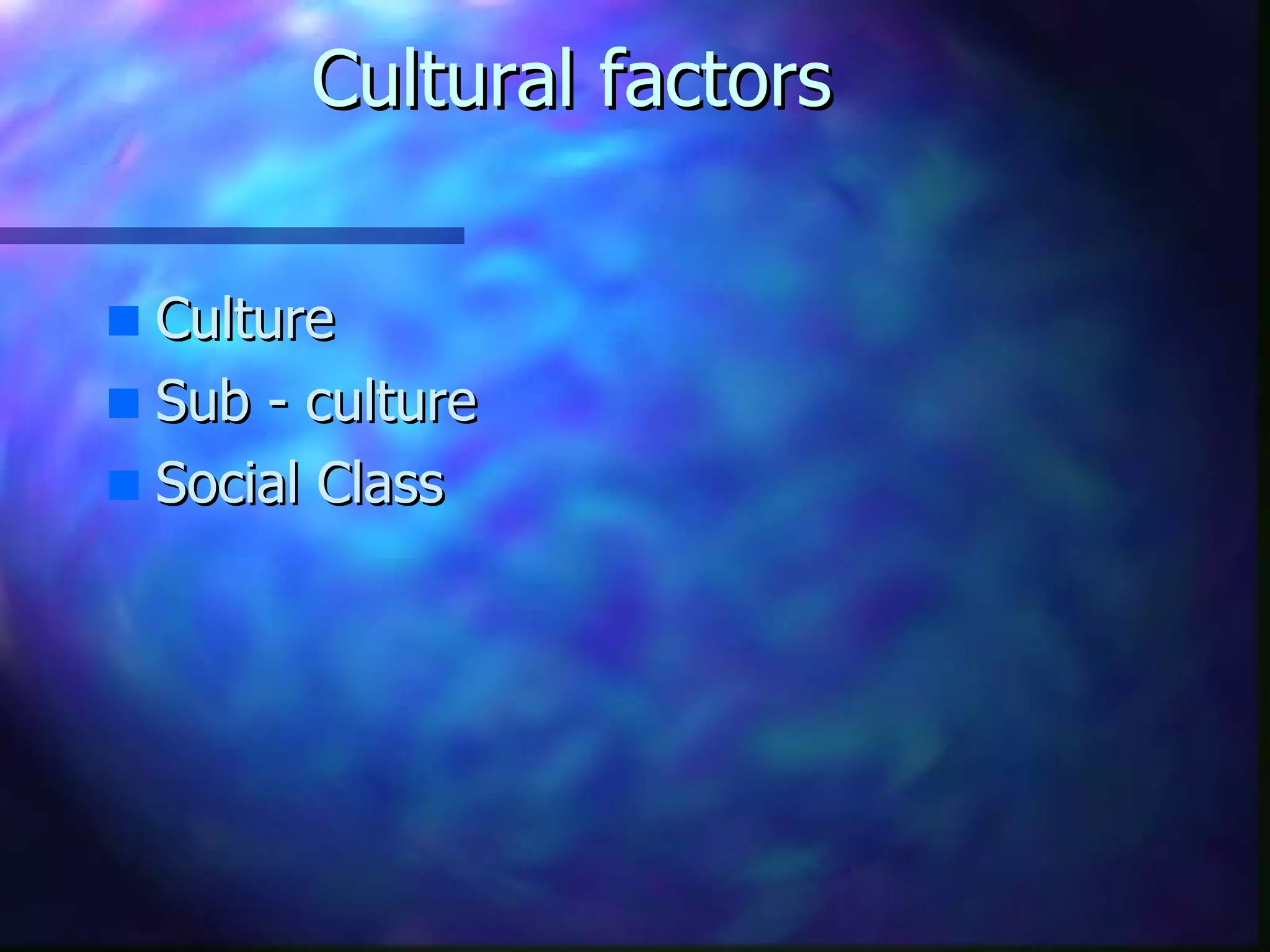
Cultural factors Culture Sub - culture Social Class
Social factors Reference Groups Family Roles and Status
Personal Factors Family Life Cycle Occupation and Economic circumstances Lifestyle Personality and self - concept
Psychological Factors Motivation Perception Learning Beliefs and Attitudes
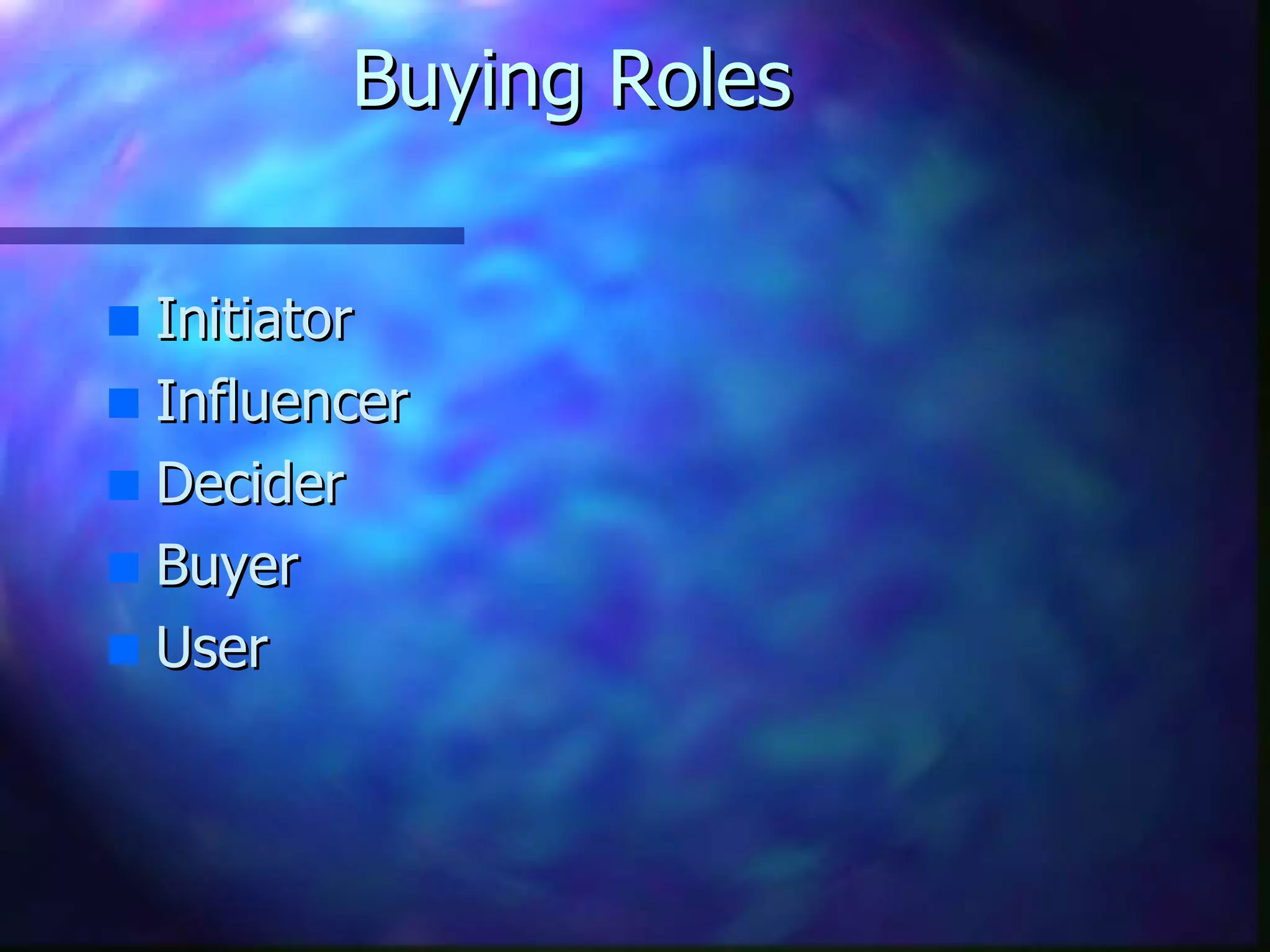
Buying Roles Initiator Influencer Decider Buyer User
Buying Behaviour Complex Dissonance - Reducing Habitual Variety seeking
Buying Process Problem Recognition Information Search Evaluation Alternatives Purchase Decision
Post - Purchase Behaviour Satisfaction Actions Use and Disposal

Consumer Behavior

  • 1.
  • 2.
    Based on conceptsfrom Psychology Sociology Anthropology Marketing Economics
  • 3.
    Why do weneed to study Consumer Behaviour? Because no longer can we take the customer/consumer for granted.
  • 4.
    Failure rates ofnew products introduced Out of 11000 new products introduced by 77 companies, only 56% are present 5 years later. Only 8% of new product concepts offered by 112 leading companies reached the market. Out of that 83% failed to meet marketing objectives.
  • 5.
    All managers mustbecome astute analysts of consumer motivation and behaviour
  • 6.
    Can Marketing bestandardised? No. Because cross - cultural styles, habits, tastes, prevents such standardisation.
  • 7.
    Unless Managements actThe more successful a firm has been in the past, the more likely is it to fail in the future.
  • 8.
    Why? Because peopletend to repeat behaviour for which they have been rewarded.
  • 9.
    Language Problems “Please leave your values at the desk” - Paris hotel “ Drop your trousers here for best results” - Bangkok laundry “ The manager has personally passed all water served here” - Acapulco restaurant “ Because of the impropriety of entertaining guests of the opposite sex in the bedroom, it is suggested that the lobby be used for the purpose.” - Zurich hotel Ladies are requested not to have children in the bar.”- Norway bar
  • 10.
    “Come alive withPepsi” “Come alive out of the grave” - Germany “Pepsi brings your ancestors back from the grave” - China
  • 11.
    Buyer Behaviour Consumer4Ps Marketing Environment Buyer Characteristics Buyer Decision Process Buyer Decision
  • 12.
    Marketing Stimuli 4Ps Product Price Place Promotion
  • 13.
    Other Stimuli MarketingEnvironment Economic Technological Political Cultural
  • 14.
    Buyer characteristics CulturalSocial Personal Psychological
  • 15.
    Buyer’s Decision ProcessProblem Recognition Information Search Evaluation of Alternatives Purchase Decision Consumption Postpurchase behaviour
  • 16.
    Buyer’s Decision ProductChoice Brand Choice Dealer Choice Purchase Timing Purchase Amount
  • 17.
    Cultural factors CultureSub - culture Social Class
  • 18.
    Social factors ReferenceGroups Family Roles and Status
  • 19.
    Personal Factors FamilyLife Cycle Occupation and Economic circumstances Lifestyle Personality and self - concept
  • 20.
    Psychological Factors MotivationPerception Learning Beliefs and Attitudes
  • 21.
    Buying Roles InitiatorInfluencer Decider Buyer User
  • 22.
    Buying Behaviour ComplexDissonance - Reducing Habitual Variety seeking
  • 23.
    Buying Process ProblemRecognition Information Search Evaluation Alternatives Purchase Decision
  • 24.
    Post - PurchaseBehaviour Satisfaction Actions Use and Disposal