KRITIKA KUMAR
Theories of Retailing
Cyclical Theories
Wheel of Retailing
Accordian Theory
Evolutionary Theories
Dialectic Process
Natural Selection
Cyclical Theories
Wheel of Retailing
Stage 1:Low Price, Low Service, limited product
offerings.
Stage 2: Improve merchandise offering, better
service, higher prices
Stage 3: Conservatism, declining ROI, increased
competition
Wheel of Retailing
Cyclical Theories
Accordion Theory
Evolution of retail institutions from general, broad-
based outlets with wide assortments, to narrow-
based institutions carrying specialised assortments,
and back to general, broad-based assortments.
Synonymous with general-specific-general theory.
Evolutionary Theories
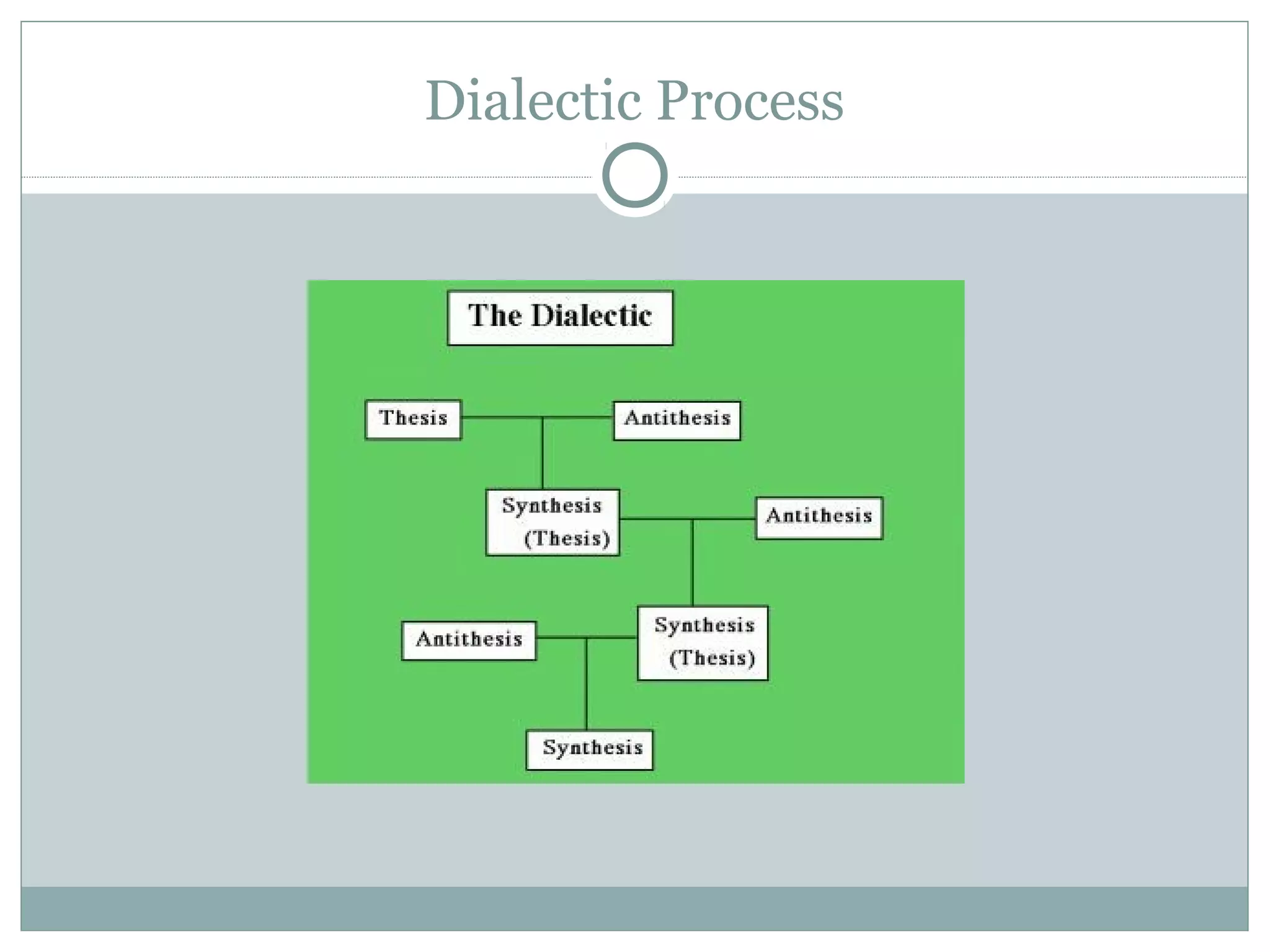
Dialectic Process
Retailers mutually adapt in the face of competition
from “opposites”.
When challenged by a competitor with a differential
advantage, the established retailer will adopt
strategies and tactics in the direction of that
advantage (making the innovator less attractive)
Dialectic Process
Evolutionary Theories
Natural Selection
Retailing institutions that can most effectively adapt
to environmental changes are the ones most likely to
prosper or survive.
Environmental need for a certain kind of retailing
institution it will evolve→
Need ceases to exist the institution will tend to→
disappear
Institutions that most effectively adapt to
environmental changes are most likely to survive
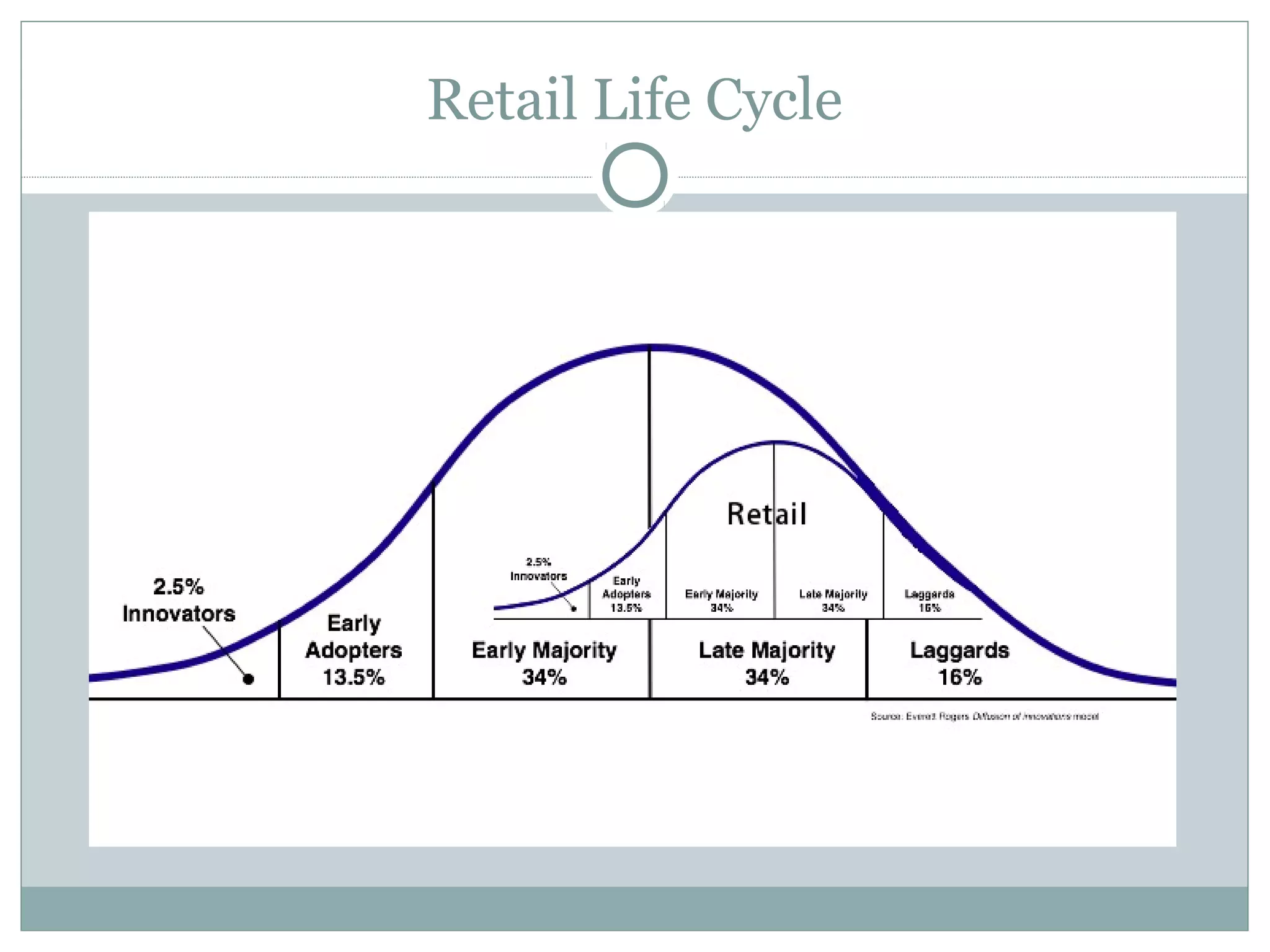
Retail Life Cycle
Retail organizations pass through identifiable stages of
innovation, development, maturity and decline.
Stages of Retail Life Cycle:
Innovation
Accelerated Growth
Maturity
Decline
Innovation
Differentiated services, product and format.
Few competitors
Rapid growth
Moderate profit
Accelerated Growth
Increase in sales
Emergence of competitors
Organization try to attain leadership
Higher investment
Cost pressure
Maturity
Increased competition
Decrease in growth rate
Repositioning: strategy, format & merchandise mix
Decline
Loses Competitive edge
Negative rate of growth
Profitability decline
Cost run higher
Retail Life Cycle

Theories of retailing

  • 1.
  • 2.
    Theories of Retailing CyclicalTheories Wheel of Retailing Accordian Theory Evolutionary Theories Dialectic Process Natural Selection
  • 3.
    Cyclical Theories Wheel ofRetailing Stage 1:Low Price, Low Service, limited product offerings. Stage 2: Improve merchandise offering, better service, higher prices Stage 3: Conservatism, declining ROI, increased competition
  • 4.
  • 5.
    Cyclical Theories Accordion Theory Evolutionof retail institutions from general, broad- based outlets with wide assortments, to narrow- based institutions carrying specialised assortments, and back to general, broad-based assortments. Synonymous with general-specific-general theory.
  • 6.
    Evolutionary Theories Dialectic Process Retailersmutually adapt in the face of competition from “opposites”. When challenged by a competitor with a differential advantage, the established retailer will adopt strategies and tactics in the direction of that advantage (making the innovator less attractive)
  • 7.
  • 8.
    Evolutionary Theories Natural Selection Retailinginstitutions that can most effectively adapt to environmental changes are the ones most likely to prosper or survive. Environmental need for a certain kind of retailing institution it will evolve→ Need ceases to exist the institution will tend to→ disappear Institutions that most effectively adapt to environmental changes are most likely to survive
  • 9.
    Retail Life Cycle Retailorganizations pass through identifiable stages of innovation, development, maturity and decline. Stages of Retail Life Cycle: Innovation Accelerated Growth Maturity Decline
  • 10.
    Innovation Differentiated services, productand format. Few competitors Rapid growth Moderate profit Accelerated Growth Increase in sales Emergence of competitors Organization try to attain leadership Higher investment Cost pressure
  • 11.
    Maturity Increased competition Decrease ingrowth rate Repositioning: strategy, format & merchandise mix Decline Loses Competitive edge Negative rate of growth Profitability decline Cost run higher
  • 12.