What is
Public Relations?
Moses Gomes, Digital Marketing Consultant
Key Take-aways
• The Message - every company has
a story
• Define your story
• Identify your audiences
• Communicate your story
• Understand the media tools
Communicating strengths
• Products and services
• Benefits and solutions
• Key message
• Tailor message to
audiences
Defining
your
message
How is your company perceived by employees,
peers, competitors, customers, prospects?
How do you want to be perceived by the public?
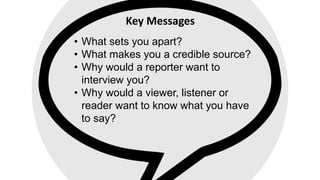
Key Messages
• What sets you apart?
• What makes you a credible source?
• Why would a reporter want to
interview you?
• Why would a viewer, listener or
reader want to know what you have
to say?
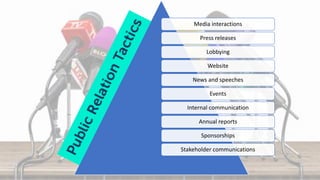
Media interactions
Press releases
Lobbying
Website
News and speeches
Events
Internal communication
Annual reports
Sponsorships
Stakeholder communications
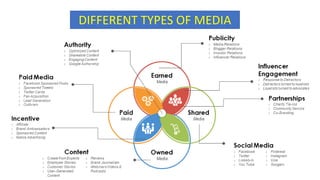
DIFFERENT TYPES OF MEDIA
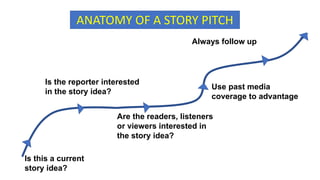
ANATOMY OF A STORY PITCH
Is this a current
story idea?
Is the reporter interested
in the story idea?
Are the readers, listeners
or viewers interested in
the story idea?
Use past media
coverage to advantage
Always follow up
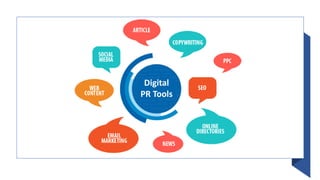
Digital
PR Tools
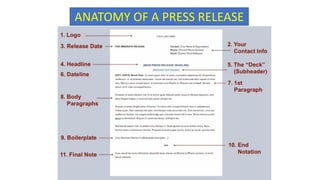
ANATOMY OF A PRESS RELEASE
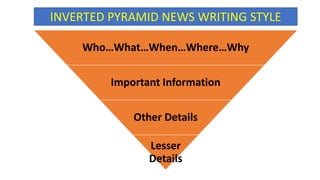
INVERTED PYRAMID NEWS WRITING STYLE
Who…What…When…Where…Why
Important Information
Other Details
Lesser
Details
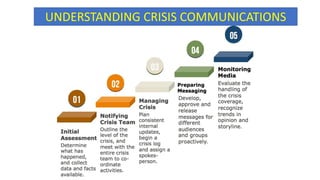
UNDERSTANDING CRISIS COMMUNICATIONS
LEVERAGE PR USING DIGITAL MARKETING
Social media does not replace
traditional media…. traditional
media is still very important,
when paired with social media,
it’s even more powerful
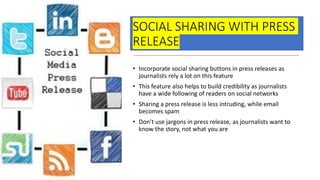
SOCIAL SHARING WITH PRESS
RELEASE
• Incorporate social sharing buttons in press releases as
journalists rely a lot on this feature
• This feature also helps to build credibility as journalists
have a wide following of readers on social networks
• Sharing a press release is less intruding, while email
becomes spam
• Don’t use jargons in press release, as journalists want to
know the story, not what you are
BUILD CAMPIAGN AROUND
CASE STUDIES
• Case study helps to build story for engagement with
journalists to explain about products / services
• It’s easier to explain in the form of case studies, while only
product is boring
• Better strategy would be to identify key facts from client’s
success story and highlight those
• Creation of visual case study has better impact than textual
Results
Solution
Problem
JOUTNALIST ACCESS AND
INSIGHTS
• Social media makes it easier to find more information
about journalists, helps to build relationships
• Social Media has given rise to citizen journalism, so don’t
overlook bloggers
• Media is often searching for sources and Twitter is the first
place they turn to tweet out the request to their audience
• Document interviews, with fun photographs to share online
on social media
SHARING IS CARING
• Providing information to journalists and fans builds
engagement
• Provide information to your customers and fans
• Work collaboratively to build engaging communication
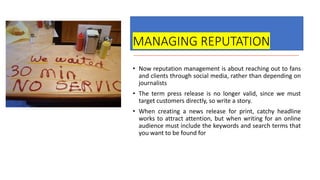
MANAGING REPUTATION
• Now reputation management is about reaching out to fans
and clients through social media, rather than depending on
journalists
• The term press release is no longer valid, since we must
target customers directly, so write a story.
• When creating a news release for print, catchy headline
works to attract attention, but when writing for an online
audience must include the keywords and search terms that
you want to be found for
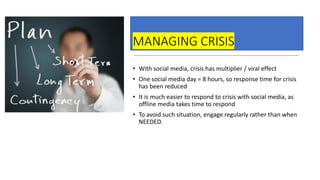
MANAGING CRISIS
• With social media, crisis has multiplier / viral effect
• One social media day = 8 hours, so response time for crisis
has been reduced
• It is much easier to respond to crisis with social media, as
offline media takes time to respond
• To avoid such situation, engage regularly rather than when
NEEDED.
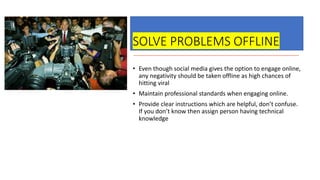
SOLVE PROBLEMS OFFLINE
• Even though social media gives the option to engage online,
any negativity should be taken offline as high chances of
hitting viral
• Maintain professional standards when engaging online.
• Provide clear instructions which are helpful, don’t confuse.
If you don’t know then assign person having technical
knowledge
What is public relations - Moses Gomes

What is public relations - Moses Gomes

  • 1.
    What is Public Relations? MosesGomes, Digital Marketing Consultant
  • 2.
    Key Take-aways • TheMessage - every company has a story • Define your story • Identify your audiences • Communicate your story • Understand the media tools
  • 5.
    Communicating strengths • Productsand services • Benefits and solutions • Key message • Tailor message to audiences
  • 6.
    Defining your message How is yourcompany perceived by employees, peers, competitors, customers, prospects? How do you want to be perceived by the public?
  • 7.
    Key Messages • Whatsets you apart? • What makes you a credible source? • Why would a reporter want to interview you? • Why would a viewer, listener or reader want to know what you have to say?
  • 10.
    Media interactions Press releases Lobbying Website Newsand speeches Events Internal communication Annual reports Sponsorships Stakeholder communications
  • 11.
  • 12.
    ANATOMY OF ASTORY PITCH Is this a current story idea? Is the reporter interested in the story idea? Are the readers, listeners or viewers interested in the story idea? Use past media coverage to advantage Always follow up
  • 14.
  • 15.
    ANATOMY OF APRESS RELEASE
  • 16.
    INVERTED PYRAMID NEWSWRITING STYLE Who…What…When…Where…Why Important Information Other Details Lesser Details
  • 17.
  • 18.
    LEVERAGE PR USINGDIGITAL MARKETING
  • 19.
    Social media doesnot replace traditional media…. traditional media is still very important, when paired with social media, it’s even more powerful
  • 20.
    SOCIAL SHARING WITHPRESS RELEASE • Incorporate social sharing buttons in press releases as journalists rely a lot on this feature • This feature also helps to build credibility as journalists have a wide following of readers on social networks • Sharing a press release is less intruding, while email becomes spam • Don’t use jargons in press release, as journalists want to know the story, not what you are
  • 21.
    BUILD CAMPIAGN AROUND CASESTUDIES • Case study helps to build story for engagement with journalists to explain about products / services • It’s easier to explain in the form of case studies, while only product is boring • Better strategy would be to identify key facts from client’s success story and highlight those • Creation of visual case study has better impact than textual Results Solution Problem
  • 22.
    JOUTNALIST ACCESS AND INSIGHTS •Social media makes it easier to find more information about journalists, helps to build relationships • Social Media has given rise to citizen journalism, so don’t overlook bloggers • Media is often searching for sources and Twitter is the first place they turn to tweet out the request to their audience • Document interviews, with fun photographs to share online on social media
  • 23.
    SHARING IS CARING •Providing information to journalists and fans builds engagement • Provide information to your customers and fans • Work collaboratively to build engaging communication
  • 24.
    MANAGING REPUTATION • Nowreputation management is about reaching out to fans and clients through social media, rather than depending on journalists • The term press release is no longer valid, since we must target customers directly, so write a story. • When creating a news release for print, catchy headline works to attract attention, but when writing for an online audience must include the keywords and search terms that you want to be found for
  • 25.
    MANAGING CRISIS • Withsocial media, crisis has multiplier / viral effect • One social media day = 8 hours, so response time for crisis has been reduced • It is much easier to respond to crisis with social media, as offline media takes time to respond • To avoid such situation, engage regularly rather than when NEEDED.
  • 26.
    SOLVE PROBLEMS OFFLINE •Even though social media gives the option to engage online, any negativity should be taken offline as high chances of hitting viral • Maintain professional standards when engaging online. • Provide clear instructions which are helpful, don’t confuse. If you don’t know then assign person having technical knowledge