Fitango Education
          Health Topics

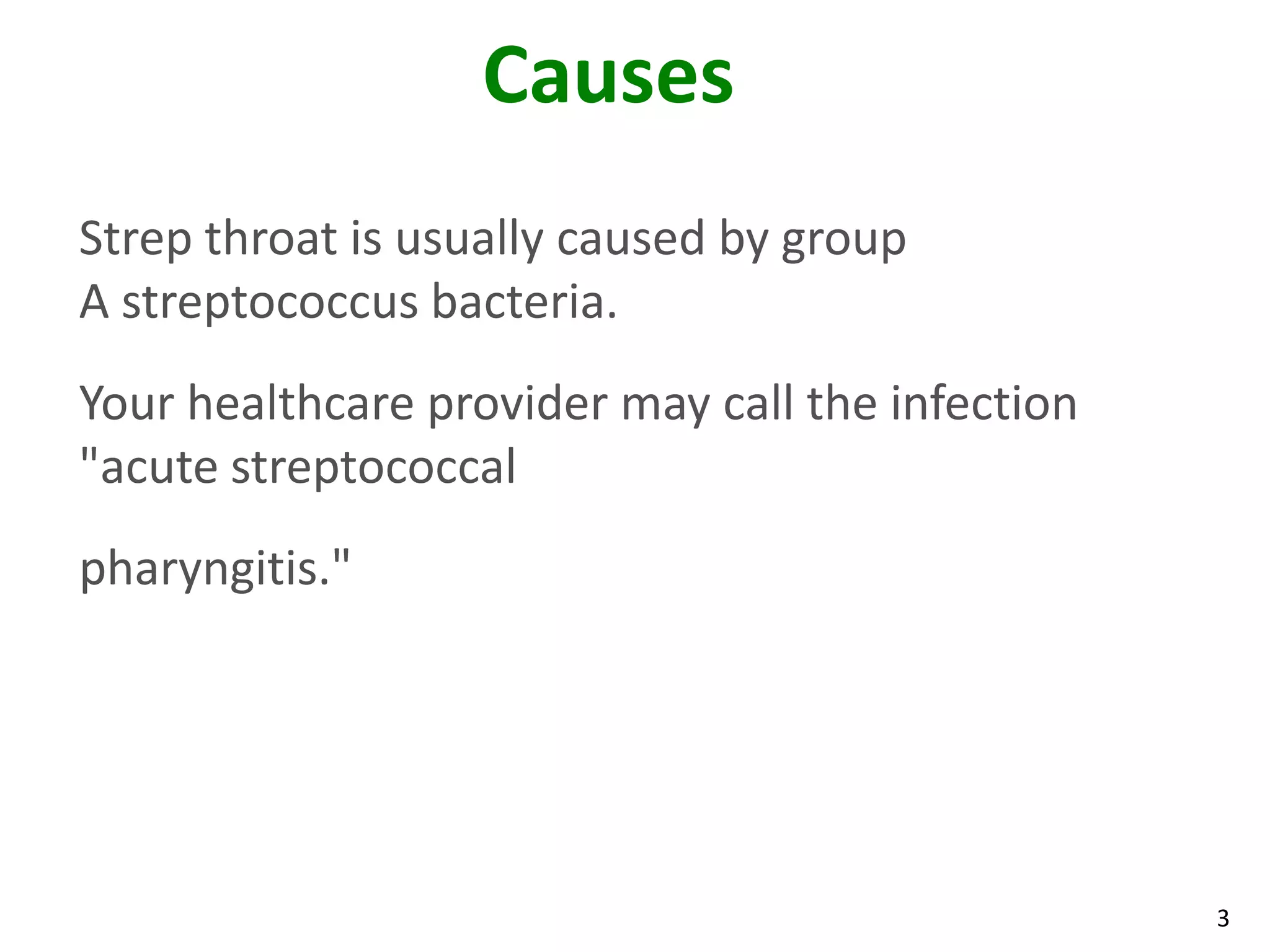
                          Strep Throat


http://www.fitango.com/categories.php?id=213
Overview
Strep throat is the most common throat
infection caused by bacteria.
It is found most often in
children between the ages of 5 and 15, although it
can occur in younger


                                                     1
Overview
children and adults. Children younger than 3 years
old can get strep
infections, but these usually don’t affect the
throat.
Strep throat infections usually occur in
the late fall, winter, and early spring.


                                                     2
Causes
Strep throat is usually caused by group
A streptococcus bacteria.
Your healthcare provider may call the infection
"acute streptococcal
pharyngitis."


                                                  3
Symptoms
If you have strep throat infection, you
will have a red and painful sore throat and may
have white patches on your
tonsils. You also may have swollen lymph nodes in
your neck, run a fever, and


                                                    4
Symptoms
have a headache. Nausea, vomiting, and
abdominal pain can occur but are more
common in children than in adults.
You can get sick within 3 days after being
exposed to the germ. Once infected, you can pass
the infection to others for up


                                                   5
Symptoms
to 2 to 3 weeks even if you don’t have symptoms.
After 24 hours of taking
antibiotics, you will no longer spread the bacteria
to others.


                                                      6
Diagnosis
Your healthcare provider will take a throat
swab to find out if you have strep throat infection.
This will be used for a
culture (a type of laboratory test) or a rapid strep
test, which only takes 10


                                                       7
Diagnosis
to 20 minutes. If the result of the rapid test is
negative, you may get a
followup culture, which takes 24 to 48 hours, to
confirm the results. If the
culture test is also negative, your healthcare
provider may suspect you do not


                                                    8
Diagnosis
have strep, but rather another type of infection.
The results of these throat cultures will
help your healthcare provider decide on the best
treatment. Most sore throats
are caused by viruses, and antibiotics are useless
against viruses.


                                                     9
Treatment
If you have strep throat, your healthcare
provider will prescribe an antibiotic. This will help
lessen symptoms. After 24
hours of taking the medicine, you will no longer be
able to spread the


                                                        10
Treatment
infection to others. Treatment will also reduce the
chance of complications.
Current guidelines by expert groups
recommend penicillin as the medicine of choice for
treating strep throat
because penicillin has been proven to be effective,
safe, and inexpensive. Your


                                                      11
Treatment
healthcare provider may instruct you to the take
pills for 10 days or give you
a shot. If you are allergic to penicillin there are
other antibiotics your
healthcare provider can give you to clear up the
illness.
During treatment, you may start to feel


                                                      12
Treatment
better within 4 days. This can happen even without
treatment. Still, it is very
important to finish all your medicine to prevent
complications.


                                                     13
Strep Throat

Strep Throat

  • 1.
    Fitango Education Health Topics Strep Throat http://www.fitango.com/categories.php?id=213
  • 2.
    Overview Strep throat isthe most common throat infection caused by bacteria. It is found most often in children between the ages of 5 and 15, although it can occur in younger 1
  • 3.
    Overview children and adults.Children younger than 3 years old can get strep infections, but these usually don’t affect the throat. Strep throat infections usually occur in the late fall, winter, and early spring. 2
  • 4.
    Causes Strep throat isusually caused by group A streptococcus bacteria. Your healthcare provider may call the infection "acute streptococcal pharyngitis." 3
  • 5.
    Symptoms If you havestrep throat infection, you will have a red and painful sore throat and may have white patches on your tonsils. You also may have swollen lymph nodes in your neck, run a fever, and 4
  • 6.
    Symptoms have a headache.Nausea, vomiting, and abdominal pain can occur but are more common in children than in adults. You can get sick within 3 days after being exposed to the germ. Once infected, you can pass the infection to others for up 5
  • 7.
    Symptoms to 2 to3 weeks even if you don’t have symptoms. After 24 hours of taking antibiotics, you will no longer spread the bacteria to others. 6
  • 8.
    Diagnosis Your healthcare providerwill take a throat swab to find out if you have strep throat infection. This will be used for a culture (a type of laboratory test) or a rapid strep test, which only takes 10 7
  • 9.
    Diagnosis to 20 minutes.If the result of the rapid test is negative, you may get a followup culture, which takes 24 to 48 hours, to confirm the results. If the culture test is also negative, your healthcare provider may suspect you do not 8
  • 10.
    Diagnosis have strep, butrather another type of infection. The results of these throat cultures will help your healthcare provider decide on the best treatment. Most sore throats are caused by viruses, and antibiotics are useless against viruses. 9
  • 11.
    Treatment If you havestrep throat, your healthcare provider will prescribe an antibiotic. This will help lessen symptoms. After 24 hours of taking the medicine, you will no longer be able to spread the 10
  • 12.
    Treatment infection to others.Treatment will also reduce the chance of complications. Current guidelines by expert groups recommend penicillin as the medicine of choice for treating strep throat because penicillin has been proven to be effective, safe, and inexpensive. Your 11
  • 13.
    Treatment healthcare provider mayinstruct you to the take pills for 10 days or give you a shot. If you are allergic to penicillin there are other antibiotics your healthcare provider can give you to clear up the illness. During treatment, you may start to feel 12
  • 14.
    Treatment better within 4days. This can happen even without treatment. Still, it is very important to finish all your medicine to prevent complications. 13