Dr Sujit Shrestha
Lecturer, Pediatrics, NMCTH
 Immunization is defined as the procedure by
which the body is prepared to fight against a
specific disease.
 It is used to induce the immune resistance of
the body to a specific disease.
Immunization is of two types:
 1. Passive immunization
 2. Active immunization.
 Passive immunization or immunity is produced without
challenging the immune system of the body. It is done by
administration of serum or gamma globulins from a
person who is already immunized (affected by the disease)
to a non-immune person.
 Passive immunization is acquired either naturally or
artificially.
Passive Natural Immunization
 Passive natural immunization is acquired from the
mother before and after birth.
 Before birth, immunity is transferred from mother to
the fetus in the form of maternal antibodies (mainly
IgG) through placenta.
 After birth, the antibodies (IgA) are transferred
through breast milk.
 It is developed by injecting previously prepared
antibodies using serum from humans or animals. This
type of immunity is useful for providing immediate
protection against acute infections like tetanus, measles,
etc.
2. ACTIVE IMMUNIZATION
Active immunization or immunity is acquired by activating
immune system of the body.
Body develops resistance against disease by producing antibodies
following the exposure to antigens. Active immunity is
acquired either
◦ naturally or artificially.
Active Natural Immunization
 Naturally acquired active immunity involves
activation of immune system in the body to produce
antibodies. It is achieved in both clinical and
subclinical infections
Active Artificial Immunization
 Active artificial immunization is a type of
immunization that is achieved by the administration
of vaccines or toxoids.
8
Vaccine is a substance that is introduced into the body to
prevent the disease produced by certain pathogens.
Vaccine consists of dead pathogens or live but attenuated
(artificially weakened) organisms. The vaccine induces
immunity against the pathogen, either by production of
antibodies or by activation of T lymphocytes.
Edward Jenner produced first live vaccine. He produced the
vaccine for smallpox from cowpox virus.
 The process of distributing and administering
vaccines is referred to as Vaccination.
1. Live-attenuated (weakened) vaccines
These vaccines contain modified strains of a pathogen (bacteria or
viruses) that have been weakened but are able to multiply within
the body and remain antigenic enough to induce a strong immune
response. ( Replicating Ag)
The varicella-zoster vaccine, oral poliovirus (OPV) vaccine, or
yellow fever virus vaccine are some examples of this type of
vaccine.
Advantage are-
Single dose is sufficient for immunization
10
Heterologous vaccines
- a sub-group of live attenuated vaccines produced from
strains that are pathogenic in animals but not in humans.
-confers protective immunity against a pathogen that
shares cross-reacting antigens with the microorganisms
in the vaccine.
-Example cowpox virus that protects against smallpox in
humans.
2. Killed- Inactivated Vaccines
 To produce this type of vaccines, bacteria or viruses are
killed or inactivated by a chemical treatment or heat.
 This group includes for example the inactivated
poliovirus (IPV) vaccine, pertussis vaccine, rabies
vaccine, or hepatitis A virus vaccine.
- Repeated dosing required.
12
3. Sub-unit vaccines
 Instead of the entire microbe, subunit vaccines
include only the antigens that best stimulate the
immune system. In some cases, these vaccines use
epitopes: the very specific parts of the antigen that
antibodies or T cells recognize and bind to.
 Because subunit vaccines contain only the essential
antigens and not all the other molecules that make up
the microbe, the chances of adverse reactions to the
vaccine are lower.
 Eg Hep B vaccine
4. Toxoid Vaccines
These vaccines are used when a bacterial toxin is the
main cause of illness.
When the immune system receives a vaccine containing
a harmless toxoid, it learns how to fight off the natural
toxin. ( non replicating Ag)
The immune system produces antibodies that block the
toxin. E.g Vaccines against diphtheria and tetanus.
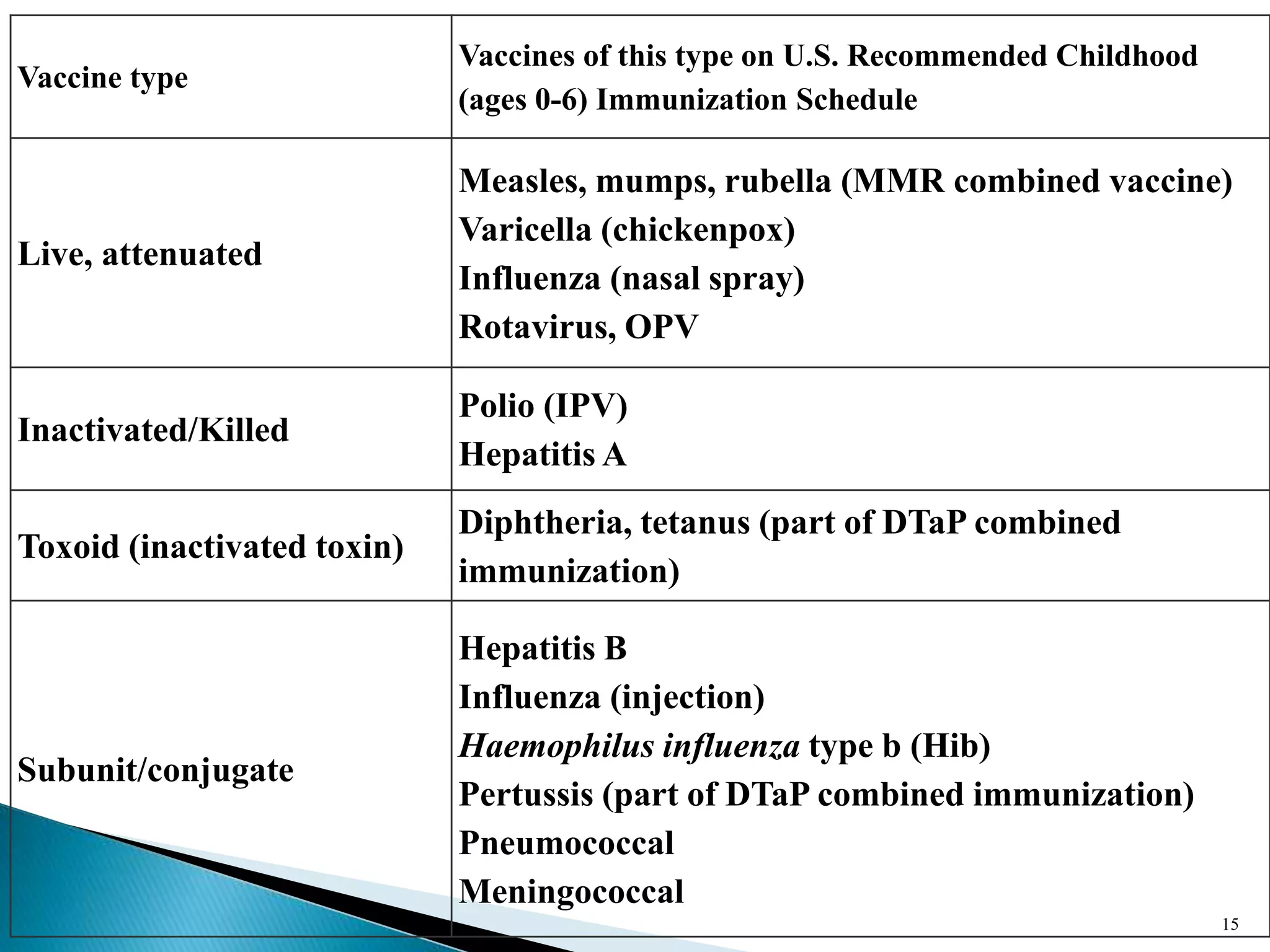
Vaccine type
Vaccines of this type on U.S. Recommended Childhood
(ages 0-6) Immunization Schedule
Live, attenuated
Measles, mumps, rubella (MMR combined vaccine)
Varicella (chickenpox)
Influenza (nasal spray)
Rotavirus, OPV
Inactivated/Killed
Polio (IPV)
Hepatitis A
Toxoid (inactivated toxin)
Diphtheria, tetanus (part of DTaP combined
immunization)
Subunit/conjugate
Hepatitis B
Influenza (injection)
Haemophilus influenza type b (Hib)
Pertussis (part of DTaP combined immunization)
Pneumococcal
Meningococcal
15
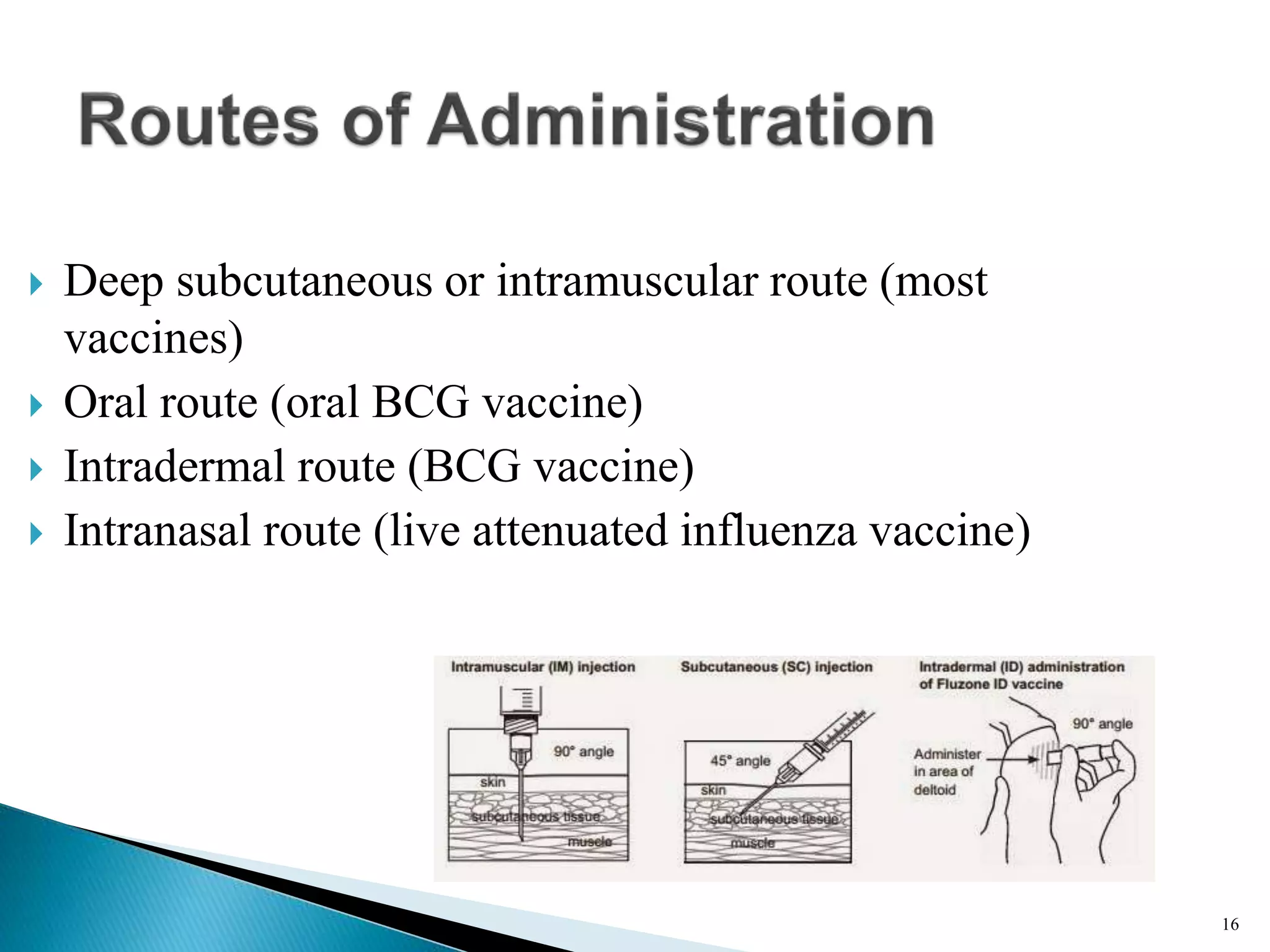
 Deep subcutaneous or intramuscular route (most
vaccines)
 Oral route (oral BCG vaccine)
 Intradermal route (BCG vaccine)
 Intranasal route (live attenuated influenza vaccine)
16
Primary vaccination
 One dose vaccines (BCG, measles, mumps, rubella,
yellow fever)
 Multiple dose vaccines (polio, DPT, hepatitis B)
Booster vaccination
 To maintain immunity level after it declines after some
time has elapsed (DT, MMR
17
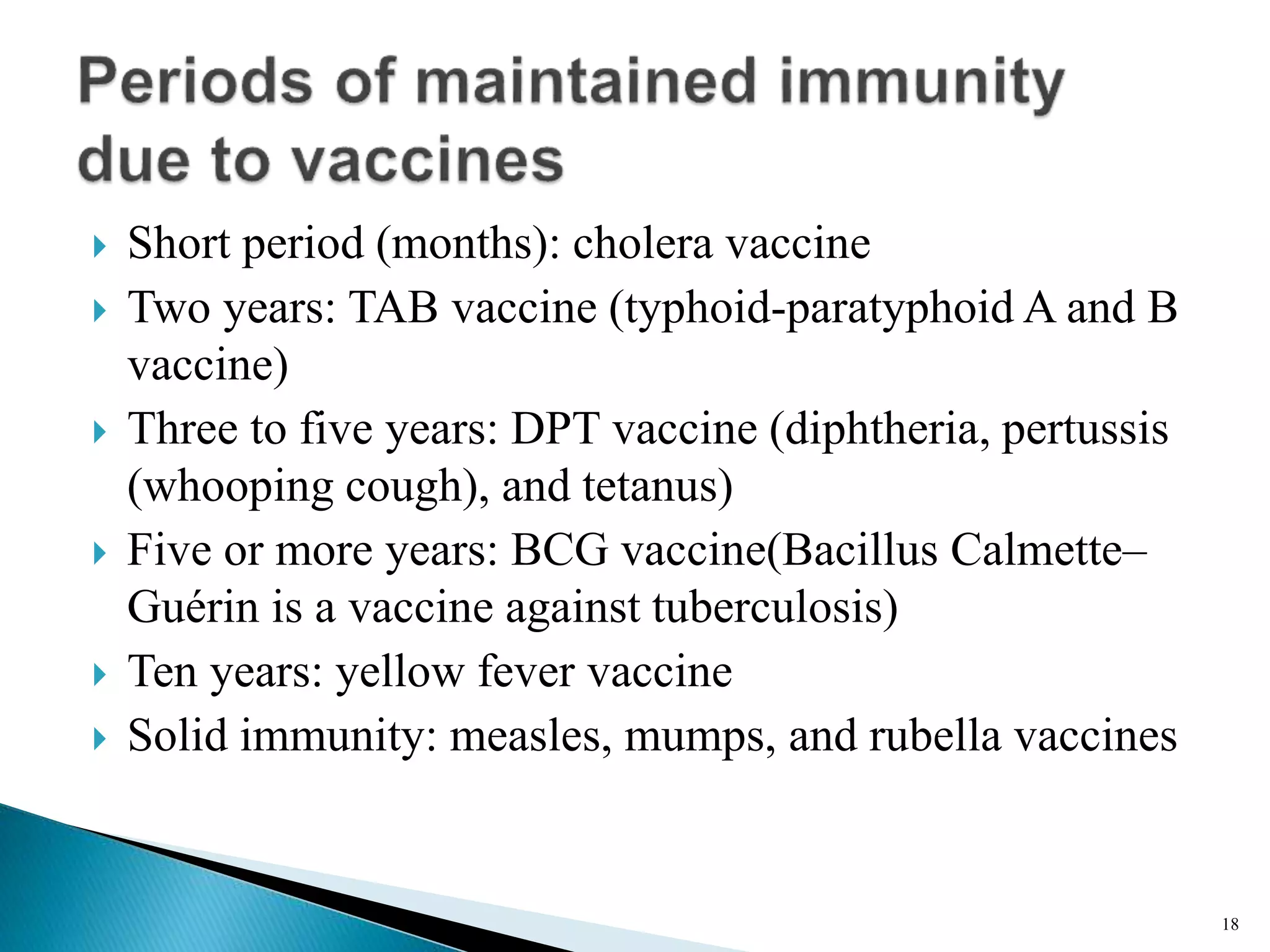
 Short period (months): cholera vaccine
 Two years: TAB vaccine (typhoid-paratyphoid A and B
vaccine)
 Three to five years: DPT vaccine (diphtheria, pertussis
(whooping cough), and tetanus)
 Five or more years: BCG vaccine(Bacillus Calmette–
Guérin is a vaccine against tuberculosis)
 Ten years: yellow fever vaccine
 Solid immunity: measles, mumps, and rubella vaccines
18
 1. An In-activated and Live virus vaccine can be
administered simultaneously at different sites without
interference with immune response.
◦ No minimum interval recommended between 2 vaccines
 2. Two or more killed antigens may also be given
simultaneously or at any interval between the doses.
Exception Cholera and Yellow fever- 4 weeks gap
 3. A minimum interval of 4 weeks is required between
administration of two live antigens, if not administered
simultaneously
 4. Lapse of schedule of immunization does not nessicitate
reinstitution of the total course. Eg. If OPV dose 2nd dose
missed or delayed, can be continued .
 5. Following are not contraindications-
◦ 1. mild acute illness
◦ 2. low grade fever
◦ 3.Mild diarrheal disease
◦ 4.current antibiotic therapy
◦ 5.prematurity
◦ 6. Recent exposure to an infectious disease
◦ 7. history of allergies eg. Penicillin
◦ 8. Malnutrition
 6. If immunization status of a child is unknown , there
is no harm in giving appropriate vaccines again.
 7. It is desirable not to reduce the dose of vaccine as it
may cause inappropriate immunological response. Dose
should not be exceeded to avoid side effects.
 8. Measles, mumps and rubella vaccines should not be
given to children, who were given immune globulin
within the previous three months, since this may hinder
adequate response to active immunization.
 9. Live virus vaccines of all types and BCG should not be
given to patients with congenital disorders of immune
functions.
 10. Live-virus vaccines of all types and BCG should not be
given to patients with congential disorders of immune
functions.
 11. Children suffering from progressive neurological
disorders or with history of convulsion to a previous dose
are at high risk of adverse reactions following whole cell
pertusis vaccine.
 12. Active immunoprophylaxis after exposure to
disease is recommended for rabies, measles, hepatitis,
varicella and tetanus.
Immunogenic efficacy of a vaccine refers to its ability to
induce an immune response.
Protective efficacy refers to actual protection against
disease.
In case of live viral and toxoid vaccines, antibody
response almost always results in protection.
In case of killed bacterial vaccines and BCG, antibody
response or CMI may not necessarily be protective.
The breakthrough disease after immunization is indicative
of vaccine failure.
 When the administration of recommended doses of
vaccine does not result in immune response sufficient
to protect against disease, the vaccine failure is
primary.
 When disease occurs in spite of immune response, it is
referred to as secondary vaccine failure.
 Primary vaccine failure occasionally occurs after three
doses of oral poliovirus vaccine.
 Secondary vaccine failure occurs not infrequently after
pertusis, typhoid and BCG immunization.
 Vaccine failure is very rare after measles, diptheria and
tetanus immunization.
 Immunological adjuvants are substances given along
with antigens in order to enhance their immunogenic
efficasy.
 Aluminium salts are used as adjuvants in diptheria-
pertusis-tetanus vaccines.
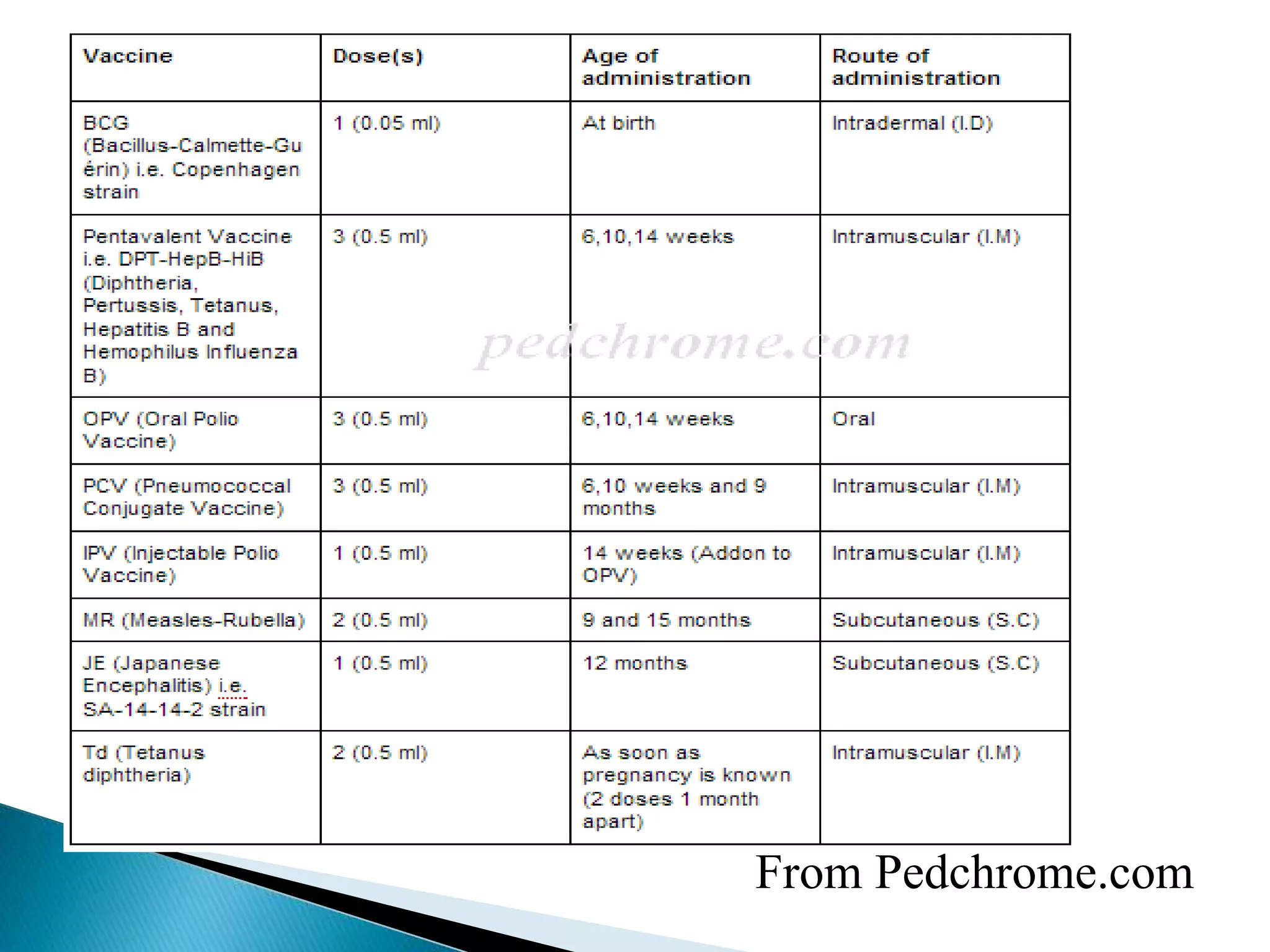
From Pedchrome.com
BCG – attenuated strain of M. tuberculosis var. bovis
Used as live vaccine against tuberculosis
Freeze dried( lyophilized) and stored at 4 C.
After reconstitution, shelf life is 1-2 weeks.
UV light kill the organisms rapidly.
Route- ID over deltoid muscle.
Dose- 0.1 ml
After 2-3 weeks, a papule develops- heals to scar, local LNs
can enlarge.
 4-12 weeks after immunization Tuberculin test
becomes positive.
Timing- Any time after birth since mother’s immunity is
not transferred to fetus.
Significant protection conferred against
Progressive primary tuberculosis and Disseinated TB
including TB Meningitis.
BCG does not protect from leprosy and other mibcrobial
disease.
 In tuberculin Positive test, the response to BCG is
accelerated , thus can be used as suggestive diagnostic
test. ( more senstive than tuberculin test)
Side effect-
Disseminated BCG infection ( Axillary LN suppuration)
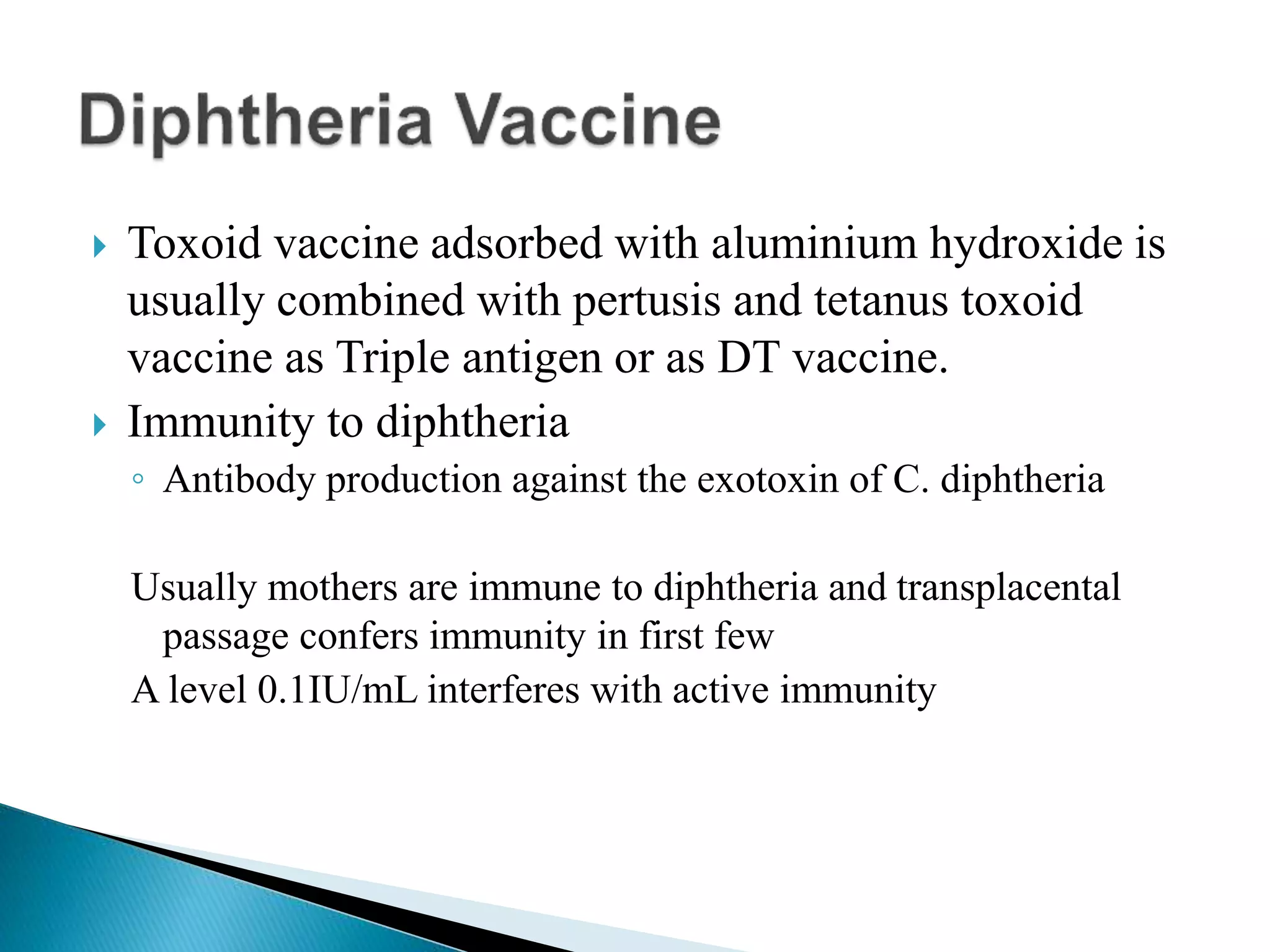
 Toxoid vaccine adsorbed with aluminium hydroxide is
usually combined with pertusis and tetanus toxoid
vaccine as Triple antigen or as DT vaccine.
 Immunity to diphtheria
◦ Antibody production against the exotoxin of C. diphtheria
Usually mothers are immune to diphtheria and transplacental
passage confers immunity in first few
A level 0.1IU/mL interferes with active immunity
 Schedule: 4 , 6 or 8th week.
 Booster recommended during 18 months
 H Influenzae conjugate vaccine containing PRP-D (
diphtheria toxoid) or CRM 197 ( diphtheria toxin
variant) can not be substituted for diphtheria toxoid
immunization.
Pertusis vaccine is usually given in form of the DPT
vaccine.
Each dose contains a fixed amount of B pertusis.
Three doses are recommended at 4-8 weeks of interval,
commencing at 1-3 months of age.
Protective efficacy is 75%.
Occaional failure may be expected.
 Common side effects-
◦ Local pain, swelling, mild to moderate fever and irritability.
◦ Prolonged screaming- uncommon reaction
Serious but rare
Convulsion
Encephalopathy Syndrome
Hypotonic – Hypo responsive state ( pale, limp, and unresponsive)
Avoided in- Progressive neurological disorder,
Febrile seizure and CP is not a contraindication.
 Few dose of Acetaminophen is a common practice,
which may help reduce fever and pain.
 Not recommended in children above 5-6 years.
 Newer acellular pertusis vaccine (aP) has been deployed
Contain inactivated pertusis toxins. Combined with either
fH ( filamentous hemagglutinin or fimbrial antigens and
pertactin.
Both administered as either DwPT or DaPT has efficacy 80%
or more in preventing typical pertusis.
DaPT can be given both primary as well as booster
immunizations.
Contraindication to DaPT is rare.
Costlier.
 Tetanus toxoids
 Polio- oral and Injectable
 Measles
 Rubella
 Hib
 Hepatitis B
 Mumps
 Pneumococcal
Others
1. Typhoid,Varicells.Rotavirus,Menigococcal,Influenza
,Rabies,Cholera
2. Combination vaccines
EPI

Vaccines in children

  • 1.
    Dr Sujit Shrestha Lecturer,Pediatrics, NMCTH
  • 2.
     Immunization isdefined as the procedure by which the body is prepared to fight against a specific disease.  It is used to induce the immune resistance of the body to a specific disease. Immunization is of two types:  1. Passive immunization  2. Active immunization.
  • 3.
     Passive immunizationor immunity is produced without challenging the immune system of the body. It is done by administration of serum or gamma globulins from a person who is already immunized (affected by the disease) to a non-immune person.  Passive immunization is acquired either naturally or artificially.
  • 4.
    Passive Natural Immunization Passive natural immunization is acquired from the mother before and after birth.  Before birth, immunity is transferred from mother to the fetus in the form of maternal antibodies (mainly IgG) through placenta.  After birth, the antibodies (IgA) are transferred through breast milk.
  • 5.
     It isdeveloped by injecting previously prepared antibodies using serum from humans or animals. This type of immunity is useful for providing immediate protection against acute infections like tetanus, measles, etc.
  • 6.
    2. ACTIVE IMMUNIZATION Activeimmunization or immunity is acquired by activating immune system of the body. Body develops resistance against disease by producing antibodies following the exposure to antigens. Active immunity is acquired either ◦ naturally or artificially.
  • 7.
    Active Natural Immunization Naturally acquired active immunity involves activation of immune system in the body to produce antibodies. It is achieved in both clinical and subclinical infections Active Artificial Immunization  Active artificial immunization is a type of immunization that is achieved by the administration of vaccines or toxoids.
  • 8.
    8 Vaccine is asubstance that is introduced into the body to prevent the disease produced by certain pathogens. Vaccine consists of dead pathogens or live but attenuated (artificially weakened) organisms. The vaccine induces immunity against the pathogen, either by production of antibodies or by activation of T lymphocytes. Edward Jenner produced first live vaccine. He produced the vaccine for smallpox from cowpox virus.
  • 9.
     The processof distributing and administering vaccines is referred to as Vaccination.
  • 10.
    1. Live-attenuated (weakened)vaccines These vaccines contain modified strains of a pathogen (bacteria or viruses) that have been weakened but are able to multiply within the body and remain antigenic enough to induce a strong immune response. ( Replicating Ag) The varicella-zoster vaccine, oral poliovirus (OPV) vaccine, or yellow fever virus vaccine are some examples of this type of vaccine. Advantage are- Single dose is sufficient for immunization 10
  • 11.
    Heterologous vaccines - asub-group of live attenuated vaccines produced from strains that are pathogenic in animals but not in humans. -confers protective immunity against a pathogen that shares cross-reacting antigens with the microorganisms in the vaccine. -Example cowpox virus that protects against smallpox in humans.
  • 12.
    2. Killed- InactivatedVaccines  To produce this type of vaccines, bacteria or viruses are killed or inactivated by a chemical treatment or heat.  This group includes for example the inactivated poliovirus (IPV) vaccine, pertussis vaccine, rabies vaccine, or hepatitis A virus vaccine. - Repeated dosing required. 12
  • 13.
    3. Sub-unit vaccines Instead of the entire microbe, subunit vaccines include only the antigens that best stimulate the immune system. In some cases, these vaccines use epitopes: the very specific parts of the antigen that antibodies or T cells recognize and bind to.  Because subunit vaccines contain only the essential antigens and not all the other molecules that make up the microbe, the chances of adverse reactions to the vaccine are lower.  Eg Hep B vaccine
  • 14.
    4. Toxoid Vaccines Thesevaccines are used when a bacterial toxin is the main cause of illness. When the immune system receives a vaccine containing a harmless toxoid, it learns how to fight off the natural toxin. ( non replicating Ag) The immune system produces antibodies that block the toxin. E.g Vaccines against diphtheria and tetanus.
  • 15.
    Vaccine type Vaccines ofthis type on U.S. Recommended Childhood (ages 0-6) Immunization Schedule Live, attenuated Measles, mumps, rubella (MMR combined vaccine) Varicella (chickenpox) Influenza (nasal spray) Rotavirus, OPV Inactivated/Killed Polio (IPV) Hepatitis A Toxoid (inactivated toxin) Diphtheria, tetanus (part of DTaP combined immunization) Subunit/conjugate Hepatitis B Influenza (injection) Haemophilus influenza type b (Hib) Pertussis (part of DTaP combined immunization) Pneumococcal Meningococcal 15
  • 16.
     Deep subcutaneousor intramuscular route (most vaccines)  Oral route (oral BCG vaccine)  Intradermal route (BCG vaccine)  Intranasal route (live attenuated influenza vaccine) 16
  • 17.
    Primary vaccination  Onedose vaccines (BCG, measles, mumps, rubella, yellow fever)  Multiple dose vaccines (polio, DPT, hepatitis B) Booster vaccination  To maintain immunity level after it declines after some time has elapsed (DT, MMR 17
  • 18.
     Short period(months): cholera vaccine  Two years: TAB vaccine (typhoid-paratyphoid A and B vaccine)  Three to five years: DPT vaccine (diphtheria, pertussis (whooping cough), and tetanus)  Five or more years: BCG vaccine(Bacillus Calmette– Guérin is a vaccine against tuberculosis)  Ten years: yellow fever vaccine  Solid immunity: measles, mumps, and rubella vaccines 18
  • 19.
     1. AnIn-activated and Live virus vaccine can be administered simultaneously at different sites without interference with immune response. ◦ No minimum interval recommended between 2 vaccines  2. Two or more killed antigens may also be given simultaneously or at any interval between the doses. Exception Cholera and Yellow fever- 4 weeks gap  3. A minimum interval of 4 weeks is required between administration of two live antigens, if not administered simultaneously
  • 20.
     4. Lapseof schedule of immunization does not nessicitate reinstitution of the total course. Eg. If OPV dose 2nd dose missed or delayed, can be continued .  5. Following are not contraindications- ◦ 1. mild acute illness ◦ 2. low grade fever ◦ 3.Mild diarrheal disease ◦ 4.current antibiotic therapy ◦ 5.prematurity ◦ 6. Recent exposure to an infectious disease ◦ 7. history of allergies eg. Penicillin ◦ 8. Malnutrition
  • 21.
     6. Ifimmunization status of a child is unknown , there is no harm in giving appropriate vaccines again.  7. It is desirable not to reduce the dose of vaccine as it may cause inappropriate immunological response. Dose should not be exceeded to avoid side effects.  8. Measles, mumps and rubella vaccines should not be given to children, who were given immune globulin within the previous three months, since this may hinder adequate response to active immunization.
  • 22.
     9. Livevirus vaccines of all types and BCG should not be given to patients with congenital disorders of immune functions.  10. Live-virus vaccines of all types and BCG should not be given to patients with congential disorders of immune functions.  11. Children suffering from progressive neurological disorders or with history of convulsion to a previous dose are at high risk of adverse reactions following whole cell pertusis vaccine.
  • 23.
     12. Activeimmunoprophylaxis after exposure to disease is recommended for rabies, measles, hepatitis, varicella and tetanus.
  • 24.
    Immunogenic efficacy ofa vaccine refers to its ability to induce an immune response. Protective efficacy refers to actual protection against disease. In case of live viral and toxoid vaccines, antibody response almost always results in protection. In case of killed bacterial vaccines and BCG, antibody response or CMI may not necessarily be protective. The breakthrough disease after immunization is indicative of vaccine failure.
  • 25.
     When theadministration of recommended doses of vaccine does not result in immune response sufficient to protect against disease, the vaccine failure is primary.  When disease occurs in spite of immune response, it is referred to as secondary vaccine failure.
  • 26.
     Primary vaccinefailure occasionally occurs after three doses of oral poliovirus vaccine.  Secondary vaccine failure occurs not infrequently after pertusis, typhoid and BCG immunization.  Vaccine failure is very rare after measles, diptheria and tetanus immunization.
  • 27.
     Immunological adjuvantsare substances given along with antigens in order to enhance their immunogenic efficasy.  Aluminium salts are used as adjuvants in diptheria- pertusis-tetanus vaccines.
  • 28.
  • 29.
    BCG – attenuatedstrain of M. tuberculosis var. bovis Used as live vaccine against tuberculosis Freeze dried( lyophilized) and stored at 4 C. After reconstitution, shelf life is 1-2 weeks. UV light kill the organisms rapidly. Route- ID over deltoid muscle. Dose- 0.1 ml After 2-3 weeks, a papule develops- heals to scar, local LNs can enlarge.
  • 30.
     4-12 weeksafter immunization Tuberculin test becomes positive. Timing- Any time after birth since mother’s immunity is not transferred to fetus. Significant protection conferred against Progressive primary tuberculosis and Disseinated TB including TB Meningitis. BCG does not protect from leprosy and other mibcrobial disease.
  • 31.
     In tuberculinPositive test, the response to BCG is accelerated , thus can be used as suggestive diagnostic test. ( more senstive than tuberculin test) Side effect- Disseminated BCG infection ( Axillary LN suppuration)
  • 32.
     Toxoid vaccineadsorbed with aluminium hydroxide is usually combined with pertusis and tetanus toxoid vaccine as Triple antigen or as DT vaccine.  Immunity to diphtheria ◦ Antibody production against the exotoxin of C. diphtheria Usually mothers are immune to diphtheria and transplacental passage confers immunity in first few A level 0.1IU/mL interferes with active immunity
  • 33.
     Schedule: 4, 6 or 8th week.  Booster recommended during 18 months  H Influenzae conjugate vaccine containing PRP-D ( diphtheria toxoid) or CRM 197 ( diphtheria toxin variant) can not be substituted for diphtheria toxoid immunization.
  • 34.
    Pertusis vaccine isusually given in form of the DPT vaccine. Each dose contains a fixed amount of B pertusis. Three doses are recommended at 4-8 weeks of interval, commencing at 1-3 months of age. Protective efficacy is 75%. Occaional failure may be expected.
  • 35.
     Common sideeffects- ◦ Local pain, swelling, mild to moderate fever and irritability. ◦ Prolonged screaming- uncommon reaction Serious but rare Convulsion Encephalopathy Syndrome Hypotonic – Hypo responsive state ( pale, limp, and unresponsive) Avoided in- Progressive neurological disorder, Febrile seizure and CP is not a contraindication.
  • 36.
     Few doseof Acetaminophen is a common practice, which may help reduce fever and pain.  Not recommended in children above 5-6 years.
  • 37.
     Newer acellularpertusis vaccine (aP) has been deployed Contain inactivated pertusis toxins. Combined with either fH ( filamentous hemagglutinin or fimbrial antigens and pertactin. Both administered as either DwPT or DaPT has efficacy 80% or more in preventing typical pertusis. DaPT can be given both primary as well as booster immunizations. Contraindication to DaPT is rare. Costlier.
  • 38.
     Tetanus toxoids Polio- oral and Injectable  Measles  Rubella  Hib  Hepatitis B  Mumps  Pneumococcal Others 1. Typhoid,Varicells.Rotavirus,Menigococcal,Influenza ,Rabies,Cholera 2. Combination vaccines EPI