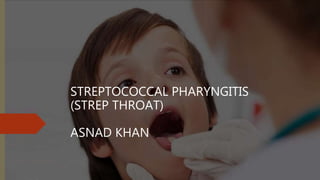
STREPTOCOCCAL PHARYNGITIS
(STREP THROAT)
ASNAD KHAN
INTRODUCTION
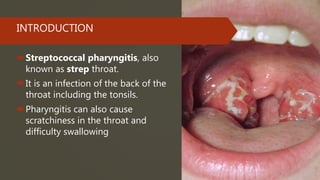
Streptococcal pharyngitis, also
known as strep throat.
It is an infection of the back of the
throat including the tonsils.
Pharyngitis can also cause
scratchiness in the throat and
difficulty swallowing
CAUSES
 Major treatable Pathogen Is Group A Hemolytic
Streptococcus(GAS).
 GAS (children) 15-30%
 GAS (Adult) 5-10%
 Viruses 50%
 Others Pathogens include
 Group C HS,
 N.gonorrhea
 Chlamydia & Mycoplasma
CLINICAL MANIFISTATIONS
Most Common Presentations Are
1. Acute illness
2. Sore Throat
3. Fever (101 F)
4. Tonsillar Exudates (Pus On Tonsils)
5. Swollen Glands
Patients May Also Have Headache, Malaise and
Anorexia.
SCARLET FEVER
 Scarlet fever, also known as scarlatina.
 It is Caused By Certain Strains Of GAS.
 It is an infection that can develop in people who
have strep throat.
 It's characterized by a bright red rash on the body.
 Usually accompanied by a high fever and sore throat.
 The same bacteria that cause strep throat also
cause scarlet fever.
COMPLICATIONS
 Two Classes Of Complications Exists;
 Suppurative and Non-Suppurative
 Suppurative Includes
 Retropharyngeal infections
 Otitis Media
 Sinusitis
 Non-Suppurative Includes
 Acute Rheumatic Fever(ARF)
 Streptococcal Glomerulonephritis
ACUTE RHEUMATIC FEVER
(ARF)
 Inflammatory Infections involving Heart, Joints,
Connective tissue And Nervous System.
 Arise Within 2-4 weeks Of Pharyngitis.
 ARF happens in 3% of Untreated Cases Of GAS.
 Penicillin Therapy Decreases The Incidence Of
ARF By 75%.
STREPTOCOCCAL GLOMERULONEPHRITIS
 Infection Cause By Certain Strains Of GAS.
 It affects the kidney.
 Occurs in Children Younger Than 7 Years.
 Occurs within 10 days Of following a GAS Upper
respiratory Infections.
 Antimicrobial Therapy Does not prevent
Streptococcal Glomerulonephritis.
PREVALANCE & DISTRIBUTION
GAS most often affects children & Young
Adults (5-15 years).
Common In Winter and Early Spring.
Acute Pharyngitis approximately Causes
in
Children 15-30%
Adults 5-10%
TRANSMISSION
 GAS Spreads through infected droplets in the air after the
Sneezes OR Coughs.
 Crowded Settings Such as Schools And Shelters have
higher chances of transmission among the people.
 Rate of transmission in untreated Condition is 35%.
 Risk of transmission decreases with 24 hours therapy of
Penicillin.
 The Person in whom GAS has colonized the nose , throat
or Skin Are the best Carrier Of GAS infection.
CLINICAL DIAGNOSIS
 Some Experts recommend that only patients with
Positive Cultures And Rapid Antigen Tests
Should be treated.
 In Adults the Centor Criteria are most often used.
The 4 Criteria are;
1. Tonsillar exudates
2. Tender anterior cervical adenopathy
3. Fever by History
4. Absence Of Cough
CLINICAL DIAGNOSIS
 Patients with 3 or 4 of these Criteria may be
treated For GAS.
 Patients with 0 or 1 criterion do not need to be
tested or treated.
 Patients with 3 or 4 criteria should be treated
only if test is Positive.
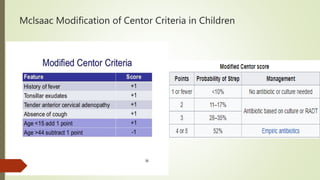
Mclsaac Modification of Centor Criteria in Children
LABORATORY DIAGNOSIS
 A throat culture is the gold standard for the
diagnosis of streptococcal pharyngitis, with a
sensitivity of 90–95%.
 A rapid strep test (also called rapid antigen
detection testing or RADT) may also be used.
 While the rapid strep test is quicker, it has a
lower sensitivity (70%) and statistically
equal specificity (98%) as a throat culture.
LABORATORY DIAGNOSIS
In areas of the world where rheumatic
fever is uncommon, a negative rapid strep
test is sufficient to rule out the disease.
Antibody tests, Such as Anti-streptolysin
O Can Confirm Streptococcal infection in
the past.
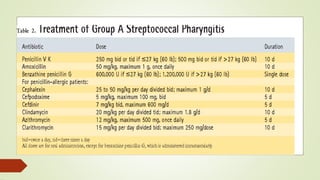
TREATMENT
 Antibiotic treatment can prevent local complications and
limit the spread of disease.
 Antibiotics prevent acute rheumatic fever if given within 9
days of the onset of symptoms.
 Treatment with antibiotics shortens the duration of the
acute illness by about 16 hours.
 The antibiotic of choice in the United States for
streptococcal pharyngitis is penicillin V, due to safety, cost,
and effectiveness.
 Amoxicillin is preferred in Europe.
 In India, where the risk of rheumatic fever is higher,
intramuscular benzathine penicillin G is the first choice for
treatment.
PREVENTION & CONTROL
 S. pyogenes is communicable and very
contagious.
 To prevent contracting it, wash hands after
sneezing or coughing and avoid being near
someone who is infected with the bacterium.
 If someone has been diagnosed with strep throat
or any disease caused by S. pyogenes, they
should stay at home until they have taken an
antibiotic for 24 hours.
PREVENTION & CONTROL
 Also, wounds should be frequently cleaned and
checked for infection of any kind, and avoid skin to
skin contact with other people’s sores or wounds.
 Researchers are trying to find an appropriate vaccine
for S. pyogenes, but there is one major problem.
 There are so many different serotypes of S pyogenes,
any vaccine developed would have to cover them to
be effective in combating the disease.
THANK YOU

Streptococcal Phayryngitis by Asnad khan

  • 1.
  • 2.
    INTRODUCTION Streptococcal pharyngitis, also knownas strep throat. It is an infection of the back of the throat including the tonsils. Pharyngitis can also cause scratchiness in the throat and difficulty swallowing
  • 3.
    CAUSES  Major treatablePathogen Is Group A Hemolytic Streptococcus(GAS).  GAS (children) 15-30%  GAS (Adult) 5-10%  Viruses 50%  Others Pathogens include  Group C HS,  N.gonorrhea  Chlamydia & Mycoplasma
  • 4.
    CLINICAL MANIFISTATIONS Most CommonPresentations Are 1. Acute illness 2. Sore Throat 3. Fever (101 F) 4. Tonsillar Exudates (Pus On Tonsils) 5. Swollen Glands Patients May Also Have Headache, Malaise and Anorexia.
  • 5.
    SCARLET FEVER  Scarletfever, also known as scarlatina.  It is Caused By Certain Strains Of GAS.  It is an infection that can develop in people who have strep throat.  It's characterized by a bright red rash on the body.  Usually accompanied by a high fever and sore throat.  The same bacteria that cause strep throat also cause scarlet fever.
  • 6.
    COMPLICATIONS  Two ClassesOf Complications Exists;  Suppurative and Non-Suppurative  Suppurative Includes  Retropharyngeal infections  Otitis Media  Sinusitis  Non-Suppurative Includes  Acute Rheumatic Fever(ARF)  Streptococcal Glomerulonephritis
  • 7.
    ACUTE RHEUMATIC FEVER (ARF) Inflammatory Infections involving Heart, Joints, Connective tissue And Nervous System.  Arise Within 2-4 weeks Of Pharyngitis.  ARF happens in 3% of Untreated Cases Of GAS.  Penicillin Therapy Decreases The Incidence Of ARF By 75%.
  • 8.
    STREPTOCOCCAL GLOMERULONEPHRITIS  InfectionCause By Certain Strains Of GAS.  It affects the kidney.  Occurs in Children Younger Than 7 Years.  Occurs within 10 days Of following a GAS Upper respiratory Infections.  Antimicrobial Therapy Does not prevent Streptococcal Glomerulonephritis.
  • 9.
    PREVALANCE & DISTRIBUTION GASmost often affects children & Young Adults (5-15 years). Common In Winter and Early Spring. Acute Pharyngitis approximately Causes in Children 15-30% Adults 5-10%
  • 10.
    TRANSMISSION  GAS Spreadsthrough infected droplets in the air after the Sneezes OR Coughs.  Crowded Settings Such as Schools And Shelters have higher chances of transmission among the people.  Rate of transmission in untreated Condition is 35%.  Risk of transmission decreases with 24 hours therapy of Penicillin.  The Person in whom GAS has colonized the nose , throat or Skin Are the best Carrier Of GAS infection.
  • 11.
    CLINICAL DIAGNOSIS  SomeExperts recommend that only patients with Positive Cultures And Rapid Antigen Tests Should be treated.  In Adults the Centor Criteria are most often used. The 4 Criteria are; 1. Tonsillar exudates 2. Tender anterior cervical adenopathy 3. Fever by History 4. Absence Of Cough
  • 12.
    CLINICAL DIAGNOSIS  Patientswith 3 or 4 of these Criteria may be treated For GAS.  Patients with 0 or 1 criterion do not need to be tested or treated.  Patients with 3 or 4 criteria should be treated only if test is Positive.
  • 13.
    Mclsaac Modification ofCentor Criteria in Children
  • 14.
    LABORATORY DIAGNOSIS  Athroat culture is the gold standard for the diagnosis of streptococcal pharyngitis, with a sensitivity of 90–95%.  A rapid strep test (also called rapid antigen detection testing or RADT) may also be used.  While the rapid strep test is quicker, it has a lower sensitivity (70%) and statistically equal specificity (98%) as a throat culture.
  • 15.
    LABORATORY DIAGNOSIS In areasof the world where rheumatic fever is uncommon, a negative rapid strep test is sufficient to rule out the disease. Antibody tests, Such as Anti-streptolysin O Can Confirm Streptococcal infection in the past.
  • 16.
    TREATMENT  Antibiotic treatmentcan prevent local complications and limit the spread of disease.  Antibiotics prevent acute rheumatic fever if given within 9 days of the onset of symptoms.  Treatment with antibiotics shortens the duration of the acute illness by about 16 hours.  The antibiotic of choice in the United States for streptococcal pharyngitis is penicillin V, due to safety, cost, and effectiveness.  Amoxicillin is preferred in Europe.  In India, where the risk of rheumatic fever is higher, intramuscular benzathine penicillin G is the first choice for treatment.
  • 18.
    PREVENTION & CONTROL S. pyogenes is communicable and very contagious.  To prevent contracting it, wash hands after sneezing or coughing and avoid being near someone who is infected with the bacterium.  If someone has been diagnosed with strep throat or any disease caused by S. pyogenes, they should stay at home until they have taken an antibiotic for 24 hours.
  • 19.
    PREVENTION & CONTROL Also, wounds should be frequently cleaned and checked for infection of any kind, and avoid skin to skin contact with other people’s sores or wounds.  Researchers are trying to find an appropriate vaccine for S. pyogenes, but there is one major problem.  There are so many different serotypes of S pyogenes, any vaccine developed would have to cover them to be effective in combating the disease.
  • 20.