M.Hakan DURAL M.D.
Some signs of serious muscle, bone or joint
injuries:
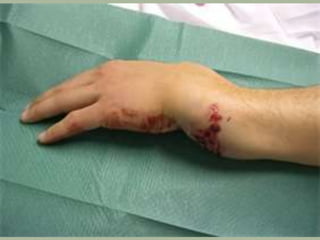
 Significant deformity
 Bruising and swelling
 Inability to use the affected part normally
 Bone fragments sticking out of the wound
 Person feels bone grating after injury
 Heard a snap or pop sound at the time of injury
 The injured area is cold or numb
 Cause of the injury suggests that the injury may be
severe
Fractures
 any break in a bone
Dislocation
 when one end of a bone making up a joint is pulled or
pushed out of place
Sprain
 when a ligament is torn (ankle, knee, finger…)
Strain
 stretching of a muscle or tendon or mild tearing of muscle
(neck, lower back…)
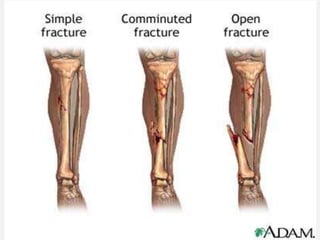
 There are two categories of fractures:
 Closed (Simple) fracture
○ The skin is intact and no wound exists anywhere near the
fracture site.
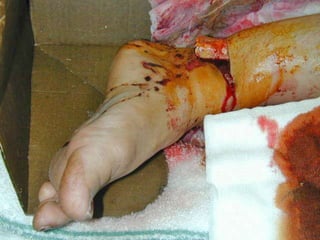
 Open (Compound) fracture
○ The skin over the fracture has been damaged or broken.
○ The wound may result from bone protruding through the
skin.
○ The bone may not always be visible in the wound.
Fractures
Fractures
 What to Look for:
General signs and Symptoms:
○Tenderness to touch.
○Swelling.
○Deformities may occur when bones are broken, causing
an abnormal shape.
○Open wounds break the skin.
○A grating sensation caused by broken bones rubbing
together
can be felt and sometimes even heard.
Do not move the injured limb in an attempt to detect it.
○Loss of use.
Fractures
 Additional signs and symptoms include:
 The history of the injury can lead to suspect
a fracture whenever a serious accident has
happened.
○ The victim may have heard or felt the bone
snap.
13
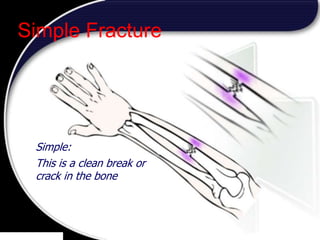
Simple:
This is a clean break or
crack in the bone
Simple Fracture
14
Comminute:
This is a type of fracture
that produces multiple bone
fragments
Comminuted Fracture
15
Green stick:
A split in a young, immature
bone. Most common in children
Green-Stick Fracture
15
16
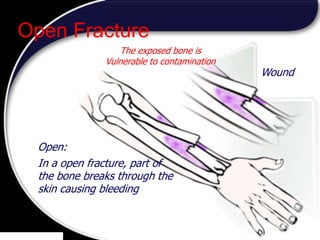
Open:
In a open fracture, part of
the bone breaks through the
skin causing bleeding
The exposed bone is
Vulnerable to contamination
Wound
Open Fracture
17
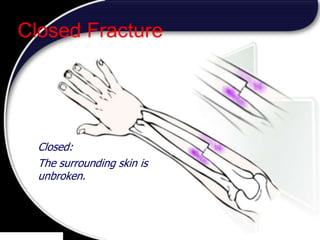
Closed:
The surrounding skin is
unbroken.
Closed Fracture
18
Open Fractures
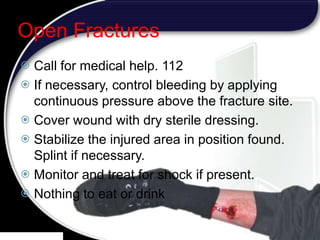
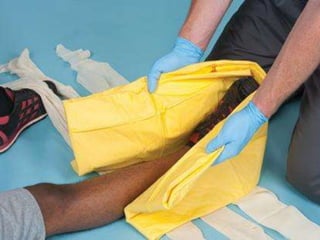
 Call for medical help. 112
 If necessary, control bleeding by applying
continuous pressure above the fracture site.
 Cover wound with dry sterile dressing.
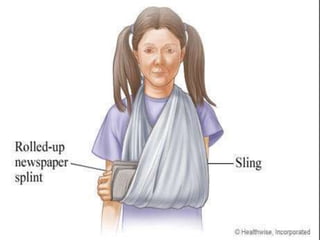
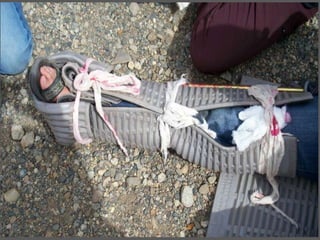
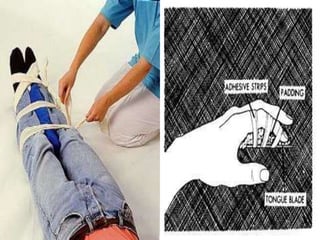
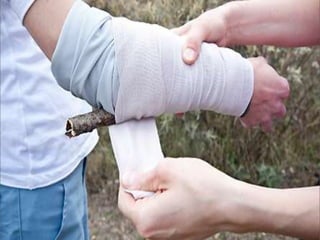
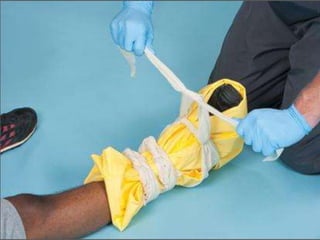
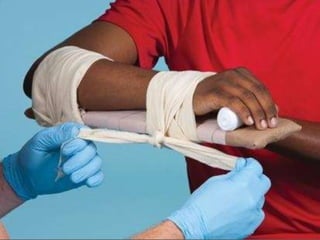
 Stabilize the injured area in position found.
Splint if necessary.
 Monitor and treat for shock if present.
 Nothing to eat or drink
21
Dislocations
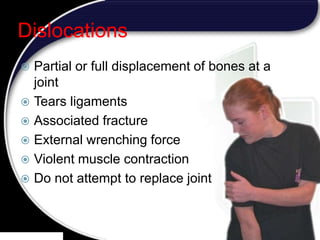
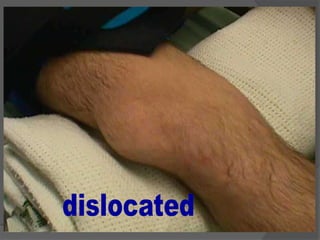
 Partial or full displacement of bones at a
joint
 Tears ligaments
 Associated fracture
 External wrenching force
 Violent muscle contraction
 Do not attempt to replace joint
22
Dislocations
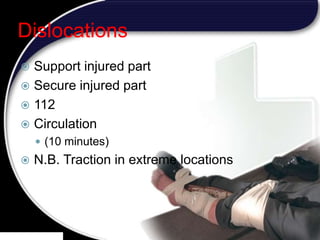
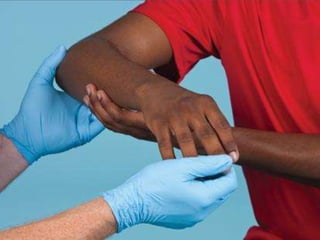
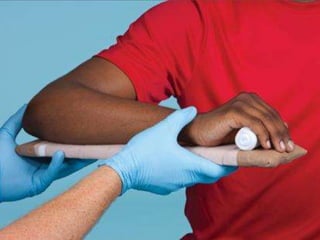
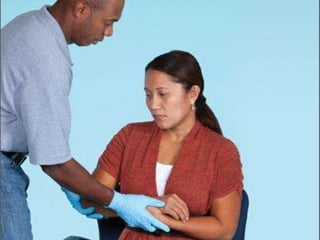
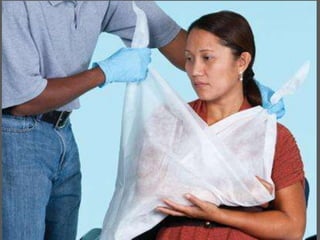
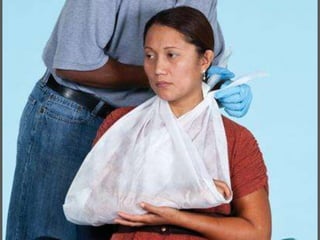
 Support injured part
 Secure injured part
 112
 Circulation
 (10 minutes)
 N.B. Traction in extreme locations
24
Soft Tissue Injuries -
Sprains
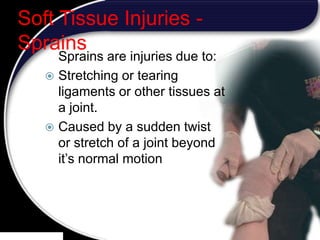
Sprains are injuries due to:
 Stretching or tearing
ligaments or other tissues at
a joint.
 Caused by a sudden twist
or stretch of a joint beyond
it’s normal motion
24
25
Soft Tissue Injuries -
Sprains
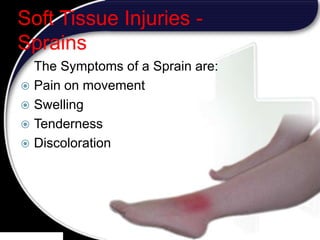
The Symptoms of a Sprain are:
 Pain on movement
 Swelling
 Tenderness
 Discoloration
25
26
Soft Tissue Injuries - Strains
The Symptoms of a strain are;
 Intense pain
 Moderate swelling
 Painful movement
 Difficult movement
 Sometimes, discolouration
27
Soft Tissue Injuries - Strains
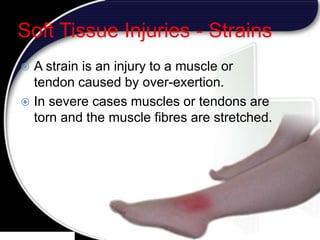
 A strain is an injury to a muscle or
tendon caused by over-exertion.
 In severe cases muscles or tendons are
torn and the muscle fibres are stretched.
27
28
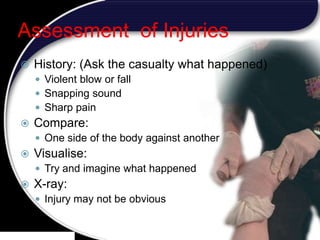
Assessment of Injuries
 History: (Ask the casualty what happened)
 Violent blow or fall
 Snapping sound
 Sharp pain
 Compare:
 One side of the body against another
 Visualise:
 Try and imagine what happened
 X-ray:
 Injury may not be obvious
28
29
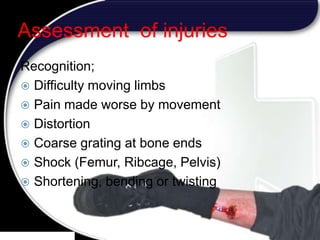
Assessment of injuries
Recognition;
 Difficulty moving limbs
 Pain made worse by movement
 Distortion
 Coarse grating at bone ends
 Shock (Femur, Ribcage, Pelvis)
 Shortening, bending or twisting
29
30
IF IN DOUBT - TREAT AS A
FRACTURE !
Soft Tissue injuries
Treatment (RICER)
 Rest the injured part.
 Apply Ice or cold compress.
 (15-20mins)
 Compress the injury.
 Elevate the injured part.
 Rehabilitate / Recuperation
30
The most common indicator of the severity of the injury is the
intensity of the pain. Also the area may be swollen, red and
bruised. Follow the below mentioned general guidelines
(RICE):
 Rest: Do not move or straighten the injury
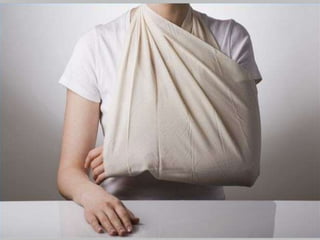
Immobilize: Try to stabilize the person in the position he/she
was found. Splint or sling the injured part only and caution
to move the person; it should not be more painful.
Cold: Indirectly cool the part using ice for a maximum of 20
minutes. Remove it for 20 minutes and then cool the part
again.
Elevate: Only elevate the part if it does not cause more
pain.
Questions/Comments

First Aid in fractures

  • 2.
  • 4.
    Some signs ofserious muscle, bone or joint injuries:  Significant deformity  Bruising and swelling  Inability to use the affected part normally  Bone fragments sticking out of the wound  Person feels bone grating after injury  Heard a snap or pop sound at the time of injury  The injured area is cold or numb  Cause of the injury suggests that the injury may be severe
  • 5.
    Fractures  any breakin a bone Dislocation  when one end of a bone making up a joint is pulled or pushed out of place Sprain  when a ligament is torn (ankle, knee, finger…) Strain  stretching of a muscle or tendon or mild tearing of muscle (neck, lower back…)
  • 6.
     There aretwo categories of fractures:  Closed (Simple) fracture ○ The skin is intact and no wound exists anywhere near the fracture site.  Open (Compound) fracture ○ The skin over the fracture has been damaged or broken. ○ The wound may result from bone protruding through the skin. ○ The bone may not always be visible in the wound. Fractures
  • 11.
    Fractures  What toLook for: General signs and Symptoms: ○Tenderness to touch. ○Swelling. ○Deformities may occur when bones are broken, causing an abnormal shape. ○Open wounds break the skin. ○A grating sensation caused by broken bones rubbing together can be felt and sometimes even heard. Do not move the injured limb in an attempt to detect it. ○Loss of use.
  • 12.
    Fractures  Additional signsand symptoms include:  The history of the injury can lead to suspect a fracture whenever a serious accident has happened. ○ The victim may have heard or felt the bone snap.
  • 13.
    13 Simple: This is aclean break or crack in the bone Simple Fracture
  • 14.
    14 Comminute: This is atype of fracture that produces multiple bone fragments Comminuted Fracture
  • 15.
    15 Green stick: A splitin a young, immature bone. Most common in children Green-Stick Fracture 15
  • 16.
    16 Open: In a openfracture, part of the bone breaks through the skin causing bleeding The exposed bone is Vulnerable to contamination Wound Open Fracture
  • 17.
    17 Closed: The surrounding skinis unbroken. Closed Fracture
  • 18.
    18 Open Fractures  Callfor medical help. 112  If necessary, control bleeding by applying continuous pressure above the fracture site.  Cover wound with dry sterile dressing.  Stabilize the injured area in position found. Splint if necessary.  Monitor and treat for shock if present.  Nothing to eat or drink
  • 21.
    21 Dislocations  Partial orfull displacement of bones at a joint  Tears ligaments  Associated fracture  External wrenching force  Violent muscle contraction  Do not attempt to replace joint
  • 22.
    22 Dislocations  Support injuredpart  Secure injured part  112  Circulation  (10 minutes)  N.B. Traction in extreme locations
  • 24.
    24 Soft Tissue Injuries- Sprains Sprains are injuries due to:  Stretching or tearing ligaments or other tissues at a joint.  Caused by a sudden twist or stretch of a joint beyond it’s normal motion 24
  • 25.
    25 Soft Tissue Injuries- Sprains The Symptoms of a Sprain are:  Pain on movement  Swelling  Tenderness  Discoloration 25
  • 26.
    26 Soft Tissue Injuries- Strains The Symptoms of a strain are;  Intense pain  Moderate swelling  Painful movement  Difficult movement  Sometimes, discolouration
  • 27.
    27 Soft Tissue Injuries- Strains  A strain is an injury to a muscle or tendon caused by over-exertion.  In severe cases muscles or tendons are torn and the muscle fibres are stretched. 27
  • 28.
    28 Assessment of Injuries History: (Ask the casualty what happened)  Violent blow or fall  Snapping sound  Sharp pain  Compare:  One side of the body against another  Visualise:  Try and imagine what happened  X-ray:  Injury may not be obvious 28
  • 29.
    29 Assessment of injuries Recognition; Difficulty moving limbs  Pain made worse by movement  Distortion  Coarse grating at bone ends  Shock (Femur, Ribcage, Pelvis)  Shortening, bending or twisting 29
  • 30.
    30 IF IN DOUBT- TREAT AS A FRACTURE ! Soft Tissue injuries Treatment (RICER)  Rest the injured part.  Apply Ice or cold compress.  (15-20mins)  Compress the injury.  Elevate the injured part.  Rehabilitate / Recuperation 30
  • 31.
    The most commonindicator of the severity of the injury is the intensity of the pain. Also the area may be swollen, red and bruised. Follow the below mentioned general guidelines (RICE):  Rest: Do not move or straighten the injury Immobilize: Try to stabilize the person in the position he/she was found. Splint or sling the injured part only and caution to move the person; it should not be more painful. Cold: Indirectly cool the part using ice for a maximum of 20 minutes. Remove it for 20 minutes and then cool the part again. Elevate: Only elevate the part if it does not cause more pain.
  • 52.