FIRST AID IN DISLOCATION
SACHIN DWIVEDI
CLINICAL INSTRUCTOR, CENER, AIIMS RISHIKESH
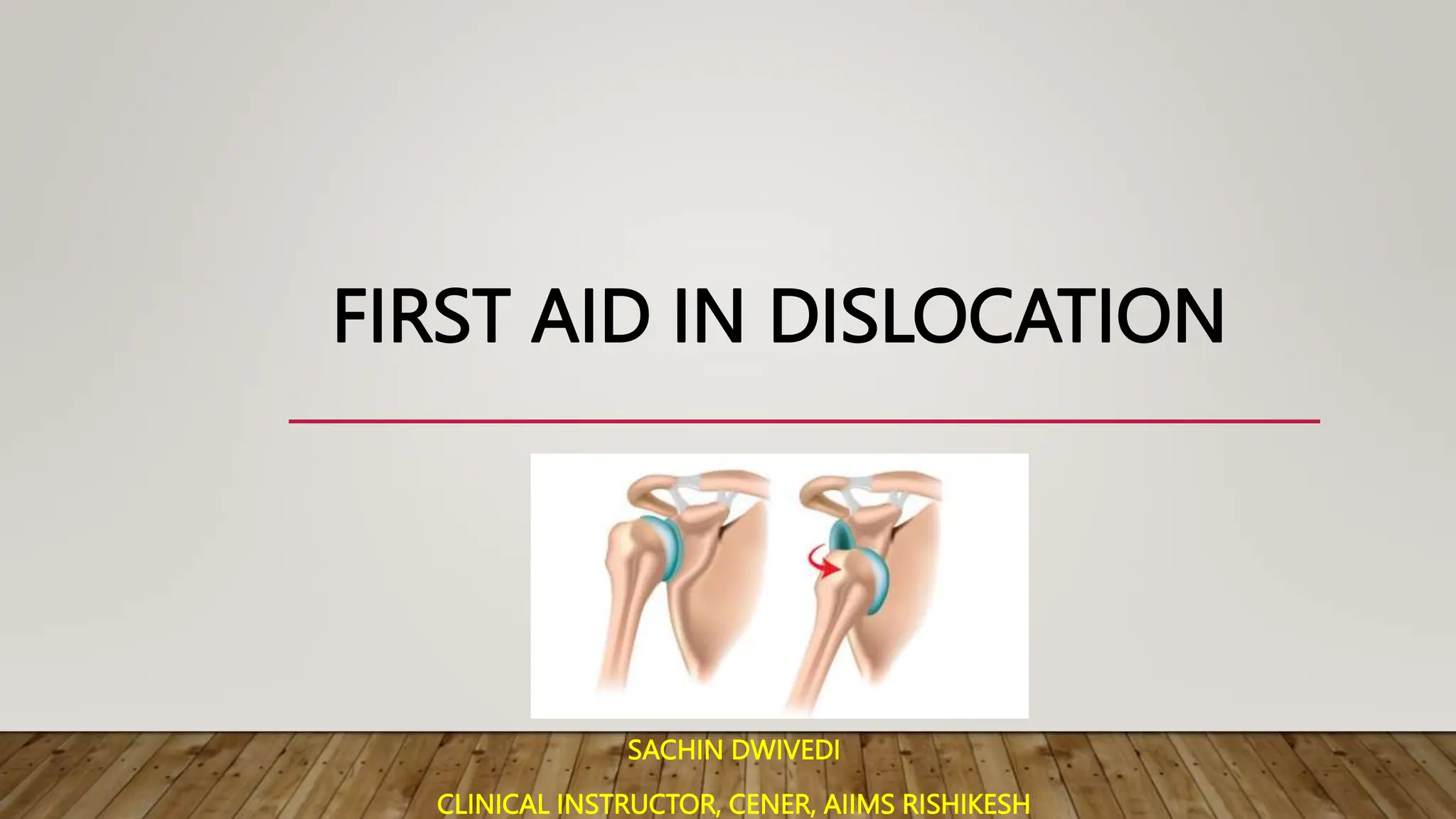
FIRST AID IN DISLOCATION
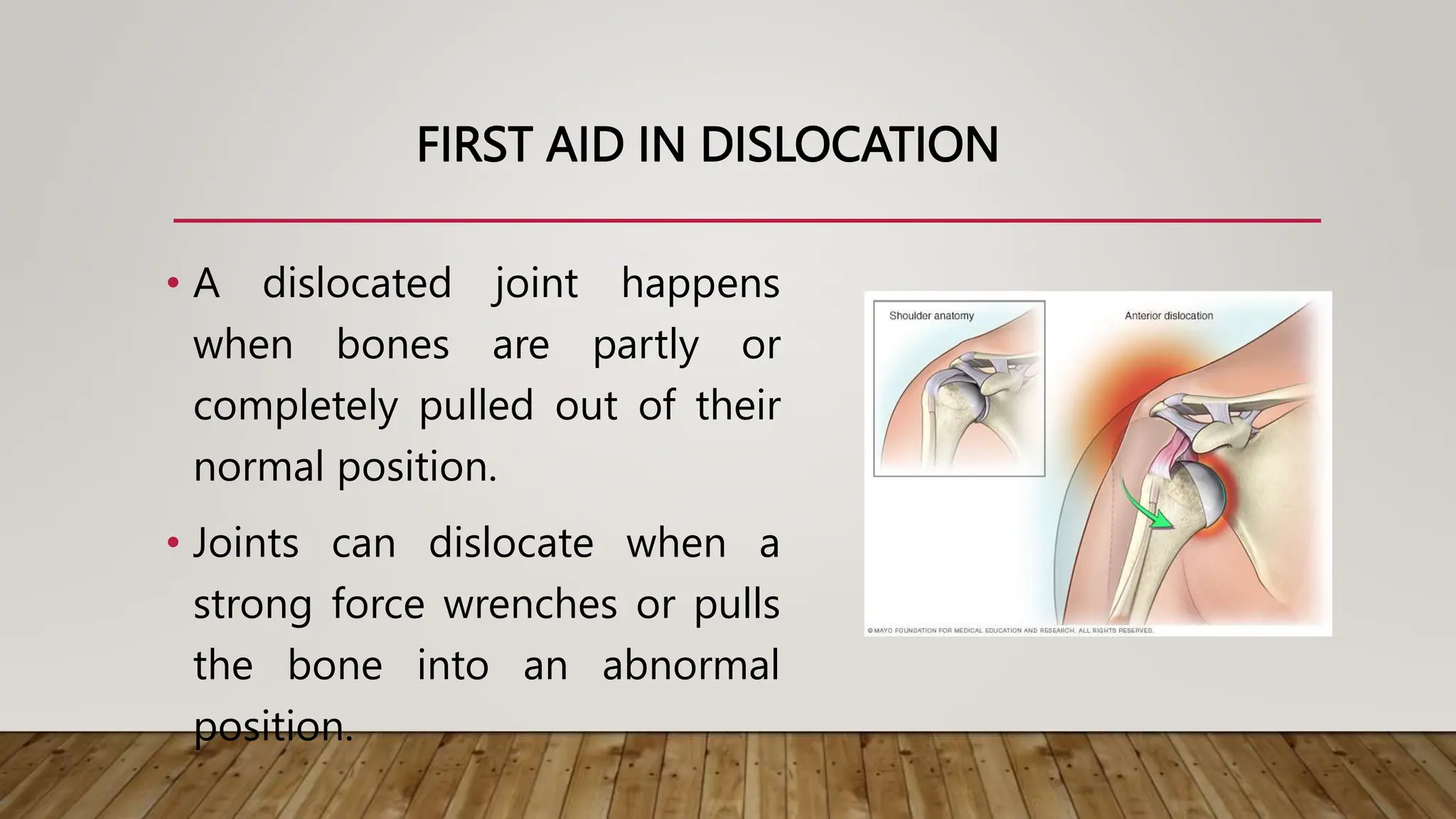
• A dislocated joint happens
when bones are partly or
completely pulled out of their
normal position.
• Joints can dislocate when a
strong force wrenches or pulls
the bone into an abnormal
position.
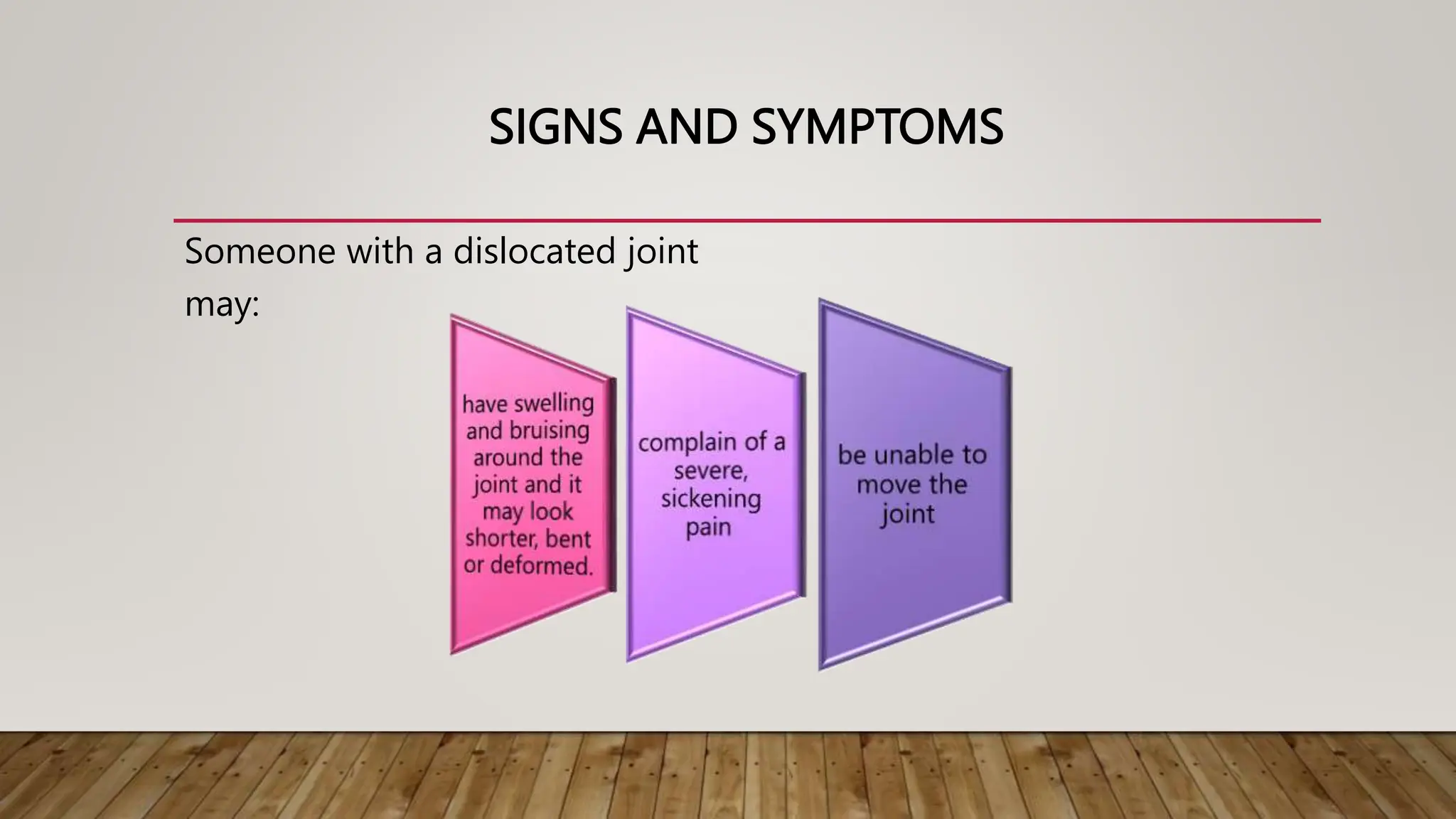
SIGNS AND SYMPTOMS
Someone with a dislocated joint
may:
WHAT TO DO
STEP-I
• Advise the victim to stay still.
• Help them to support their dislocated joint in the most comfortable position.
• Offer simple pain relief such as Paracetamol, if they can take it.
• Do not try to put the dislocated bone back into its socket, as this may cause
further injury.
WHAT TO DO
STEP-II
Stop the joint from moving.
• If you think they have dislocated their shoulder or elbow, support the injured
arm using a sling.
• To give comfort and support, tie a broad-fold bandage (wide bandage) around
the chest and the sling. If a hand or arm is injured, remove any watches in case
of swelling.
• If you think they have dislocated their ankle, knee or hip joint, support the
injured leg using padding and broad-fold bandages.
• With a lower limb joint, make sure they don't put any weight on it.
https://youtu.be/PwfBGkBXkFA
WHAT TO DO
STEP-III
• Send the casualty to hospital. Call 108 for emergency help if you
can’t take them yourself.
WHAT TO DO
STEP-IV
• While waiting for help, treat for shock if necessary.
• Monitor their level of response.
• Do not raise an injured leg. Only raise the uninjured leg.
WHAT TO DO
STEP-V
• Check the circulation beyond any bandages every 10 minutes and
loosen if necessary.
FIRST AID IN STRAINS AND
SPRAINS
SACHIN DWIVEDI
CLINICAL INSTRUCTOR, CENER, AIIMS RISHIKESH
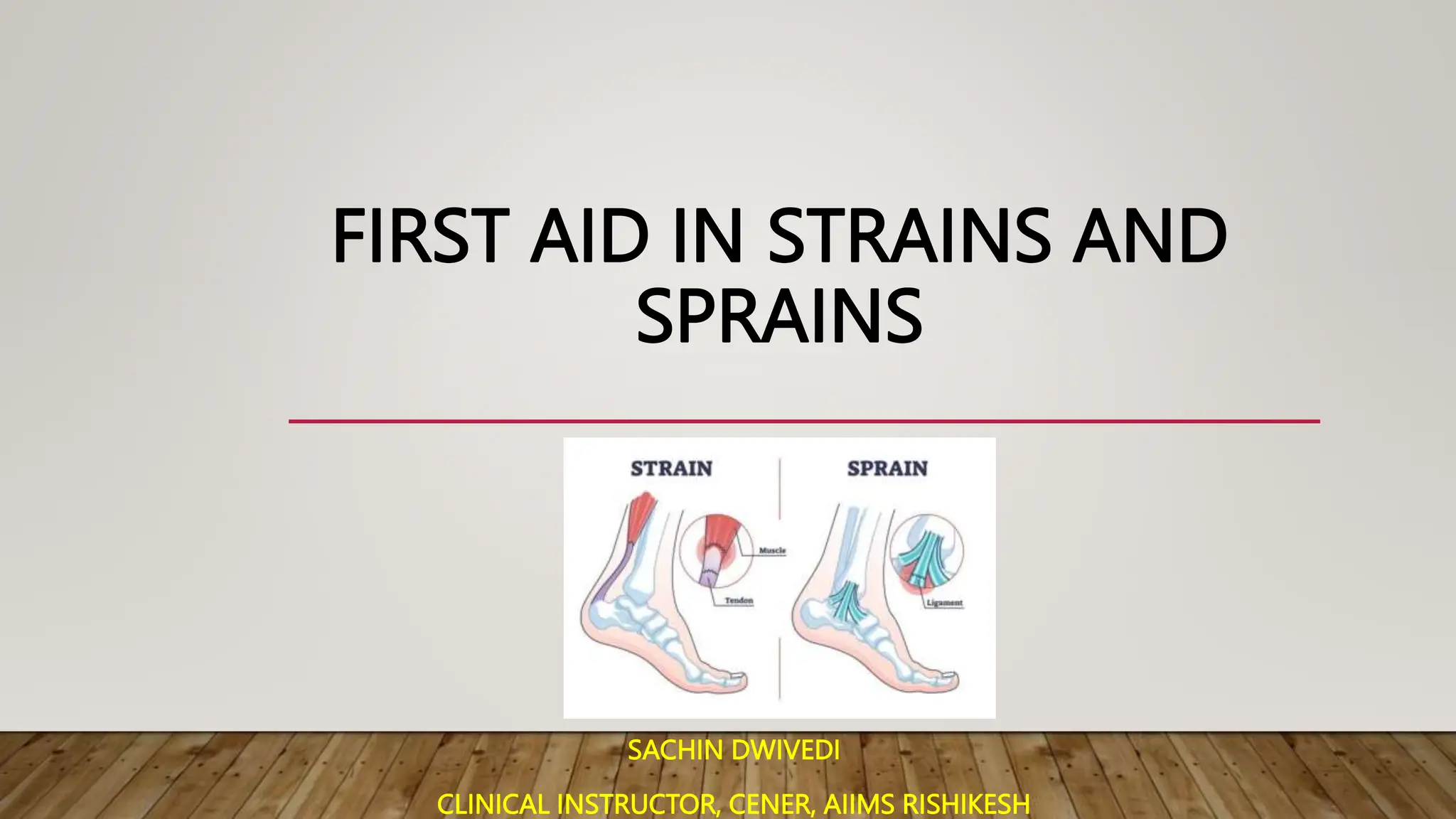
FIRST AID IN STRAINS AND SPRAINS
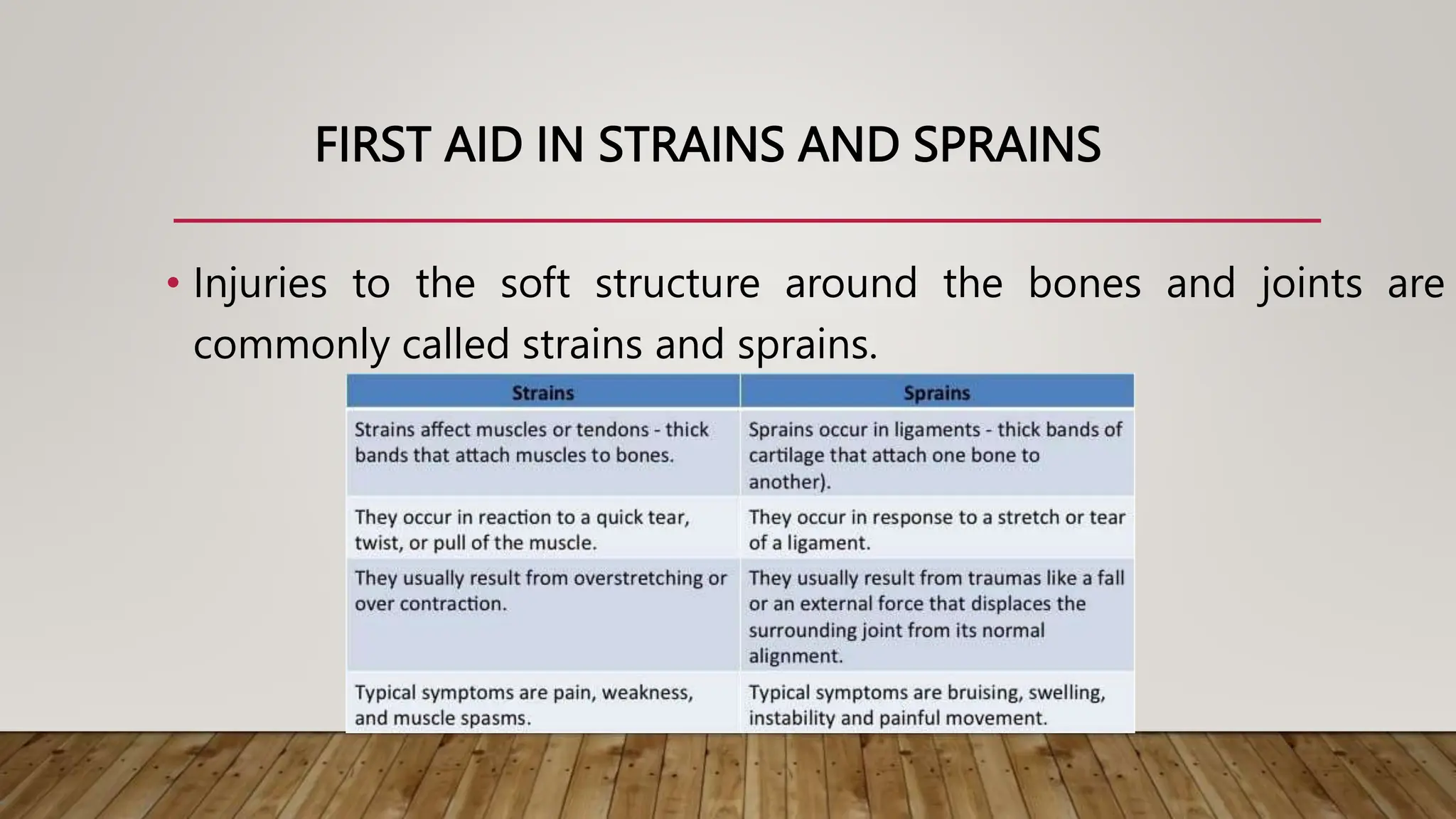
• Injuries to the soft structure around the bones and joints are
commonly called strains and sprains.
SIGNS AND SYMPTOMS
WHAT TO DO
STEP-I
WHAT TO DO
STEP-II
https://youtu.be/PwfBGkBXkFA
WHAT TO DO
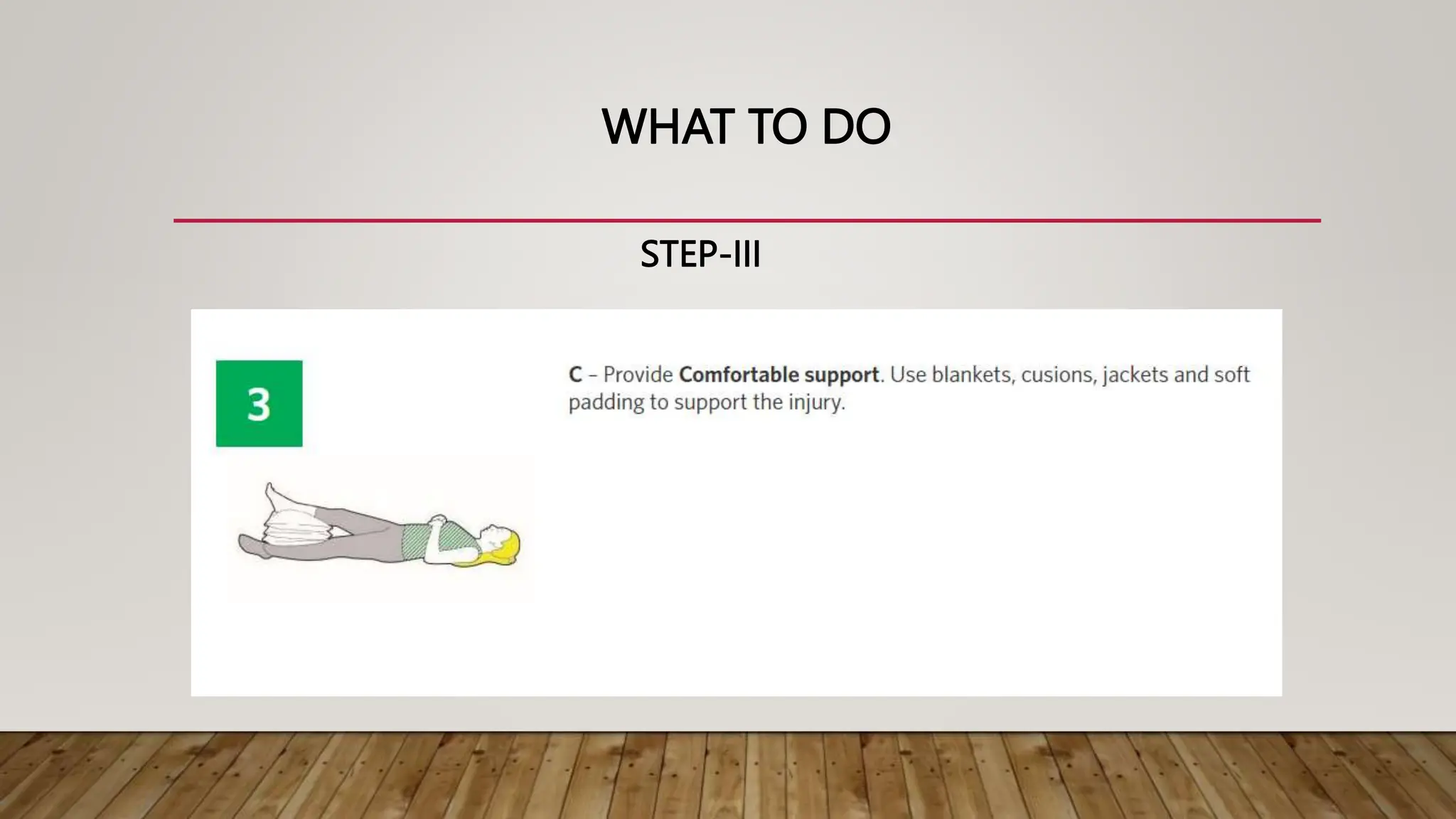
STEP-III
WHAT TO DO
STEP-IV
WHAT TO DO
STEP-V
THANK YOU
REFERENCES
• First Aid in Dislocation retrieved from https://www.sja.org.uk/get-advice/first-aid-
advice/bones-and-muscle-injuries/dislocated-joints/
• First Aid in strains and sprains retrieved from https://www.sja.org.uk/get-
advice/first-aid-advice/bones-and-muscle-injuries/strains-and-sprains/
• Shoulder dislocation retrieved from https://www.mayoclinic.org/diseases-
conditions/dislocated-shoulder/multimedia/shoulder-dislocation/img-20008378
• Strains and sprains retrieved from https://louisvillebones.com/sprains-vs-strains/

First Aid In Dislocation or muscles injury.pptx

  • 1.
    FIRST AID INDISLOCATION SACHIN DWIVEDI CLINICAL INSTRUCTOR, CENER, AIIMS RISHIKESH
  • 2.
    FIRST AID INDISLOCATION • A dislocated joint happens when bones are partly or completely pulled out of their normal position. • Joints can dislocate when a strong force wrenches or pulls the bone into an abnormal position.
  • 3.
    SIGNS AND SYMPTOMS Someonewith a dislocated joint may:
  • 4.
    WHAT TO DO STEP-I •Advise the victim to stay still. • Help them to support their dislocated joint in the most comfortable position. • Offer simple pain relief such as Paracetamol, if they can take it. • Do not try to put the dislocated bone back into its socket, as this may cause further injury.
  • 5.
    WHAT TO DO STEP-II Stopthe joint from moving. • If you think they have dislocated their shoulder or elbow, support the injured arm using a sling. • To give comfort and support, tie a broad-fold bandage (wide bandage) around the chest and the sling. If a hand or arm is injured, remove any watches in case of swelling. • If you think they have dislocated their ankle, knee or hip joint, support the injured leg using padding and broad-fold bandages. • With a lower limb joint, make sure they don't put any weight on it. https://youtu.be/PwfBGkBXkFA
  • 6.
    WHAT TO DO STEP-III •Send the casualty to hospital. Call 108 for emergency help if you can’t take them yourself.
  • 7.
    WHAT TO DO STEP-IV •While waiting for help, treat for shock if necessary. • Monitor their level of response. • Do not raise an injured leg. Only raise the uninjured leg.
  • 8.
    WHAT TO DO STEP-V •Check the circulation beyond any bandages every 10 minutes and loosen if necessary.
  • 9.
    FIRST AID INSTRAINS AND SPRAINS SACHIN DWIVEDI CLINICAL INSTRUCTOR, CENER, AIIMS RISHIKESH
  • 10.
    FIRST AID INSTRAINS AND SPRAINS • Injuries to the soft structure around the bones and joints are commonly called strains and sprains.
  • 11.
  • 12.
  • 13.
  • 14.
  • 15.
  • 16.
  • 17.
  • 18.
    REFERENCES • First Aidin Dislocation retrieved from https://www.sja.org.uk/get-advice/first-aid- advice/bones-and-muscle-injuries/dislocated-joints/ • First Aid in strains and sprains retrieved from https://www.sja.org.uk/get- advice/first-aid-advice/bones-and-muscle-injuries/strains-and-sprains/ • Shoulder dislocation retrieved from https://www.mayoclinic.org/diseases- conditions/dislocated-shoulder/multimedia/shoulder-dislocation/img-20008378 • Strains and sprains retrieved from https://louisvillebones.com/sprains-vs-strains/