Fracture first aid
Dr. Hany Elsaeed Eldakar
Consultant of orthopedic surgery
What is first aid ?
Is immediate assistance given to any
person suffering from either a minor or
major injury, using the available
resources at the site of the accident,
before the availability of proper medical
care.
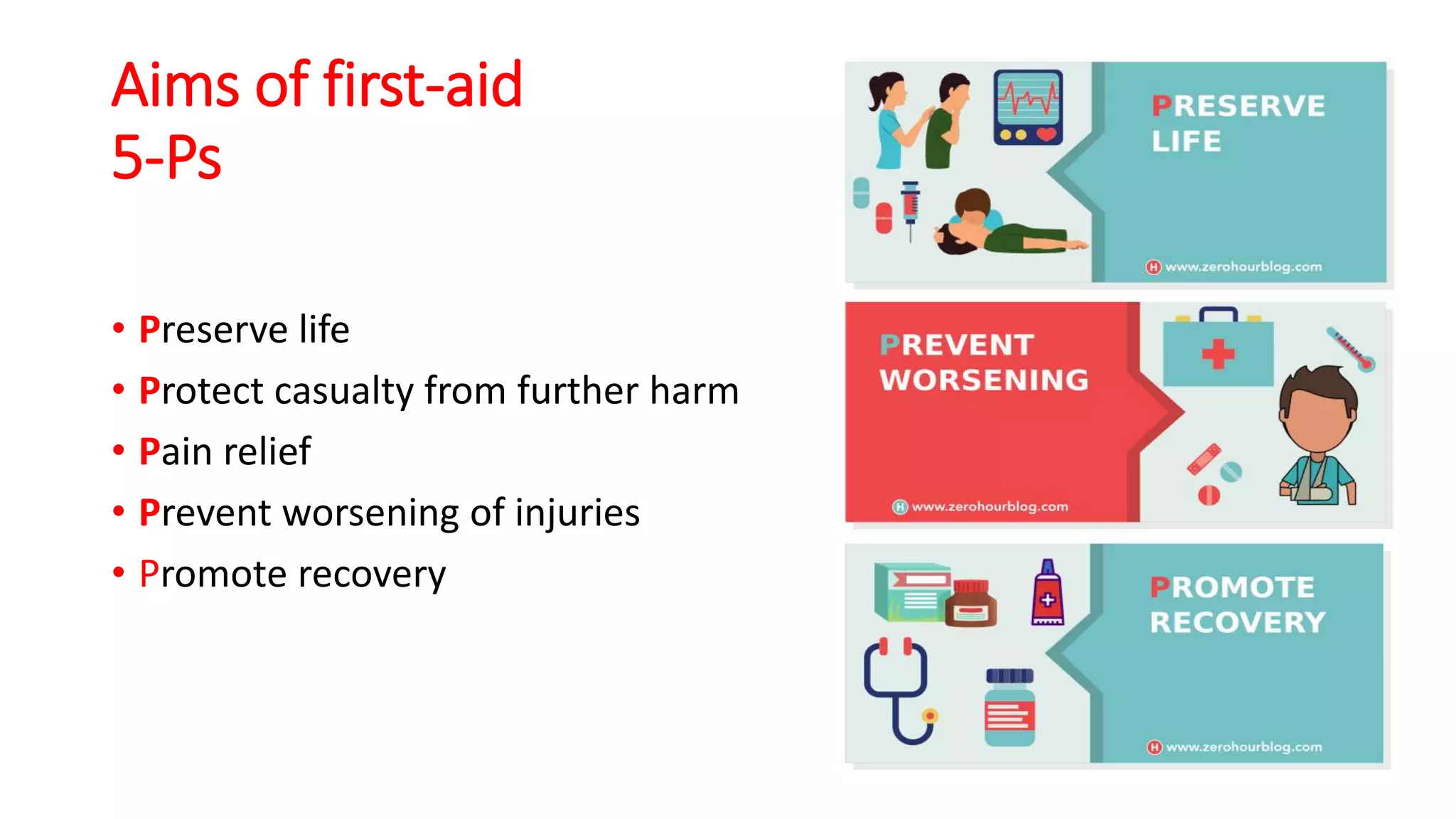
Aims of first-aid
5-Ps
• Preserve life
• Protect casualty from further harm
• Pain relief
• Prevent worsening of injuries
• Promote recovery
Frist aid kit
Remember
• You are not a doctor
• You are not allowed to treat
the patient
• You are not allowed to move
the patient
• You must call for medical help
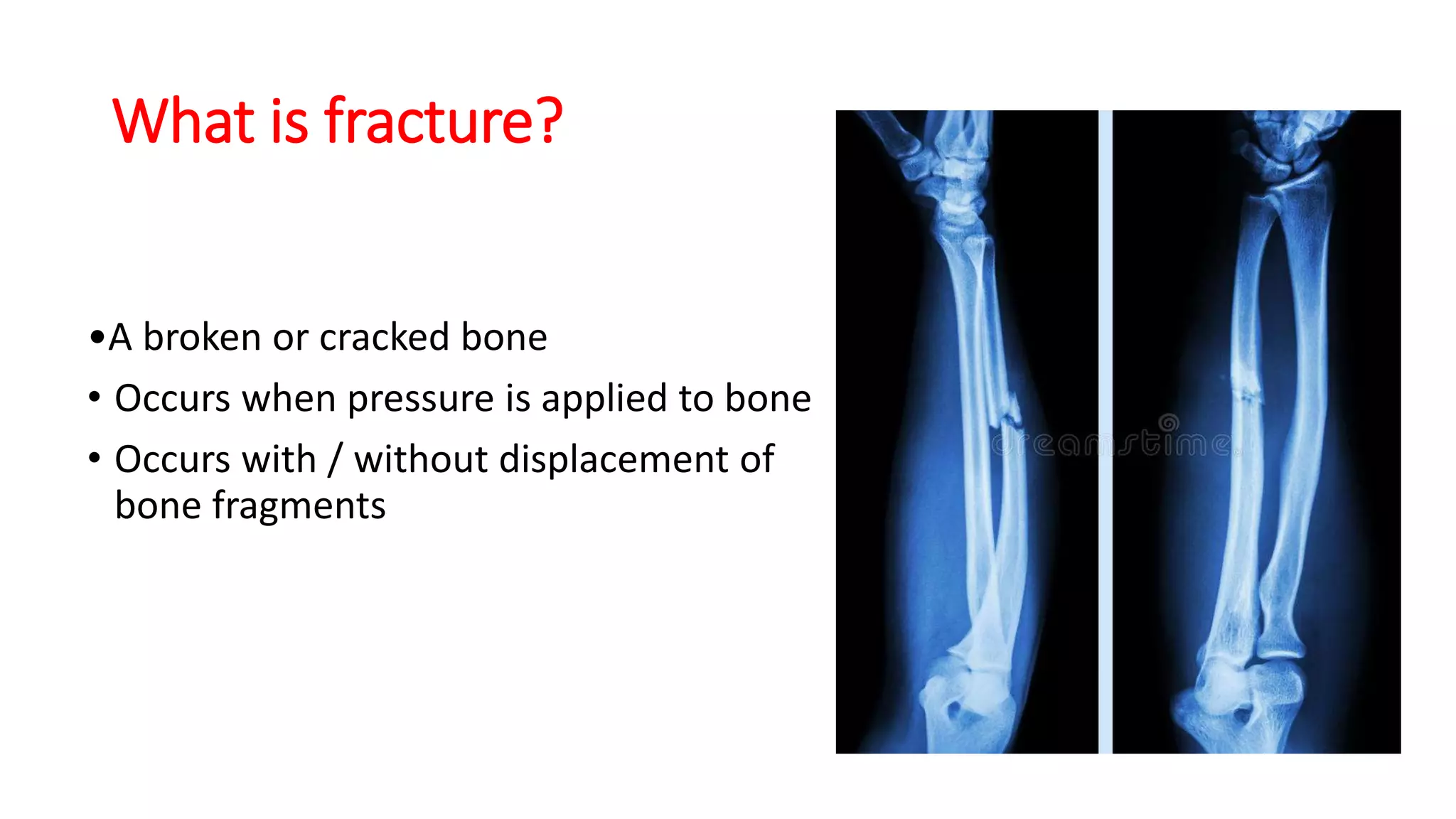
What is fracture?
•A broken or cracked bone
• Occurs when pressure is applied to bone
• Occurs with / without displacement of
bone fragments
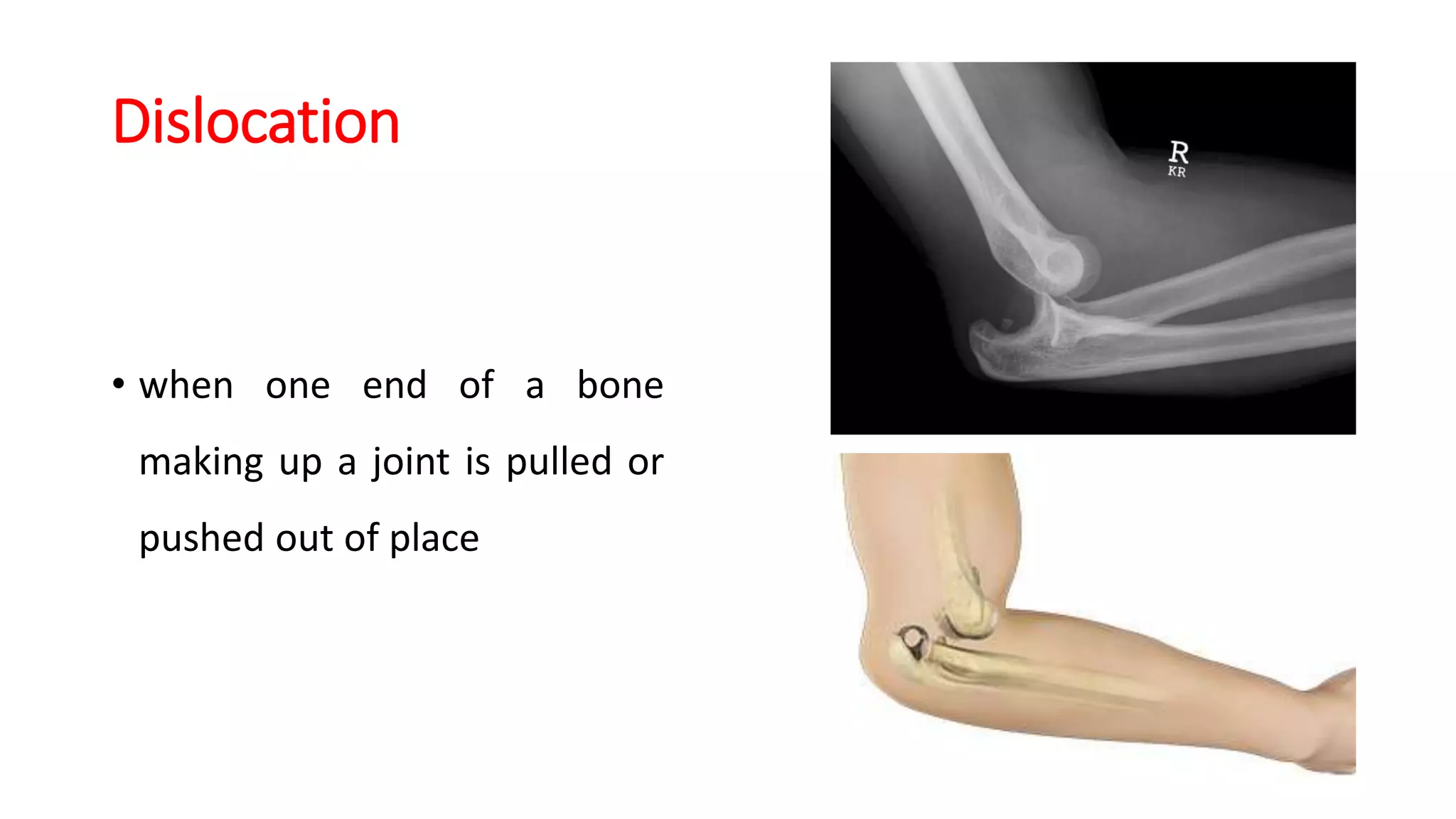
Dislocation
• when one end of a bone
making up a joint is pulled or
pushed out of place
Sprain
• when a ligament is torn (ankle, knee,
finger…)
Strain
• stretching of a muscle or mild tearing of
muscle (neck, lower back…)
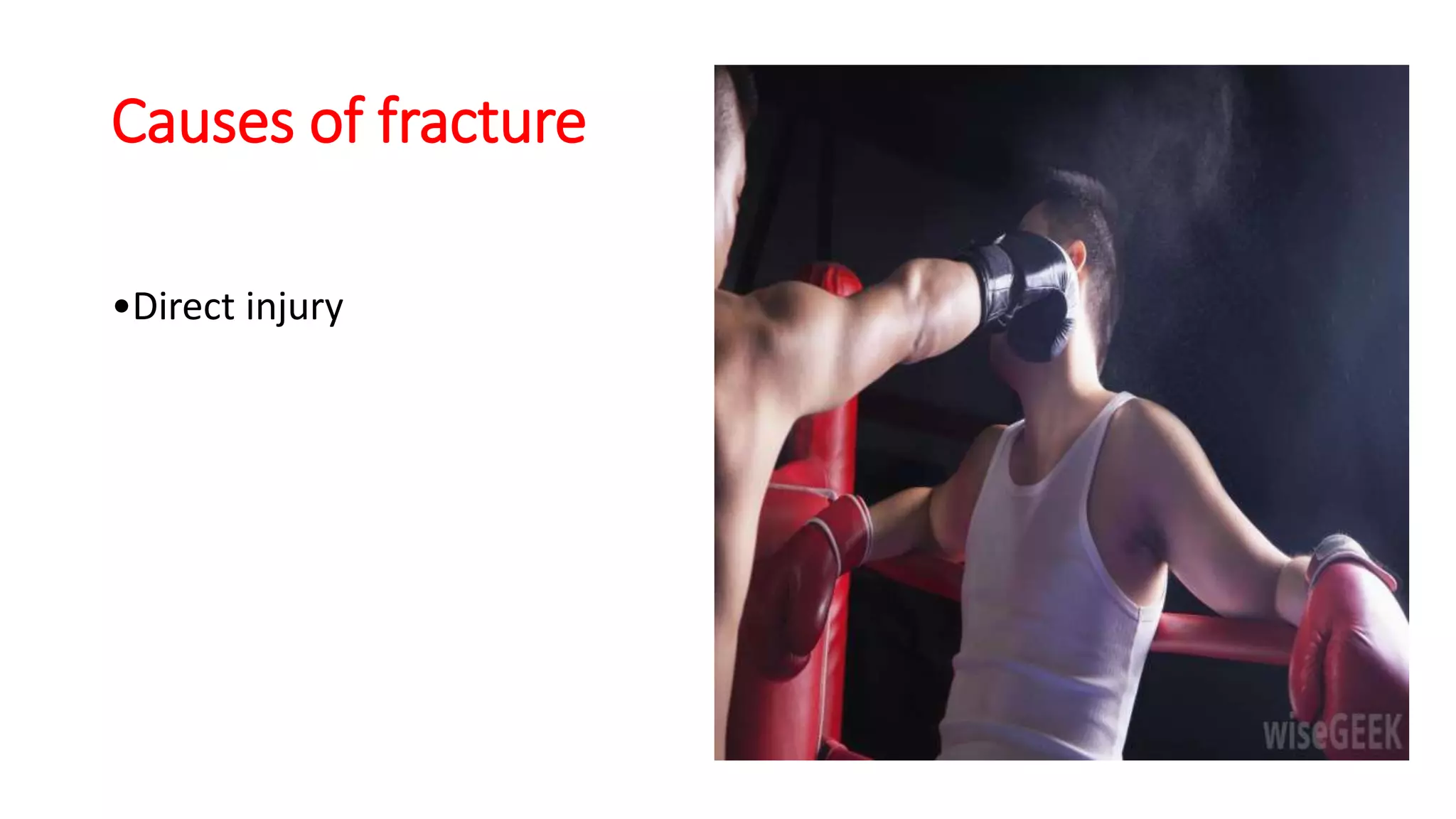
Causes of fracture
•Direct injury
Causes of fracture
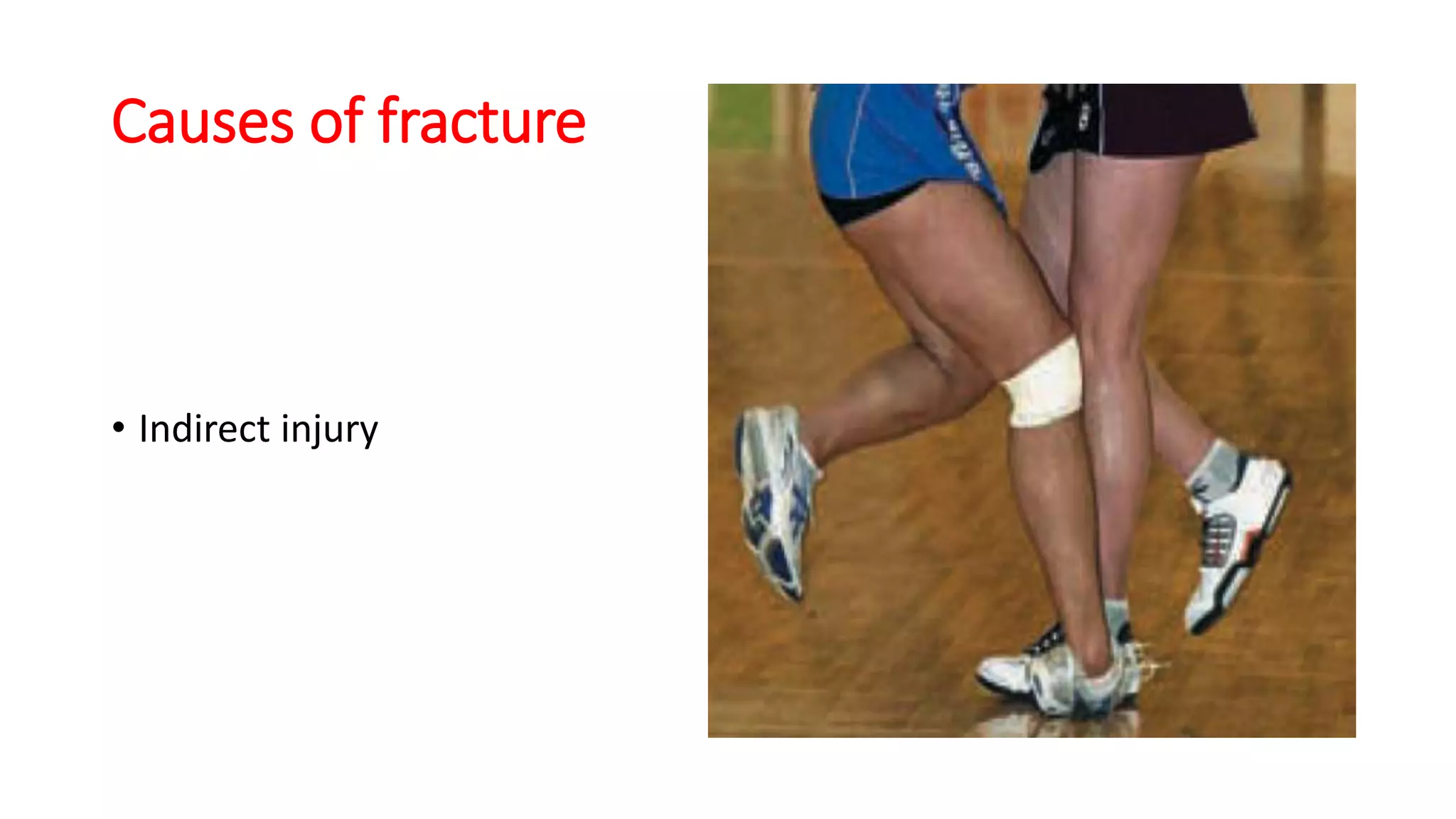
• Indirect injury
Causes of fracture
Muscle contraction
• Electric shock
• Epilepsy fits
Causes of fracture
• Stress fracture
Causes of fracture
Pathological fracture
(Fracture in diseased bone)
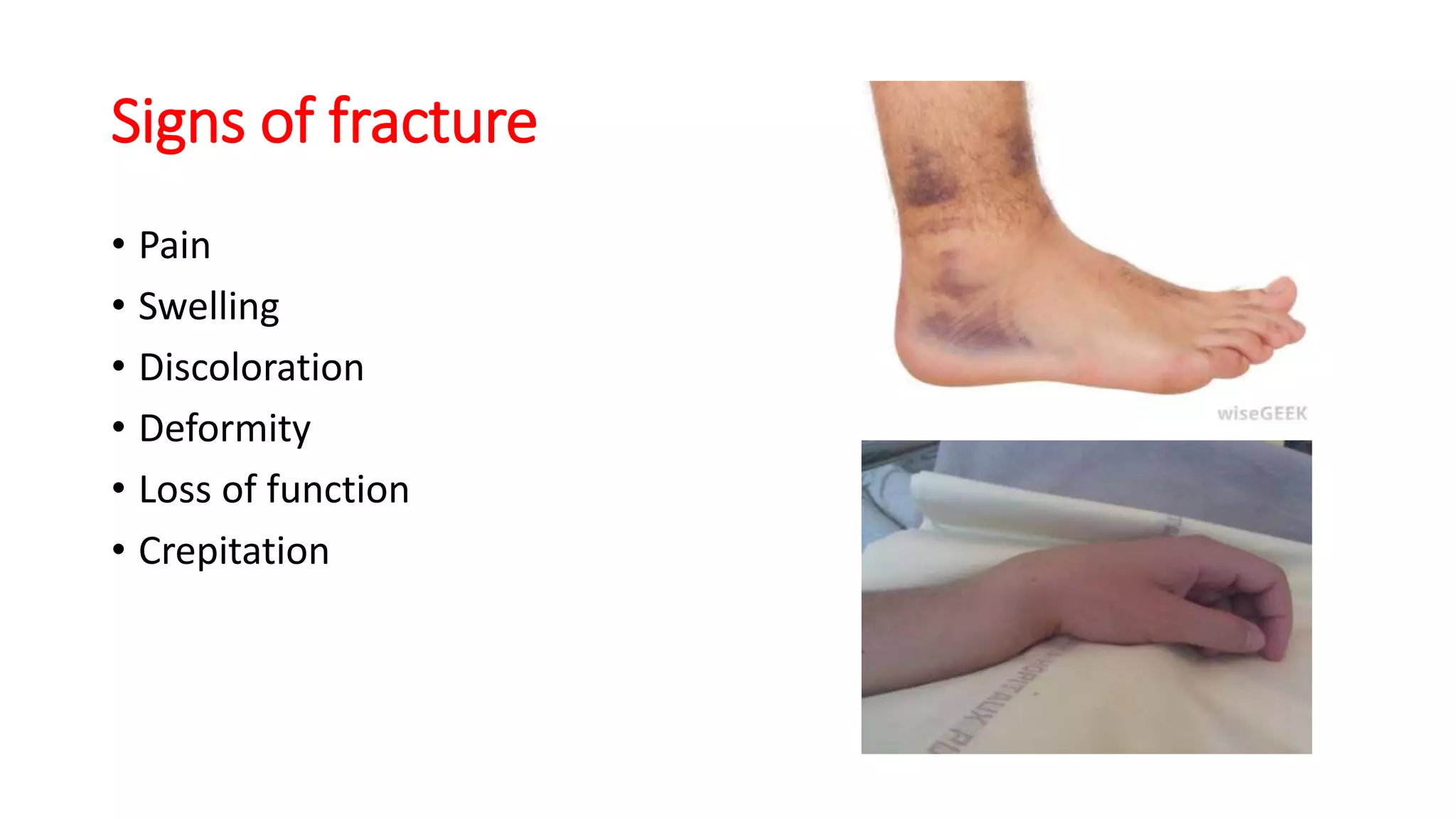
Signs of fracture
• Pain
• Swelling
• Discoloration
• Deformity
• Loss of function
• Crepitation
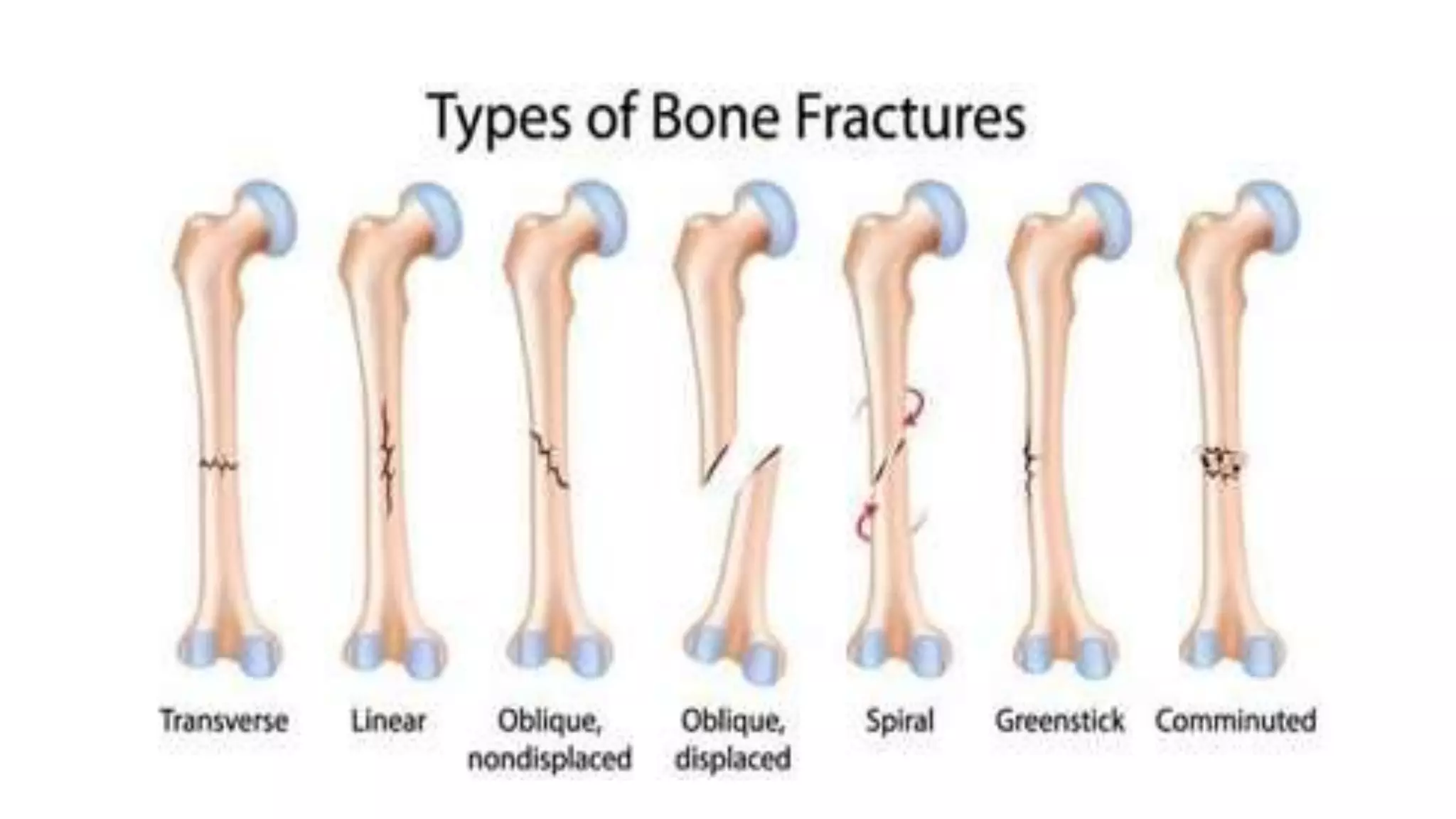
Types of fractures
• Closed (Simple) fracture
The skin is intact and no wound exists
anywhere near the fracture site.
Types of fractures
Open (Compound) fracture
The skin over the fracture
has been damaged or
broken.
Closed fracture first aid
• Cold fomentations
• Stabilize the injured area in
position found
• Monitor and treat for shock if
present.
• Nothing to eat or drink
• Call 123
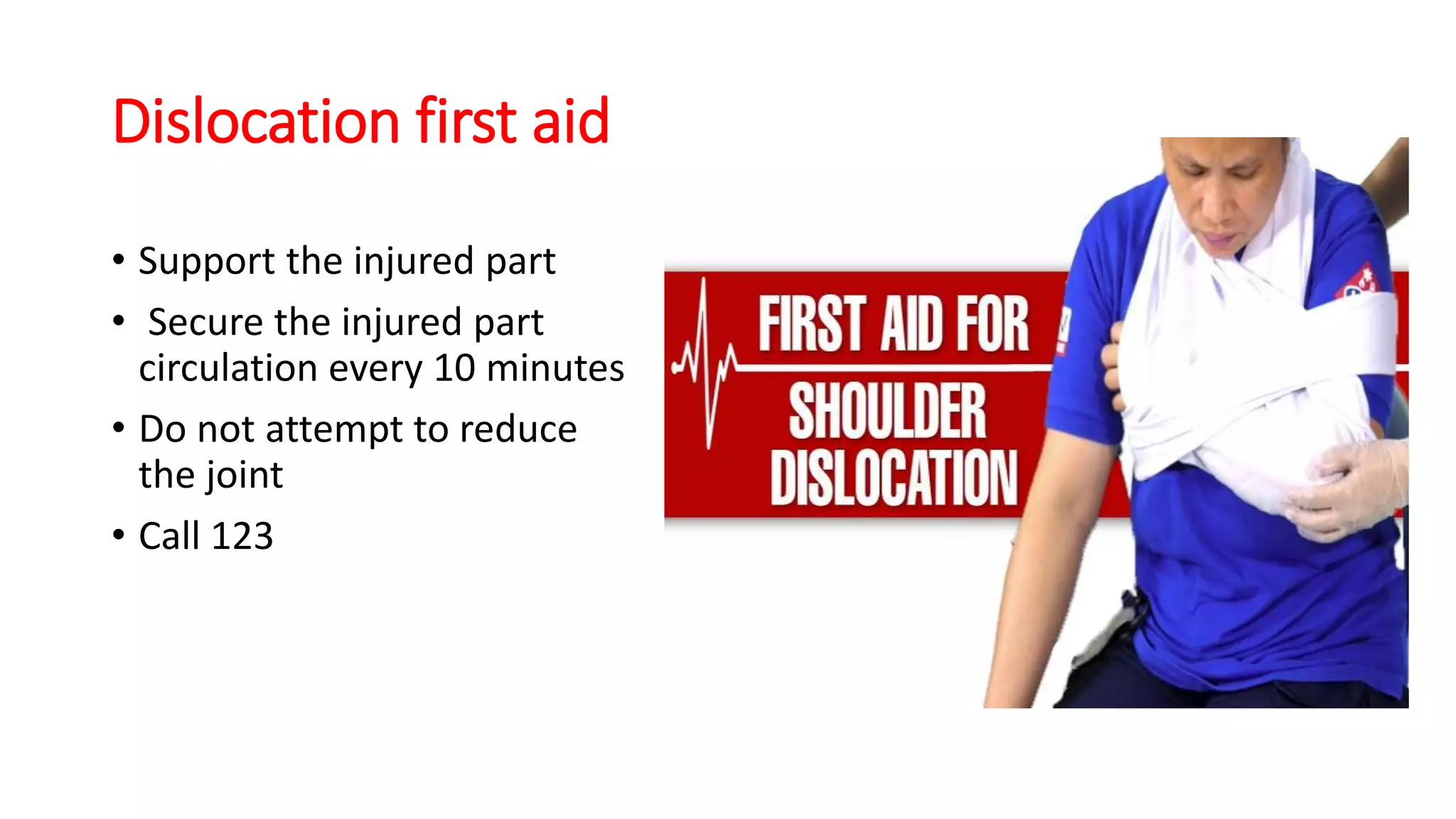
Dislocation first aid
• Support the injured part
• Secure the injured part
circulation every 10 minutes
• Do not attempt to reduce
the joint
• Call 123
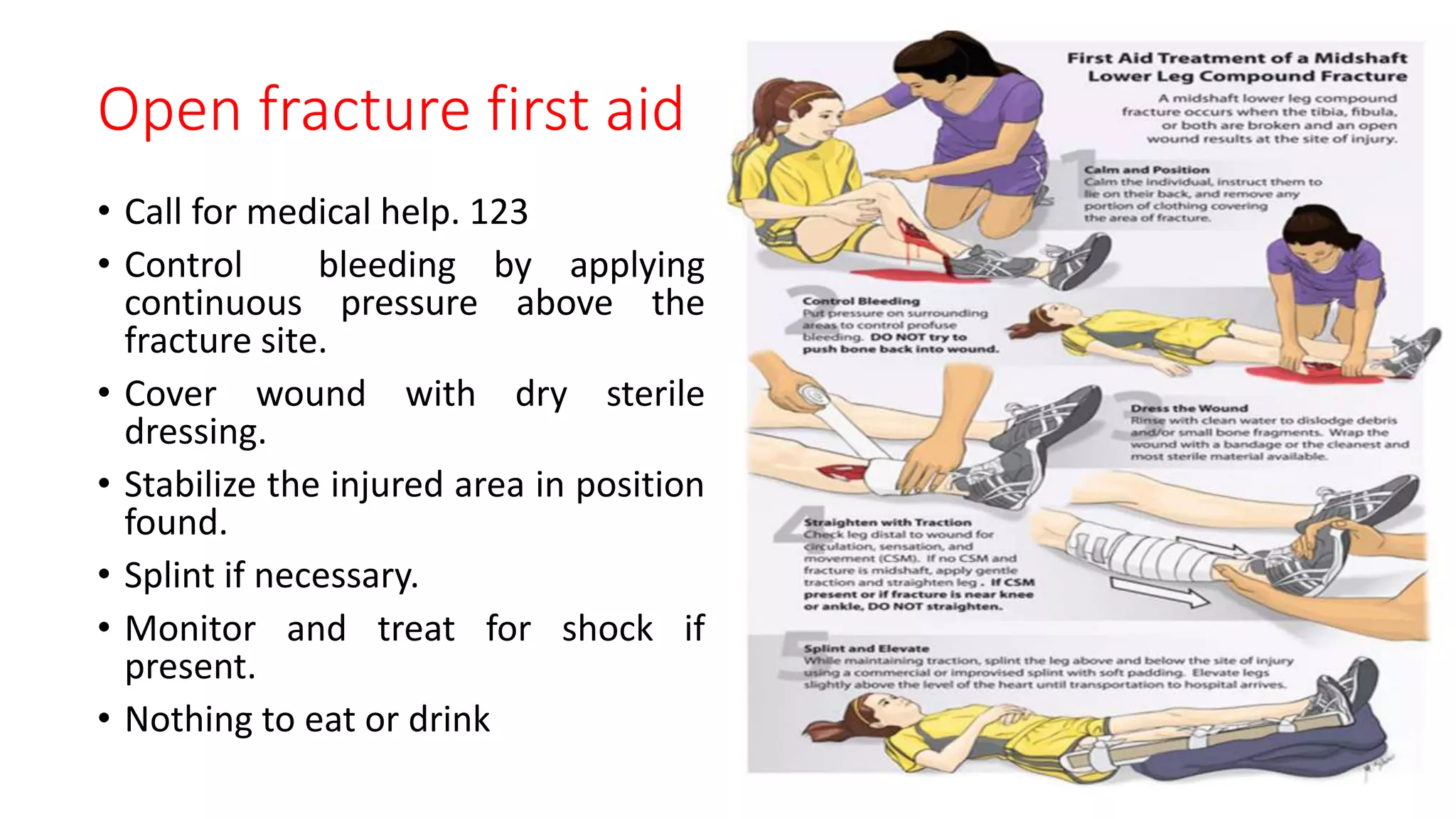
Open fracture first aid
• Call for medical help. 123
• Control bleeding by applying
continuous pressure above the
fracture site.
• Cover wound with dry sterile
dressing.
• Stabilize the injured area in position
found.
• Splint if necessary.
• Monitor and treat for shock if
present.
• Nothing to eat or drink
• Massage the affected area
• Straighten the broken bone
• Move without support to broken bone
• Move joints above or below the affected area
Soft Tissue Injuries
Sprains
• Sprains are injuries due to
stretching or tearing of ligaments
or other tissues at a joint.
• Caused by a sudden twist or stretch
of a joint beyond it’s normal
motion
Soft Tissue Injuries
The Symptoms of a Sprain are:
• Pain on movement
• Swelling
• Tenderness
• Discoloration
Soft Tissue Injuries
Strain
• A strain is an injury to a
muscle or tendon caused by
over-exertion.
• In severe cases muscles or
tendons are torn and the
muscle fibers are stretched
Soft Tissue Injuries
The Symptoms of a strain
• Intense pain
• Moderate swelling
• Painful and difficult movement
• Sometimes discoloration
Soft tissue injuries first aid
RICE = Rest, Ice, Compression and Elevation.
IF IN DOUBT - TREAT AS A FRACTURE !
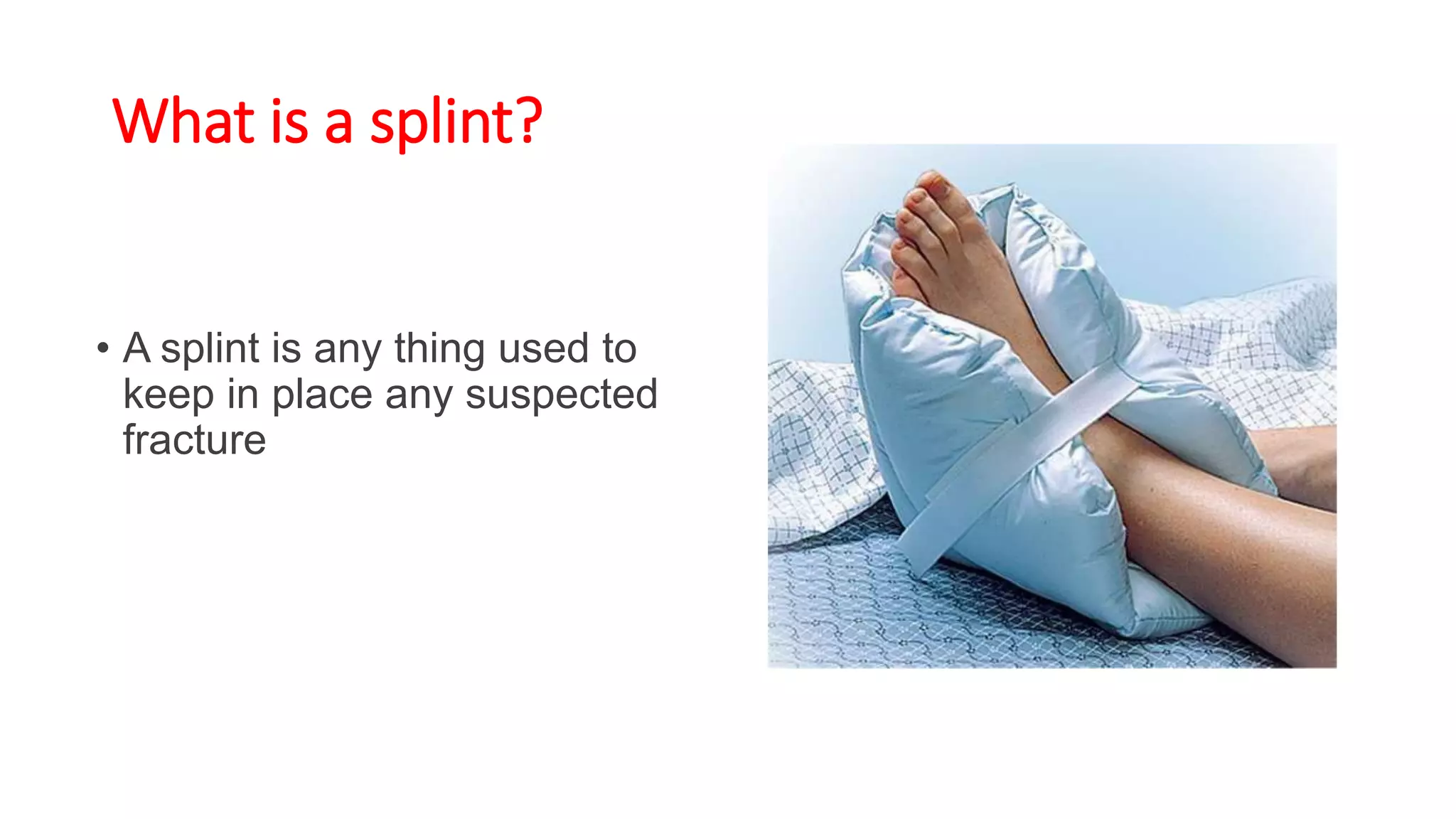
What is a splint?
• A splint is any thing used to
keep in place any suspected
fracture
Splinting
• Reduces pain
• Prevents further damage to muscles, nerves, and blood vessels
• Prevents closed fracture from becoming open fracture
• Reduces bleeding and swelling
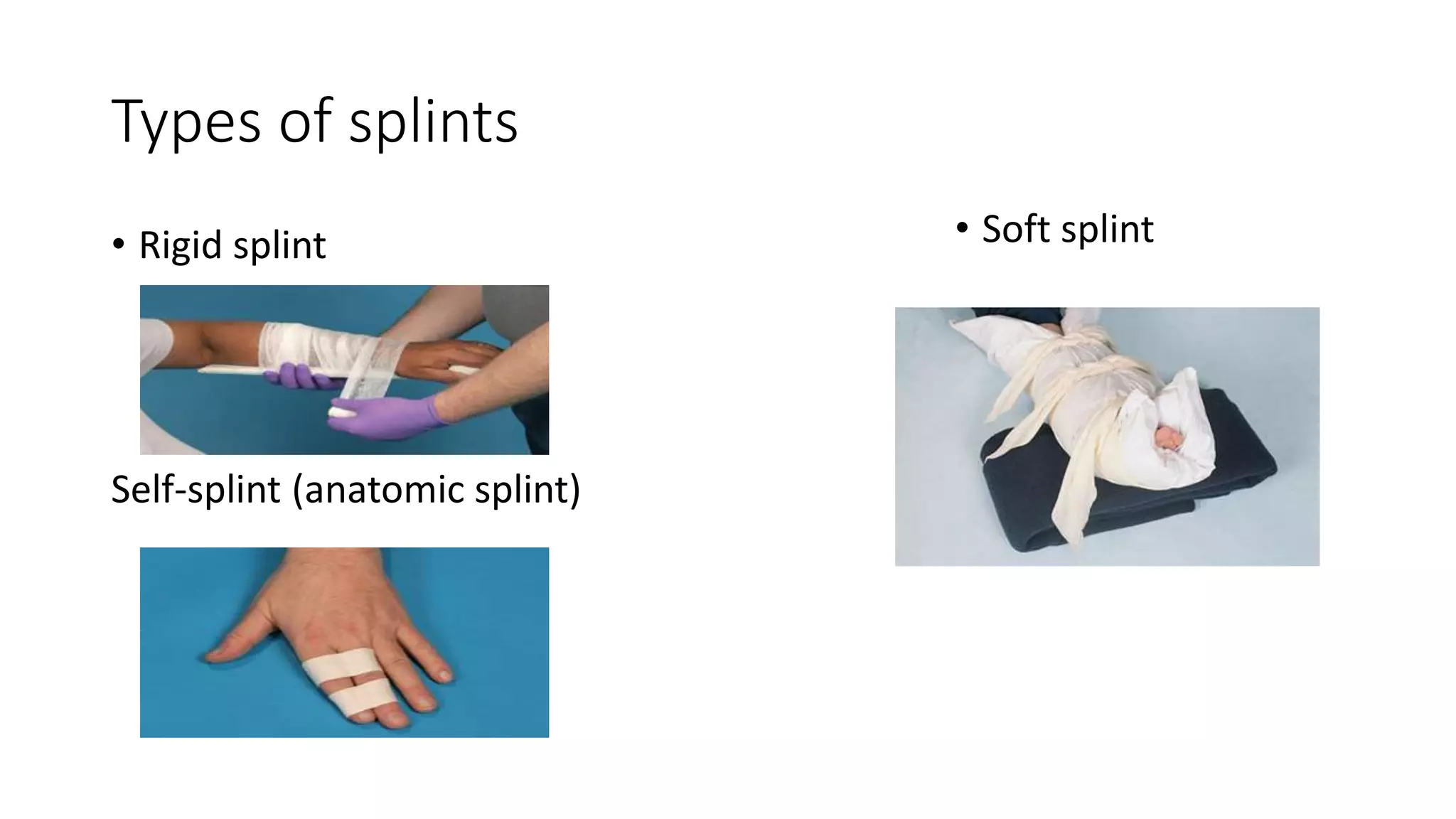
Types of splints
• Rigid splint
Self-splint (anatomic splint)
• Soft splint
Splinting Guidelines
1. Cover open wounds with dry dressing before applying splint.
2. Splint only if it won’t cause further pain.
3. Splint in position found.
4. Use splint that will extend beyond joints above and below injury.
5. Apply firmly, but do not affect circulation
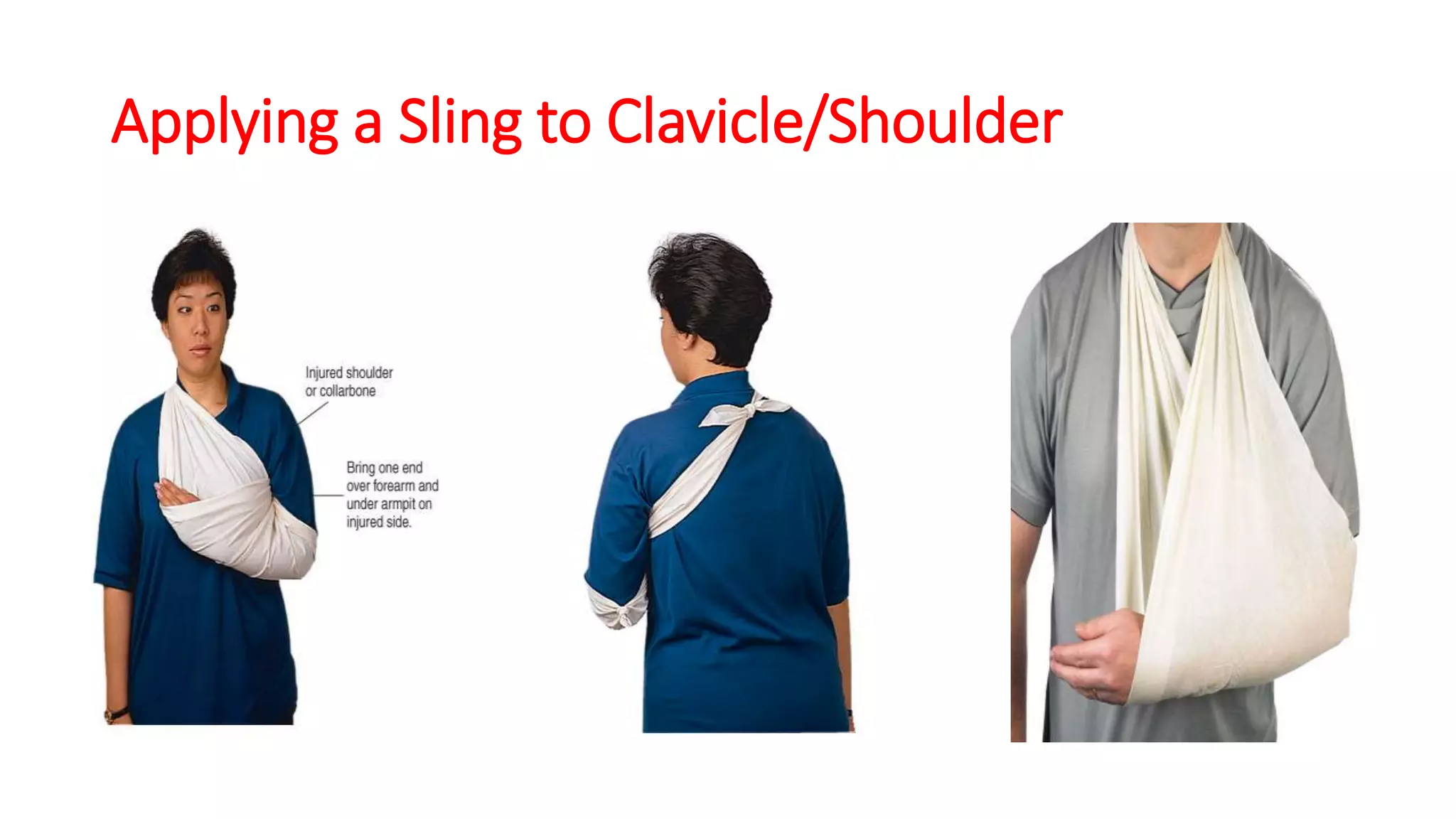
Applying a Sling to Clavicle/Shoulder
Improvised Slings
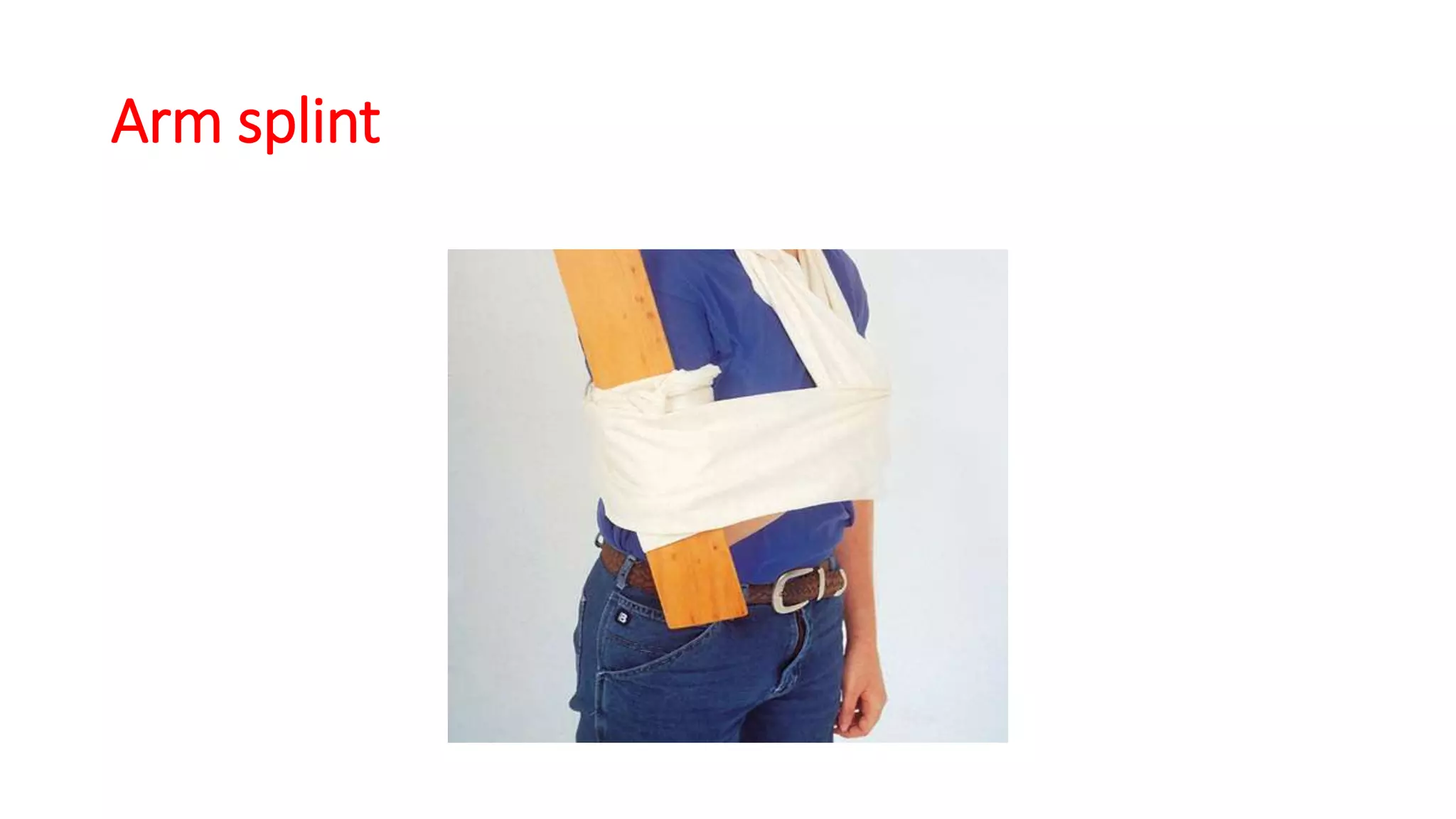
Arm splint
Elbow splint
Forearm splint
Wrist, Hand, and Finger Splinting
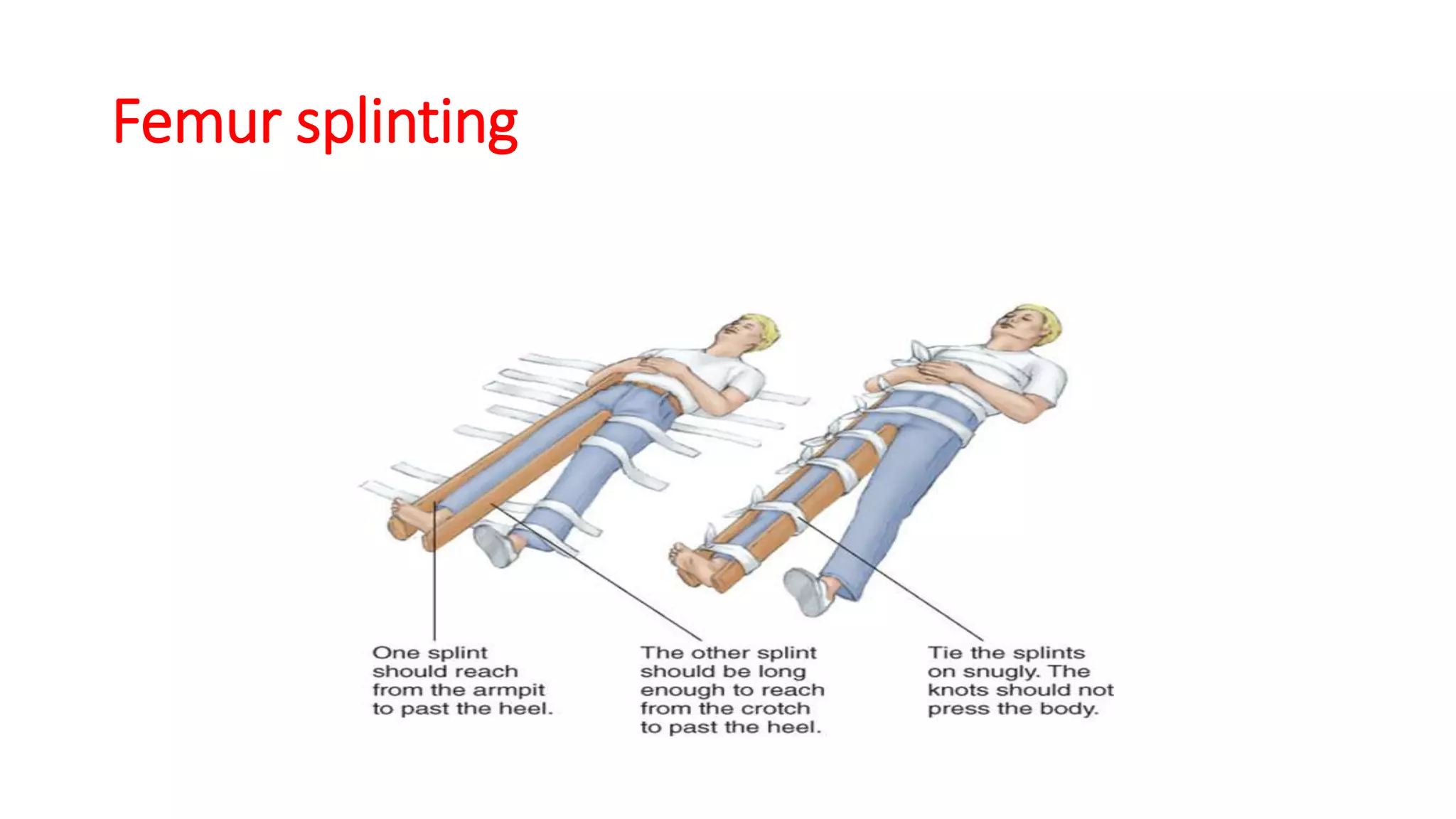
Femur splinting
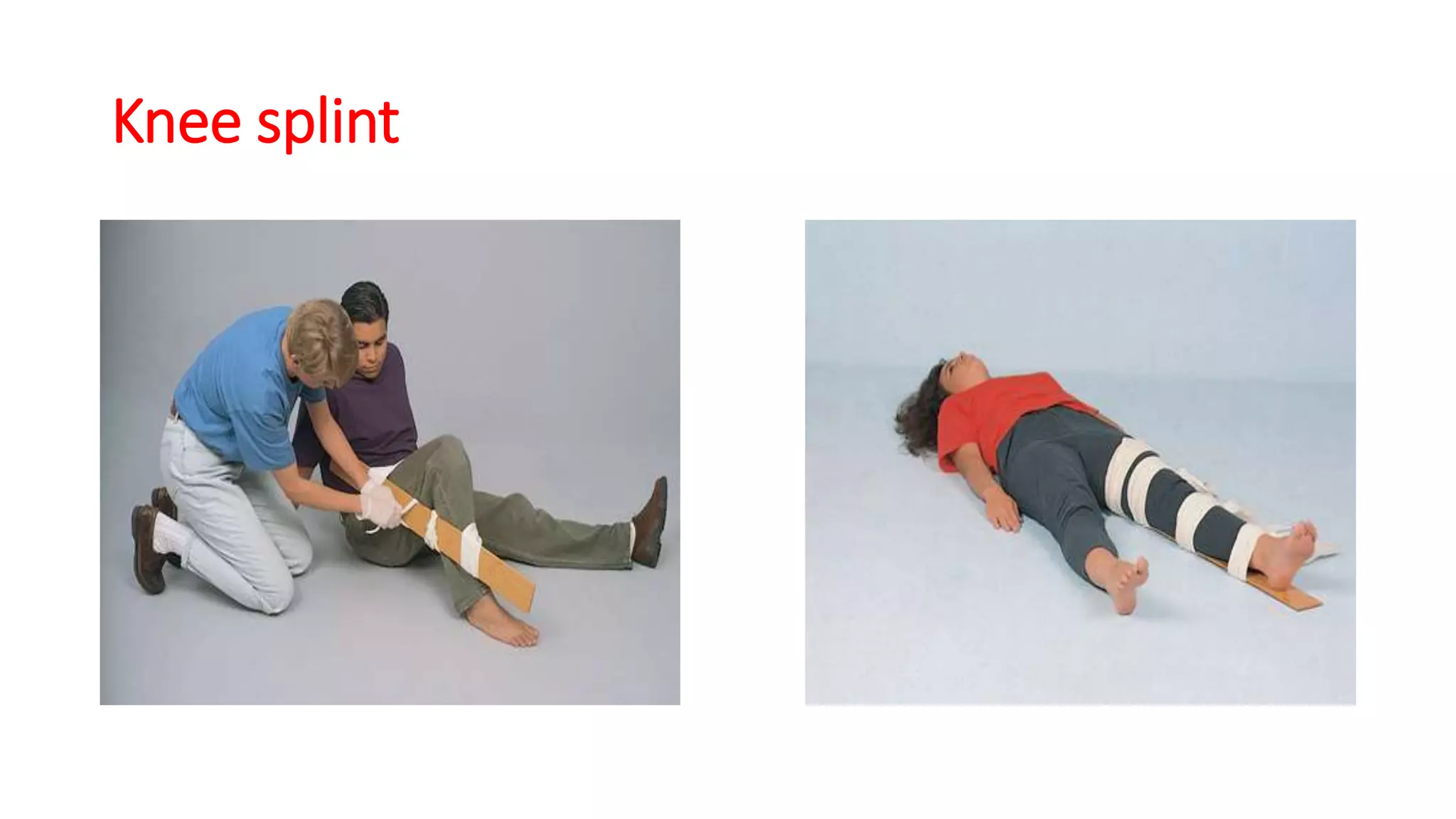
Knee splint
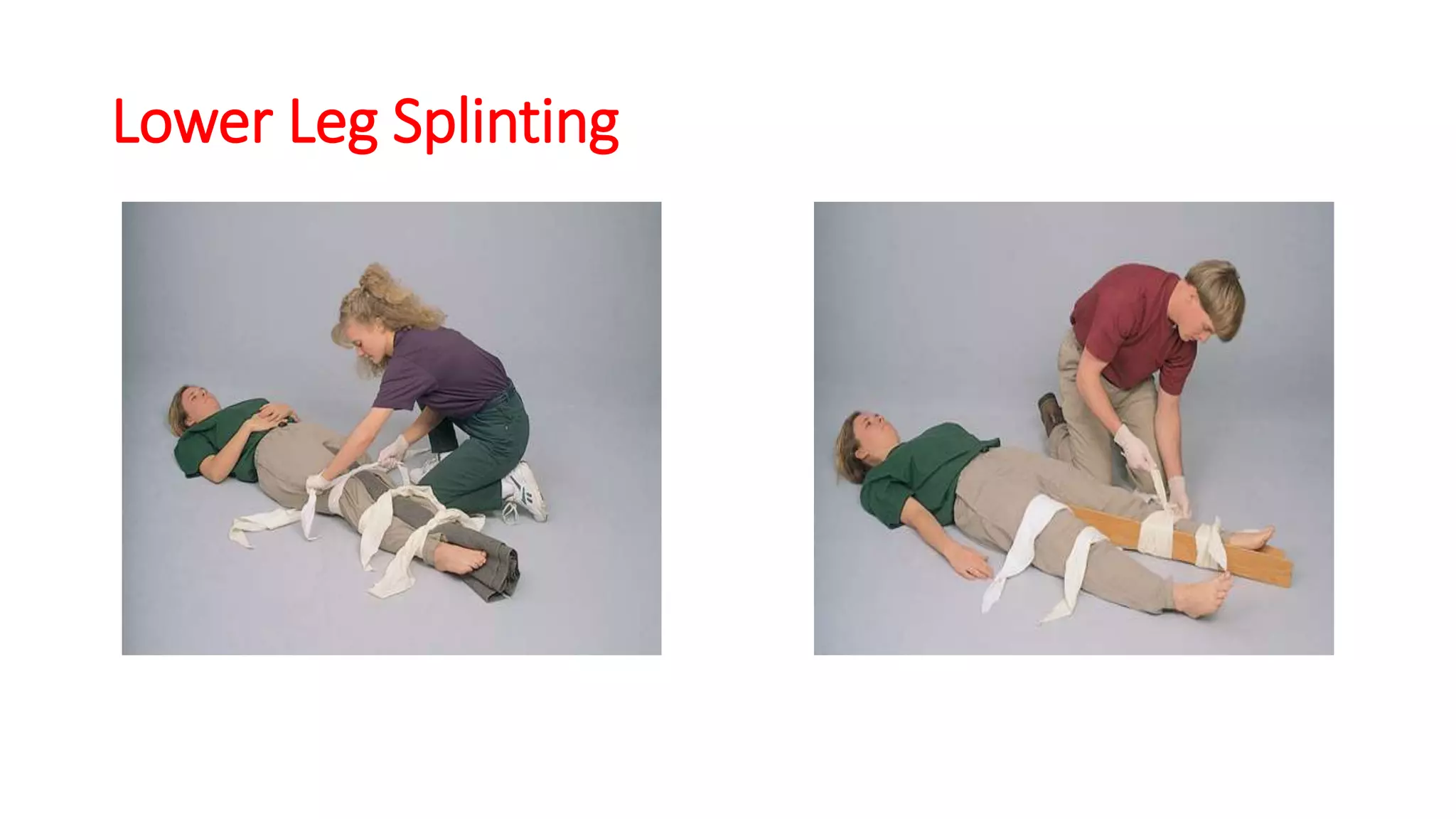
Lower Leg Splinting
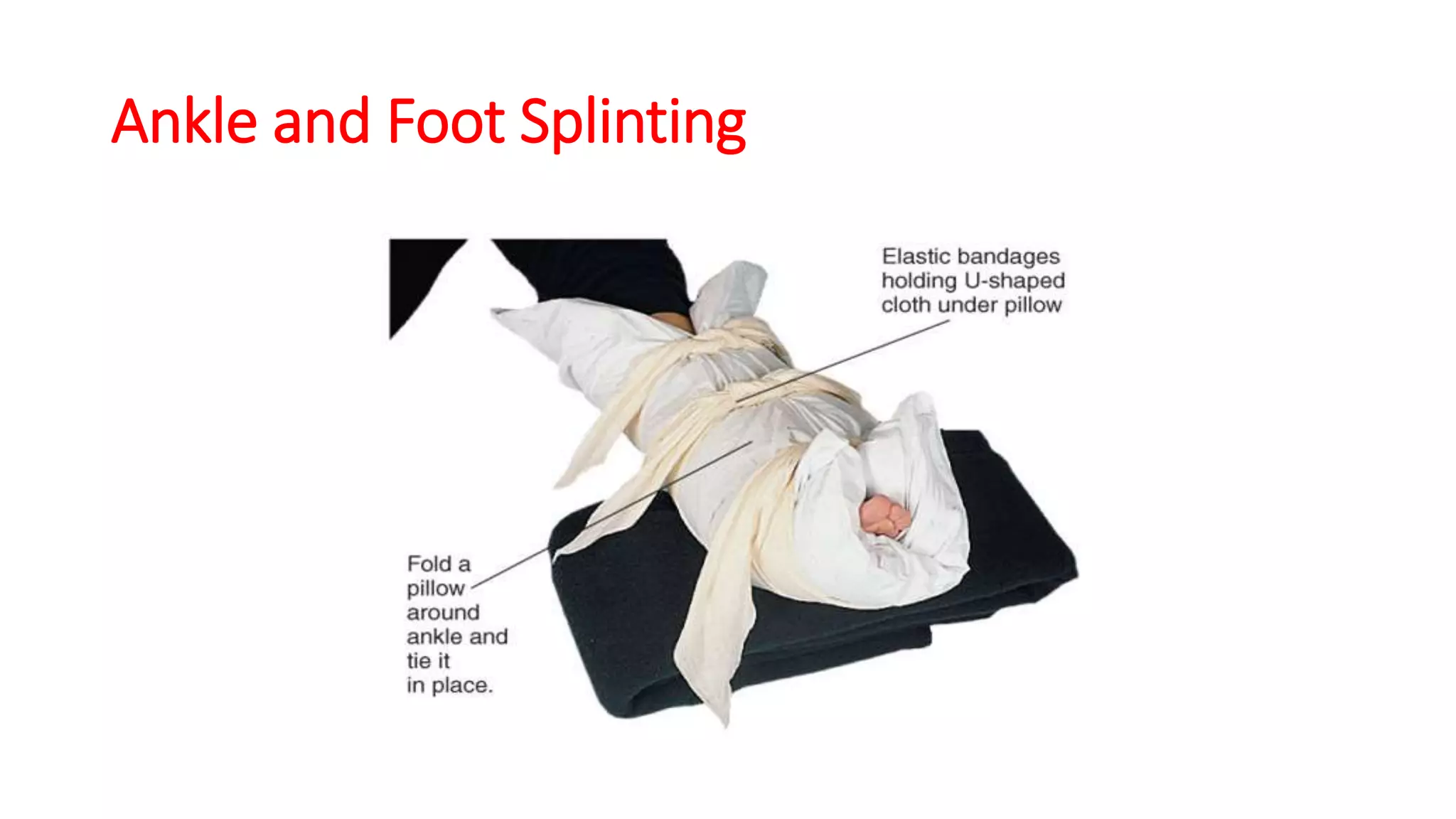
Ankle and Foot Splinting
Let’s play

Fracture first aid by Dr. Hany Aldakar MD. Orthopedic Surgery and Traumatology

  • 2.
    Fracture first aid Dr.Hany Elsaeed Eldakar Consultant of orthopedic surgery
  • 4.
    What is firstaid ? Is immediate assistance given to any person suffering from either a minor or major injury, using the available resources at the site of the accident, before the availability of proper medical care.
  • 5.
    Aims of first-aid 5-Ps •Preserve life • Protect casualty from further harm • Pain relief • Prevent worsening of injuries • Promote recovery
  • 6.
  • 7.
    Remember • You arenot a doctor • You are not allowed to treat the patient • You are not allowed to move the patient • You must call for medical help
  • 8.
    What is fracture? •Abroken or cracked bone • Occurs when pressure is applied to bone • Occurs with / without displacement of bone fragments
  • 9.
    Dislocation • when oneend of a bone making up a joint is pulled or pushed out of place
  • 10.
    Sprain • when aligament is torn (ankle, knee, finger…) Strain • stretching of a muscle or mild tearing of muscle (neck, lower back…)
  • 11.
  • 12.
    Causes of fracture •Indirect injury
  • 13.
    Causes of fracture Musclecontraction • Electric shock • Epilepsy fits
  • 14.
    Causes of fracture •Stress fracture
  • 15.
    Causes of fracture Pathologicalfracture (Fracture in diseased bone)
  • 16.
    Signs of fracture •Pain • Swelling • Discoloration • Deformity • Loss of function • Crepitation
  • 18.
    Types of fractures •Closed (Simple) fracture The skin is intact and no wound exists anywhere near the fracture site.
  • 19.
    Types of fractures Open(Compound) fracture The skin over the fracture has been damaged or broken.
  • 20.
    Closed fracture firstaid • Cold fomentations • Stabilize the injured area in position found • Monitor and treat for shock if present. • Nothing to eat or drink • Call 123
  • 21.
    Dislocation first aid •Support the injured part • Secure the injured part circulation every 10 minutes • Do not attempt to reduce the joint • Call 123
  • 22.
    Open fracture firstaid • Call for medical help. 123 • Control bleeding by applying continuous pressure above the fracture site. • Cover wound with dry sterile dressing. • Stabilize the injured area in position found. • Splint if necessary. • Monitor and treat for shock if present. • Nothing to eat or drink
  • 23.
    • Massage theaffected area • Straighten the broken bone • Move without support to broken bone • Move joints above or below the affected area
  • 24.
    Soft Tissue Injuries Sprains •Sprains are injuries due to stretching or tearing of ligaments or other tissues at a joint. • Caused by a sudden twist or stretch of a joint beyond it’s normal motion
  • 25.
    Soft Tissue Injuries TheSymptoms of a Sprain are: • Pain on movement • Swelling • Tenderness • Discoloration
  • 26.
    Soft Tissue Injuries Strain •A strain is an injury to a muscle or tendon caused by over-exertion. • In severe cases muscles or tendons are torn and the muscle fibers are stretched
  • 27.
    Soft Tissue Injuries TheSymptoms of a strain • Intense pain • Moderate swelling • Painful and difficult movement • Sometimes discoloration
  • 28.
    Soft tissue injuriesfirst aid RICE = Rest, Ice, Compression and Elevation.
  • 29.
    IF IN DOUBT- TREAT AS A FRACTURE !
  • 30.
    What is asplint? • A splint is any thing used to keep in place any suspected fracture
  • 31.
    Splinting • Reduces pain •Prevents further damage to muscles, nerves, and blood vessels • Prevents closed fracture from becoming open fracture • Reduces bleeding and swelling
  • 32.
    Types of splints •Rigid splint Self-splint (anatomic splint) • Soft splint
  • 33.
    Splinting Guidelines 1. Coveropen wounds with dry dressing before applying splint. 2. Splint only if it won’t cause further pain. 3. Splint in position found. 4. Use splint that will extend beyond joints above and below injury. 5. Apply firmly, but do not affect circulation
  • 34.
    Applying a Slingto Clavicle/Shoulder
  • 35.
  • 36.
  • 37.
  • 38.
  • 39.
    Wrist, Hand, andFinger Splinting
  • 40.
  • 41.
  • 42.
  • 43.
    Ankle and FootSplinting
  • 45.