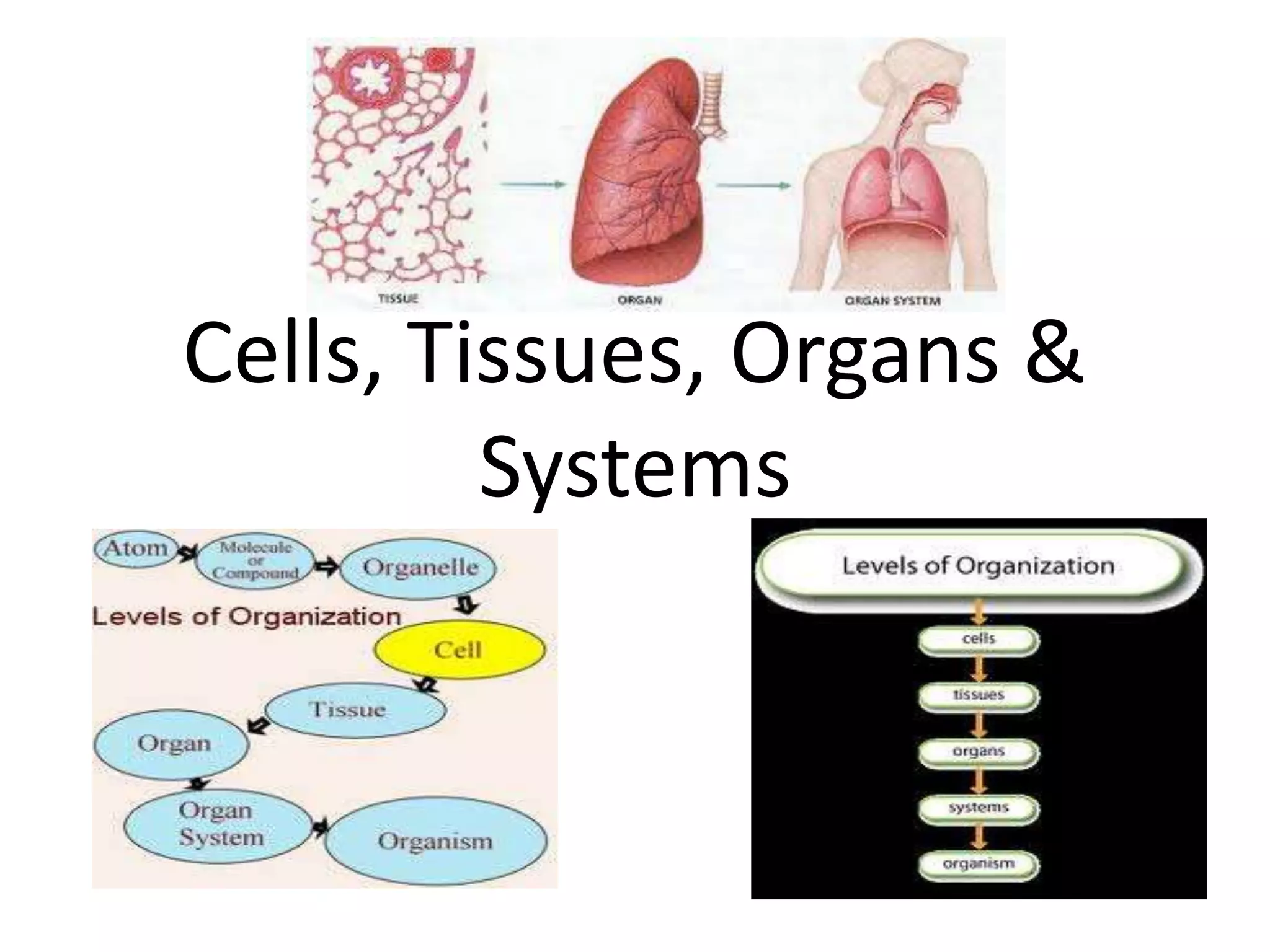
Cells, Tissues, Organs &
Systems
An organism is a collection of cells, tissues,
organs and systems that is capable of
independent existence and reproduction.
CELLS
All cells produced from the zygote by mitosis
have identical DNA
Cells with identical genetic information
differentiate to become different cells with their
own structure and function
Cells can be identical or different according to
the specific genes that are either active or
inactive in the cell
Cell differentiation is the term used to name the
process in which cells with identical cells with
identical nuclear composition, i.e. same number
and type of genes, become different and
specialized in both their structure and function.
How many cells can you name?
Examples
Muscle cells: elongated and consisting of
filaments allowing for contraction.
Red blood cell: biconcave shaped cells
containing haemoglobin to transport oxygen.
Palisade cells: rectangular shaped plant cells
containing chloroplasts for photosynthesis
Guard cells: specialised shape controlling
opening and closing of stomatal pores
TISSUES
Cells of the same type are usually found
together in a tissue, held together by
extracellular fluid or fibres.
In human bodies there are four basic types.
1. Epithelial tissues – consist of tightly packed
cells that cover and protect the inside and
outside surfaces of the body. They are named
according to their shape
- cuboidal epithelium
- columnar epithelium
- squamous epithelium
2. Connective Tissues – support or bind other cells
and tissues together
- fat (adipose tissue)
- cartilage
- bone
- blood
3. Muscle tissue – cells which are able to contract.
Contain contractile protein myosin and actin
filaments
- skeletal (voluntary)
- smooth (involuntary)
- cardiac (heart)
4. Nervous tissue- able to detect and transmit
electro chemical messages
ORGANS
Organs consist of a collection of tissues and
perform important specific tasks in the body.
For example the stomach is one organ found within
the digestive system consisting of tissues which are
responsible for the storage and digestion of food.
Epithelial cells secrete digestive juices
Blood cells carry blood to and from the small
intestine allowing transport of nutrients
Muscle cells allow for peristalsis, a process which
allows food to move via waves of muscular
contraction.
Stomach Tissues
SYSTEMS
A system is a group of organs located near each
other and work together to perform an
important function.
How many can you list?
Cells tissue organs_systems

Cells tissue organs_systems

  • 1.
  • 2.
    An organism isa collection of cells, tissues, organs and systems that is capable of independent existence and reproduction.
  • 3.
    CELLS All cells producedfrom the zygote by mitosis have identical DNA Cells with identical genetic information differentiate to become different cells with their own structure and function Cells can be identical or different according to the specific genes that are either active or inactive in the cell
  • 4.
    Cell differentiation isthe term used to name the process in which cells with identical cells with identical nuclear composition, i.e. same number and type of genes, become different and specialized in both their structure and function. How many cells can you name?
  • 5.
    Examples Muscle cells: elongatedand consisting of filaments allowing for contraction. Red blood cell: biconcave shaped cells containing haemoglobin to transport oxygen. Palisade cells: rectangular shaped plant cells containing chloroplasts for photosynthesis Guard cells: specialised shape controlling opening and closing of stomatal pores
  • 7.
    TISSUES Cells of thesame type are usually found together in a tissue, held together by extracellular fluid or fibres. In human bodies there are four basic types. 1. Epithelial tissues – consist of tightly packed cells that cover and protect the inside and outside surfaces of the body. They are named according to their shape - cuboidal epithelium - columnar epithelium - squamous epithelium
  • 9.
    2. Connective Tissues– support or bind other cells and tissues together - fat (adipose tissue) - cartilage - bone - blood 3. Muscle tissue – cells which are able to contract. Contain contractile protein myosin and actin filaments - skeletal (voluntary) - smooth (involuntary) - cardiac (heart)
  • 10.
    4. Nervous tissue-able to detect and transmit electro chemical messages
  • 12.
    ORGANS Organs consist ofa collection of tissues and perform important specific tasks in the body. For example the stomach is one organ found within the digestive system consisting of tissues which are responsible for the storage and digestion of food. Epithelial cells secrete digestive juices Blood cells carry blood to and from the small intestine allowing transport of nutrients Muscle cells allow for peristalsis, a process which allows food to move via waves of muscular contraction.
  • 13.
  • 16.
    SYSTEMS A system isa group of organs located near each other and work together to perform an important function. How many can you list?