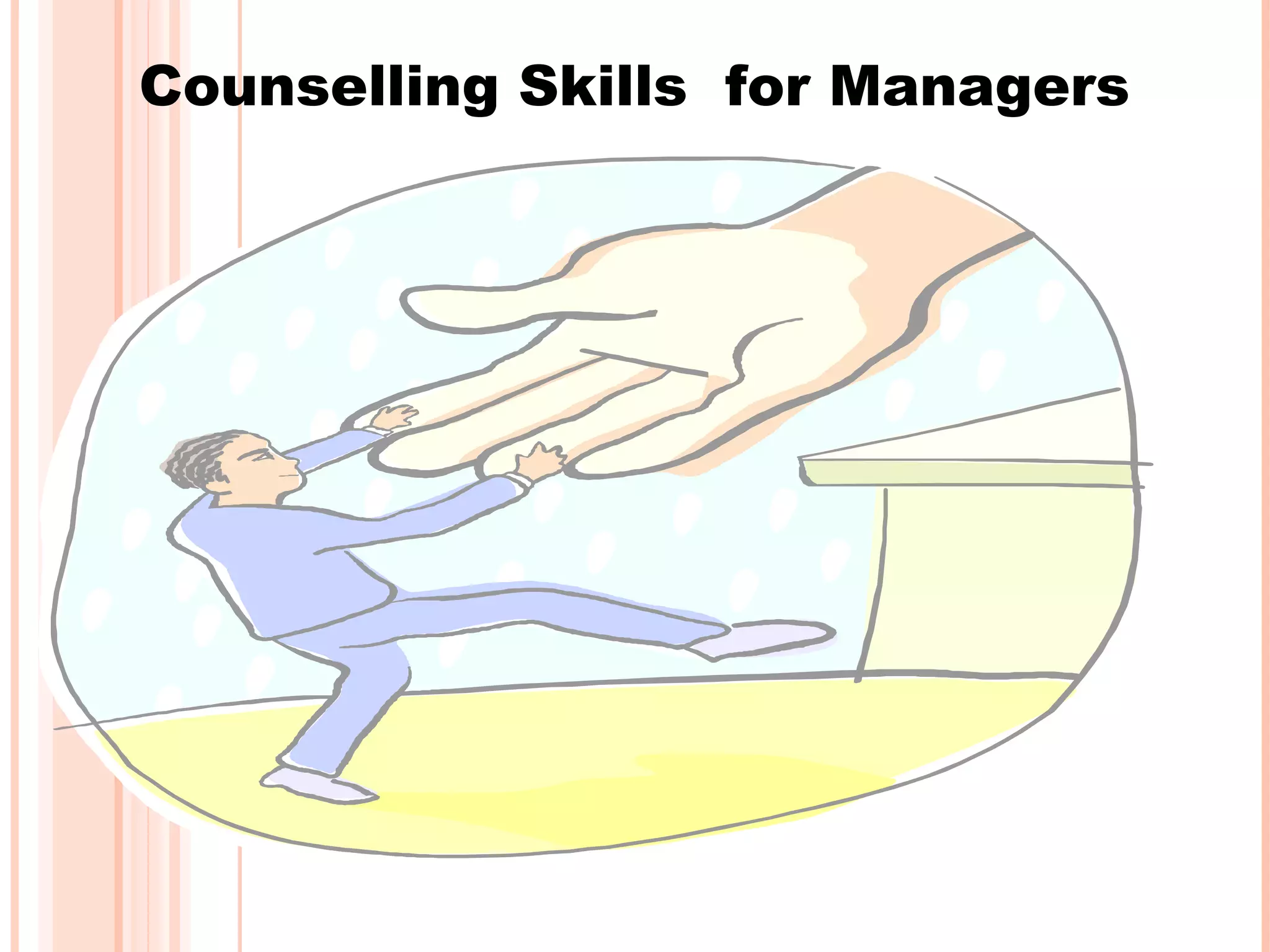

Counselling Skills for Managers
5 W’s ofCounselling
   What

   Why

   Who

   When

          2
   Where
Management Counselling Approaches


 Directive  :- Manager dictates solution
 Prescriptive :- Suggests possible solution &
  encourages its adoption
 Negotiative :- After offers & counter-
  offers ,both arrive at agreements
 Consultative :- Discusses on employee
  provided solutions to get better ones
 Non-directive :- Encourages employee to
  design solutions
Counselling Process
Counselling    is a process with a
 beginning, a middle and an end,
                 Where
the counsellor facilitates an
 individual to consider the aspects
 of their life they wish to change.
Each process has a task to
 accomplish
Counselling Process
 The whole idea is to enable the client
 to explore a difficulty or distress
 which they may be experiencing,
 assisted by the counsellor who would
 guide the client from feeling a victim
 of circumstances to feeling that they
 have more control over their life
        5
Stage 1 - Preparation
 Identify the need : An awareness of a problem &
  the need for help
 Readiness : The client should be ready to accept
  help
 Factors affecting readiness

       Ignorance
       Resistance
       Lack of motivation
       Attitude
 Place

 Notify in advance

 Time of meeting

 Organise information
Stage II – Pre Counselling Session
Initial
       interview to get acquainted
Preparation of case history
Exploration of the client’s concern for
 the problem
Stage III – Building up Rapport &
relationship
 Very Critical as it paves the way for a constructive
  relationship
 Relationship includes trust, respect & relative
  psychological comfort

 Rogers in 1957 proposed the core conditions for
  successful counselling
 Unconditional +ve regard

 Empathy

 Congruence:- Both consider the issue from the same
  perspective & aim for the same goals
Stage III – Building up Rapport &
relationship
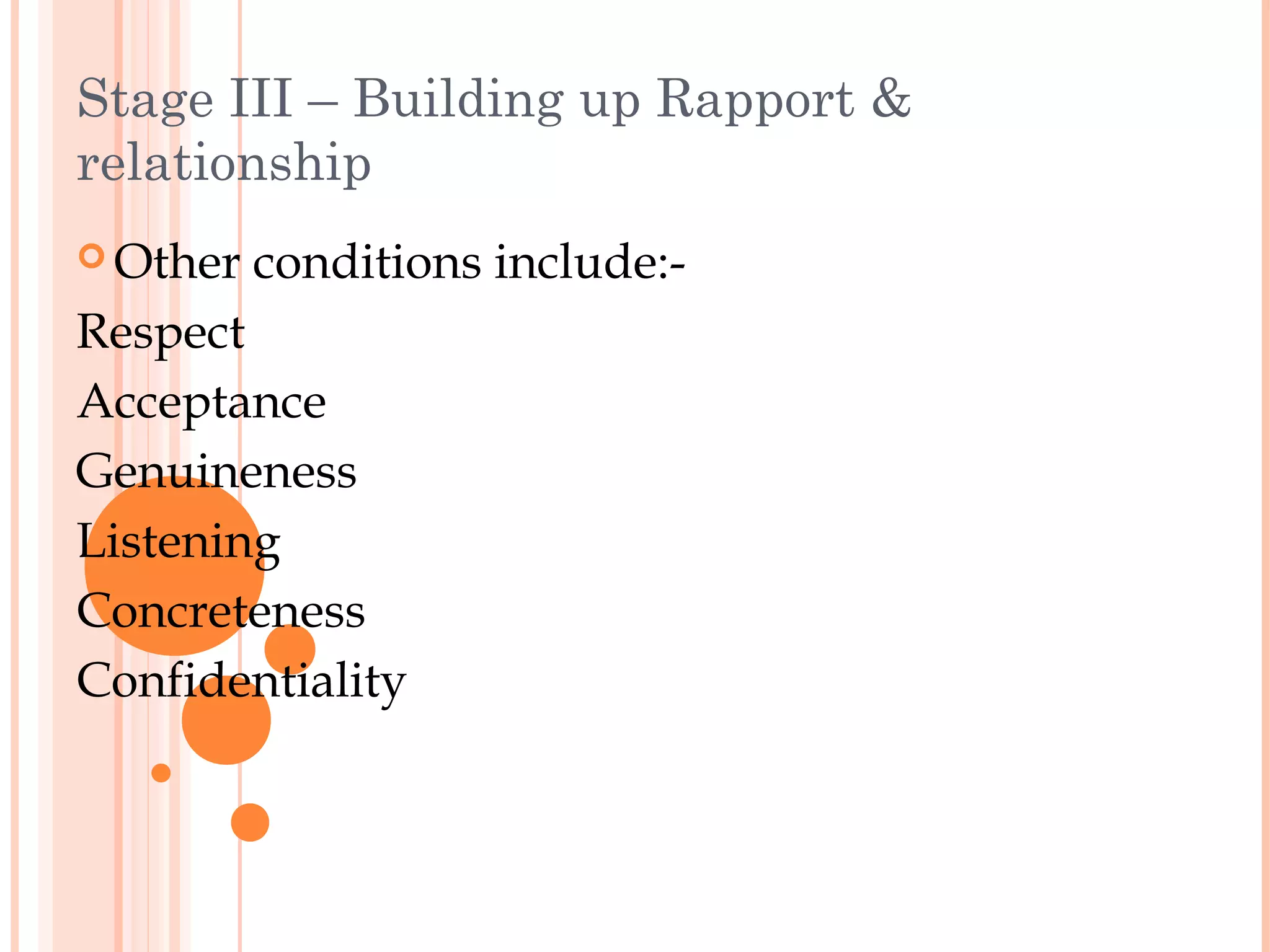
 Other   conditions include:-
Respect
Acceptance
Genuineness
Listening
Concreteness
Confidentiality
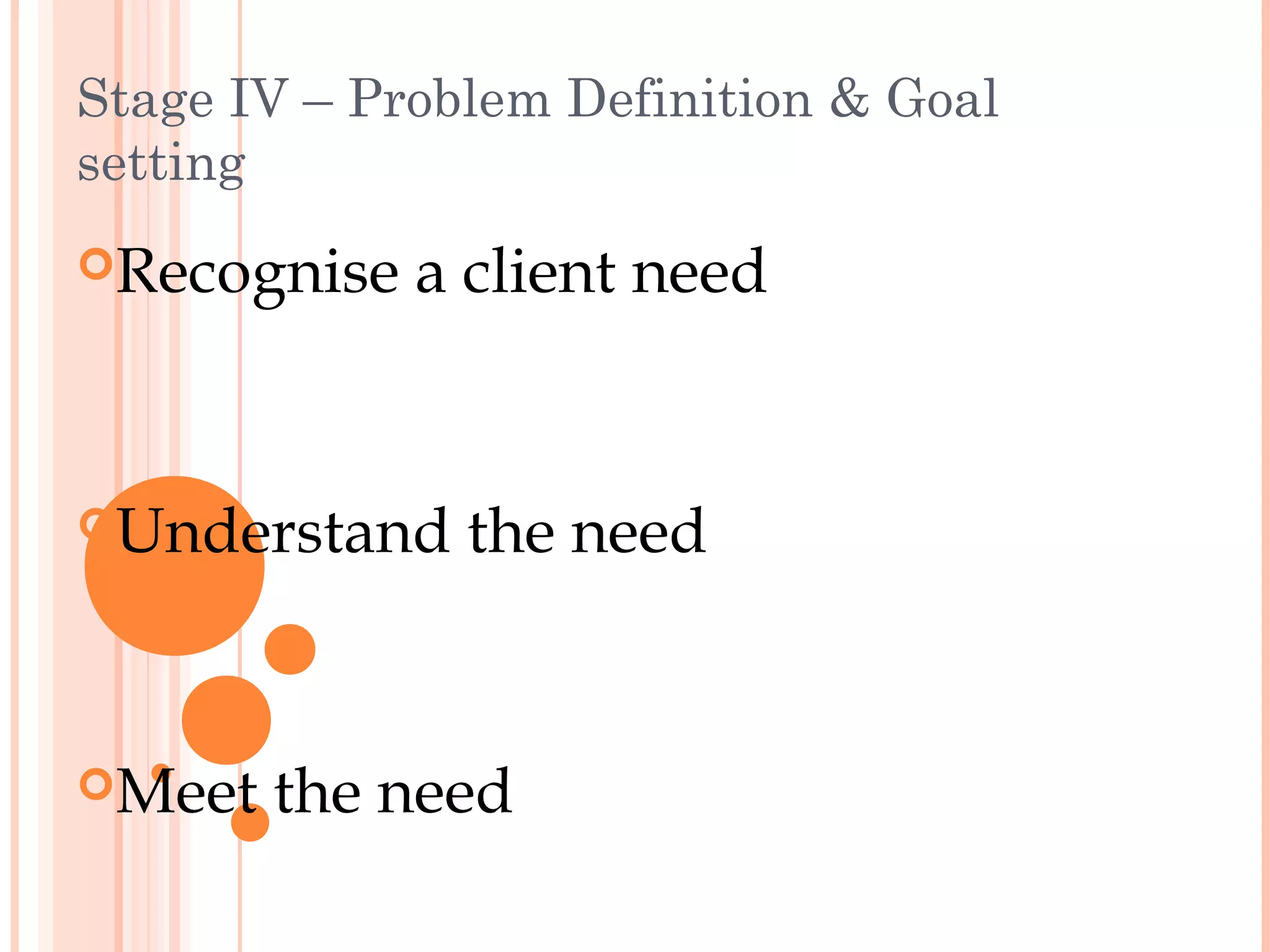
Stage IV – Problem Definition & Goal
setting
Recognise   a client need


Understand    the need


Meet   the need
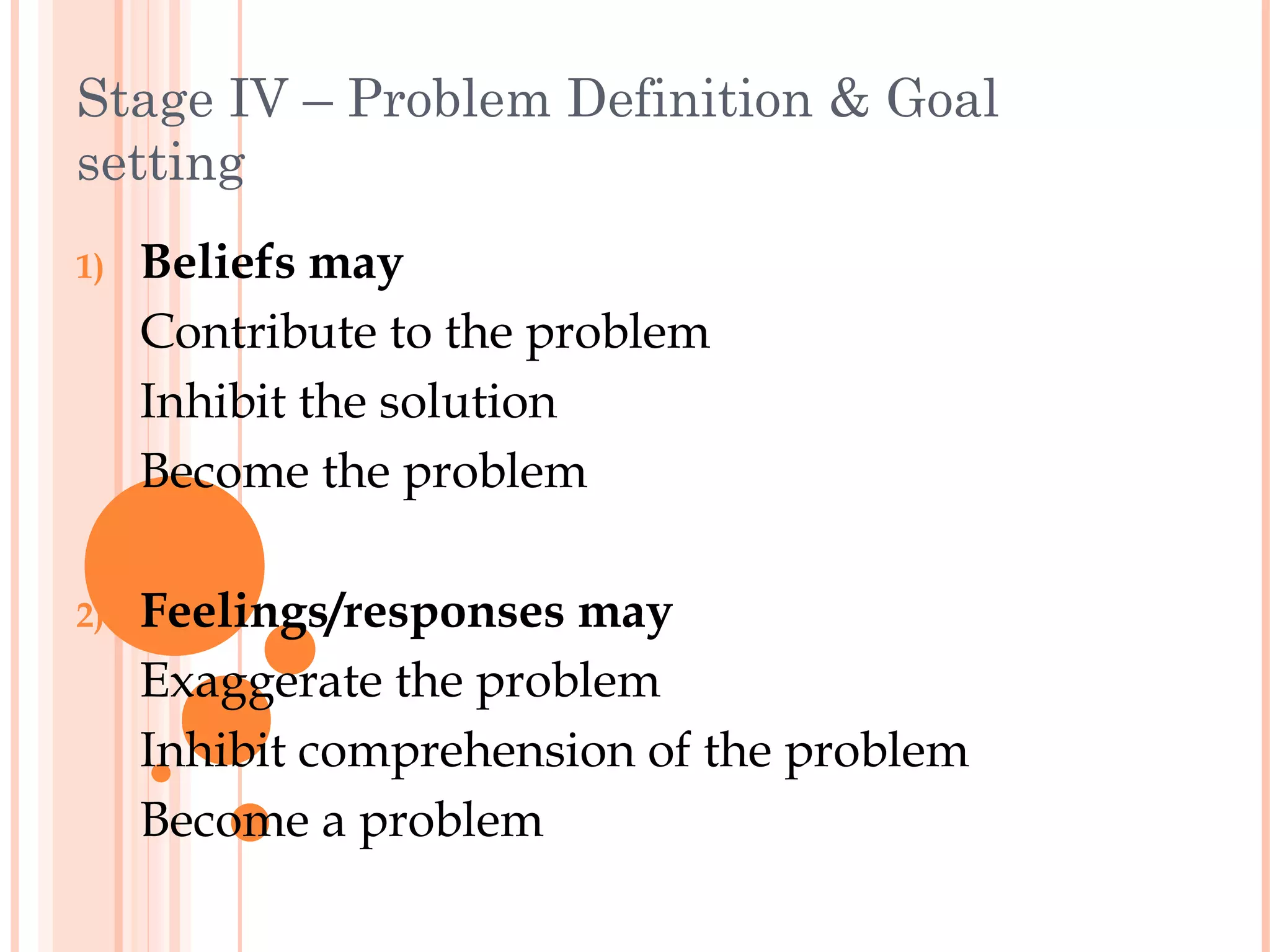
Stage IV – Problem Definition & Goal
setting
1)   Beliefs may
     Contribute to the problem
     Inhibit the solution
     Become the problem

2)   Feelings/responses may
     Exaggerate the problem
     Inhibit comprehension of the problem
     Become a problem
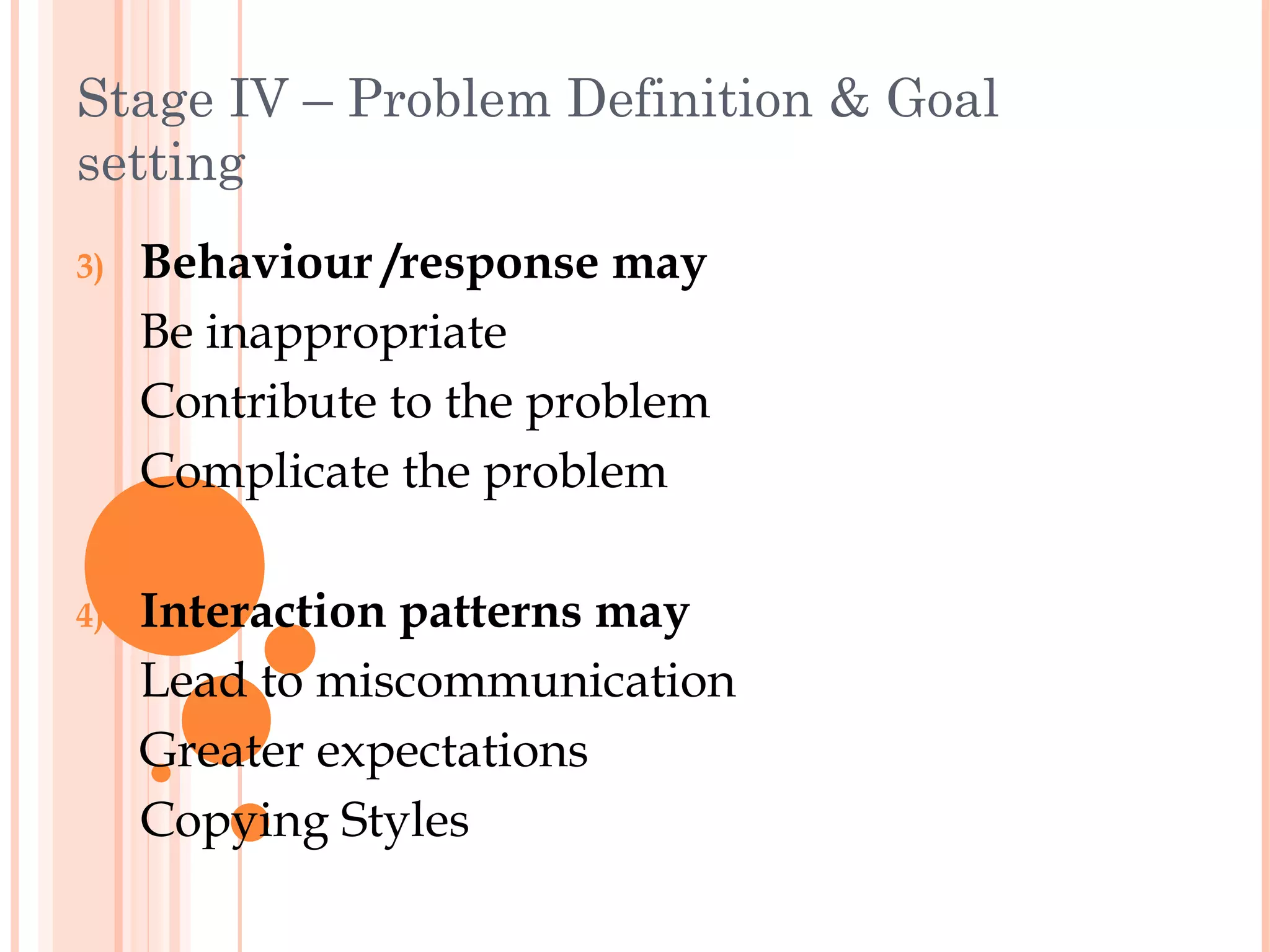
Stage IV – Problem Definition & Goal
setting
3)   Behaviour /response may
     Be inappropriate
     Contribute to the problem
     Complicate the problem

4)   Interaction patterns may
     Lead to miscommunication
     Greater expectations
     Copying Styles
Stage IV – Problem Definition & Goal
setting
5)   Contextual factors
     Time
     Place
     Cultural & Socio-Political issues
Problem Definition
The clients might make different types of
 statements

 Based   on facts & Alternatives

 Based   on Judgements,preferences,Dislikes

 Based   on specific type of behaviour

 Basedon emotions,Conflicts,pressures,fears &
 expectations
Problem Definition
 Explorationof information for assessing the
 problem is gathered from

 Client’s   perspective

 Counsellor’s   perspective

 Other’s    perspective
Problem Definition
 Re-assessment   implies changing from known
  ,apparent views to less known, hidden
  dimensions
 When new perspectives/insights are discovered,
  approaches to change can be evolved
 Challenging is a difficult task as it involves re-
  directing the thought process & dealing with the
  discomfort they experience

 Confrontation

 Selfconfrontation
 Feedback

 Directives
Goal Setting
Prioritising, Focusing & Accepting the
 problem

Allowing the client to state the goals

Determines the selection of interventions
Goal Setting

1)   To change an unwanted or unwelcome
     behaviour

2)   To cope better in a stressful situation

3)   To make & implement decisions

4)   To enhance relationships

5)   To help in client’s journey towards achieving his
     potential
Stage V – Intervention & Problem Solving
 An   action plan to meet the goals is made

 Clearlyindicate the steps to be taken by the
 client & the interventions utilised by the
 counsellor

 Implementation  activities include specific
 counselling, training & education, group
 therapy etc
Stage V – Intervention & Problem
Solving
A   successful treatment plan includes

 Goals  clearly defined & reachable
 Plans adapted with time
 Positive ,action-oriented focus
 Client’s willingness & motivation to
  follow it
Stage VI - Termination
Termination is important as a means of empowering the
 client by creating a temporary closure of relationship

Termination is considered when:-

Awareness by counselor & counselee that the work is
 completed
When it seems that counselling is not being helpful

It is not a clear-cut ending, but also no need to continue
  beyond necessity
Stage VI - Termination

 Suggested termination
 Imposed termination

 Situational termination

 Early termnation


 A gradual tapering off of sessions
 Therapeutic vacations-break without breaking
  the connection

   Counselor should carefully consider the most
    effective way to terminate each client
Stage VI - Termination
   Open Door policy

   The client should review the future plan of action
    in his own words

   A future date is identified in consultation with
    the client for reviewing the progress & evolving
    corrective measures
Stage VII – Follow up
   Counselor’s role to be an evaluator & navigator

   Follow up is to :-

   Review Progress

   Review the Learning
Counselling for managers module2

Counselling for managers module2

  • 1.
  • 2.
    5 W’s ofCounselling  What  Why  Who  When 2  Where
  • 3.
    Management Counselling Approaches Directive :- Manager dictates solution  Prescriptive :- Suggests possible solution & encourages its adoption  Negotiative :- After offers & counter- offers ,both arrive at agreements  Consultative :- Discusses on employee provided solutions to get better ones  Non-directive :- Encourages employee to design solutions
  • 4.
    Counselling Process Counselling is a process with a beginning, a middle and an end, Where the counsellor facilitates an individual to consider the aspects of their life they wish to change. Each process has a task to accomplish
  • 5.
    Counselling Process  Thewhole idea is to enable the client to explore a difficulty or distress which they may be experiencing, assisted by the counsellor who would guide the client from feeling a victim of circumstances to feeling that they have more control over their life 5
  • 6.
    Stage 1 -Preparation  Identify the need : An awareness of a problem & the need for help  Readiness : The client should be ready to accept help  Factors affecting readiness Ignorance Resistance Lack of motivation Attitude  Place  Notify in advance  Time of meeting  Organise information
  • 7.
    Stage II –Pre Counselling Session Initial interview to get acquainted Preparation of case history Exploration of the client’s concern for the problem
  • 8.
    Stage III –Building up Rapport & relationship  Very Critical as it paves the way for a constructive relationship  Relationship includes trust, respect & relative psychological comfort  Rogers in 1957 proposed the core conditions for successful counselling  Unconditional +ve regard  Empathy  Congruence:- Both consider the issue from the same perspective & aim for the same goals
  • 9.
    Stage III –Building up Rapport & relationship  Other conditions include:- Respect Acceptance Genuineness Listening Concreteness Confidentiality
  • 10.
    Stage IV –Problem Definition & Goal setting Recognise a client need Understand the need Meet the need
  • 11.
    Stage IV –Problem Definition & Goal setting 1) Beliefs may Contribute to the problem Inhibit the solution Become the problem 2) Feelings/responses may Exaggerate the problem Inhibit comprehension of the problem Become a problem
  • 12.
    Stage IV –Problem Definition & Goal setting 3) Behaviour /response may Be inappropriate Contribute to the problem Complicate the problem 4) Interaction patterns may Lead to miscommunication Greater expectations Copying Styles
  • 13.
    Stage IV –Problem Definition & Goal setting 5) Contextual factors Time Place Cultural & Socio-Political issues
  • 14.
    Problem Definition The clientsmight make different types of statements  Based on facts & Alternatives  Based on Judgements,preferences,Dislikes  Based on specific type of behaviour  Basedon emotions,Conflicts,pressures,fears & expectations
  • 15.
    Problem Definition  Explorationofinformation for assessing the problem is gathered from  Client’s perspective  Counsellor’s perspective  Other’s perspective
  • 16.
    Problem Definition  Re-assessment implies changing from known ,apparent views to less known, hidden dimensions  When new perspectives/insights are discovered, approaches to change can be evolved  Challenging is a difficult task as it involves re- directing the thought process & dealing with the discomfort they experience  Confrontation  Selfconfrontation  Feedback  Directives
  • 17.
    Goal Setting Prioritising, Focusing& Accepting the problem Allowing the client to state the goals Determines the selection of interventions
  • 18.
    Goal Setting 1) To change an unwanted or unwelcome behaviour 2) To cope better in a stressful situation 3) To make & implement decisions 4) To enhance relationships 5) To help in client’s journey towards achieving his potential
  • 19.
    Stage V –Intervention & Problem Solving  An action plan to meet the goals is made  Clearlyindicate the steps to be taken by the client & the interventions utilised by the counsellor  Implementation activities include specific counselling, training & education, group therapy etc
  • 20.
    Stage V –Intervention & Problem Solving A successful treatment plan includes Goals clearly defined & reachable Plans adapted with time Positive ,action-oriented focus Client’s willingness & motivation to follow it
  • 21.
    Stage VI -Termination Termination is important as a means of empowering the client by creating a temporary closure of relationship Termination is considered when:- Awareness by counselor & counselee that the work is completed When it seems that counselling is not being helpful It is not a clear-cut ending, but also no need to continue beyond necessity
  • 22.
    Stage VI -Termination  Suggested termination  Imposed termination  Situational termination  Early termnation  A gradual tapering off of sessions  Therapeutic vacations-break without breaking the connection  Counselor should carefully consider the most effective way to terminate each client
  • 23.
    Stage VI -Termination  Open Door policy  The client should review the future plan of action in his own words  A future date is identified in consultation with the client for reviewing the progress & evolving corrective measures
  • 24.
    Stage VII –Follow up  Counselor’s role to be an evaluator & navigator  Follow up is to :-  Review Progress  Review the Learning