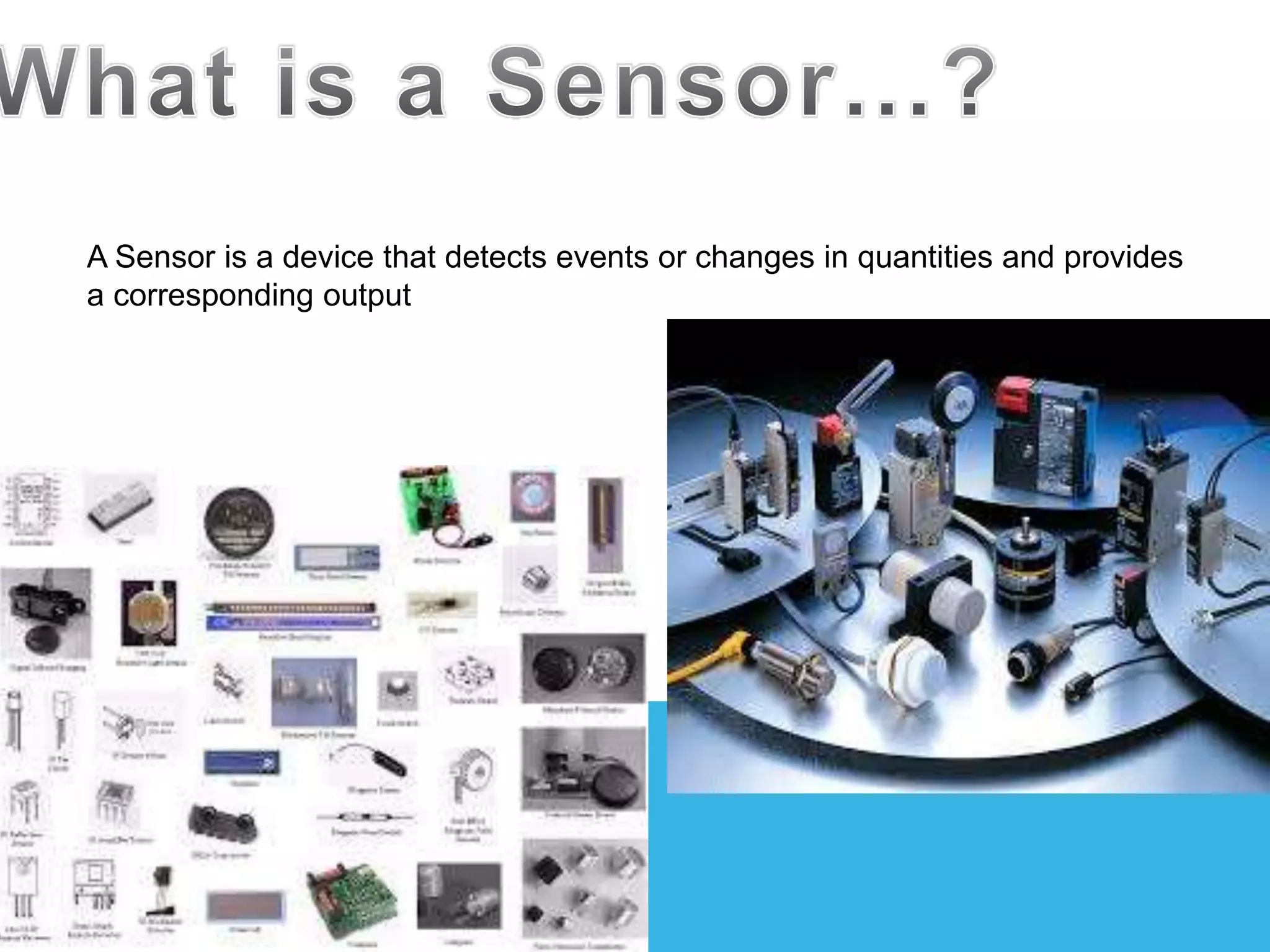
A Sensor is a device that detects events or changes in quantities and provides 
a corresponding output
 Operation with reverse bias 
 Capacitance should be 
small 
 Leakage current should be low
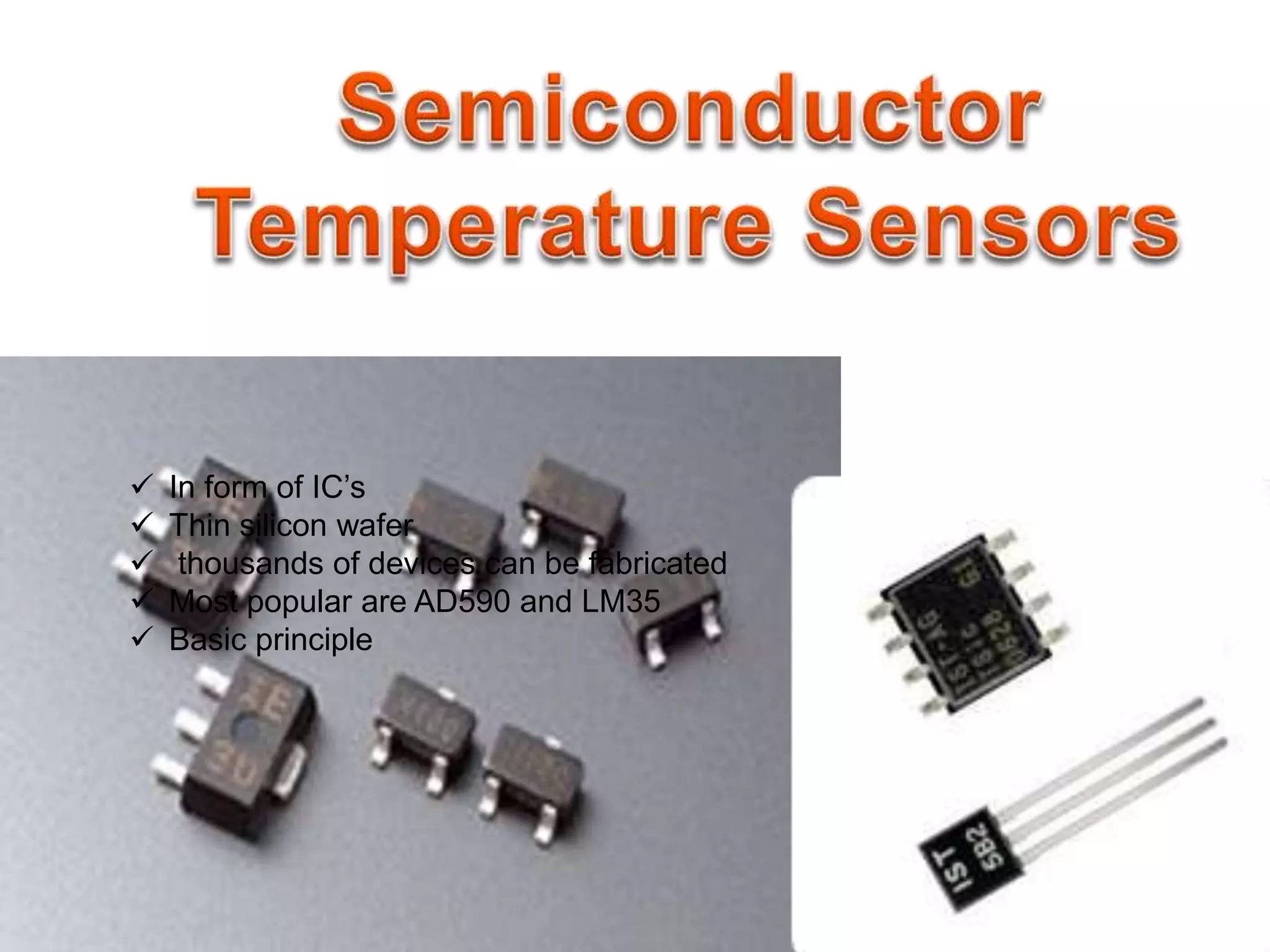
 In form of IC’s 
 Thin silicon wafer 
 thousands of devices can be fabricated 
 Most popular are AD590 and LM35 
 Basic principle
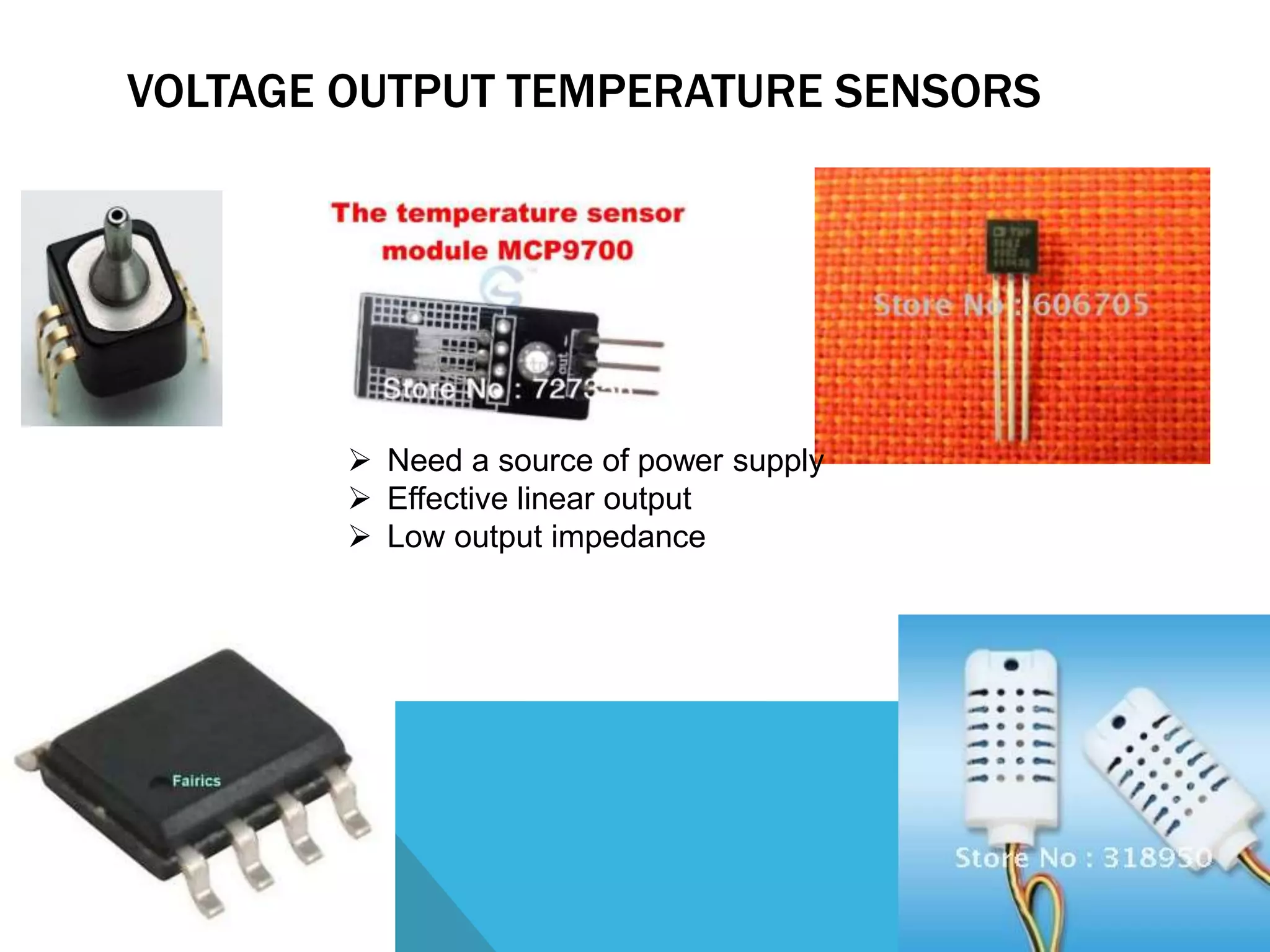
VOLTAGE OUTPUT TEMPERATURE SENSORS 
 Need a source of power supply 
 Effective linear output 
 Low output impedance
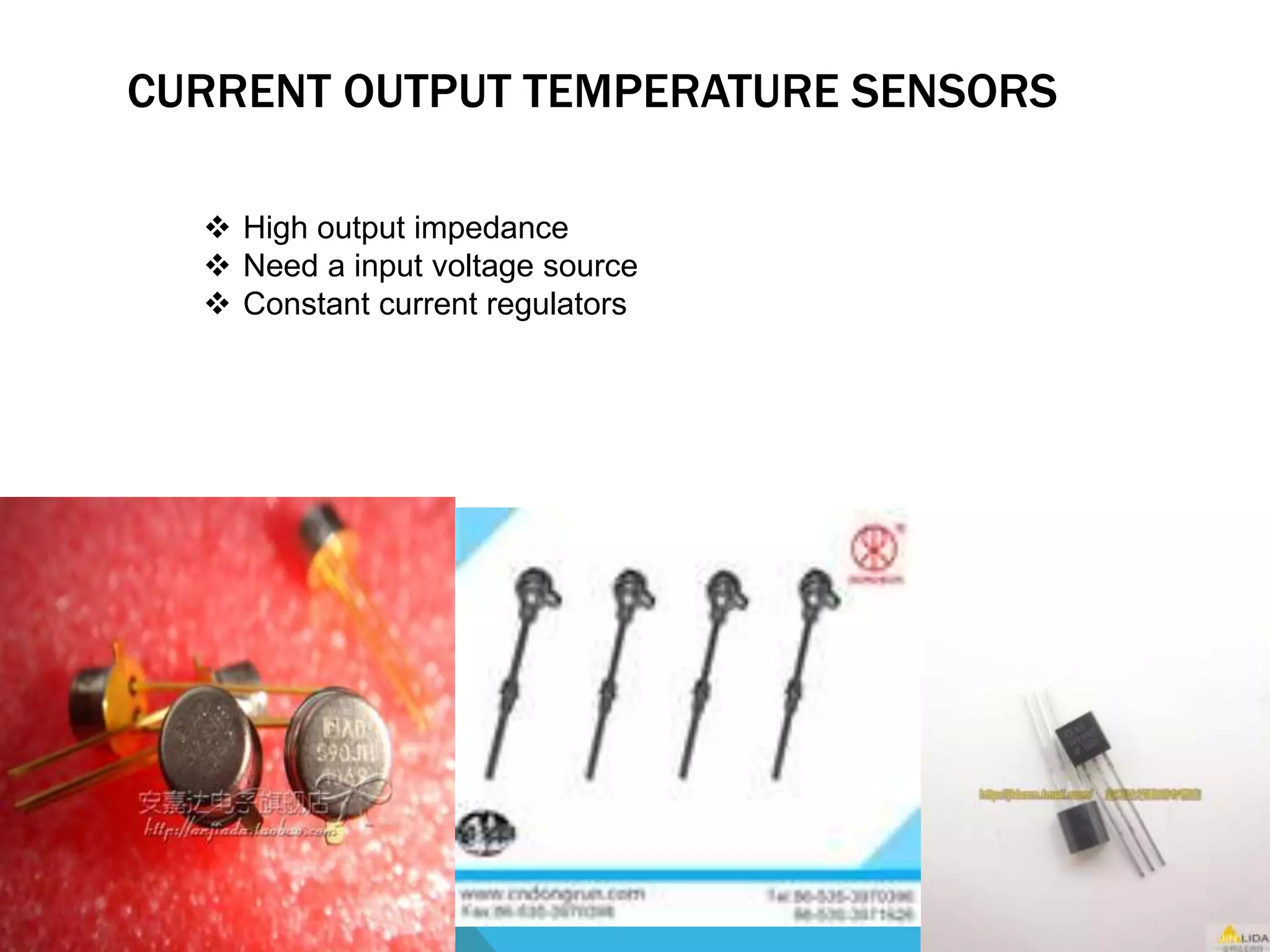
CURRENT OUTPUT TEMPERATURE SENSORS 
 High output impedance 
 Need a input voltage source 
 Constant current regulators
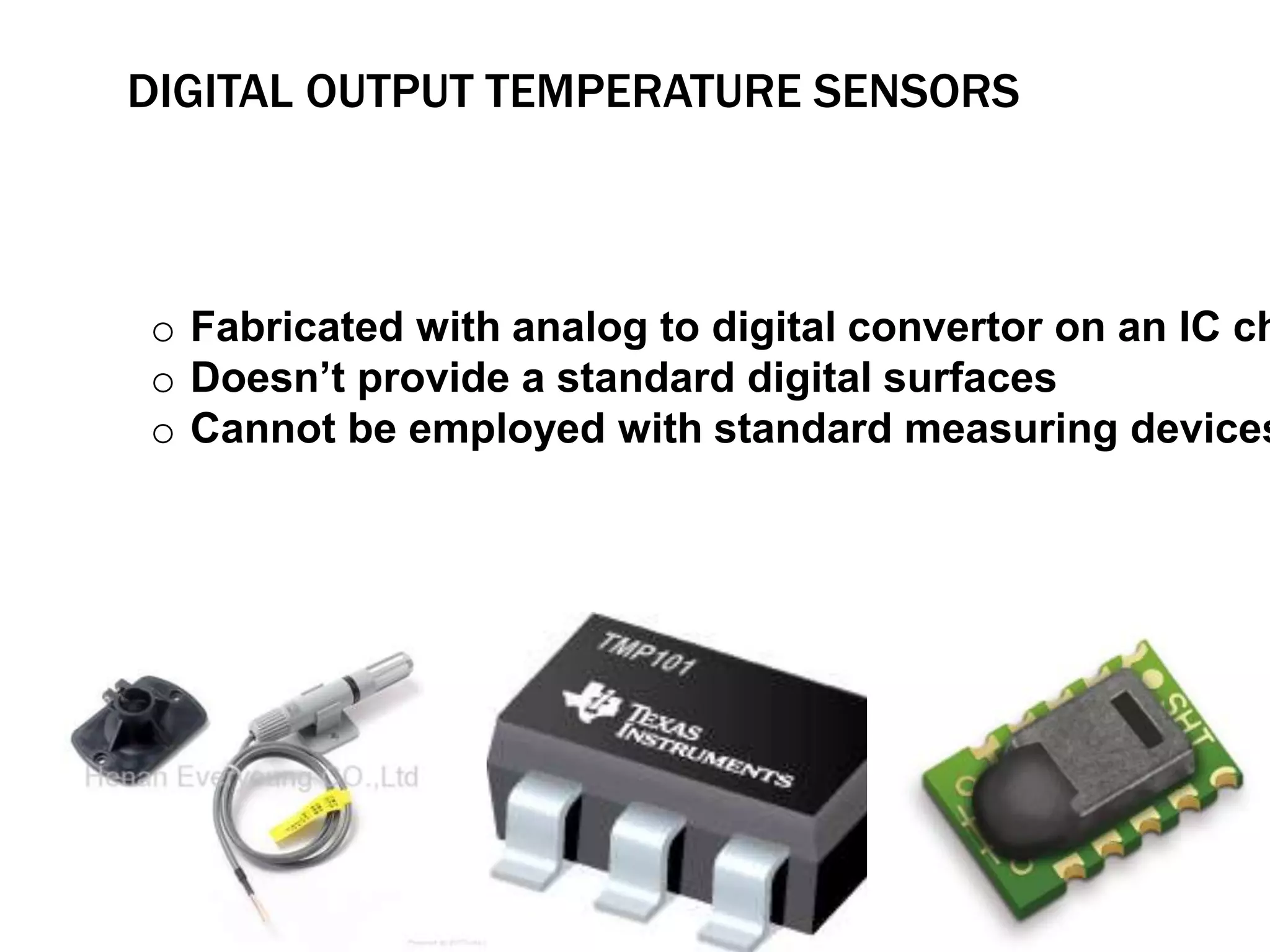
DIGITAL OUTPUT TEMPERATURE SENSORS 
o Fabricated with analog to digital convertor on an IC chip 
o Doesn’t provide a standard digital surfaces 
o Cannot be employed with standard measuring devices
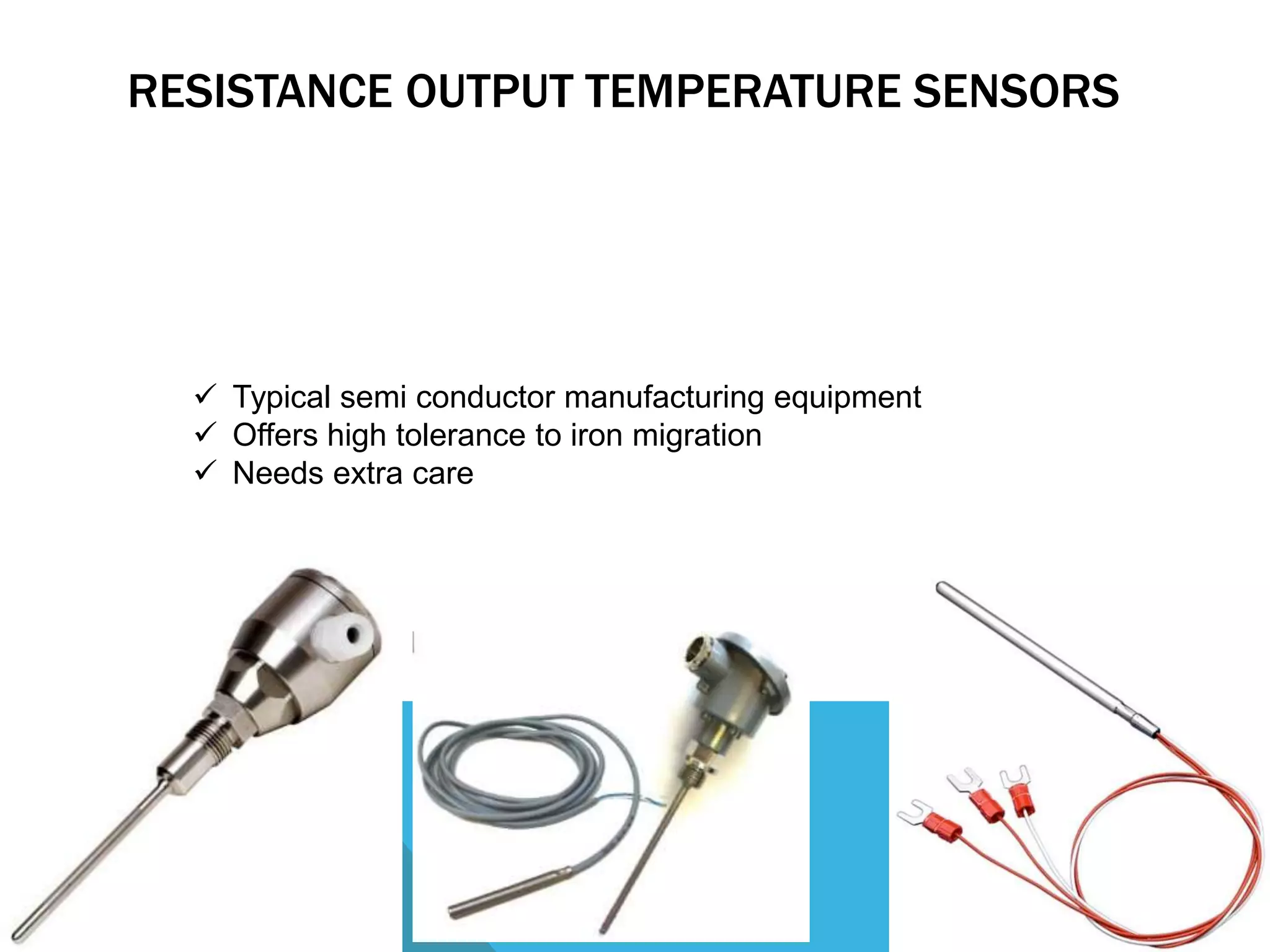
RESISTANCE OUTPUT TEMPERATURE SENSORS 
 Typical semi conductor manufacturing equipment 
 Offers high tolerance to iron migration 
 Needs extra care
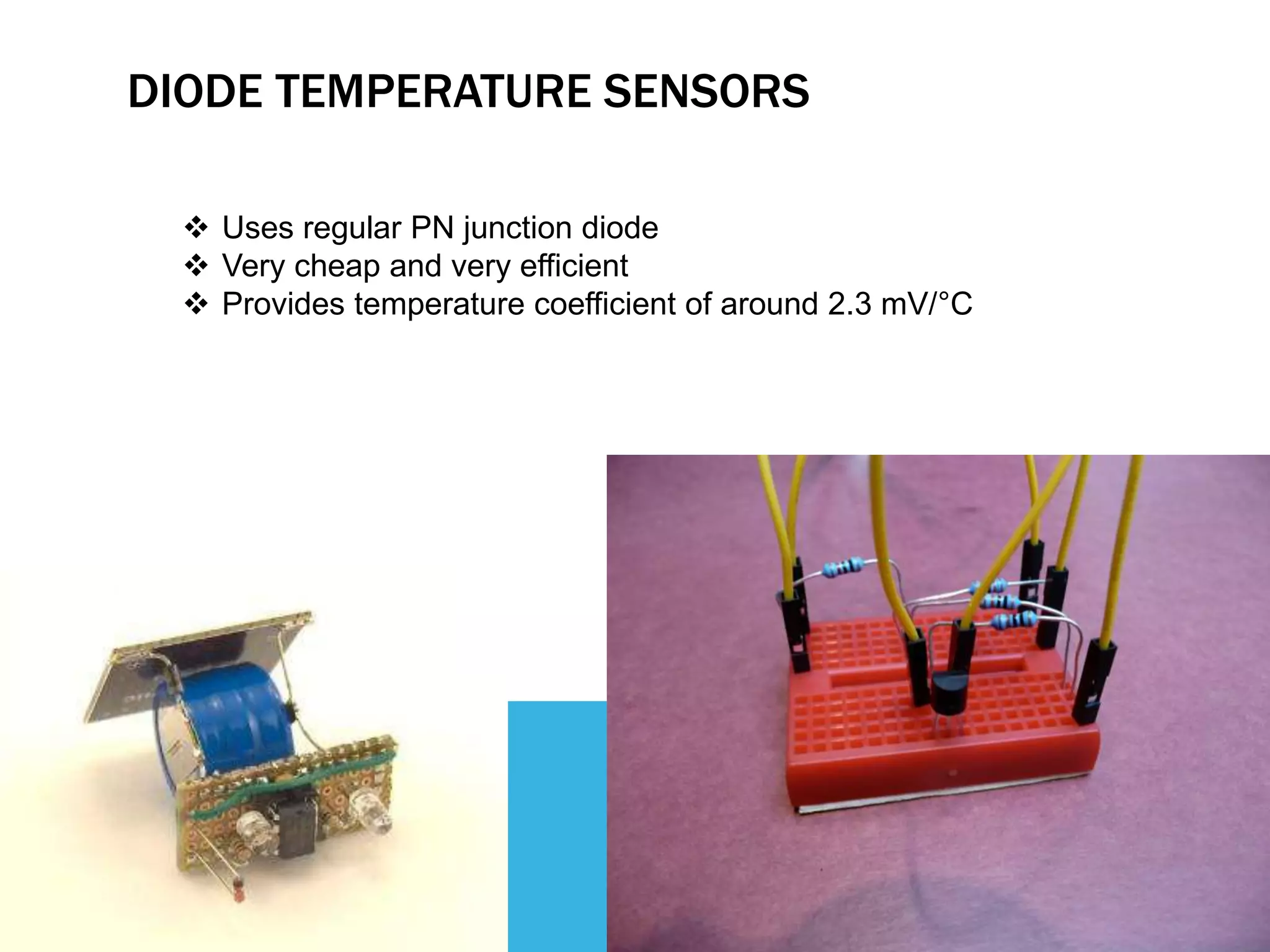
DIODE TEMPERATURE SENSORS 
 Uses regular PN junction diode 
 Very cheap and very efficient 
 Provides temperature coefficient of around 2.3 mV/°C
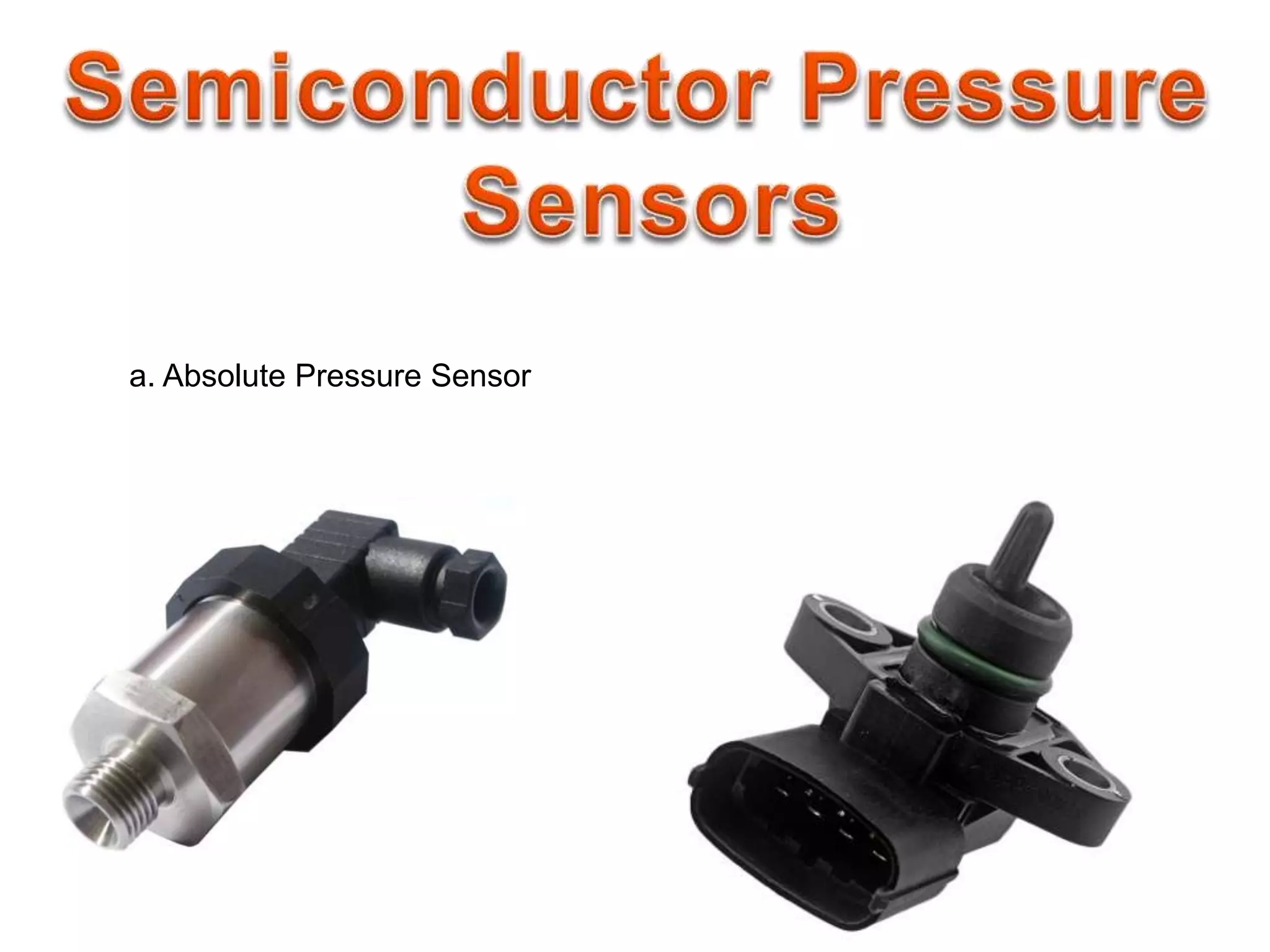
a. Absolute Pressure Sensor
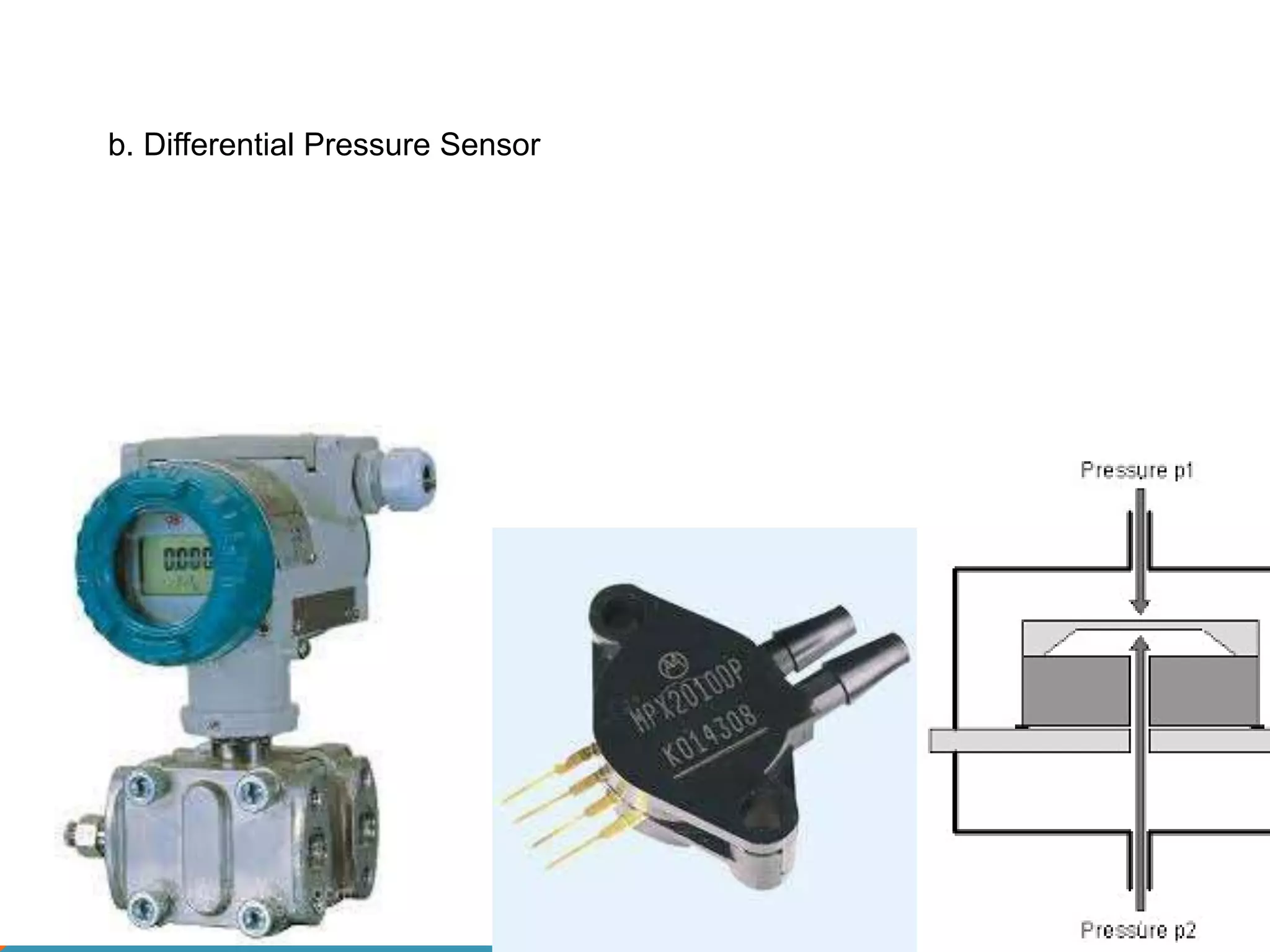
b. Differential Pressure Sensor
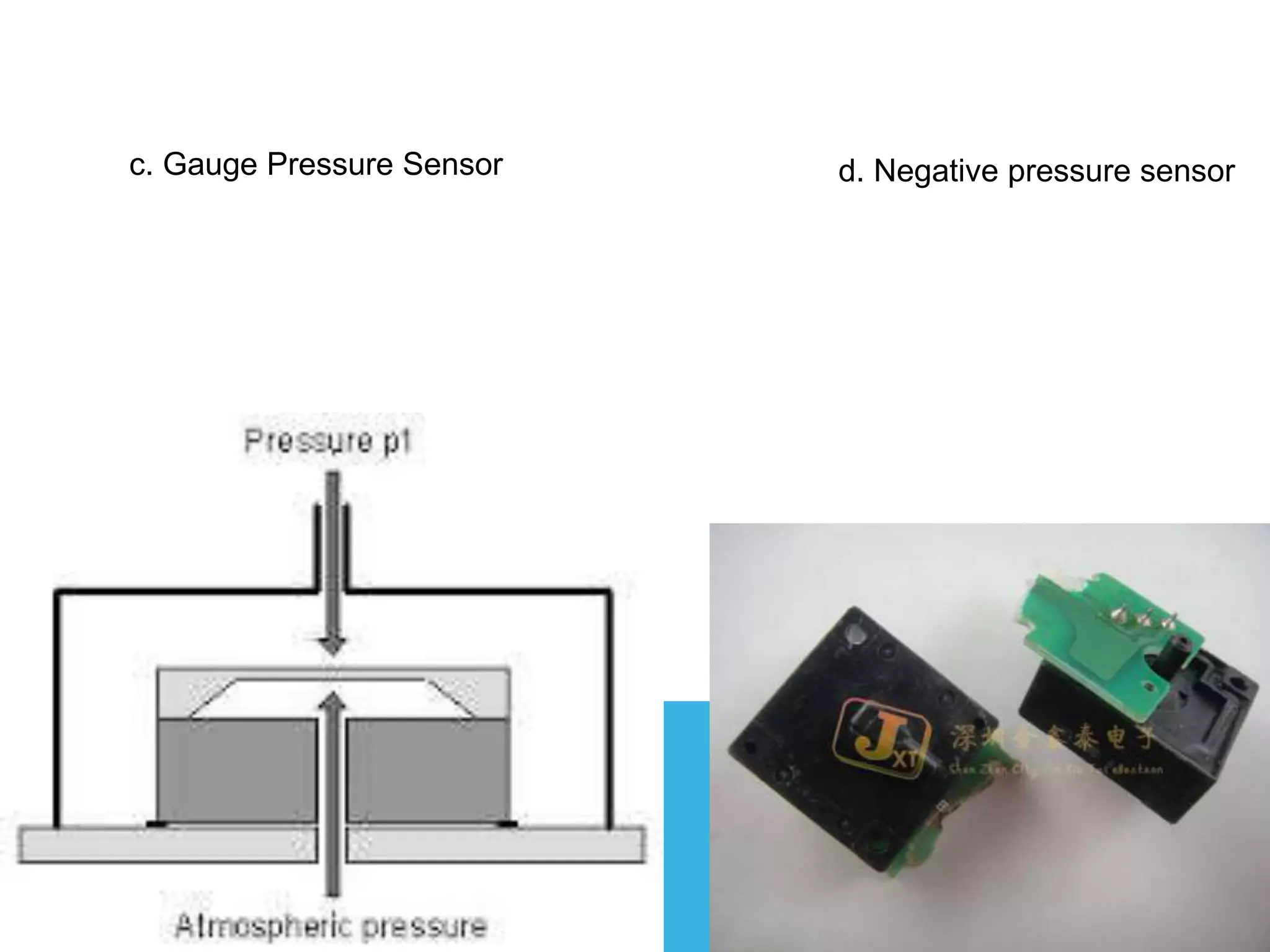
c. Gauge Pressure Sensor d. Negative pressure sensor
The possibilities of applications of the semiconductor sensors are endless. 
Research is still going on, almost all the sensors employ the use of semiconductors, 
thus called semiconductor sensors. 
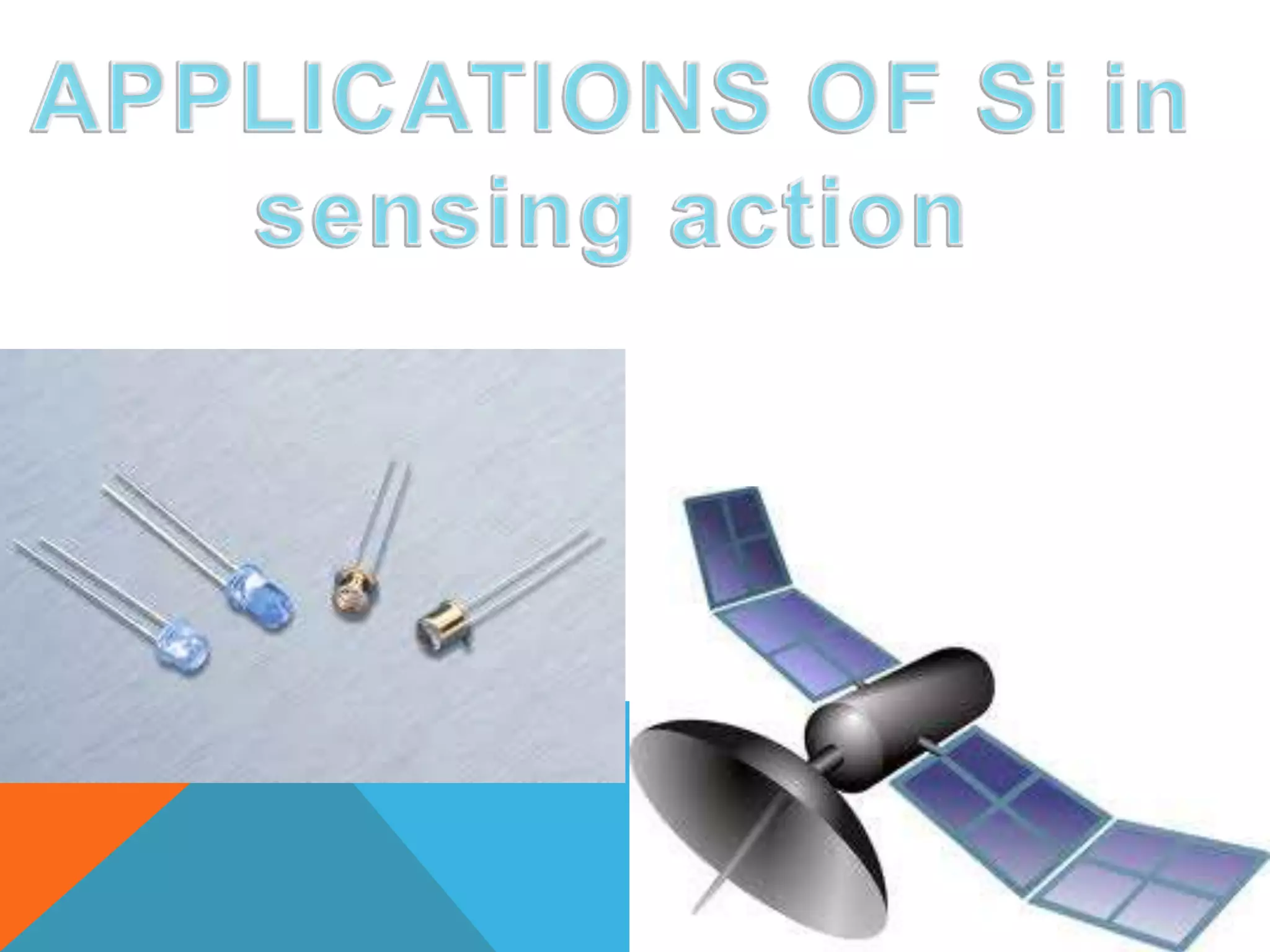
From a Remote control television to satellite sensing everything involves semiconductor 
sensors
Semiconductor sensors

Semiconductor sensors

  • 2.
    A Sensor isa device that detects events or changes in quantities and provides a corresponding output
  • 4.
     Operation withreverse bias  Capacitance should be small  Leakage current should be low
  • 6.
     In formof IC’s  Thin silicon wafer  thousands of devices can be fabricated  Most popular are AD590 and LM35  Basic principle
  • 7.
    VOLTAGE OUTPUT TEMPERATURESENSORS  Need a source of power supply  Effective linear output  Low output impedance
  • 8.
    CURRENT OUTPUT TEMPERATURESENSORS  High output impedance  Need a input voltage source  Constant current regulators
  • 9.
    DIGITAL OUTPUT TEMPERATURESENSORS o Fabricated with analog to digital convertor on an IC chip o Doesn’t provide a standard digital surfaces o Cannot be employed with standard measuring devices
  • 10.
    RESISTANCE OUTPUT TEMPERATURESENSORS  Typical semi conductor manufacturing equipment  Offers high tolerance to iron migration  Needs extra care
  • 11.
    DIODE TEMPERATURE SENSORS  Uses regular PN junction diode  Very cheap and very efficient  Provides temperature coefficient of around 2.3 mV/°C
  • 12.
  • 13.
  • 14.
    c. Gauge PressureSensor d. Negative pressure sensor
  • 19.
    The possibilities ofapplications of the semiconductor sensors are endless. Research is still going on, almost all the sensors employ the use of semiconductors, thus called semiconductor sensors. From a Remote control television to satellite sensing everything involves semiconductor sensors