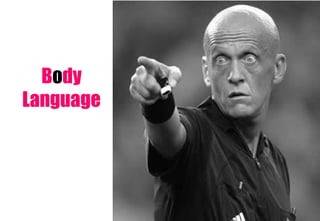
B o dy Language
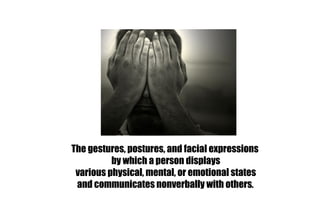
The gestures, postures, and facial expressions by which a person displays various physical, mental, or emotional states and communicates nonverbally with others .
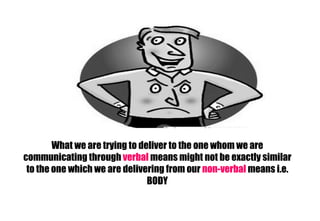
What we are trying to deliver to the one whom we are communicating through   verbal   means might not be exactly similar to the one which we are delivering from our   non-verbal   means i.e. BODY
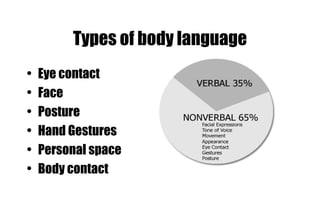
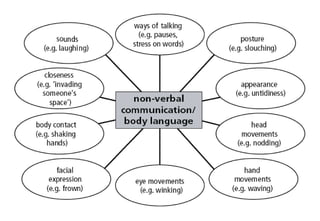
Types of body language Eye contact Face Posture Hand Gestures Personal space Body contact
 
The way you sit, you stand, you use you hands and legs, what you do while talking to someone … is an indication of  YOUR  PERSONALITY .
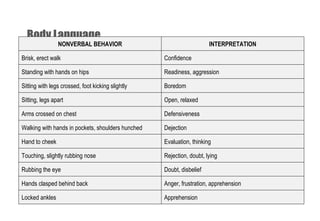
Body Language   Apprehension Locked ankles Anger, frustration, apprehension Hands clasped behind back Doubt, disbelief Rubbing the eye Rejection, doubt, lying Touching, slightly rubbing nose Evaluation, thinking Hand to cheek Dejection Walking with hands in pockets, shoulders hunched Defensiveness Arms crossed on chest Open, relaxed Sitting, legs apart Boredom Sitting with legs crossed, foot kicking slightly Readiness, aggression Standing with hands on hips Confidence Brisk, erect walk INTERPRETATION NONVERBAL BEHAVIOR
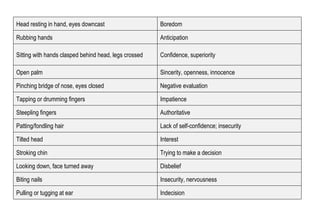
Indecision Pulling or tugging at ear Insecurity, nervousness Biting nails Disbelief Looking down, face turned away Trying to make a decision Stroking chin Interest Tilted head Lack of self-confidence; insecurity Patting/fondling hair Authoritative Steepling fingers Impatience Tapping or drumming fingers Negative evaluation Pinching bridge of nose, eyes closed Sincerity, openness, innocence Open palm Confidence, superiority Sitting with hands clasped behind head, legs crossed Anticipation Rubbing hands Boredom Head resting in hand, eyes downcast
BE AWARE OF YOURSELF !!! What you do might be interpreted in several ways, depending on the setting and who you are talking to. You’ll probably want to use your body language differently when talking to a guest as compared to when you talk to a family member.
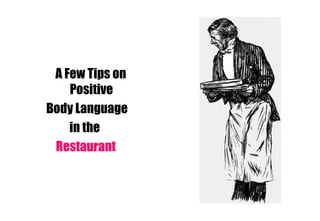
A Few Tips on Positive Body Language in the  Restaurant
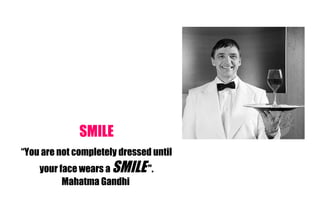
SMILE “ You are not completely dressed until your face wears a  SMILE  ". Mahatma Gandhi
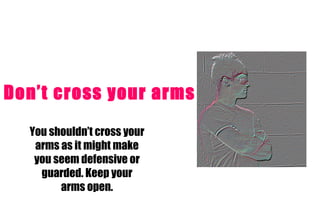
Don’t cross your arms You shouldn’t cross your arms as it might make you seem defensive or guarded. Keep your arms open.
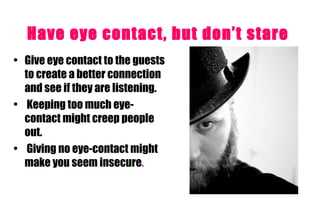
Have eye contact, but don’t stare   Give eye contact to the guests to create a better connection and see if they are listening. Keeping too much eye-contact might creep people out. Giving no eye-contact might make you seem insecure .
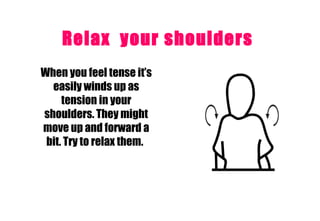
Relax  your shoulders   When you feel tense it’s easily winds up as tension in your shoulders. They might move up and forward a bit. Try to relax them.
Nod when they are talking   Nod once in a while to signal that you are listening. But don’t overdo it and peck like Woody Woodpecker.
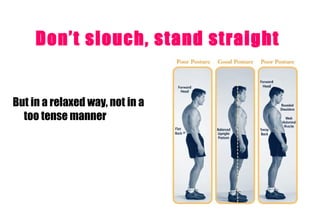
Don’t slouch, stand straight   But in a relaxed way, not in a too tense manner
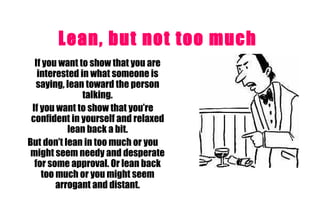
Lean, but not too much   If you want to show that you are interested in what someone is saying, lean toward the person talking. If you want to show that you’re confident in yourself and relaxed lean back a bit. But don’t lean in too much or you might seem needy and desperate for some approval. Or lean back too much or you might seem arrogant and distant.
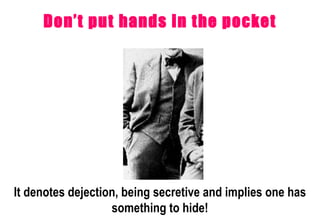
Don’t put hands in the pocket It denotes dejection, being secretive and implies one has something to hide!
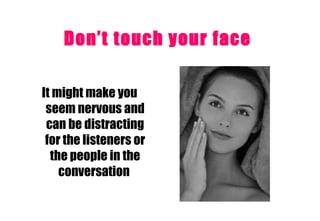
Don’t touch your face   It might make you seem nervous and can be distracting for the listeners or the people in the conversation
Don’t run your fingers through your hair   Running your fingers through the hair show lack of self confidence .
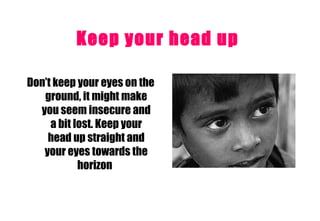
Keep your head up   Don’t keep your eyes on the ground, it might make you seem insecure and a bit lost. Keep your head up straight and your eyes towards the horizon
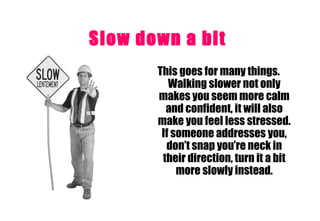
Slow down a bit   This goes for many things. Walking slower not only makes you seem more calm and confident, it will also make you feel less stressed. If someone addresses you, don’t snap you’re neck in their direction, turn it a bit more slowly instead.
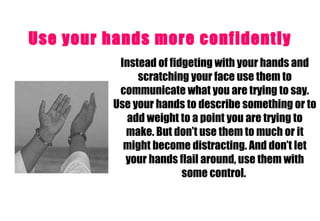
Use your hands more confidently   Instead of fidgeting with your hands and scratching your face use them to communicate what you are trying to say. Use your hands to describe something or to add weight to a point you are trying to make. But don’t use them to much or it might become distracting. And don’t let your hands flail around, use them with some control.
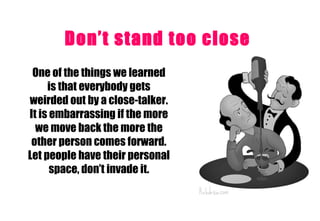
Don’t stand too close   One of the things we learned is that everybody gets weirded out by a close-talker. It is embarrassing if the more we move back the more the other person comes forward. Let people have their personal space, don’t invade it.
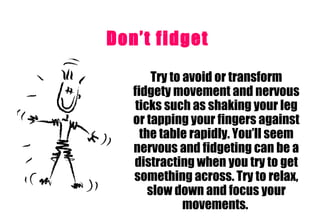
Don’t fidget   Try to avoid or transform fidgety movement and nervous ticks such as shaking your leg or tapping your fingers against the table rapidly. You’ll seem nervous and fidgeting can be a distracting when you try to get something across. Try to relax, slow down and focus your movements.
Keep a good attitude   Last but not least, keep a positive, open and relaxed attitude. How you feel will come through in your body language and can make a major difference.

Body Language

  • 1.
    B o dyLanguage
  • 2.
    The gestures, postures,and facial expressions by which a person displays various physical, mental, or emotional states and communicates nonverbally with others .
  • 3.
    What we aretrying to deliver to the one whom we are communicating through verbal means might not be exactly similar to the one which we are delivering from our non-verbal means i.e. BODY
  • 4.
    Types of bodylanguage Eye contact Face Posture Hand Gestures Personal space Body contact
  • 5.
  • 6.
    The way yousit, you stand, you use you hands and legs, what you do while talking to someone … is an indication of YOUR PERSONALITY .
  • 7.
    Body Language Apprehension Locked ankles Anger, frustration, apprehension Hands clasped behind back Doubt, disbelief Rubbing the eye Rejection, doubt, lying Touching, slightly rubbing nose Evaluation, thinking Hand to cheek Dejection Walking with hands in pockets, shoulders hunched Defensiveness Arms crossed on chest Open, relaxed Sitting, legs apart Boredom Sitting with legs crossed, foot kicking slightly Readiness, aggression Standing with hands on hips Confidence Brisk, erect walk INTERPRETATION NONVERBAL BEHAVIOR
  • 8.
    Indecision Pulling ortugging at ear Insecurity, nervousness Biting nails Disbelief Looking down, face turned away Trying to make a decision Stroking chin Interest Tilted head Lack of self-confidence; insecurity Patting/fondling hair Authoritative Steepling fingers Impatience Tapping or drumming fingers Negative evaluation Pinching bridge of nose, eyes closed Sincerity, openness, innocence Open palm Confidence, superiority Sitting with hands clasped behind head, legs crossed Anticipation Rubbing hands Boredom Head resting in hand, eyes downcast
  • 9.
    BE AWARE OFYOURSELF !!! What you do might be interpreted in several ways, depending on the setting and who you are talking to. You’ll probably want to use your body language differently when talking to a guest as compared to when you talk to a family member.
  • 10.
    A Few Tipson Positive Body Language in the Restaurant
  • 11.
    SMILE “ Youare not completely dressed until your face wears a SMILE ". Mahatma Gandhi
  • 12.
    Don’t cross yourarms You shouldn’t cross your arms as it might make you seem defensive or guarded. Keep your arms open.
  • 13.
    Have eye contact,but don’t stare Give eye contact to the guests to create a better connection and see if they are listening. Keeping too much eye-contact might creep people out. Giving no eye-contact might make you seem insecure .
  • 14.
    Relax yourshoulders When you feel tense it’s easily winds up as tension in your shoulders. They might move up and forward a bit. Try to relax them.
  • 15.
    Nod when theyare talking Nod once in a while to signal that you are listening. But don’t overdo it and peck like Woody Woodpecker.
  • 16.
    Don’t slouch, standstraight But in a relaxed way, not in a too tense manner
  • 17.
    Lean, but nottoo much If you want to show that you are interested in what someone is saying, lean toward the person talking. If you want to show that you’re confident in yourself and relaxed lean back a bit. But don’t lean in too much or you might seem needy and desperate for some approval. Or lean back too much or you might seem arrogant and distant.
  • 18.
    Don’t put handsin the pocket It denotes dejection, being secretive and implies one has something to hide!
  • 19.
    Don’t touch yourface It might make you seem nervous and can be distracting for the listeners or the people in the conversation
  • 20.
    Don’t run yourfingers through your hair Running your fingers through the hair show lack of self confidence .
  • 21.
    Keep your headup Don’t keep your eyes on the ground, it might make you seem insecure and a bit lost. Keep your head up straight and your eyes towards the horizon
  • 22.
    Slow down abit This goes for many things. Walking slower not only makes you seem more calm and confident, it will also make you feel less stressed. If someone addresses you, don’t snap you’re neck in their direction, turn it a bit more slowly instead.
  • 23.
    Use your handsmore confidently Instead of fidgeting with your hands and scratching your face use them to communicate what you are trying to say. Use your hands to describe something or to add weight to a point you are trying to make. But don’t use them to much or it might become distracting. And don’t let your hands flail around, use them with some control.
  • 24.
    Don’t stand tooclose One of the things we learned is that everybody gets weirded out by a close-talker. It is embarrassing if the more we move back the more the other person comes forward. Let people have their personal space, don’t invade it.
  • 25.
    Don’t fidget Try to avoid or transform fidgety movement and nervous ticks such as shaking your leg or tapping your fingers against the table rapidly. You’ll seem nervous and fidgeting can be a distracting when you try to get something across. Try to relax, slow down and focus your movements.
  • 26.
    Keep a goodattitude Last but not least, keep a positive, open and relaxed attitude. How you feel will come through in your body language and can make a major difference.