Be Fire Safe… Save Lives
" Precaution is better than cure"  it is true and it also applies to our kitchens.  We can avoid lot accidents  in the kitchen if we follow the simple things. We present  an overview of what we have found to be the most common ways people can get hurt in a kitchen, and the ways you can avoid being hurt, or hurting someone else.
Make sure all the electric appliances & burners are turned off before you leave the kitchen
Keep electrical appliances away from water to avoid electrical shock and fire. And stay away from electrical sockets, ESPECIALLY if your hands are wet.
Make sure paper towels, dish towels and pot holders are kept away from the stovetop, so they won't catch fire.
Never add water to a dish that has hot oil in it. It could splatter, and someone could get hurt.
Dress for fire safety in the kitchen. Don't wear loose fitting clothing.
Never leave cooking unattended. If you must leave the kitchen for some reason, turn the heat off.
Avoid reaching over the stove for anything while cooking. Store frequently needed items in other areas of the kitchen.
Clean any grease build-up from the stove, oven & exhaust fan regularly. Cooking grease & oil ignite easily & burn rapidly.
Shield yourself from steam when uncovering food, especially microwave servings. Steam can cause serious burns. 
Always turn pot handles toward the back of the stove so no one accidentally bumps into them and knocks a pot over.
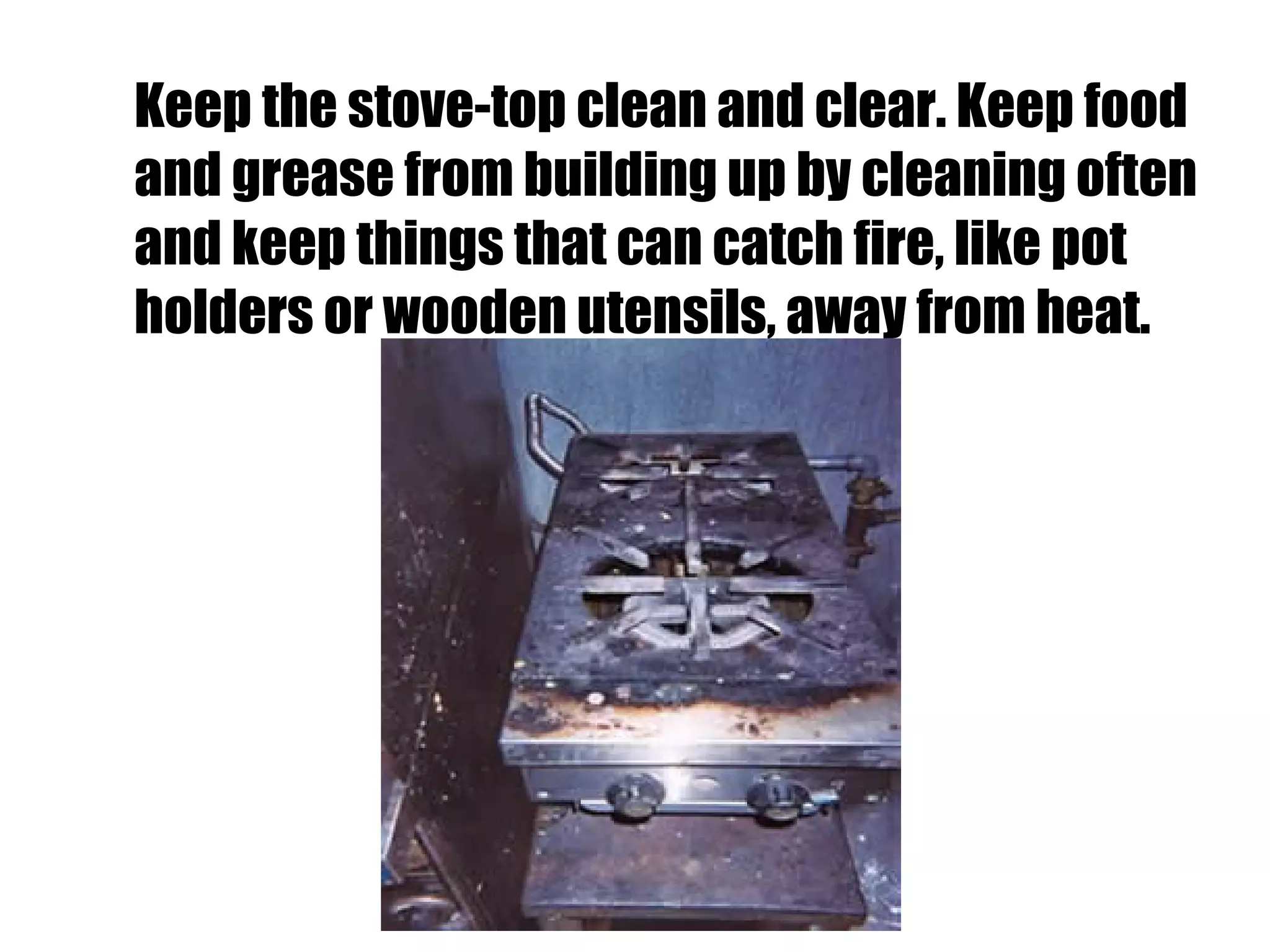
Keep the stove-top clean and clear. Keep food and grease from building up by cleaning often and keep things that can catch fire, like pot holders or wooden utensils, away from heat.
Do not put any metallic materials in the microwave oven, which may cause sparks and eventually damage the microwave.
Prevent boil-overs by not overfilling pots. Use recommended temperatures instead of increasing the heat to reduce cooking time.
Use a burner that's the appropriate size for the pan you're using.
Frequently launder dish cloths and sponges.   Soiled cloths catch fire readily.
Do not smoke in the kitchen.
Know the use of Fire extinguisher and their location.
Keep combustibles like cloth, paper, oil etc free from hot surfaces.
Have good lighting in kitchen and work areas.
Check the handles of all pots and pans to ensure that they are tightly fastened.

Fire Safety In Kitchen

  • 1.
    Be Fire Safe…Save Lives
  • 2.
    " Precaution isbetter than cure" it is true and it also applies to our kitchens. We can avoid lot accidents  in the kitchen if we follow the simple things. We present  an overview of what we have found to be the most common ways people can get hurt in a kitchen, and the ways you can avoid being hurt, or hurting someone else.
  • 3.
    Make sure allthe electric appliances & burners are turned off before you leave the kitchen
  • 4.
    Keep electrical appliancesaway from water to avoid electrical shock and fire. And stay away from electrical sockets, ESPECIALLY if your hands are wet.
  • 5.
    Make sure papertowels, dish towels and pot holders are kept away from the stovetop, so they won't catch fire.
  • 6.
    Never add waterto a dish that has hot oil in it. It could splatter, and someone could get hurt.
  • 7.
    Dress for firesafety in the kitchen. Don't wear loose fitting clothing.
  • 8.
    Never leave cookingunattended. If you must leave the kitchen for some reason, turn the heat off.
  • 9.
    Avoid reaching overthe stove for anything while cooking. Store frequently needed items in other areas of the kitchen.
  • 10.
    Clean any greasebuild-up from the stove, oven & exhaust fan regularly. Cooking grease & oil ignite easily & burn rapidly.
  • 11.
    Shield yourself fromsteam when uncovering food, especially microwave servings. Steam can cause serious burns. 
  • 12.
    Always turn pothandles toward the back of the stove so no one accidentally bumps into them and knocks a pot over.
  • 13.
    Keep the stove-topclean and clear. Keep food and grease from building up by cleaning often and keep things that can catch fire, like pot holders or wooden utensils, away from heat.
  • 14.
    Do not putany metallic materials in the microwave oven, which may cause sparks and eventually damage the microwave.
  • 15.
    Prevent boil-overs bynot overfilling pots. Use recommended temperatures instead of increasing the heat to reduce cooking time.
  • 16.
    Use a burnerthat's the appropriate size for the pan you're using.
  • 17.
    Frequently launder dishcloths and sponges. Soiled cloths catch fire readily.
  • 18.
    Do not smokein the kitchen.
  • 19.
    Know the useof Fire extinguisher and their location.
  • 20.
    Keep combustibles likecloth, paper, oil etc free from hot surfaces.
  • 21.
    Have good lightingin kitchen and work areas.
  • 22.
    Check the handlesof all pots and pans to ensure that they are tightly fastened.