Mujahid maqbool

F-42028
BBA 22
What is Body Language
•   Body language is non-verbal communication
    that involves body movement.
•   People in the workplace can convey a great
    deal of information without even speaking;
    through non-verbal communication
•   Body language is the unspoken or non-verbal
    mode of communication that we do in every
    single aspect of our interaction with another
    person.
How Does Body Speak?
• Like any spoken language, body language
  has words, sentences and punctuation
• Each gesture is like a single word and one
  word may have several different meanings
• It is like a mirror that tells us what the
  other person thinks and feels in response
  to our words or actions.
Lets examine how body language
communicates from head to toes
Types of body language
•   Body movement
•   Facial expressions
•   Eye contact
•   Smiling
•   Posture
•   Gesture
Body movement
• Avoid random movements
• Step forward to indicate you are arriving at
  a point
• Step back when concluding a point and
  signals the audience they can relax
  momentarily.
• Always lead with your foot nearest your
  destination.
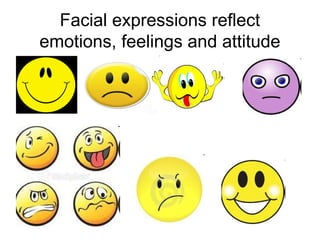
Facial expressions reflect
emotions, feelings and attitude
Facial expressions
• The face is most one of the
  most reliable indicators of a
  person's attitude, emotions &
  feelings
• Some people try to hide their
  true emotions the term poker
  face describes them.
• Your face is watched whenever
  you speak.
Eye contact
• To make people feel good
  and show your interest
  you must maintain eye
  contact.
• The easiest way to
  maintain eye contact
  naturally is to look at the
  persons whole face
  above the tip of their nose
• Honest person has a
  tendency to look you
  straight in the eye when
  you speaking
• Establish a bond
smiling
• The most strong body
  language signal to
  influence our first
  impression is the
  smile
• It is the most
  recognize signal
  everywhere
• Smiling is an
  international language
Voice tone
• Powerful voice tone reflect confidence
• Take pause to stimulate thinking
• Don’t speak too quickly its reflects stress
  and excitement
• Change your pace according to your call
• Clear controlled steady voice shows
  confidence
• Hesitation: low confidence
Imp of non-verbal communication
• Actual words convey only 10% of the
  message
• The other 90% is transmitted by non-
  verbal communication which consists of
  40% how it is said and 50% body
  language
Posture
• One of the first key things
  people notice is how to
  carry and present your self
• Do you walk & stand with
  confidence
• In any face-to-face
  communication or meeting
  or interview the way we
  hold our head, body shape
  and posture is very
  important.
Gestures.
• The physical
  movement of
  arms, legs,
  hands, and head
  are known
  gestures. They
  play a very
  important role in
  conveying
  meaning without
  using words.
Relax your shoulders
• When you feel tense its easily winds up as
  tension in your shoulders. They might
  move up and forward a bit.Try to relax.Try
  to loosen up by shaking the shoulders a
  bit and move them back
Don't touch your face
• It might make you
  seem nervous and can
  be distracting for the
  listeners or the people
  in the conversation
Keep your head up
• Don’t keep your eyes on the ground it
  might make you seem insecure and a bit
  lost
• Keep your head up straight and your eyes
  towards the horizon
Don’t stand too close
• One of the things we learned is that
  everybody feels uncomfortable by a close
  talker
• It is embarrassing if the move we back the
  more the other persons come forward
• Let people have their personal space don’t
  invade it
Keep a good attitude
• Last but not least keep a positive, open
  and relaxed attitude. how you feel will
  come through in your body language and
  can make a major difference
Body language

Body language

  • 1.
  • 3.
    What is BodyLanguage • Body language is non-verbal communication that involves body movement. • People in the workplace can convey a great deal of information without even speaking; through non-verbal communication • Body language is the unspoken or non-verbal mode of communication that we do in every single aspect of our interaction with another person.
  • 4.
    How Does BodySpeak? • Like any spoken language, body language has words, sentences and punctuation • Each gesture is like a single word and one word may have several different meanings • It is like a mirror that tells us what the other person thinks and feels in response to our words or actions.
  • 6.
    Lets examine howbody language communicates from head to toes
  • 7.
    Types of bodylanguage • Body movement • Facial expressions • Eye contact • Smiling • Posture • Gesture
  • 8.
    Body movement • Avoidrandom movements • Step forward to indicate you are arriving at a point • Step back when concluding a point and signals the audience they can relax momentarily. • Always lead with your foot nearest your destination.
  • 9.
  • 10.
    Facial expressions • Theface is most one of the most reliable indicators of a person's attitude, emotions & feelings • Some people try to hide their true emotions the term poker face describes them. • Your face is watched whenever you speak.
  • 11.
    Eye contact • Tomake people feel good and show your interest you must maintain eye contact. • The easiest way to maintain eye contact naturally is to look at the persons whole face above the tip of their nose • Honest person has a tendency to look you straight in the eye when you speaking • Establish a bond
  • 12.
    smiling • The moststrong body language signal to influence our first impression is the smile • It is the most recognize signal everywhere • Smiling is an international language
  • 13.
    Voice tone • Powerfulvoice tone reflect confidence • Take pause to stimulate thinking • Don’t speak too quickly its reflects stress and excitement • Change your pace according to your call • Clear controlled steady voice shows confidence • Hesitation: low confidence
  • 14.
    Imp of non-verbalcommunication • Actual words convey only 10% of the message • The other 90% is transmitted by non- verbal communication which consists of 40% how it is said and 50% body language
  • 15.
    Posture • One ofthe first key things people notice is how to carry and present your self • Do you walk & stand with confidence • In any face-to-face communication or meeting or interview the way we hold our head, body shape and posture is very important.
  • 16.
    Gestures. • The physical movement of arms, legs, hands, and head are known gestures. They play a very important role in conveying meaning without using words.
  • 17.
    Relax your shoulders •When you feel tense its easily winds up as tension in your shoulders. They might move up and forward a bit.Try to relax.Try to loosen up by shaking the shoulders a bit and move them back
  • 18.
    Don't touch yourface • It might make you seem nervous and can be distracting for the listeners or the people in the conversation
  • 19.
    Keep your headup • Don’t keep your eyes on the ground it might make you seem insecure and a bit lost • Keep your head up straight and your eyes towards the horizon
  • 20.
    Don’t stand tooclose • One of the things we learned is that everybody feels uncomfortable by a close talker • It is embarrassing if the move we back the more the other persons come forward • Let people have their personal space don’t invade it
  • 21.
    Keep a goodattitude • Last but not least keep a positive, open and relaxed attitude. how you feel will come through in your body language and can make a major difference