COURSE OUTLINESTHE FORMAT OF THE COURSEKNOWLEDE AND SKILLS THAT CAN BE GAINED.COURSE PROGRAMECOURE OBJECTIVESREQUIRE MATERIALS:TEXT BOOKS    Anesthesia Rotation bookASSESSMENT
POLICY OF MISSED WORK (ATTENDENCE REQUIREMENT)FINAL EXAMCONTACT INFORMATION     DEPARTMENT 71597     Dr walid     tel       71816     Dr osama  bleep 2158QUESTIONS
Clinical Objectives for Medical Students in (044) Anesthesia and CPR CourseAt the end of the course the student will be able to understand and practice:    	1- Pre-anesthesia assessment and evaluationAble to take history from patientAble to open PAC System to get information and investigation.Interpretation of preoperative data relevant to anesthetic plan.Consultations
2- Orientation with anesthesia equipment in O.R.Anesthesia machineAnesthesia circuitsLaryngoscopes – tubes – LMA – AirwaysEpidural set 	 Spinal setMonitors		- Anesthesia Record Anesthetics Drugs :  I.V. drugs Inhalational & Muscle RelaxantsResuscitation Drugs During AnesthesiaCrystalloids & Colloids Fluids
3- Post-operative Care Unit OrientationsCase Scenarios: Interactive Case Discussion
4- Surgical ICU Rounds & Discussions aboutManagement of critically I’ll patientMonitoring of critically I’ll patientVentilatorsCommon Cases in ICU     Head injury management     Sepsis management
Role Of Anesthesiologist In pre-Opertiveperiod
AnesthesiaThe word is derived from the Greek words an, which means “without” and aithesia which means “feeling”The use of medical anesthesia was first reported in 1846The development of anesthesia has made today’s modern surgical techniques possible
Basic Principles of Anesthesia“Triad of General Anesthesia”need for unconsciousnessneed for analgesianeed for muscle relaxation and loss of reflexes
Anesthetic assessment andpreparation for surgery
Purposes of the Preoperative EvaluationObtain medical historyReview current physical statusOrder additional tests / consultationAnswer questions
Overview.The preanesthetic evaluation has specific objectives including:- Establishing a doctor-patient         relationship, - Becoming familiar with the surgical illness and coexisting medical conditions,
  Developing a management strategy for perioperative anesthetic care, -  Obtaining informed consent for the anesthetic plan.  The overall goals of the preoperative assessment are to reduce perioperative morbidity and mortality and to allay patient anxiety.
Stages of the Peri-Operative PeriodPre-OperativeFrom time of decision to have surgery until admitted into the OR theatre.
Stages of the Peri-Operative PeriodIntra-OperativeTime from entering the OR theatre to entering the Recovering Room or Post Anesthetic Care Unit (PACU)
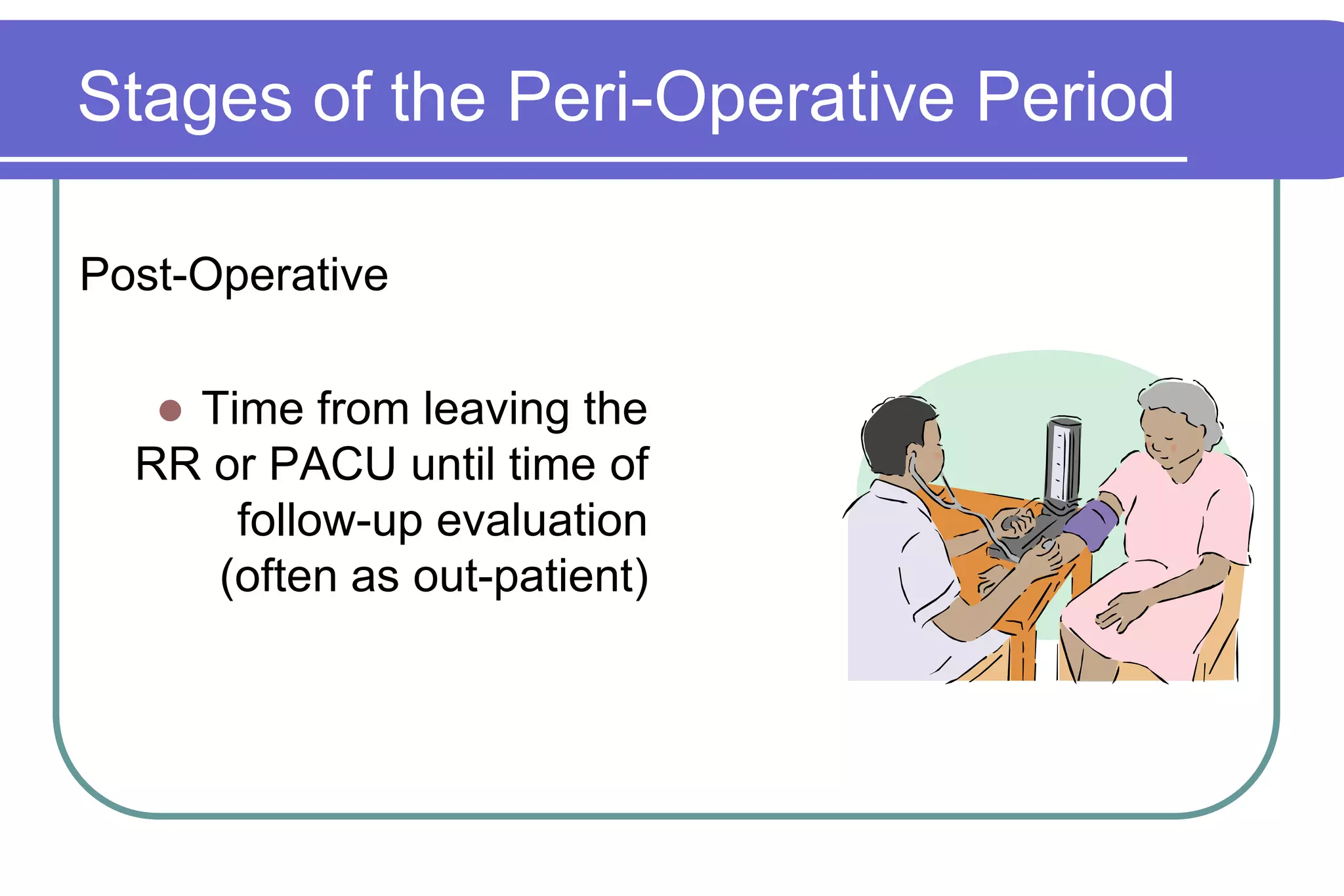
Stages of the Peri-Operative PeriodPost-OperativeTime from leaving the RR or PACU until time of  follow-up evaluation (often as out-patient)
Purposes of thePreoperative Evaluation Reassure patient / allay anxietyOrder preoperative medicationsObtain informed consentDocument the recordDevelop anesthetic care plan
Medical HistoryReview the chartReview previous recordsInterview the patient
The Chart ReviewDemographic DataHeight / weightVital signsDiagnosis
The Chart ReviewHistory and Physical ExamNote any abnormalitiesDon’t assume that all problems are listed
The Chart ReviewMedicationsRoutine medications at homeMeds ordered in hospitalLab / x-ray resultsConsultations
Old Hospital RecordsAvailable in same institutionPrevious diagnosisPrevious treatment
Old Hospital RecordsReview prior anesthesia recordInduction dosesAirway difficultyWork-up
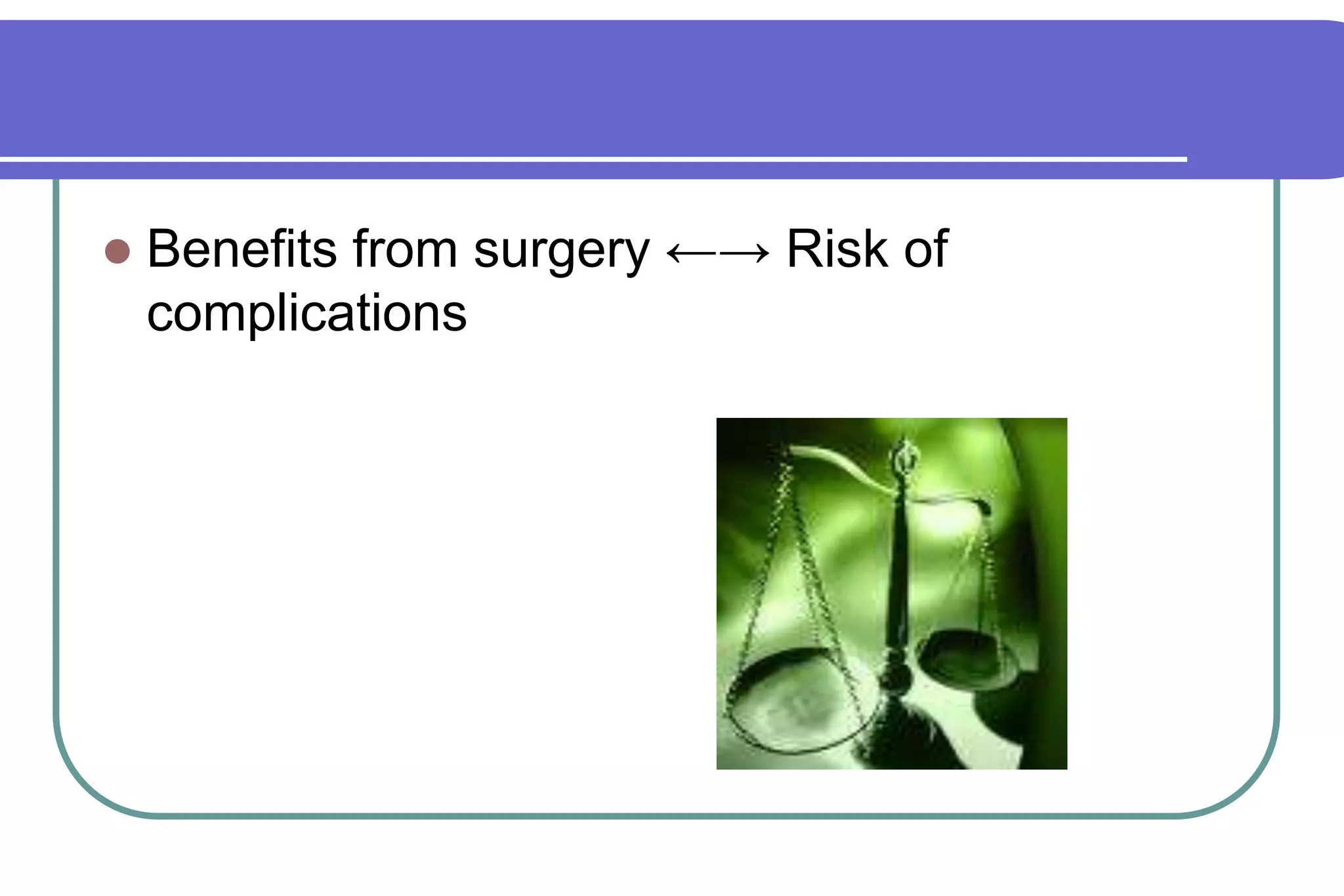
Benefits from surgery ←-> Risk of complications
Age ObesitySmokingGeneral health statusChronic obstructive pulmonary disease (COPD)AsthmaPatient related risk factors(pulmonary)
SmokingImportant risk factorSmoking history of 40 pack years or more->↑risk of pulmonary complicationsstopped smoking < 2 months : stopped for > 2 months4:1(57% : 14.5%) quit smoking > 6 months : never smoked = 1:1 (11.9% : 11%)
Risk StratificationRevised Cardiac Risk Index High risk surgery (vascular, thoracic)Ischemic heart diseaseCongestive heart failureCerebrovascular diseaseInsulin therapy for diabetesCreatinine >2.0mg/dL
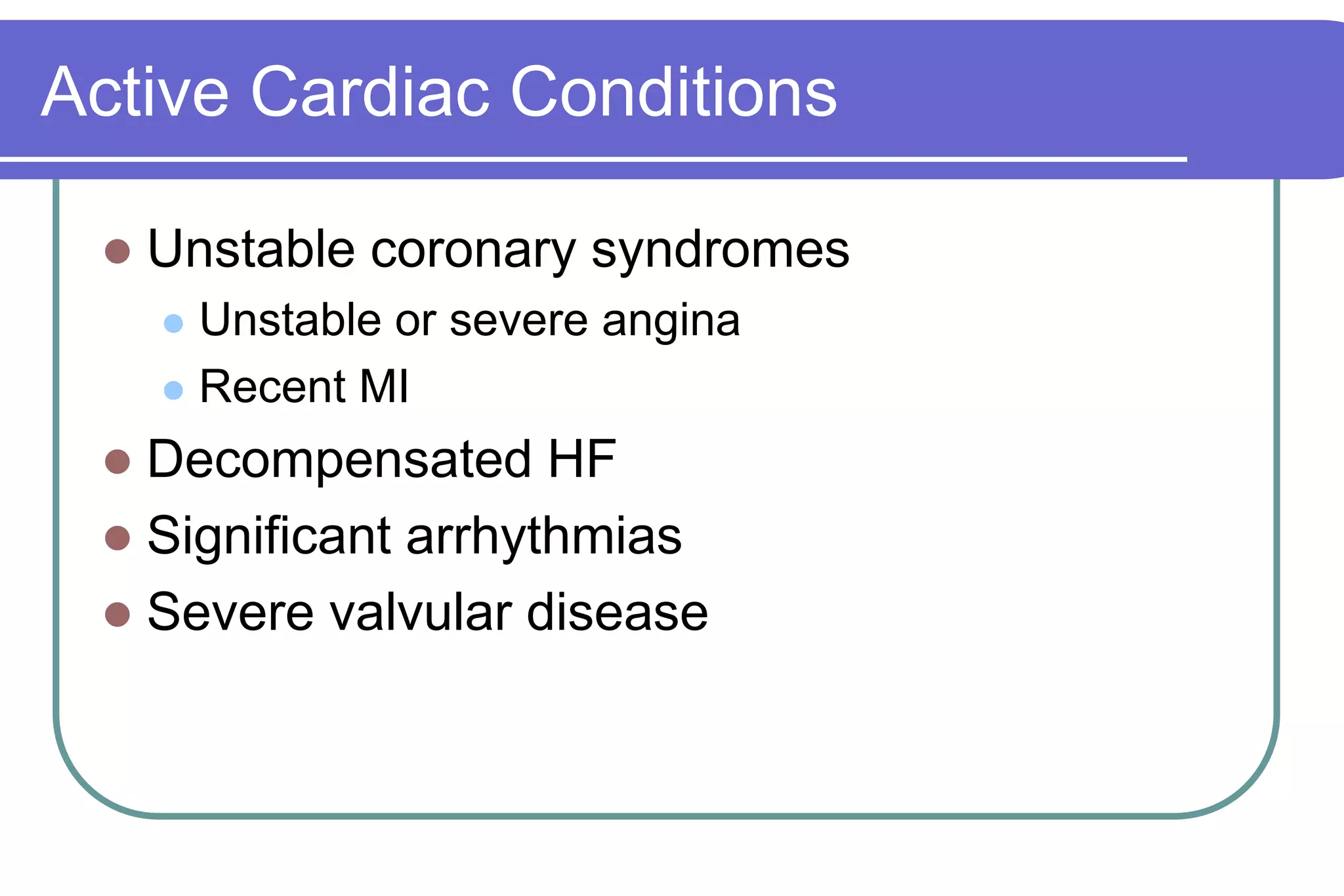
Active Cardiac ConditionsUnstable coronary syndromesUnstable or severe anginaRecent MIDecompensated HFSignificant arrhythmiasSevere valvular disease
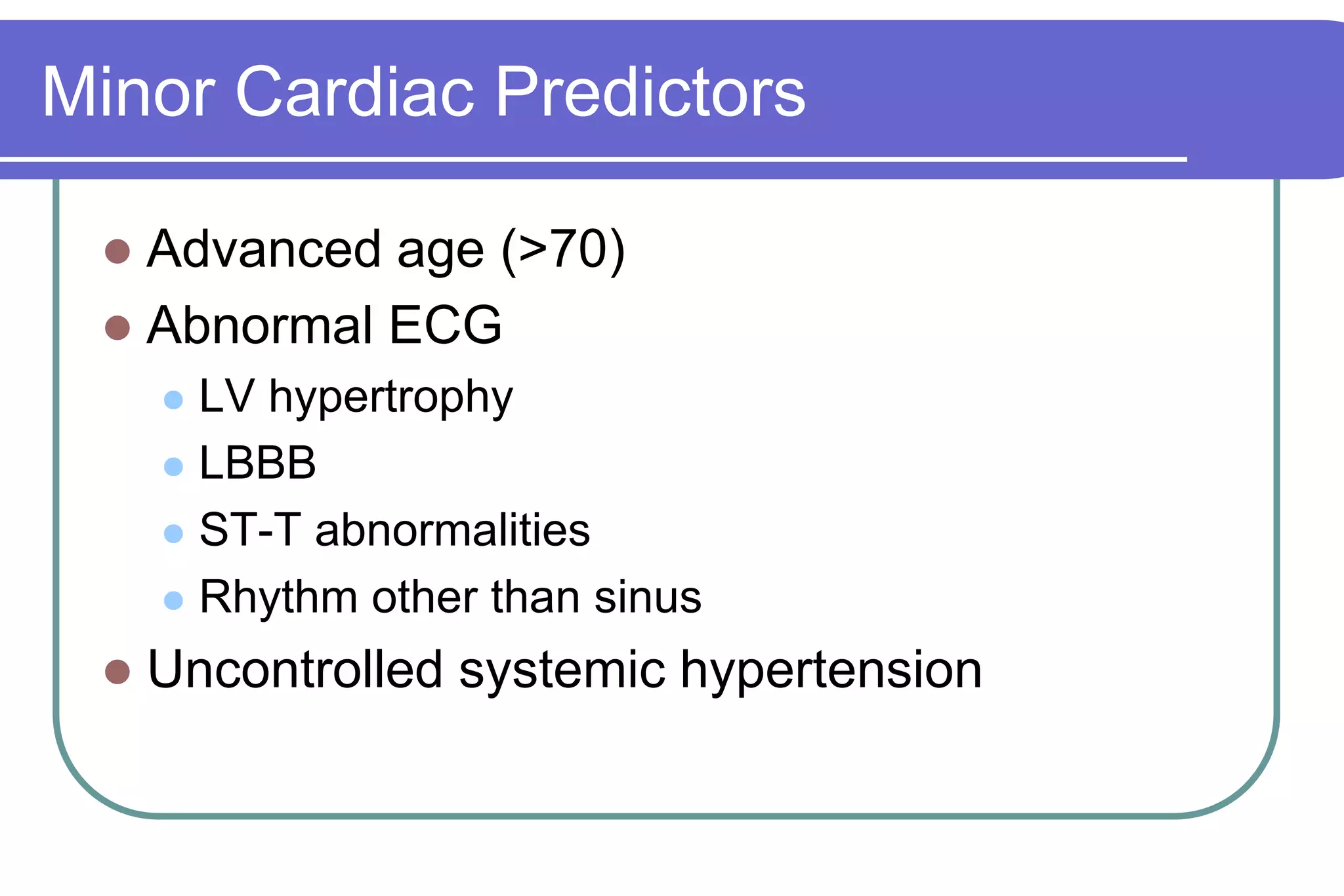
Minor Cardiac PredictorsAdvanced age (>70)Abnormal ECGLV hypertrophyLBBBST-T abnormalitiesRhythm other than sinusUncontrolled systemic hypertension
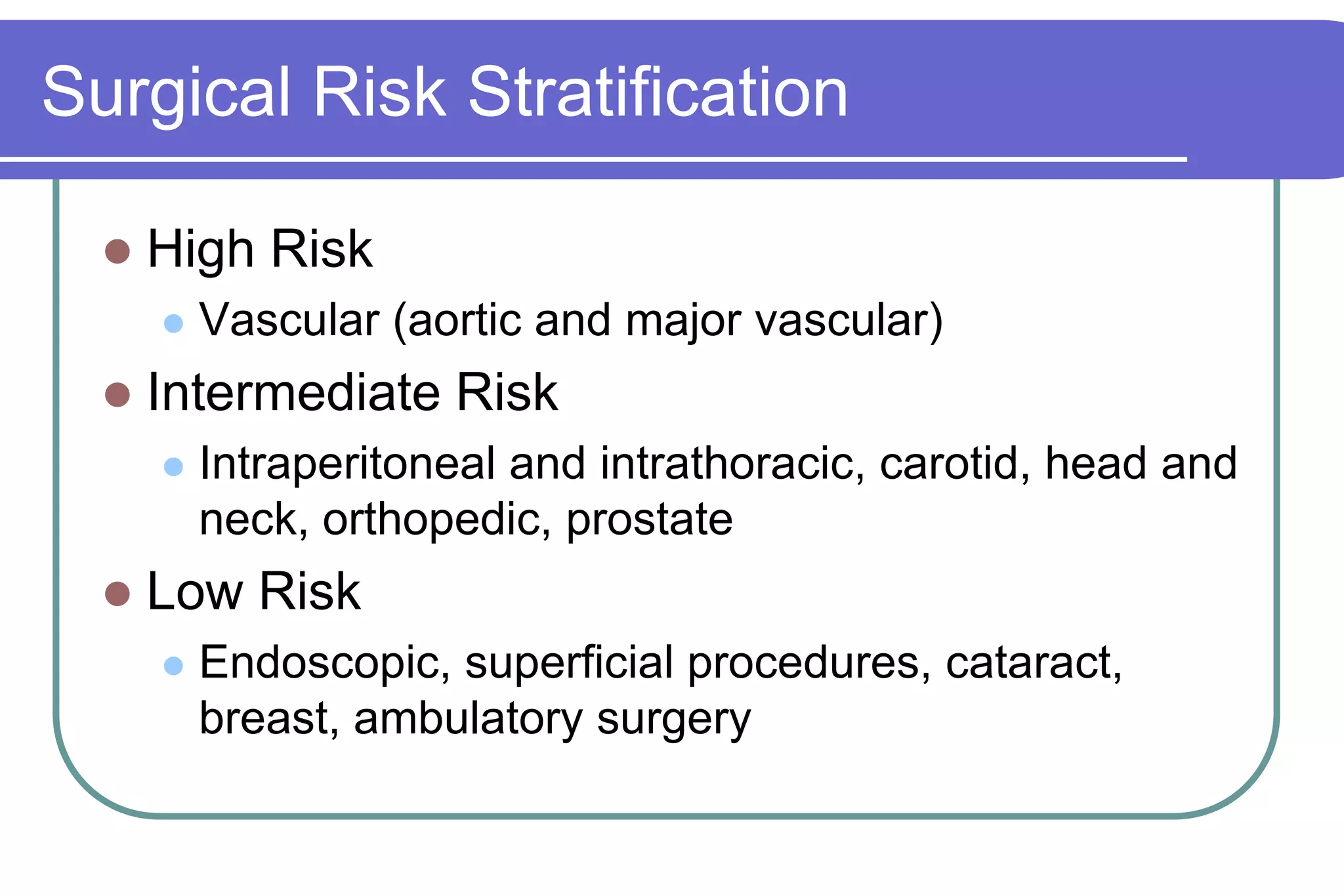
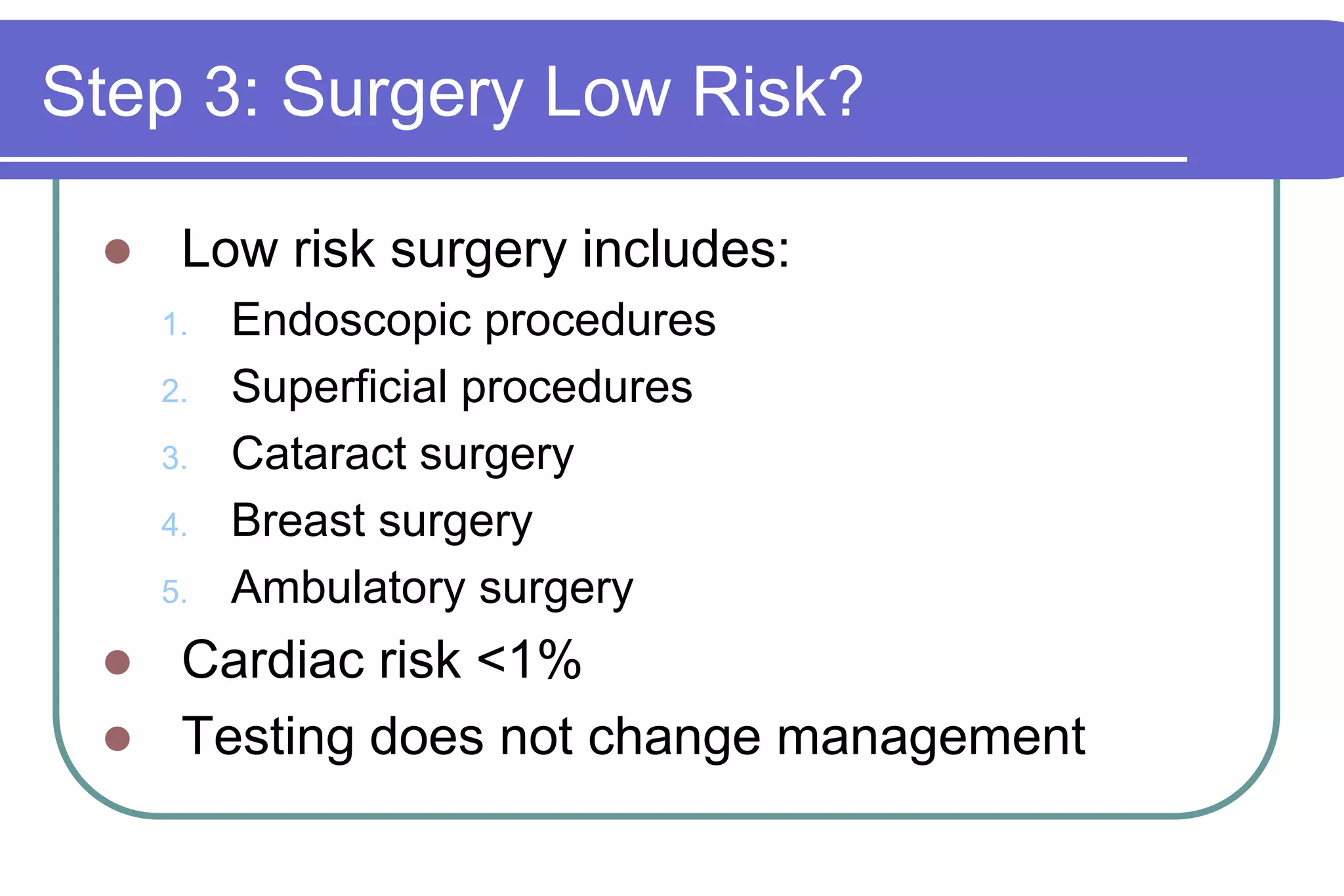
Surgical Risk StratificationHigh Risk Vascular (aortic and major vascular)Intermediate RiskIntraperitonealand intrathoracic, carotid, head and neck, orthopedic, prostateLow RiskEndoscopic, superficial procedures, cataract, breast, ambulatory surgery
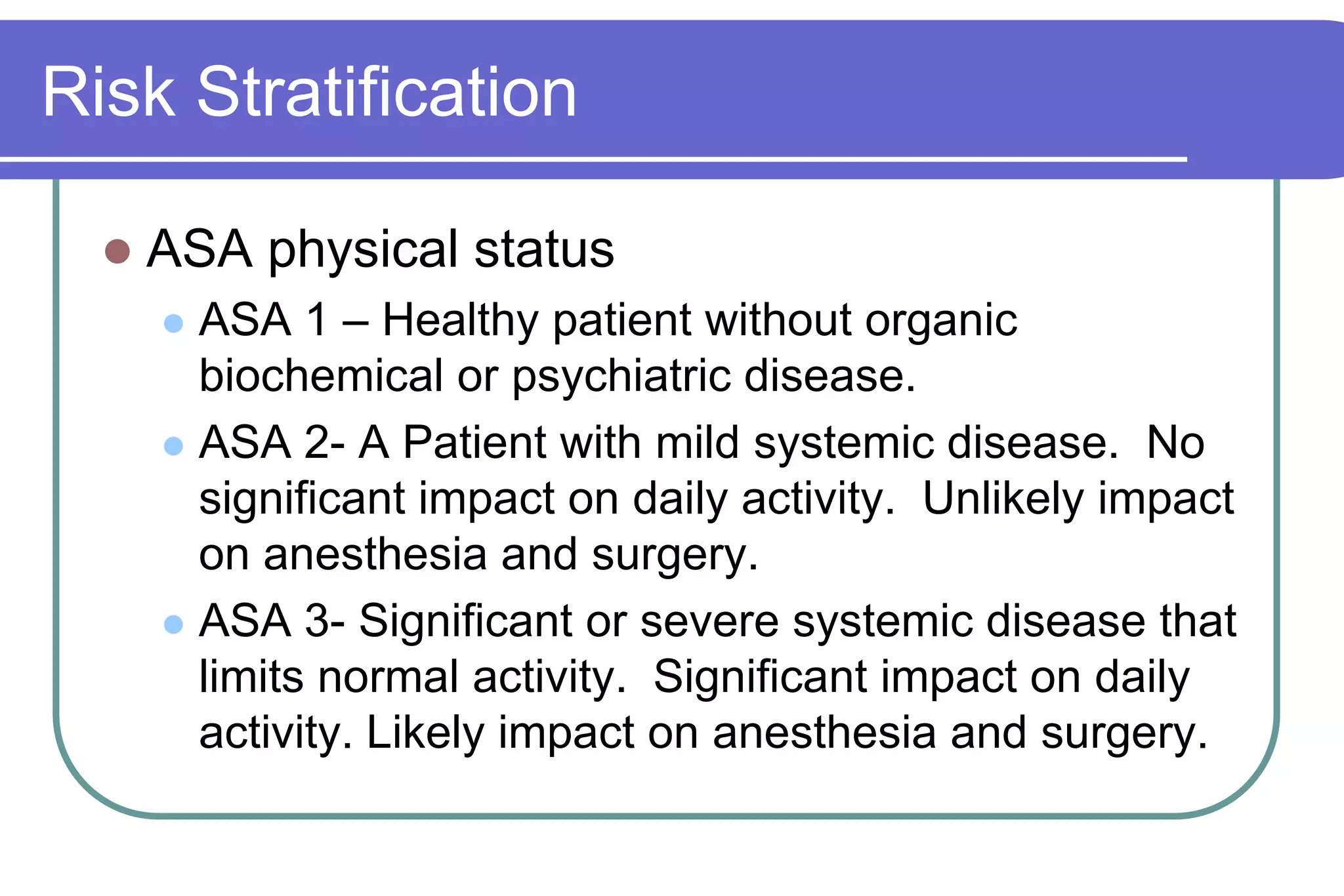
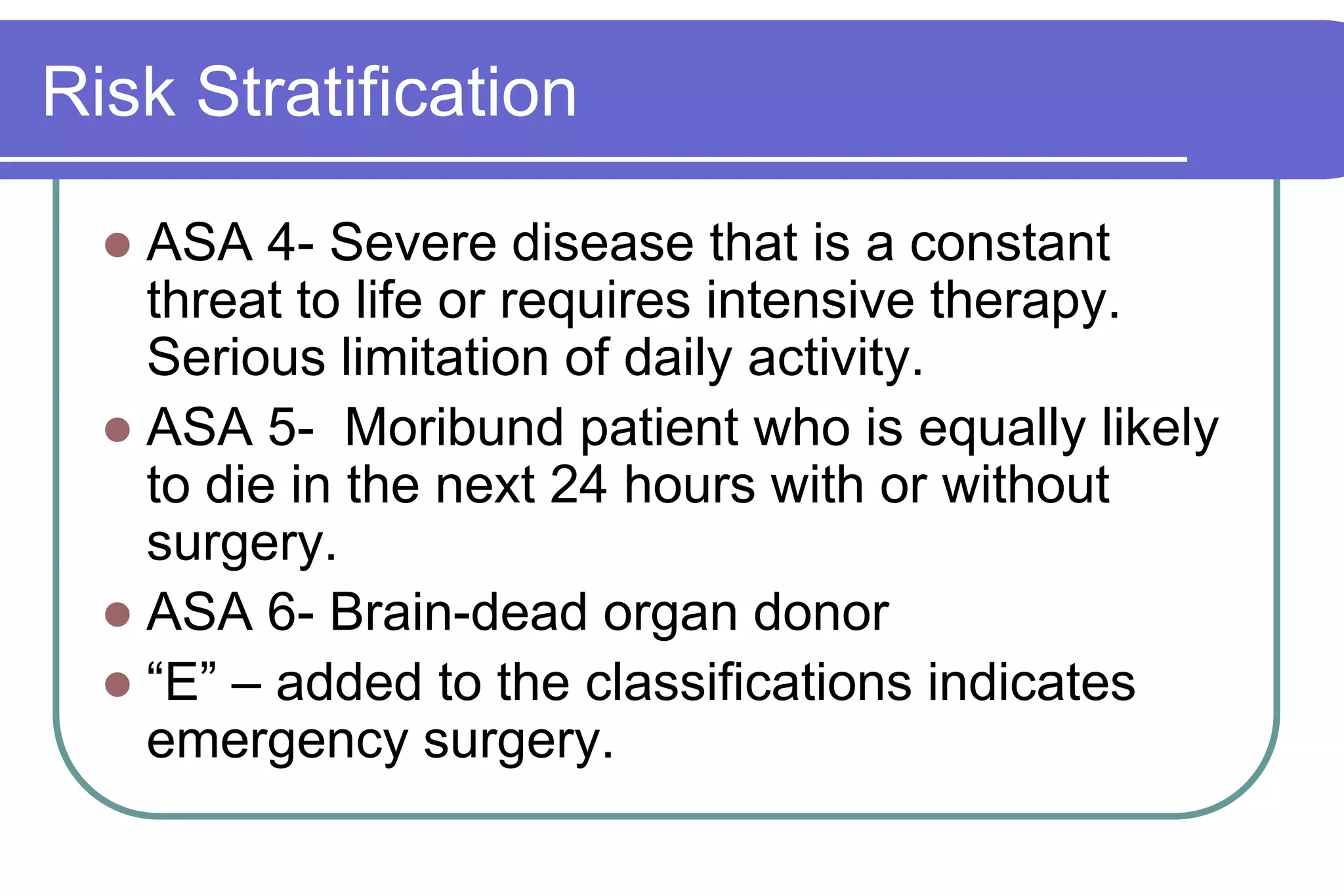
Risk StratificationASA physical statusASA 1 – Healthy patient without organic biochemical or psychiatric disease.ASA 2- A Patient with mild systemic disease.  No significant impact on daily activity.  Unlikely impact on anesthesia and surgery.ASA 3- Significant or severe systemic disease that limits normal activity.  Significant impact on daily activity. Likely impact on anesthesia and surgery.
Risk StratificationASA 4- Severe disease that is a constant threat to life or requires intensive therapy.  Serious limitation of daily activity.ASA 5-  Moribund patient who is equally likely to die in the next 24 hours with or without surgery.ASA 6- Brain-dead organ donor“E” – added to the classifications indicates emergency surgery.
Step #1:Is the surgery emergent?yesIs the surgery emergent?Operating room*no(Next Step)Consider beta-blockade, pain controland other peri-operative management
Step 2: Determine Presence of Active Cardiac ConditionsIf none are present, proceed with surgeryPresence of one of these delays surgery for evaluationMany patients need a cardiac cath
Step 2Unstable coronary syndromesDecompensated heart failureSignificant arrhythmiasSevere valvular disease
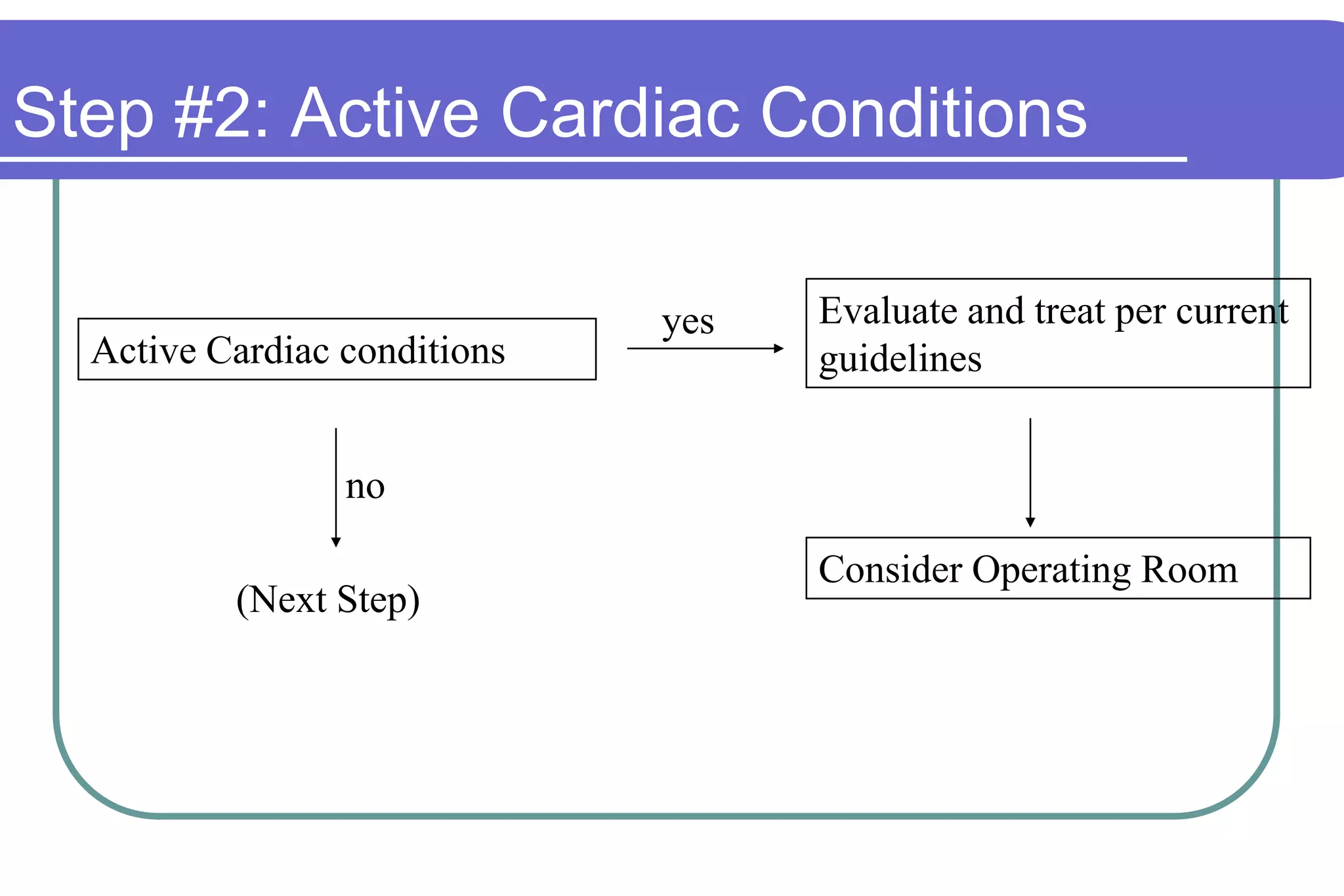
Step #2: Active Cardiac ConditionsEvaluate and treat per current guidelinesyesActive Cardiac conditionsnoConsider Operating Room(Next Step)
Step 3: Surgery Low Risk?Low risk surgery includes:Endoscopic proceduresSuperficial proceduresCataract surgeryBreast surgeryAmbulatory surgeryCardiac risk <1%Testing does not change management
Step #3: Surgery Low Risk?yesOperating roomLow risk surgeryNo(Next Step)
Airway EvaluationTake very seriously history of prior difficultyHead and neck movement (extension)Alignment of oral, pharyngeal, laryngeal axesCervical spine arthritis or trauma, burn, radiation, tumor, infection, scleroderma, short and thick neck
Airway EvaluationJaw MovementBoth inter-incisor gap and anterior subluxation<3.5cm inter-incisor gap concerningInability to sublux lower incisors beyond upper incisorsReceding mandibleProtruding Maxillary Incisors (buck teeth)
Airway EvaluationOropharyngeal visualizationMallampati ScoreSitting position, protrude tongue, don’t say “AHH”
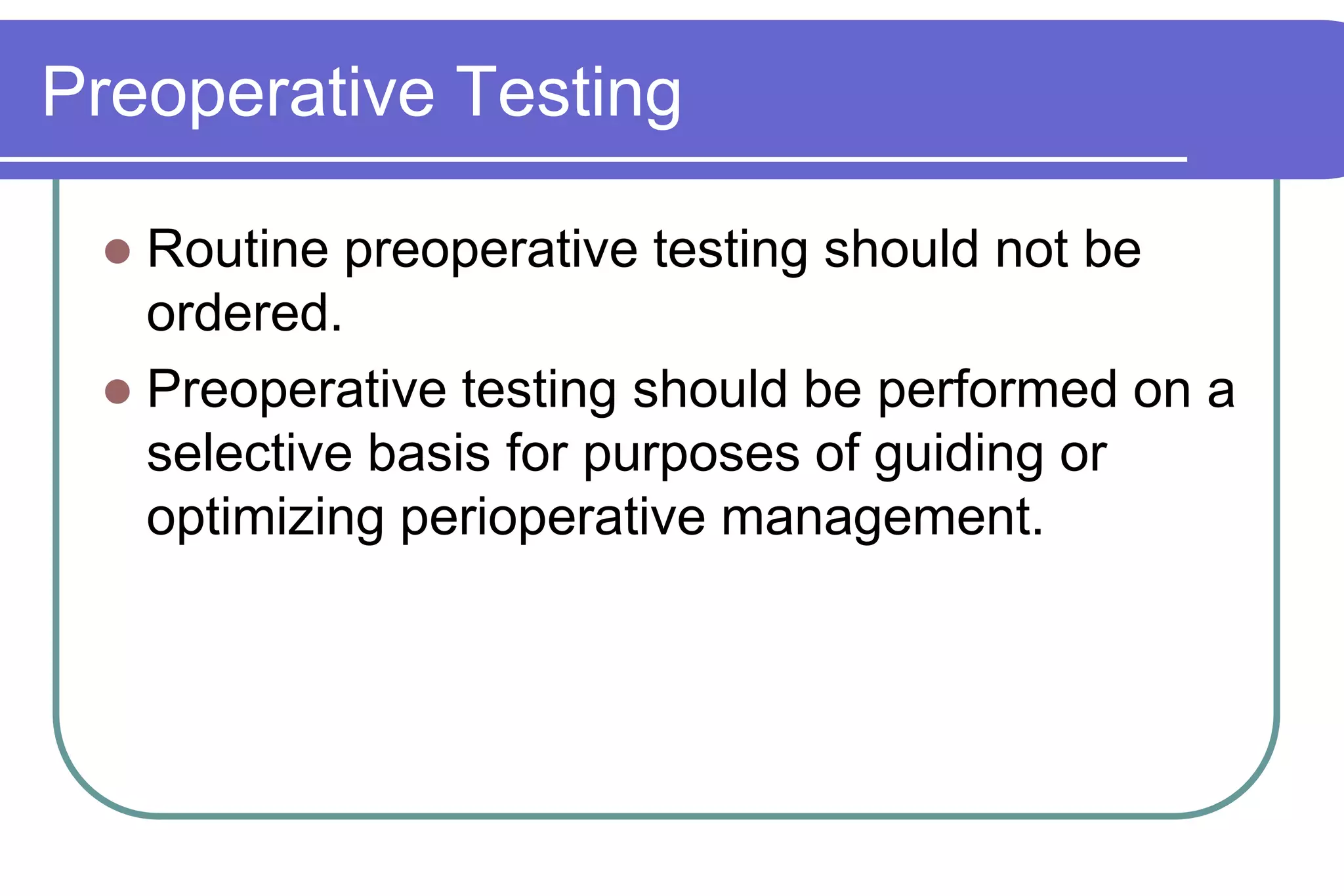
Preoperative TestingRoutine preoperative testing should not be ordered.Preoperative testing should be performed on a selective basis for purposes of guiding or optimizing perioperative management.
Preoperative Testing5Procedure based.Low riskBaseline creatinine if procedure involves contrast dye.Intermediate riskBase line creatinine if contrast dye or >55yr of age.High riskCBC, lytes & S, creatinine as above.PFTs for lung reduction surgery.
Preoperative TestingDisease-based indicationsAlcohol abuseCBC, ECG, lytes, LFTs, PTAnemiaCBCBleeding disorderCBC, LFTs, PT, PTTCardiovascularCBC, creatinine, CXR, ECG, lytes
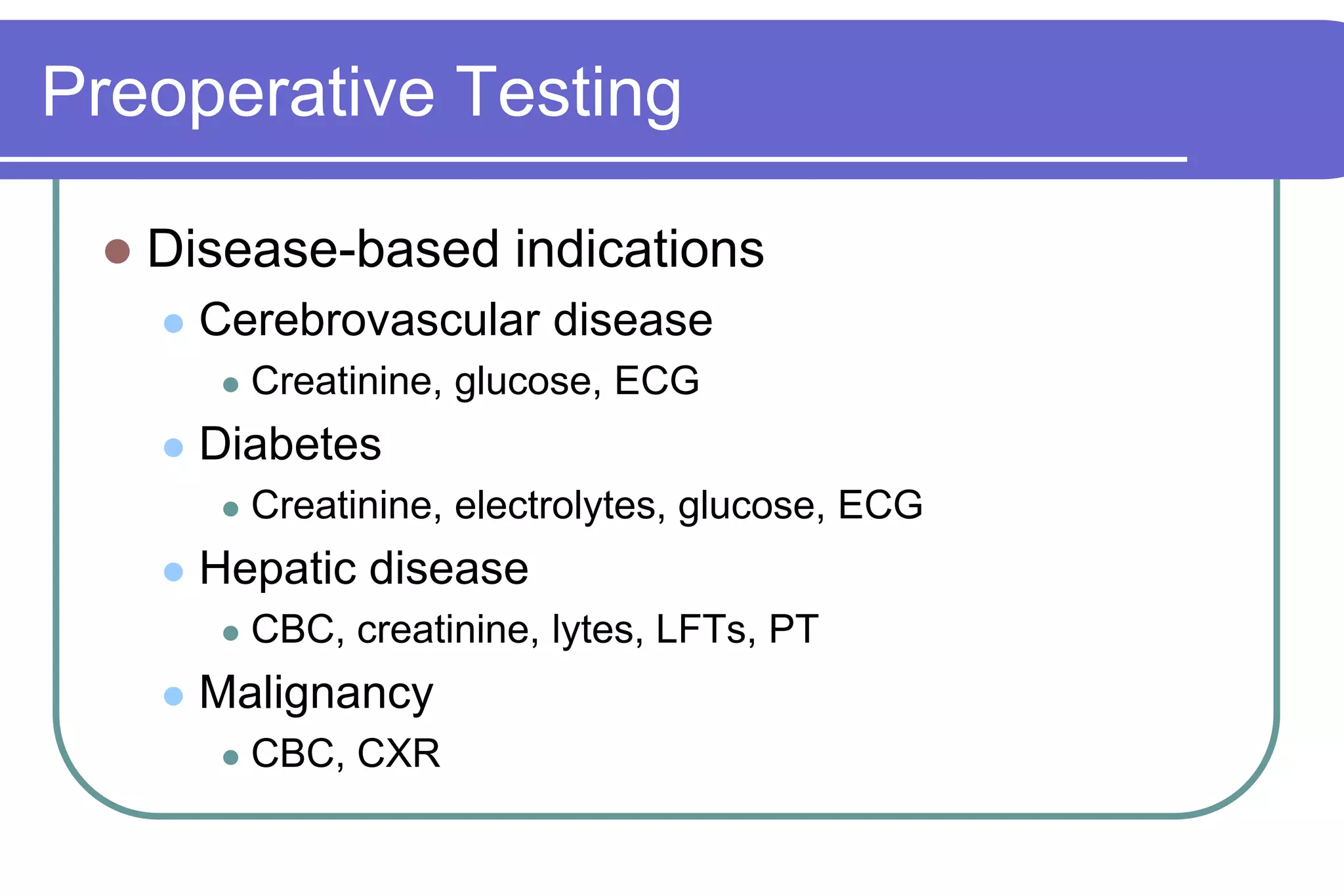
Preoperative TestingDisease-based indicationsCerebrovascular diseaseCreatinine, glucose, ECGDiabetesCreatinine, electrolytes, glucose, ECGHepatic diseaseCBC, creatinine, lytes, LFTs, PTMalignancyCBC, CXR
Preoperative TestingDisease-based indicationsPregnancy (controversial)Serum B-hCG- 7 days,  Upreg 3 daysPulmonary diseaseCBC, ECG, CXRRenal diseaseCBC, Cr, lytes, ECGRACBC, ECG, CXR, C-spine (atlantoaxialsubluxation)AP C-spine, AP odontoid view and lateral flexion and extention.
Preoperative TestingDisease-based	Sleep apnea	CBC, ECGSmoking >40 pack yearCBC, ECG, CXRSystemic LupusCr, ECG, CXR
Preoperative TestingTherapy-based indicationsRadiation therapyCBC, ECG, CXRWarfarinPTDigoxinLytes, ECG, Dig levelDiureticsCr, lytes, ECGSteroidsGlucose, ECG
Obtaining a ConsultAsk specific questions which you want answeredTalk directly to the consultant
Informed ConsentFrequently questioned in malpractice casesRisks / benefitsAlternativesAnswer all questionsDo not deceive the patient
Risks of AnesthesiaDetermine what the patient wants to know - Do not frighten  patientsStart with minor risksProceed to serious risks
Risk associated with anesthesiaand surgeryThe question that patients askis ‘Doctor, what are the risks of having an anaesthetic?’These can be divided into two main groups.
MinorThese are not life threatening and can occur even when anaesthesia has apparently been uneventful. They include:• failed IV access;• cut lip, damage to teeth, caps, crowns;• sore throat;• headache;• postoperative nausea and vomiting;• retention of urine.
MajorThese may be life-threatening events. They include:• aspiration of gastric contents;• hypoxic brain injury;• myocardial infarction;• cerebrovascular accident;• nerve injury;• chest infection  Death
Document the VisitComplete the evaluation formEnter progress notesHave patient sign consentWrite appropriate orders
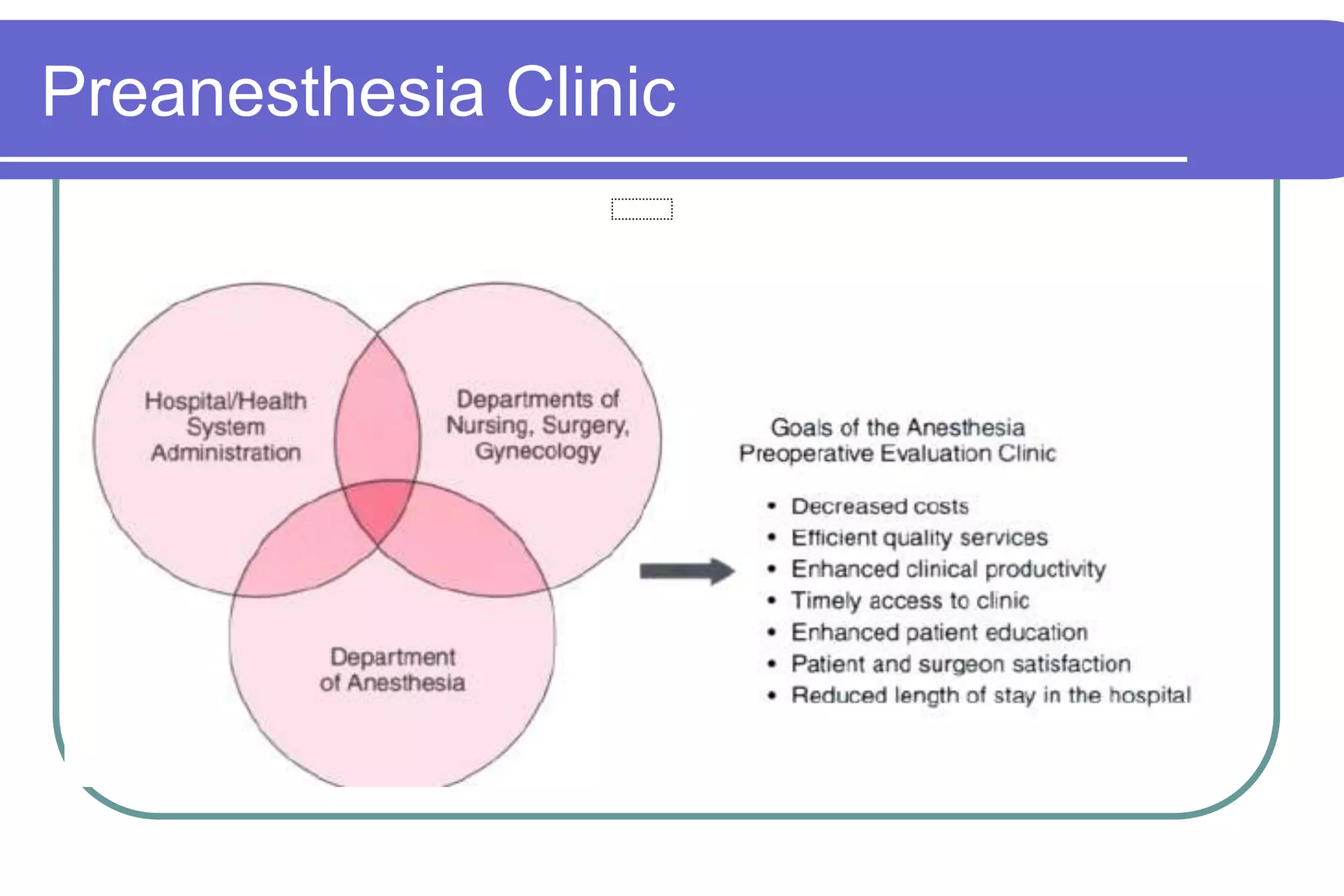
Preanesthesia Clinic
       Questions?

Preoperative Evaluation

  • 1.
    COURSE OUTLINESTHE FORMATOF THE COURSEKNOWLEDE AND SKILLS THAT CAN BE GAINED.COURSE PROGRAMECOURE OBJECTIVESREQUIRE MATERIALS:TEXT BOOKS Anesthesia Rotation bookASSESSMENT
  • 2.
    POLICY OF MISSEDWORK (ATTENDENCE REQUIREMENT)FINAL EXAMCONTACT INFORMATION DEPARTMENT 71597 Dr walid tel 71816 Dr osama bleep 2158QUESTIONS
  • 3.
    Clinical Objectives forMedical Students in (044) Anesthesia and CPR CourseAt the end of the course the student will be able to understand and practice: 1- Pre-anesthesia assessment and evaluationAble to take history from patientAble to open PAC System to get information and investigation.Interpretation of preoperative data relevant to anesthetic plan.Consultations
  • 4.
    2- Orientation withanesthesia equipment in O.R.Anesthesia machineAnesthesia circuitsLaryngoscopes – tubes – LMA – AirwaysEpidural set Spinal setMonitors - Anesthesia Record Anesthetics Drugs : I.V. drugs Inhalational & Muscle RelaxantsResuscitation Drugs During AnesthesiaCrystalloids & Colloids Fluids
  • 5.
    3- Post-operative CareUnit OrientationsCase Scenarios: Interactive Case Discussion
  • 6.
    4- Surgical ICURounds & Discussions aboutManagement of critically I’ll patientMonitoring of critically I’ll patientVentilatorsCommon Cases in ICU Head injury management Sepsis management
  • 7.
    Role Of AnesthesiologistIn pre-Opertiveperiod
  • 9.
    AnesthesiaThe word isderived from the Greek words an, which means “without” and aithesia which means “feeling”The use of medical anesthesia was first reported in 1846The development of anesthesia has made today’s modern surgical techniques possible
  • 10.
    Basic Principles ofAnesthesia“Triad of General Anesthesia”need for unconsciousnessneed for analgesianeed for muscle relaxation and loss of reflexes
  • 11.
  • 12.
    Purposes of thePreoperative EvaluationObtain medical historyReview current physical statusOrder additional tests / consultationAnswer questions
  • 13.
    Overview.The preanesthetic evaluationhas specific objectives including:- Establishing a doctor-patient relationship, - Becoming familiar with the surgical illness and coexisting medical conditions,
  • 14.
    Developinga management strategy for perioperative anesthetic care, - Obtaining informed consent for the anesthetic plan. The overall goals of the preoperative assessment are to reduce perioperative morbidity and mortality and to allay patient anxiety.
  • 15.
    Stages of thePeri-Operative PeriodPre-OperativeFrom time of decision to have surgery until admitted into the OR theatre.
  • 16.
    Stages of thePeri-Operative PeriodIntra-OperativeTime from entering the OR theatre to entering the Recovering Room or Post Anesthetic Care Unit (PACU)
  • 17.
    Stages of thePeri-Operative PeriodPost-OperativeTime from leaving the RR or PACU until time of follow-up evaluation (often as out-patient)
  • 18.
    Purposes of thePreoperativeEvaluation Reassure patient / allay anxietyOrder preoperative medicationsObtain informed consentDocument the recordDevelop anesthetic care plan
  • 19.
    Medical HistoryReview thechartReview previous recordsInterview the patient
  • 20.
    The Chart ReviewDemographicDataHeight / weightVital signsDiagnosis
  • 21.
    The Chart ReviewHistoryand Physical ExamNote any abnormalitiesDon’t assume that all problems are listed
  • 22.
    The Chart ReviewMedicationsRoutinemedications at homeMeds ordered in hospitalLab / x-ray resultsConsultations
  • 23.
    Old Hospital RecordsAvailablein same institutionPrevious diagnosisPrevious treatment
  • 24.
    Old Hospital RecordsReviewprior anesthesia recordInduction dosesAirway difficultyWork-up
  • 25.
    Benefits from surgery←-> Risk of complications
  • 26.
    Age ObesitySmokingGeneral healthstatusChronic obstructive pulmonary disease (COPD)AsthmaPatient related risk factors(pulmonary)
  • 27.
    SmokingImportant risk factorSmokinghistory of 40 pack years or more->↑risk of pulmonary complicationsstopped smoking < 2 months : stopped for > 2 months4:1(57% : 14.5%) quit smoking > 6 months : never smoked = 1:1 (11.9% : 11%)
  • 29.
    Risk StratificationRevised CardiacRisk Index High risk surgery (vascular, thoracic)Ischemic heart diseaseCongestive heart failureCerebrovascular diseaseInsulin therapy for diabetesCreatinine >2.0mg/dL
  • 30.
    Active Cardiac ConditionsUnstablecoronary syndromesUnstable or severe anginaRecent MIDecompensated HFSignificant arrhythmiasSevere valvular disease
  • 31.
    Minor Cardiac PredictorsAdvancedage (>70)Abnormal ECGLV hypertrophyLBBBST-T abnormalitiesRhythm other than sinusUncontrolled systemic hypertension
  • 33.
    Surgical Risk StratificationHighRisk Vascular (aortic and major vascular)Intermediate RiskIntraperitonealand intrathoracic, carotid, head and neck, orthopedic, prostateLow RiskEndoscopic, superficial procedures, cataract, breast, ambulatory surgery
  • 34.
    Risk StratificationASA physicalstatusASA 1 – Healthy patient without organic biochemical or psychiatric disease.ASA 2- A Patient with mild systemic disease. No significant impact on daily activity. Unlikely impact on anesthesia and surgery.ASA 3- Significant or severe systemic disease that limits normal activity. Significant impact on daily activity. Likely impact on anesthesia and surgery.
  • 35.
    Risk StratificationASA 4-Severe disease that is a constant threat to life or requires intensive therapy. Serious limitation of daily activity.ASA 5- Moribund patient who is equally likely to die in the next 24 hours with or without surgery.ASA 6- Brain-dead organ donor“E” – added to the classifications indicates emergency surgery.
  • 36.
    Step #1:Is thesurgery emergent?yesIs the surgery emergent?Operating room*no(Next Step)Consider beta-blockade, pain controland other peri-operative management
  • 37.
    Step 2: DeterminePresence of Active Cardiac ConditionsIf none are present, proceed with surgeryPresence of one of these delays surgery for evaluationMany patients need a cardiac cath
  • 38.
    Step 2Unstable coronarysyndromesDecompensated heart failureSignificant arrhythmiasSevere valvular disease
  • 39.
    Step #2: ActiveCardiac ConditionsEvaluate and treat per current guidelinesyesActive Cardiac conditionsnoConsider Operating Room(Next Step)
  • 40.
    Step 3: SurgeryLow Risk?Low risk surgery includes:Endoscopic proceduresSuperficial proceduresCataract surgeryBreast surgeryAmbulatory surgeryCardiac risk <1%Testing does not change management
  • 41.
    Step #3: SurgeryLow Risk?yesOperating roomLow risk surgeryNo(Next Step)
  • 42.
    Airway EvaluationTake veryseriously history of prior difficultyHead and neck movement (extension)Alignment of oral, pharyngeal, laryngeal axesCervical spine arthritis or trauma, burn, radiation, tumor, infection, scleroderma, short and thick neck
  • 44.
    Airway EvaluationJaw MovementBothinter-incisor gap and anterior subluxation<3.5cm inter-incisor gap concerningInability to sublux lower incisors beyond upper incisorsReceding mandibleProtruding Maxillary Incisors (buck teeth)
  • 45.
    Airway EvaluationOropharyngeal visualizationMallampatiScoreSitting position, protrude tongue, don’t say “AHH”
  • 46.
    Preoperative TestingRoutine preoperativetesting should not be ordered.Preoperative testing should be performed on a selective basis for purposes of guiding or optimizing perioperative management.
  • 47.
    Preoperative Testing5Procedure based.LowriskBaseline creatinine if procedure involves contrast dye.Intermediate riskBase line creatinine if contrast dye or >55yr of age.High riskCBC, lytes & S, creatinine as above.PFTs for lung reduction surgery.
  • 48.
    Preoperative TestingDisease-based indicationsAlcoholabuseCBC, ECG, lytes, LFTs, PTAnemiaCBCBleeding disorderCBC, LFTs, PT, PTTCardiovascularCBC, creatinine, CXR, ECG, lytes
  • 49.
    Preoperative TestingDisease-based indicationsCerebrovasculardiseaseCreatinine, glucose, ECGDiabetesCreatinine, electrolytes, glucose, ECGHepatic diseaseCBC, creatinine, lytes, LFTs, PTMalignancyCBC, CXR
  • 50.
    Preoperative TestingDisease-based indicationsPregnancy(controversial)Serum B-hCG- 7 days, Upreg 3 daysPulmonary diseaseCBC, ECG, CXRRenal diseaseCBC, Cr, lytes, ECGRACBC, ECG, CXR, C-spine (atlantoaxialsubluxation)AP C-spine, AP odontoid view and lateral flexion and extention.
  • 51.
    Preoperative TestingDisease-based Sleep apnea CBC,ECGSmoking >40 pack yearCBC, ECG, CXRSystemic LupusCr, ECG, CXR
  • 52.
    Preoperative TestingTherapy-based indicationsRadiationtherapyCBC, ECG, CXRWarfarinPTDigoxinLytes, ECG, Dig levelDiureticsCr, lytes, ECGSteroidsGlucose, ECG
  • 53.
    Obtaining a ConsultAskspecific questions which you want answeredTalk directly to the consultant
  • 54.
    Informed ConsentFrequently questionedin malpractice casesRisks / benefitsAlternativesAnswer all questionsDo not deceive the patient
  • 55.
    Risks of AnesthesiaDeterminewhat the patient wants to know - Do not frighten patientsStart with minor risksProceed to serious risks
  • 56.
    Risk associated withanesthesiaand surgeryThe question that patients askis ‘Doctor, what are the risks of having an anaesthetic?’These can be divided into two main groups.
  • 57.
    MinorThese are notlife threatening and can occur even when anaesthesia has apparently been uneventful. They include:• failed IV access;• cut lip, damage to teeth, caps, crowns;• sore throat;• headache;• postoperative nausea and vomiting;• retention of urine.
  • 58.
    MajorThese may belife-threatening events. They include:• aspiration of gastric contents;• hypoxic brain injury;• myocardial infarction;• cerebrovascular accident;• nerve injury;• chest infection Death
  • 59.
    Document the VisitCompletethe evaluation formEnter progress notesHave patient sign consentWrite appropriate orders
  • 60.
  • 61.
    Questions?