POST OPERATIVE CARE


      Mr. Leo Devasia
      Leo Home Health Services
      www.leohomehealth.com
INTRODUCTION
        The post operative
         period begins from
         the time the
         patient leaves the
         operating room
         and ends with the
         follow up visit by
         the surgeon.
         The post operative
         care is provided by
         -
        PACU

        SICU
PURPOSES
To enable a successful and faster
recovery of the patient post
operatively.
To reduce post operative mortality
rate.
To reduce the length of hospital stay
of the patient.
To provide quality care service.
To reduce hospital and patient cost
during post operative period.
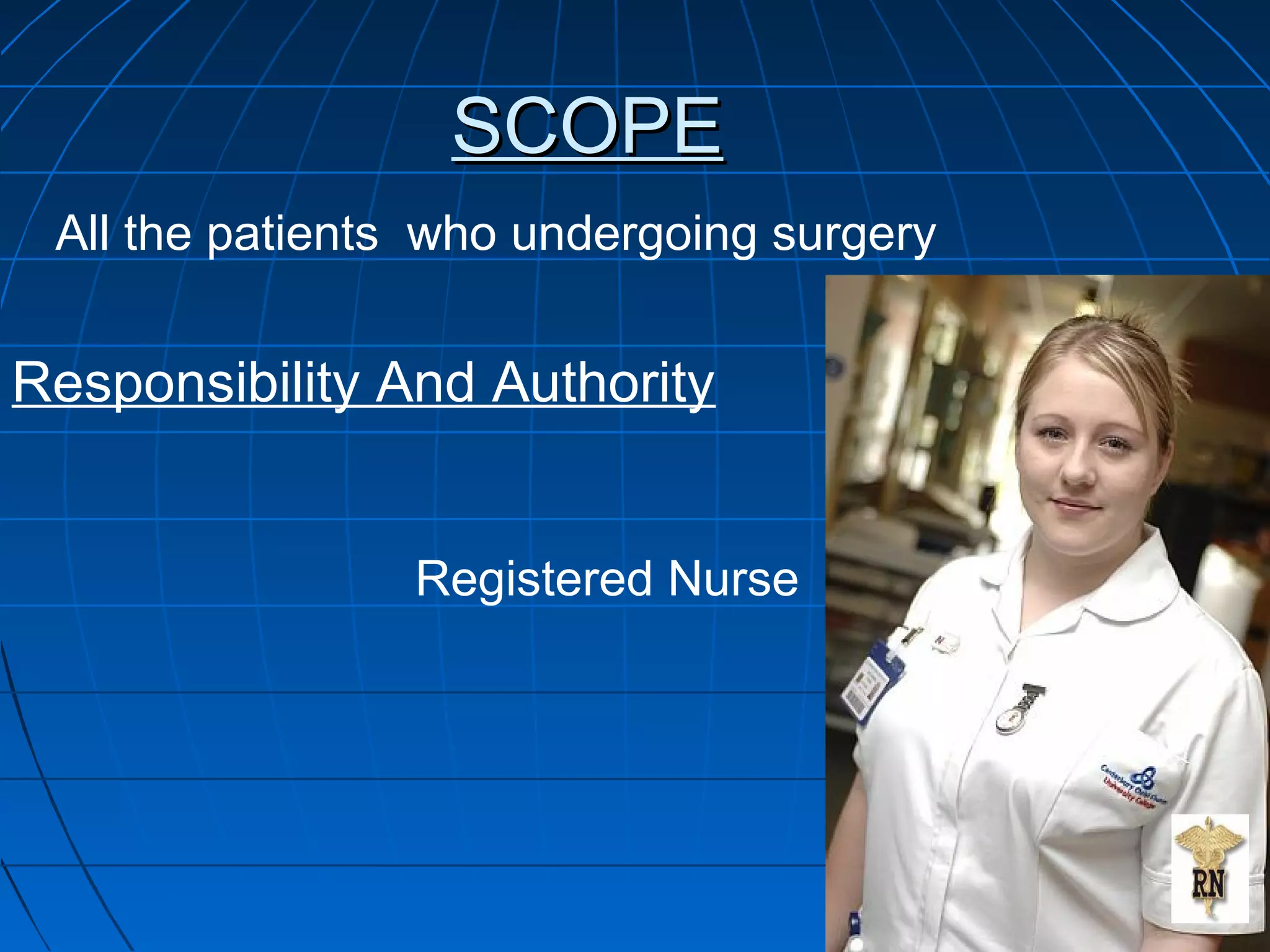
SCOPE
 All the patients who undergoing surgery


Responsibility And Authority


                Registered Nurse
POST OPERATIVE CARE UNIT
    OR POST ANESTHETIC CARE
           UNIT[PACU]
  Patients still under anesthesia or
  recovering from anesthesia are
  placed in the unit for observation by
  highly skilled nurses,anesthetist and
  surgeon.
 PACU should be sound proof, painted

  in soft colour, isolated and these
  features will help the patient to
  reduce anxiety and promote comfort.
PHASES OF POST OP UNIT
    Two phases-
   Phase I
   Phase II
Phase I

  It is the immediate recovery phase
  and requires intensive nursing care
  to detect early signs of complication.
 Receive a complete patient record
  from the operating room which to
  plan post operative care.
 It is designated for care of surgical
  patient immediately after surgery
  and patient requiring close
  monitoring
Phase II
 Care of the surgical patient who has
  been transferred from the Phase I
  post op unit.
 Patient requiring less observation

  and less nursing care than Phase I
 This phase is also known as Step

  down or progressive care unit.
NURSING MANAGEMENT IN POST
          OP UNIT
                 To provide care until
                the patient has
                recovered from the
                effect of anesthesia.
                Assessing the patient
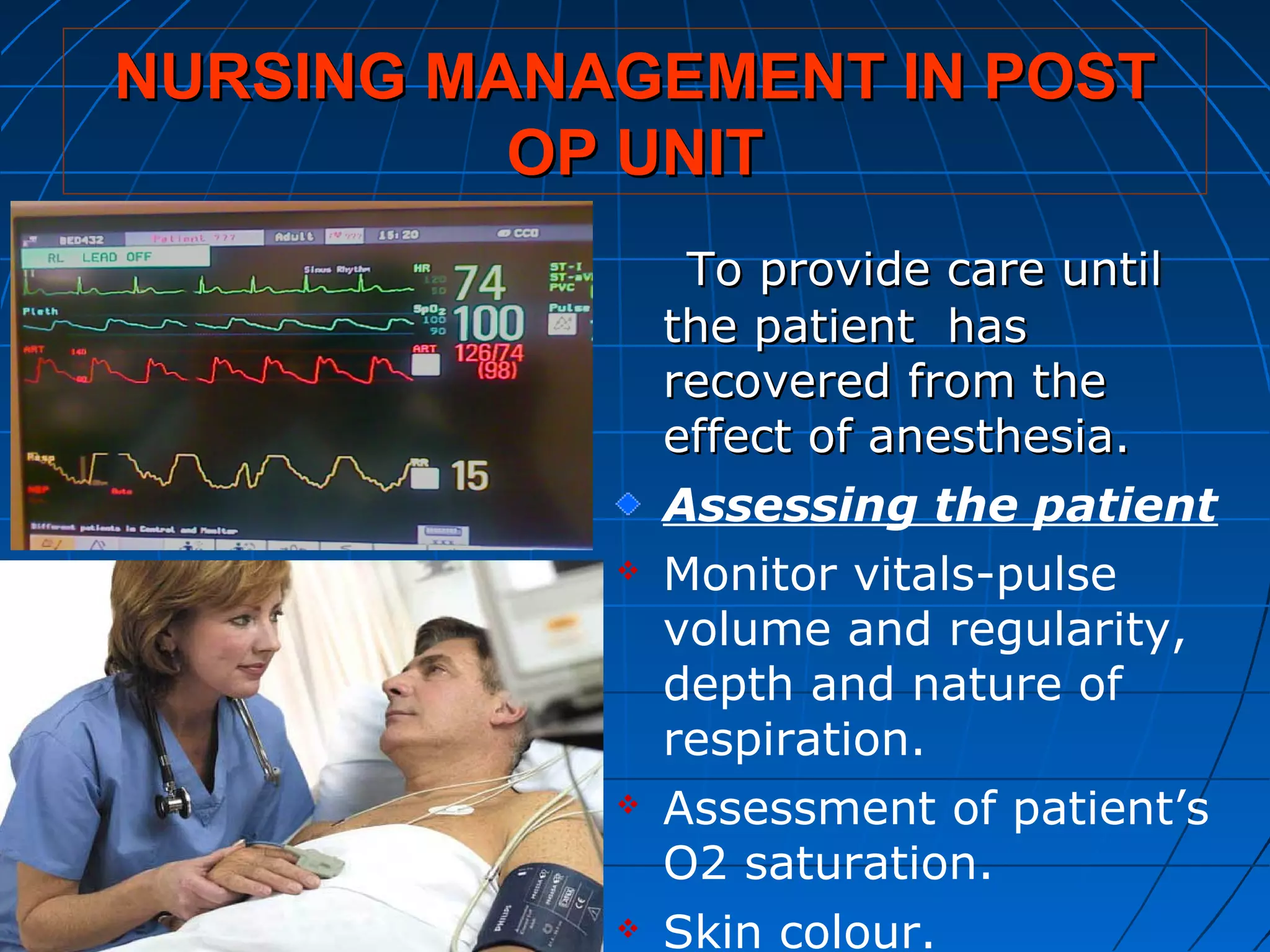
               Monitor vitals-pulse
                volume and regularity,
                depth and nature of
                respiration.
               Assessment of patient’s
                O2 saturation.
               Skin colour.
KEEP MONITORING VITALS
Check the level of consciousness.
Ability to respond to commands.
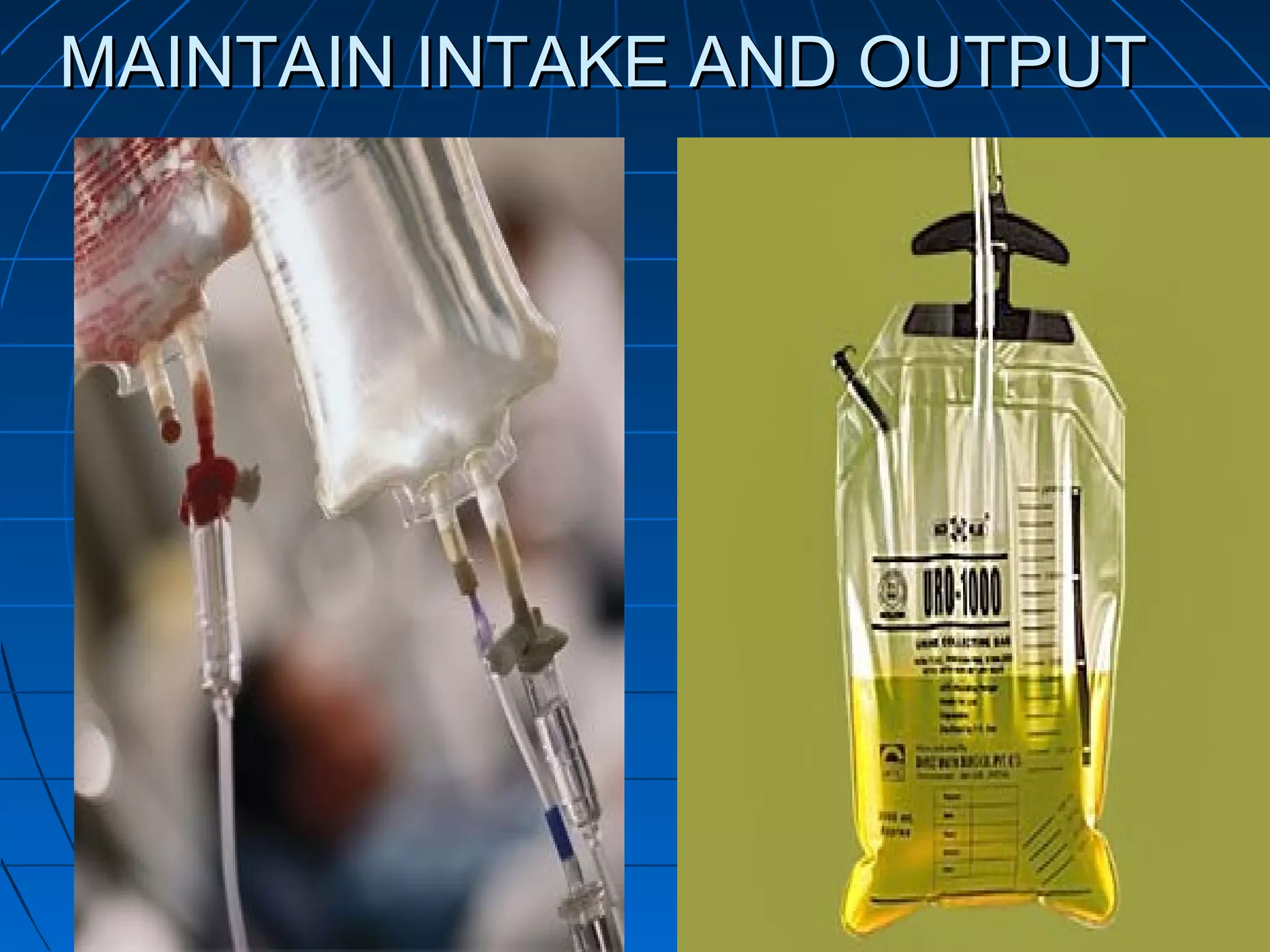
MAINTAIN INTAKE AND OUTPUT
Protect airway

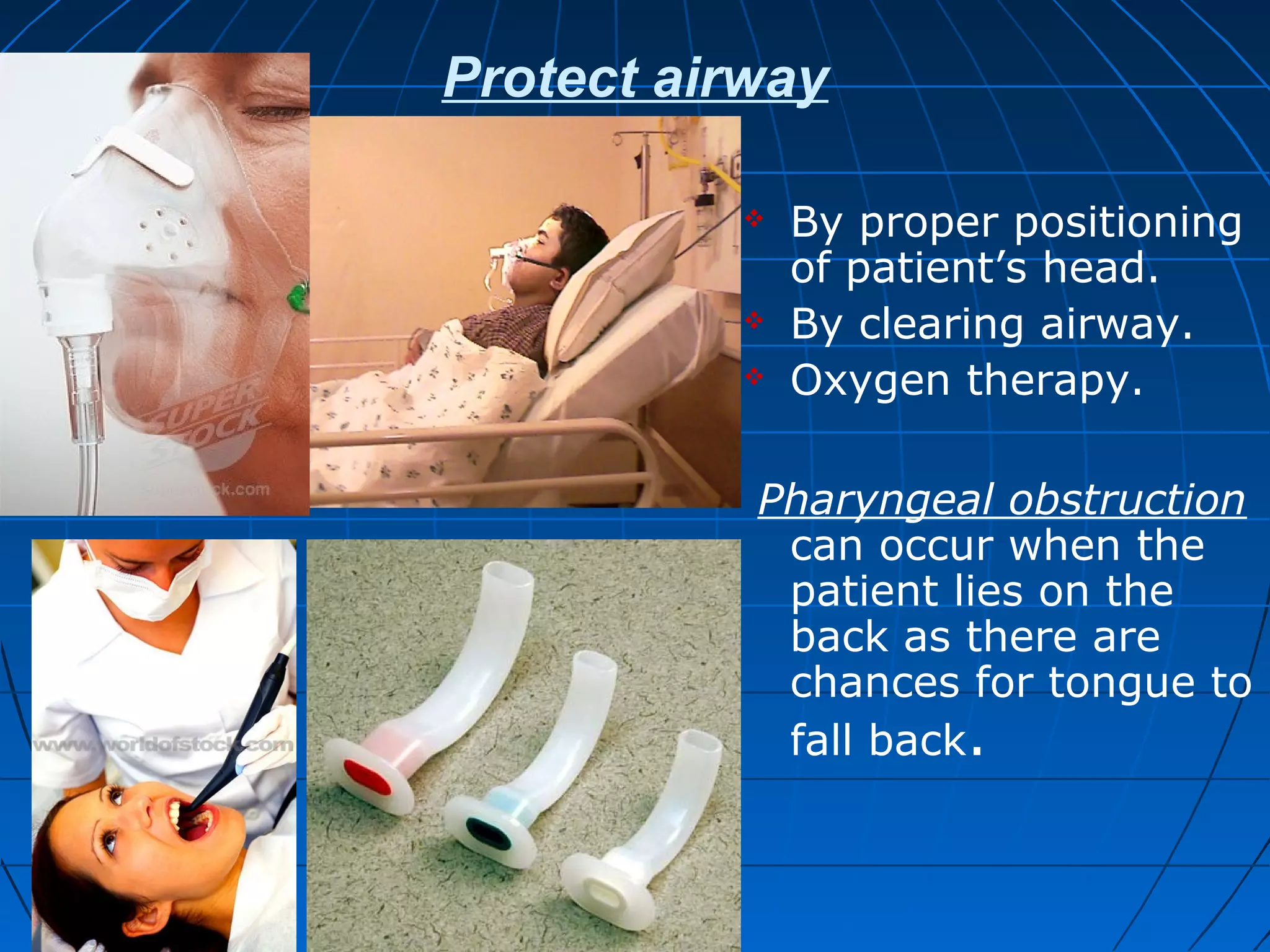
             By proper positioning
              of patient’s head.
             By clearing airway.
             Oxygen therapy.

           Pharyngeal obstruction
            can occur when the
            patient lies on the
            back as there are
            chances for tongue to
            fall back.
Maintaining IV Stability

    Hypovolemic shock: can be
    avoided by timely
    administration of IV Fluids,
    blood and blood products and
    medication.
   Replacement of fluids.[colloids
    and crystalloids]
   Keep the patient warm.
   Monitor intake and output
    balance.
   Monitor the vitals continuously
    with the patient condition.
Shock Position
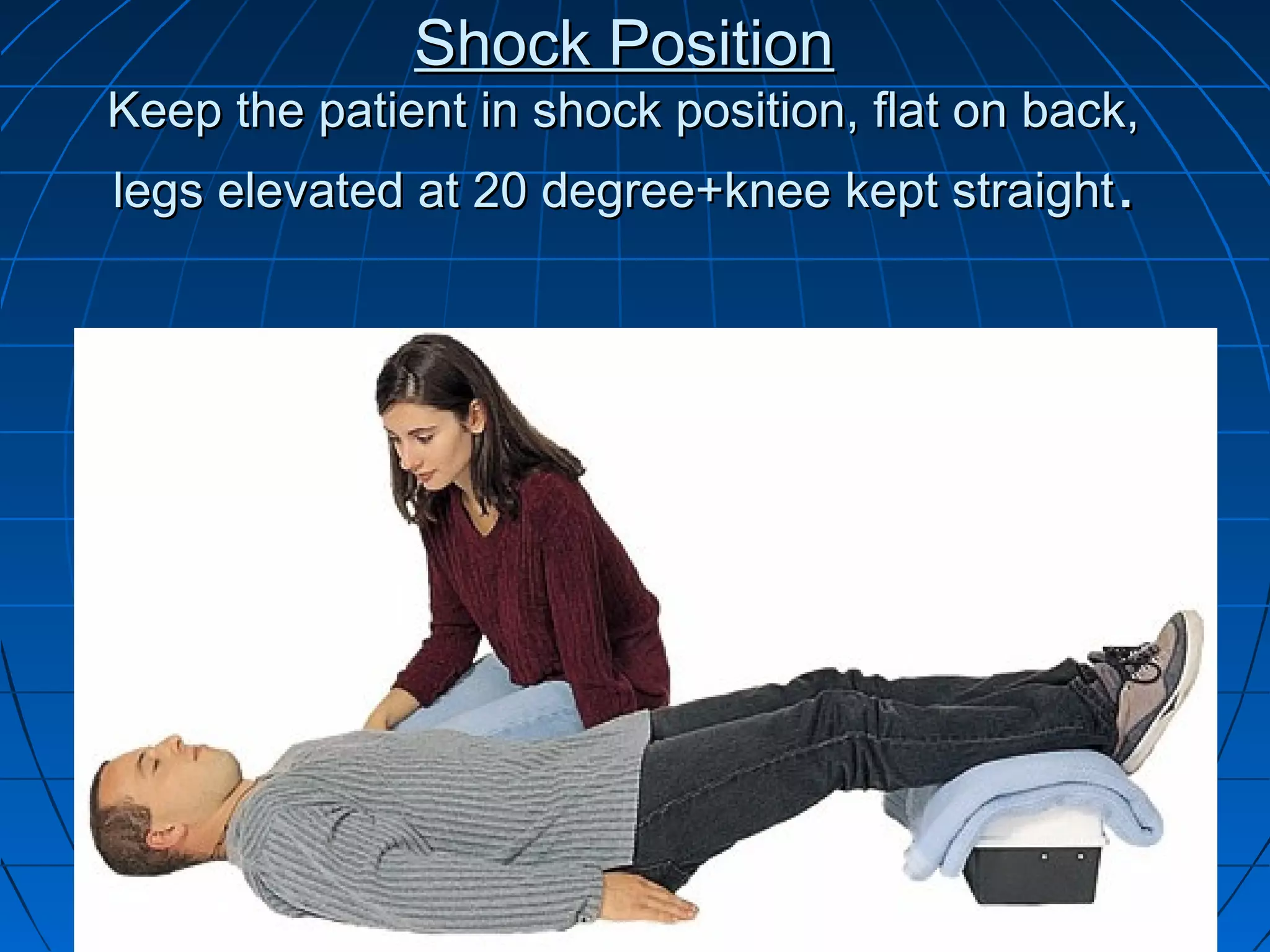
Keep the patient in shock position, flat on back,
legs elevated at 20 degree+knee kept straight .
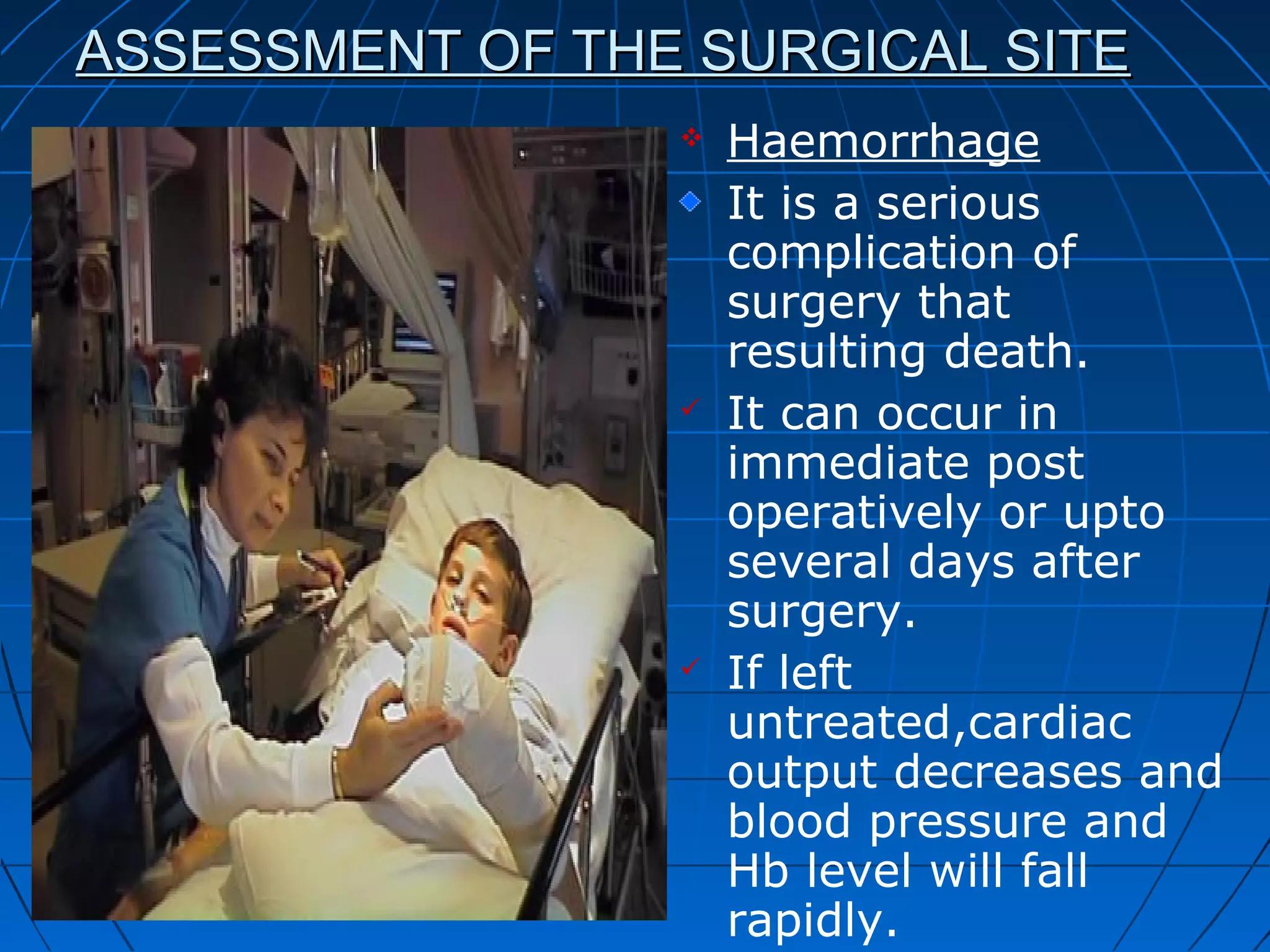
ASSESSMENT OF THE SURGICAL SITE
                    Haemorrhage
                     It is a serious
                     complication of
                     surgery that
                     resulting death.
                    It can occur in
                     immediate post
                     operatively or upto
                     several days after
                     surgery.
                    If left
                     untreated,cardiac
                     output decreases and
                     blood pressure and
                     Hb level will fall
                     rapidly.
• Blood transfusion if
  necessary.
• The surgical
  site+incision should
  always be inspected.
• If bleeding,pressure
  dressing are placed.
• If the bleeding is
  concealed,the patient is
  taken in OR for
  emergency exploration
  of concealed
  haemorrhage in body
  cavity.
KEEP THE PATIENT WARM
               Use warmer(Bair
                Hugger) blankets
               Use warm lights
Relieving pain +Anxiety
              Administer opioid
               analgesia as per
               Doctor’s order.
              Epidural analgesia.
              NSAIDS.
              Psychological support
               to relieve fear+To
               give support.
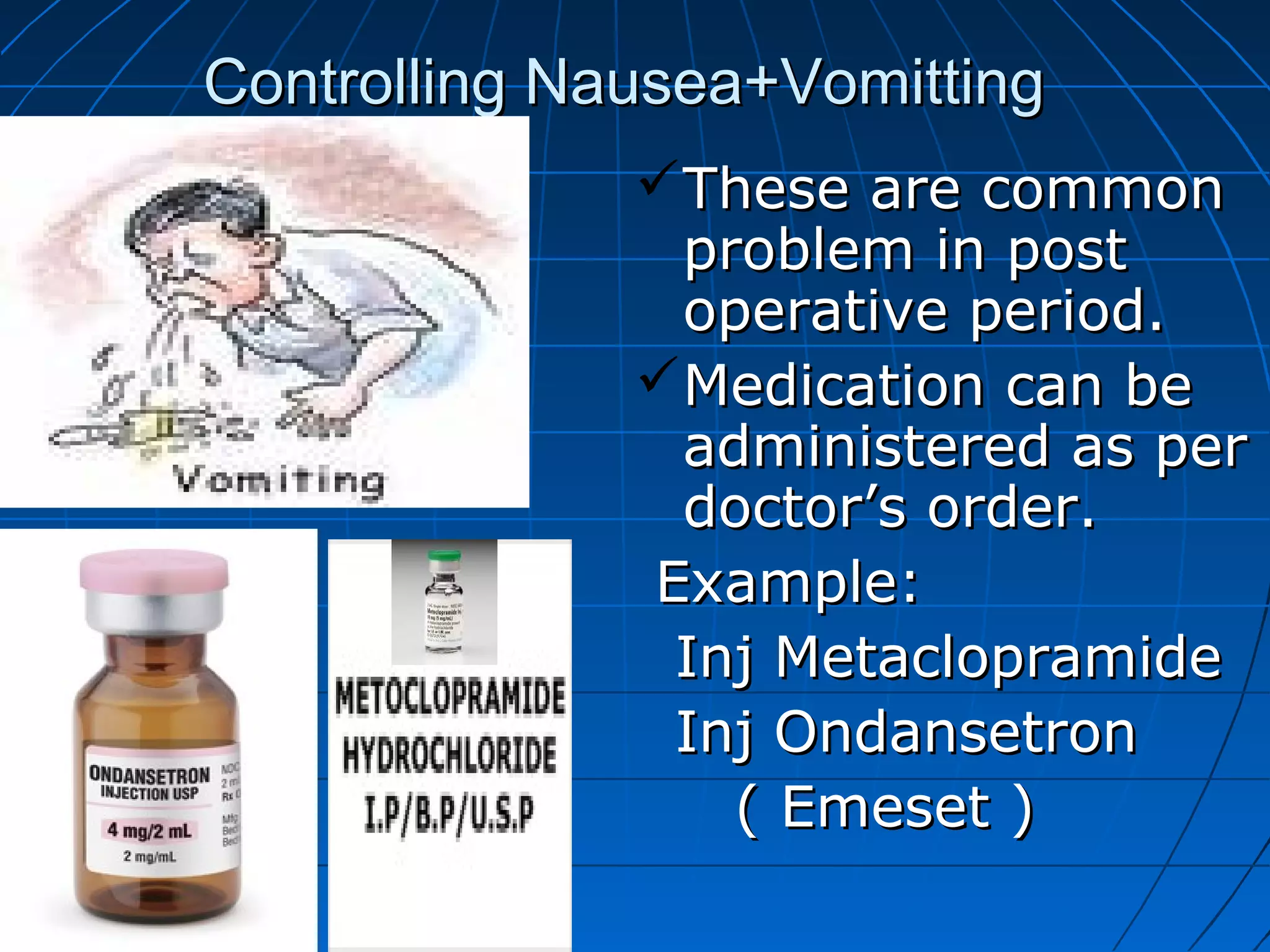
Controlling Nausea+Vomitting
              These are common
               problem in post
               operative period.
              Medication can be
               administered as per
               doctor’s order.
              Example:
               Inj Metaclopramide
               Inj Ondansetron
                 ( Emeset )
Discharge from the Post Operative Unit
   A patient remains in the post op unit, untill the patient
  has fully recoverd from anesthesia.
       Following measures are used to determine the
  patient ready for disharge from post operative unit.
 Stable vital signs
 Orientation to Person
                   Place
                   Time or events
 Adequate oxygen saturation level.
 Urine out put at least 30ml/hour
 Minimal pain.
 Adequate respiratory function.
 Aldrete score more than ‘ 9 ‘ before shifting from
  Post Operative Anaesthesia Care Unit
ALDRETE SCORE
Post-Anesthesia Score
A total discharge score of 8-10 is necessary
Post-Anesthesia Score
PRE-ANESTHESIA VITAL SIGNS/SOURCE                  TIME     ADM 15" 30" 45" 1' 2' 3' 4'   DISCHARGE
            SYSTOLIC BP 20% OF PRE-ANESTHETIC LEVEL
                                       2
CIRCULATION 20-50%                     1
            > 50                       0
            FULLY AWAKE                2
CONCIOUSNES AROUSABLE ON CALLING       1
S
            NOT RESPONDING             0
            WARM, DRY SKIN W/ PREPROCEDURAL
            COLORING                   2
COLOR       PALE, DUSKY, BLOTCHY, JAUNDICED, OTHER
                                       1
            CYANOTIC                   0
            ABLE TO DEEP BREATHE & COUGH FREELY
                                       2
RESPIRATION DYSPNEA OR LIMITED BREATHING APKEIC
                                       1
            0
            ABLE TO MOVE 4 EXTREMITIES 2
ACTIVITY    ABLE TO MOVE 2 EXTREMITIES 1
            ABLE TO MOVE 0 EXTREMITIES 0
COMMENTS                                            TOTAL
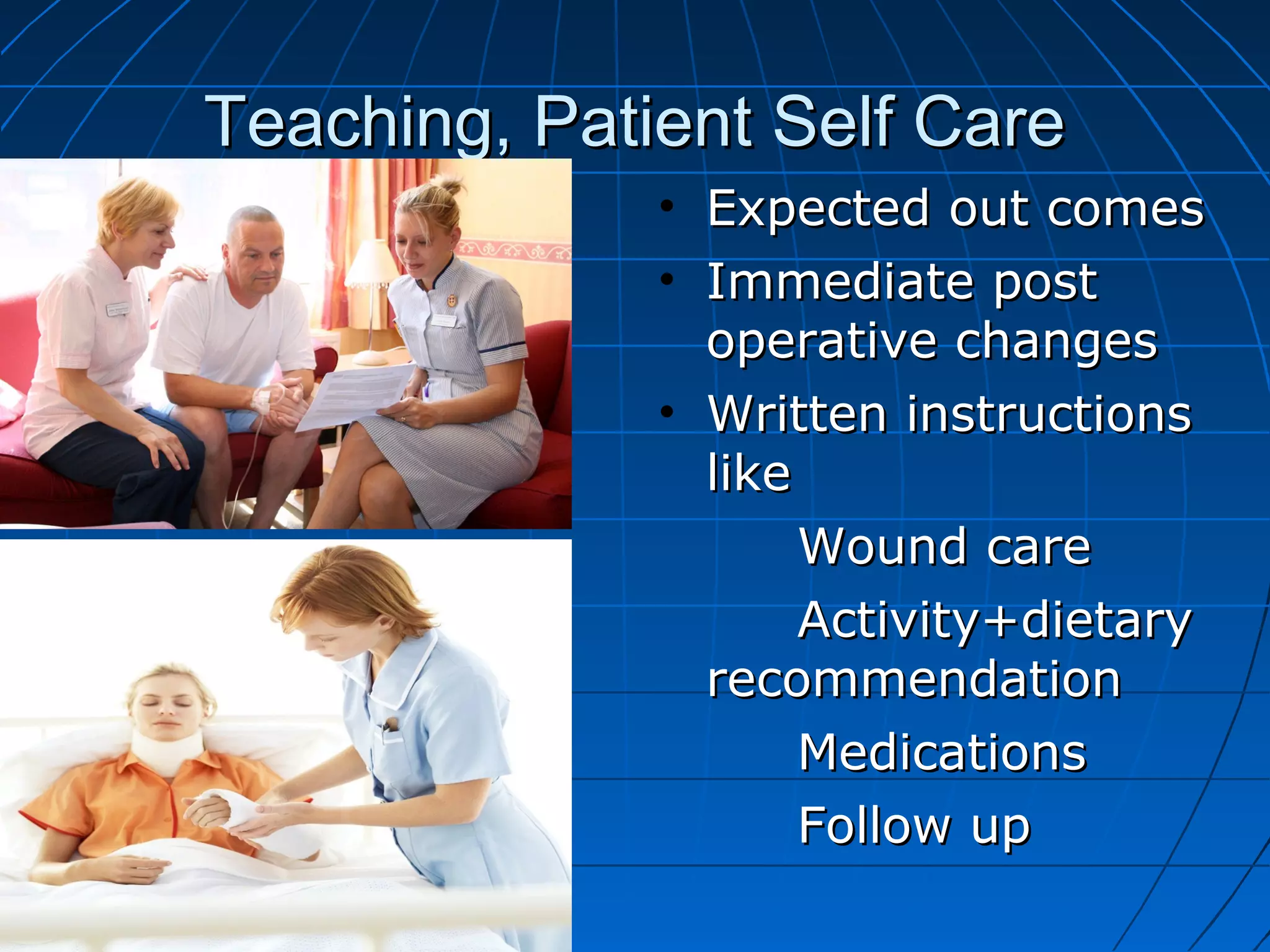
Teaching, Patient Self Care
              • Expected out comes
              • Immediate post
                operative changes
              • Written instructions
                like
                     Wound care
                     Activity+dietary
                recommendation
                     Medications
                     Follow up
THANK YOU

Post operative care

  • 1.
    POST OPERATIVE CARE Mr. Leo Devasia Leo Home Health Services www.leohomehealth.com
  • 2.
    INTRODUCTION The post operative period begins from the time the patient leaves the operating room and ends with the follow up visit by the surgeon. The post operative care is provided by -  PACU  SICU
  • 3.
    PURPOSES To enable asuccessful and faster recovery of the patient post operatively. To reduce post operative mortality rate. To reduce the length of hospital stay of the patient. To provide quality care service. To reduce hospital and patient cost during post operative period.
  • 4.
    SCOPE All thepatients who undergoing surgery Responsibility And Authority Registered Nurse
  • 5.
    POST OPERATIVE CAREUNIT OR POST ANESTHETIC CARE UNIT[PACU]  Patients still under anesthesia or recovering from anesthesia are placed in the unit for observation by highly skilled nurses,anesthetist and surgeon.  PACU should be sound proof, painted in soft colour, isolated and these features will help the patient to reduce anxiety and promote comfort.
  • 6.
    PHASES OF POSTOP UNIT Two phases-  Phase I  Phase II
  • 7.
    Phase I  It is the immediate recovery phase and requires intensive nursing care to detect early signs of complication.  Receive a complete patient record from the operating room which to plan post operative care.  It is designated for care of surgical patient immediately after surgery and patient requiring close monitoring
  • 8.
    Phase II  Careof the surgical patient who has been transferred from the Phase I post op unit.  Patient requiring less observation and less nursing care than Phase I  This phase is also known as Step down or progressive care unit.
  • 9.
    NURSING MANAGEMENT INPOST OP UNIT To provide care until the patient has recovered from the effect of anesthesia. Assessing the patient  Monitor vitals-pulse volume and regularity, depth and nature of respiration.  Assessment of patient’s O2 saturation.  Skin colour.
  • 10.
  • 11.
    Check the levelof consciousness. Ability to respond to commands.
  • 12.
  • 13.
    Protect airway  By proper positioning of patient’s head.  By clearing airway.  Oxygen therapy. Pharyngeal obstruction can occur when the patient lies on the back as there are chances for tongue to fall back.
  • 14.
    Maintaining IV Stability Hypovolemic shock: can be avoided by timely administration of IV Fluids, blood and blood products and medication.  Replacement of fluids.[colloids and crystalloids]  Keep the patient warm.  Monitor intake and output balance.  Monitor the vitals continuously with the patient condition.
  • 15.
    Shock Position Keep thepatient in shock position, flat on back, legs elevated at 20 degree+knee kept straight .
  • 16.
    ASSESSMENT OF THESURGICAL SITE  Haemorrhage It is a serious complication of surgery that resulting death.  It can occur in immediate post operatively or upto several days after surgery.  If left untreated,cardiac output decreases and blood pressure and Hb level will fall rapidly.
  • 17.
    • Blood transfusionif necessary. • The surgical site+incision should always be inspected. • If bleeding,pressure dressing are placed. • If the bleeding is concealed,the patient is taken in OR for emergency exploration of concealed haemorrhage in body cavity.
  • 18.
    KEEP THE PATIENTWARM  Use warmer(Bair Hugger) blankets  Use warm lights
  • 19.
    Relieving pain +Anxiety  Administer opioid analgesia as per Doctor’s order.  Epidural analgesia.  NSAIDS.  Psychological support to relieve fear+To give support.
  • 20.
    Controlling Nausea+Vomitting These are common problem in post operative period. Medication can be administered as per doctor’s order. Example: Inj Metaclopramide Inj Ondansetron ( Emeset )
  • 21.
    Discharge from thePost Operative Unit A patient remains in the post op unit, untill the patient has fully recoverd from anesthesia. Following measures are used to determine the patient ready for disharge from post operative unit.  Stable vital signs  Orientation to Person Place Time or events  Adequate oxygen saturation level.  Urine out put at least 30ml/hour  Minimal pain.  Adequate respiratory function.  Aldrete score more than ‘ 9 ‘ before shifting from Post Operative Anaesthesia Care Unit
  • 22.
    ALDRETE SCORE Post-Anesthesia Score Atotal discharge score of 8-10 is necessary Post-Anesthesia Score PRE-ANESTHESIA VITAL SIGNS/SOURCE TIME ADM 15" 30" 45" 1' 2' 3' 4' DISCHARGE SYSTOLIC BP 20% OF PRE-ANESTHETIC LEVEL 2 CIRCULATION 20-50% 1 > 50 0 FULLY AWAKE 2 CONCIOUSNES AROUSABLE ON CALLING 1 S NOT RESPONDING 0 WARM, DRY SKIN W/ PREPROCEDURAL COLORING 2 COLOR PALE, DUSKY, BLOTCHY, JAUNDICED, OTHER 1 CYANOTIC 0 ABLE TO DEEP BREATHE & COUGH FREELY 2 RESPIRATION DYSPNEA OR LIMITED BREATHING APKEIC 1 0 ABLE TO MOVE 4 EXTREMITIES 2 ACTIVITY ABLE TO MOVE 2 EXTREMITIES 1 ABLE TO MOVE 0 EXTREMITIES 0 COMMENTS TOTAL
  • 23.
    Teaching, Patient SelfCare • Expected out comes • Immediate post operative changes • Written instructions like Wound care Activity+dietary recommendation Medications Follow up
  • 24.