4 PRECAST CONCRETE STAIRS4. PRECAST CONCRETE STAIRS
• Most of the concrete stair arrangements are possible to produce as
precast concrete components hich can be:precast concrete components which can be:
- Individual steps units
- Complete flight with number of steps required
• Advantages of precast concrete units:
- Better quality control of the finished product
Saving of space on site as formwork storage space and- Saving of space on site as formwork storage space and
fabrication space is not required.
- Stairway enclosing shaft can be utilized for hoisting or lifting of
materials and equipments during the major construction periodmaterials and equipments during the major construction period.
- Can usually be positioned and fixed by semiskilled labor.
- Along with the extensive experiments in formwork techniques,
the coloring of the concrete with various aggregates and the
surface treatments is possible.
- It is also possible to finish prefabricated concrete stairp p
elements with timber or stone.
• Limitation:Limitation:
- Efficient transport and lifting vehicles are a prerequisite for the
use of industrially manufactured precast concrete elements.
- Additional care is needed to achieve monolithic joints between
precast stair elements and cast in situ structural elements..
COMMON TYPES OF PRECAST STEPS UNITS:
• Rectangular cantilever steps
• Spandril cantilever stepsSpandril cantilever steps
• Sector shaped cantilever units.
(Used for open riser spiral
stairs.)
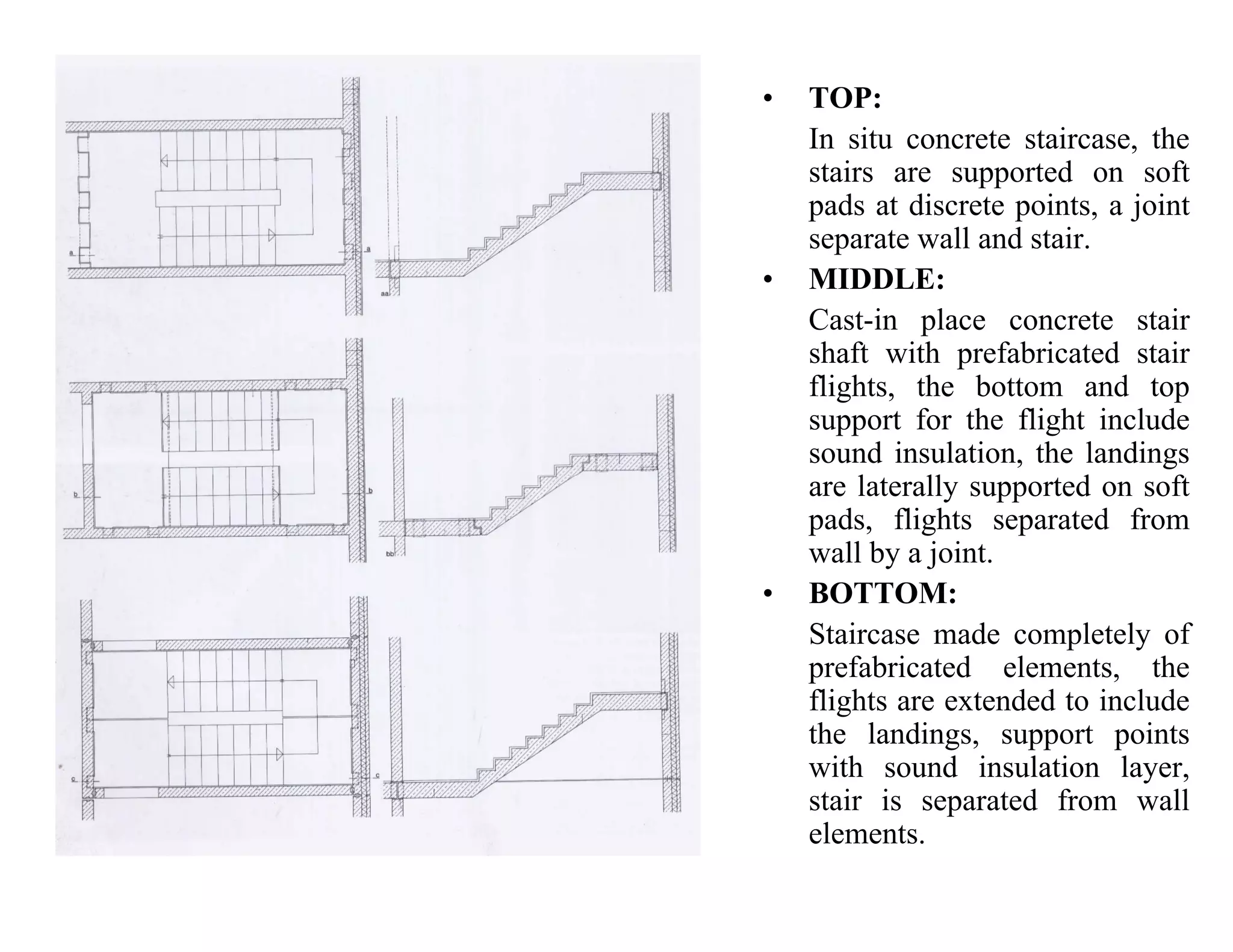
• TOP:
I i i hIn situ concrete staircase, the
stairs are supported on soft
pads at discrete points, a joint
separate wall and stairseparate wall and stair.
• MIDDLE:
Cast-in place concrete stair
shaft with prefabricated stairshaft with prefabricated stair
flights, the bottom and top
support for the flight include
sound insulation, the landings
l ll d fare laterally supported on soft
pads, flights separated from
wall by a joint.
• BOTTOM:• BOTTOM:
Staircase made completely of
prefabricated elements, the
flights are extended to includeflights are extended to include
the landings, support points
with sound insulation layer,
stair is separated from wall
lelements.
Pictorial sequence from
the construction site of an
d i i i b ildiadministration building
in Stuttgart.
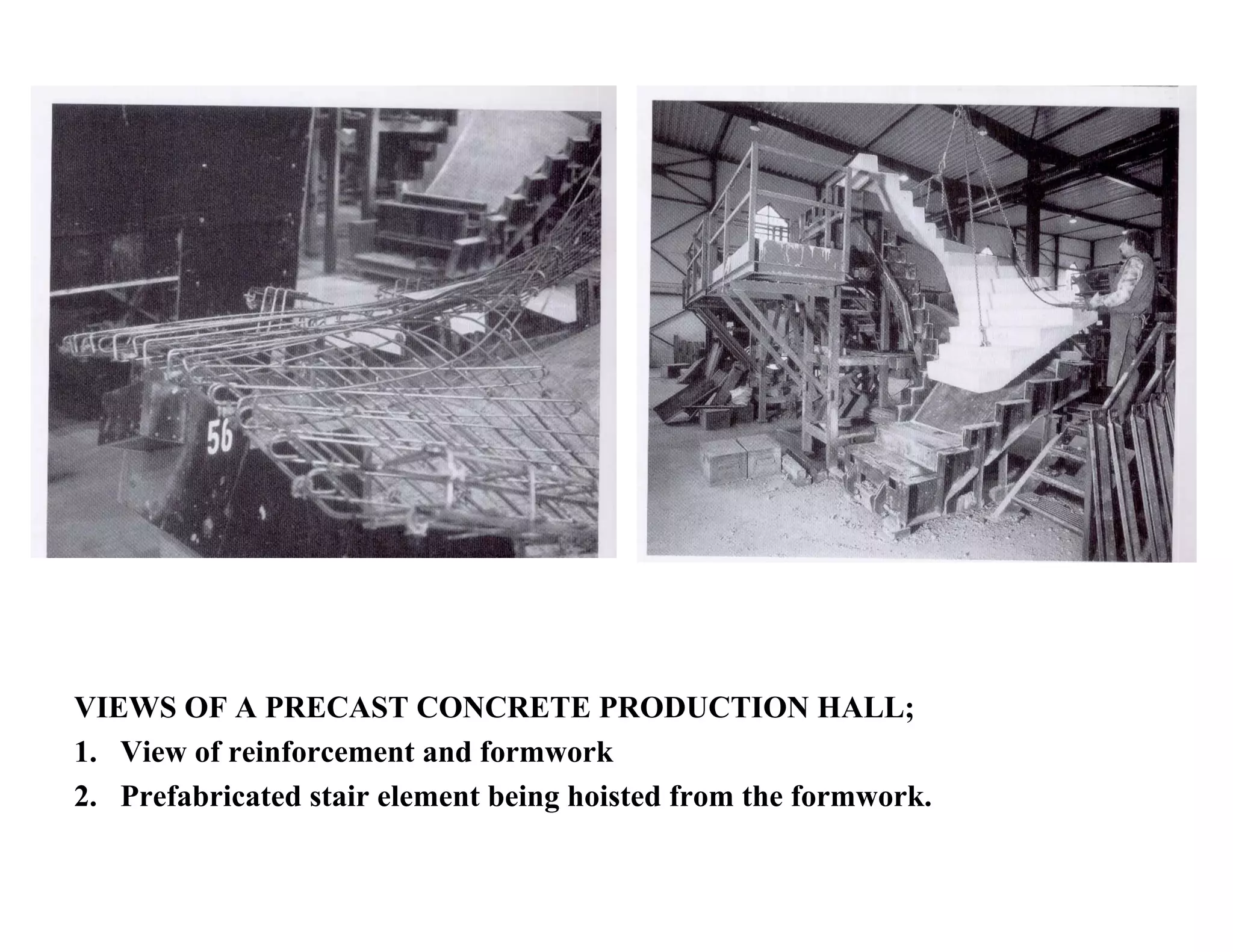
VIEWS OF A PRECAST CONCRETE PRODUCTION HALL;VIEWS OF A PRECAST CONCRETE PRODUCTION HALL;
1. View of reinforcement and formwork
2. Prefabricated stair element being hoisted from the formwork.
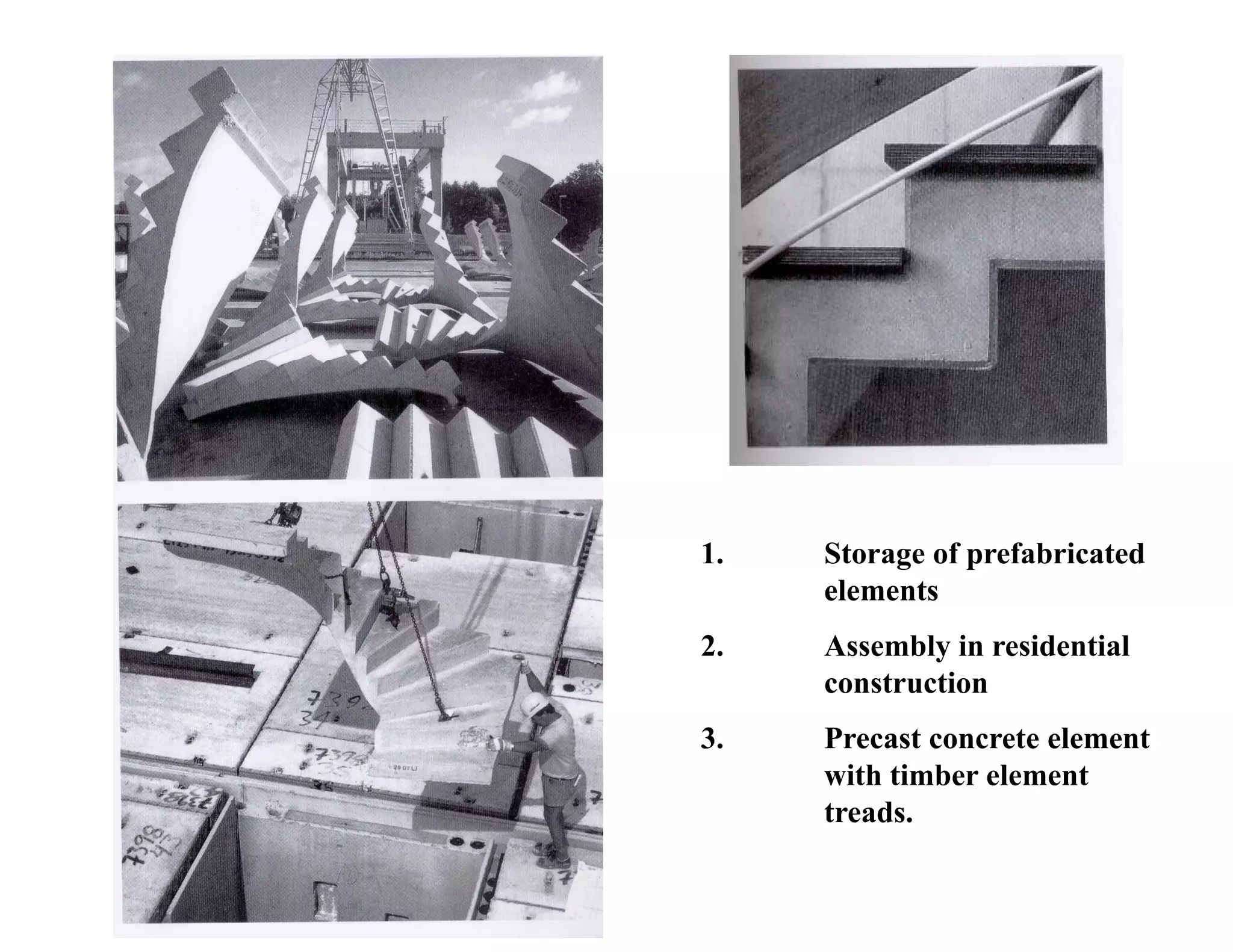
1. Storage of prefabricated
elementselements
2. Assembly in residential
construction
3. Precast concrete element
with timber element
treads.t eads.

PRECAST CONCRETE STAIRS

  • 1.
    4 PRECAST CONCRETESTAIRS4. PRECAST CONCRETE STAIRS • Most of the concrete stair arrangements are possible to produce as precast concrete components hich can be:precast concrete components which can be: - Individual steps units - Complete flight with number of steps required • Advantages of precast concrete units: - Better quality control of the finished product Saving of space on site as formwork storage space and- Saving of space on site as formwork storage space and fabrication space is not required. - Stairway enclosing shaft can be utilized for hoisting or lifting of materials and equipments during the major construction periodmaterials and equipments during the major construction period. - Can usually be positioned and fixed by semiskilled labor. - Along with the extensive experiments in formwork techniques, the coloring of the concrete with various aggregates and the surface treatments is possible. - It is also possible to finish prefabricated concrete stairp p elements with timber or stone.
  • 2.
    • Limitation:Limitation: - Efficienttransport and lifting vehicles are a prerequisite for the use of industrially manufactured precast concrete elements. - Additional care is needed to achieve monolithic joints between precast stair elements and cast in situ structural elements..
  • 3.
    COMMON TYPES OFPRECAST STEPS UNITS: • Rectangular cantilever steps • Spandril cantilever stepsSpandril cantilever steps • Sector shaped cantilever units. (Used for open riser spiral stairs.)
  • 4.
    • TOP: I ii hIn situ concrete staircase, the stairs are supported on soft pads at discrete points, a joint separate wall and stairseparate wall and stair. • MIDDLE: Cast-in place concrete stair shaft with prefabricated stairshaft with prefabricated stair flights, the bottom and top support for the flight include sound insulation, the landings l ll d fare laterally supported on soft pads, flights separated from wall by a joint. • BOTTOM:• BOTTOM: Staircase made completely of prefabricated elements, the flights are extended to includeflights are extended to include the landings, support points with sound insulation layer, stair is separated from wall lelements.
  • 7.
    Pictorial sequence from theconstruction site of an d i i i b ildiadministration building in Stuttgart.
  • 8.
    VIEWS OF APRECAST CONCRETE PRODUCTION HALL;VIEWS OF A PRECAST CONCRETE PRODUCTION HALL; 1. View of reinforcement and formwork 2. Prefabricated stair element being hoisted from the formwork.
  • 9.
    1. Storage ofprefabricated elementselements 2. Assembly in residential construction 3. Precast concrete element with timber element treads.t eads.