AR- 602
BUILDING, CONSTRUCTION AND MATERIAL
SUBMITTED BY:
BARN1AR15034
BARN1AR15036
PREFABRICATED CONSTRUCTION
LITERATURE CASE STUDY:
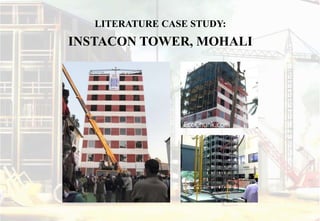
INSTACON TOWER, MOHALI
INTRODUCTION
• LOCATION: Mohali, Punjab, India.
• COMPLETED ON: December 1, 2012.
• DEVELOPER: Synergy Thrislington, a Mohali-based
infrastructure company.
• SIZE OF THE PROJECT: 2,553.60 sq m
• The first building of its kind in India, the structure
was built with the assistance of three cranes and
more than 200 highly skilled technicians and workers.
• A dead load of 1,200-1,500 kg sq m along with a live
350 kg sq m, the 48-hour masterwork stands tall in
this vibrant city.
• COSTS: 8-9 Crore.
• It required 40-60 days for Instacon's units to be
manufactured in the factory.
DURING CONSTRUCTION
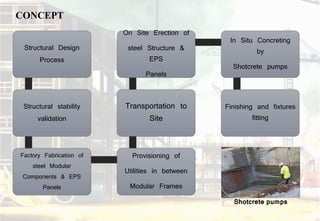
CONCEPT
Structural Design
Process
Structural stability
validation
Factory Fabrication of
steel Modular
Components & EPS
Panels
Provisioning of
Utilities in between
Modular Frames
Transportation to
Site
On Site Erection of
steel Structure &
EPS
Panels
In Situ Concreting
by
Shotcrete pumps
Finishing and fixtures
fitting
Shotcrete pumps
BUILDING MATERIALS:
• The external structure of the building comprises double-
skinned PUF panel (PVDF galvalume coated sheet) that
ensures thermal insulation.
• The core material used is mild steel, which is lightweight,
strong, flexible and environment-friendly.
• The steel is also coated with rust retardants and anti-
corrosive paints to avoid rusting.
• Brick, sand or gravel is not utilised in the constructing
process; however, concrete is used only in the
foundation and in a three-inch deck flooring.
• Internal wall and false ceiling: LAGYP™ gypsum boards.
CONSTRUCTION:
• Around 80-90 per cent of the work was completed in
the factory under a controlled environment.
• In this system, different units of the building such as wall
panels, columns, etc, were produced within the factory
and then transported them to the actual site where 10-
20 per cent of the work was carried out by simply
installing them.
• Also, utility arrangements such as HVAC, plumbing,
electrical, fire-fighting, etc, were fitted in the floor
frames of steel.
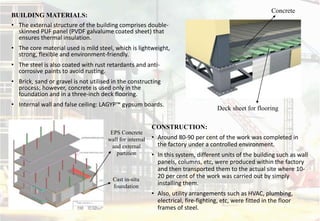
Deck sheet for flooring
Concrete
EPS Concrete
wall for internal
and external
partition
Cast in-situ
foundation
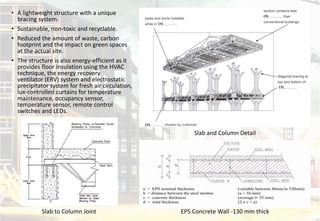
EPS Concrete Wall -130 mm thick
Slab and Column Detail
Slab to Column Joint
• A lightweight structure with a unique
bracing system.
• Sustainable, non-toxic and recyclable.
• Reduced the amount of waste, carbon
footprint and the impact on green spaces
at the actual site.
• The structure is also energy-efficient as it
provides floor insulation using the HVAC
technique, the energy recovery
ventilator (ERV) system and electrostatic
precipitator system for fresh air circulation,
lux-controlled curtains for temperature
maintenance, occupancy sensor,
temperature sensor, remote control
switches and LEDs.
PROBLEMS FACED IN
CONVENTIONAL CONSTRUCTION
• Time Consuming
• Cost Escalations/variations
• Poor Quality Construction
• Shortage of Skilled
Manpower
• Time over runs
• Unsafe Buildings
ADVANTAGES:
• Energy efficient houses
• Safety at Construction
• Earth Quake resistance
• Faster construction mode saves time.
• No Cost escalations
• Less Electricity Consumption
• Early return on Investment.
• Quicker income from rental.
• Minimal material wastage and increased
asset value.
• Economy of scale in manufacturing
• Salvage Value after lifetime
• Availability of more carpet area
Partition

Instacon tower mohali

  • 1.
    AR- 602 BUILDING, CONSTRUCTIONAND MATERIAL SUBMITTED BY: BARN1AR15034 BARN1AR15036 PREFABRICATED CONSTRUCTION
  • 2.
  • 3.
    INTRODUCTION • LOCATION: Mohali,Punjab, India. • COMPLETED ON: December 1, 2012. • DEVELOPER: Synergy Thrislington, a Mohali-based infrastructure company. • SIZE OF THE PROJECT: 2,553.60 sq m • The first building of its kind in India, the structure was built with the assistance of three cranes and more than 200 highly skilled technicians and workers. • A dead load of 1,200-1,500 kg sq m along with a live 350 kg sq m, the 48-hour masterwork stands tall in this vibrant city. • COSTS: 8-9 Crore. • It required 40-60 days for Instacon's units to be manufactured in the factory. DURING CONSTRUCTION
  • 4.
    CONCEPT Structural Design Process Structural stability validation FactoryFabrication of steel Modular Components & EPS Panels Provisioning of Utilities in between Modular Frames Transportation to Site On Site Erection of steel Structure & EPS Panels In Situ Concreting by Shotcrete pumps Finishing and fixtures fitting Shotcrete pumps
  • 5.
    BUILDING MATERIALS: • Theexternal structure of the building comprises double- skinned PUF panel (PVDF galvalume coated sheet) that ensures thermal insulation. • The core material used is mild steel, which is lightweight, strong, flexible and environment-friendly. • The steel is also coated with rust retardants and anti- corrosive paints to avoid rusting. • Brick, sand or gravel is not utilised in the constructing process; however, concrete is used only in the foundation and in a three-inch deck flooring. • Internal wall and false ceiling: LAGYP™ gypsum boards. CONSTRUCTION: • Around 80-90 per cent of the work was completed in the factory under a controlled environment. • In this system, different units of the building such as wall panels, columns, etc, were produced within the factory and then transported them to the actual site where 10- 20 per cent of the work was carried out by simply installing them. • Also, utility arrangements such as HVAC, plumbing, electrical, fire-fighting, etc, were fitted in the floor frames of steel. Deck sheet for flooring Concrete EPS Concrete wall for internal and external partition Cast in-situ foundation
  • 6.
    EPS Concrete Wall-130 mm thick Slab and Column Detail Slab to Column Joint • A lightweight structure with a unique bracing system. • Sustainable, non-toxic and recyclable. • Reduced the amount of waste, carbon footprint and the impact on green spaces at the actual site. • The structure is also energy-efficient as it provides floor insulation using the HVAC technique, the energy recovery ventilator (ERV) system and electrostatic precipitator system for fresh air circulation, lux-controlled curtains for temperature maintenance, occupancy sensor, temperature sensor, remote control switches and LEDs.
  • 7.
    PROBLEMS FACED IN CONVENTIONALCONSTRUCTION • Time Consuming • Cost Escalations/variations • Poor Quality Construction • Shortage of Skilled Manpower • Time over runs • Unsafe Buildings ADVANTAGES: • Energy efficient houses • Safety at Construction • Earth Quake resistance • Faster construction mode saves time. • No Cost escalations • Less Electricity Consumption • Early return on Investment. • Quicker income from rental. • Minimal material wastage and increased asset value. • Economy of scale in manufacturing • Salvage Value after lifetime • Availability of more carpet area Partition