EGYPTIAN ARCHITECTURE
CHARACTERISTICS OF EGYPTIAN
ARCHITECTURE
Massive structures came to be favoured
from the Old Kingdom on.
Mud brick was the principal building
material for domestic building.
Stone was favoured for temples and tombs.
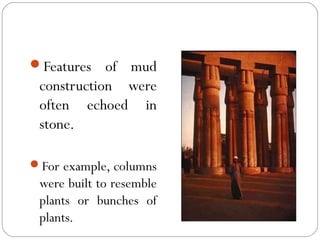
Features of mud
construction were
often echoed in
stone.
For example, columns
were built to resemble
plants or bunches of
plants.
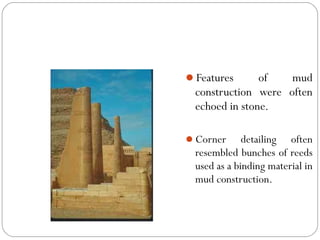
Features of mud
construction were often
echoed in stone.
Corner detailing often
resembled bunches of reeds
used as a binding material in
mud construction.
FUNERARY STRUCTURES
Egyptian aristocratic culture focussed on
preparation for life after death.
Preservation of bodies through
mummification and providing goods for the
afterlife were considered essential.
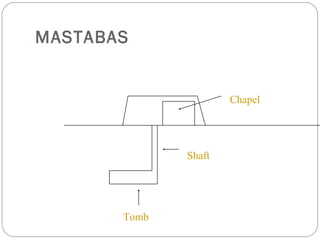
MASTABAS
Early Old Kingdom aristocratic and royal
burials were in mastabas - square or
rectangular buildings connected by shafts to
tomb chambers deep beneath the earth.
The mastaba also housed a chapel and a
statue of the dead.
MASTABAS
Shaft
Tomb
Chapel
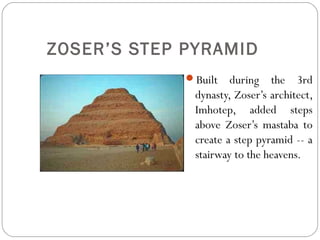
ZOSER’S STEP PYRAMID
Built during the 3rd
dynasty, Zoser’s architect,
Imhotep, added steps
above Zoser’s mastaba to
create a step pyramid -- a
stairway to the heavens.
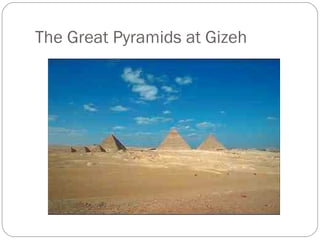
THE GREAT PYRAMIDS OF
GIZEH
These were built during the 4th dynasty.
What remains is but a fraction of the great funerary
districts of each of thae pyramids.
Construction was hugely labour intensive -- but this was
paid labour during slow agricultural seasons, not slave
labour as is commonly supposed.
The Great Pyramids at Gizeh
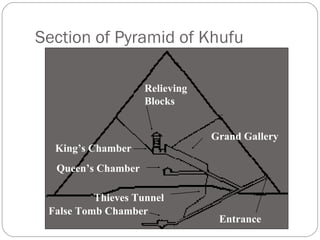
Section of Pyramid of Khufu
Relieving
Blocks
Grand Gallery
King’s Chamber
Queen’s Chamber
False Tomb Chamber
Thieves Tunnel
Entrance
The Great Pyramids of Gizeh
These were buildings that housed chambers and passages,
including small air shafts that may have been used for
ventilation -- or were, perhaps, passages for the spirit of the
pharaohs to pass through.
Pyramid building was abandoned during the Old Kingdom.
They provided tomb robbers with easily identifiable targets.
The Theban Necropolis
Pyramidal structures were abandoned in the Old Kingdom.
Later Pharaohs were buried in Upper Egypt across the Nile
from Karnak.
Large concentrations of tombs were cut into cliffsides at
what are now known as the Valley of the Kings and the
Valley of the Queens.
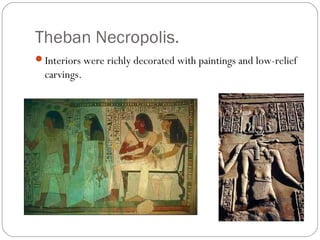
Theban Necropolis.
Interiors were richly decorated with paintings and low-relief
carvings.
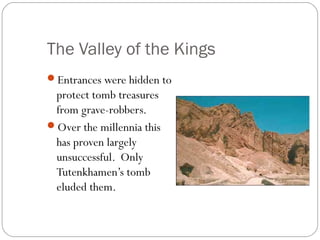
The Valley of the Kings
Entrances were hidden to
protect tomb treasures
from grave-robbers.
Over the millennia this
has proven largely
unsuccessful. Only
Tutenkhamen’s tomb
eluded them.
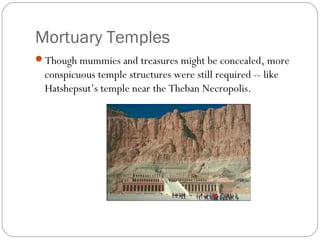
Mortuary Temples
Though mummies and treasures might be concealed, more
conspicuous temple structures were still required -- like
Hatshepsut’s temple near the Theban Necropolis.
Temples
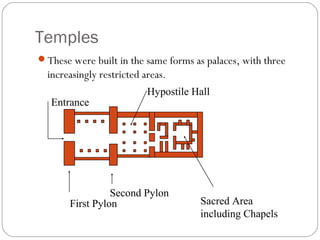
These were built in the same forms as palaces, with three
increasingly restricted areas.
First Pylon
Second Pylon
Hypostile Hall
Sacred Area
including Chapels
Entrance
Temples
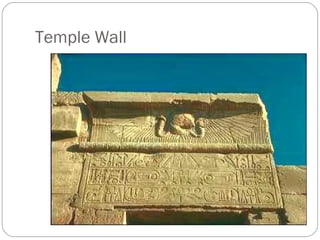
The entire temple was surrounded by a windowless wall.
Within the temple, light and shadow were important
features.
Walls might be blank or incised with low relief carvings.
Temple Wall
Temples
Lighting through wall openings, columns, and clerestory
windows in the colonnade, were intended to feature
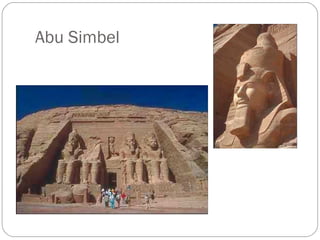
particular locations. In the case of Abu Simbel, the statures
on the wall deepest in the temple, emerged from shadow on
two days during the year.
Abu Simbel
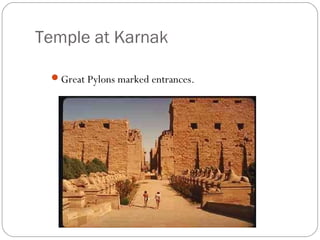
Temple at Karnak
Great Pylons marked entrances.
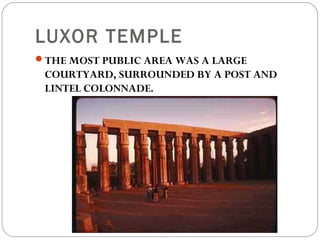
LUXOR TEMPLE
THE MOST PUBLIC AREA WAS A LARGE
COURTYARD, SURROUNDED BY A POST AND
LINTEL COLONNADE.
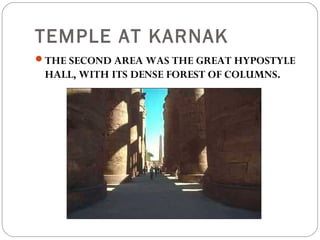
TEMPLE AT KARNAK
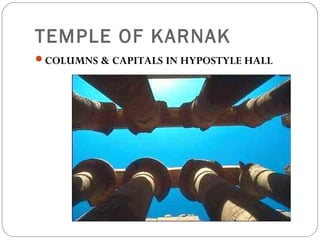
THE SECOND AREA WAS THE GREAT HYPOSTYLE
HALL, WITH ITS DENSE FOREST OF COLUMNS.
TEMPLE OF KARNAK
COLUMNS & CAPITALS IN HYPOSTYLE HALL
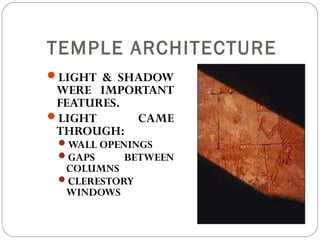
TEMPLE ARCHITECTURE
LIGHT & SHADOW
WERE IMPORTANT
FEATURES.
LIGHT CAME
THROUGH:
WALL OPENINGS
GAPS BETWEEN
COLUMNS
CLERESTORY
WINDOWS
IN CLOSING
EGYPTIAN ARCHITECTURE SHOWED BOTH
VARIETY AND CONTINUITY OVER CA. 3,000
YEARS.
WHILE DOMESTIC STRUCTURES OF MUD
BRICK HAVE BEEN OBLITERATED BY TIME,
MONUMENTAL STRUCTURES IN STONE STILL
ASTOUND VISITORS TO EGYPT TODAY.

Egyptian architecture

  • 1.
  • 2.
    CHARACTERISTICS OF EGYPTIAN ARCHITECTURE Massivestructures came to be favoured from the Old Kingdom on. Mud brick was the principal building material for domestic building. Stone was favoured for temples and tombs.
  • 3.
    Features of mud constructionwere often echoed in stone. For example, columns were built to resemble plants or bunches of plants.
  • 4.
    Features of mud constructionwere often echoed in stone. Corner detailing often resembled bunches of reeds used as a binding material in mud construction.
  • 5.
    FUNERARY STRUCTURES Egyptian aristocraticculture focussed on preparation for life after death. Preservation of bodies through mummification and providing goods for the afterlife were considered essential.
  • 6.
    MASTABAS Early Old Kingdomaristocratic and royal burials were in mastabas - square or rectangular buildings connected by shafts to tomb chambers deep beneath the earth. The mastaba also housed a chapel and a statue of the dead.
  • 7.
  • 8.
    ZOSER’S STEP PYRAMID Builtduring the 3rd dynasty, Zoser’s architect, Imhotep, added steps above Zoser’s mastaba to create a step pyramid -- a stairway to the heavens.
  • 9.
    THE GREAT PYRAMIDSOF GIZEH These were built during the 4th dynasty. What remains is but a fraction of the great funerary districts of each of thae pyramids. Construction was hugely labour intensive -- but this was paid labour during slow agricultural seasons, not slave labour as is commonly supposed.
  • 10.
  • 11.
    Section of Pyramidof Khufu Relieving Blocks Grand Gallery King’s Chamber Queen’s Chamber False Tomb Chamber Thieves Tunnel Entrance
  • 12.
    The Great Pyramidsof Gizeh These were buildings that housed chambers and passages, including small air shafts that may have been used for ventilation -- or were, perhaps, passages for the spirit of the pharaohs to pass through. Pyramid building was abandoned during the Old Kingdom. They provided tomb robbers with easily identifiable targets.
  • 13.
    The Theban Necropolis Pyramidalstructures were abandoned in the Old Kingdom. Later Pharaohs were buried in Upper Egypt across the Nile from Karnak. Large concentrations of tombs were cut into cliffsides at what are now known as the Valley of the Kings and the Valley of the Queens.
  • 14.
    Theban Necropolis. Interiors wererichly decorated with paintings and low-relief carvings.
  • 15.
    The Valley ofthe Kings Entrances were hidden to protect tomb treasures from grave-robbers. Over the millennia this has proven largely unsuccessful. Only Tutenkhamen’s tomb eluded them.
  • 16.
    Mortuary Temples Though mummiesand treasures might be concealed, more conspicuous temple structures were still required -- like Hatshepsut’s temple near the Theban Necropolis.
  • 17.
    Temples These were builtin the same forms as palaces, with three increasingly restricted areas. First Pylon Second Pylon Hypostile Hall Sacred Area including Chapels Entrance
  • 18.
    Temples The entire templewas surrounded by a windowless wall. Within the temple, light and shadow were important features. Walls might be blank or incised with low relief carvings.
  • 19.
  • 20.
    Temples Lighting through wallopenings, columns, and clerestory windows in the colonnade, were intended to feature particular locations. In the case of Abu Simbel, the statures on the wall deepest in the temple, emerged from shadow on two days during the year.
  • 21.
  • 22.
    Temple at Karnak GreatPylons marked entrances.
  • 23.
    LUXOR TEMPLE THE MOSTPUBLIC AREA WAS A LARGE COURTYARD, SURROUNDED BY A POST AND LINTEL COLONNADE.
  • 24.
    TEMPLE AT KARNAK THESECOND AREA WAS THE GREAT HYPOSTYLE HALL, WITH ITS DENSE FOREST OF COLUMNS.
  • 25.
    TEMPLE OF KARNAK COLUMNS& CAPITALS IN HYPOSTYLE HALL
  • 26.
    TEMPLE ARCHITECTURE LIGHT &SHADOW WERE IMPORTANT FEATURES. LIGHT CAME THROUGH: WALL OPENINGS GAPS BETWEEN COLUMNS CLERESTORY WINDOWS
  • 27.
    IN CLOSING EGYPTIAN ARCHITECTURESHOWED BOTH VARIETY AND CONTINUITY OVER CA. 3,000 YEARS. WHILE DOMESTIC STRUCTURES OF MUD BRICK HAVE BEEN OBLITERATED BY TIME, MONUMENTAL STRUCTURES IN STONE STILL ASTOUND VISITORS TO EGYPT TODAY.