Frame System, Elements and Details- 05
311-Construction II
Kabul University
Engineering Faculty, Architecture Dep.
Kabul, Afghanistan
Sep, 2012
Major Element of Frame Structure
 Frame Structure is consist of many parts, that together they make
complete Frame structure.
 Main Parts or Elements of Frame Structure:
 1- Foundation
 2- Column
 3- Slab on Grade
 4- Beam or girder
 5- Slab
 6- Stair
 7- Shear wall
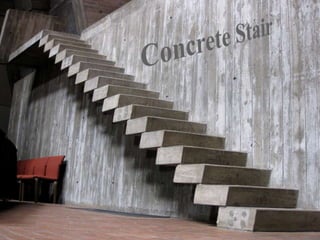
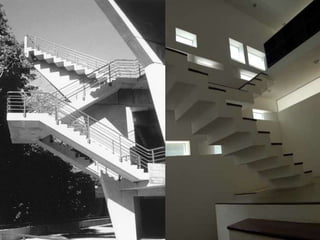
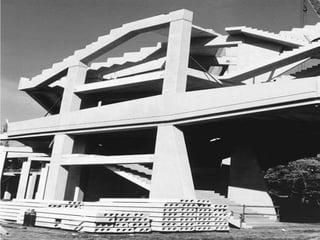
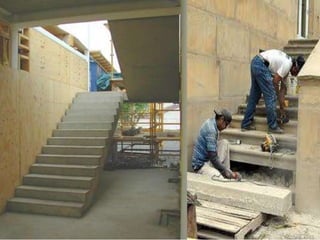
Concrete Stair
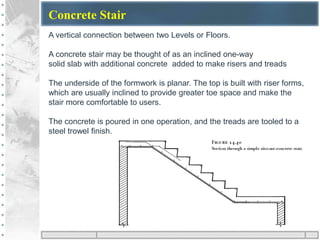
A vertical connection between two Levels or Floors.
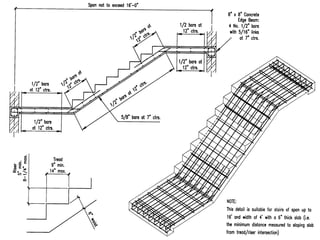
A concrete stair may be thought of as an inclined one-way
solid slab with additional concrete added to make risers and treads
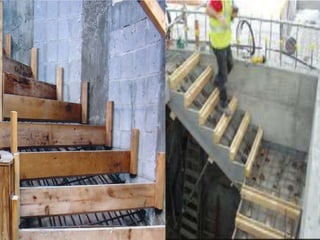
The underside of the formwork is planar. The top is built with riser forms,
which are usually inclined to provide greater toe space and make the
stair more comfortable to users.
The concrete is poured in one operation, and the treads are tooled to a
steel trowel finish.
Site Cast Reinforced Concrete Stairs
A variety of stair types and arrangements are possible each having its
own appearance and design characteristics.
In all cases these stairs must comply with
the minimum requirements
Common Type of Concrete Site cast Stairs:
• INCLINED SLAB STAIR
• CRANKED SLAB STAIR
• STRING BEAM STAIR
• CANTILEVER STAIR
• Spiral and Helical Stairs
Site Cast Reinforced Concrete Stairs
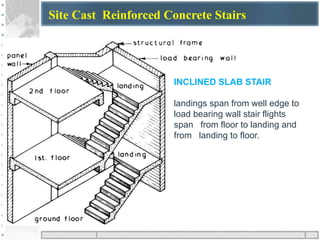
INCLINED SLAB STAIR
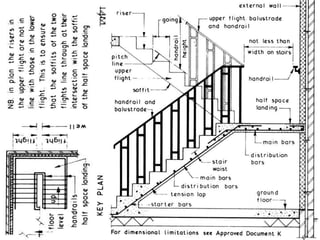
landings span from well edge to
load bearing wall stair flights
span from floor to landing and
from landing to floor.
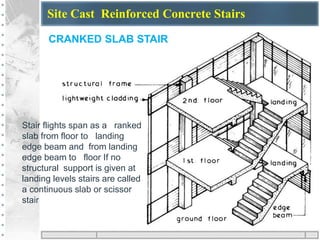
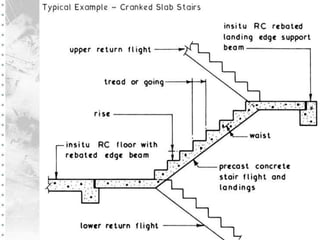
Stair flights span as a ranked
slab from floor to landing
edge beam and from landing
edge beam to floor If no
structural support is given at
landing levels stairs are called
a continuous slab or scissor
stair
Site Cast Reinforced Concrete Stairs
CRANKED SLAB STAIR
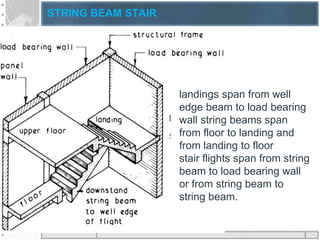
STRING BEAM STAIR
landings span from well
edge beam to load bearing
wall string beams span
from floor to landing and
from landing to floor
stair flights span from string
beam to load bearing wall
or from string beam to
string beam.
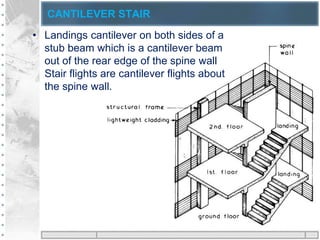
CANTILEVER STAIR
• Landings cantilever on both sides of a
stub beam which is a cantilever beam
out of the rear edge of the spine wall
Stair flights are cantilever flights about
the spine wall.
Site Cast Reinforced Concrete Stairs
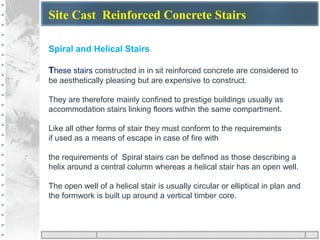
Spiral and Helical Stairs
These stairs constructed in in sit reinforced concrete are considered to
be aesthetically pleasing but are expensive to construct.
They are therefore mainly confined to prestige buildings usually as
accommodation stairs linking floors within the same compartment.
Like all other forms of stair they must conform to the requirements
if used as a means of escape in case of fire with
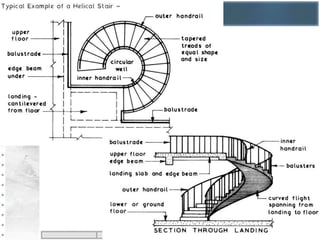
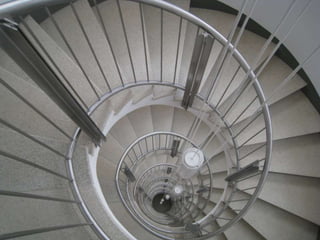
the requirements of Spiral stairs can be defined as those describing a
helix around a central column whereas a helical stair has an open well.
The open well of a helical stair is usually circular or elliptical in plan and
the formwork is built up around a vertical timber core.
sprial
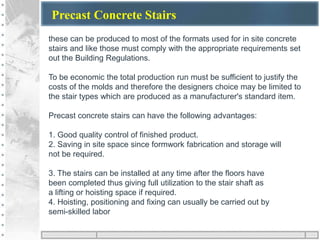
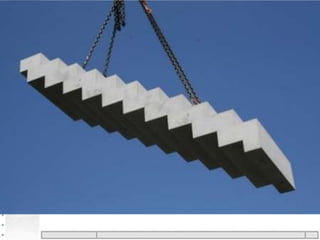
Precast Concrete Stairs
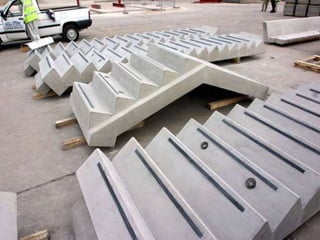
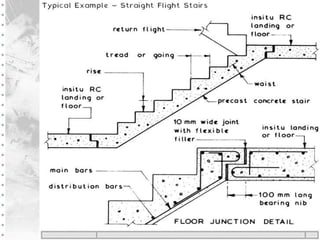
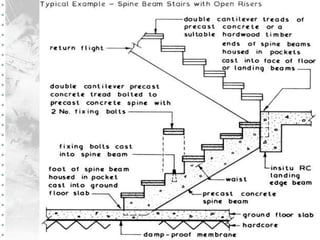
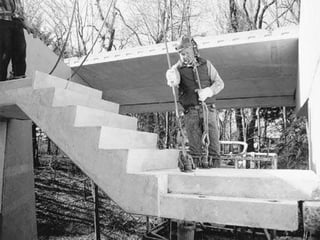
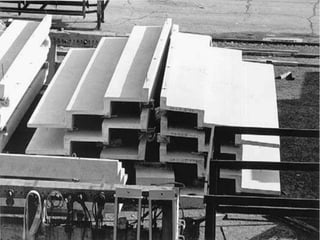
these can be produced to most of the formats used for in site concrete
stairs and like those must comply with the appropriate requirements set
out the Building Regulations.
To be economic the total production run must be sufficient to justify the
costs of the molds and therefore the designers choice may be limited to
the stair types which are produced as a manufacturer's standard item.
Precast concrete stairs can have the following advantages:
1. Good quality control of finished product.
2. Saving in site space since formwork fabrication and storage will
not be required.
3. The stairs can be installed at any time after the floors have
been completed thus giving full utilization to the stair shaft as
a lifting or hoisting space if required.
4. Hoisting, positioning and fixing can usually be carried out by
semi-skilled labor
Precast Concrete Stairs
Precast Concrete Spiral Stairs
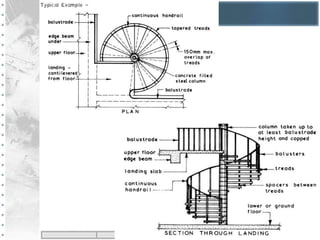
This form of stair is usually constructed with an open riser format using
tapered treads which have a keyhole plan shape.
Each tread has a hollow cylinder at the narrow end equal to the rise
which is fitted over a central steel column usually filled with in site
concrete.
The outer end of the tread has holes through which the balusters pass to
be fixed on the underside of the tread below, a hollow spacer being used
to maintain the distance between consecutive treads.
Presentation 08.ppt ABOUT CONCRETE UNDER PRESURE

Presentation 08.ppt ABOUT CONCRETE UNDER PRESURE

  • 1.
    Frame System, Elementsand Details- 05 311-Construction II Kabul University Engineering Faculty, Architecture Dep. Kabul, Afghanistan Sep, 2012
  • 2.
    Major Element ofFrame Structure  Frame Structure is consist of many parts, that together they make complete Frame structure.  Main Parts or Elements of Frame Structure:  1- Foundation  2- Column  3- Slab on Grade  4- Beam or girder  5- Slab  6- Stair  7- Shear wall
  • 4.
    Concrete Stair A verticalconnection between two Levels or Floors. A concrete stair may be thought of as an inclined one-way solid slab with additional concrete added to make risers and treads The underside of the formwork is planar. The top is built with riser forms, which are usually inclined to provide greater toe space and make the stair more comfortable to users. The concrete is poured in one operation, and the treads are tooled to a steel trowel finish.
  • 5.
    Site Cast ReinforcedConcrete Stairs A variety of stair types and arrangements are possible each having its own appearance and design characteristics. In all cases these stairs must comply with the minimum requirements Common Type of Concrete Site cast Stairs: • INCLINED SLAB STAIR • CRANKED SLAB STAIR • STRING BEAM STAIR • CANTILEVER STAIR • Spiral and Helical Stairs
  • 6.
    Site Cast ReinforcedConcrete Stairs INCLINED SLAB STAIR landings span from well edge to load bearing wall stair flights span from floor to landing and from landing to floor.
  • 7.
    Stair flights spanas a ranked slab from floor to landing edge beam and from landing edge beam to floor If no structural support is given at landing levels stairs are called a continuous slab or scissor stair Site Cast Reinforced Concrete Stairs CRANKED SLAB STAIR
  • 8.
    STRING BEAM STAIR landingsspan from well edge beam to load bearing wall string beams span from floor to landing and from landing to floor stair flights span from string beam to load bearing wall or from string beam to string beam.
  • 9.
    CANTILEVER STAIR • Landingscantilever on both sides of a stub beam which is a cantilever beam out of the rear edge of the spine wall Stair flights are cantilever flights about the spine wall.
  • 10.
    Site Cast ReinforcedConcrete Stairs Spiral and Helical Stairs These stairs constructed in in sit reinforced concrete are considered to be aesthetically pleasing but are expensive to construct. They are therefore mainly confined to prestige buildings usually as accommodation stairs linking floors within the same compartment. Like all other forms of stair they must conform to the requirements if used as a means of escape in case of fire with the requirements of Spiral stairs can be defined as those describing a helix around a central column whereas a helical stair has an open well. The open well of a helical stair is usually circular or elliptical in plan and the formwork is built up around a vertical timber core.
  • 11.
  • 15.
    Precast Concrete Stairs thesecan be produced to most of the formats used for in site concrete stairs and like those must comply with the appropriate requirements set out the Building Regulations. To be economic the total production run must be sufficient to justify the costs of the molds and therefore the designers choice may be limited to the stair types which are produced as a manufacturer's standard item. Precast concrete stairs can have the following advantages: 1. Good quality control of finished product. 2. Saving in site space since formwork fabrication and storage will not be required. 3. The stairs can be installed at any time after the floors have been completed thus giving full utilization to the stair shaft as a lifting or hoisting space if required. 4. Hoisting, positioning and fixing can usually be carried out by semi-skilled labor
  • 21.
    Precast Concrete Stairs PrecastConcrete Spiral Stairs This form of stair is usually constructed with an open riser format using tapered treads which have a keyhole plan shape. Each tread has a hollow cylinder at the narrow end equal to the rise which is fitted over a central steel column usually filled with in site concrete. The outer end of the tread has holes through which the balusters pass to be fixed on the underside of the tread below, a hollow spacer being used to maintain the distance between consecutive treads.