Downloaded 2,047 times
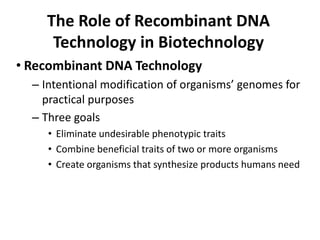
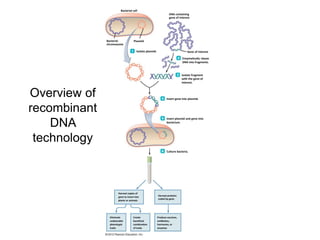
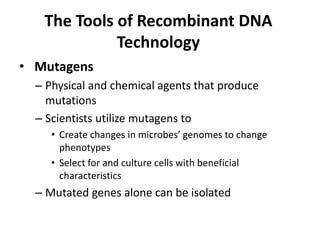
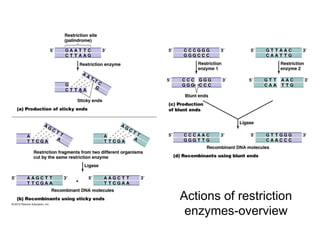
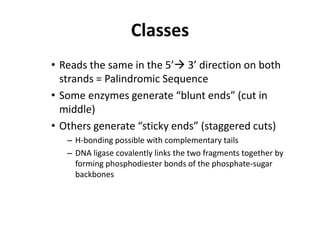
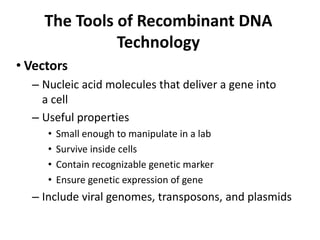
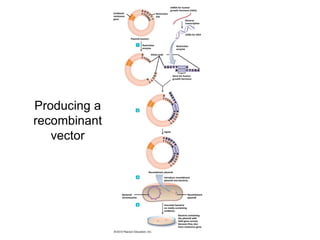
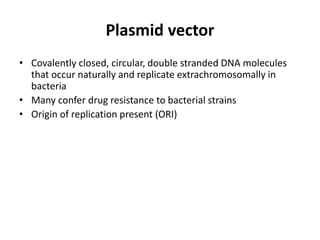
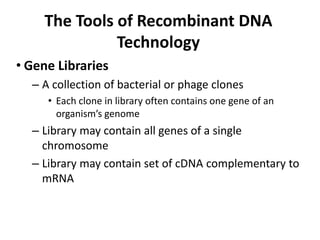
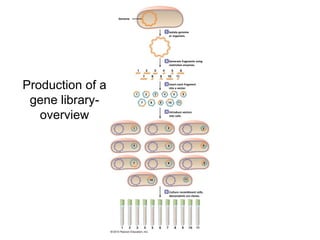

Recombinant DNA technology involves intentionally modifying organisms' genomes for practical purposes such as eliminating undesirable traits, combining beneficial traits from different organisms, or creating organisms that synthesize useful products. The key steps involve isolating a gene of interest, inserting it into a plasmid, introducing the plasmid into bacteria, and harvesting copies of the gene or its protein products. Common tools used include mutagens, reverse transcriptase to synthesize cDNA, synthetic nucleic acids, restriction enzymes to cut DNA at specific sites, vectors to deliver genes into cells, and gene libraries containing collections of cloned genes.


