Downloaded 591 times
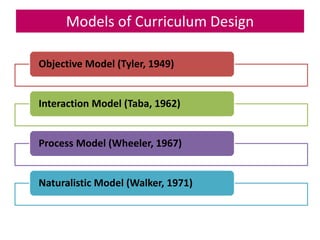
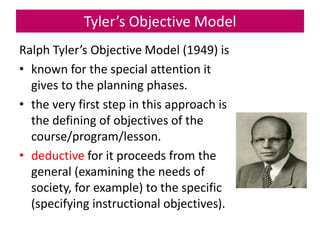
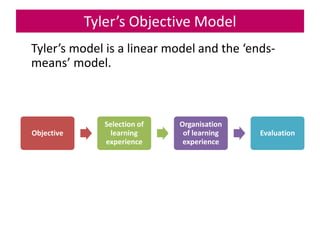

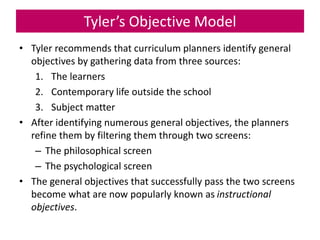
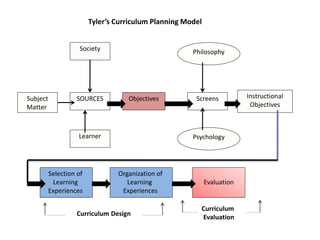
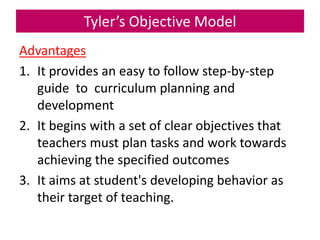
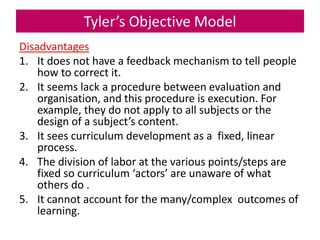
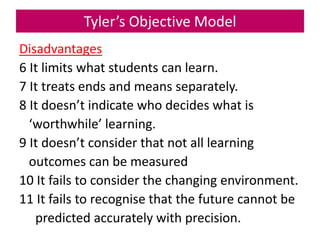
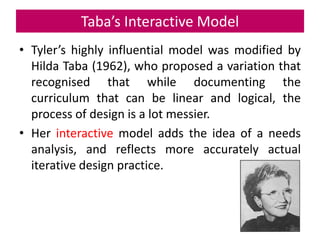
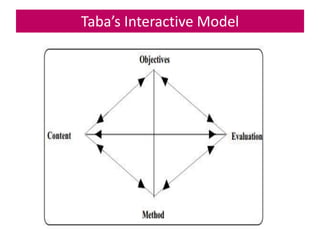
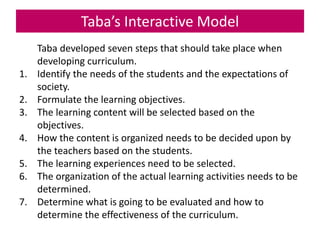
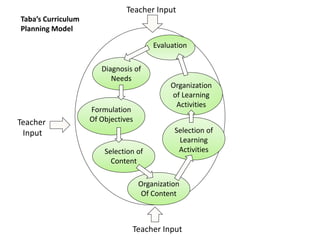
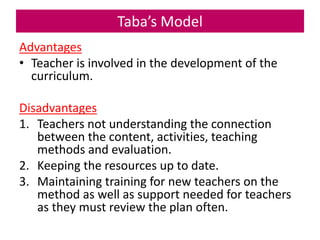
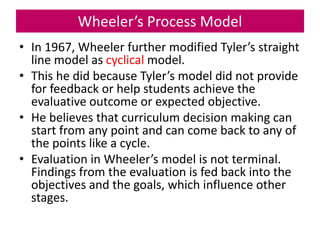
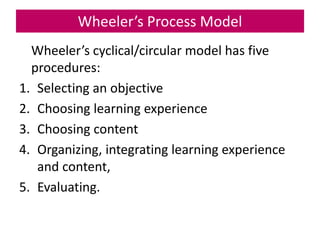

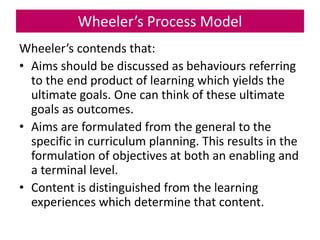
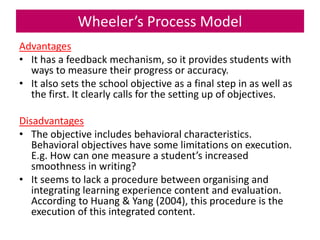
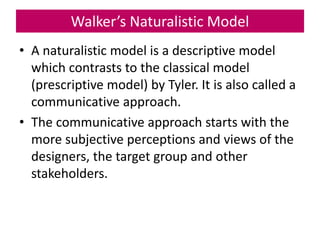
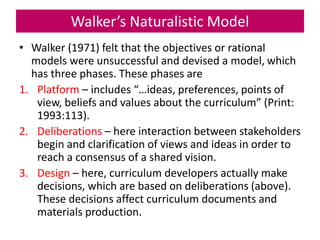
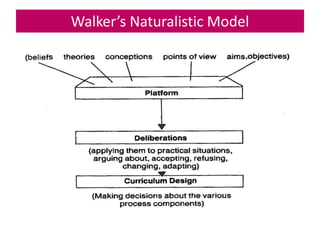
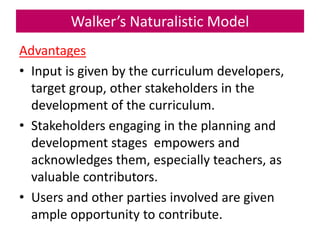
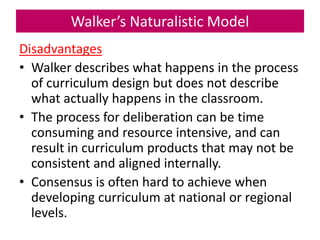
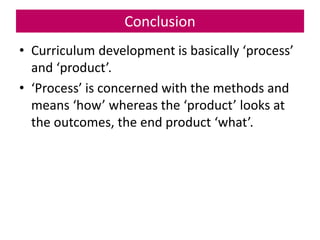
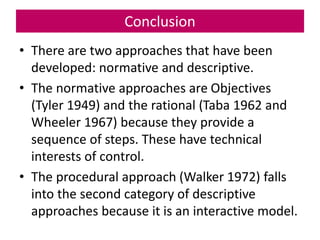
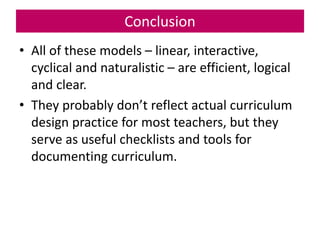

The document discusses several models of curriculum design: Tyler's Objective Model (1949), Taba's Interactive Model (1962), Wheeler's Process Model (1967), and Walker's Naturalistic Model (1971). It provides details on the key aspects of each model, including their advantages and disadvantages. Tyler's model is linear and focuses on objectives. Taba's model is interactive and involves more teacher input. Wheeler's model is cyclical with feedback. Walker's model is descriptive and emphasizes stakeholder consensus. In conclusion, while the models provide useful frameworks, actual curriculum design in practice may vary and draw from multiple approaches.


