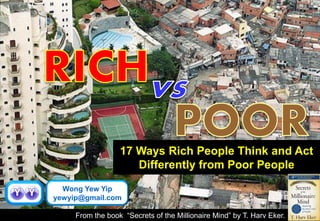
17 Ways Rich People Think and Act Differently from Poor People 
From the book “Secrets of the Millionaire Mind” by T. Harv Eker. 
Wong Yew Yip 
yewyip@gmail.com
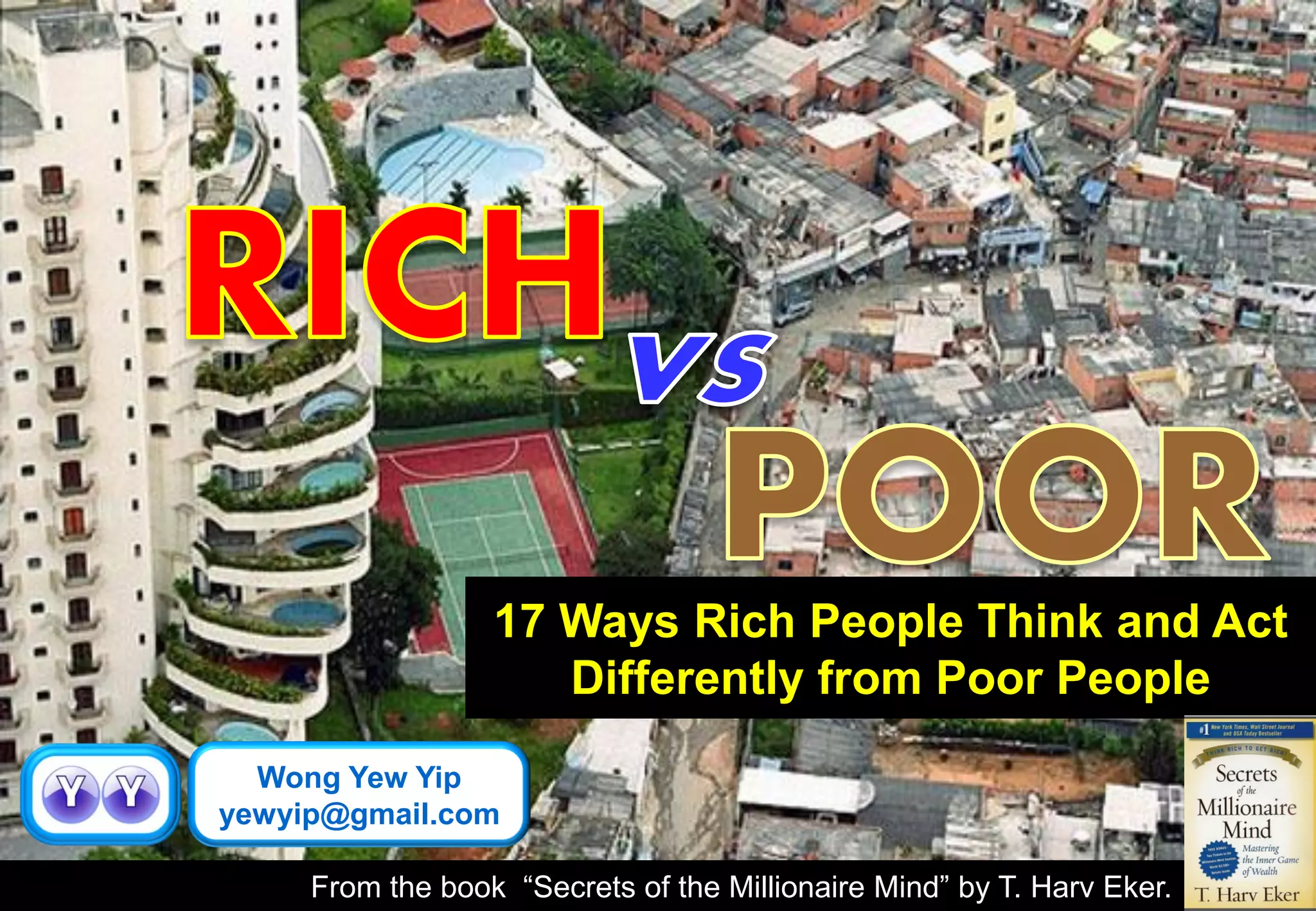
Rich people believe: 
“I create my life.” 
Poor people believe: 
“Life happens to me.” 
Wealth 
Principle: 
When you are complaining, you become a living, breathing “crap magnet.”
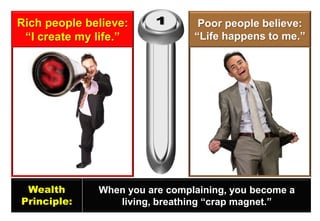
Rich people play the money game to win 
Poor people play the money game to not lose 
Wealth 
Principle: 
If your goal is to be comfortable, chances are 
you’ll never get rich. But if your goal is to be rich, 
chances are you’ll end up mighty comfortable
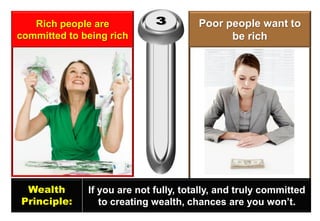
Rich people are committed to being rich 
Poor people want to be rich 
Wealth 
Principle: 
If you are not fully, totally, and truly committed 
to creating wealth, chances are you won’t.
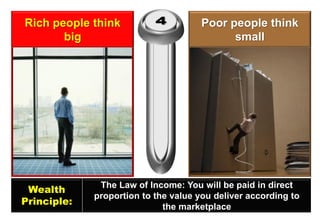
Rich people think big 
Poor people think small 
Wealth 
Principle: 
The Law of Income: You will be paid in direct proportion to the value you deliver according to the marketplace
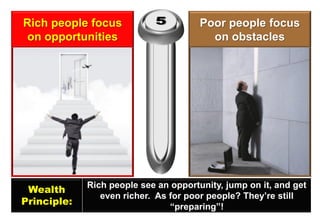
Rich people focus on opportunities 
Poor people focus on obstacles 
Wealth 
Principle: 
Rich people see an opportunity, jump on it, and get even richer. As for poor people? They’re still “preparing”!
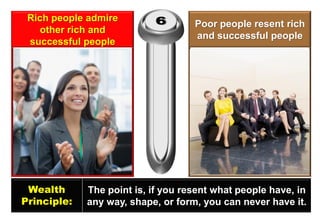
Rich people admire other rich and successful people 
Poor people resent rich and successful people 
Wealth 
Principle: 
The point is, if you resent what people have, in any way, shape, or form, you can never have it.
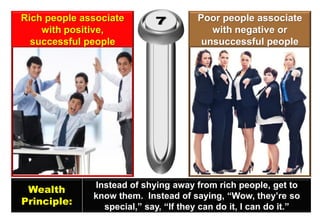
Rich people associate with positive, successful people 
Poor people associate with negative or unsuccessful people 
Wealth 
Principle: 
Instead of shying away from rich people, get to 
know them. Instead of saying, “Wow, they’re so special,” say, “If they can do it, I can do it.”
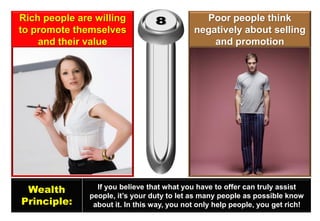
Rich people are willing to promote themselves and their value 
Poor people think negatively about selling and promotion 
Wealth 
Principle: 
If you believe that what you have to offer can truly assist people, it’s your duty to let as many people as possible know about it. In this way, you not only help people, you get rich!
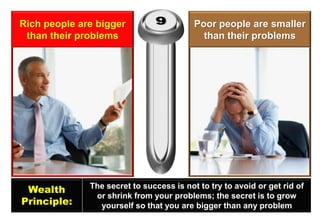
Rich people are bigger than their problems 
Poor people are smaller than their problems 
Wealth 
Principle: 
The secret to success is not to try to avoid or get rid of or shrink from your problems; the secret is to grow yourself so that you are bigger than any problem
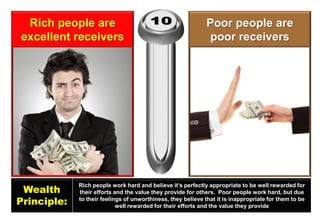
Rich people are excellent receivers 
Poor people are poor receivers 
Wealth 
Principle: 
Rich people work hard and believe it’s perfectly appropriate to be well rewarded for their efforts and the value they provide for others. Poor people work hard, but due to their feelings of unworthiness, they believe that it is inappropriate for them to be well rewarded for their efforts and the value they provide
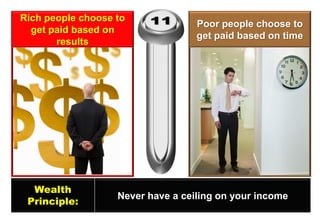
Rich people choose to get paid based on results 
Poor people choose to get paid based on time 
Wealth 
Principle: 
Never have a ceiling on your income
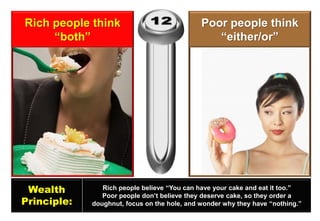
Rich people think “both” 
Poor people think “either/or” 
Wealth 
Principle: 
Rich people believe “You can have your cake and eat it too.” 
Poor people don’t believe they deserve cake, so they order a doughnut, focus on the hole, and wonder why they have “nothing.”
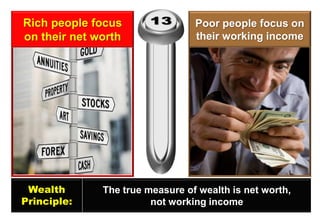
Rich people focus on their net worth 
Poor people focus on their working income 
Wealth 
Principle: 
The true measure of wealth is net worth, 
not working income
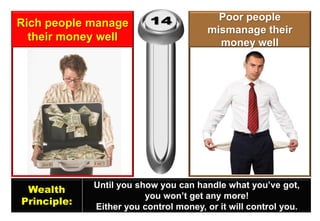
Rich people manage their money well 
Poor people mismanage their money well 
Wealth 
Principle: 
Until you show you can handle what you’ve got, you won’t get any more! 
Either you control money, or it will control you.
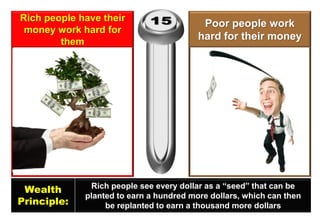
Rich people have their money work hard for them 
Poor people work hard for their money 
Wealth 
Principle: 
Rich people see every dollar as a “seed” that can be planted to earn a hundred more dollars, which can then be replanted to earn a thousand more dollars
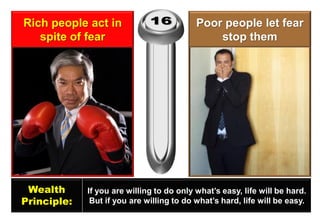
Rich people act in spite of fear 
Poor people let fear stop them 
Wealth 
Principle: 
If you are willing to do only what’s easy, life will be hard. But if you are willing to do what’s hard, life will be easy.
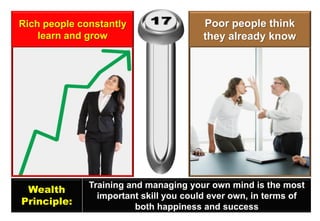
Rich people constantly learn and grow 
Poor people think they already know 
Wealth 
Principle: 
Training and managing your own mind is the most 
important skill you could ever own, in terms of both happiness and success
To conclude, 
here are 3 relevant quotes from 
Napoleon Hill in his best selling book,
“You are the master of your destiny. You can influence, direct and control your own environment. You can make your life what you want it to be.” 
~ Napoleon Hill, Think and Grow Rich
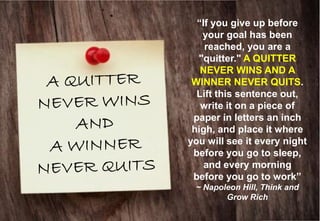
“If you give up before your goal has been reached, you are a "quitter." A QUITTER NEVER WINS AND A WINNER NEVER QUITS. Lift this sentence out, write it on a piece of paper in letters an inch high, and place it where you will see it every night before you go to sleep, and every morning before you go to work” ~ Napoleon Hill, Think and Grow Rich
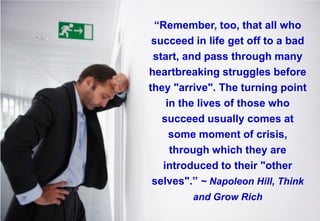
“Remember, too, that all who succeed in life get off to a bad start, and pass through many heartbreaking struggles before they "arrive". The turning point in the lives of those who succeed usually comes at some moment of crisis, through which they are introduced to their "other selves".” ~ Napoleon Hill, Think and Grow Rich
Thank You 
yewyip@gmail.com

Rich vs poor

  • 1.
    17 Ways RichPeople Think and Act Differently from Poor People From the book “Secrets of the Millionaire Mind” by T. Harv Eker. Wong Yew Yip yewyip@gmail.com
  • 2.
    Rich people believe: “I create my life.” Poor people believe: “Life happens to me.” Wealth Principle: When you are complaining, you become a living, breathing “crap magnet.”
  • 3.
    Rich people playthe money game to win Poor people play the money game to not lose Wealth Principle: If your goal is to be comfortable, chances are you’ll never get rich. But if your goal is to be rich, chances are you’ll end up mighty comfortable
  • 4.
    Rich people arecommitted to being rich Poor people want to be rich Wealth Principle: If you are not fully, totally, and truly committed to creating wealth, chances are you won’t.
  • 5.
    Rich people thinkbig Poor people think small Wealth Principle: The Law of Income: You will be paid in direct proportion to the value you deliver according to the marketplace
  • 6.
    Rich people focuson opportunities Poor people focus on obstacles Wealth Principle: Rich people see an opportunity, jump on it, and get even richer. As for poor people? They’re still “preparing”!
  • 7.
    Rich people admireother rich and successful people Poor people resent rich and successful people Wealth Principle: The point is, if you resent what people have, in any way, shape, or form, you can never have it.
  • 8.
    Rich people associatewith positive, successful people Poor people associate with negative or unsuccessful people Wealth Principle: Instead of shying away from rich people, get to know them. Instead of saying, “Wow, they’re so special,” say, “If they can do it, I can do it.”
  • 9.
    Rich people arewilling to promote themselves and their value Poor people think negatively about selling and promotion Wealth Principle: If you believe that what you have to offer can truly assist people, it’s your duty to let as many people as possible know about it. In this way, you not only help people, you get rich!
  • 10.
    Rich people arebigger than their problems Poor people are smaller than their problems Wealth Principle: The secret to success is not to try to avoid or get rid of or shrink from your problems; the secret is to grow yourself so that you are bigger than any problem
  • 11.
    Rich people areexcellent receivers Poor people are poor receivers Wealth Principle: Rich people work hard and believe it’s perfectly appropriate to be well rewarded for their efforts and the value they provide for others. Poor people work hard, but due to their feelings of unworthiness, they believe that it is inappropriate for them to be well rewarded for their efforts and the value they provide
  • 12.
    Rich people chooseto get paid based on results Poor people choose to get paid based on time Wealth Principle: Never have a ceiling on your income
  • 13.
    Rich people think“both” Poor people think “either/or” Wealth Principle: Rich people believe “You can have your cake and eat it too.” Poor people don’t believe they deserve cake, so they order a doughnut, focus on the hole, and wonder why they have “nothing.”
  • 14.
    Rich people focuson their net worth Poor people focus on their working income Wealth Principle: The true measure of wealth is net worth, not working income
  • 15.
    Rich people managetheir money well Poor people mismanage their money well Wealth Principle: Until you show you can handle what you’ve got, you won’t get any more! Either you control money, or it will control you.
  • 16.
    Rich people havetheir money work hard for them Poor people work hard for their money Wealth Principle: Rich people see every dollar as a “seed” that can be planted to earn a hundred more dollars, which can then be replanted to earn a thousand more dollars
  • 17.
    Rich people actin spite of fear Poor people let fear stop them Wealth Principle: If you are willing to do only what’s easy, life will be hard. But if you are willing to do what’s hard, life will be easy.
  • 18.
    Rich people constantlylearn and grow Poor people think they already know Wealth Principle: Training and managing your own mind is the most important skill you could ever own, in terms of both happiness and success
  • 19.
    To conclude, hereare 3 relevant quotes from Napoleon Hill in his best selling book,
  • 20.
    “You are themaster of your destiny. You can influence, direct and control your own environment. You can make your life what you want it to be.” ~ Napoleon Hill, Think and Grow Rich
  • 21.
    “If you giveup before your goal has been reached, you are a "quitter." A QUITTER NEVER WINS AND A WINNER NEVER QUITS. Lift this sentence out, write it on a piece of paper in letters an inch high, and place it where you will see it every night before you go to sleep, and every morning before you go to work” ~ Napoleon Hill, Think and Grow Rich
  • 22.
    “Remember, too, thatall who succeed in life get off to a bad start, and pass through many heartbreaking struggles before they "arrive". The turning point in the lives of those who succeed usually comes at some moment of crisis, through which they are introduced to their "other selves".” ~ Napoleon Hill, Think and Grow Rich
  • 23.