Metabolism: Basic Concepts 
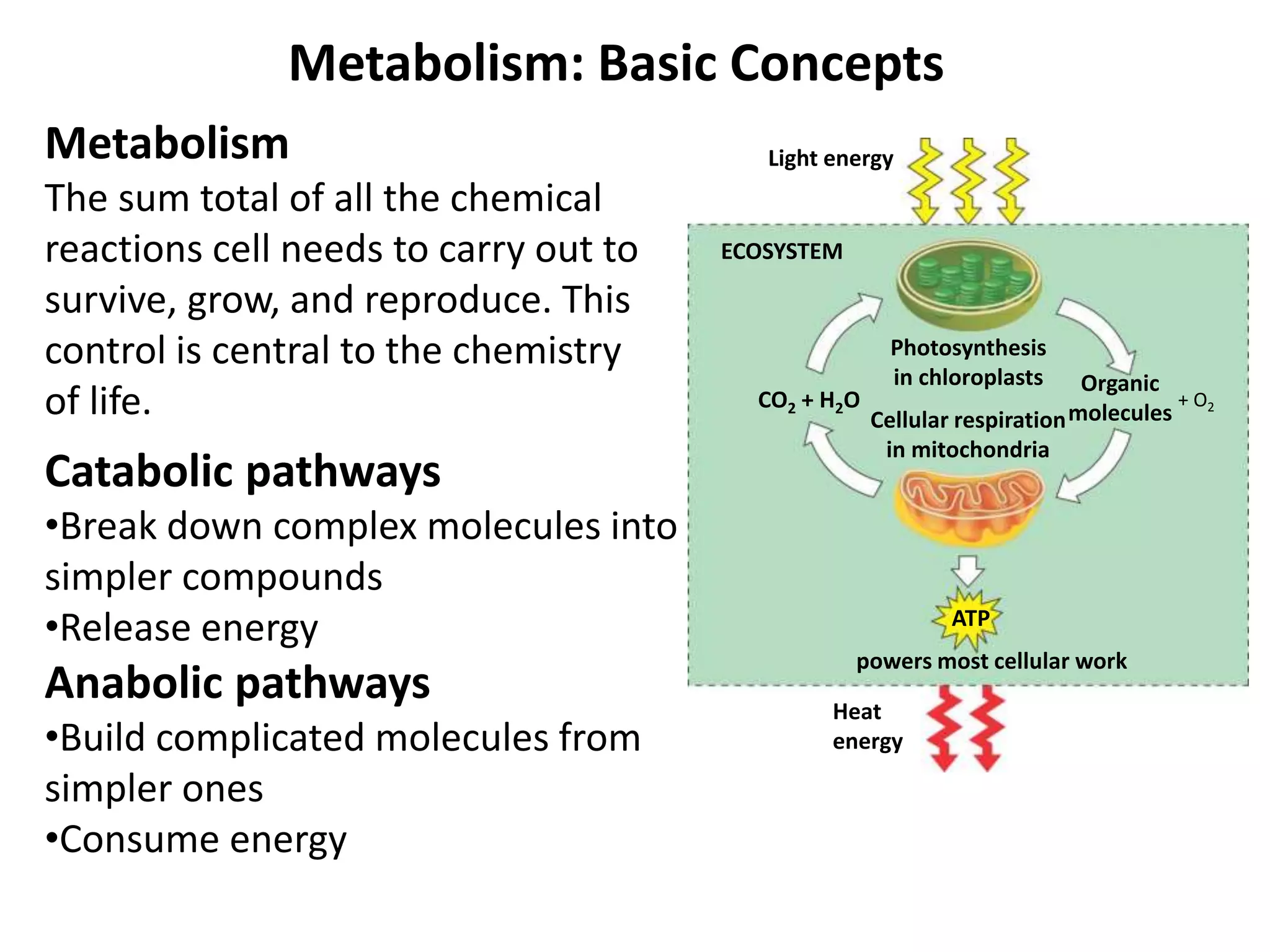
Light energy 
ECOSYSTEM 
CO2 + H2O 
Photosynthesis 
in chloroplasts 
Cellular respiration 
in mitochondria 
Organic 
molecules 
+ O2 
ATP 
powers most cellular work 
Heat 
energy 
Metabolism 
The sum total of all the chemical 
reactions cell needs to carry out to 
survive, grow, and reproduce. This 
control is central to the chemistry 
of life. 
Catabolic pathways 
•Break down complex molecules into 
simpler compounds 
•Release energy 
Anabolic pathways 
•Build complicated molecules from 
simpler ones 
•Consume energy
Cells obtain energy by the oxidation of organic 
Molecules 
Proteins Carbohydrates Fats 
Amino 
acids 
Sugars Glycerol Fatty 
acids 
Glycolysis 
Glucose 
Glyceraldehyde-3- P 
Pyruvate 
Acetyl CoA 
NH3 
Citric 
acid 
cycle 
Oxidative 
phosphorylation
Organisms live at the expense of free energy 
Not all of a system's energy is available to do work. The amount of 
energy that is available to do work is described by the concept 
of free energy. 
Significance of Free Energy: 
•Indicates the maximum amount of a system's energy which is 
available to do work. 
•Indicates whether a reaction will occur spontaneously or not. 
Free Energy and Metabolism 
Reactions can be classified based upon their free energy changes: 
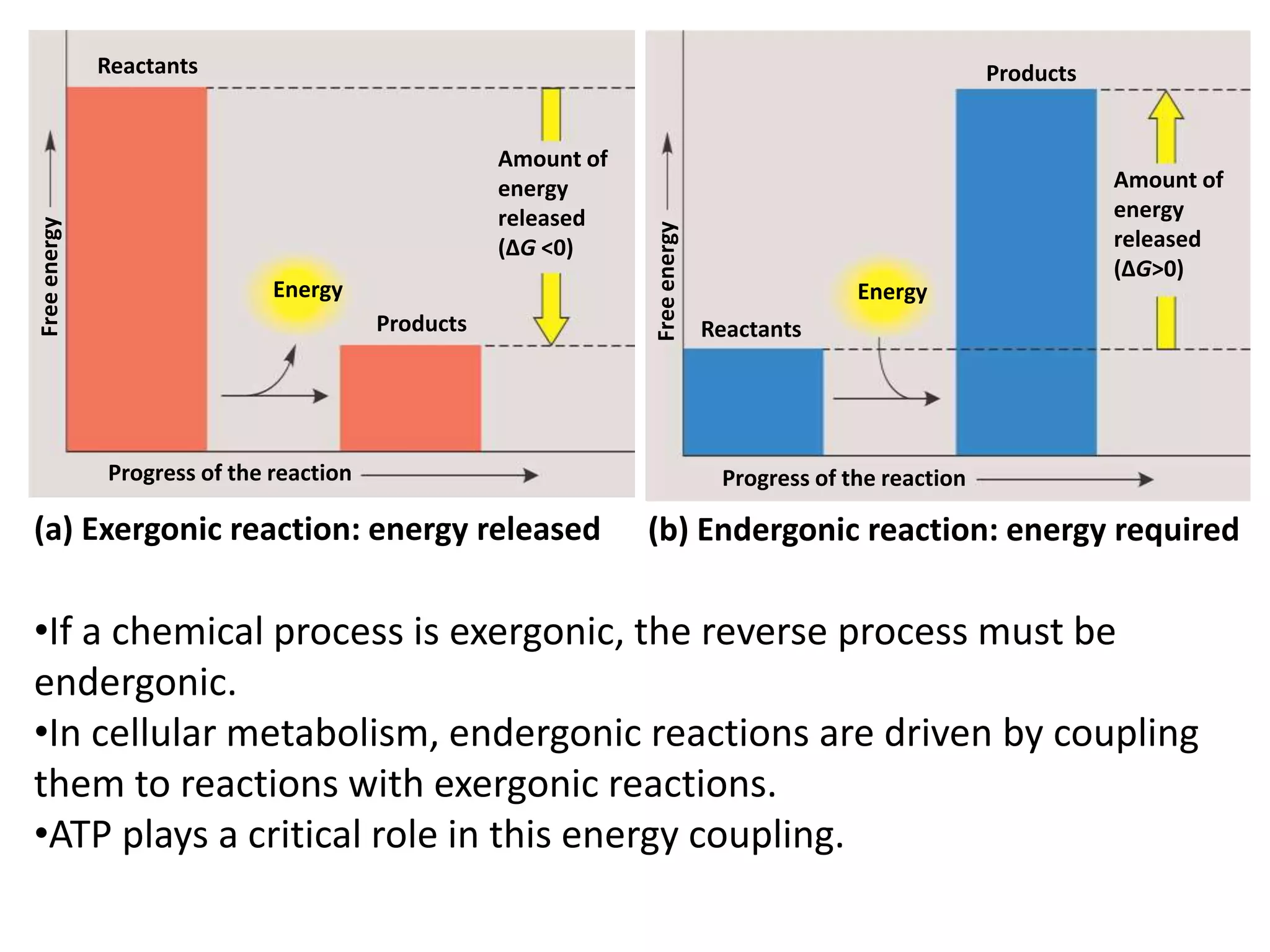
•Exergonic reaction= A reaction that proceeds with a net release of 
free energy and is spontaneous. 
•Endergonic reaction= An energy-requiring reaction that proceeds 
with a net gain of free energy; a reaction that absorbs free energy 
from its surroundings and non spontaneous.
Reactants 
Products 
Energy 
Progress of the reaction 
Amount of 
energy 
released 
(ΔG <0) 
Free energy 
(a) Exergonic reaction: energy released 
Energy 
Products 
Amount of 
energy 
released 
(ΔG>0) 
Reactants 
Progress of the reaction 
Free energy 
(b) Endergonic reaction: energy required 
•If a chemical process is exergonic, the reverse process must be 
endergonic. 
•In cellular metabolism, endergonic reactions are driven by coupling 
them to reactions with exergonic reactions. 
•ATP plays a critical role in this energy coupling.
ATP powers cellular work by coupling exergonic to 
endergonic reactions 
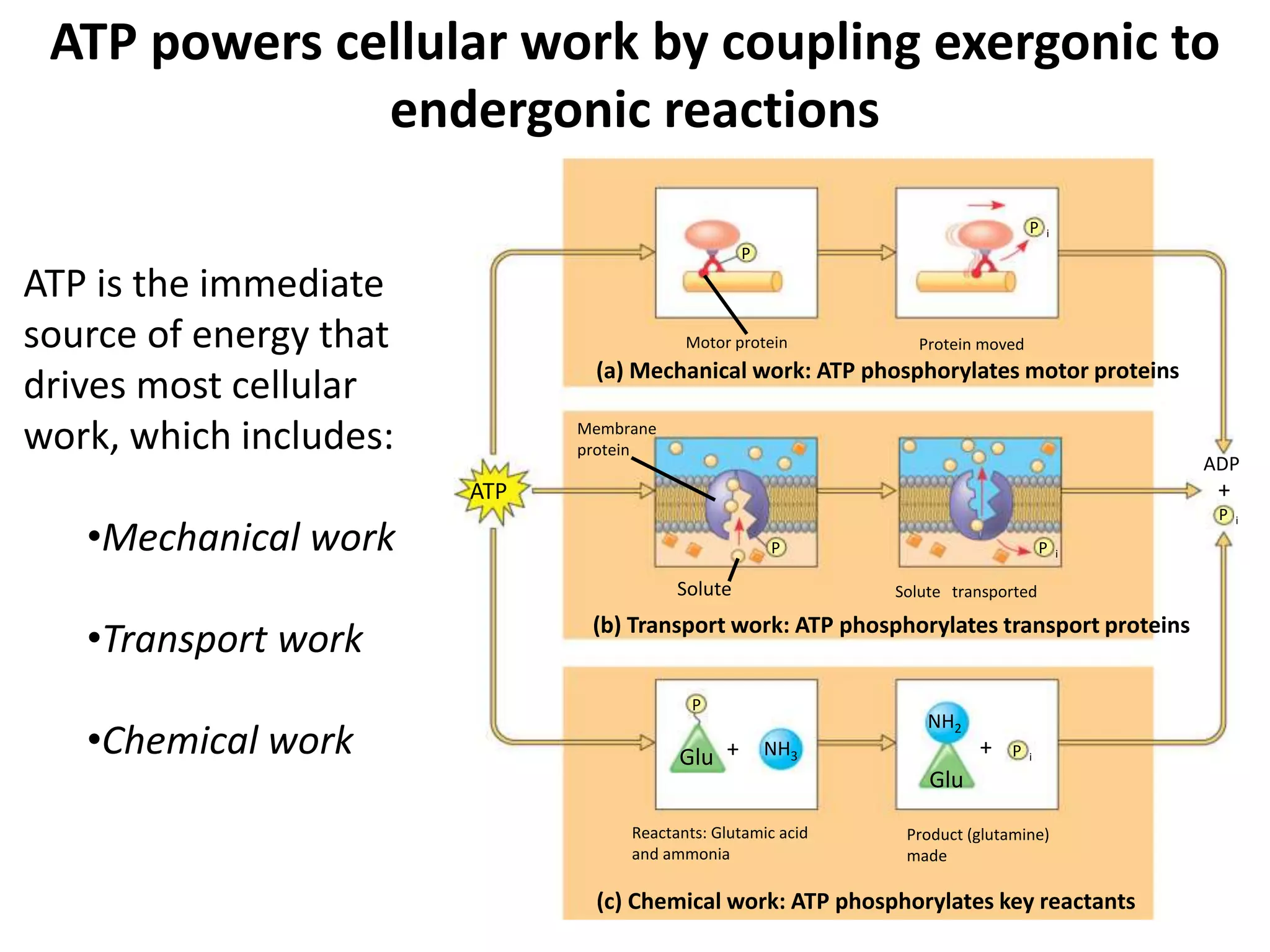
ATP is the immediate 
source of energy that 
drives most cellular 
work, which includes: 
•Mechanical work 
•Transport work 
•Chemical work 
P 
(a) Mechanical work: ATP phosphorylates motor proteins 
Membrane 
protein 
Motor protein 
P i 
Protein moved 
Solute 
P P i 
Solute transported 
(c) Chemical work: ATP phosphorylates key reactants 
ATP 
(b) Transport work: ATP phosphorylates transport proteins 
Glu 
Glu 
NH3 
NH2 
P i 
P i 
+ + 
Reactants: Glutamic acid 
and ammonia 
Product (glutamine) 
made 
ADP 
+ 
P
ATP AS A METABOLIC ENERGY STORAG 
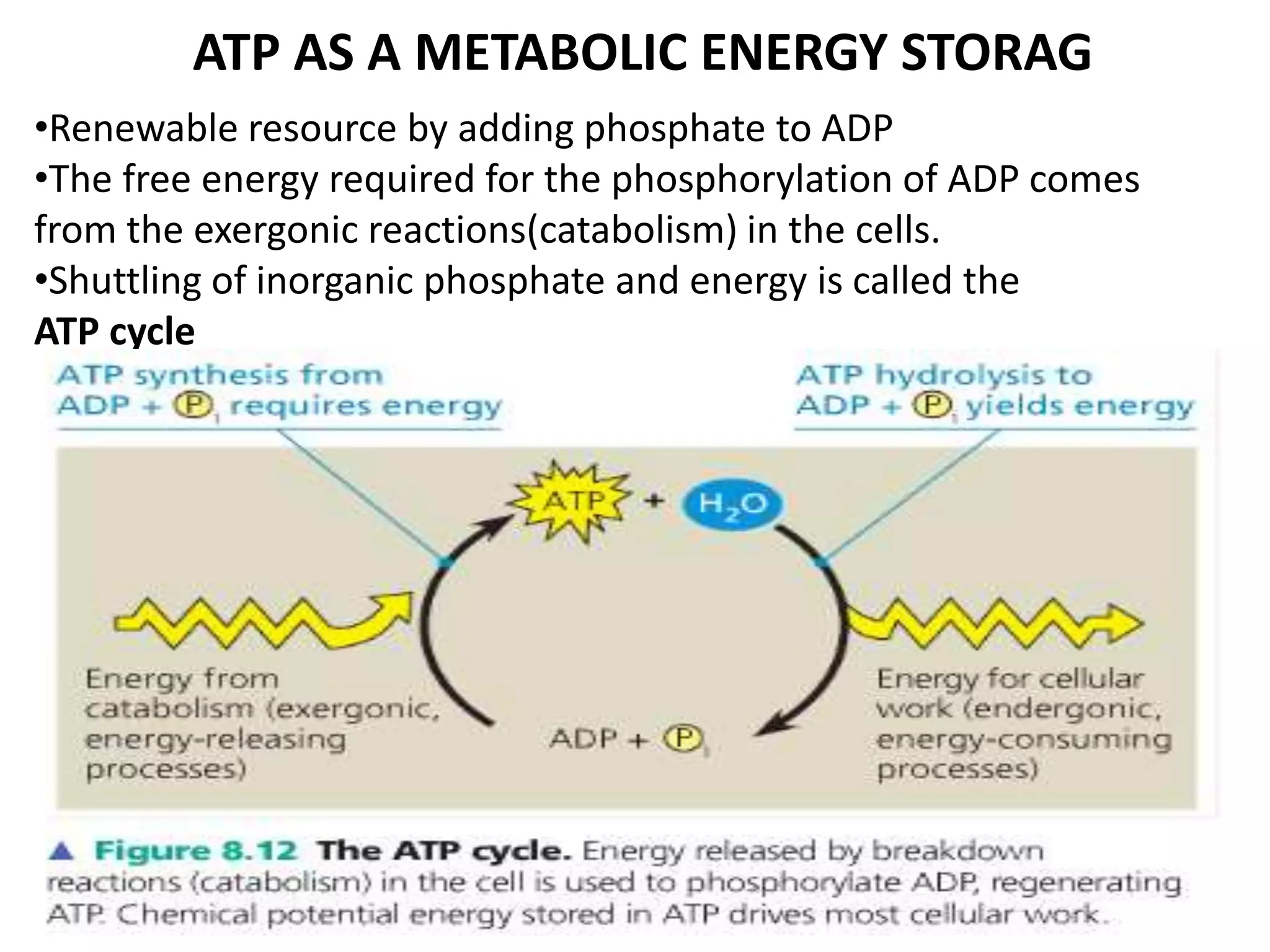
•Renewable resource by adding phosphate to ADP 
•The free energy required for the phosphorylation of ADP comes 
from the exergonic reactions(catabolism) in the cells. 
•Shuttling of inorganic phosphate and energy is called the 
ATP cycle
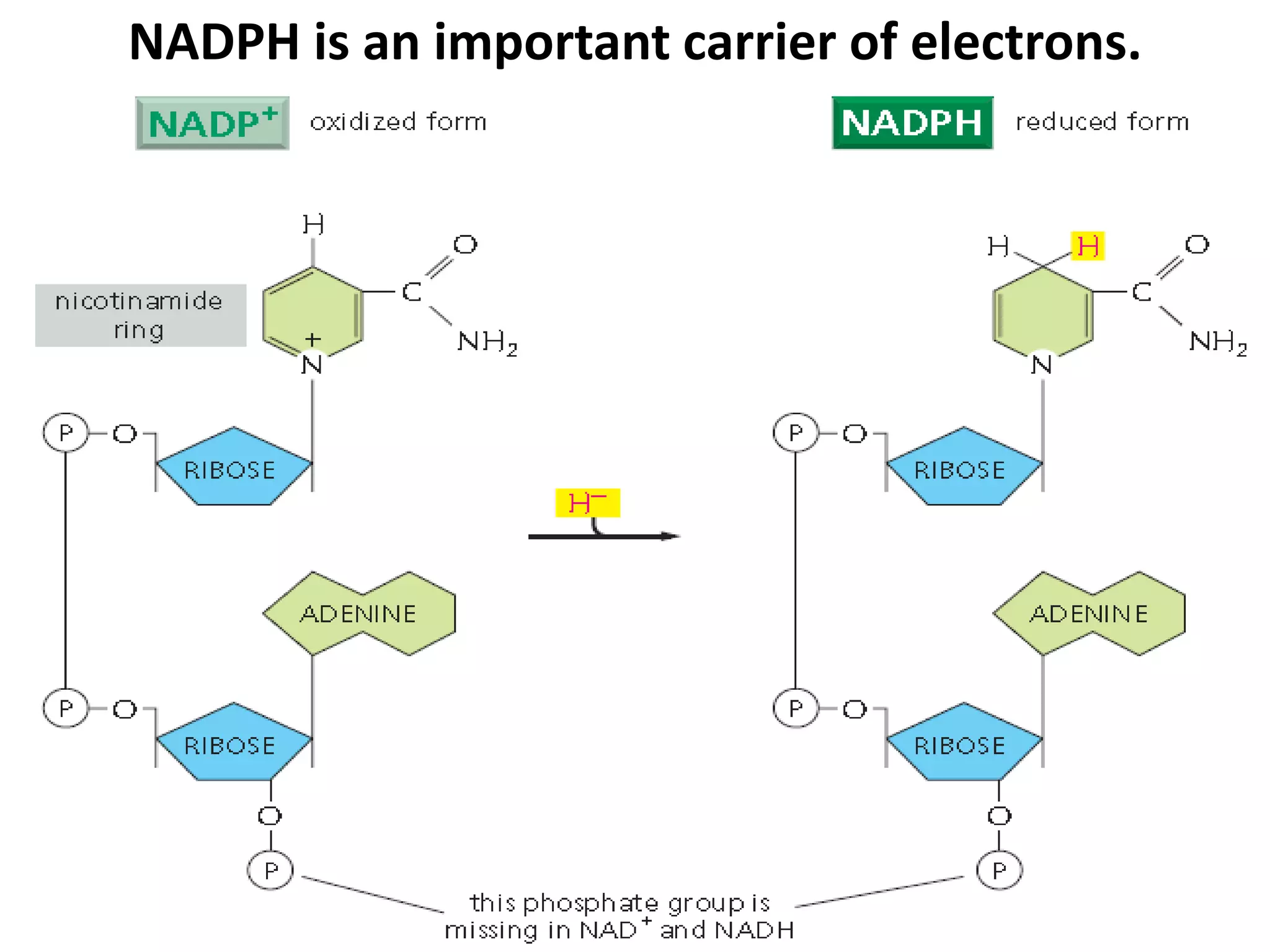
NADPH is an important carrier of electrons.
Chemiosmosis: The energy coupling mechanism. 
•The hydrogen gradient across the membrane created by ATP synthase 
is used to drive cellular work of ATP synthesis 
•It couples the electron transport chain to the ATP synthesis
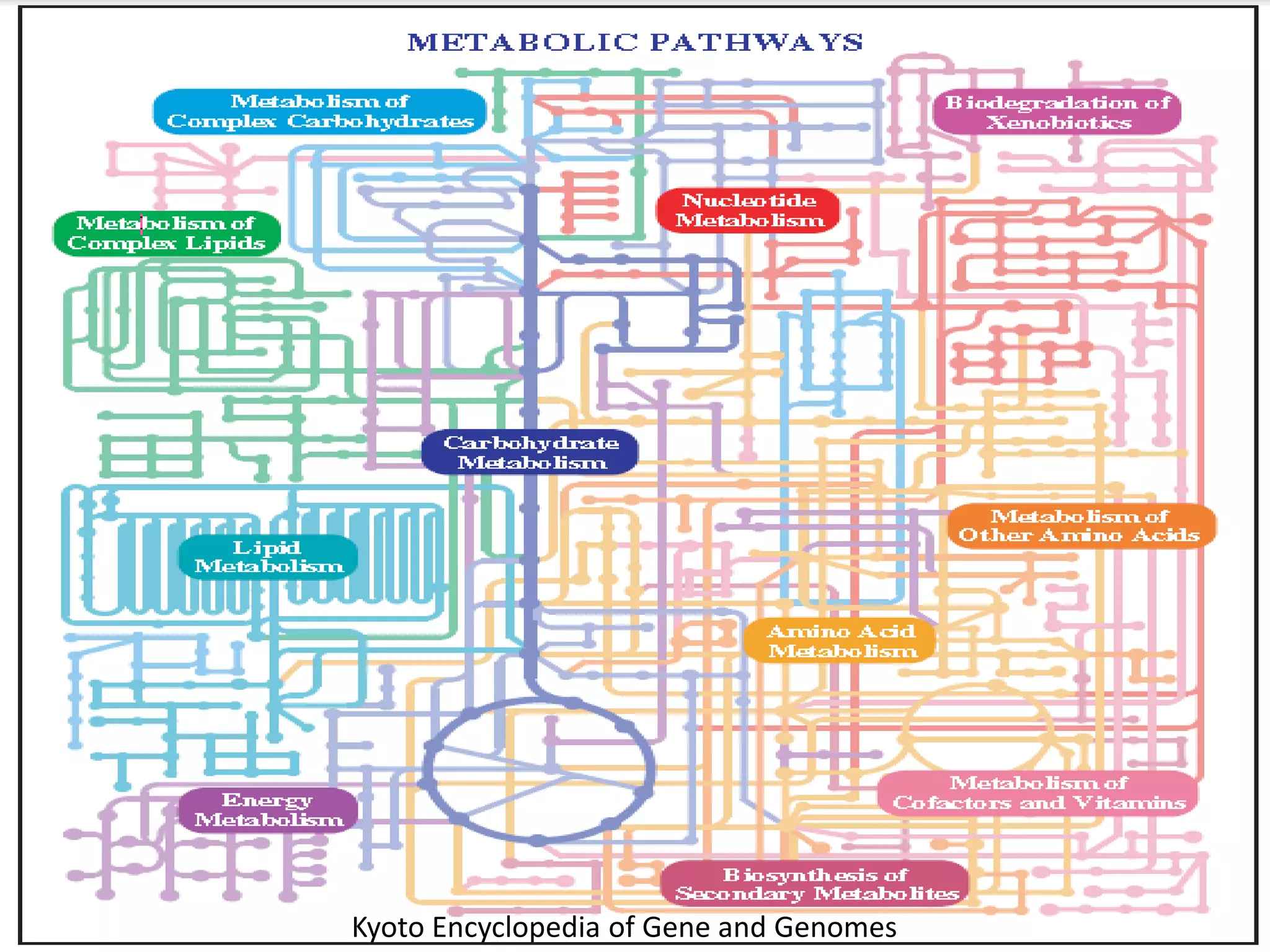
Kyoto Encyclopedia of Gene and Genomes
Major pathways of glucose utilization
Glycolysis
The Citric acid cycle coupled with 
Oxidative phosphorylation
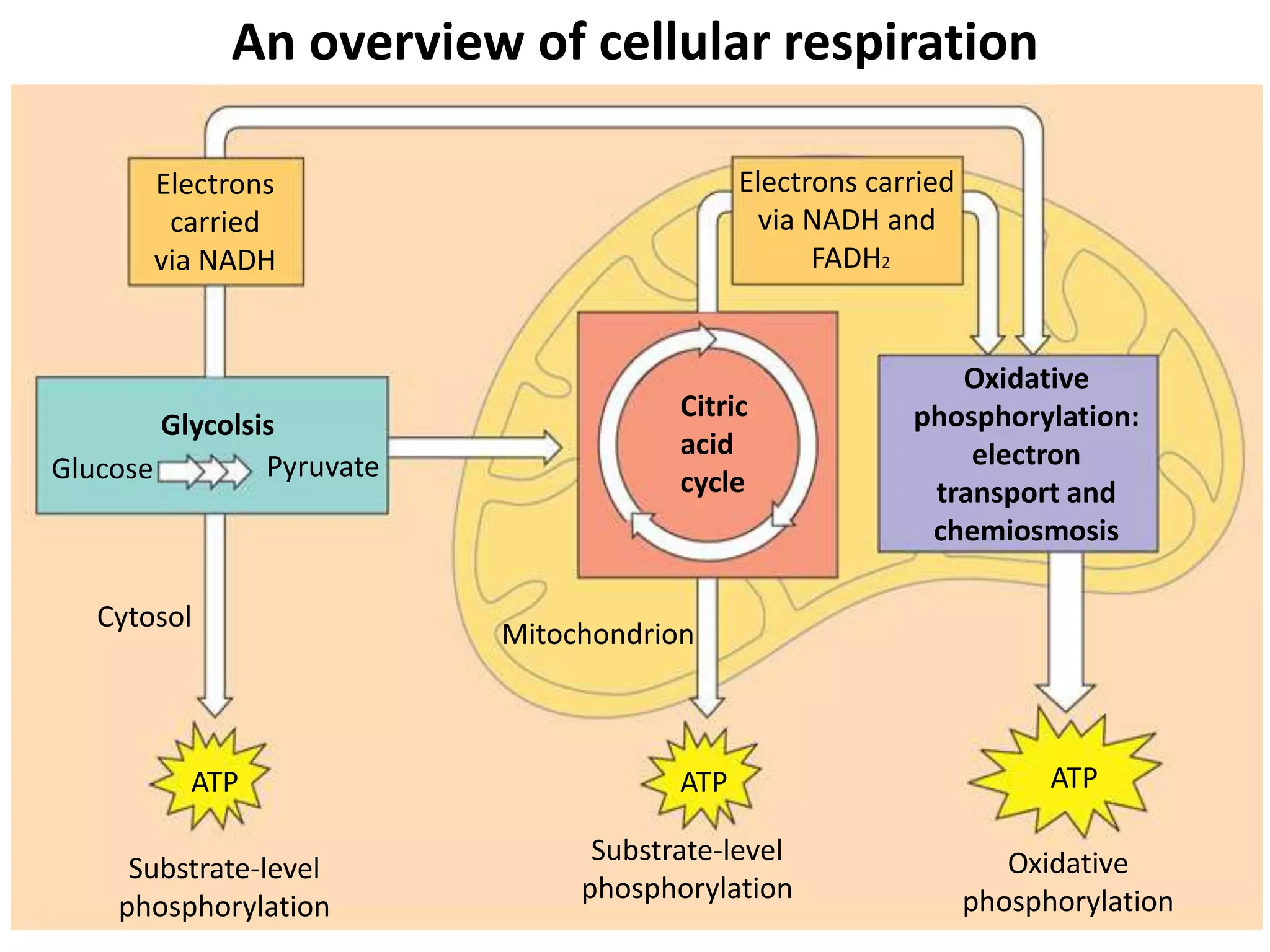
Electrons 
carried 
via NADH 
Glycolsis 
Glucose Pyruvate 
ATP 
Substrate-level 
phosphorylation 
Electrons carried 
via NADH and 
FADH2 
Citric 
acid 
cycle 
Oxidative 
phosphorylation: 
electron 
transport and 
chemiosmosis 
ATP ATP 
Substrate-level 
phosphorylation 
Oxidative 
phosphorylation 
Mitochondrion 
Cytosol 
An overview of cellular respiration
Glyoxylate cycle 
The glyoxylate cycle
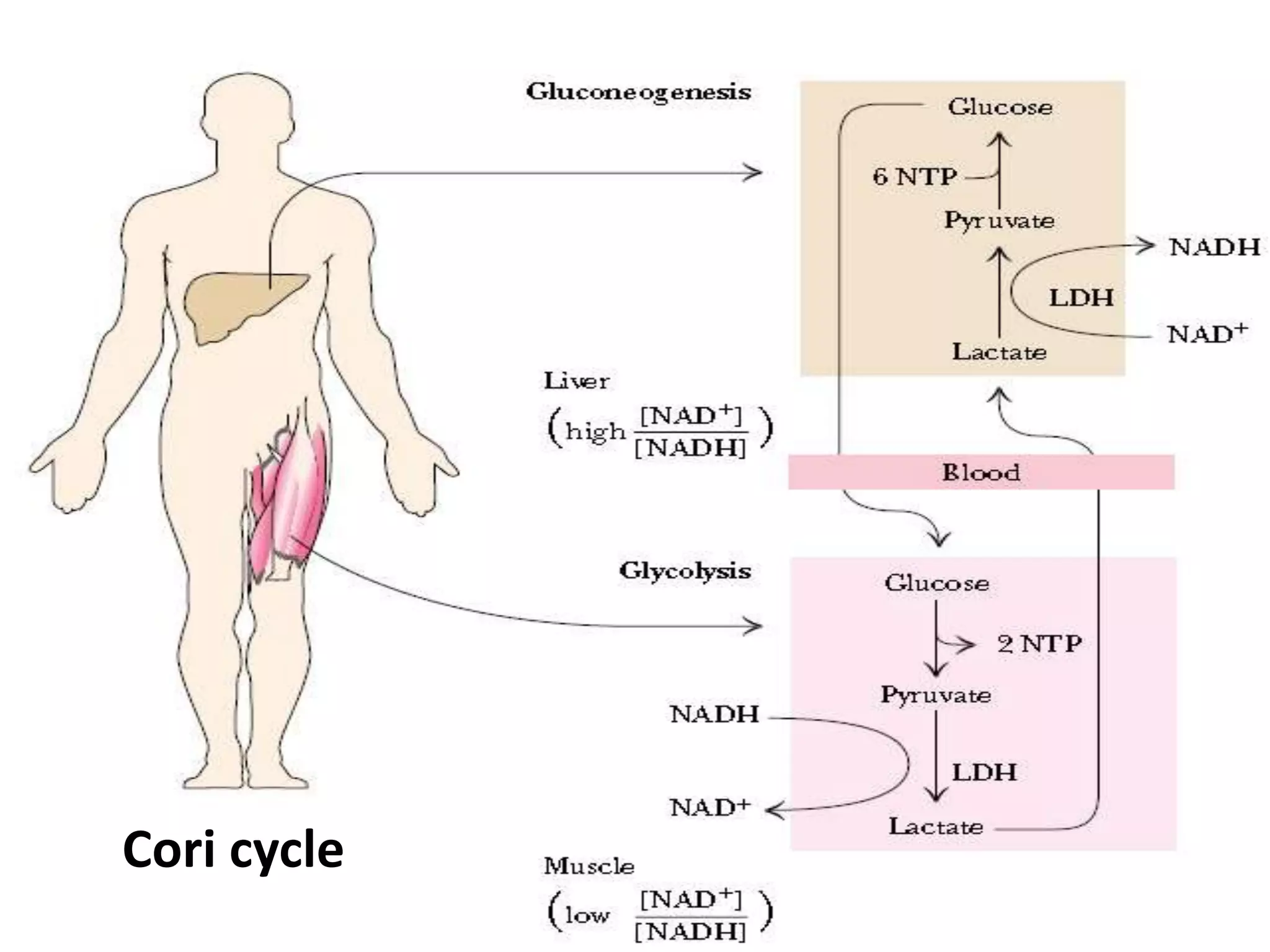
Cori cycle
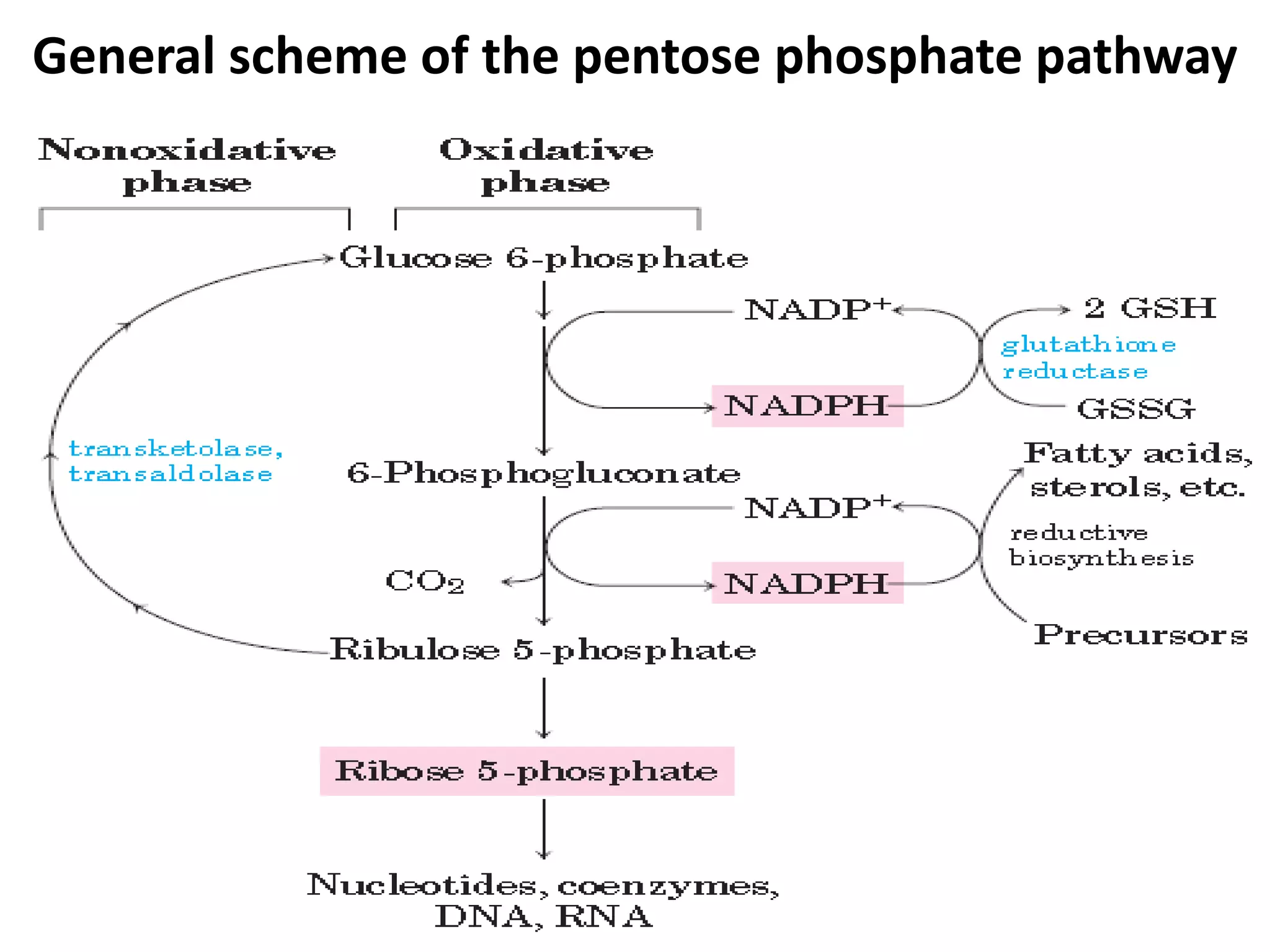
General scheme of the pentose phosphate pathway
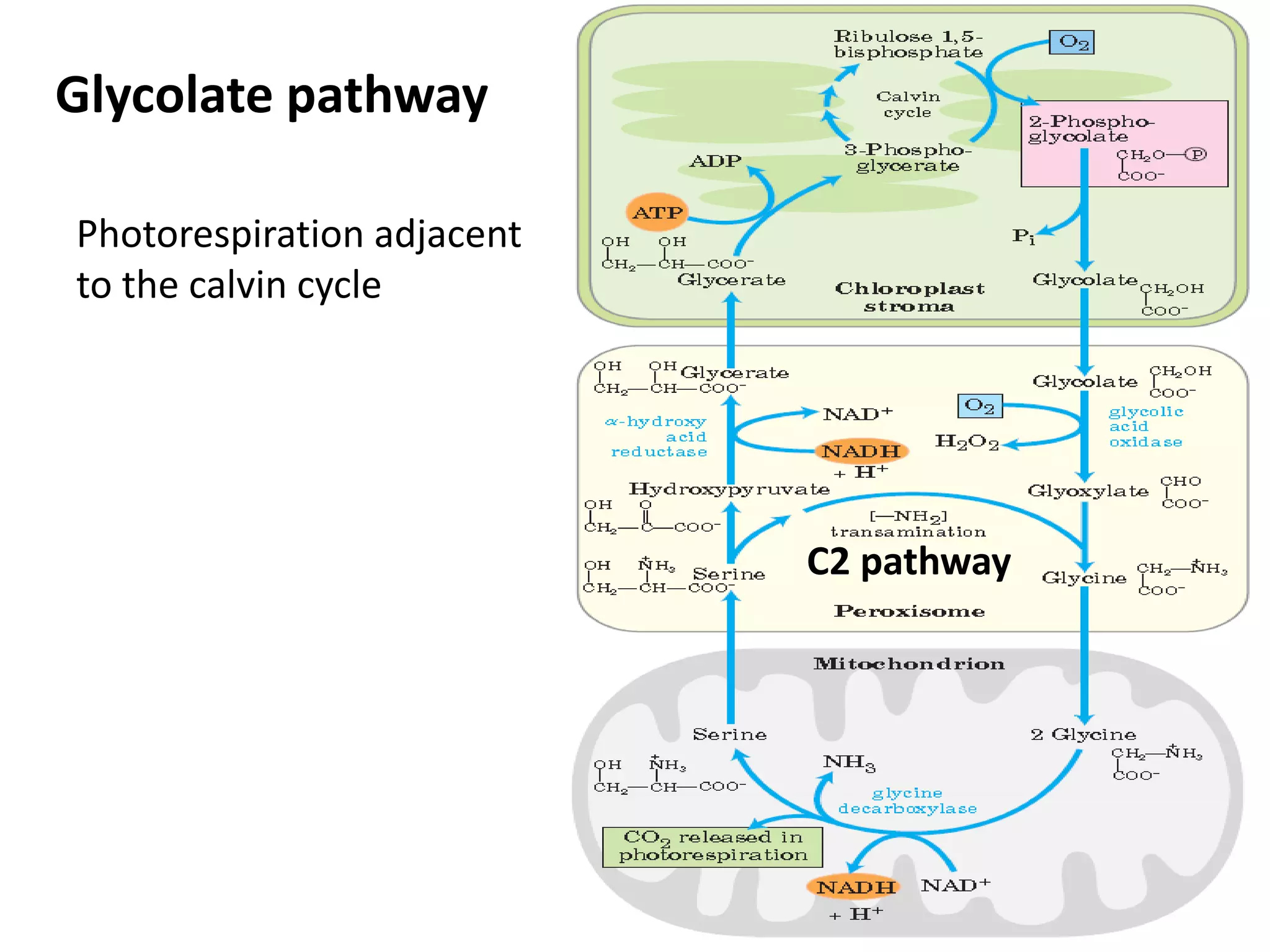
Glycolate pathway 
Photorespiration adjacent 
to the calvin cycle 
C2 pathway
Stoichiometry of Co2 assimilation in the Calvin cycle 
C3 pathway
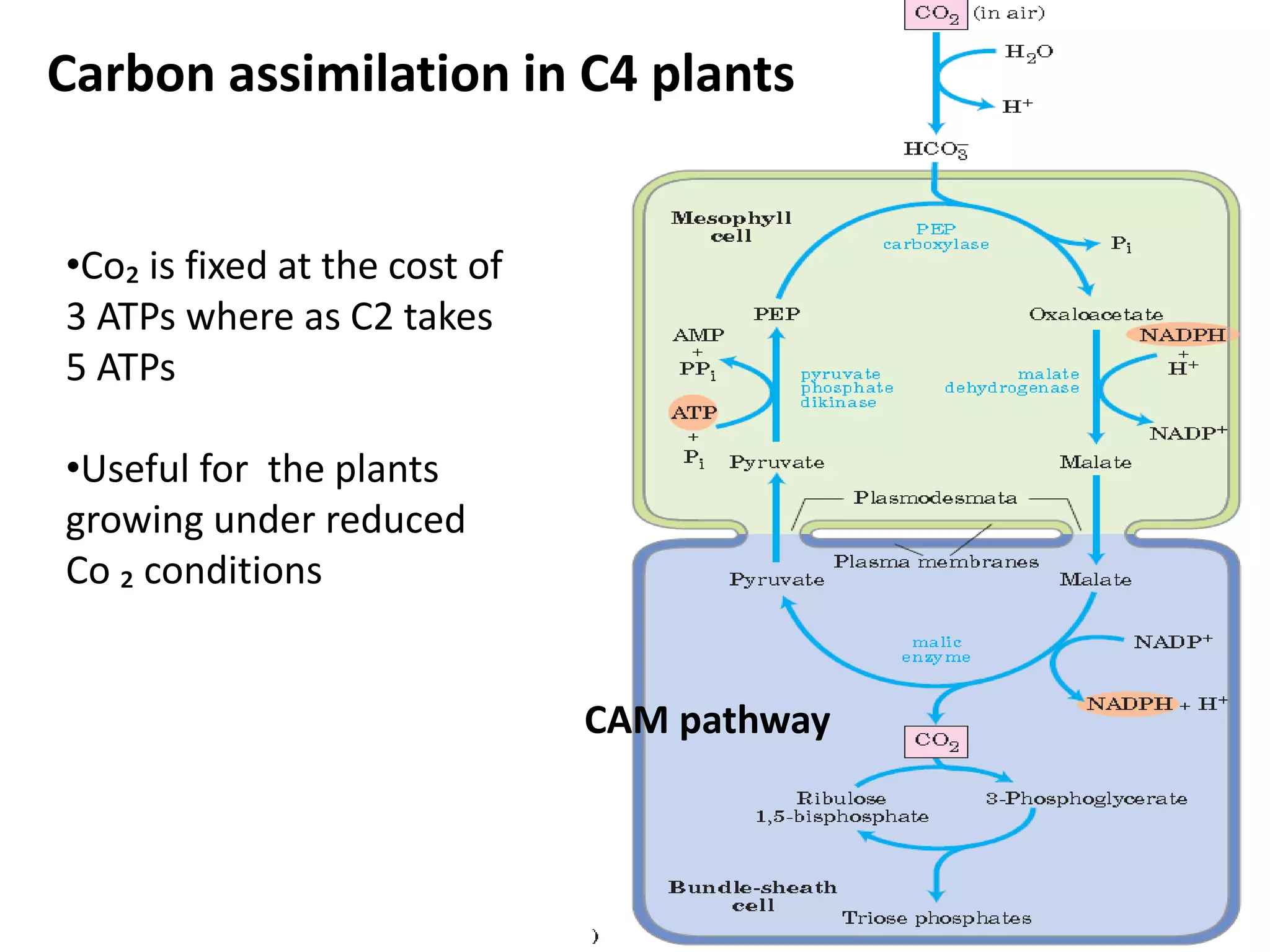
Carbon assimilation in C4 plants 
•Co₂ is fixed at the cost of 
3 ATPs where as C2 takes 
5 ATPs 
•Useful for the plants 
growing under reduced 
Co ₂ conditions 
CAM pathway
Fatty acid biosynthesis
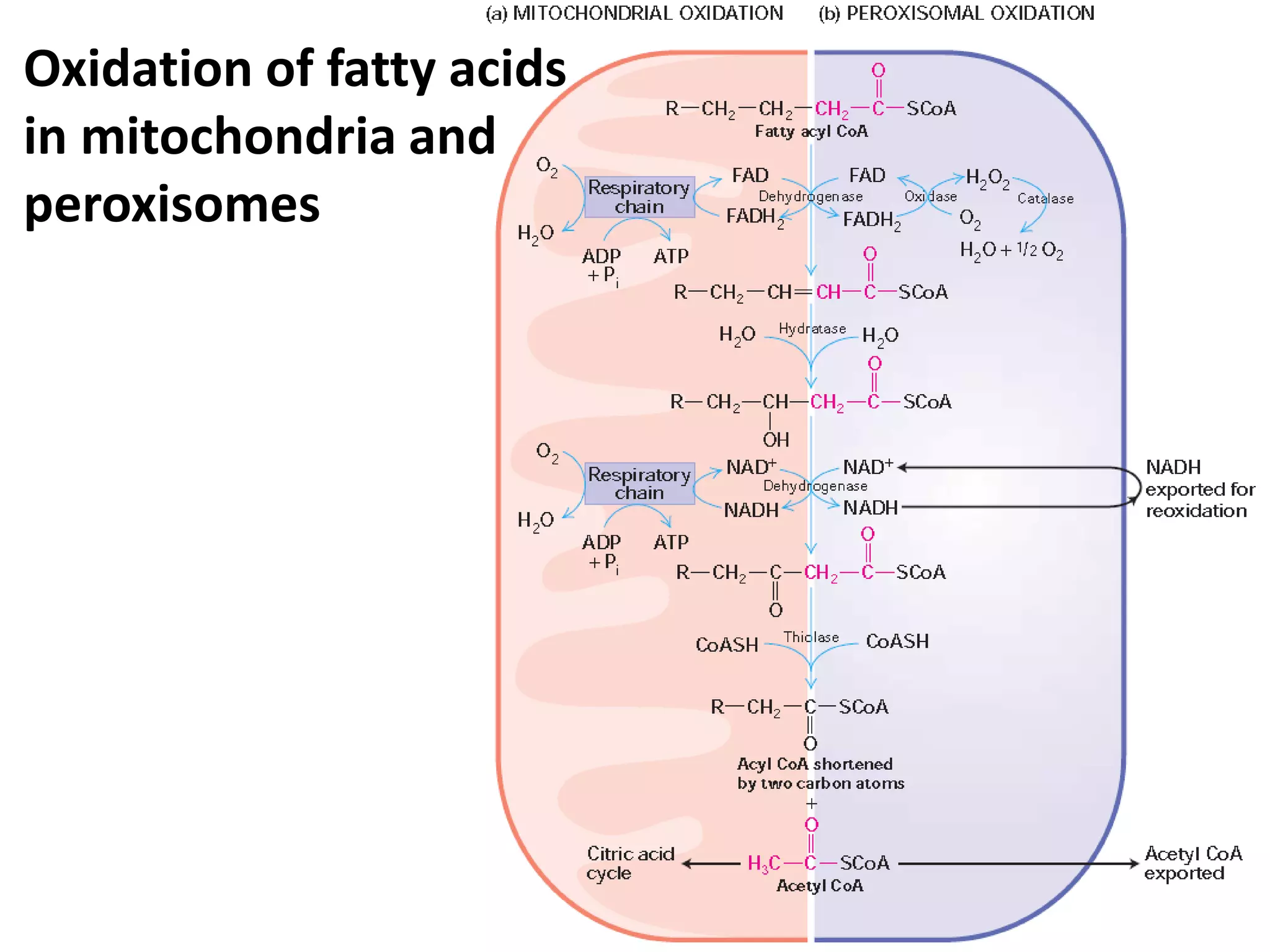
Oxidation of fatty acids 
in mitochondria and 
peroxisomes
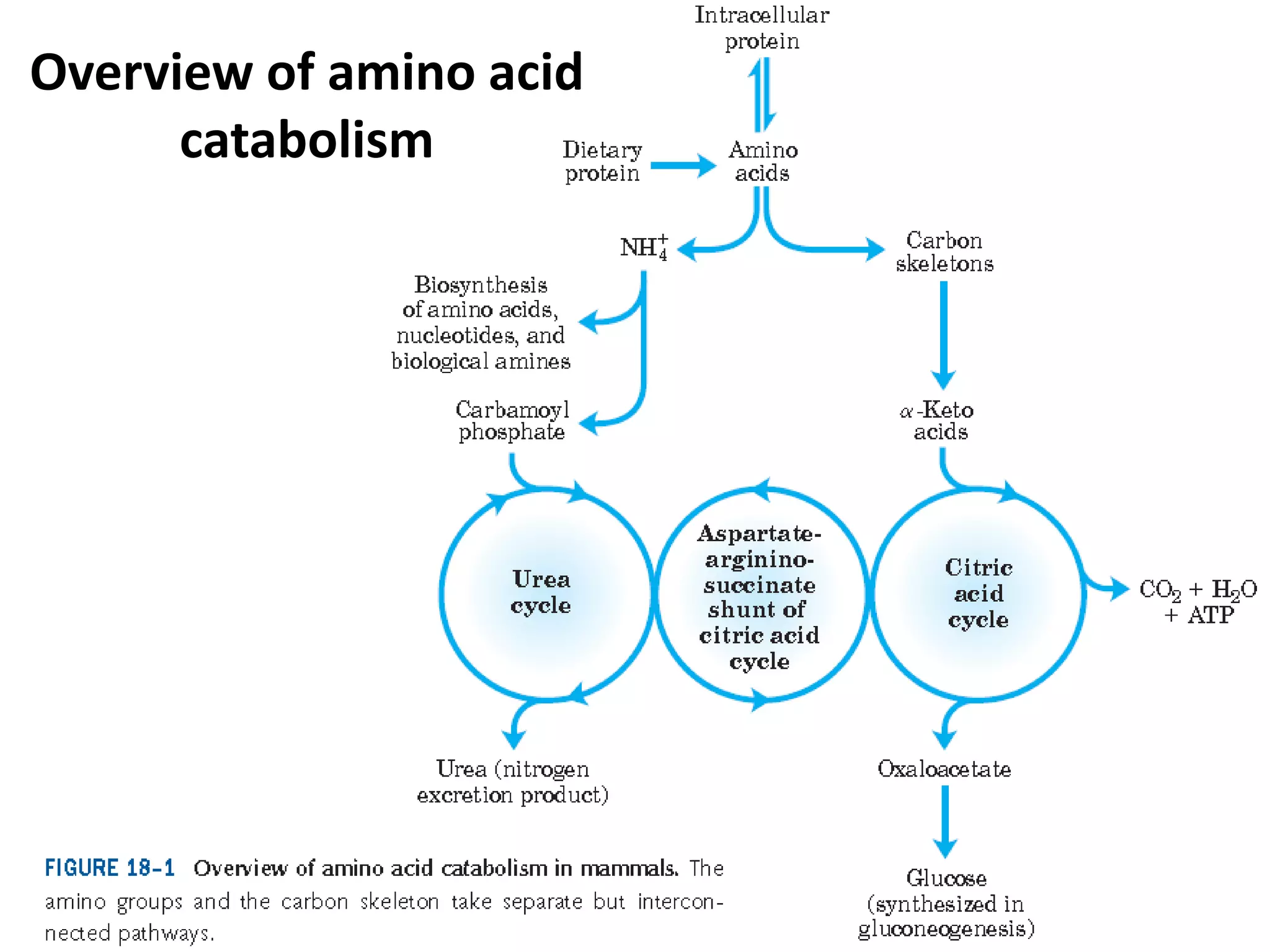
Overview of amino acid 
catabolism
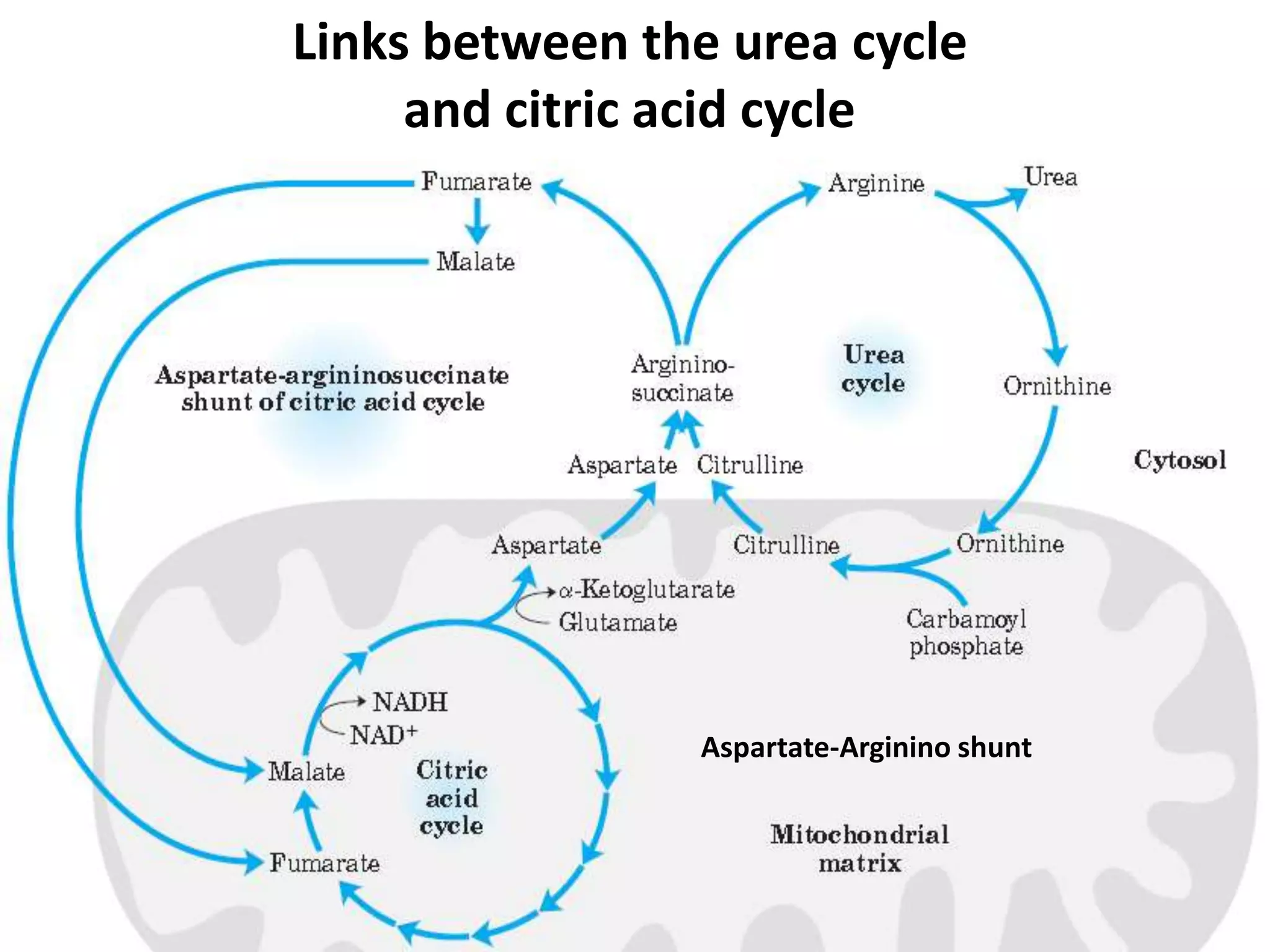
Links between the urea cycle 
and citric acid cycle 
Aspartate-Arginino shunt
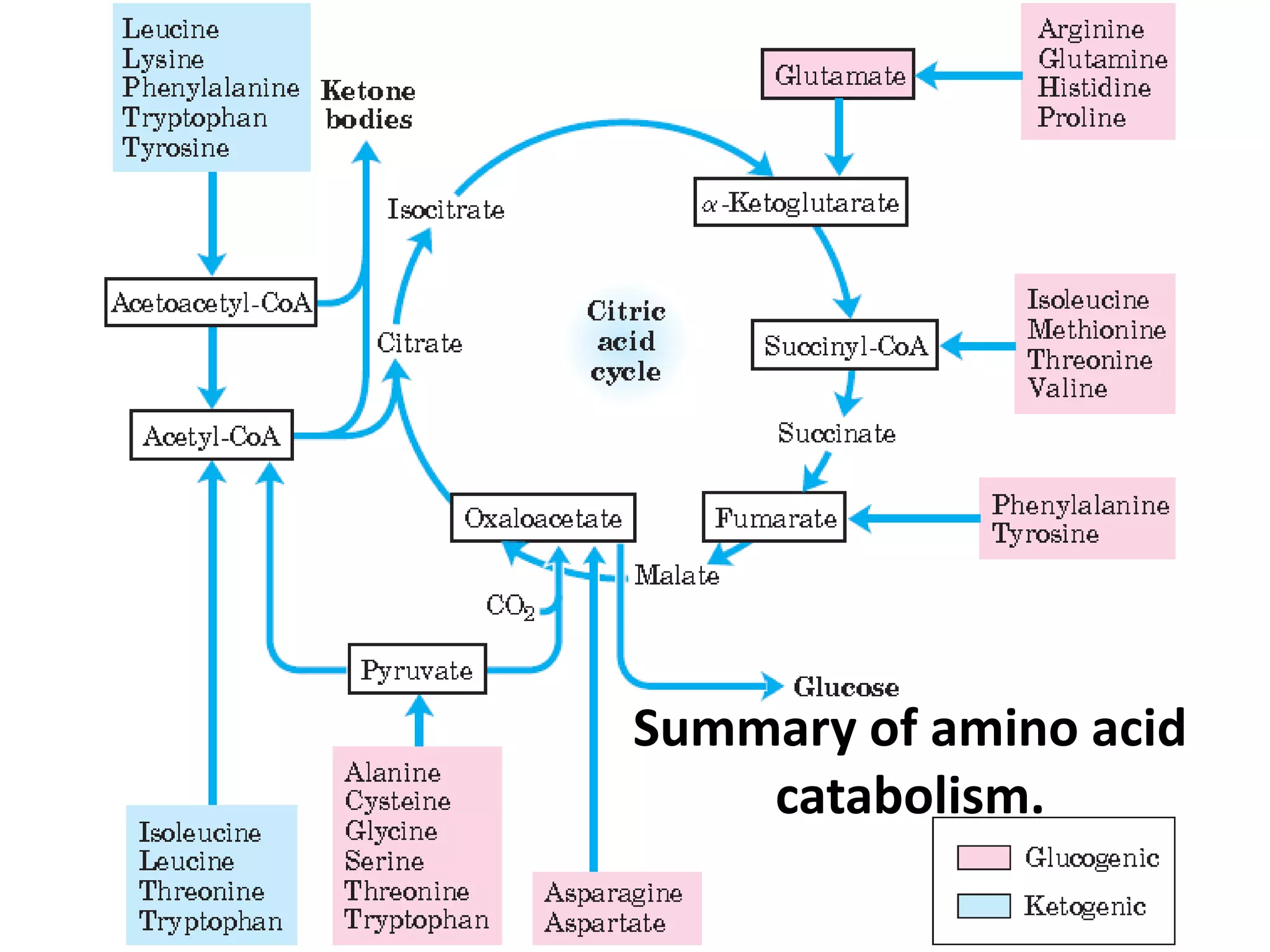
Summary of amino acid 
catabolism.
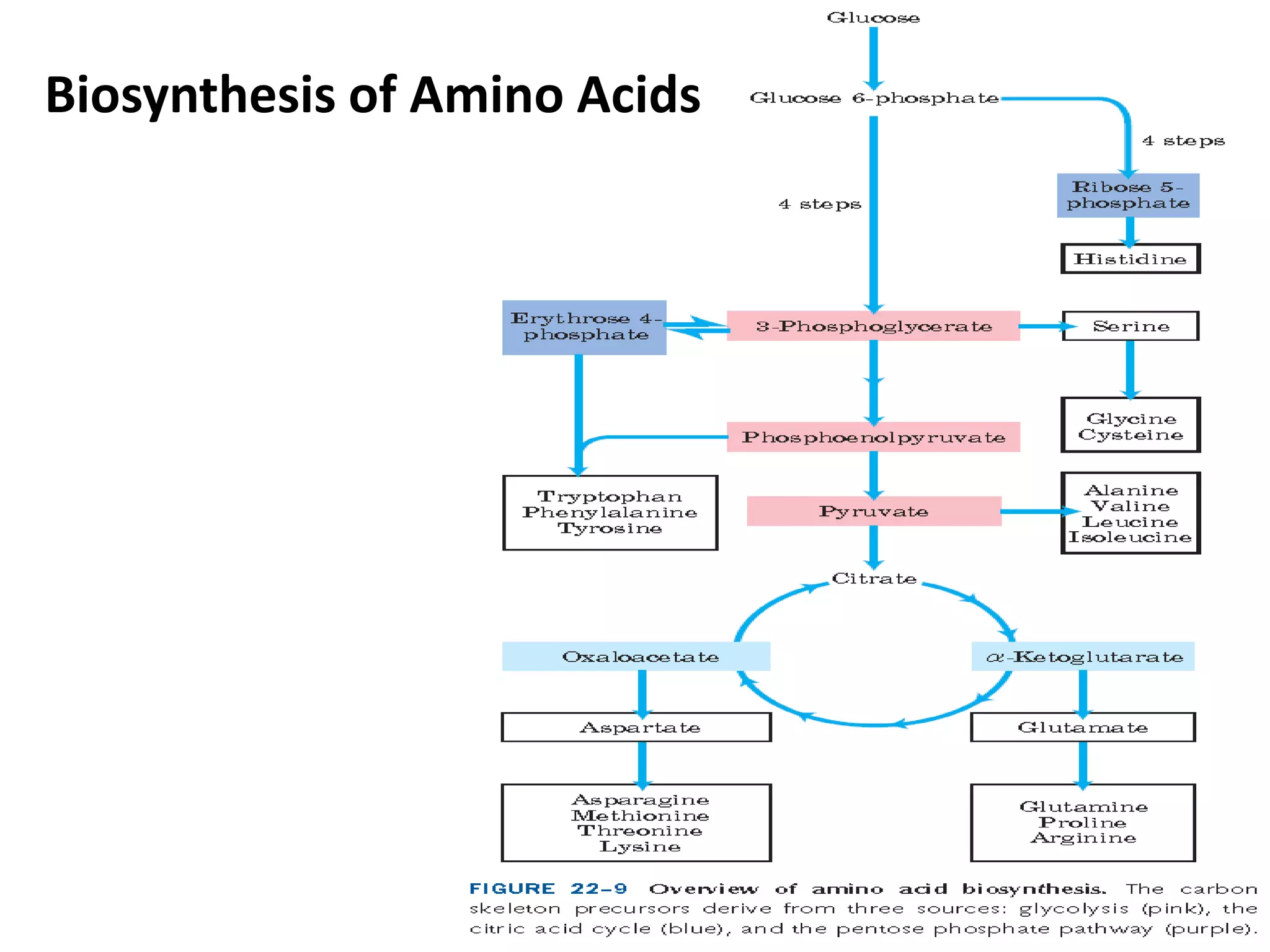
Biosynthesis of Amino Acids
Nucleic acid metabolism 
Inosine Monophosphate Oratidine-5’monophosphate 
http://seqcore.brcf.med.umich.edu/mcb500/na/purdegr.html
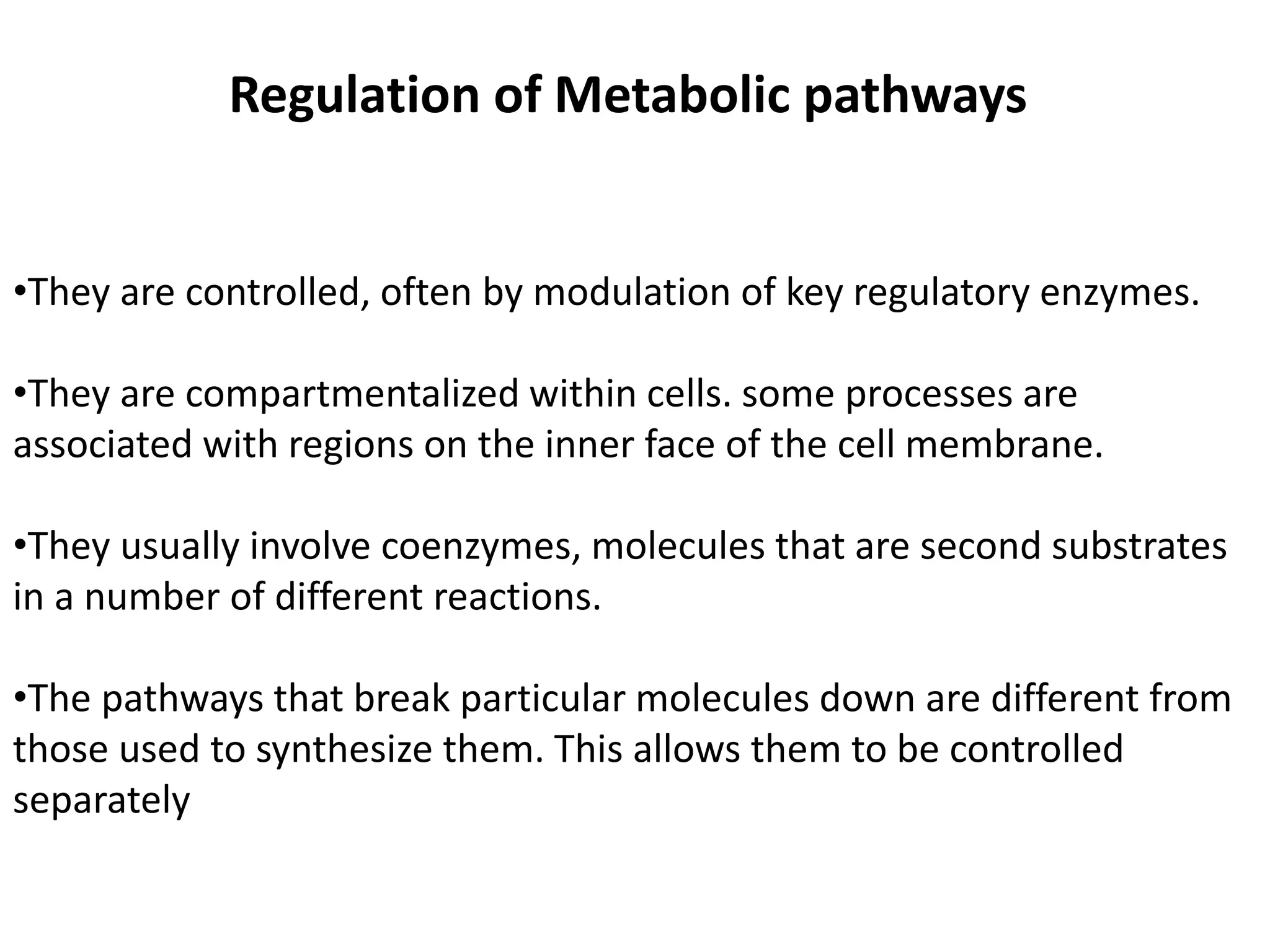
Regulation of Metabolic pathways 
•They are controlled, often by modulation of key regulatory enzymes. 
•They are compartmentalized within cells. some processes are 
associated with regions on the inner face of the cell membrane. 
•They usually involve coenzymes, molecules that are second substrates 
in a number of different reactions. 
•The pathways that break particular molecules down are different from 
those used to synthesize them. This allows them to be controlled 
separately
References 
•Lehninger-Principles of biochemisty (forth edition) 
Authors-D.Nelson, M. Cox 
•Biochemistry (fifth edition) 
Authors-J.berg, J.Tymoczko, L.Styer 
•Biology(seventh edition) 
Authors-N.Campbell J.Reece 
•Harper’s Illustrated Biochemistry(26th edition) 
Authors-R.Murray, D.Granner, V.Rodwell 
•Biochemistry(second edition) 
Authors-Garrett and Grisham 
•Molecular biology of the cell 
Author-Bruce Albert 
•Molecular cell biology(fifth edition) 
Authors-Lodish, Berk
Bioenergetics

Bioenergetics

  • 2.
    Metabolism: Basic Concepts Light energy ECOSYSTEM CO2 + H2O Photosynthesis in chloroplasts Cellular respiration in mitochondria Organic molecules + O2 ATP powers most cellular work Heat energy Metabolism The sum total of all the chemical reactions cell needs to carry out to survive, grow, and reproduce. This control is central to the chemistry of life. Catabolic pathways •Break down complex molecules into simpler compounds •Release energy Anabolic pathways •Build complicated molecules from simpler ones •Consume energy
  • 4.
    Cells obtain energyby the oxidation of organic Molecules Proteins Carbohydrates Fats Amino acids Sugars Glycerol Fatty acids Glycolysis Glucose Glyceraldehyde-3- P Pyruvate Acetyl CoA NH3 Citric acid cycle Oxidative phosphorylation
  • 5.
    Organisms live atthe expense of free energy Not all of a system's energy is available to do work. The amount of energy that is available to do work is described by the concept of free energy. Significance of Free Energy: •Indicates the maximum amount of a system's energy which is available to do work. •Indicates whether a reaction will occur spontaneously or not. Free Energy and Metabolism Reactions can be classified based upon their free energy changes: •Exergonic reaction= A reaction that proceeds with a net release of free energy and is spontaneous. •Endergonic reaction= An energy-requiring reaction that proceeds with a net gain of free energy; a reaction that absorbs free energy from its surroundings and non spontaneous.
  • 6.
    Reactants Products Energy Progress of the reaction Amount of energy released (ΔG <0) Free energy (a) Exergonic reaction: energy released Energy Products Amount of energy released (ΔG>0) Reactants Progress of the reaction Free energy (b) Endergonic reaction: energy required •If a chemical process is exergonic, the reverse process must be endergonic. •In cellular metabolism, endergonic reactions are driven by coupling them to reactions with exergonic reactions. •ATP plays a critical role in this energy coupling.
  • 7.
    ATP powers cellularwork by coupling exergonic to endergonic reactions ATP is the immediate source of energy that drives most cellular work, which includes: •Mechanical work •Transport work •Chemical work P (a) Mechanical work: ATP phosphorylates motor proteins Membrane protein Motor protein P i Protein moved Solute P P i Solute transported (c) Chemical work: ATP phosphorylates key reactants ATP (b) Transport work: ATP phosphorylates transport proteins Glu Glu NH3 NH2 P i P i + + Reactants: Glutamic acid and ammonia Product (glutamine) made ADP + P
  • 8.
    ATP AS AMETABOLIC ENERGY STORAG •Renewable resource by adding phosphate to ADP •The free energy required for the phosphorylation of ADP comes from the exergonic reactions(catabolism) in the cells. •Shuttling of inorganic phosphate and energy is called the ATP cycle
  • 9.
    NADPH is animportant carrier of electrons.
  • 10.
    Chemiosmosis: The energycoupling mechanism. •The hydrogen gradient across the membrane created by ATP synthase is used to drive cellular work of ATP synthesis •It couples the electron transport chain to the ATP synthesis
  • 11.
    Kyoto Encyclopedia ofGene and Genomes
  • 12.
    Major pathways ofglucose utilization
  • 13.
  • 14.
    The Citric acidcycle coupled with Oxidative phosphorylation
  • 16.
    Electrons carried viaNADH Glycolsis Glucose Pyruvate ATP Substrate-level phosphorylation Electrons carried via NADH and FADH2 Citric acid cycle Oxidative phosphorylation: electron transport and chemiosmosis ATP ATP Substrate-level phosphorylation Oxidative phosphorylation Mitochondrion Cytosol An overview of cellular respiration
  • 17.
    Glyoxylate cycle Theglyoxylate cycle
  • 18.
  • 19.
    General scheme ofthe pentose phosphate pathway
  • 21.
    Glycolate pathway Photorespirationadjacent to the calvin cycle C2 pathway
  • 22.
    Stoichiometry of Co2assimilation in the Calvin cycle C3 pathway
  • 23.
    Carbon assimilation inC4 plants •Co₂ is fixed at the cost of 3 ATPs where as C2 takes 5 ATPs •Useful for the plants growing under reduced Co ₂ conditions CAM pathway
  • 24.
  • 25.
    Oxidation of fattyacids in mitochondria and peroxisomes
  • 26.
    Overview of aminoacid catabolism
  • 27.
    Links between theurea cycle and citric acid cycle Aspartate-Arginino shunt
  • 28.
    Summary of aminoacid catabolism.
  • 29.
  • 30.
    Nucleic acid metabolism Inosine Monophosphate Oratidine-5’monophosphate http://seqcore.brcf.med.umich.edu/mcb500/na/purdegr.html
  • 31.
    Regulation of Metabolicpathways •They are controlled, often by modulation of key regulatory enzymes. •They are compartmentalized within cells. some processes are associated with regions on the inner face of the cell membrane. •They usually involve coenzymes, molecules that are second substrates in a number of different reactions. •The pathways that break particular molecules down are different from those used to synthesize them. This allows them to be controlled separately
  • 32.
    References •Lehninger-Principles ofbiochemisty (forth edition) Authors-D.Nelson, M. Cox •Biochemistry (fifth edition) Authors-J.berg, J.Tymoczko, L.Styer •Biology(seventh edition) Authors-N.Campbell J.Reece •Harper’s Illustrated Biochemistry(26th edition) Authors-R.Murray, D.Granner, V.Rodwell •Biochemistry(second edition) Authors-Garrett and Grisham •Molecular biology of the cell Author-Bruce Albert •Molecular cell biology(fifth edition) Authors-Lodish, Berk

Editor's Notes

  • #3 On the environmental level---Solar energy is converted into chemical energy by chloroplasts by the process of photosynthesis and this energy is stored in the form of organic molecules---Autotrops ----pass on to the heterotrops----mitochondria utilizes this energy to power their cellular work.
  • #8 mechanical:such as beating of cilia, muscle contraction, cytoplasmic flow, and chromosome movement during mitosis and meiosis. Transport:such as pumping substances across membranes. Chemical:such as the endergonic process of polymerization. Hence ATP ia an intermediet between the metabolic energy generating and energy consuming metabolic reaction
  • #9 energy stored in ATP is often harnessed to Join Two Molecules Together An energetically unfavorable biosynthetic reaction can be driven by AtP hydrolysis
  • #10 A small set of activated carrier molecules, particularly ATP, NADH, and NADPH, plays a central part in these coupling events. ATP carries high-energy phosphate groups, whereas NADH and NADPH carry high-energy electrons. (a) NaDph is produced in reactions of the general type shown on the left, in which two hydrogen atoms are removed from a substrate. The oxidized form of the carrier molecule, NaDp+, receives one hydrogen atom plus an electron (a hydride ion), and the proton (h+) from the other h atom is released into solution. Because NaDph holds its hydride ion in a high-energy linkage, the added hydride ion can easily be transferred to other molecules, as shown on the right. (B) the structure of NaDp+ and NaDph. the part of the NaDp+ molecule known as the nicotinamide ring accepts two electrons together with a proton (the equivalent of a hydride ion, h–), forming NaDph. NaD+ and NaDh are identical in structure to NaDp+ and NaDph, respectively, except that they lack the indicated phosphate group.
  • #12 Metabolism as a threedimensional meshwork. A typical eukaryotic cell has the capacity to make about 30,000 different proteins, which catalyze thousands of different reactions involving many hundreds of metabolites, most shared by more than one “pathway.” This overview image of metabolic pathways is from the online KEGG () PATHWAY database (www.genome.ad.jp/kegg/pathway/map/map01100.html). Each area can be further expanded for increasingly detailed information, to the level of specific enzymes and intermediates.
  • #14 Embden-Meyeraf-parnas pathway Aerobic- glucose------2 pyruvprate and 2 ATP….connected to the TCA Anerobic- ATP production. Recycle NADH by making fermented lactate or fermented alcohol Location-cytosol Connections- G6P<-----------glycogen G6P-------------pentose phosphate Pyruvate--------TCA via Acetyle Co.A Pyruvate-------- Fat via Acetyl Co.A
  • #15 Kreb cycle:Pyruvate produced in glycolysis is oxidized in the tricarboxylic acid (TCA) cycle. Burn fat,glucose or proteins. Electrons liberated in this oxidation, flow through the electron transport chain and drive the synthesis of ATP in oxidative phosphorylation. Location-mitochondria Amphibolic nature of TCA cycle- both catabolic and anabolic in nature
  • #16 Anaplurotic reaction: the reaction concern to replanish or to fill up the intermediates of TCA cycle are called anaplurotic reactions
  • #17 38 ATP overall yield….
  • #18 Only in plants bacs and fungi: Glyoxysomes lack three of the enzymes needed to run the glyoxylate cycle. Succinate dehydrogenase, fumarase, and malate dehydrogenase are all “borrowed” from the mitochondria in a shuttle in which succinate and glutamate are passed to the mitochondria, and -ketoglutarate and aspartate are passed to the glyoxysome Net convergen of acetyl co a into oxyaloacetate----Gluconeogenesis Forms oxalactate from Acetyl Co.A Convert fats into carbohydrates Play very important role in seed germination( fats are converted into sugars)
  • #19 Pyruvate----- Glucose Maintainance of glucose levels Toxic metabolites to the body i.e. lactate, propionate, glycerol etc are wiped off Location-liver
  • #20 Alternative secondary pathway of glucose oxidation More anabolic in nature Concerned with the biosynthesis of NADPH and pentose sugars Location-cytosol Uses reducing power NADPH for the reductive synthesis of fatty acids and steroids and amino acids
  • #22 This pathway, which salvages 2-phosphoglycolate (shaded pink) by its conversion to serine and eventually 3-phosphoglycerate, involves three cellular compartments. Glycolate formed by dephosphorylation of 2-phosphoglycolate in chloroplasts is oxidized to glyoxylate in peroxisomes and then transaminated to glycine. In mitochondria, two glycine molecules condense to form serine and the CO2 released during photorespiration (shaded green). This reaction is catalyzed by glycine decarboxylase, an enzyme present at very high levels in the mitochondria of C3 plants The serine is converted to hydroxypyruvate and then to glycerate in peroxisomes; glycerate reenters the chloroplasts to be phosphorylated, rejoining the Calvin cycle. Oxygen (shaded blue) is consumed at two steps during photorespiration.
  • #23 For every three CO2 molecules fixed, one molecule of triose phosphate (glyceraldehyde 3-phosphate) is produced and nine ATP and six NADPH are consumed. Corboxylation of a pentose
  • #24 The C4 pathway, involving mesophyll cells and bundle-sheath cells, predominates in plants of tropical origin. (a) Electron micrograph showing chloroplasts of adjacent mesophyll and bundle-sheath cells. The bundle-sheath cell contains starch granules. Plasmodesmata connecting the two cells are visible. (b) The C4 pathway of CO2 assimilation, which occurs through a four-carbon intermediate.
  • #25 Liberation of fatty acids from triacylglycerols in adipose tissue is hormonedependent.
  • #26 . In both mitochondrial oxidation (a) and peroxisomal oxidation (b), four identical enzyme-catalyzed reactions (shown down the center of the figure) convert a fatty acyl CoA molecule to acetyl CoA and a fatty acyl CoA shortened by two carbon atoms. Concomitantly (in reactions moving to the left of center for mitochondria and to the right of center for peroxisomes), one FAD molecule is reduced to FADH2, and one NAD molecule is reduced to NADH. The cycle is repeated on the shortened acyl CoA until fatty acids with an even number of carbon atoms are completely converted to acetyl CoA. In mitochondria, electrons from FADH2 and NADH enter the respiratory chain and ultimately are used to generate ATP; the acetyl CoA generated is oxidized in the citric acid cycle, resulting in synthesis of additional ATP. Because peroxisomes lack the electron-transport complexes composing the respiratory chain and the enzymes of the citric acid cycle, oxidation of fatty acids in these organelles yields no ATP. [Adapted from D. L. Nelson and M. M. Cox, Lehninger Principles of Biochemistry, 3d ed., 2000, Worth
  • #27 . Amino acids are grouped according to their major degradative end product. Some amino acids are listed more than once because different parts of their carbon skeletons are degraded to different end products. The figure shows the most important catabolic pathways in vertebrates, but there are minor variations among vertebrate species. Threonine, for instance, is degraded via at least two different pathways (see Figs 18–19, 18–27), and the importance of a given pathway can vary with the organism and its metabolic conditions. The glucogenic and ketogenic amino acids are also delineated in the figure, by color shading. Notice that five of the amino acids are both glucogenic and ketogenic. The amino acids degraded to pyruvate are also potentially ketogenic. Only two amino acids, leucine and lysine, are exclusively ketogenic
  • #32 In eukaryotes different sets of metabolic reactions are carried out in different organelles. In animals and plants this compartmentalization is carried further, so that in some cases different reactions take place in different body organs. Prokaryotes too show compartmentalization of a simpler sort—