Downloaded 1,837 times
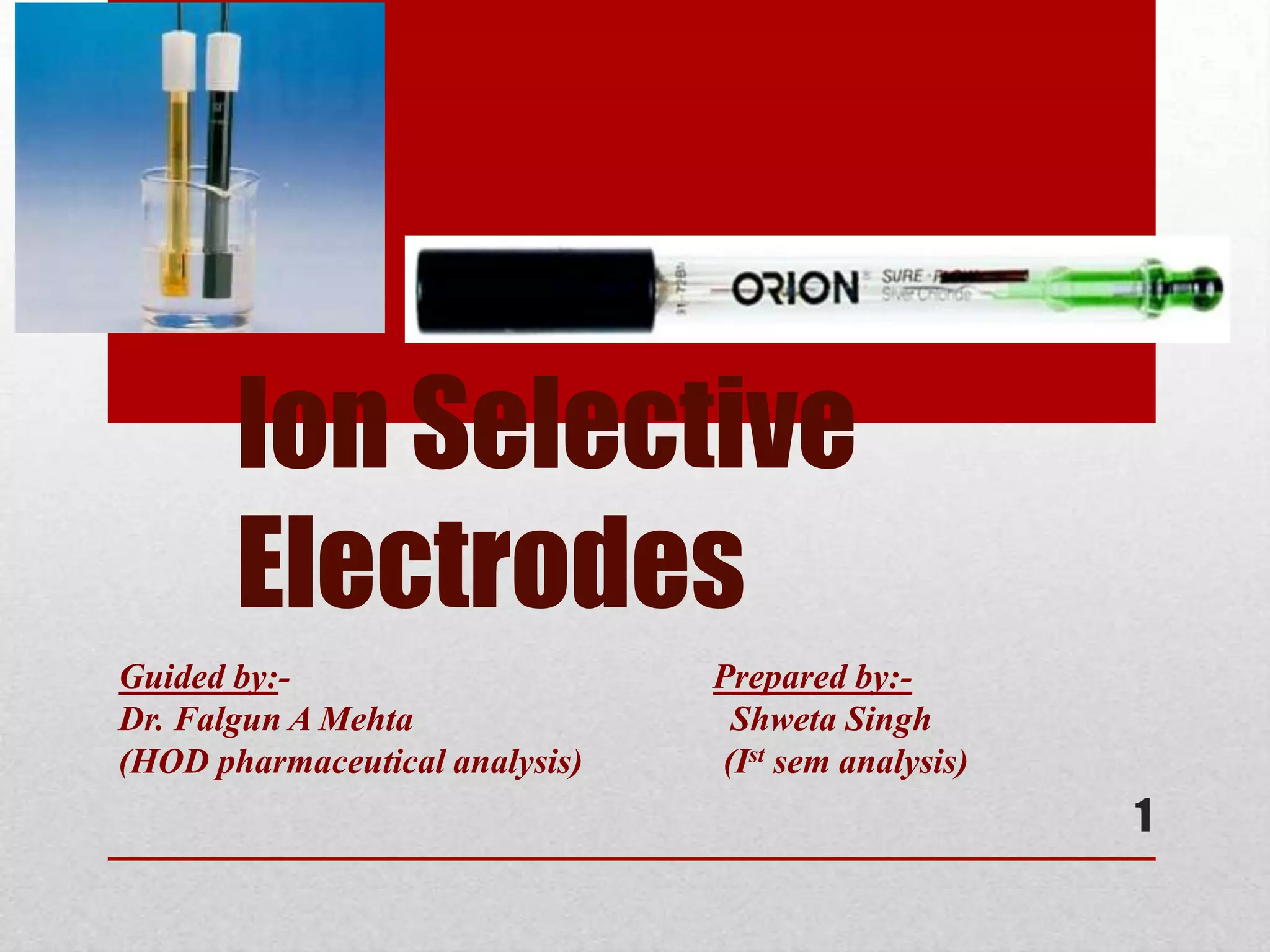

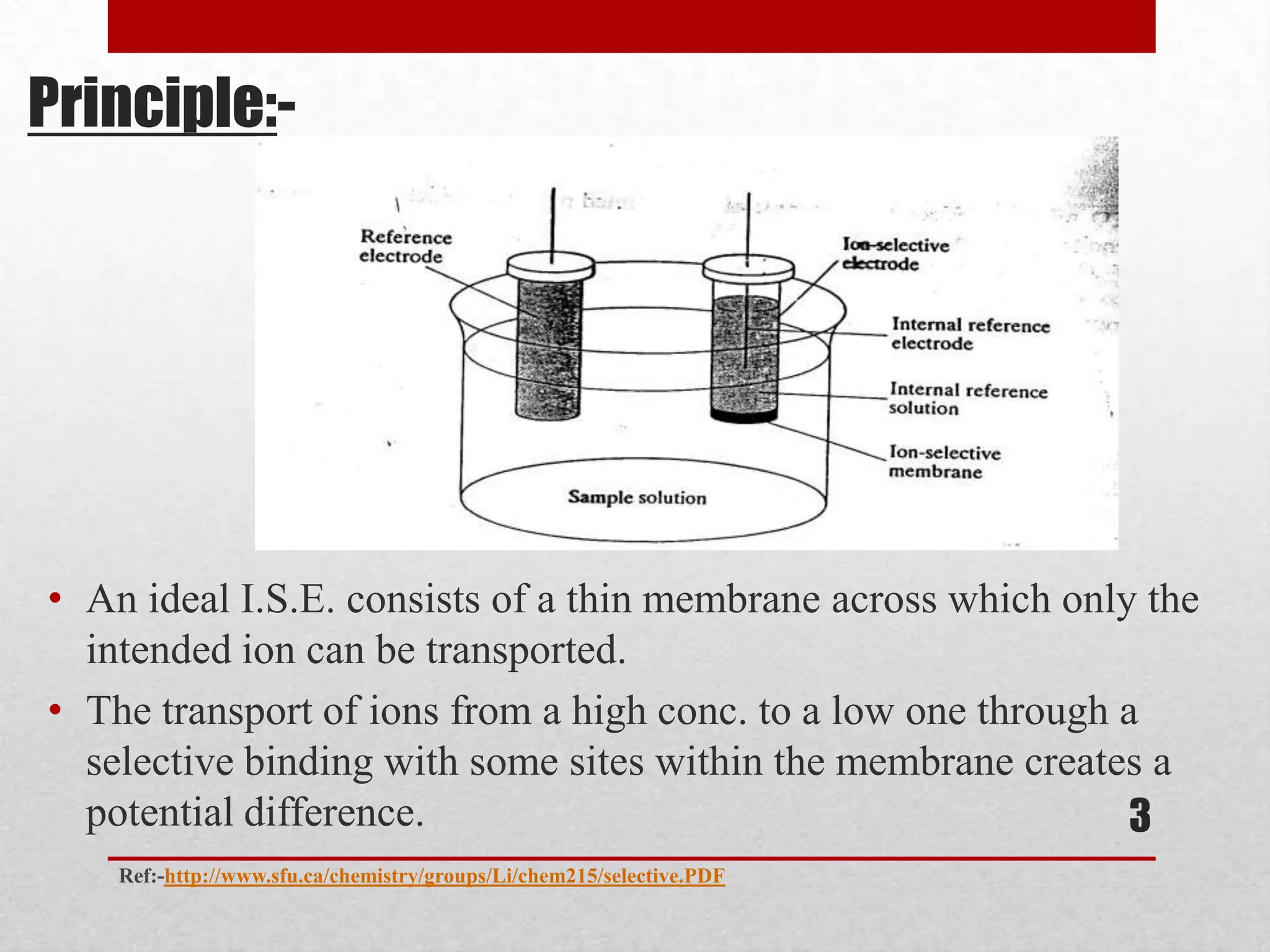


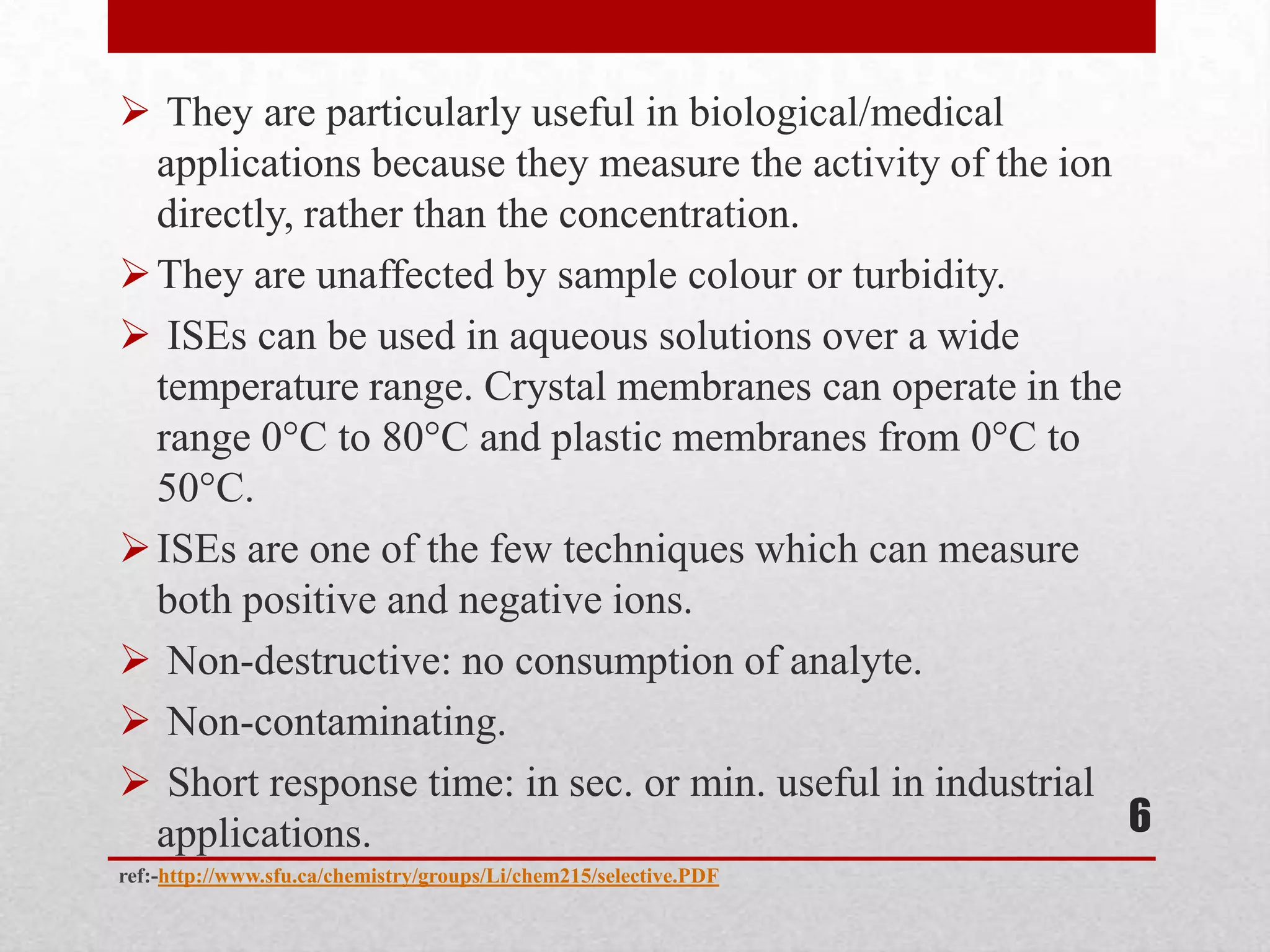

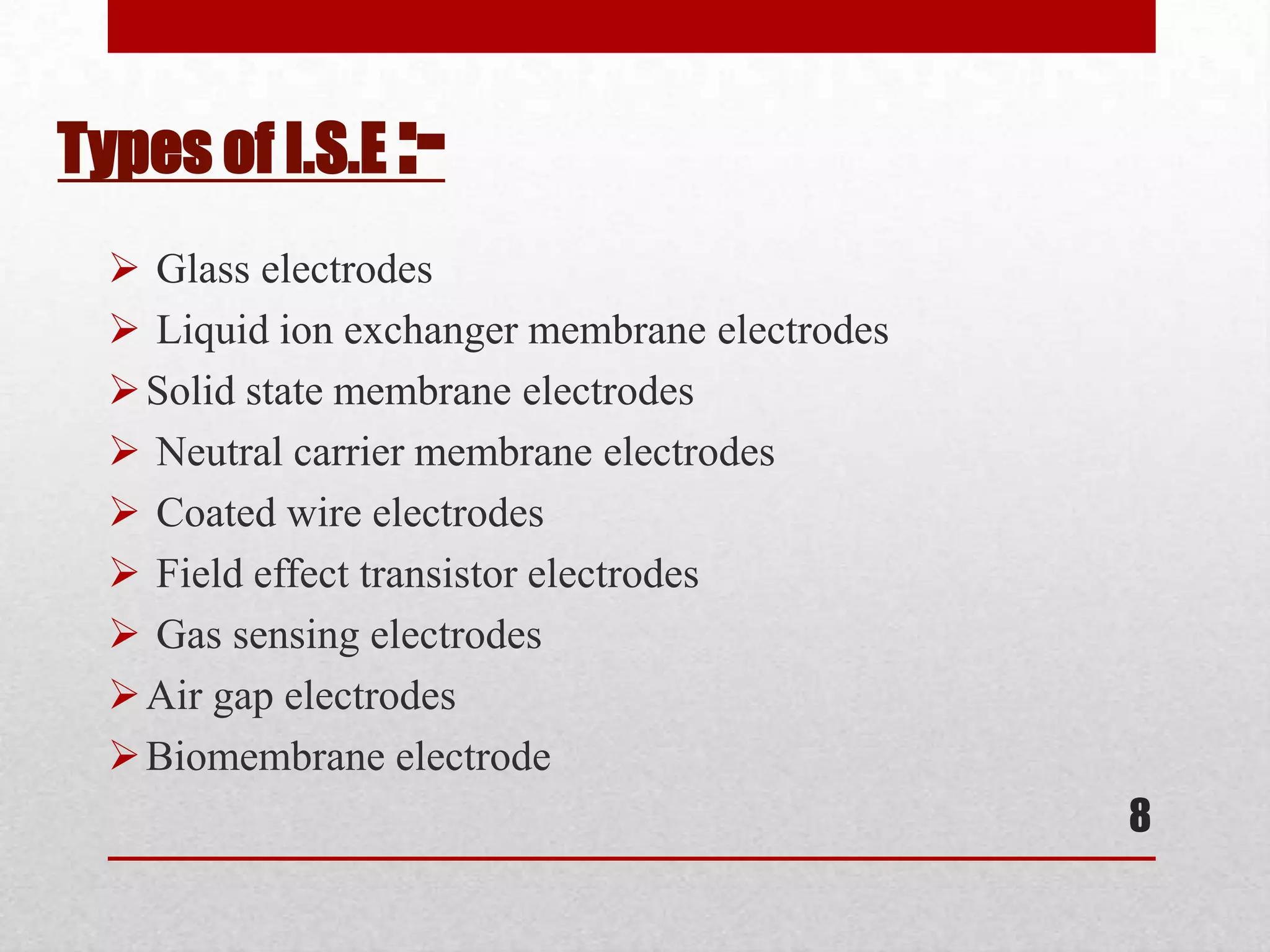
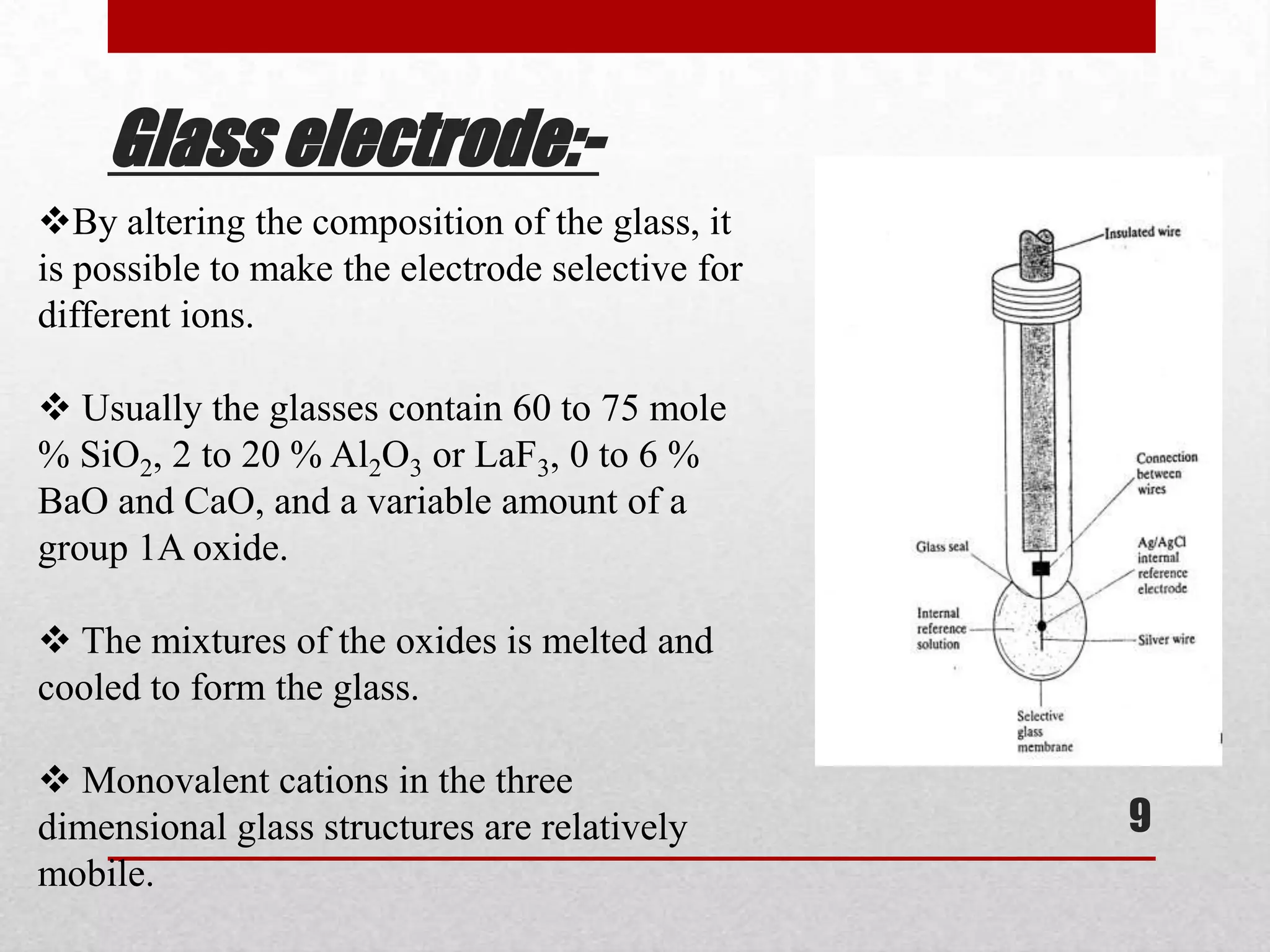

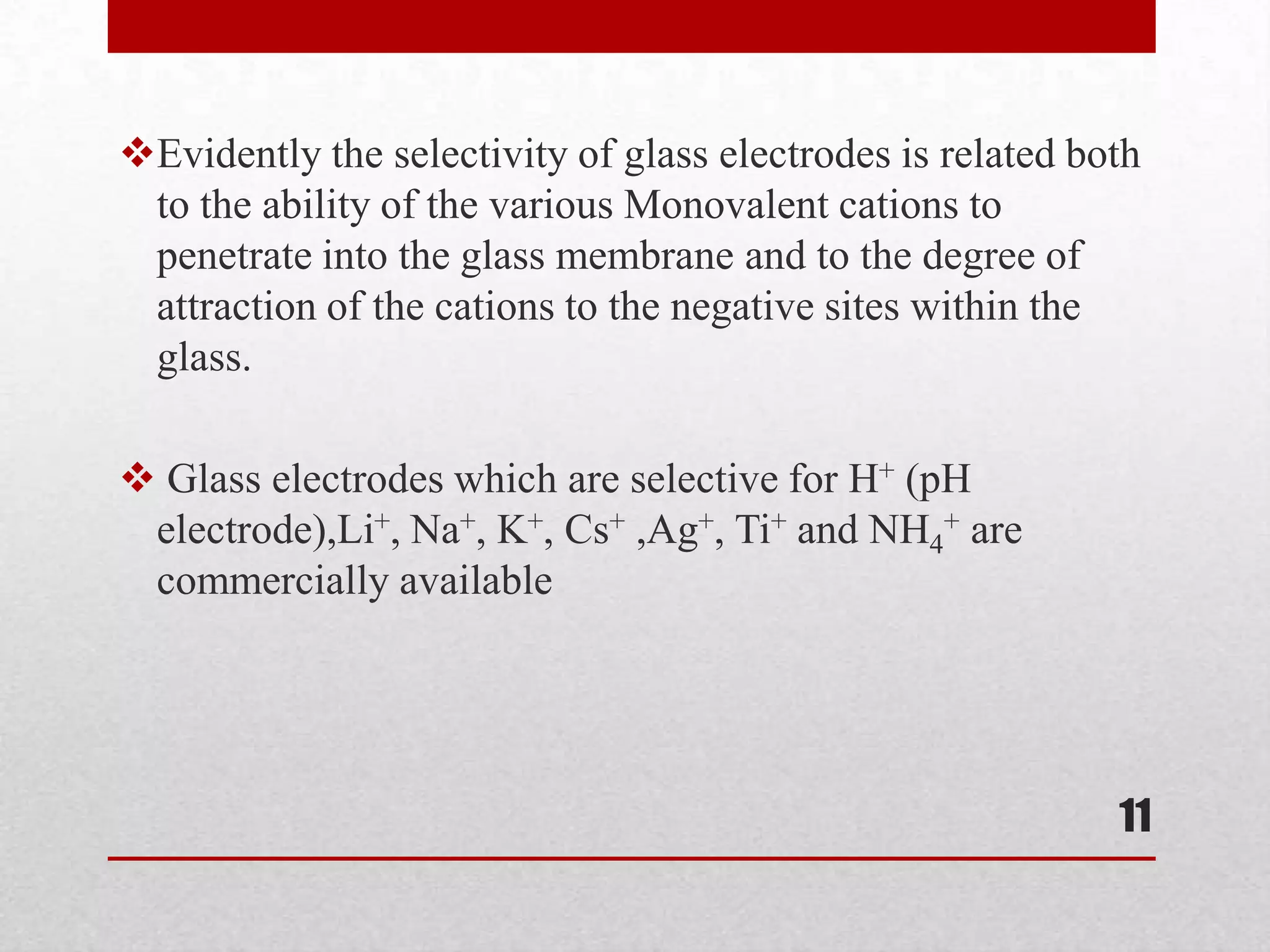
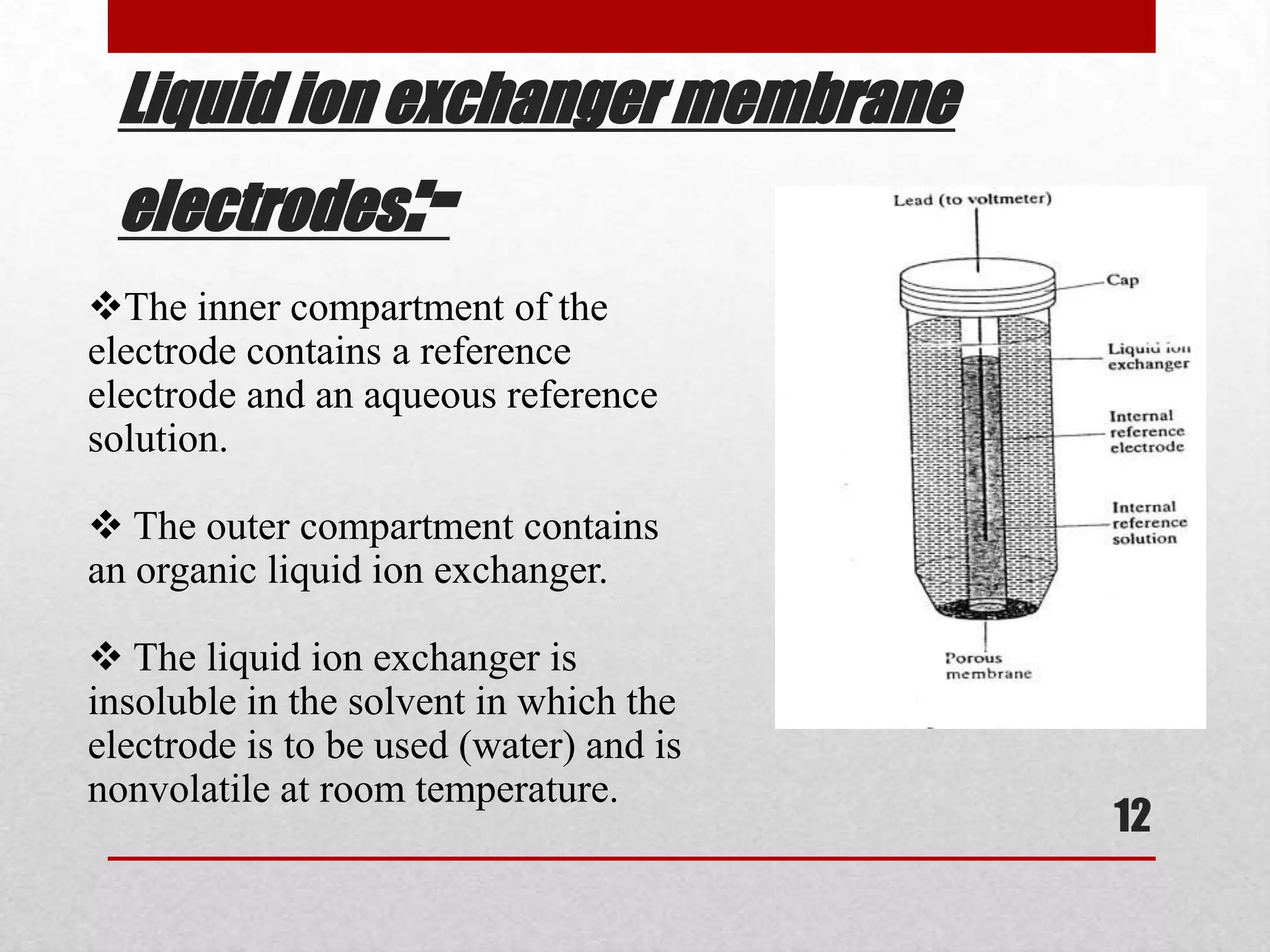
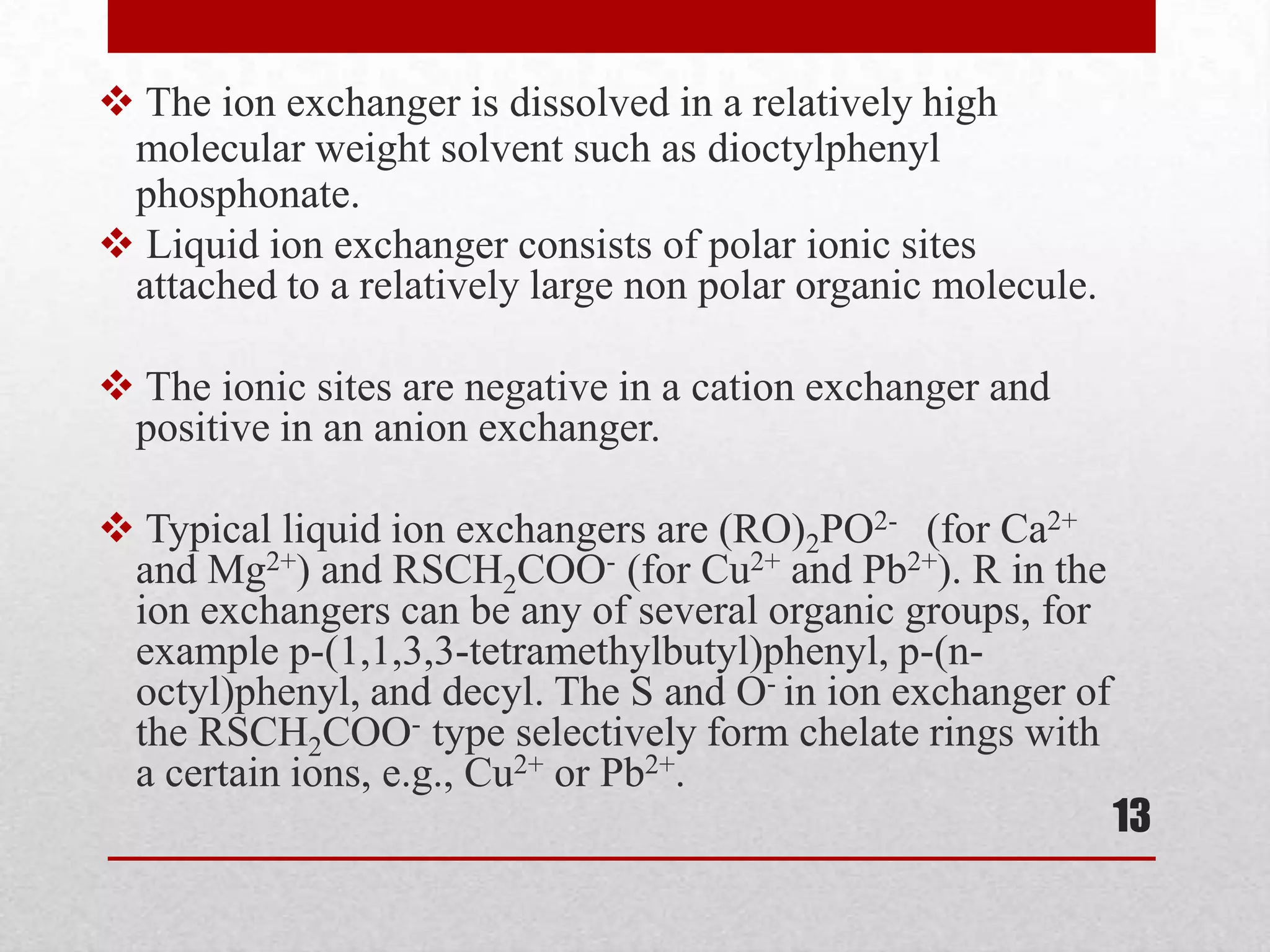

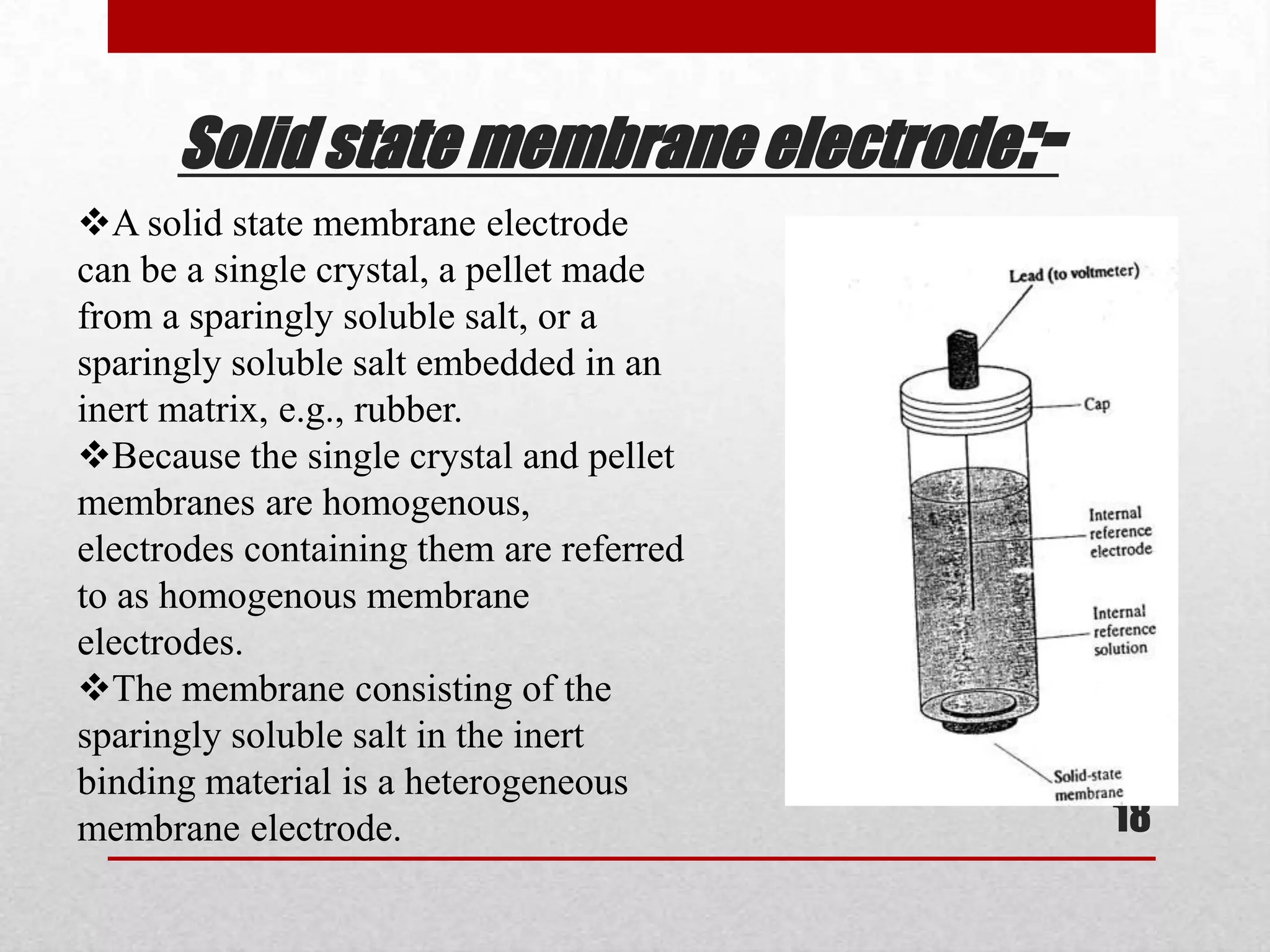


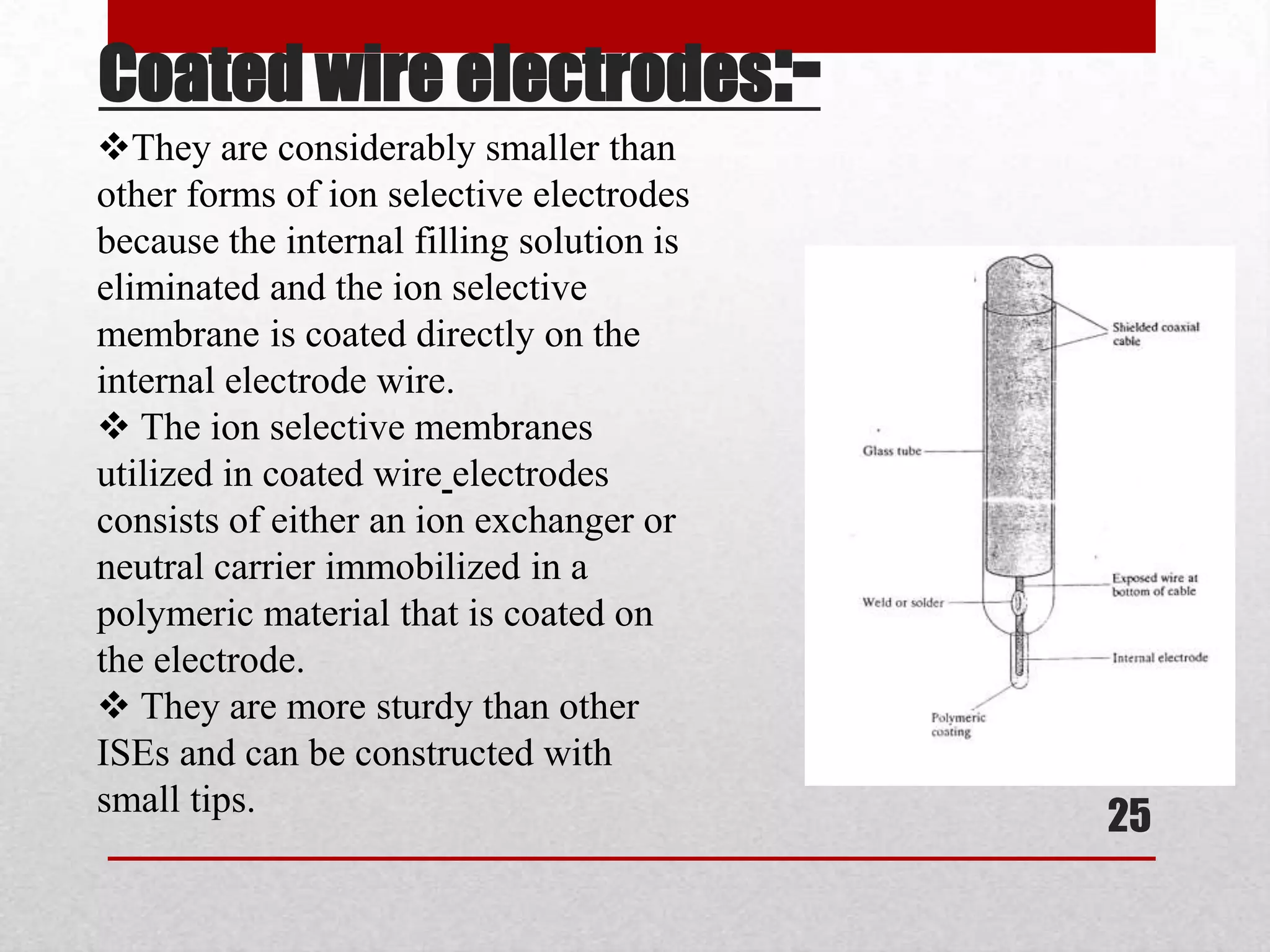

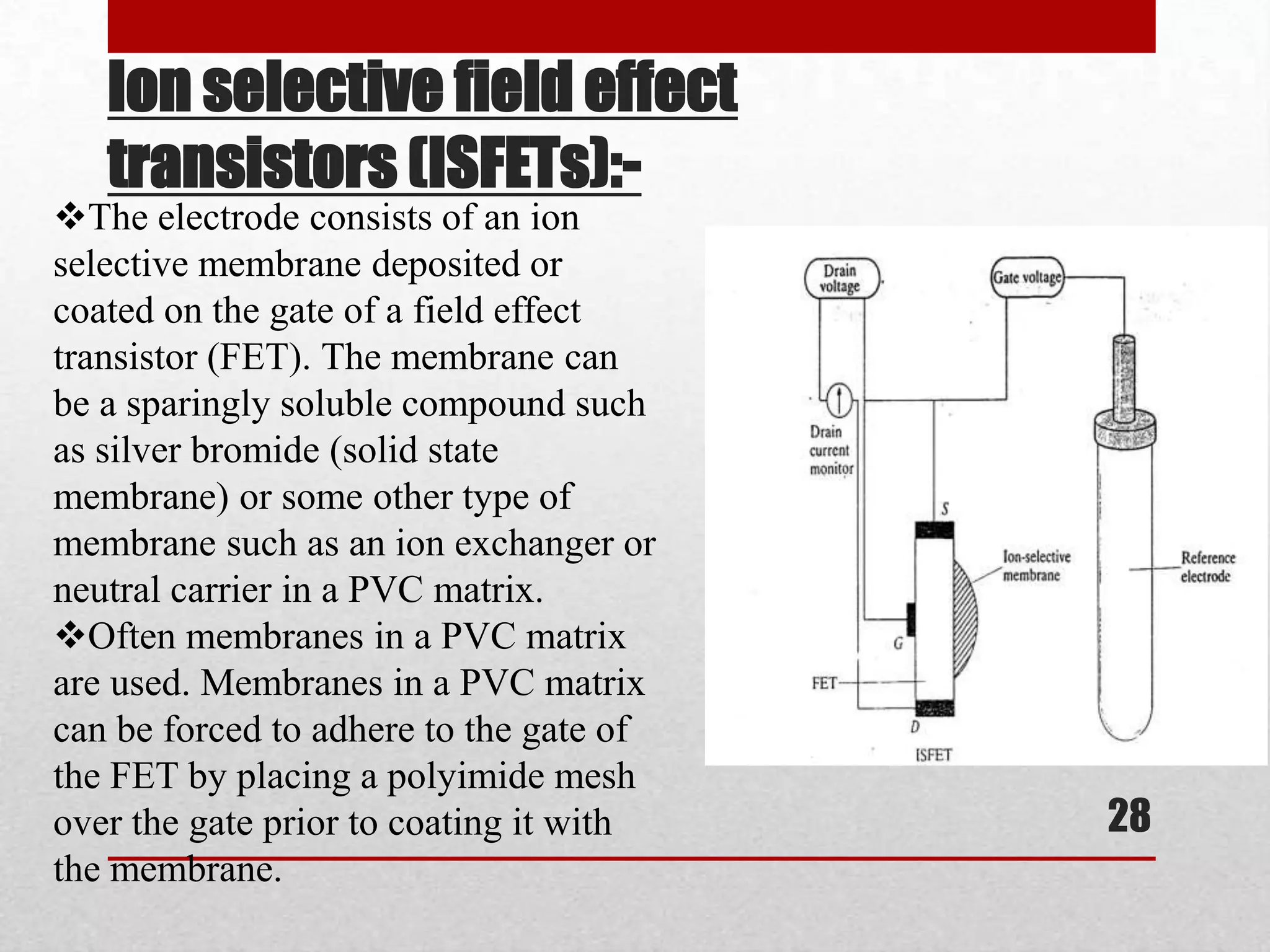
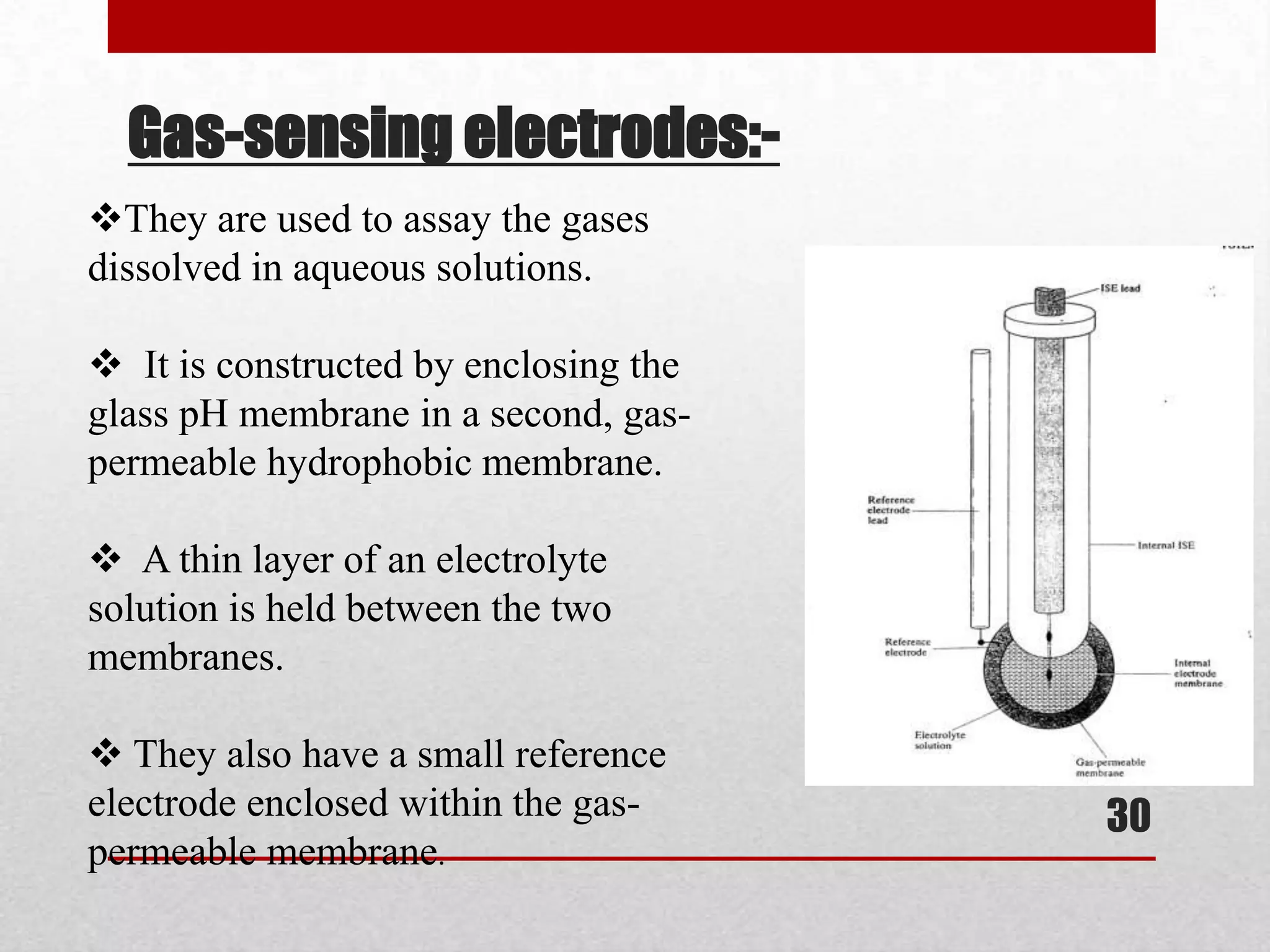

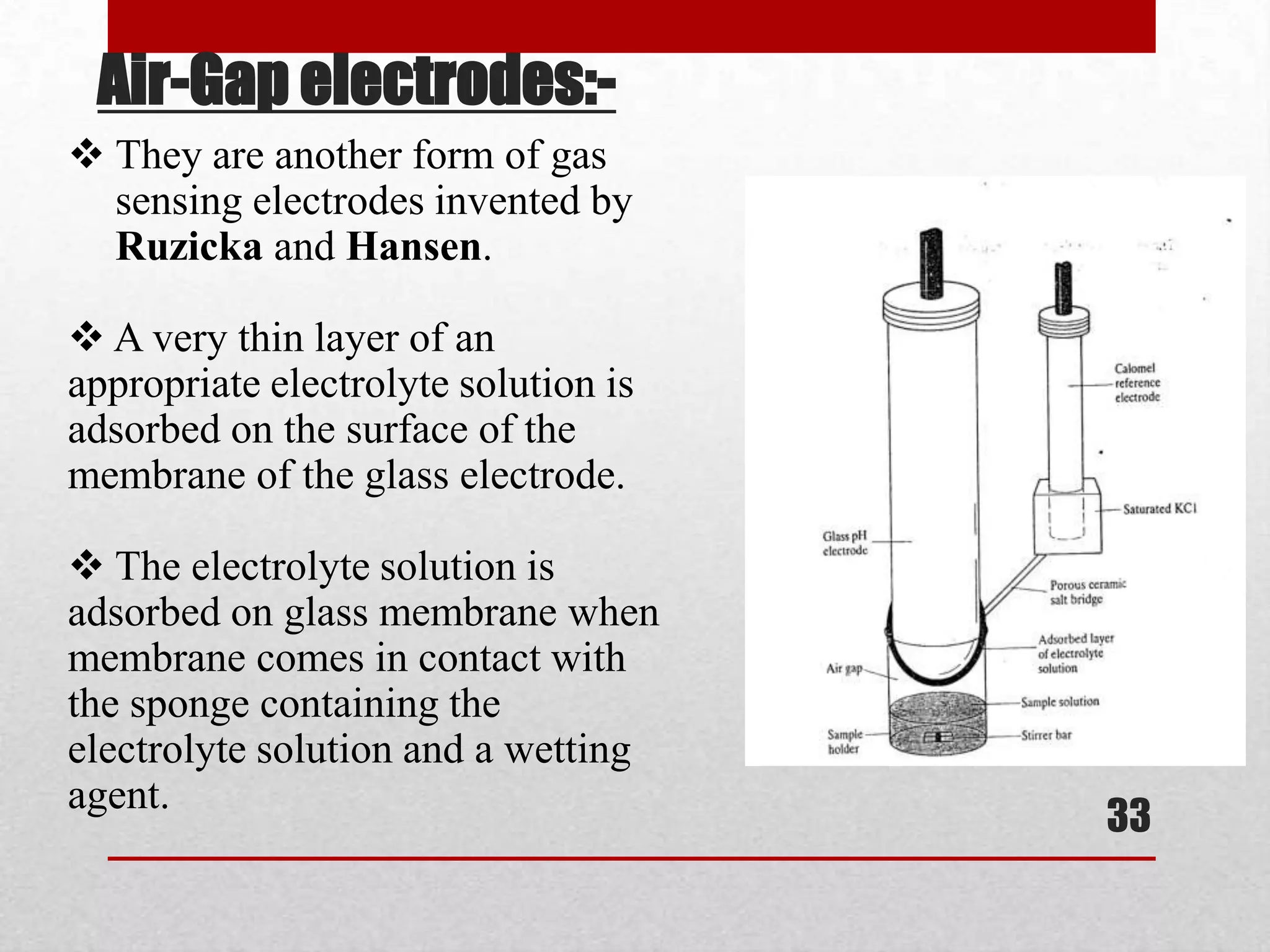


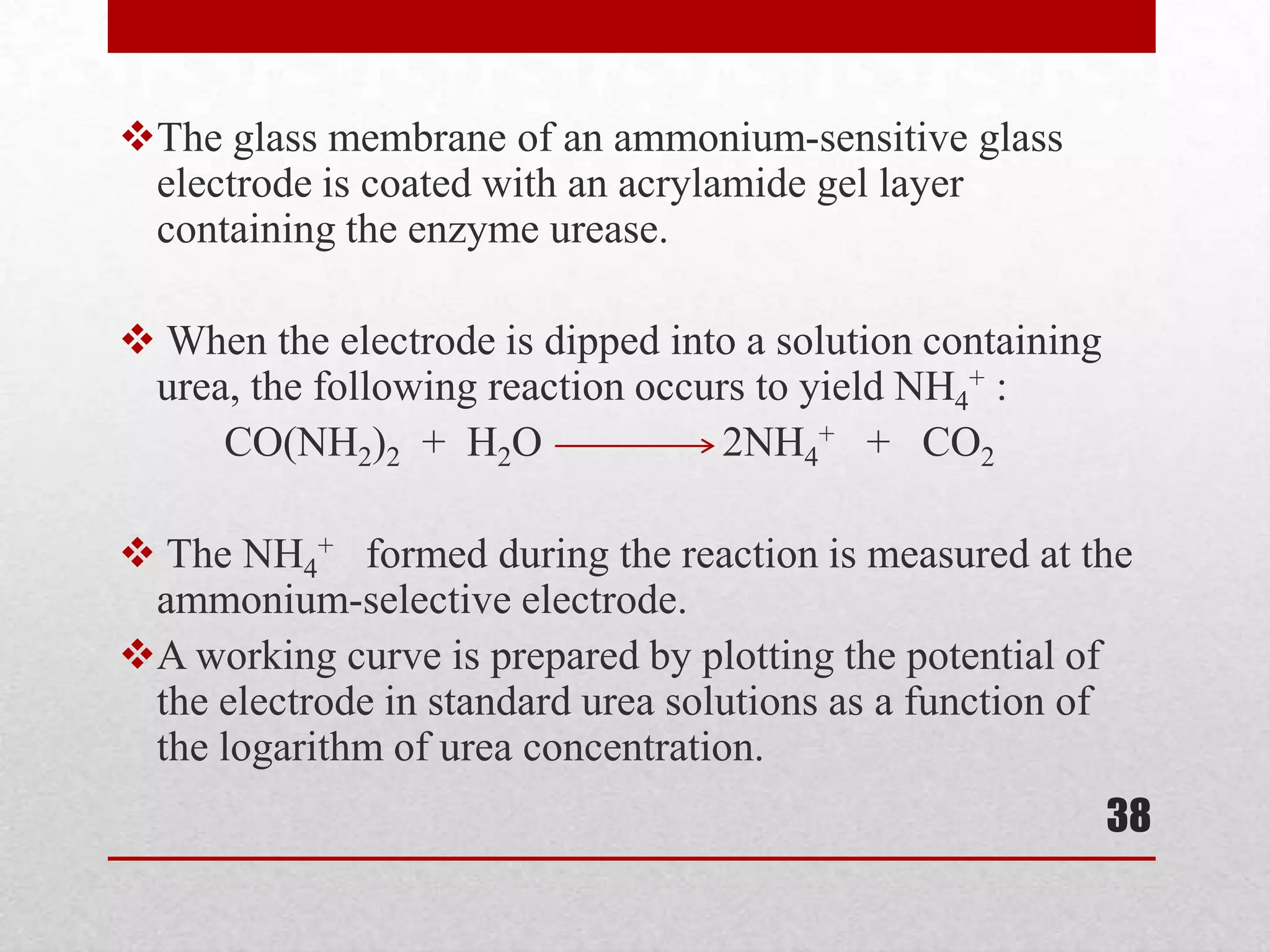
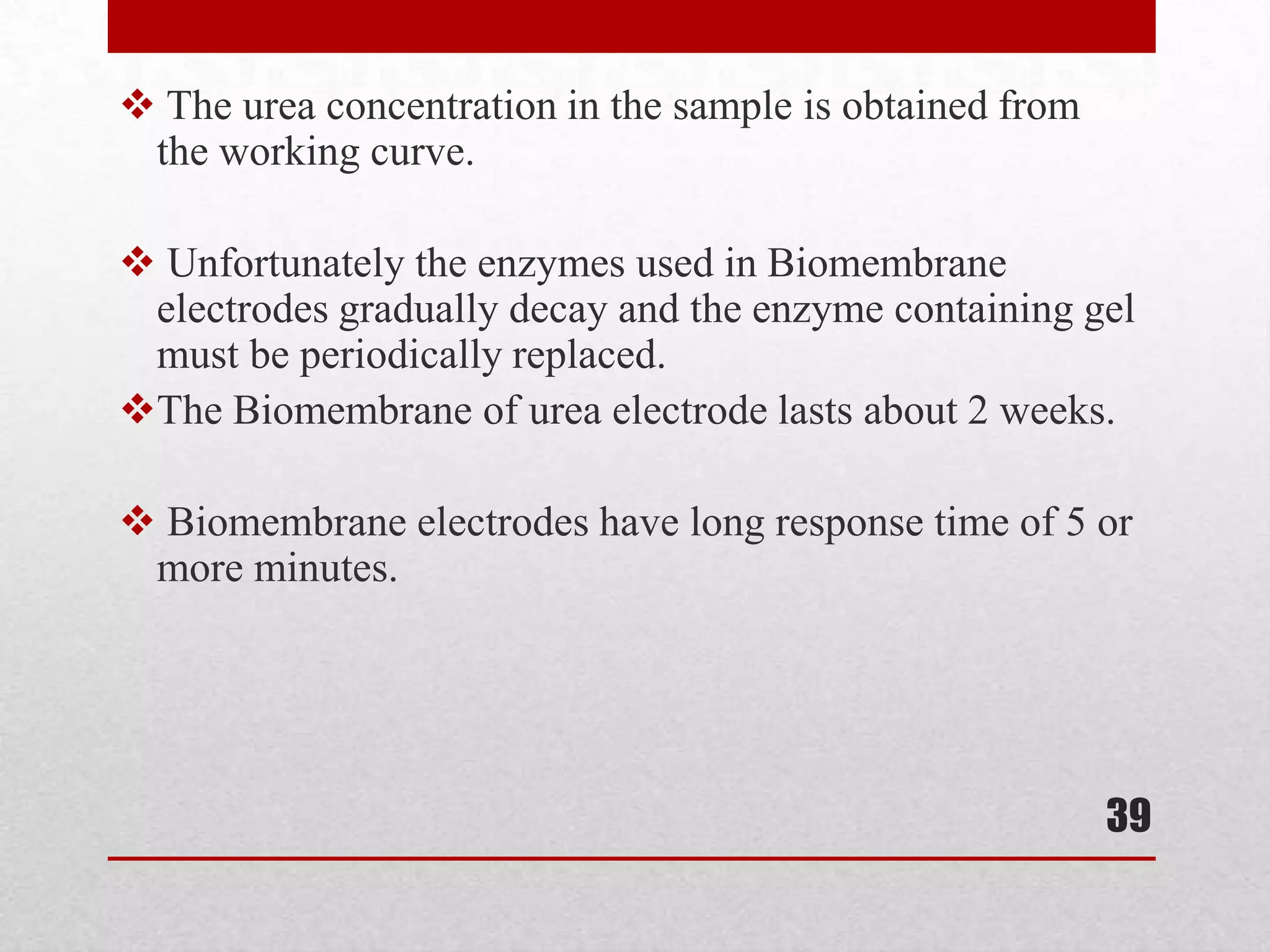
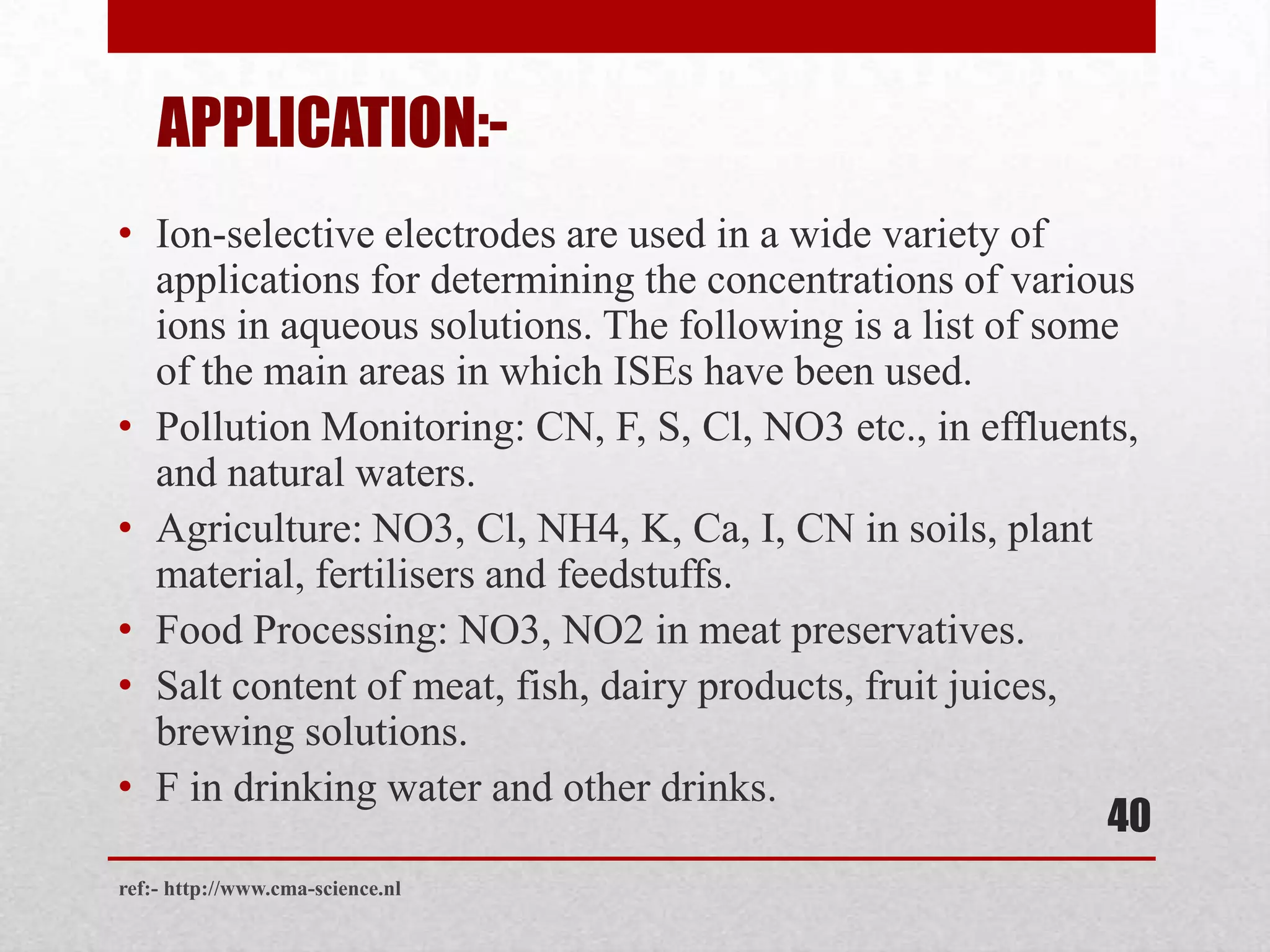


The document discusses ion selective electrodes (ISEs), including: - The principle of ISEs is that a selective membrane allows only the intended ion to pass through, creating a potential difference. - Types of ISEs include glass electrodes, liquid ion exchanger membranes, solid state membranes, and coated wire electrodes. - ISEs have advantages like low cost, wide concentration range, robustness, and fast response times. Limitations include imprecision, interference, and limited lifetime. - ISEs have many applications in fields, laboratories, medical/biological uses, and industrial processes due to their attributes.


![Polarography[1]](https://cdn.slidesharecdn.com/ss_thumbnails/polarography1-210816031327-thumbnail.jpg?width=640&height=640&fit=bounds)


