


INTRODUCTION
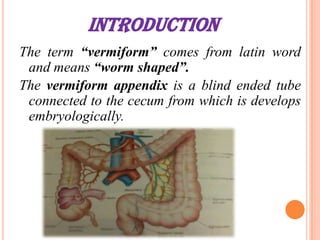
The term “vermiform” comes from latin word
 and means “worm shaped”.
The vermiform appendix is a blind ended tube
 connected to the cecum from which is develops
 embryologically.
DEFINITION
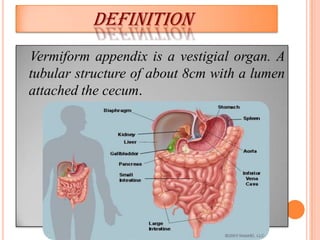
Vermiform appendix is a vestigial organ. A
tubular structure of about 8cm with a lumen
attached the cecum.
VESTIGIALITY
A vestigial structure is a structure that has lost
 all or most of its original function through the
 process of evolution. The main function of
 appendix is to digest cellulose with the help of
 mutualistic bacteria. As the human appendix
 no longer houses a significant amount of these
 bacteria and humans are no longer capable of
 digesting more than a minimal amount of
 cellulose per day. Thus human appendix is
 considered as a vestigial organ.
SIZE AND LOCATION
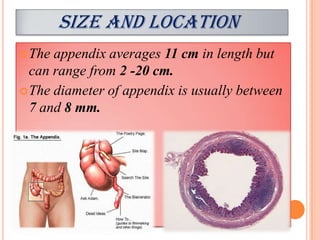
 The appendix averages 11 cm in length but
  can range from 2 -20 cm.
 The diameter of appendix is usually between
  7 and 8 mm.
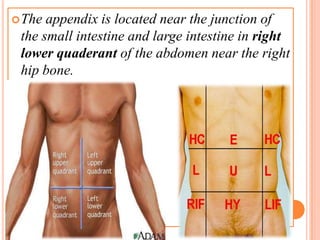
 The appendix is located near the junction of
 the small intestine and large intestine in right
 lower quaderant of the abdomen near the right
 hip bone.
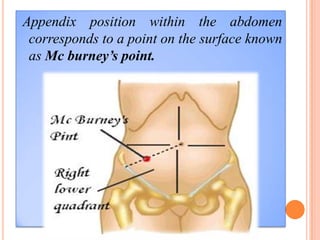
Appendix position within the abdomen
 corresponds to a point on the surface known
 as Mc burney’s point.
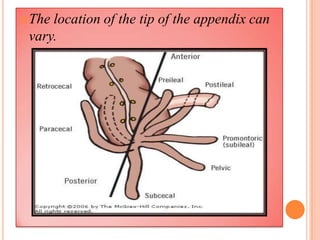
 Thelocation of the tip of the appendix can
 vary.
FEATURES
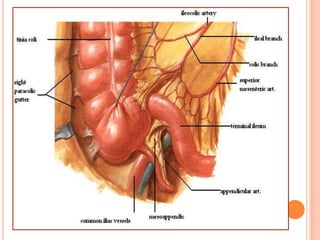
   Found at the point where the taniae coli
    converge on the postero medial wall of
    caecum.
   It opens into the caecum at one end and the
    other end is blind.
   Mesoappendix :-a peritoneal fold enclosing
    the appendicular vessels.
   It is the prolongation of the mesentry of the
    terminal ileum.
   The tip of the appendix lies at the level of the
    brim of the pelvis.
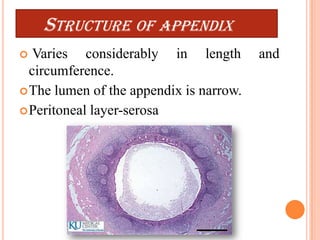
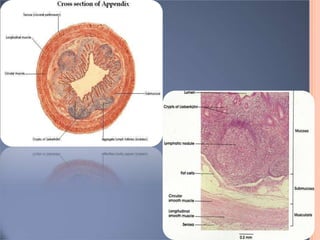
STRUCTURE OF APPENDIX
  Varies considerably in length         and
  circumference.
 The lumen of the appendix is narrow.
 Peritoneal layer-serosa
  muscular coat of longitudinal and
  circular muscle layer.
 It has well developed submucosa coat
  containing lymphoid tissue.
 The lumen has longitudinal fold of
  mucous membrane and contains intestinal
  debris.
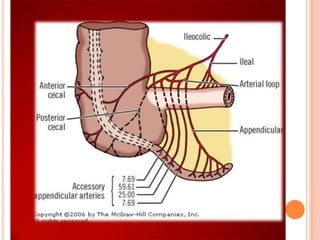
BLOOD SUPPLY TO THE APPENDIX
 The arterial supply of the appendix is by
 means of the appendicular artery,inferior
 branch of of the ileocecal artery of the
 superior mesentric trunk.

 The appendicular vein , ranch of ileocecal
 vein, drains appendicecal venous network
 into the superior mesentric vein and
 eventually into the portal circulation.
LYMPH SUPPLY
    The lymph vessels drain into one or two
    nodes lying in the mesoappendix,fom there
    the lymph passes through a numer of
    mesentric nodes to reach the superior
    mesentric nodes.

            nerve supply
 The   nerve of the appendix are derived from
    sympathetic and parasympthetic (vagus)
    nerve from the superior mesentric plexus.
FUNCTIONS OF VERMIFORM APPENDIX
    Maintain homeostatic :- the endocrine cells
    present in appendix contribute to biological
    control mechanism.

    Immune function :- during the early years of
    development, the appendix has been shown to
    function as a lymphoid organ, assisting with
    the Maturation of B lymphocytes and
    production of antibodies IgA.
    Provide direction to lymphocytes :- appendix
    is involved in the production of molecules that
    help to direct the movement of lymphocytes to
    various other location in the body.

    Maintaining gut flora :- the tube like structure
    of appendix helps in the proper movement of
    waste matter in the digestive system.
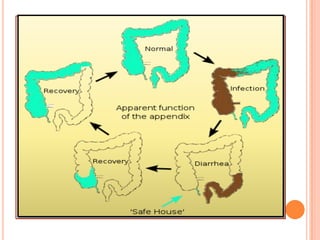
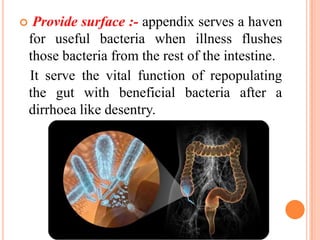
    Provide surface :- appendix serves a haven
    for useful bacteria when illness flushes
    those bacteria from the rest of the intestine.
    It serve the vital function of repopulating
    the gut with beneficial bacteria after a
    dirrhoea like desentry.
BENEFICIAL BACTERIA
 Probiotic function:-
 help to have proper digestion and a healthy
 colon.
 helps protect from harmfull bacteria.
 helps in maintaining digestive system’s
 function.
 maintain high energy level and proper
 immune system function.
 helps in maintaining body’s vital hormone
 and chemical balance
SECONDARY FUNCTION             OF
                APPENDIX
Use of appendix in reconstructive surgery:-
 The appendix is used to recreat a sphincter
  muscles in the bladder surgeries so that the
  patient can continent the urin.

   In the disease of ureter the appendix allow
    urin to flow from the kidney to the bladder.
Anatomy presentation

Anatomy presentation

  • 2.
    INTRODUCTION The term “vermiform”comes from latin word and means “worm shaped”. The vermiform appendix is a blind ended tube connected to the cecum from which is develops embryologically.
  • 3.
    DEFINITION Vermiform appendix isa vestigial organ. A tubular structure of about 8cm with a lumen attached the cecum.
  • 4.
    VESTIGIALITY A vestigial structureis a structure that has lost all or most of its original function through the process of evolution. The main function of appendix is to digest cellulose with the help of mutualistic bacteria. As the human appendix no longer houses a significant amount of these bacteria and humans are no longer capable of digesting more than a minimal amount of cellulose per day. Thus human appendix is considered as a vestigial organ.
  • 5.
    SIZE AND LOCATION The appendix averages 11 cm in length but can range from 2 -20 cm.  The diameter of appendix is usually between 7 and 8 mm.
  • 6.
     The appendixis located near the junction of the small intestine and large intestine in right lower quaderant of the abdomen near the right hip bone.
  • 7.
    Appendix position withinthe abdomen corresponds to a point on the surface known as Mc burney’s point.
  • 8.
     Thelocation ofthe tip of the appendix can vary.
  • 9.
    FEATURES  Found at the point where the taniae coli converge on the postero medial wall of caecum.  It opens into the caecum at one end and the other end is blind.  Mesoappendix :-a peritoneal fold enclosing the appendicular vessels.  It is the prolongation of the mesentry of the terminal ileum.  The tip of the appendix lies at the level of the brim of the pelvis.
  • 11.
    STRUCTURE OF APPENDIX  Varies considerably in length and circumference.  The lumen of the appendix is narrow.  Peritoneal layer-serosa
  • 12.
     muscularcoat of longitudinal and circular muscle layer.  It has well developed submucosa coat containing lymphoid tissue.  The lumen has longitudinal fold of mucous membrane and contains intestinal debris.
  • 14.
    BLOOD SUPPLY TOTHE APPENDIX  The arterial supply of the appendix is by means of the appendicular artery,inferior branch of of the ileocecal artery of the superior mesentric trunk.  The appendicular vein , ranch of ileocecal vein, drains appendicecal venous network into the superior mesentric vein and eventually into the portal circulation.
  • 16.
    LYMPH SUPPLY  The lymph vessels drain into one or two nodes lying in the mesoappendix,fom there the lymph passes through a numer of mesentric nodes to reach the superior mesentric nodes. nerve supply  The nerve of the appendix are derived from sympathetic and parasympthetic (vagus) nerve from the superior mesentric plexus.
  • 17.
    FUNCTIONS OF VERMIFORMAPPENDIX  Maintain homeostatic :- the endocrine cells present in appendix contribute to biological control mechanism.  Immune function :- during the early years of development, the appendix has been shown to function as a lymphoid organ, assisting with the Maturation of B lymphocytes and production of antibodies IgA.
  • 18.
    Provide direction to lymphocytes :- appendix is involved in the production of molecules that help to direct the movement of lymphocytes to various other location in the body.  Maintaining gut flora :- the tube like structure of appendix helps in the proper movement of waste matter in the digestive system.
  • 20.
    Provide surface :- appendix serves a haven for useful bacteria when illness flushes those bacteria from the rest of the intestine. It serve the vital function of repopulating the gut with beneficial bacteria after a dirrhoea like desentry.
  • 21.
  • 22.
     Probiotic function:- help to have proper digestion and a healthy colon.  helps protect from harmfull bacteria.  helps in maintaining digestive system’s function.  maintain high energy level and proper immune system function.  helps in maintaining body’s vital hormone and chemical balance
  • 23.
    SECONDARY FUNCTION OF APPENDIX Use of appendix in reconstructive surgery:-  The appendix is used to recreat a sphincter muscles in the bladder surgeries so that the patient can continent the urin.  In the disease of ureter the appendix allow urin to flow from the kidney to the bladder.