VERMIFORM APPENDIX
DR.SUPRITI
DEMONSTRATOR(DEPT OF ANATOMY)
TMMC&RC
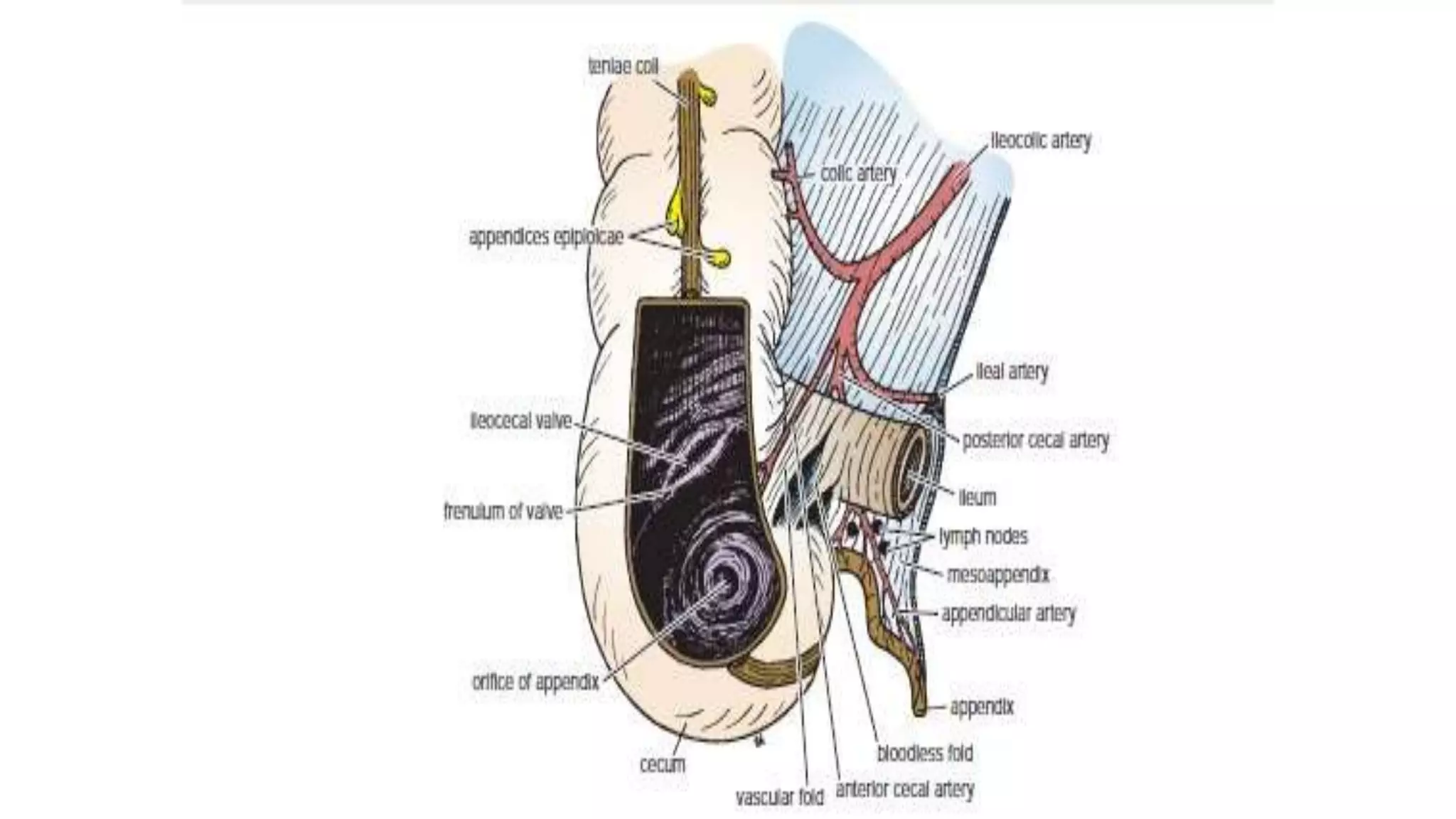
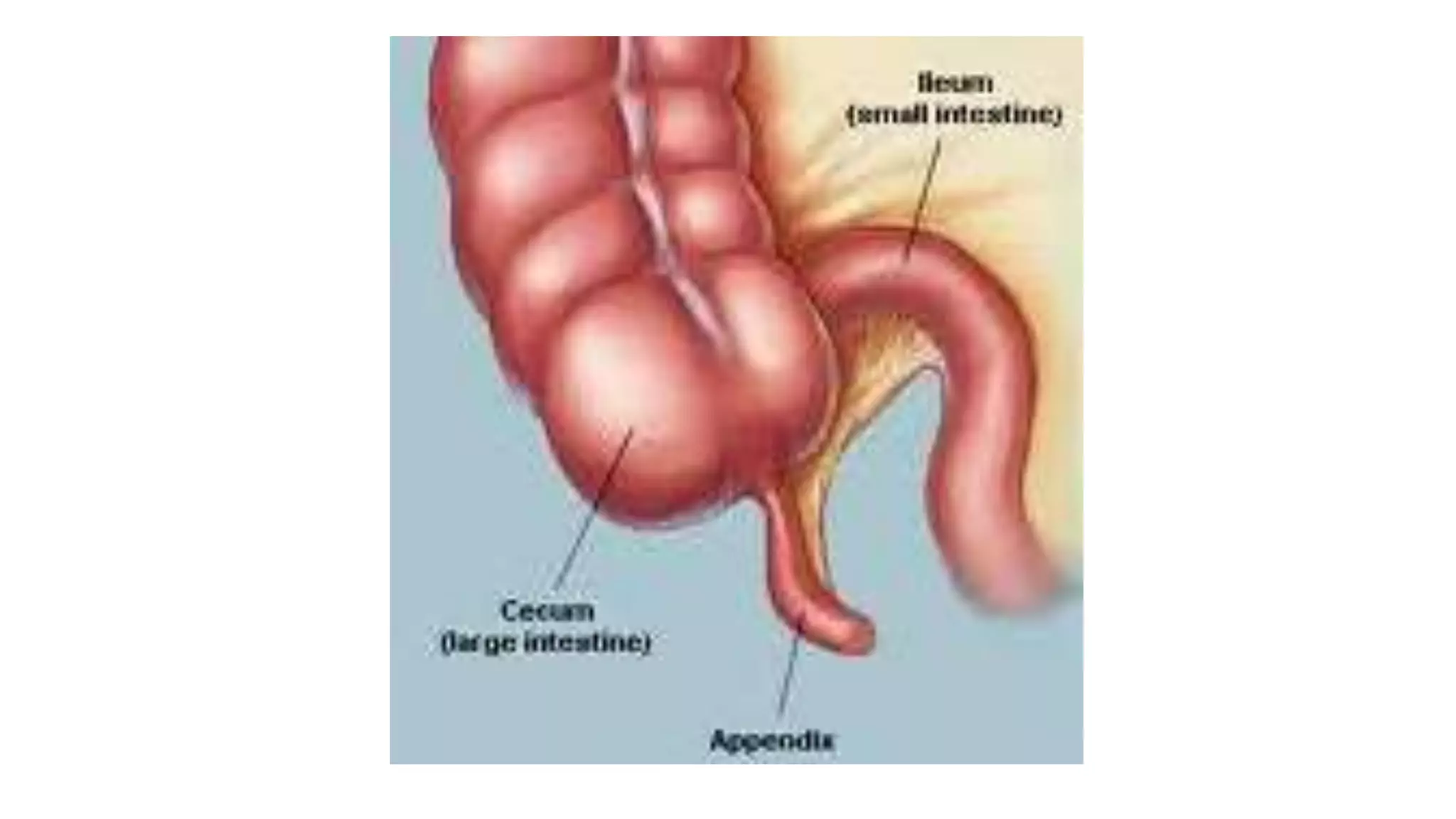
• It is a blind-ended muscular tube attached to the
posteromedial wall of caecum, about 2cm below ileocaecal jxn.
• Suspended by peritoneal fold, MESOAPPENDIX.
• Devoid of taenia coli, sacculations, appendices epiploicae.
MESOAPPENDIX
• The mesoappendix (mesentery of appendix) is short, triangular
and variable.
• It extends the whole length of appendix.The breadth of
mesoappendix usually falls short of length of appendix.
• The body of appendix is kinked on itself where the free border
of mesoappendix ends,hence it is coiled like worm and is
named the vermiform.
• Appendicular vessels pass through free margin of
mesoappendix.
MEASUREMENTS
• The appendix is 9 cm (7 to 11cm) in length but can range from
2 to 20 cm. The diameter of the appendix is 1 to 7 mm.
• It is relatively longer in children and decreases after 40 years of
age.
SURFACE ANATOMY
• The base of appendix is represented by a point about 2cm
below the intersection between the transtubercular and rt
lateral planes.
McBurney’s point
• Represented by a point at the junction of medial two third and
lateral one third of a line which extends from the umblicus to
rt ant. Sup.illiac spine.
• This point indicate maximum tenderness in a patient suffering
from inflammation of the appendix.
PARTS OF APPENDIX
 A) Base
 B) Body
 c) Tip
BASE
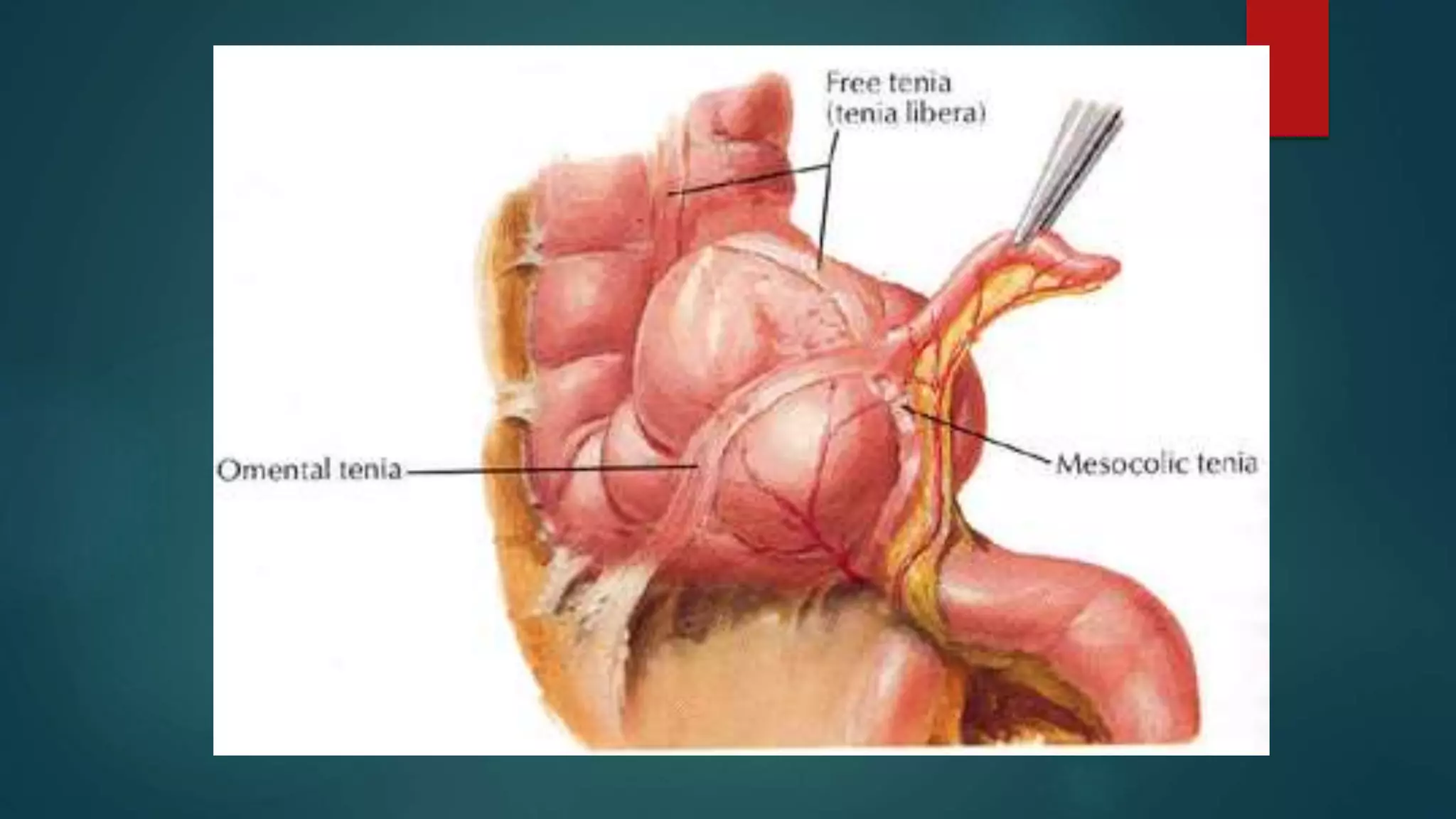
 Base – it is attached to posteromedial wall of caecum
about 2 m below the ileocaecal junction.
 All taenia of caecum converge to the base and serve
as a guide for the identification of the appendix.
BODY
 Body is narrow,tubular and contains a canal which
opens into the caecum.
 The caecal opening is guarded by an incomplete
mucous fold called as,”THE VALVE OF GERLACH”
TIP
 It is least vascular and is directed in various direction.
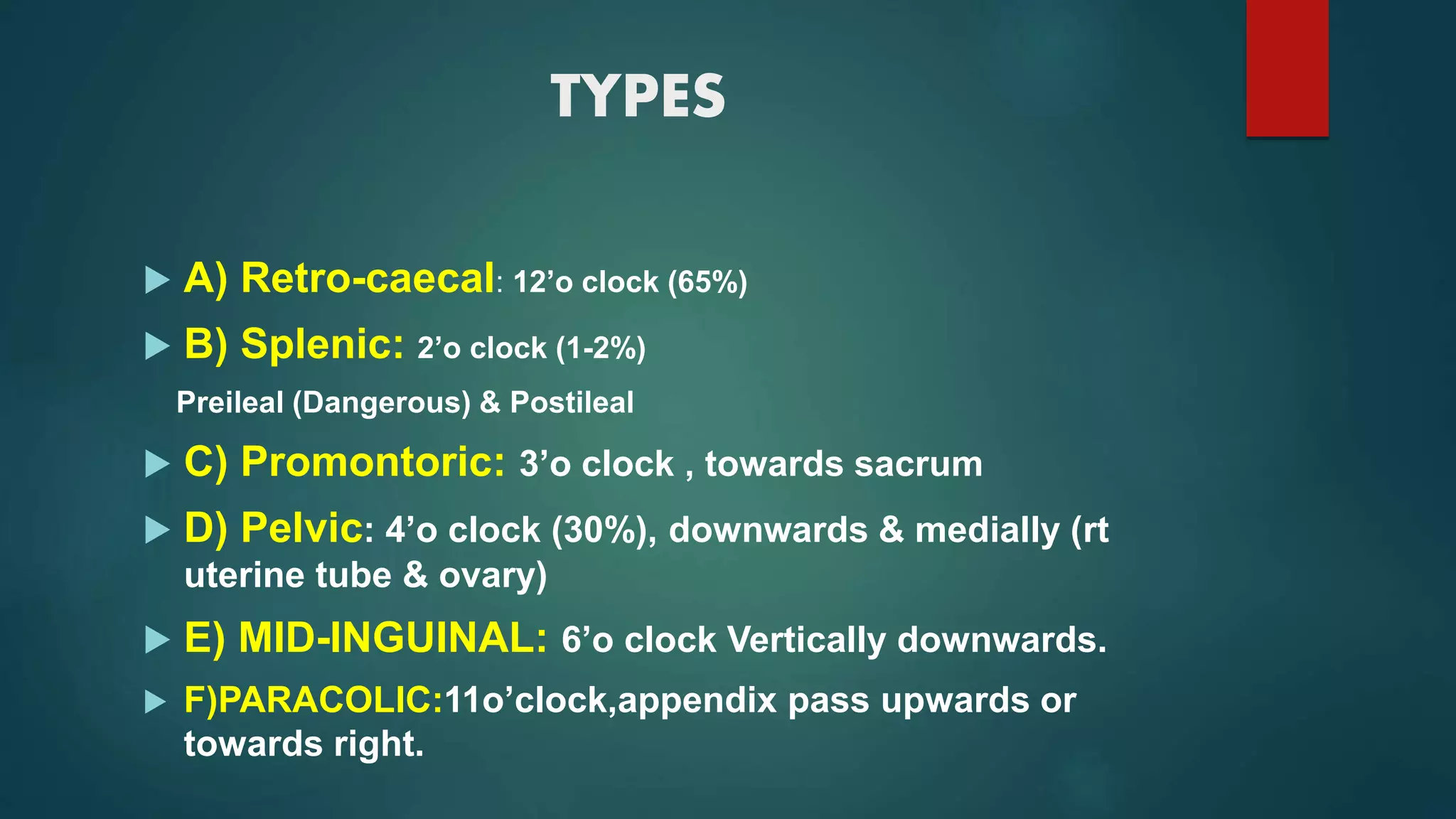
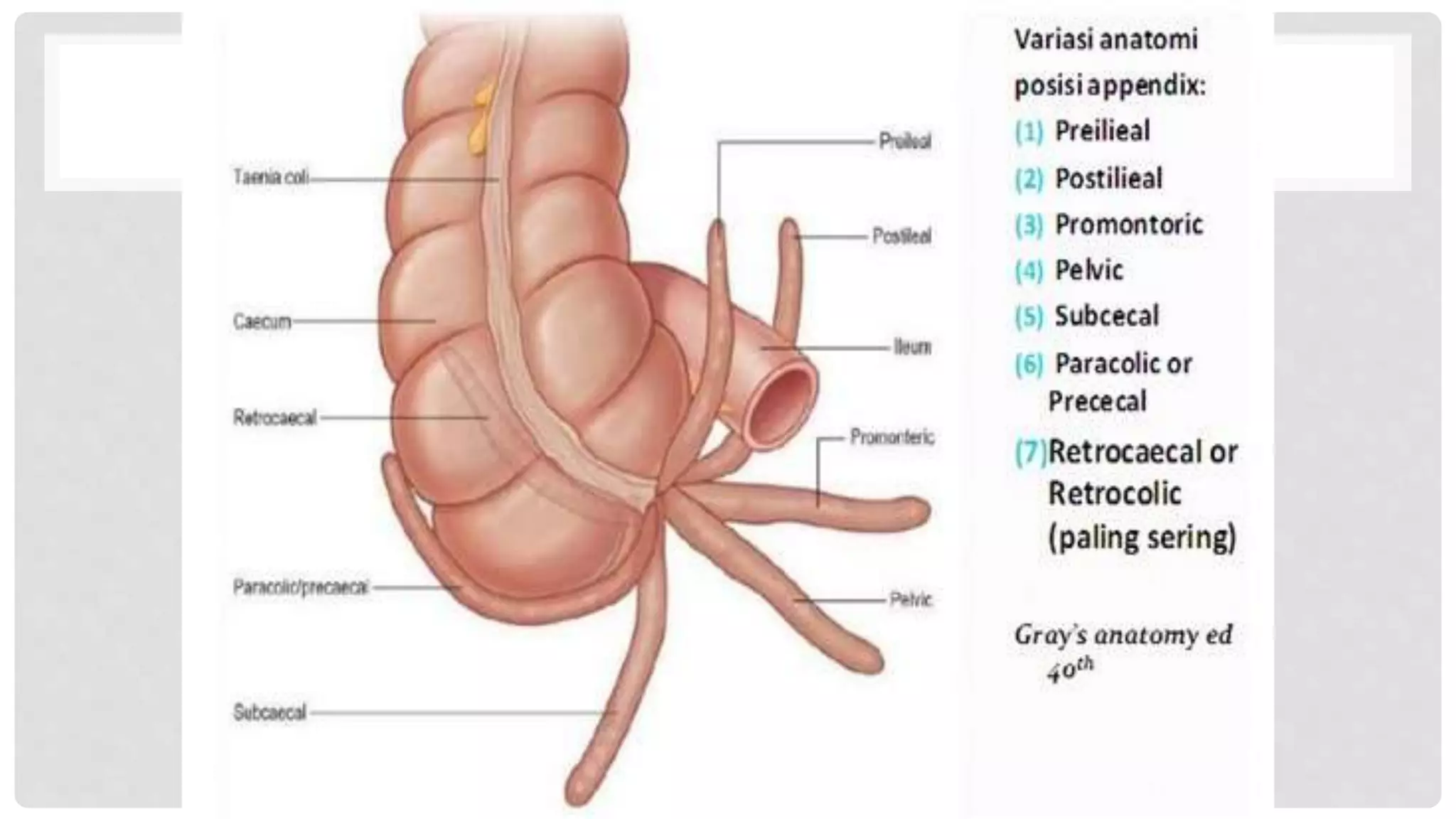
TYPES
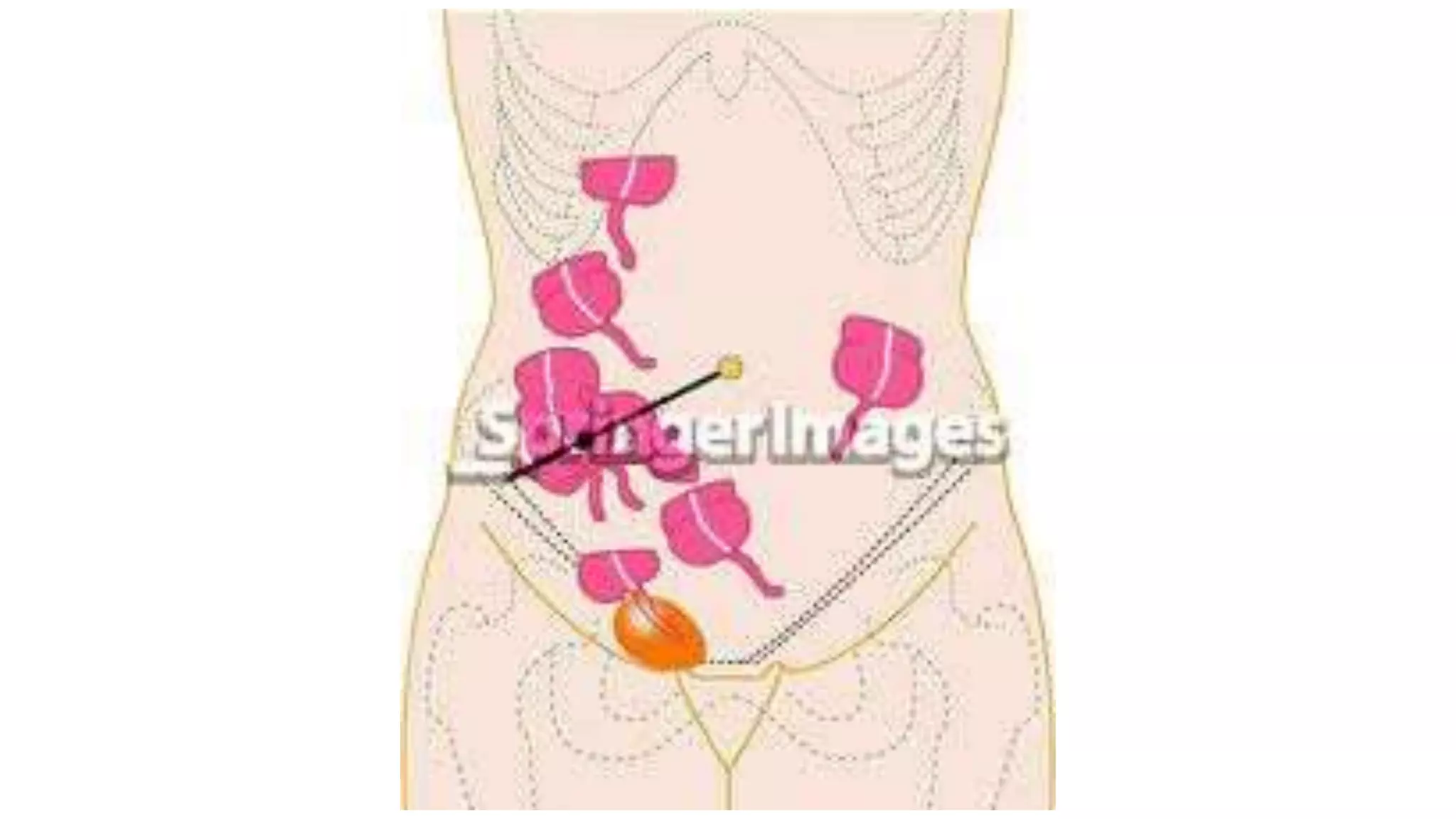
 A) Retro-caecal: 12’o clock (65%)
 B) Splenic: 2’o clock (1-2%)
Preileal (Dangerous) & Postileal
 C) Promontoric: 3’o clock , towards sacrum
 D) Pelvic: 4’o clock (30%), downwards & medially (rt
uterine tube & ovary)
 E) MID-INGUINAL: 6’o clock Vertically downwards.
 F)PARACOLIC:11o’clock,appendix pass upwards or
towards right.
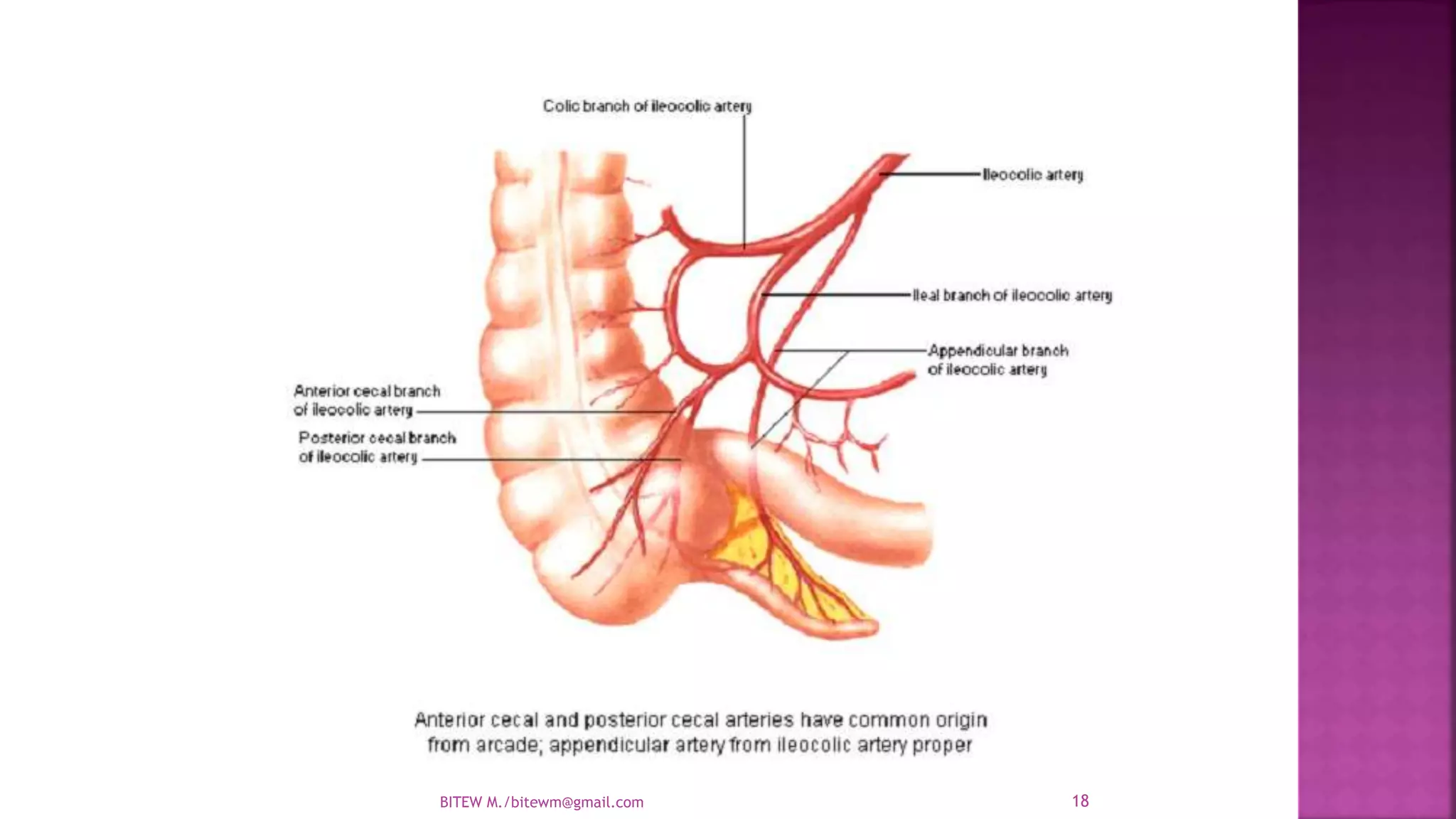
BLOOD SUPPLY
 Appendicular A br. Of inferior div of ileocolic art
 Recurrent br supplies base of appendix and anastomose
with posterior caecal artery.
 End artery
18BITEW M./bitewm@gmail.com
NERVE SUPPLY
 Parasympathetic: VAGUS
 Sympathetic: T10 segment of spinal cord.
LYMPHATIC DRAINAGE
Lymphatics drain into superior mesenteric lymph
nodes via ilea-colic nodes
APPLIED ANATOMY
 Inflammation of appendix is known as
appendicitis,seen in adoloscent age.In this condition
it is usually necessary to remove the appendix.
 The operation for removal of appendix is called as
appendectomy.
 The anatomial factors producing inflammation may
be as follows:-
 Appendix is a blind tube,a faecolith may obstruct the
lumen and precipitate the attack of appendicitis.
 Supplied by an end artery.
 Presence of hiatus muscularis.
 Presence of lymphatic follicles in submuosa.
Anatomy of appendix

Anatomy of appendix

  • 1.
  • 2.
    • It isa blind-ended muscular tube attached to the posteromedial wall of caecum, about 2cm below ileocaecal jxn. • Suspended by peritoneal fold, MESOAPPENDIX. • Devoid of taenia coli, sacculations, appendices epiploicae.
  • 4.
    MESOAPPENDIX • The mesoappendix(mesentery of appendix) is short, triangular and variable. • It extends the whole length of appendix.The breadth of mesoappendix usually falls short of length of appendix. • The body of appendix is kinked on itself where the free border of mesoappendix ends,hence it is coiled like worm and is named the vermiform. • Appendicular vessels pass through free margin of mesoappendix.
  • 6.
    MEASUREMENTS • The appendixis 9 cm (7 to 11cm) in length but can range from 2 to 20 cm. The diameter of the appendix is 1 to 7 mm. • It is relatively longer in children and decreases after 40 years of age.
  • 7.
    SURFACE ANATOMY • Thebase of appendix is represented by a point about 2cm below the intersection between the transtubercular and rt lateral planes.
  • 8.
    McBurney’s point • Representedby a point at the junction of medial two third and lateral one third of a line which extends from the umblicus to rt ant. Sup.illiac spine. • This point indicate maximum tenderness in a patient suffering from inflammation of the appendix.
  • 10.
    PARTS OF APPENDIX A) Base  B) Body  c) Tip
  • 11.
    BASE  Base –it is attached to posteromedial wall of caecum about 2 m below the ileocaecal junction.  All taenia of caecum converge to the base and serve as a guide for the identification of the appendix.
  • 13.
    BODY  Body isnarrow,tubular and contains a canal which opens into the caecum.  The caecal opening is guarded by an incomplete mucous fold called as,”THE VALVE OF GERLACH”
  • 14.
    TIP  It isleast vascular and is directed in various direction.
  • 15.
    TYPES  A) Retro-caecal:12’o clock (65%)  B) Splenic: 2’o clock (1-2%) Preileal (Dangerous) & Postileal  C) Promontoric: 3’o clock , towards sacrum  D) Pelvic: 4’o clock (30%), downwards & medially (rt uterine tube & ovary)  E) MID-INGUINAL: 6’o clock Vertically downwards.  F)PARACOLIC:11o’clock,appendix pass upwards or towards right.
  • 17.
    BLOOD SUPPLY  AppendicularA br. Of inferior div of ileocolic art  Recurrent br supplies base of appendix and anastomose with posterior caecal artery.  End artery
  • 18.
  • 19.
    NERVE SUPPLY  Parasympathetic:VAGUS  Sympathetic: T10 segment of spinal cord.
  • 20.
    LYMPHATIC DRAINAGE Lymphatics draininto superior mesenteric lymph nodes via ilea-colic nodes
  • 21.
    APPLIED ANATOMY  Inflammationof appendix is known as appendicitis,seen in adoloscent age.In this condition it is usually necessary to remove the appendix.  The operation for removal of appendix is called as appendectomy.
  • 22.
     The anatomialfactors producing inflammation may be as follows:-  Appendix is a blind tube,a faecolith may obstruct the lumen and precipitate the attack of appendicitis.  Supplied by an end artery.  Presence of hiatus muscularis.  Presence of lymphatic follicles in submuosa.