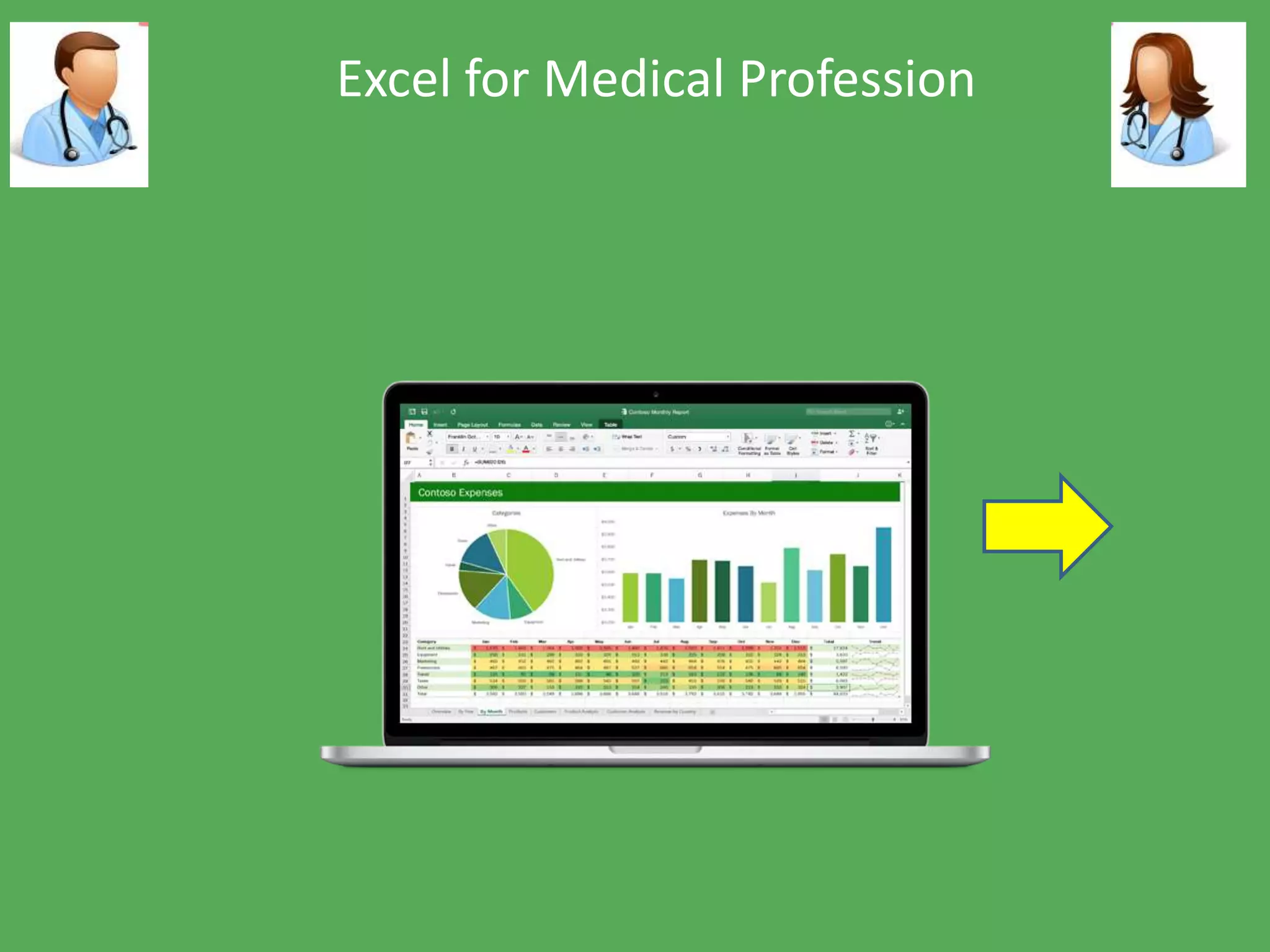
Excel for Medical Profession
Introduction of Excel
Use of Excel in Medical Profession
Sample example
Work with Excel (with practice)
sample excel templates use in medical profession
Q & A (any time)
outline
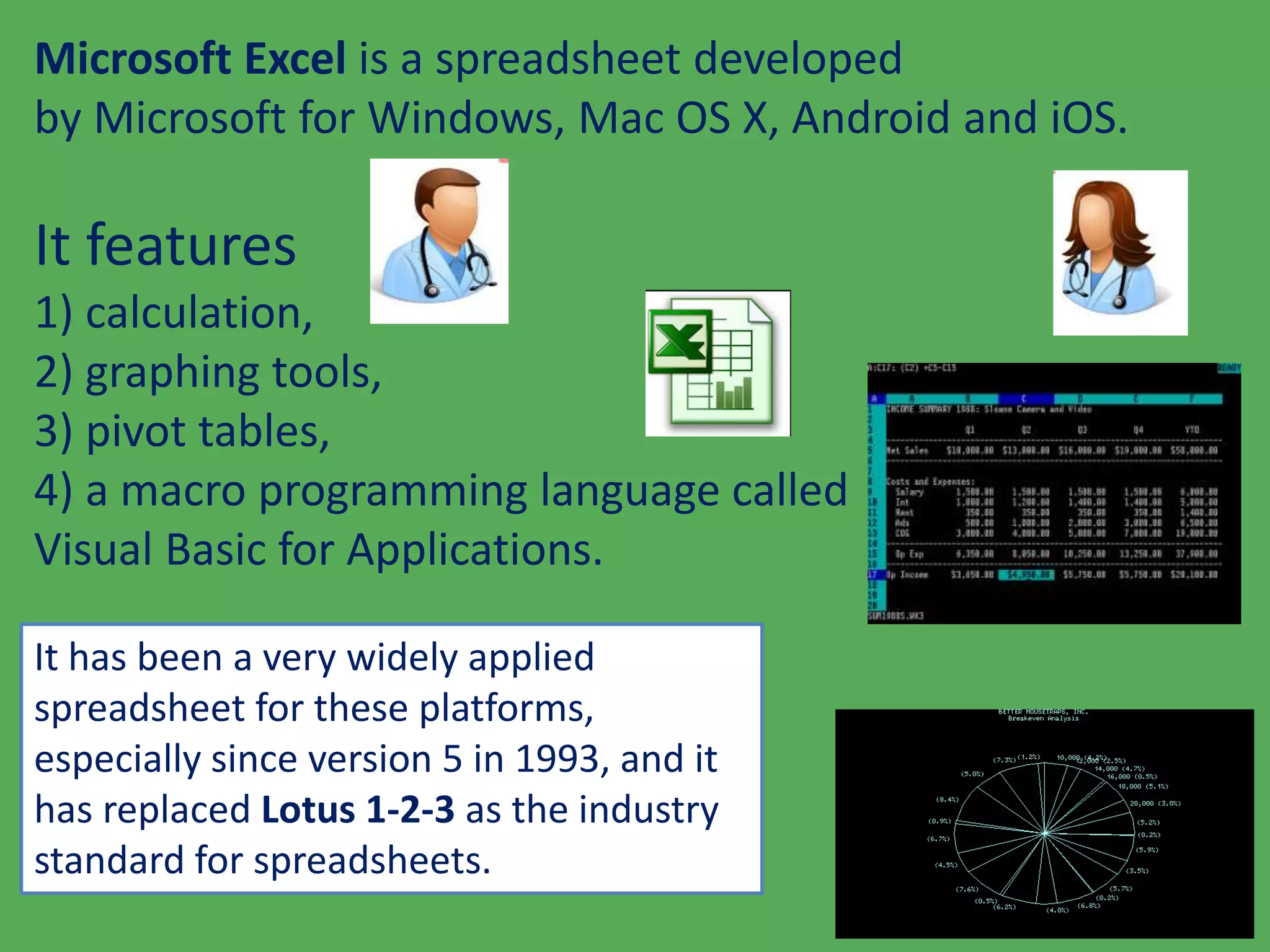
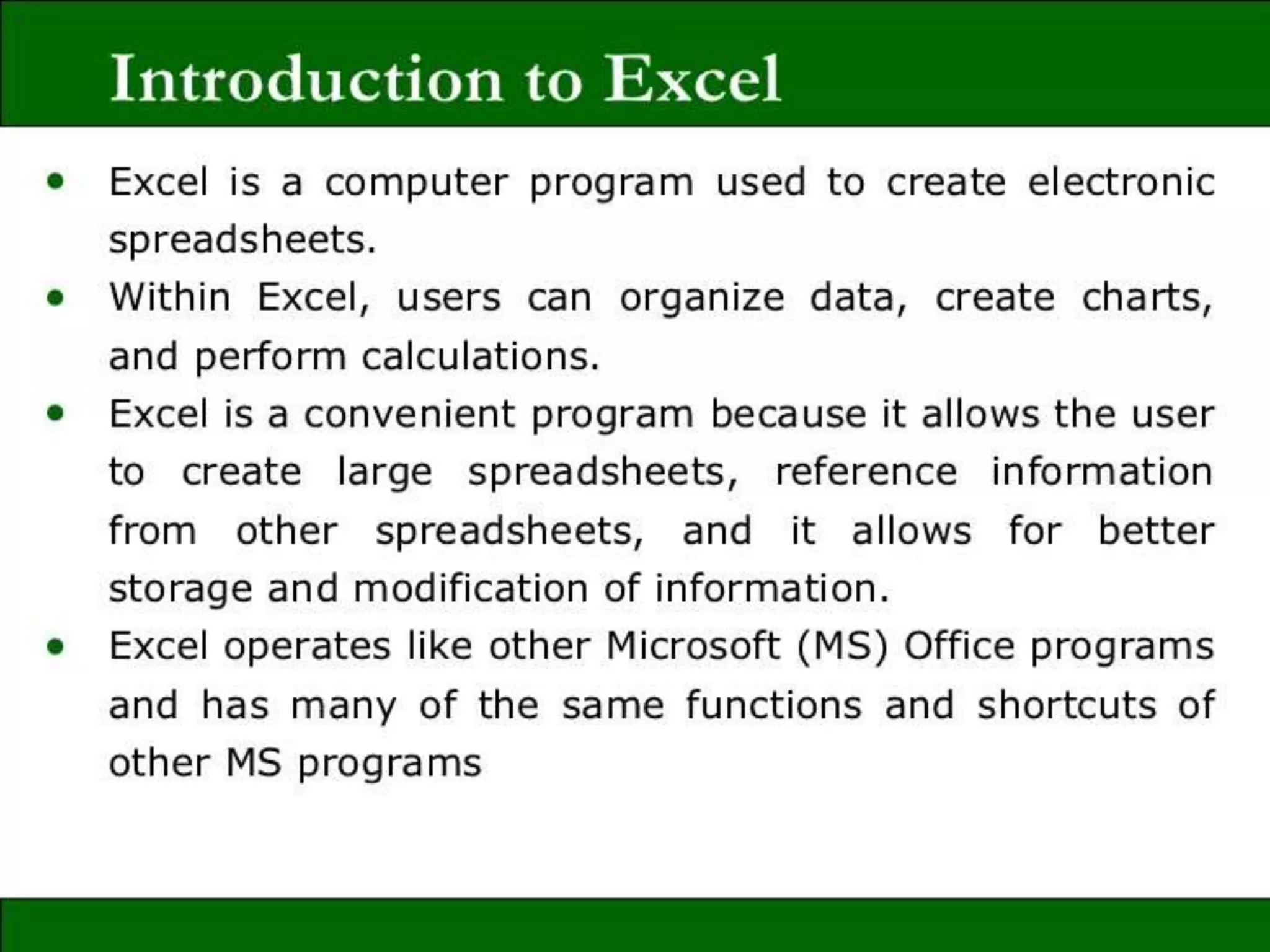
Microsoft Excel is a spreadsheet developed
by Microsoft for Windows, Mac OS X, Android and iOS.
It features
1) calculation,
2) graphing tools,
3) pivot tables,
4) a macro programming language called
Visual Basic for Applications.
It has been a very widely applied
spreadsheet for these platforms,
especially since version 5 in 1993, and it
has replaced Lotus 1-2-3 as the industry
standard for spreadsheets.
Microsoft Excel is a commercial spreadsheet program
developed by Microsoft
Application of Excel
 To manage name list of data records.
 To perform mathematical calculation easily in daily
business.
 Inventory management.
 Create forms and consolidate results.
 Analytical tools.
 Corporate budgeting.
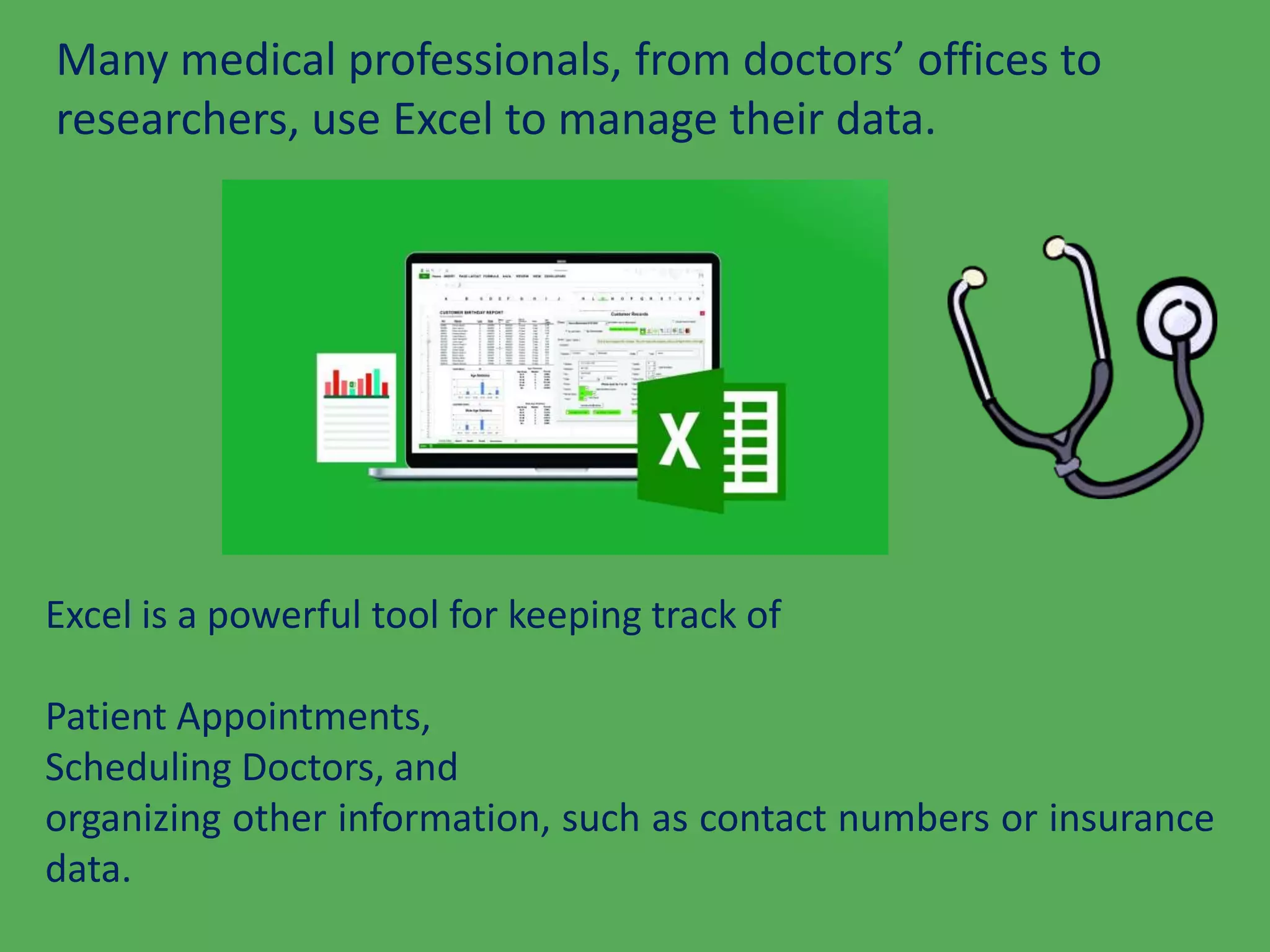
Many medical professionals, from doctors’ offices to
researchers, use Excel to manage their data.
Excel is a powerful tool for keeping track of
Patient Appointments,
Scheduling Doctors, and
organizing other information, such as contact numbers or insurance
data.
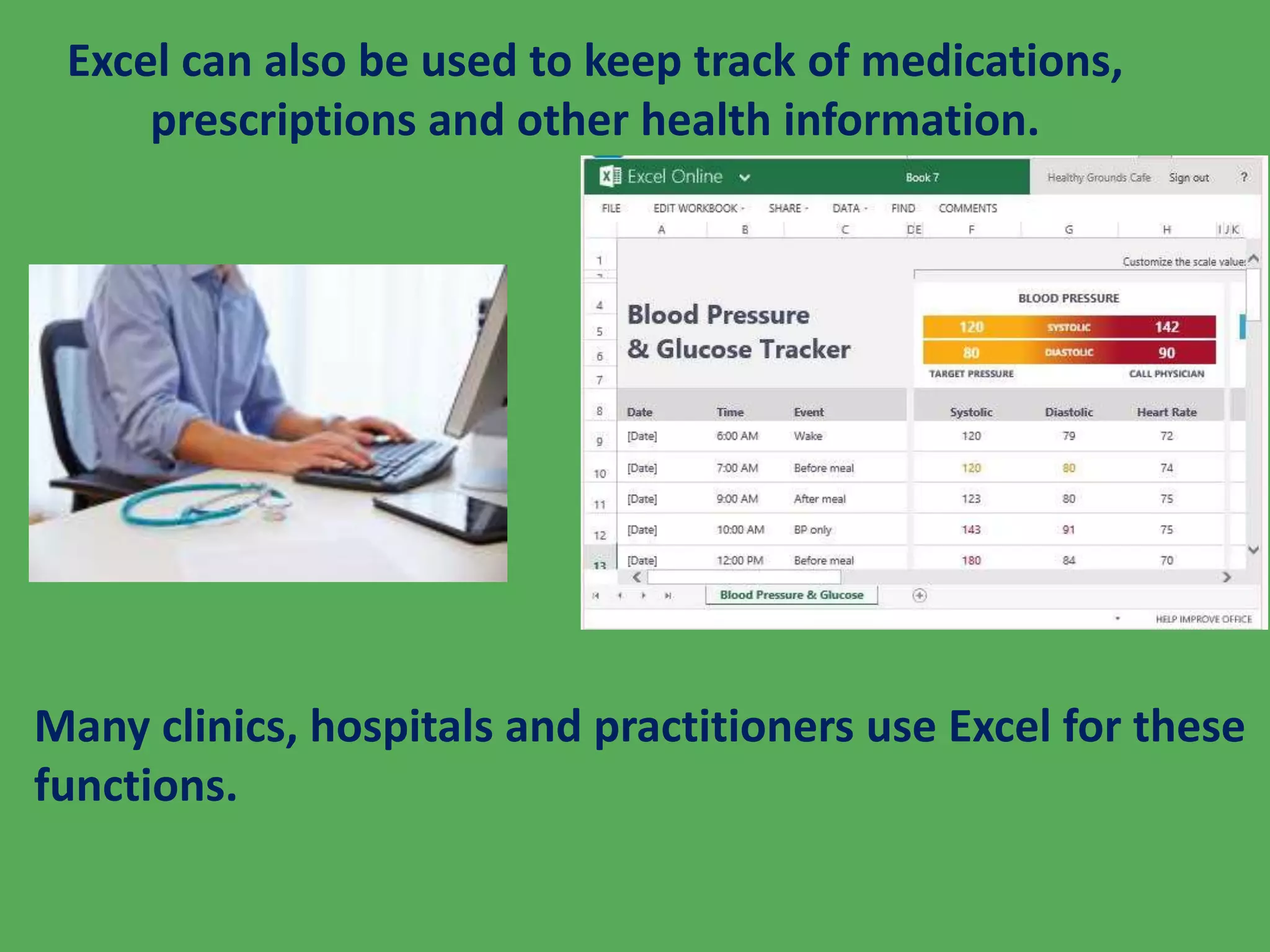
Many clinics, hospitals and practitioners use Excel for these
functions.
Excel can also be used to keep track of medications,
prescriptions and other health information.
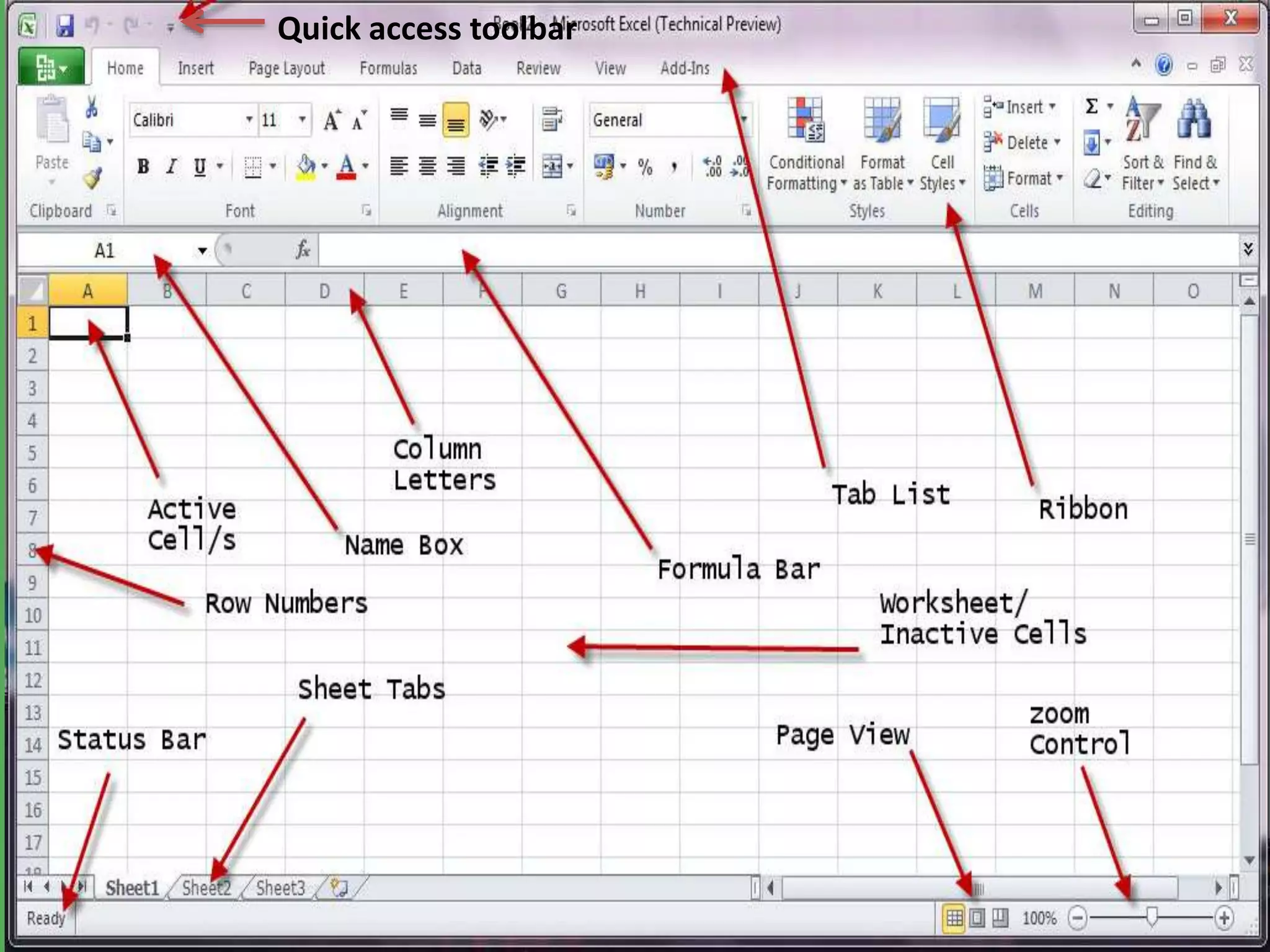
Quick access toolbar
Excel useful commands
Know worksheet
Save workbook
Table formatting
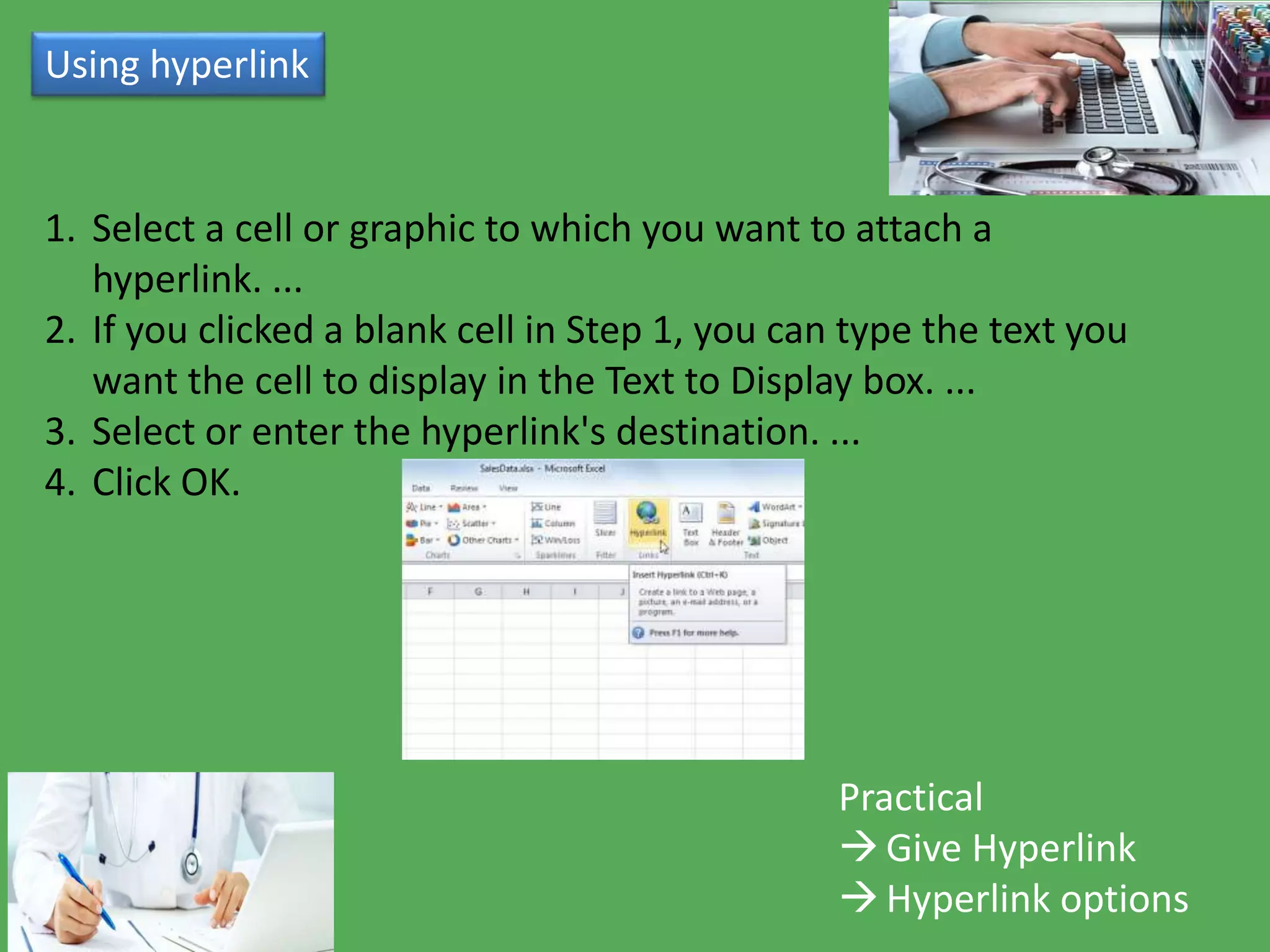
Using hyperlink
Data validation
Use of formulas
Use of comment box
Screen shot
Workbook protection
Watch window
Filter
Short cut keys
Know worksheet
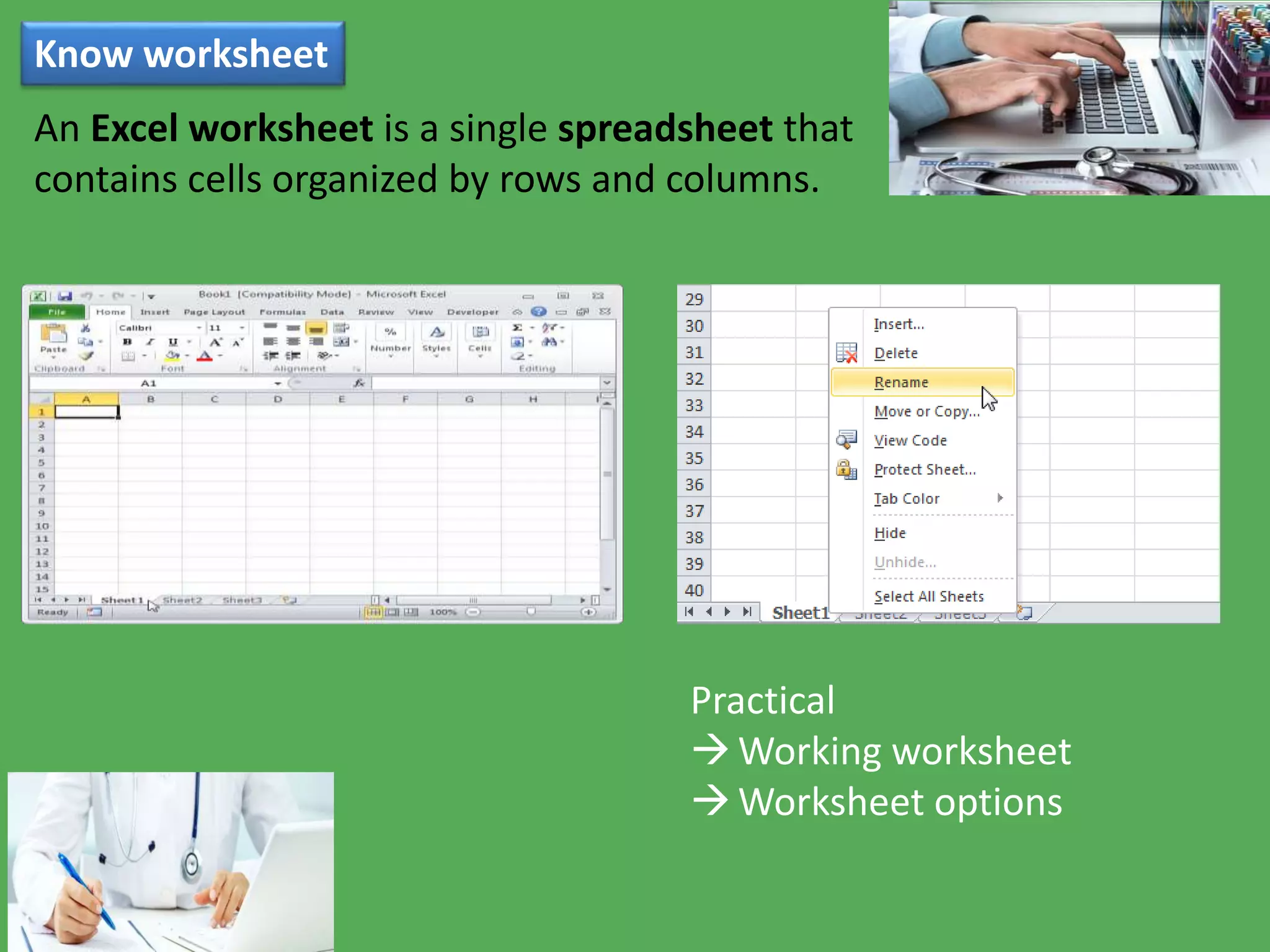
An Excel worksheet is a single spreadsheet that
contains cells organized by rows and columns.
Practical
Working worksheet
Worksheet options
Save workbook
Practical
Save worksheet
Save options
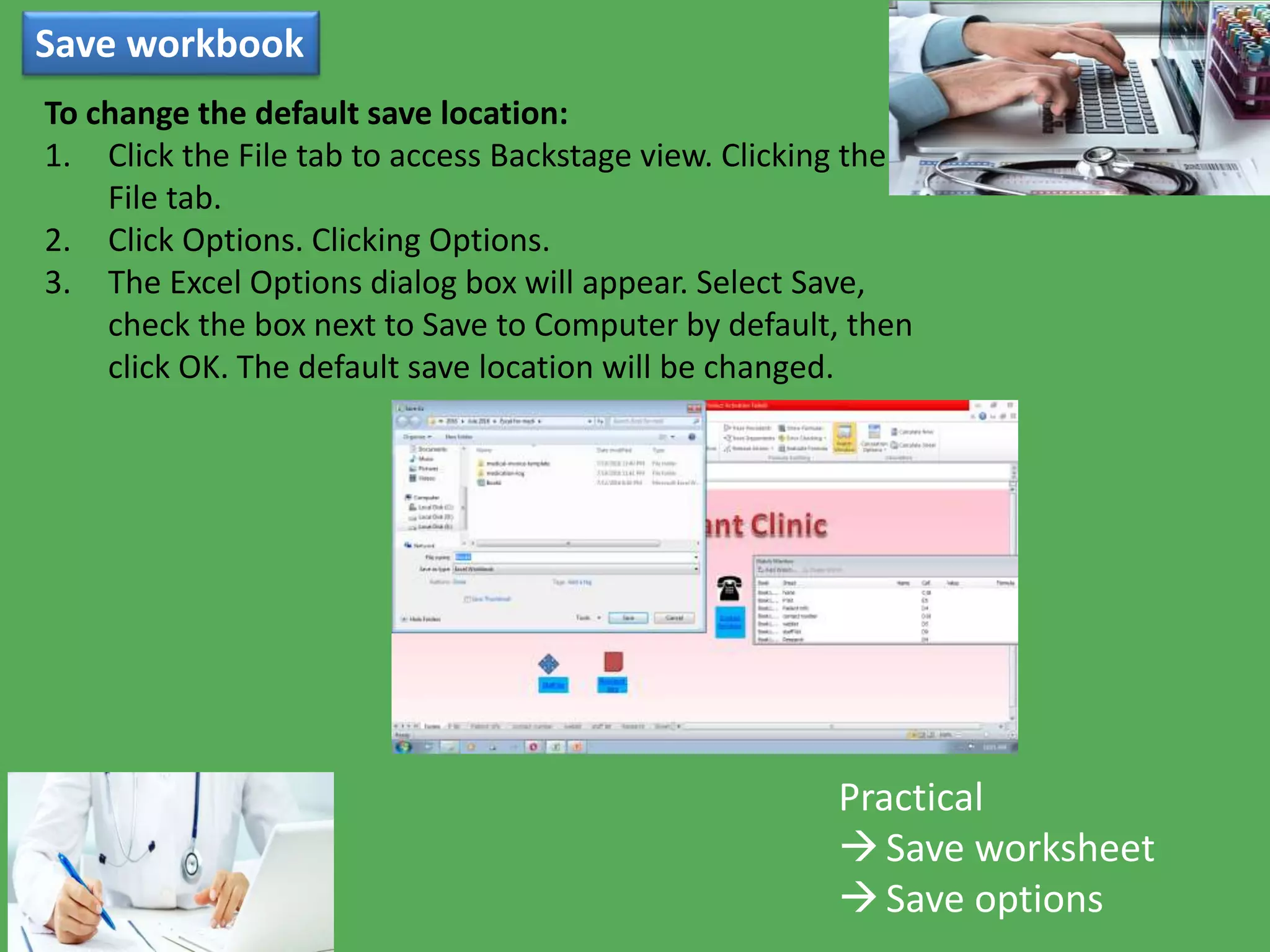
To change the default save location:
1. Click the File tab to access Backstage view. Clicking the
File tab.
2. Click Options. Clicking Options.
3. The Excel Options dialog box will appear. Select Save,
check the box next to Save to Computer by default, then
click OK. The default save location will be changed.
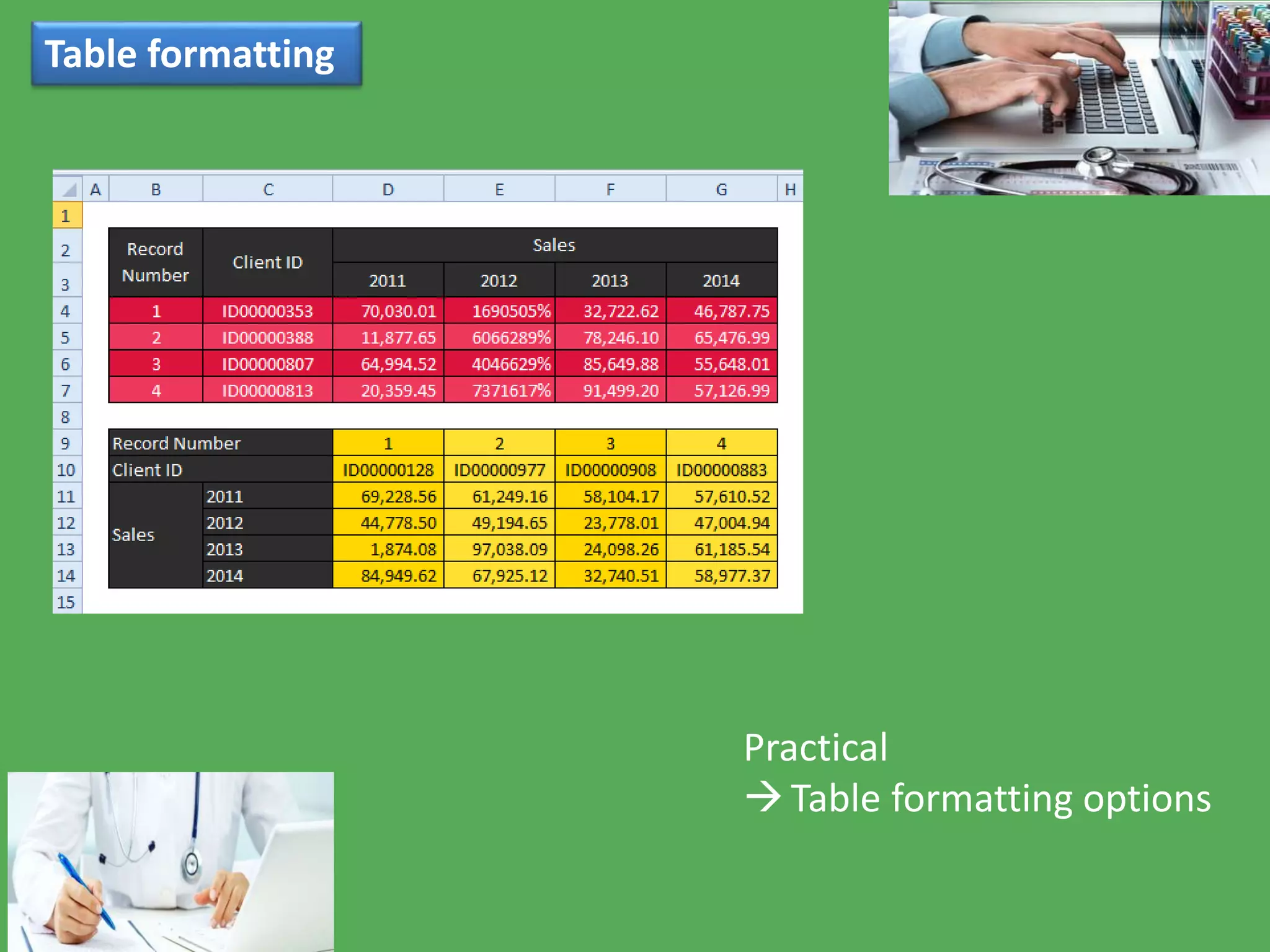
Table formatting
Practical
Table formatting options
Using hyperlink
Practical
Give Hyperlink
Hyperlink options
1. Select a cell or graphic to which you want to attach a
hyperlink. ...
2. If you clicked a blank cell in Step 1, you can type the text you
want the cell to display in the Text to Display box. ...
3. Select or enter the hyperlink's destination. ...
4. Click OK.
Data validation
Practical
Use of data validation
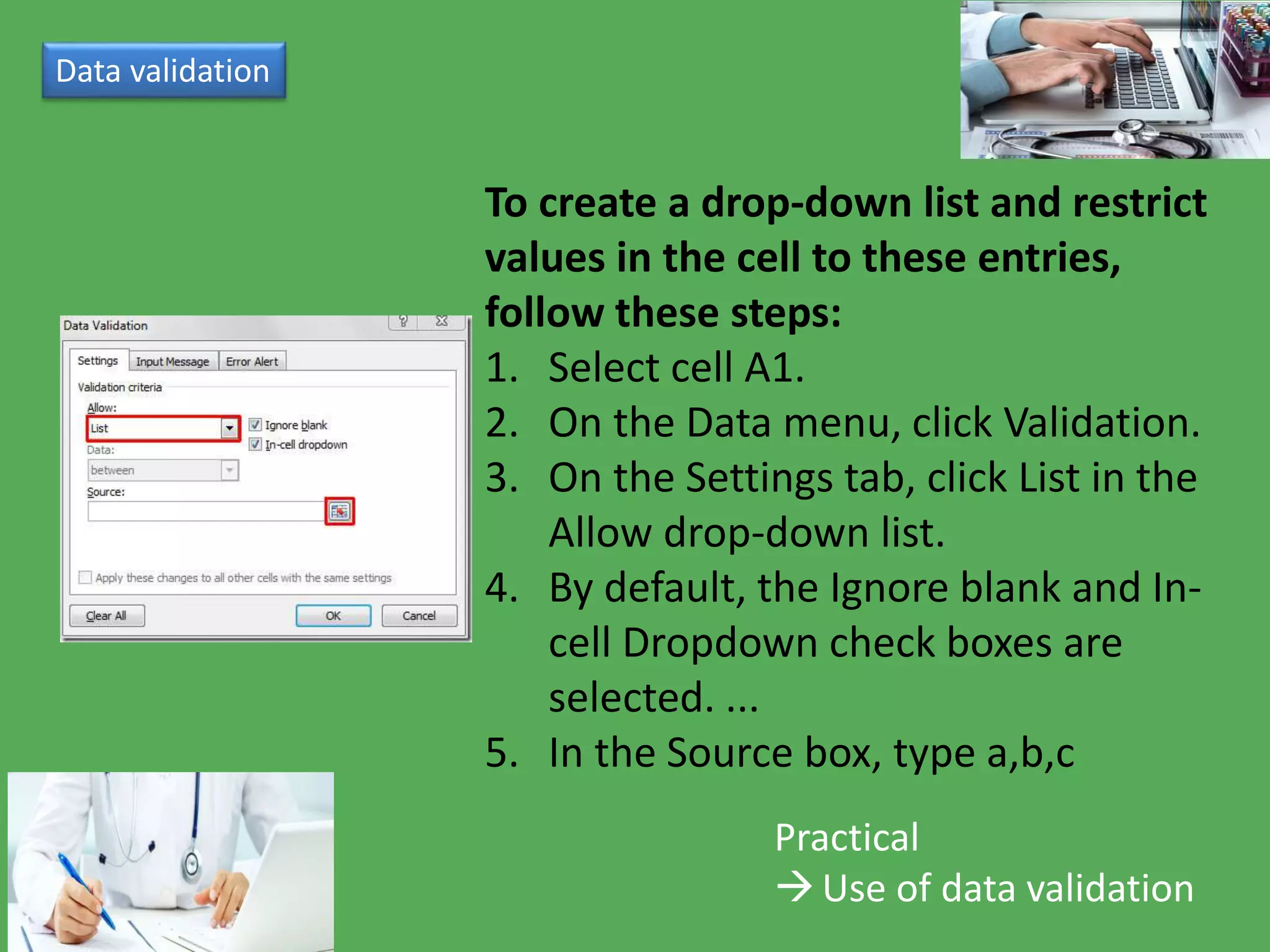
To create a drop-down list and restrict
values in the cell to these entries,
follow these steps:
1. Select cell A1.
2. On the Data menu, click Validation.
3. On the Settings tab, click List in the
Allow drop-down list.
4. By default, the Ignore blank and In-
cell Dropdown check boxes are
selected. ...
5. In the Source box, type a,b,c
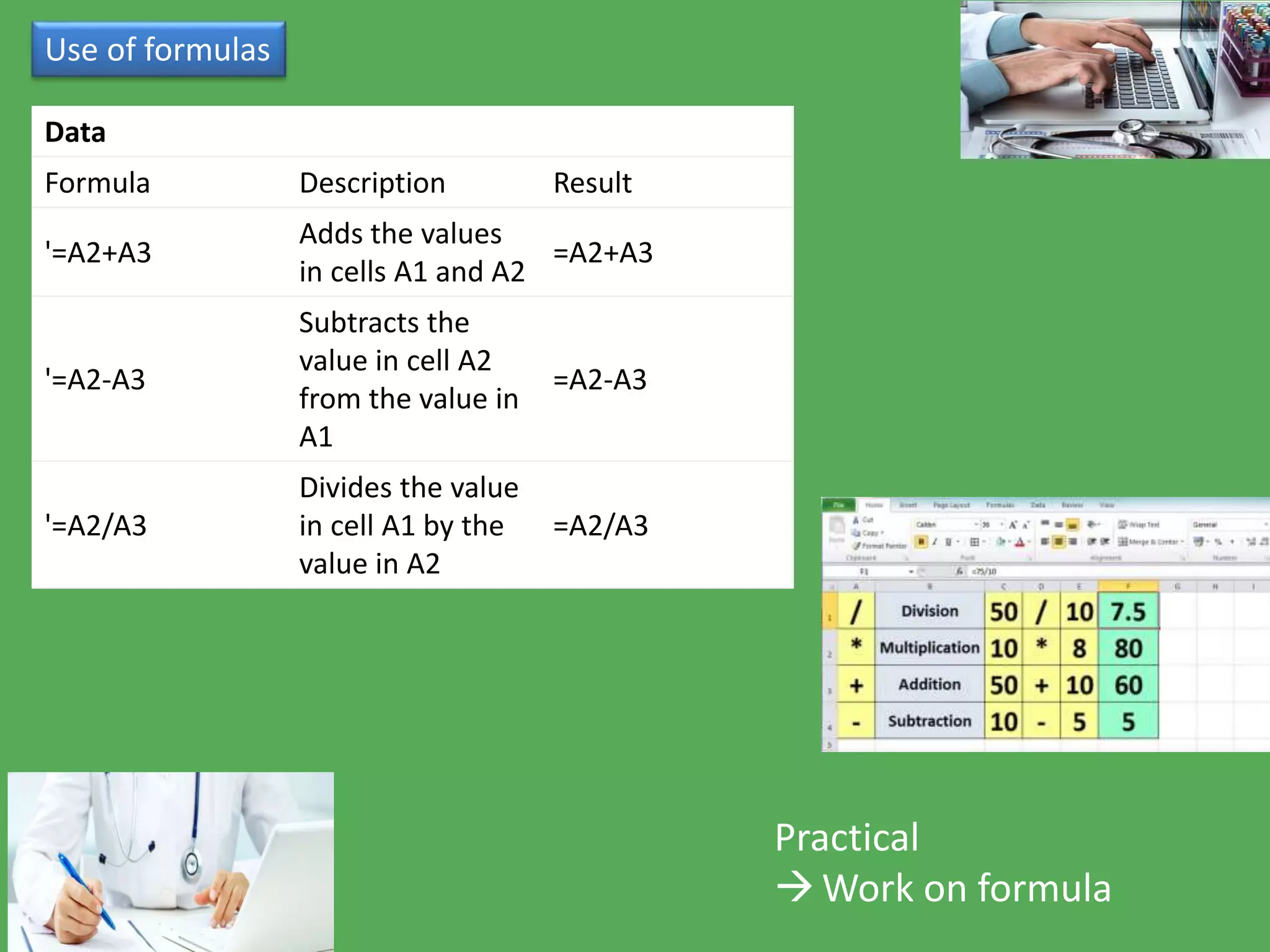
Use of formulas
Practical
Work on formula
Data
Formula Description Result
'=A2+A3
Adds the values
in cells A1 and A2
=A2+A3
'=A2-A3
Subtracts the
value in cell A2
from the value in
A1
=A2-A3
'=A2/A3
Divides the value
in cell A1 by the
value in A2
=A2/A3
Use of comment box
Practical
Using comment box
Comment box options
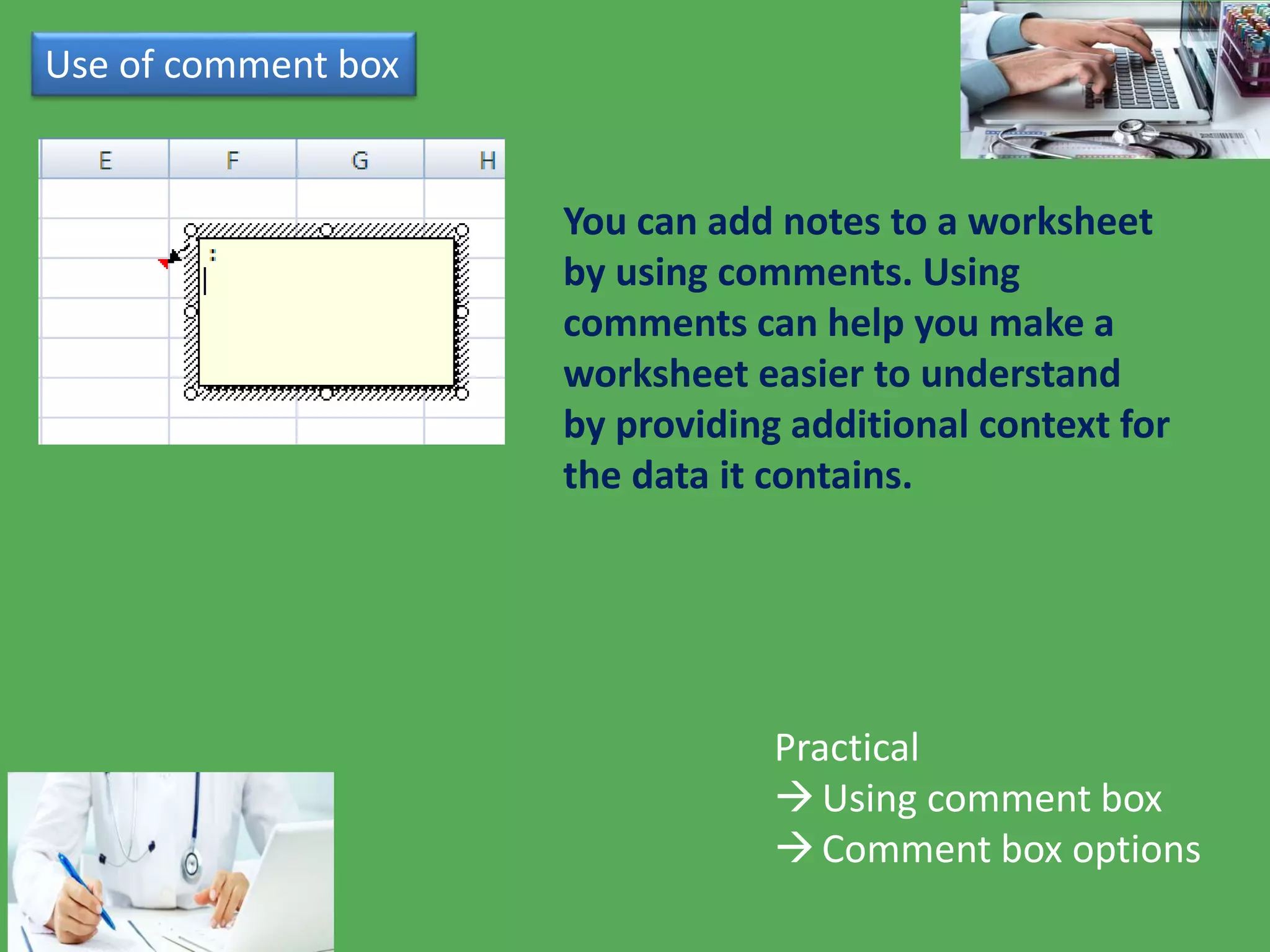
You can add notes to a worksheet
by using comments. Using
comments can help you make a
worksheet easier to understand
by providing additional context for
the data it contains.
Screen shot
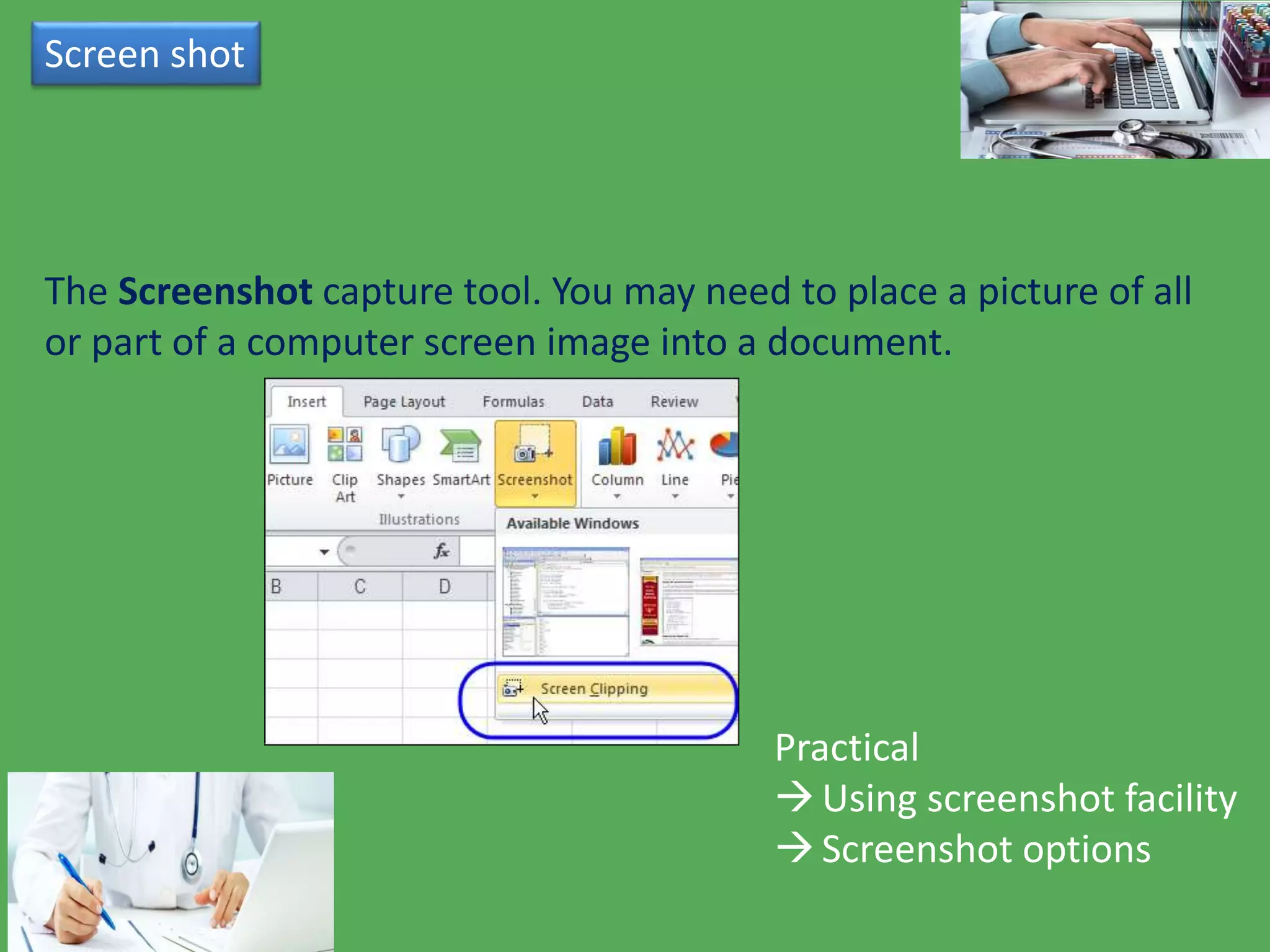
The Screenshot capture tool. You may need to place a picture of all
or part of a computer screen image into a document.
Practical
Using screenshot facility
Screenshot options
Workbook protection
Practical
Use of protection tool
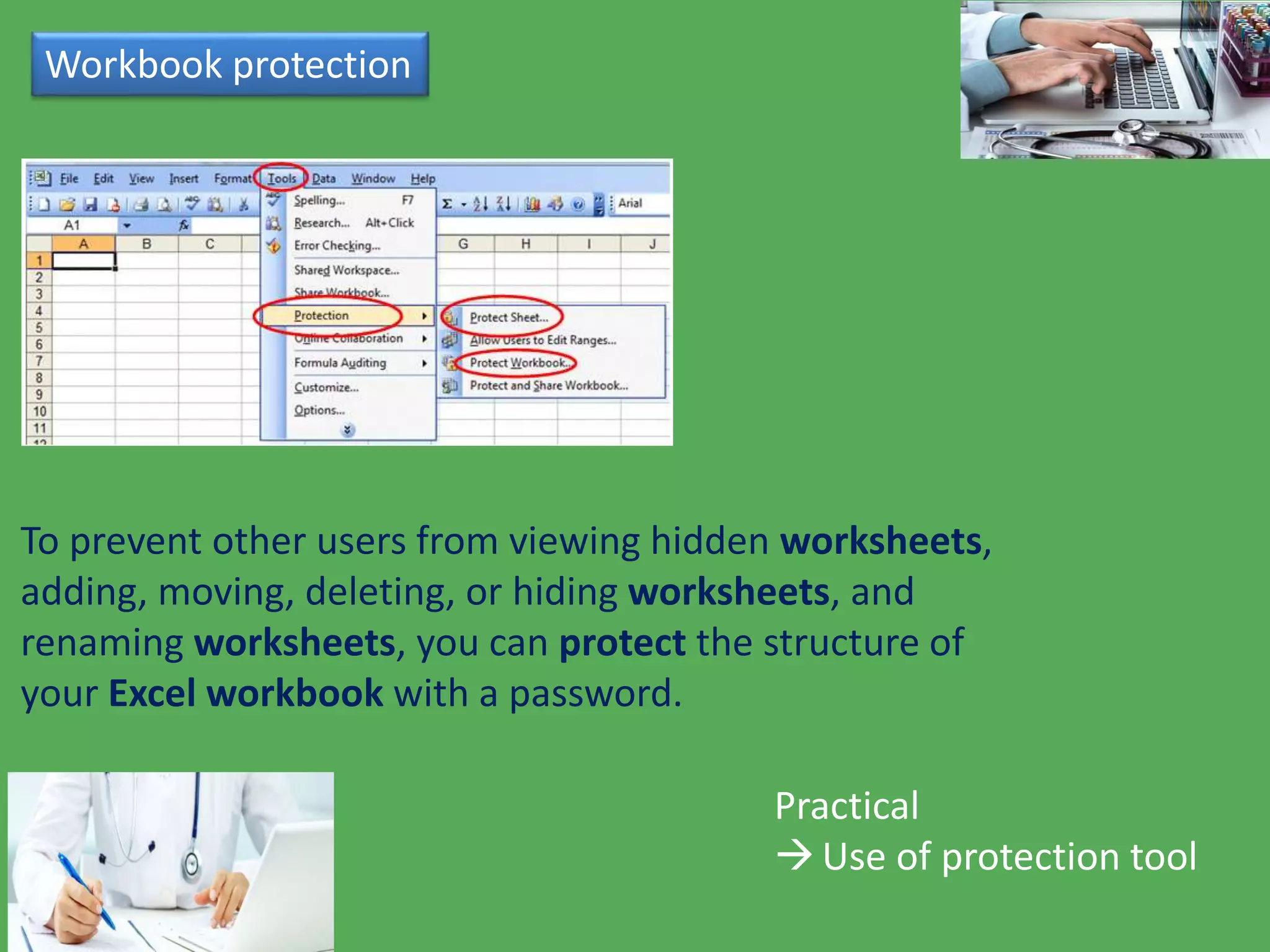
To prevent other users from viewing hidden worksheets,
adding, moving, deleting, or hiding worksheets, and
renaming worksheets, you can protect the structure of
your Excel workbook with a password.
Watch window
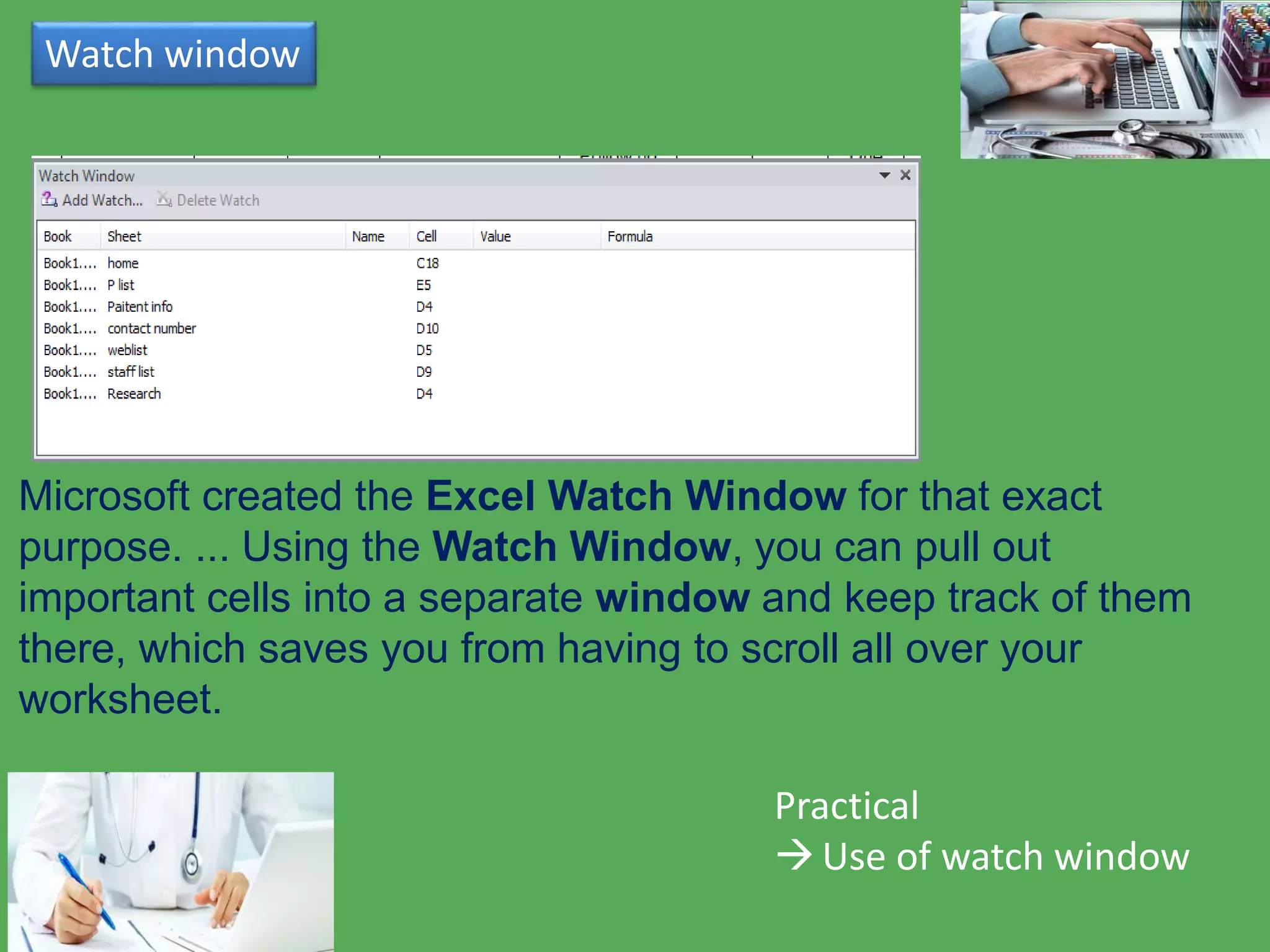
Microsoft created the Excel Watch Window for that exact
purpose. ... Using the Watch Window, you can pull out
important cells into a separate window and keep track of them
there, which saves you from having to scroll all over your
worksheet.
Practical
Use of watch window
Filter
Practical
Using filter
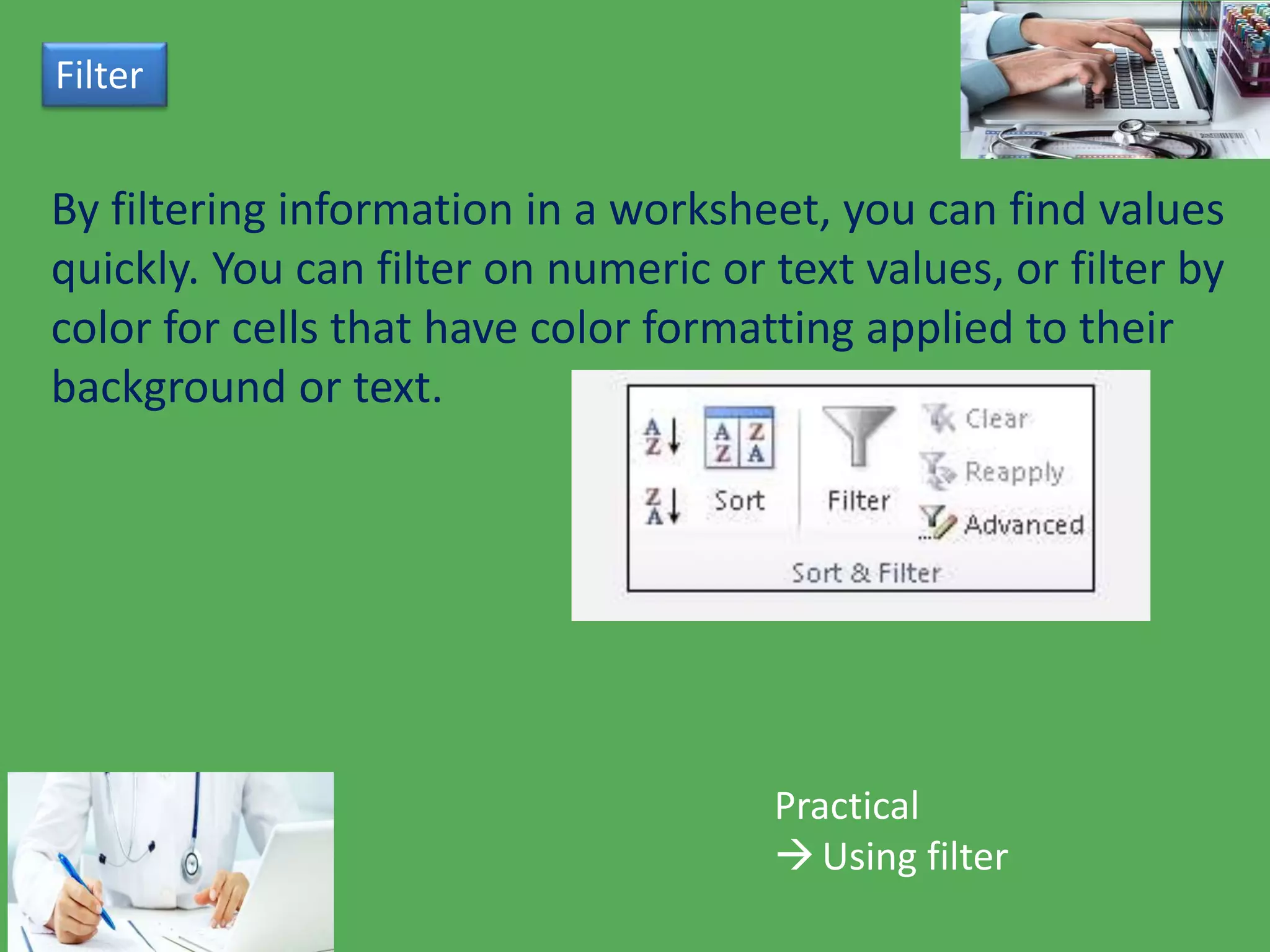
By filtering information in a worksheet, you can find values
quickly. You can filter on numeric or text values, or filter by
color for cells that have color formatting applied to their
background or text.
ctrl + spacebar to select current column
shift + spacebar to select current row
shift + F3 to insert function
F5 to go to box
ctrl + semicolon to insert current date
ctrl + shift +semicolon to insert current date
shift + F2 to insert comment in current cell
ctrl + tild key to show all formulas
Short cut keys
Practical
Sample Excel Templates Use in Medical Profession
ASCVD (Atherosclerotic Cardiovascular Disease) Risk Calculator
heart attack risk estimation calculator
Referral tracking spreadsheet
calculating cardiovascular risk
thank you…!
8308456916satish.sixteen@gmail.com

Basics of excel for medical profession

  • 1.
  • 2.
    Introduction of Excel Useof Excel in Medical Profession Sample example Work with Excel (with practice) sample excel templates use in medical profession Q & A (any time) outline
  • 3.
    Microsoft Excel isa spreadsheet developed by Microsoft for Windows, Mac OS X, Android and iOS. It features 1) calculation, 2) graphing tools, 3) pivot tables, 4) a macro programming language called Visual Basic for Applications. It has been a very widely applied spreadsheet for these platforms, especially since version 5 in 1993, and it has replaced Lotus 1-2-3 as the industry standard for spreadsheets.
  • 4.
    Microsoft Excel isa commercial spreadsheet program developed by Microsoft Application of Excel  To manage name list of data records.  To perform mathematical calculation easily in daily business.  Inventory management.  Create forms and consolidate results.  Analytical tools.  Corporate budgeting.
  • 6.
    Many medical professionals,from doctors’ offices to researchers, use Excel to manage their data. Excel is a powerful tool for keeping track of Patient Appointments, Scheduling Doctors, and organizing other information, such as contact numbers or insurance data.
  • 7.
    Many clinics, hospitalsand practitioners use Excel for these functions. Excel can also be used to keep track of medications, prescriptions and other health information.
  • 8.
  • 9.
    Excel useful commands Knowworksheet Save workbook Table formatting Using hyperlink Data validation Use of formulas Use of comment box Screen shot Workbook protection Watch window Filter Short cut keys
  • 10.
    Know worksheet An Excelworksheet is a single spreadsheet that contains cells organized by rows and columns. Practical Working worksheet Worksheet options
  • 11.
    Save workbook Practical Save worksheet Saveoptions To change the default save location: 1. Click the File tab to access Backstage view. Clicking the File tab. 2. Click Options. Clicking Options. 3. The Excel Options dialog box will appear. Select Save, check the box next to Save to Computer by default, then click OK. The default save location will be changed.
  • 12.
  • 13.
    Using hyperlink Practical Give Hyperlink Hyperlinkoptions 1. Select a cell or graphic to which you want to attach a hyperlink. ... 2. If you clicked a blank cell in Step 1, you can type the text you want the cell to display in the Text to Display box. ... 3. Select or enter the hyperlink's destination. ... 4. Click OK.
  • 14.
    Data validation Practical Use ofdata validation To create a drop-down list and restrict values in the cell to these entries, follow these steps: 1. Select cell A1. 2. On the Data menu, click Validation. 3. On the Settings tab, click List in the Allow drop-down list. 4. By default, the Ignore blank and In- cell Dropdown check boxes are selected. ... 5. In the Source box, type a,b,c
  • 15.
    Use of formulas Practical Workon formula Data Formula Description Result '=A2+A3 Adds the values in cells A1 and A2 =A2+A3 '=A2-A3 Subtracts the value in cell A2 from the value in A1 =A2-A3 '=A2/A3 Divides the value in cell A1 by the value in A2 =A2/A3
  • 16.
    Use of commentbox Practical Using comment box Comment box options You can add notes to a worksheet by using comments. Using comments can help you make a worksheet easier to understand by providing additional context for the data it contains.
  • 17.
    Screen shot The Screenshotcapture tool. You may need to place a picture of all or part of a computer screen image into a document. Practical Using screenshot facility Screenshot options
  • 18.
    Workbook protection Practical Use ofprotection tool To prevent other users from viewing hidden worksheets, adding, moving, deleting, or hiding worksheets, and renaming worksheets, you can protect the structure of your Excel workbook with a password.
  • 19.
    Watch window Microsoft createdthe Excel Watch Window for that exact purpose. ... Using the Watch Window, you can pull out important cells into a separate window and keep track of them there, which saves you from having to scroll all over your worksheet. Practical Use of watch window
  • 20.
    Filter Practical Using filter By filteringinformation in a worksheet, you can find values quickly. You can filter on numeric or text values, or filter by color for cells that have color formatting applied to their background or text.
  • 21.
    ctrl + spacebarto select current column shift + spacebar to select current row shift + F3 to insert function F5 to go to box ctrl + semicolon to insert current date ctrl + shift +semicolon to insert current date shift + F2 to insert comment in current cell ctrl + tild key to show all formulas Short cut keys Practical
  • 22.
    Sample Excel TemplatesUse in Medical Profession ASCVD (Atherosclerotic Cardiovascular Disease) Risk Calculator heart attack risk estimation calculator Referral tracking spreadsheet calculating cardiovascular risk
  • 23.