OBJECTIVE
TYPE TESTS
Prepared by: Mr. Ronald Macanip Quileste, M.Ed
true / false
items
TRUEORFALSE
"YES/NO" OR "AGREE/DISAGREE
measuresfacts
good for vocabulary (definitions),
formula, dates, names, etc.
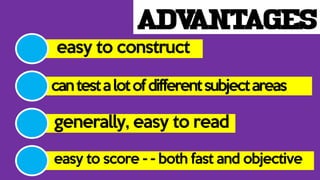
ADVANTAGES
easy to construct
cantestalotofdifferentsubjectareas
generally, easy to read
easy to score - - both fast and objective
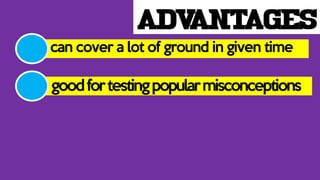
ADVANTAGES
can cover a lot of ground in given time
goodfortestingpopularmisconceptions
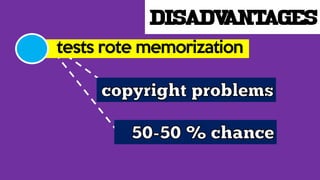
disadvantages
tests rote memorization
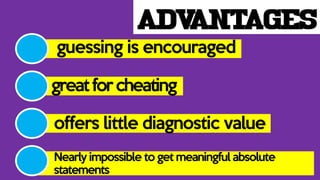
ADVANTAGES
guessing is encouraged
greatforcheating
offers little diagnostic value
Nearly impossible to get meaningful absolute
statements
steps to
construct
true / false
test items
the statement must be
unequivocally true or
false
make each item as
significant as
possible
Include only one
central idea in
each statement
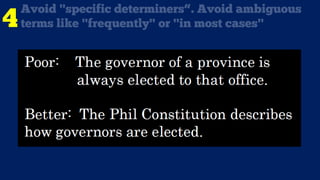
Avoid "specific determiners"
Avoid ambiguous terms
like "frequently" or "in most
cases"
4
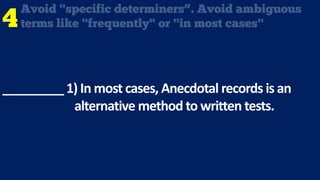
_________ 1) In most cases, Anecdotal records is an
alternative method to written tests.
4
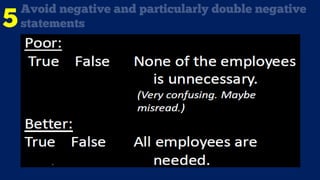
Avoid negative and
particularly double
negative statements
5
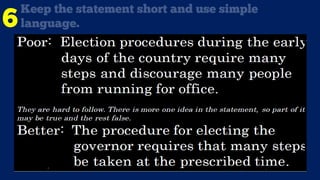
Keep the statement
short and use simple
language
6
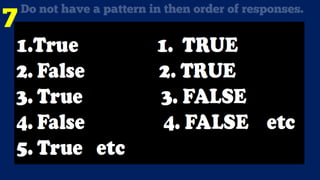
Do not have a
pattern in the
order of
responses
7
approximately,
half of the
statements
should be false
avoid trick
questions
Paraphrase source
materials before
including them
on the test
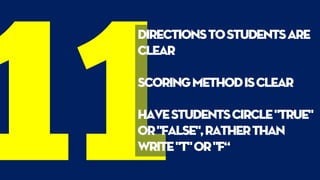
Directionstostudentsare
clear
Scoringmethodisclear
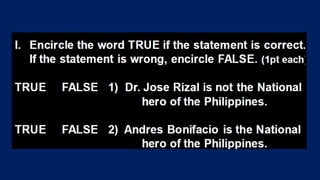
Havestudentscircle"true"
or"false",ratherthan
write"t"or"f“
binary
choice items
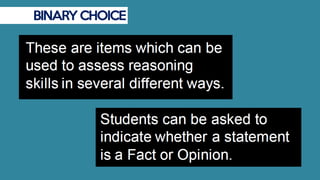
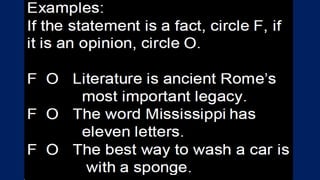
BINARYCHOICE
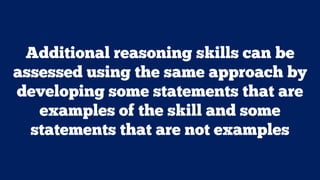
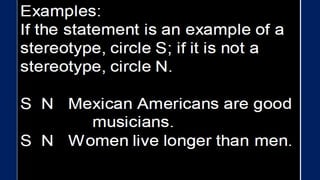
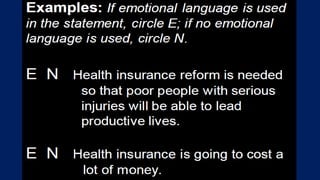
Additional reasoning skills can be
assessed using the same approach by
developing some statements that are
examples of the skill and some
statements that are not examples
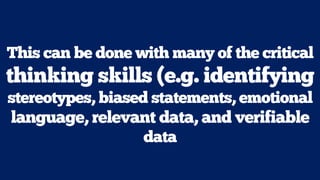
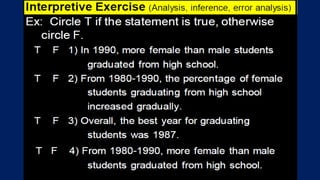
This can be done with many of the critical
thinking skills (e.g. identifying
stereotypes, biased statements, emotional
language, relevant data, and verifiable
data
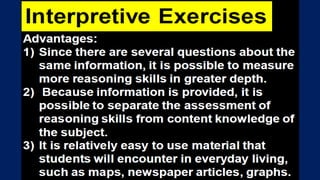
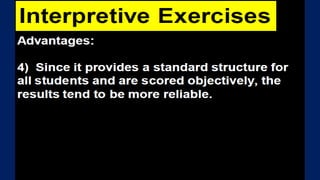
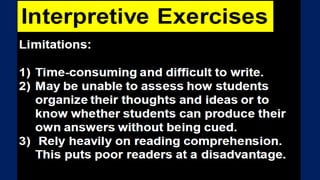
interpretive
exercises
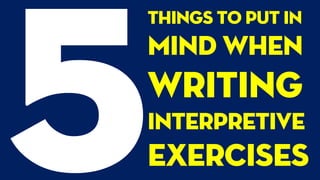
things to put in
mind when
writing
interpretive
exercises
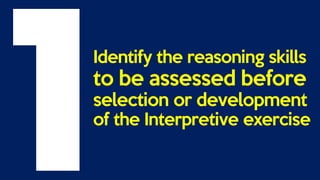
Identify the reasoning skills
to be assessed before
selection or development
of the Interpretive exercise
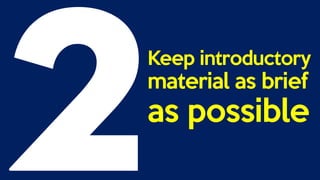
Keep introductory
material as brief
as possible
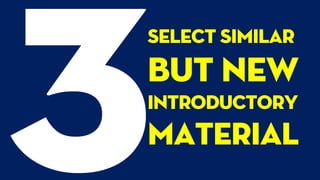
Select similar
but new
introductory
material
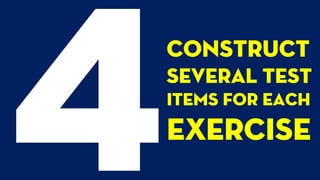
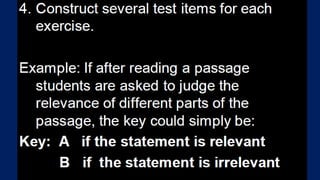
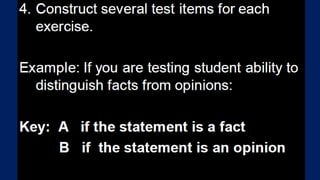
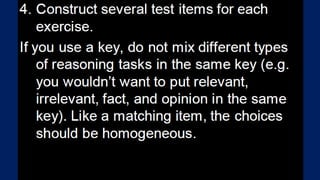
Construct
several test
items for each
exercise
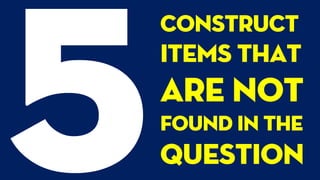
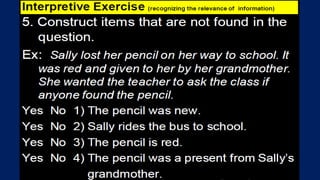
Construct
items that
are not
found in the
question
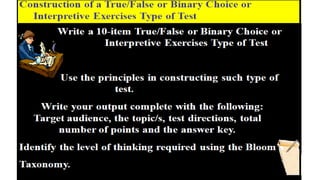
write-shop
references
Raagas, Ester L . (2010). Assessment and Evaluation of Student
Learning: Concepts and Applications (3rd edition) by Ester L.
Raagas, ELR DATStat Analysis Center, Cagayan de Oro
City.
http://www.utexas.edu/academic/mec/research/pdf/oldhtmlfiles/m
ultichoiceexamhandout.html
http://web.utk.edu/~mccay/apdm/plan/plan_b.htm

Writing True/False, Binary Choice, and Interpretive Exercises Test Items