Downloaded 70 times
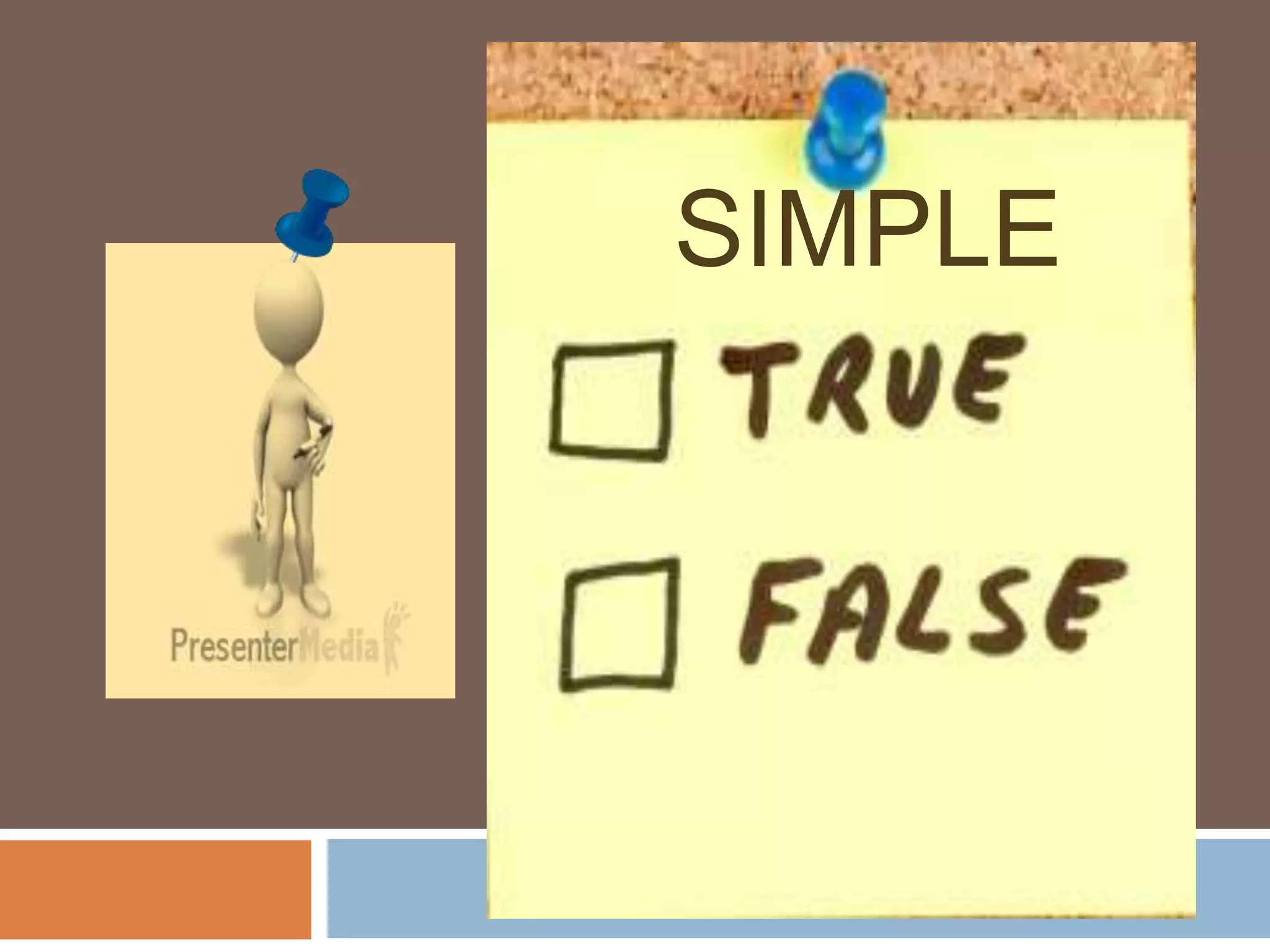


True or false questions are binary choice test items that require examinees to indicate whether statements are true or false. Constructing good true or false questions follows several rules: statements should not contain hints to the answer, avoid absolute terms like "always" and "never", keep sentences short to prevent giving clues away, don't include minor errors or tricks, don't quote verbatim from sources, and avoid strong determiners that make statements more likely to be true or false. Well-made true or false questions are balanced and avoid patterns that could allow guessing the answers.


